Home Blog Page 1551

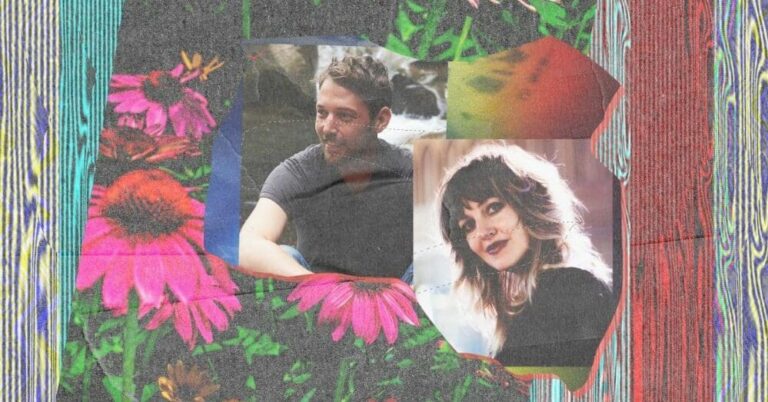
Artist Spotlight: Laura Fell

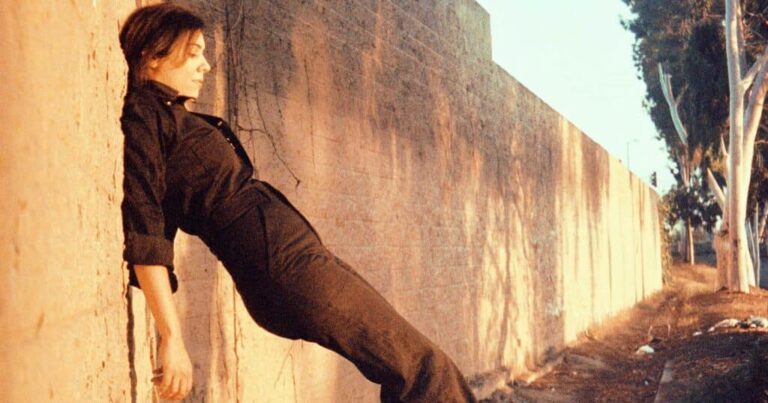
“I can’t find the answers for myself/ It’s easier to help somebody else,” Laura Fell laments on ‘Cold’, the second single from her upcoming debut album, Safe from Me. A psychotherapist by day, it’s perhaps no surprise that the London-based artist’s music is imbued with a sense of vulnerability and keen self-awareness, but it also serves as a subtle means by which to challenge some of those assumptions – the record is less about finding answers than the discoveries that arise simply from the process of introspection, and ‘Cold’ is a stunning embodiment of that. The song started as a spare arrangement before it took on a new shape in the studio, and the final result is lavish and engrossing as Fell’s quietly elegant vocals crawl around layers of ominous percussion; ‘Bone of Contention’ unravels with a similar kind of mystical beauty and poetic suggestion as Fell explores a love triangle gone wrong. The instrumentation throughout Safe from Me is wonderfully organic and refined, with Fell having recruited a group of classically trained musicians to help realize her artistic vision, but it’s the songwriter’s knack for penning empathetic, nuanced folk songs and wrapping them around her enchanting voice that renders it such a compelling listen.

We caught up with Laura Fell for this edition of our Artist Spotlight series, where we showcase up-and-coming artists and give them a chance to talk about their music.

What’s your earliest memory of feeling deeply connected to music? 

Definitely the first band I felt really connected to was Bright Eyes – they were in many ways the band of my teenage years. Their songs suddenly put into words a lot of what I was feeling but wasn’t sure how to express, and that was the first time I think I had that really precious experience of feeling understood through music. I absolutely love the album they released this year, and really enjoyed going back down memory lane off the back of it, and revisiting their back catalogue. 

Another memory that stands out is when my Mum gave me her copy of Blood on the Tracks by Dylan – I must have been maybe 16, or 17? I just remember sitting in my bedroom and listening to it from start to finish over and over again until I could recite all of the lyrics. I was so impressed by his ability to communicate these nuanced and complex emotions in a way that felt effortless, and avoided cliche. To this day some of my favourite lyrics are on that record. 

What are some of your biggest influences, musical or not? 

With music I’ve always been most drawn to the lyrics, and they are often what I tune into the most on a first listen. When it comes to lyrics, the artists that really blow me away are Adrienne Lenker – I love Big Thief, and heard them first, but then sought out her solo stuff and utterly fell in love with it – Conor Oberst (Bright Eyes), Blake Mills and Laura Marling. Then there are the classics – Paul Simon, Joni Mitchell, Leonard Cohen, Bob Dylan. I think what they all have is this carefully crafted balance in the language they use between the poetic and the everyday. Their lyrics are poignant and emotive but at the same time have this simplicity and directness to them as well, you know? 

I read that you started playing music at 25, when the poetry you’d been writing started feeling more like songs. Could you talk more about that? What were your first attempts of setting those words to music like? 

Yeah, so before I started to write and perform music when I moved to London, I’d studied Creative Writing as part of my Undergrad, so I was writing all of the time, really – poetry, mostly. But I guess alongside that I was also getting more and more into music, and listening to artists like Bright Eyes, Dylan, Cohen, where it often felt like a mix between music and spoken word, and almost like stories within the song. I remember thinking, oh maybe I could try that, too, and going through my notebooks and trying out melodies for lines I’d scribbled down. Then in my final year of Uni I did an open mic night where I sang two covers – Laura Marling’s ‘Blackberry Stone’ and Fleet Foxes ‘Someone You’d Admire’- with my friend Josh playing guitar for me. It was terrifying but also made me realise how much I enjoyed singing, and from then on I was quite keen to explore my voice more. So it sort of happened quite naturally over time. Then I bought a guitar and started teaching myself, fiddling around until something sounded nice, and playing it on loop until a melody came that fitted the words I’d written. Nowadays my writing process can differ more – sometimes the words come first, sometimes the melody, sometimes a guitar riff.

In what ways do you feel that being a psychotherapist informs your approach to songwriting? 

I think that my training and work as a psychotherapist has really strengthened my ability to sit with vulnerability, and not need to avoid or run away from it, and I think that ability opens up that space in my songwriting for sure – I’m always wanting to drill down into the raw emotions of the experiences I’m writing about, to try to make sense of them and understand them on a deeper level. Also as a therapist I’m often looking for how it all connects, and I think that’s also present in my writing – this idea of looking for the thread that ties everything together. I often think that when you start therapy it’s a bit like getting the four corners of a jigsaw in place and then you work to slowly put the other pieces in to form a complete image. There’s this sense of never being quite sure where it’s going to take you, or what the image at the end is going to be, and I feel like that mirrors my experience with writing – a lot of the time I only really know what a song is about once it’s finished and I play it or hear it back. 

‘Cold’ delves into the irony of making a living out of giving people advice, but not always being able to follow that advice yourself. Was pursuing music a different way for you to process those feelings? 

Yeah, so with ‘Cold’ I guess I wanted to playfully explore and challenge a presumption I’ve encountered quite a lot that therapists are in some way these entirely self-actualised people that have it all together, and I guess also to acknowledge the frustrating way in which it is often so much harder for any of us to take our own advice than it is for us to give it out to other people. But I’d also say that the song sort of captures that self-doubt and self-frustration in the moment it’s experienced – it names it – so that it can then be let go. I feel like that’s actually a really important part of my relationship with music – writing is this process of noticing my experience, naming it, and by doing so being able to put it down, let it go, or move forward from it with a lesson learned. So yeah, for sure, writing is a really important vehicle for processing my feelings and experiences, and making sense of them for myself. 

Could you give us some insight into the process of writing and recording your debut album? 

In terms of writing the songs for the album, I’d say they came together over a period of 8 months or so and, when I had ten tunes written and finished I put the band together. We had several rehearsal sessions where we played the tunes through and my producer, Chris Hyson, put together the skeleton arrangements. We were quite conscious of the fact that we didn’t want to go into the studio with too defined an idea of where each song would go – we wanted to leave that open, and have the space to experiment and build each tune into its own little world. So I’d say we had three rehearsals before heading to Wales to record with the core band (Guitar, Bass, Drums), where we live-tracked each song and then recorded all the vocals separately. We had four amazing days there where we mostly focused on starting to shape the tunes, then back in London we added overdubs – a lot more electric guitar, the double bass, cello, horns, Rhodes – over the next year or so alongside the mixing.

It was a slow process but I’m so happy we did it that way, as each mix is so dense and needed time to get it just right. Killpartrick, who engineered, mixed & mastered the record has such an amazing ear for detail, and invested so much in making sure we ended up with the best possible result. I credit him for how polished and complete the final masters feel, but also still retain the vulnerability of the songs themselves.

What are some things you feel you took away from the experience as a whole? 

Overall I learnt a real sense of confidence and conviction in my music from making the record, and from working with the incredible musicians involved. I think there was something about the concrete, tangible finished product of the album that also enabled me to sort of claim the titles of being a musician, being an artist, that before I think I’d struggled to own, in a way. Alex Killpatrick, who recorded, mixed and mastered the record, and Lloyd Haines (Drums) also taught me so much about sound and developing my ear in general. They and Chris (Hyson), who produced the record, have incredible ears for sound and arrangement. I feel very lucky to have been able to attend almost all of the mixing sessions with Alex, as I learnt so much being in the room for that process of bringing it all together. 

What are your plans going into the future? 

Obviously at the moment the landscape of live music is hugely uncertain, but I would love to do a tour of the record with the band once the album is released – it’s as lovely hearing the band bringing the songs to life on the stage behind me as it is to hear them doing exactly that on the record. Other than playing live again I’m also really itching to get back into the studio and record, and gradually work towards the next record. I’ve been writing a lot of new material over lockdown that I’m already starting to think about arrangements for. It would be amazing to have collaborations with other musicians be a big part of that again, like it was with recording Safe from Me – I learnt so much from the wonderfully talented musicians doing the record, and I personally find collaborating with others to be one of the most exciting and enriching parts of making music.

Safe from Me is out this Friday, November 20 via Balloon Machine Records.

Julien Baker Shares Cover of ‘A Dreamer’s Holiday’

0

Julien Baker has shared a cover of ‘A Dreamer’s Holiday’ as part of this year’s Spotify’s Singles: Holiday Collection. Listen to her take on the festive classic below.

“I chose ‘Dreamers Holiday’ because I found it incredibly unique as far as holiday songs are concerned”, Baker said in a statement. “It’s a very understated song- both lyrically and musically; while it’s technically about a ‘holiday’, it doesn’t directly reference any specific holiday theme, it leaves the lyrics a bit more open-ended. It’s the same way with the music— the chord structure is complicated but surprisingly timeless to me even though the song itself is over 70 years old. It’s the kind of song whose arrangement can be re-imagined so many times, and I love the feeling of sonic potential a single like that gives me.”

Baker recently announced her third studio album, Little Oblivions. The follow-up to 2017’s Turn Out the Lights arrives on February 26, 2021 via Matador and includes the single ‘Faith Healer’.

Legendary Audio Engineer Bruce Swedien Dies At 86

0

Bruce Swedien, the acclaimed audio engineer best known for his work with Michael Jackson and Quincy Jones, has died at the age of 86. His daughter, the musician Roberta Swedien, confirmed the news on Facebook, writing, “He had a long life full of love, great music, big boats and a beautiful marriage. We will celebrate that life. He was loved by everyone.”

Swedien was born in Minneapolis in 1934 and showed an interest in recording from an early age. He first found success in 1962, when he received his first Grammy nomination for Frankie Valli and the Four Seasons’ ‘Big Girls Don’t Cry’, and over the next decade went on to record with jazz legends including Duke Ellington, Count Basie, Oscar Peterson, Sarah Vaughn, and Dinah Washington. It was also during this time that Swedien met Jones, at the time an up-and-coming producer, who brought him to New York in 1977 to meet Michael Jackson and work on the music for The Wiz. After working on Jackson’s debut album Off the Wall, Swedien recorded and mixed ThrillerBad, and Dangerous and became a close collaborator to both Jones and Jackson.

On Wednesday, Jones posted a tribute to Swedien on social media. “I am absolutely devastated to learn the news that we lost my dear brother-in-arms, the legendary Bruce Swedien,” he wrote. “There are not enough words to express how much Bruce meant to me… He was without question the absolute best engineer in the business, and for more than 70 years I wouldn’t even think about going into a recording session unless I knew Bruce was behind the board. Along with the late great Rod Temperton, we reached heights that we could have never imagined and made history together. I have always said it’s no accident that more than four decades later no matter where I go in the world, in every club, like clockwork at the witching hour you hear ‘Billie Jean,’ ‘Beat It,’ ‘Wanna Be Starting Something,’ and ‘Thriller.’ That was the sonic genius of Bruce Swedien, and to this day I can hear artists trying to replicate him.”


Δείτε αυτή τη δημοσίευση στο Instagram.


Η δημοσίευση κοινοποιήθηκε από το χρήστη Quincy Jones (@quincyjones)

Spike Lee to Direct New Musical Film About Viagra

Spike Lee has been set to direct a new musical film based on the story behind the creation of Viagra. According to Deadline, the screenplay for the movie will be co-written by Lee himself alongside British actor, director, and playwright Kwame Kwei-Armah. It’s said to be based upon David Kushner’s 2018 Esquire article ‘All Rise: The Untold Story of The Guys Who Launched Viagra’, whose summary reads:

“It’s been 20 years since VIAGRA HIT THE MARKET, forever changing men’s sex lives (and their partners’). But before the little blue pill that could became a staple of bedside tables and club-kids’ packets, the drug had to overcome resistance from Wall Street, M.D.’s Capitol Hill, and the Catholic church. Whose job was it to convince some of America’s most powerful institutions that all men deserved boners? Two guys. This is the story of how an unlikely duo popped the top on a $3-billion-a-year industry.”

The music for the as-of-yet untitled project will be penned by songwriting duo Mark “Stew” Stewart and Heidi Rodewald, who created the Tony-winning musical Passing Strange. Lee previously filmed a production of Passing Strange which was released in 2009.

Lee’s latest feature film, Da 5 Bloods, came out on Netflix earlier this year. He also filmed a production of David Byrne’s American Utopia, which premiered on HBO last month.

Megan Thee Stallion Details Tracklist for New Album ‘Good News’

0

Megan Thee Stallion has revealed the tracklist for her upcoming debut album Good News. The 17-track LP includes the previously released ‘Savage Remix’ (feat. Beyoncé), ‘Girls in the Hood’, and ‘Don’t Stop’ (feat. Young Thug) and features guest spots from SZA, Lil Durk, City Girls, Popcaan, DaBaby, Big Sean, and 2 Chainz. Check out the tracklist below.

Good News is set for release this Friday, November 20. It marks Meg’s proper full-length debut following a series of mixtapes and EPs, the most recent of which, Suga, dropped in March of this year.


Δείτε αυτή τη δημοσίευση στο Instagram.


Η δημοσίευση κοινοποιήθηκε από το χρήστη Hot Girl Meg (@theestallion)

Ariana Grande Shares New Video for ’34+35′

0

Ariana Grande has shared a new video for her Positions track ’34+25′. The visual was directed by Director X and shows Grande leading a team of scientists bringing a robot to life. Check it out below.

Positions came out in late October. Prior to it release, Grande released the title track along with a music video featuring Grande as President of the United States. Read our review of the album here.

Last week, Grande joined Thundercat for a performance of his hit 2015 track ‘Them Changes’ at the Adult Swim festival.

Top 5 Movies Every Millennial Has Seen

The movie industry has evolved vastly throughout the years, from the old classic romantic movies featuring Audrey Hepburn to modern day dramas like Manchester by the Sea.

In this article, we look at some of the movies majority millennials have seen at least once.

watched at least once. This is our list of the top 5 movies every millennial has seen to get started:

21 (2008)

21 is the first film on our list of movies every millennial has seen. It’s a 2008 American heist drama and a work of the movie director, Robert Luketic. Inspired by the MIT Blackjack Team, the movie starred popular Hollywood actors like Laurence Fishburne, Aaron Yoo, Liza Lapira, Jacob Pitts, and Lieu Chinh.

Although this movie is subjected to mixed controversy and reviews regarding the choices of the film’s cast, it became part of the box office.  21 also rose to the top as the Number 1 movie in the U.S. and Canada just within the first two weekends after its release.

As you may already know, casinos offer a great place to shoot movies. Most of the scenes in 21 were filmed at casinos in Las Vegas like Caesars Palace, Planet Hollywood, the Venetian, Red Rock Casino, and Hard Rock Hotel. If you are interested in learning about these popular casinos, you can check out this list of casino sites put together by the Sports betting community site, OLBG.com.

  1. Coming to America (1988)

Second on our list is the comedy classic and well-watched film Coming to America.

In the movie, Eddie Murphy played the role of a wealthy and pampered prince from Africa who travelled to America with his best friend (Arsenio Hall) searching for a bride for himself. Murphy, who had never worked all his life, quickly finds a job as a cleaner in a restaurant where he eventually started making friends, acquaintances, enemies, and getting into trouble. But ultimately, he found the woman of his dreams.

Whether it is a comedy, romance, or action, this movie sure has a blend of everything in it and is undoubtedly an all-time classic that will keep you entertained at all times.

  1. The Godfather (1972)

The Godfather will indeed find its way to the very top among various lists of great movies and even in school curriculums for film classes because it is entertaining and educative.

Marlon Brando’s performance is nothing short of top class, yet he hardly played the most vital role in the film. You can indulge in watching the movie from the first scene, comparing the beginning of Al Pacino and the end.

  1. Pillow Talk (1959)

These days, the world has several romantic comedies from various great actors and comedians. Therefore, it is quite challenging to pick the best out of these great movies. However, Pillow Talk is an excellent choice, as it is fun to understand how telephone communication happened in the past.  The combo between Day/Hudson was quite remarkable, as you watch their “fiery banter” as both keep pretending to have so much hatred for each other all through half of the entire movie. If you would prefer a fun experience from Doris Day, you can check out the Western Musical Calamity Jane. This piece holds an incredible and cheesy experience with the actress. There’s no match for powerful voice and screen presence.

  1. The Graduate (1967)

With this exciting and final entry in our list of movies every millennial has seen, you would have a changed perception of your spouse’s parents. Mrs. Robinson has been a favorite name, even from Simon and Garfunkel’s song. The popularity of this name is viewed from the eyes of Benjamin Braddock. Get ready and kit up for the “most uncomfortable” love series ever shown in films. Braddock (playing to the song originally sang by Dustin Hoffman; Bumbling Perfection) landed himself in a big predicament one night after driving his friend’s mom home. This happened just after he graduated from college. Which trouble did Braddock cause himself? Find out the answer in The Graduate.

Conclusion

It is pertinent to note that this list doesn’t follow any particular order or classes of millennial movies. What we’ve done is simply list out some all-time classical movies. Each one rocked the TV screens of every home across the world.


The Impact of Education on a Society’s Lifestyle Growth and Change

Education has been instrumental in changing a lot of things in society. A similar effect, but in education, had the popularization of online paper writing services like DoMyEssay, where students can buy custom essay to get help with their assignments and easily improve their grades. students can get help with their assignments and easily improve their grades. Most people can relate to others better in society because they have been educated and socialized to accommodate others. There several advantages of being educated that can make you a better citizen in society. Some of the benefits are mentioned below.

Education Makes People Develop Critical Thinking Skills

All people think about situations in life, which affects how they respond to issues around them. However, how well and deep someone feels about a specific issue depends on how educated they are. Most schools and colleges, like Miller-Motte, teach their students’ critical thinking skills, where they are equipped with the necessary knowledge on how to ask relevant questions and analyze situations in depth rather than being reactive. Academic writing is a great tool for the development of critical thinking. When students receive the writing assignment and start analyzing “how to write my research paper” they have already made the first step towards critical thinking.

As a result, such individuals develop into curious and reflective individuals, who may not react to issues until they have fully understood them. This makes them better citizens in society since they question things and only go with what works for them rather than settling.

Helps People Think Outside the Box

Smart people are not necessarily those born with a brilliant mind but those who nurture themselves to stand out. Apart from being a creative person, education helps you channel this creativity into the right things, thus making you a useful member of your society. You are likely to become a better person when you know that things are not done in one way only. There are several ways of doing the same thing to achieve excellent results. Going to school exposes you to this kind of experience, allowing you to appreciate the value of always thinking outside the box. Through avenues like engaging keynote speakers, you get exposed to diverse insights and viewpoints that further expand your horizons. People who go to school are likely to be creative compared to those who do not. This makes it easy for you to relate with others easily.

Helps People Build Their Social Skills

Attending school is one of the easiest ways to build networks that will last a lifetime. You get to learn how to seek help like when you hire an essay writer whenever you need assistance. Some of the people you meet in school will become your career partners and acquaintances that you can look up to for any help. Having a person you can reach out for a particular thing makes life easier. What’s more, interactions that happen in school teach people to be friendly and open-minded.

Adopt Healthier Lifestyles

Attending school opens you up to the possibilities of having a better life than what you are accustomed to. By seeing how others lead their lives, or by reading and discovering the benefits of adopting certain healthy lifestyles, you get to choose better for yourself. You get to learn some of the things to avoid to attain the best quality of life, making it easy for you to enjoy life with those around you more.

Enhanced Employment Opportunities

People with an education and college degree are likely to get better employment opportunities than those who did not attend any school. Most industries and companies are searching for skilled laborers with the expertise to handle a lot of complicated machinery and the ability to master plans and procedures.

Being learned makes it possible for workers to adapt to such situations, and it is even more comfortable if they have specialized skills and knowledge on the same. Many companies will consider hiring experts with such experience instead of picking unskilled labor, unless for the lower-level tasks. This makes life in the workplace easier and better.

Increases Family Income

The more people are educated in a family, the higher their chances of having stable jobs with a constant income flow. When people are empowered economically, they can sustain their families and improve their living standards. Being educated increases the chances of people being employed and earning a sustainable income. However, when there is no formal employment to count on, educated individuals can venture into business and trade, making it possible for them to survive and improve their livelihoods.

Makes People Excellent Problem Solvers

After spending years in a class solving mathematical problems, one tends to develop special problem-solving skills. Besides math problems, most subjects require students to think critically and find viable solutions. While this may seem like an assessment strategy, the critical and in-depth thinking skills acquired also apply in real life. Most educated individuals are smart critical thinkers that can get themselves out of tricky situations.

Education Attracts Modernity

An educated community or society tends to adopt a few things that help urbanize even the most rural areas. The thing people learn in school help shape the choices and desires they have. By observing and reading about different societies in history and culture, educated individuals can develop an ideal society for themselves.

In the end, education remains one of the most important aspects of modern life. Most people with a basic education can maneuver through life with its numerous challenges. There is a form of empowerment that comes with being educated, making it possible for people to improve their lives in totality.

Why Education Is Important in Life

Whether you have been asked to write an essay on the importance of education in life or are simply debating about this topic, understanding the benefits of education in life is crucial. Most people today live better lives because they got an education. So, how important is an education in one’s life?

Equips One with Basic Reading and Writing Skills

Your essay writer will easily point out that education makes it possible for people to read and write. These are basic communication skills in today’s world. Most of the content shared today is either written or spoken in official languages. If you do not know how to read written content, the chances are that you will miss out on some of the most crucial communication and socializing skills.

Reading skills come in handy in different situations, both official and unofficial. You need to understand how to read a letter to know what the sender is communicating. The same reading skills will be useful whenever you have to read official documents at work. The bottom line is that education makes it possible for a person to master basic reading skills. And for those who want to go further, pursuing a part time mba can do a lot of good.

Additionally, getting an education helps one to manage simple to complex writing assignments. Even if you may not write professionally as published authors do, getting a primary education makes it possible to understand simple writing techniques useful for effective communication. Knowing how to write your name and append signatures in documents is made possible when you know how to write. The bottom line is that education makes people literate, which is a crucial survival requirement in a developed world.

Education is Necessary for Employment

Most people in formal employment secure their jobs because they have attained a certain level of education. Most jobs in industries require that employees have specific academic qualifications. The training in schools and colleges is crucial for the successful execution of tasks at the industry or company level. In most cases, uneducated people lose some lucrative opportunities because their academic stand works to their disadvantage.

Enhanced Communication

Education is also crucial for effective communication. Unless you attend some form of training, you are less likely to appreciate the diversity in people; hence it will fail to accommodate the communication differences brought about by culture and socialization.

Apart from this, people learn how to become good speakers and orators at schools. It is one thing to talk about and another to communicate effectively. It is also at school that people learn different communication techniques to apply based on their situation.

Enhances the Use of Technology

When someone is taught how to use a gadget or machine, they tend to use it better. Some of the sophisticated machinery in an industry requires attending a class and g through a course to master. While learning through apprenticeship always works, the experts have to be educated to teach the rest of the staff. You are likely to handle machines better when you attend a specific class on the same.

Flattens the Curve

When people are educated, they have an equal chance to compete for the same opportunities. Most of these opportunities are awarded based on merit. When education and academic qualifications are used as the determinant, people from different backgrounds get the same platform to fight it out. This affords even the poorest people in society a chance to become the best they can be because everyone is equal.

Education Empowers

This happens in the sense that when someone is educated, they get to dream of better things for themselves. The opportunities that come with this platform brings realities closer home. Most people who get educated learn how to turn their weaknesses into power and transform their lives in the long run. It does not matter which community one comes from, their economic background, or their exposure level. Once someone gets an education, the field gets leveled, and they can reach for their goals easily.

Education Leads to Improved Economies

Most people in society would probably lead to ordinary low-income level lives. However, when one gets educated, the chances of securing well-paying jobs also increase. When they are paid well, their family income increases, and they are also likely to have extra to engage in economic activities such as businesses. In the long run, they help boost their family’s financial status and contribute to their society and the nation’s economic growth.

The bottom line – education is a game-changer and should be embraced. The benefits are immense for all.


Bandcamp Launches Ticketed Livestreaming Service

0

Bandcamp has announced a new livestreaming service, Bandcamp Live, which will allow musicians to set up ticketed livestream performances. The online concerts will be fully integrated into the platform and will feature a virtual “merch table” and real-time chat. 80-85% of ticket sales will go directly to the artist, and the company has also announced it will waive its ticket fees entirely until March 31, 2021.

Earlier this year, the online music marketplace launched Bandcamp Fridays, a day each month where the company waives its revenue share, to help artists struggling due to the COVID-19 pandemic. “Bandcamp Live is the next step in our effort to help our community thrive during this crazy time,” a post on their website reads. “Streaming will never replace the experience of in-person performances, but we believe it’s the next best thing, and will provide artists with a powerful tool to build and connect with their fans both now, and when Covid is behind us and we’re all out enjoying the magic of live music once again.”

You can head out to the Bandcamp website to check out some of the artists who have already confirmed shows on Bandcamp Live, including Cloud Nothings, Liv.e, Kaitlyn Aurelia Smith, Hatchie, and more.