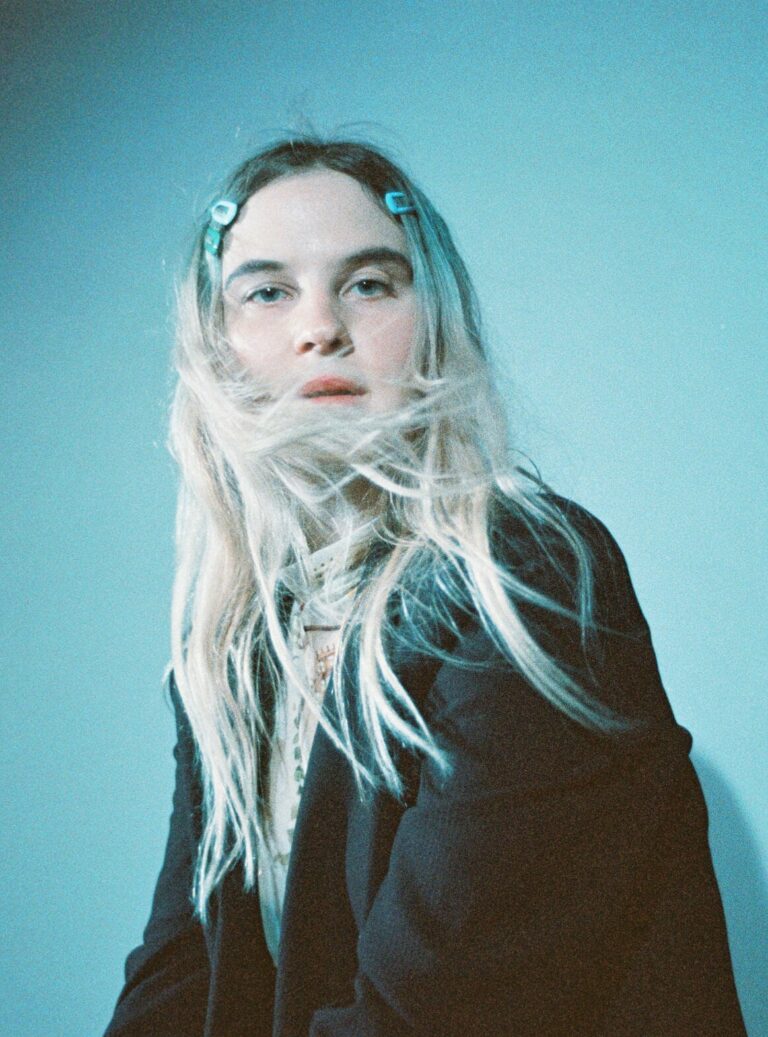
Staffordshire-born singer-songwriter Alex Jayne has shared a new single called ‘Pictures’. Check it out below, alongside an accompanying Laurie Barraclough-directed video.
“’Pictures’ is about breaking free from my own attachment to photographs from the past. And how easy it is to be seduced by nostalgia – to ignore the truth behind a rose-tinted lens,” Jayne explained in a statement.
Speaking about the inspiration behind the video, Barraclough added: “For a song about a relationship that exists only in photographs, shooting the video on celluloid film was a no brainer. Super8 naturally has a very nostalgic feel – as well as a real home movie vibe – qualities that line up perfectly with the themes and lyrics of the song.”
Right now, the Covid-19 pandemic is impacting musicians in pretty severe ways. Many musicians who relied on live performances in order to make ends meet are now being left with little in the way of an outlet for their performances, so what’s the answer?
Well, it seems to increasingly be the case that musicians are turning to live performances online via live streaming platforms and it’s not hard to see why. They offer musicians the chance to carry on performing to their audiences all over the world without breaking any lockdown rules, while they earn some money at the same time. If it’s something you want to do, here’s how.
Promote Your Plans
First of all, you need to make sure that your plans are being properly promoted because if people don’t even know what your plans are and what you’re looking to do in terms of your live performances, you’re obviously going to have issues going forward. Promoting your plans via social media and ensuring you communicate your plans well in advance is key. You don’t want to finalize things late and then let everyone know at the last minute.
Make the Details Clear
It also needs to be clear to your audience what they need to do in order to join in and take part, and this will be dictated by how you’ve chosen to plan out your performance. It might be the case that people need to pay a fee to take part, or maybe you’re streaming it for free so that anyone can join in. All of these details need to be as clear as they possibly can be in order to avoid any confusion that’ll lead to problems later.
Set Your Financial Expectations
It’s important to have a set of expectations in place for how the finances of this are going to play out. At the very least, you’ll want to make sure that you’re covering any of the costs that you’ve incurred to make this whole process possible. If you don’t set your financial expectations carefully, you’ll likely be disappointed. As mentioned above, fees can be charged or you can simply encourage donations via the livestream as most livestreaming platforms offer this function.
Find the Right Microphone
You’re going to need to have the right equipment in place if you’re going to make the most of your musical performances. Finding cheap microphones and camera equipment will be key if you’re doing this on a budget. However you go about investing in this equipment, you’ll need to have it all in place, set up correctly and understand how to get the most of it before you start your first streamed performance.
Set Up Your Camera
Setting up your camera is something that you’ll definitely need to work on beforehand. You’ll want to make sure that you’re always in view because this performance isn’t just about the audio. People tuning into a livestream of you performing your music will want to be able to see you clearly, and that means seeing your face. It might not be something that comes naturally to you, but it certainly is important.
Stream Via Different Platforms At Once
As a musician, you’ll have the chance to livestream your performances on a wide range of livestreaming platforms. These include but aren’t limited to Twitch, YouTube, Periscope, Facebook and more. Ideally, you should look to stream simultaneously to as many of these platforms. This will allow you to maximize your audience because different people in your audience will have different preferences regarding the sites that they enjoy watching this kind of content on.
Engage During the Performance
When you’re performing and you’re in front of the camera, it’s obviously a very different feeling and atmosphere to the one you get when you’re on the stage in front of hundreds of people. That’s why it’s important to engage the audience in some way and break down those barriers that are in place. It’s not easy to start with but as your audience gets into it and you find your rhythm, you’ll find that it all becomes a lot more organic-feeling.
Right now, the world is in turmoil and the live music circuit is pretty much on hold. For now, no one is able to perform live in front of a big audience, so performing via livestream as discussed above might well be your best bet in terms of practicing your live performance and earning money as you do so.
Are you interested in photography? If so, then you might be curious about how you can hone your skills and ensure that you do deliver a higher standard of photographs to potential clients. Even if you’re not planning to sell, it’s always great to know that you are improving your skills. So, how can you approach this challenge the right way? Well, there are a few possibilities worth considering.
Upgrade Your Tech
One of the first options that you can consider is upgrading your tools. This could provide tremendous benefits when approached the right way. You should explore guides online to find the best cameras or video cameras and drone cameras for your particular type of photography. You should also look for the opinions of influencers and experts to ensure that you do make the right decision here.
Beyond the typical camera, you can go further with the type of tech that you’re exploring. For instance, you might want to think about investing in the best DJI UAV products on the market. These are high-quality drones that will quite literally allow you to elevate your photography skills. You’ll be able to take incredible shots of landscapes and beautiful new perspectives of things. Drones are used by a massive number of photographers these days because of the fantastic benefits that they provide. They can even be automated so you can set them on a fixed course and focus entirely on getting the perfect shot.
Go Outside Your Comfort Zone
As a photographer, you probably have a set list of things that you like photographing. Some people love taking shots of great architecture, others prefer capturing live moments and many more focus on things like animals or social activities. Regardless of what you usually photograph, you can consider going beyond this box. If you do this, you should find that you are able to discover some fantastic new skills associated with this style of photography. It’s a great way to ensure that you bring new innovative ideas to a particular type of this art form.
Learn To Use Light
One of the first things that you should consider is learning to use the light of an area more effectively than before. There are numerous ways to do this and you can explore how to gain the most from different light environments either in post or when you are taking the photos themselves. If you are curious about this possibility, you’ll find numerous guides online that will provide you with a fantastic starting point. Alternatively, you could consider investing in new software to alter and change your photos as you need to. In addition investing in some kind of professional photography tuition that will help you upgrade your photography skills.
We hope this helps you understand the key ways that you can elevate your photography skills and ensure that you do get more from this form of art. If you take our advice, you’ll be thrilled by the impact that it can have on your photographs. If you are using this as a commercial venture, it could even provide you with ways to reach new clients and get them on board with your company.
College life tends to get a bit hectic from time to time. From fast-approaching deadlines to random tests, college life can be overwhelming. The secret to keeping it all together is by using EssayService, a professional paper writing service for students, to get help with your assignments and by looking for fun and engaging activities such as reading poetry books.
This activity can also directly help your academic success. Unlike most students who find it challenging to choose topics for their poetry essay, reading a fewpoetry essays examples will prove to be enough when writing your own. So, as college students, you should consider putting the phones down just for a few minutes and read a poem or two.
Besides, reading poems and text from famous poets can actually make you smarter because when you are reading, you are sharpening your command of the language. What this means is that after consistently reading poetry books, writing essays and literature reviews will feel like a breeze. However, it is not always easy to figure out how to write poetry-based assignments. So, you can check out the EssaysAdvisor blog to gain some essential tips.
With that said, let’s get a better understanding of what poetry is.
What is Poetry?
Poetry is a form of literature that applies concepts of rhythm, symbolism and play on words to draw out meaning from a particular topic. Without going into too much detail, poetry simply refers to stories meshed together in rhythmical and emotional harmony. The main aim of poetry is to invoke emotions while passing a message across.
There are a specific set of rules that govern the writing of poems. These rules are what separate poems from other forms of literary works such as songwriting. So, why should you read poetry books?
Why Should Students Read Poetry Books?
The primary purpose of going to college is to broaden your knowledge and scope in a particular field. In the same way, poetry allows students to better understand and appreciate the world around us. The messages and meanings hidden behind the melodic rhythms of poetry serve to teach and better yet enlighten people.
We understand that poetry might not be everyone’s cup of tea, but you should give it a go. Soon you’ll find reading them enjoyable, and in no time, you’ll be having quite a bit of fun while doing so. It’s as easy as picking up a book, reading a few poems, and that’s it.
Remember, reading such books and essays make you smarter and in doing so, writing your poetry essays becomes easier. Here are poetry books every college student should read.
Poetry Books that all College Students Need to Read
1.Milk and Honey by Rupi Kaur
Among the best poetry books for college students, Milk and Honey by Rupi Kaur is arguably the best. Milk and Honey is a collection of stories and poems about survival, love, pain and loss. However, comfort and happiness can be found in the most bizarre of places, hence the title Milk and Honey.
2.Love and Misadventure by Lang Leav
Lang Leav is a well-known name in the poetry universe as a great author. As fate would have it, many students often go through a lot of emotions and relationships while in college. Well, if you are looking for poetry about college life with regards to relationships, look no further than Love and Misadventure.
3.If They Come For Us byFatimah Asghar
It is not new for students to attend colleges far away from their homes. If you are looking for a poem that relates to life far from home, look no further. Fatimah Asghar documented her experiences as a Pakistani Muslim living in America. There are a lot of themes, including identity exploration, healing, conflict and violence.
It is also worth noting that Fatimah Asghar picked up an Emmy nomination for her work in a different scrip, Brown Girls. What this means is that you will be treated to a powerful and imaginative poem as you see the world in the eyes of Fatimah.
4.Sea of Strangers by Lang Leav
Lang has a couple of excellent poetry books, some of which feature as the best books for college grads. If you read her other poetry book, Love and Misadventure, then you will most certainly fancy this one as well.
Sea of Strangers captures the audience’s imagination and attention spectacularly. With strong themes of love, self-empowerment and loss, you are guaranteed a journey of self-discovery and finding as you read the book.
5.Bicycle in a Ransacked City: an Elegy by Andrés Cerpa
Last on our list is a poetry book by the famous Andrés Cerpa. The book is about a son who takes care of his ailing father. The book demands an emotional response as the story follows the son who struggles with caring for his father, who is diagnosed with Parkinson’s Disease.
The author majestically navigates between strong themes of tenderness and sadness. You will find the book emotionally invoking and stunning, to say the least. Beside most people in college can relate to the themes as written by the author.
Adrianne Lenker is the latest musician to perform on NPR’s Tiny Desk (Home) Concert series. Joining from a camper trailer parked somewhere in Joshua Tree National Park, the Big Thief singer played five tracks from her recently released album songs: ‘zombie girl’, ‘two reverse’, ‘dragon eyes’, ‘anything’, and ‘ingydar’. Watch her performance below.
songs is one of two albums Lenker released simultaneously last month. She last appeared on Tiny Desk back in 2016. Angel Olsen, Phoebe Bridgers, and more have recently guested on the series.
Read our review of Adrianne Lenker’s songs / instrumentalshere.
“I can’t find the answers for myself/ It’s easier to help somebody else,” Laura Fell laments on ‘Cold’, the second single from her upcoming debut album, Safe from Me. A psychotherapist by day, it’s perhaps no surprise that the London-based artist’s music is imbued with a sense of vulnerability and keen self-awareness, but it also serves as a subtle means by which to challenge some of those assumptions – the record is less about finding answers than the discoveries that arise simply from the process of introspection, and ‘Cold’ is a stunning embodiment of that. The song started as a spare arrangement before it took on a new shape in the studio, and the final result is lavish and engrossing as Fell’s quietly elegant vocals crawl around layers of ominous percussion; ‘Bone of Contention’ unravels with a similar kind of mystical beauty and poetic suggestion as Fell explores a love triangle gone wrong. The instrumentation throughout Safe from Me is wonderfully organic and refined, with Fell having recruited a group of classically trained musicians to help realize her artistic vision, but it’s the songwriter’s knack for penning empathetic, nuanced folk songs and wrapping them around her enchanting voice that renders it such a compelling listen.
We caught up with Laura Fell for this edition of our Artist Spotlight series, where we showcase up-and-coming artists and give them a chance to talk about their music.
What’s your earliest memory of feeling deeply connected to music?
Definitely the first band I felt really connected to was Bright Eyes – they were in many ways the band of my teenage years. Their songs suddenly put into words a lot of what I was feeling but wasn’t sure how to express, and that was the first time I think I had that really precious experience of feeling understood through music. I absolutely love the album they released this year, and really enjoyed going back down memory lane off the back of it, and revisiting their back catalogue.
Another memory that stands out is when my Mum gave me her copy of Blood on the Tracks by Dylan – I must have been maybe 16, or 17? I just remember sitting in my bedroom and listening to it from start to finish over and over again until I could recite all of the lyrics. I was so impressed by his ability to communicate these nuanced and complex emotions in a way that felt effortless, and avoided cliche. To this day some of my favourite lyrics are on that record.
What are some of your biggest influences, musical or not?
With music I’ve always been most drawn to the lyrics, and they are often what I tune into the most on a first listen. When it comes to lyrics, the artists that really blow me away are Adrienne Lenker – I love Big Thief, and heard them first, but then sought out her solo stuff and utterly fell in love with it – Conor Oberst (Bright Eyes), Blake Mills and Laura Marling. Then there are the classics – Paul Simon, Joni Mitchell, Leonard Cohen, Bob Dylan. I think what they all have is this carefully crafted balance in the language they use between the poetic and the everyday. Their lyrics are poignant and emotive but at the same time have this simplicity and directness to them as well, you know?
I read that you started playing music at 25, when the poetry you’d been writing started feeling more like songs. Could you talk more about that? What were your first attempts of setting those words to music like?
Yeah, so before I started to write and perform music when I moved to London, I’d studied Creative Writing as part of my Undergrad, so I was writing all of the time, really – poetry, mostly. But I guess alongside that I was also getting more and more into music, and listening to artists like Bright Eyes, Dylan, Cohen, where it often felt like a mix between music and spoken word, and almost like stories within the song. I remember thinking, oh maybe I could try that, too, and going through my notebooks and trying out melodies for lines I’d scribbled down. Then in my final year of Uni I did an open mic night where I sang two covers – Laura Marling’s ‘Blackberry Stone’ and Fleet Foxes ‘Someone You’d Admire’- with my friend Josh playing guitar for me. It was terrifying but also made me realise how much I enjoyed singing, and from then on I was quite keen to explore my voice more. So it sort of happened quite naturally over time. Then I bought a guitar and started teaching myself, fiddling around until something sounded nice, and playing it on loop until a melody came that fitted the words I’d written. Nowadays my writing process can differ more – sometimes the words come first, sometimes the melody, sometimes a guitar riff.
In what ways do you feel that being a psychotherapist informs your approach to songwriting?
I think that my training and work as a psychotherapist has really strengthened my ability to sit with vulnerability, and not need to avoid or run away from it, and I think that ability opens up that space in my songwriting for sure – I’m always wanting to drill down into the raw emotions of the experiences I’m writing about, to try to make sense of them and understand them on a deeper level. Also as a therapist I’m often looking for how it all connects, and I think that’s also present in my writing – this idea of looking for the thread that ties everything together. I often think that when you start therapy it’s a bit like getting the four corners of a jigsaw in place and then you work to slowly put the other pieces in to form a complete image. There’s this sense of never being quite sure where it’s going to take you, or what the image at the end is going to be, and I feel like that mirrors my experience with writing – a lot of the time I only really know what a song is about once it’s finished and I play it or hear it back.
‘Cold’ delves into the irony of making a living out of giving people advice, but not always being able to follow that advice yourself. Was pursuing music a different way for you to process those feelings?
Yeah, so with ‘Cold’ I guess I wanted to playfully explore and challenge a presumption I’ve encountered quite a lot that therapists are in some way these entirely self-actualised people that have it all together, and I guess also to acknowledge the frustrating way in which it is often so much harder for any of us to take our own advice than it is for us to give it out to other people. But I’d also say that the song sort of captures that self-doubt and self-frustration in the moment it’s experienced – it names it – so that it can then be let go. I feel like that’s actually a really important part of my relationship with music – writing is this process of noticing my experience, naming it, and by doing so being able to put it down, let it go, or move forward from it with a lesson learned. So yeah, for sure, writing is a really important vehicle for processing my feelings and experiences, and making sense of them for myself.
Could you give us some insight into the process of writing and recording your debut album?
In terms of writing the songs for the album, I’d say they came together over a period of 8 months or so and, when I had ten tunes written and finished I put the band together. We had several rehearsal sessions where we played the tunes through and my producer, Chris Hyson, put together the skeleton arrangements. We were quite conscious of the fact that we didn’t want to go into the studio with too defined an idea of where each song would go – we wanted to leave that open, and have the space to experiment and build each tune into its own little world. So I’d say we had three rehearsals before heading to Wales to record with the core band (Guitar, Bass, Drums), where we live-tracked each song and then recorded all the vocals separately. We had four amazing days there where we mostly focused on starting to shape the tunes, then back in London we added overdubs – a lot more electric guitar, the double bass, cello, horns, Rhodes – over the next year or so alongside the mixing.
It was a slow process but I’m so happy we did it that way, as each mix is so dense and needed time to get it just right. Killpartrick, who engineered, mixed & mastered the record has such an amazing ear for detail, and invested so much in making sure we ended up with the best possible result. I credit him for how polished and complete the final masters feel, but also still retain the vulnerability of the songs themselves.
What are some things you feel you took away from the experience as a whole?
Overall I learnt a real sense of confidence and conviction in my music from making the record, and from working with the incredible musicians involved. I think there was something about the concrete, tangible finished product of the album that also enabled me to sort of claim the titles of being a musician, being an artist, that before I think I’d struggled to own, in a way. Alex Killpatrick, who recorded, mixed and mastered the record, and Lloyd Haines (Drums) also taught me so much about sound and developing my ear in general. They and Chris (Hyson), who produced the record, have incredible ears for sound and arrangement. I feel very lucky to have been able to attend almost all of the mixing sessions with Alex, as I learnt so much being in the room for that process of bringing it all together.
What are your plans going into the future?
Obviously at the moment the landscape of live music is hugely uncertain, but I would love to do a tour of the record with the band once the album is released – it’s as lovely hearing the band bringing the songs to life on the stage behind me as it is to hear them doing exactly that on the record. Other than playing live again I’m also really itching to get back into the studio and record, and gradually work towards the next record. I’ve been writing a lot of new material over lockdown that I’m already starting to think about arrangements for. It would be amazing to have collaborations with other musicians be a big part of that again, like it was with recording Safe from Me – I learnt so much from the wonderfully talented musicians doing the record, and I personally find collaborating with others to be one of the most exciting and enriching parts of making music.
“I chose ‘Dreamers Holiday’ because I found it incredibly unique as far as holiday songs are concerned”, Baker said in a statement. “It’s a very understated song- both lyrically and musically; while it’s technically about a ‘holiday’, it doesn’t directly reference any specific holiday theme, it leaves the lyrics a bit more open-ended. It’s the same way with the music— the chord structure is complicated but surprisingly timeless to me even though the song itself is over 70 years old. It’s the kind of song whose arrangement can be re-imagined so many times, and I love the feeling of sonic potential a single like that gives me.”
Baker recently announced her third studio album, Little Oblivions. The follow-up to 2017’s Turn Out the Lights arrives on February 26, 2021 via Matador and includes the single ‘Faith Healer’.
Bruce Swedien, the acclaimed audio engineer best known for his work with Michael Jackson and Quincy Jones, has died at the age of 86. His daughter, the musician Roberta Swedien, confirmed the news on Facebook, writing, “He had a long life full of love, great music, big boats and a beautiful marriage. We will celebrate that life. He was loved by everyone.”
Swedien was born in Minneapolis in 1934 and showed an interest in recording from an early age. He first found success in 1962, when he received his first Grammy nomination for Frankie Valli and the Four Seasons’ ‘Big Girls Don’t Cry’, and over the next decade went on to record with jazz legends including Duke Ellington, Count Basie, Oscar Peterson, Sarah Vaughn, and Dinah Washington. It was also during this time that Swedien met Jones, at the time an up-and-coming producer, who brought him to New York in 1977 to meet Michael Jackson and work on the music for The Wiz. After working on Jackson’s debut album Off the Wall, Swedien recorded and mixed Thriller, Bad, and Dangerous and became a close collaborator to both Jones and Jackson.
On Wednesday, Jones posted a tribute to Swedien on social media. “I am absolutely devastated to learn the news that we lost my dear brother-in-arms, the legendary Bruce Swedien,” he wrote. “There are not enough words to express how much Bruce meant to me… He was without question the absolute best engineer in the business, and for more than 70 years I wouldn’t even think about going into a recording session unless I knew Bruce was behind the board. Along with the late great Rod Temperton, we reached heights that we could have never imagined and made history together. I have always said it’s no accident that more than four decades later no matter where I go in the world, in every club, like clockwork at the witching hour you hear ‘Billie Jean,’ ‘Beat It,’ ‘Wanna Be Starting Something,’ and ‘Thriller.’ That was the sonic genius of Bruce Swedien, andto this day I can hear artists trying to replicate him.”
Spike Lee has been set to direct a new musical film based on the story behind the creation of Viagra. According to Deadline, the screenplay for the movie will be co-written by Lee himself alongside British actor, director, and playwright Kwame Kwei-Armah. It’s said to be based upon David Kushner’s 2018 Esquire article ‘All Rise: The Untold Story of The Guys Who Launched Viagra’, whose summary reads:
“It’s been 20 years since VIAGRA HIT THE MARKET, forever changing men’s sex lives (and their partners’). But before the little blue pill that could became a staple of bedside tables and club-kids’ packets, the drug had to overcome resistance from Wall Street, M.D.’s Capitol Hill, and the Catholic church. Whose job was it to convince some of America’s most powerful institutions that all men deserved boners? Two guys. This is the story of how an unlikely duo popped the top on a $3-billion-a-year industry.”
The music for the as-of-yet untitled project will be penned by songwriting duo Mark “Stew” Stewart and Heidi Rodewald, who created the Tony-winning musical Passing Strange. Lee previously filmed a production of Passing Strange which was released in 2009.
Lee’s latest feature film, Da 5 Bloods, came out on Netflix earlier this year. He also filmed a production of David Byrne’s American Utopia, which premiered on HBO last month.
Megan Thee Stallion has revealed the tracklist for her upcoming debut album Good News. The 17-track LP includes the previously released ‘Savage Remix’ (feat. Beyoncé), ‘Girls in the Hood’, and ‘Don’t Stop’ (feat. Young Thug) and features guest spots from SZA, Lil Durk, City Girls, Popcaan, DaBaby, Big Sean, and 2 Chainz. Check out the tracklist below.
Good News is set for release this Friday, November 20. It marks Meg’s proper full-length debut following a series of mixtapes and EPs, the most recent of which, Suga, dropped in March of this year.