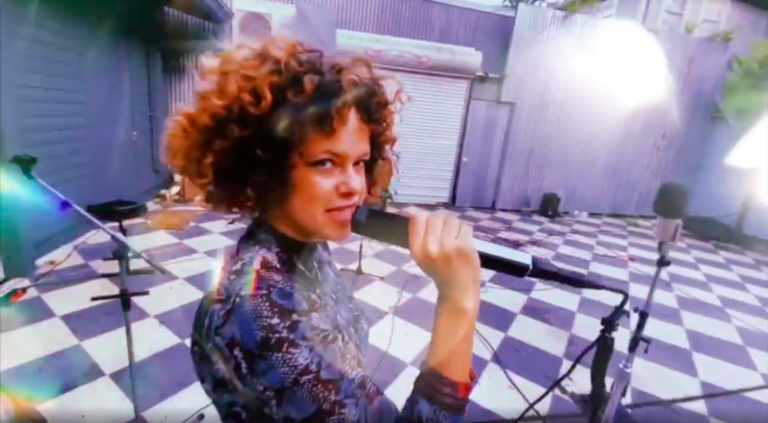
With a new album coming, Gang Starr are back with a new song, previewing the upcoming album. This well-produced song named Bad Name was a shock to many fans of Gang Starr, mostly due to it featuring vocals from the late MC Guru. Yet, unsurprisingly, DJ Premier has managed to pull off a solid and respectful production that brings back the memories of their past.
Tim Baker The Eighteenth Hole feat. Felicity Williams of Bernice & Nico Paulo
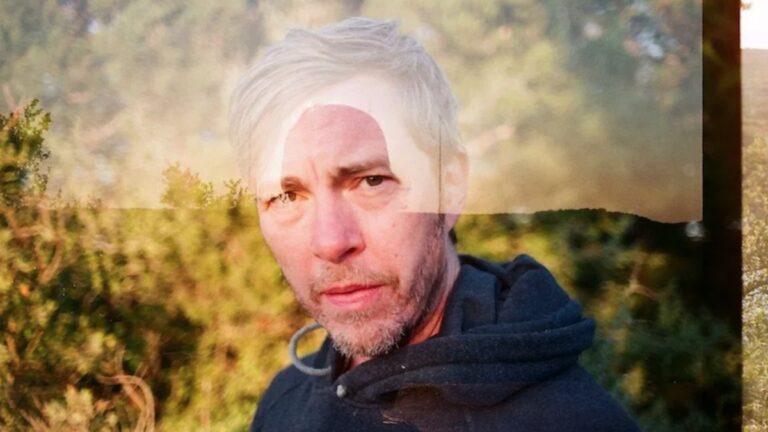
Coming from Tim Baker’s latest album All Hands is a smooth piece named The Eighteenth Hole. In this piece, Baker grabs you in withasuperb vocal performance. In this rendition of the song, Tim is joined by Felicity Williams of Bernice and Nico Paulo who bring in a layer of honey-like warmth. With this marvellous piece released, Tim Baker has emerged as an artist to watch.
ONUR What U Do
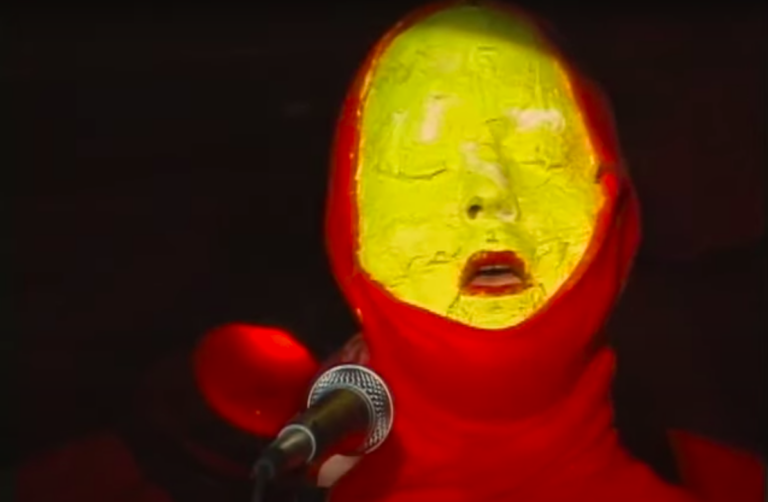
Entering with a wave of incredible energy, ear-pleasing vocals, and a catchy beat is ONUR with What U Do. In his latest single, ONUR delivers a grand production that will keep you listening for weeks to come. This radio-ready track is made for the playlists.
In this segment, we showcase our top picks of what to catch at the cinema this weekend, what to stream and our short film of the week.
Our pick of the new releases out on October 18th, 2019:
Cinema: Zombieland 2: Double Tap
Rating
Length
15
99 Min
Released in 2009 and directed by Ruben Fleischer (most recently known for helming the Tom Hardy antihero film, Venom), Zombieland is a post-apocalyptic zombie comedy that was a critical success and rapidly gained following across the world – and took an apocalyptic-sized $75.6 million at the box office. The film features Columbus (Jesse Eisenberg), a nerdy, shy student and survivor of the zombie epidemic, who is attempting to make his way across the zombie-infested world to reach his family in Ohio. Along the way, he encounters Tallahassee (Woody Harrelson), a gun-wielding tough guy who’s struggling to gain his favourite snack, Twinkies, and a pair of sisters (Emma Stone and Abigail Breslin), who are trying to get to the Pacific Playland amusement park, which they believe is a sanctuary that’s free from zombies.
The immense success of the film led the creative team, particularly writers Rhett Reese and Paul Wernick (now known for their work on Deadpool), to want to formulate a sequel as soon as possible to cultivate the original’s success. Even Harrelson, who (in his words) is not a “sequels guy”, stated that he “never wanted to do a sequel in the previous movies I’ve done until this one”. But various creative differences, scheduling issues and concerns regarding the necessity of a sequel, have meant that the sequel was placed on hold.
Fast forward a decade to 2019 and Fleischer along with the cast of the original have finally returned for a sequel. The quartet are now experts at regularly dispensing of zombies but they are now faced with the grave problem that the zombies are ever-evolving – they are becoming more intelligent- and subsequently more of a threat. As well as dealing with the newly evolved zombies, the group must come to terms with the issues within their own dysfunctional family in order to survive in this apocalyptic world.
Though this film is highly unlikely to be in contention during award season (nor is it trying to be), Zombieland 2 is being widely praised for its cast, the humorous script and its element of pure fun. And its currently holding an approval rating of 76% on rotten tomatoes – an admirable score for a sequel. So if you’re looking for zombie-infested fun or simply a film to get you excited for the Halloween season then this film is perfect.
Stream: Rhythm + Flow (Netflix)
Rating
Length
Mature
1 Season
Talent shows have become omnipresent in our lives – they have launched some ordinary people into the stratosphere and others have had their dreams crushed by the format. But, their abundancy has led to stagnation and a diminishment in their power or influence – The Voice UK has struggled to propel an artist beyond the show itself and The X Factor has recently turned to a new celebrity format to salvage some form of popularity. Netflix’s new reality series Rhythm + Flow appears to have surfaced at an optimum time. The concept is simple: three famous judges are searching for their next hip-hop superstar, through auditions, battle rounds and tasks, and the ultimate winner will receive $250,000 and a slot at a Spotify gig.
The concept is undoubtedly formulaic. But, where the series really comes into its own, is through its three main judges: Cardi B, T.I. and Chance the Rapper. Their criticism and judgement feels fresher and less outdated than other comparable talent competitions. They respect artists and don’t tend to fall into the “mocking” category that plagues other shows – they provide constructive criticism and never take pleasure in the contestant’s incompetence. It’s honest, entertaining, provides a much-needed platform for hip-hop artists and is sure to either rescue the format or annihilate any other competitors all together.
Short of the Week: Sometimes, I think about dying by Stefanie Abel Horowitz
This short film tells the story of Fran (Katy Wright-Mead). She has passive suicidal thoughts. But, one day she smiles at a guy (Jim Sarbh) in the office – he takes her to the cinema, for a meal and on a short holiday. But, as this guy attempts to get closer to her, Fran struggles to come to terms with the fact that she must learn how to live. This short film is an honest portrait of the dramas and struggles of having suicidal thoughts and also contains elements of dark humour. The premise is simplistic, but the issues dealt with are complex and it’s a true testament to Horowitz’s skill that she manages handle successfully them with care.
Speaking on the short film, Horowitz stated that “In 2013, in a dark Theater in New York’s lower east side I directed a play called killers, written by Kevin Armento and starring Katy Wright-Mead. The play told of a death-obsessed woman, Fran, who didn’t know much about living. It was a little scary, but also funny and kind of sweet. It stuck with me and 5 years later I’ve turned it into a short film. I hope you like, and want for Fran as much as I do!”
In this segment, we showcase the most notable albums out each week. Here are the albums out on October 18th, 2019:
Jimmy Eat World, Surviving: Following 2016’s Integrity Blues, Jimmy Eat World have come out with their 10th studio album Surviving via RCA Records. The record sees the pop punk outfit reuniting with Integrity Blues producer Justin Meldal-Johnsen (Beck, Nine Inch Nails, M83) and is being promoted as one of their most ambitious and personal efforts to date. “Surviving explores some of the different kinds of weights my ego tells me I have to carry, what I see people around me choosing to carry and what I have found to be the truth when I choose to let go,” frontman Jim Adkins explains.
Foals,Everything Not Saved Will Be Lost (Part 2): Foals return with their sixth studio album and the second half of their two-part studio project, Everything Not Saved Will Be Lost. The first part was released back in March to generally favourable reviews. Notably, the album cover was taken by famed National Geographic photographer, Maggie Steber. The indie group have also announced a documentary titled Rip Up the Road to promote project, which will be released on November 15th via Amazon Prime.
Battles,Juice B Crypts: Four years after the release of La Di Da, experimental rock outfit Battles are back, this time as a duo consisting of multi-instrumentalist Ian Williams and drummer John Stanier. Juice B Crypts features a variety of guest artists, including Shabazz Palaces, Tune-Yards, Xenia Rubinos, Jon Anderson of Yes fame, and Taiwanese psych band 落差草原 WWW. Ian Williams said in a statement: ”[Juice B Crypts is] about chord progressions, resolutions, returning home. Take that and throw it into a blender of modern electronic tools like glitching devices, or use melodic lines and take them and regurgitate them and pulverize the traditional stuff but at the same time try and retain harmonic relationships while completely smashing them up.”
clipping., There Existed An Addiction to Blood: This is the third studio album from experimental hip-hop group clipping., out now via Sub Pop. The follow-up to 2016’s Splendor and Misery is described in a press statement as “experimental hip-hop built to bang in a post-apocalyptic club bursting with radiation. It’s horror-core that soaks up past blood and replants it into a different organism, undead but dangerously alive. It is a new sun, blindingly bright and built to burn your retinas.”
Vagabon,Vagabon: Indie singer-songwriter Vagabon aka Lætitia Tamko has released her sophomore self-titled record, previously known as All the Women in Me. Vagabon changed the name of the record when she learned the poet it references, Nayyirah Waheed, preferred not to be quoted. The album follows 2016’s critically acclaimed debut Infinite Worlds, and is reportedly a departure from it, featuring less indie-rock guitars and more cinematic synths as the artist searches for a new musical identity.
Other albums out today: Anna Wise, As If It Were Forever; James Arthur, You; Nils Frahm, All Encores; Playboy Carti, Whole Lotta Red; Ringo Starr, What’s My Name; Third Eye Blind, Screamer.
Timo Kuilder, an artist and illustrator based out of Amsterdam, Netherlands, released a splendid series named Drunk Glasses. In this mini-series, Kuilder explores drinks with minimalistic features that are pleasing to the eye. Kuilder’s use of rough textures with retro-like colours brings out a homely feel to the series.
Issey Miyake’s SS20 collection debuted at the Paris Fashion Week. This was also the first debut collection of Satoshi Kondo. He had worked in the fashion house for over a decade, capturing the essence of the brand.
A Sense of Joy was the name for the collection, and rightly so as this is what was brought to the audience. The show presented an unconventional way to do a catwalk. The catwalk had high energy and lively music. There have been many other fashion houses who have had unconventional catwalks. But this one was focused on a performative act, which helped it anchor its audience with a memorable experience.
Throughout the show, many loose-fitting garments were displayed. As the models danced and spun around, different silhouette looks were created from initial garments. In terms of colour and print, the whole collection utilised playful and vibrant elements.
Massimo Colonna, an Italian photographer and digital artist, revealed a superb mini series named Migration. In this mini-series, Colonna combines the migration of birds with minimalistic architecture to bring out the focus on the moving subjects. These simple, but eye-pleasing artworks deliver a poster-like appearance that elevate their surroundings by utilising shapes.
Writing about the series, Colonna described as “Project of three images depicting scenes of distant lands, exotic, sometimes unattainable. Within these landscapes a flock of birds moves creating unusual shapes, geometric, an evolution in the way of migration. In a historical moment in which even the sky becomes advertising space, nature changes in angles and corners”
Welsh singer-songwriter Chloé Davis aka twst may have only released two singles so far, but she already displays all the quintessential qualities of a modern pop star in the same vein as Billie Eilish or Charli XCX, or some unique amalgamation of the two. twst’s sound is cutting-edge and incredibly infectious – it’s impossible to listen to the single ‘Girl On Your TV’ and not feel an urge to replay it over again and again. It has the intimate but surreal quality of someone trying to make a hit alone in their bedroom – except it actually feels like a hit. Indeed, twst recorded and self-produced the tracks within the four walls of her bedroom, although it’s no surprise that they were mixed by none other than innovative pop producer Rob Kinelski, known for working with Billie Eilish among others, whose production flourishes here are palpable but not overbearing. Both ‘Girl On Your TV’ and ‘Always’ brilliantly depict our psychological relationship to the digital world and how it affects our day-to-day interactions, but it’s done through the lens of a young person who understands the nuances of that experience rather than someone commenting from the outside. “HD shows in me perfection/ But it fucks with your perception,” she intones on ‘Girl on Your TV’, while on ‘Always’ she has a conversation with a Siri-like personal assistant. It’s hyperreal, post-ironic, metamodern – whatever you want to call it, it’s truly something special. And we can’t wait to hear more.
We caught up with twst for this edition of Artist Spotlight, where we showcase up-and-coming artists and give them a chance to talk a bit about their music.
How did the name twst come to you?
mothers maiden name.
I read that you left home at 14 and relocated to a recording studio in the South West Valleys. What inspired you to make that decision?
The decision was made from a place of wanting to find somewhere I felt I belonged. I was very misunderstood by my family and I don’t think they knew how to deal with me. For all the obvious reasons why this would be hard at such a young, difficult age, I was desperate to be in a place where I fitted in and I felt like I could do that most comfortably in isolation where I could begin to create my own world.
Why does self-producing appeal to you as a way of creating music?
When I have a new idea, most of the time I have a clear vision before I’ve even started writing or producing the song. So self-producing feels very natural and efficient because it’s just me and my computer and once I’ve found the tone for the production, it usually happens very quickly from there.
What were some of the challenges you faced as you started teaching yourself production?
The only real challenge, and one that scares me, is not knowing how to do something technically, when I’m on an inspired mad flow. So being able to overcome that as effectively as possible without it harming the creative wave is something very practical to learn.
Your approach to songwriting can be linked to the meaning behind the name of your label, ‘hikikomori baby’. Can you explain what that concept means to you?
There is no equivalent English word for “hikikomori”. The Japanese word describes both the condition of acute isolation and those suffering from it, so the attraction seemed obvious to me but I was also drawn to it phonetically. I love the sound of it. I was inspired by the Kawaii aesthetic at the time as seen in goytv video. Ultimately, I named the label “hikikomori baby” as a reference to the time where I lived quite reclusively after leaving school and home. I started to build my own way of seeing the world, without too many rules or much guidance. I found some kind of personal hyper reality. The concepts that I’ve been writing about are heavily based upon the feelings of isolation, loneliness and my connection to technology during this period.
The “baby” part of “hikikomori baby” is post-ironic. Which in itself is ironic (post).
Both ‘Girl on Your TV’ and ‘Always’ deal with how digital spaces affect relationships – how did that theme catch your attention?
When I wrote girl on your tv, I was deeply feeling the over sexualisation of women in the media. I was really, really angry at the time. My head was kinda warped during this period too. I was seeing this sexualisation in a way in which I’d never seen before. So in goytv, my character is the sexualised girl and I’m asking the person who views me this way, to view me differently. This in turn, inspired the duet with the Siri like voice in “Always” as I am fascinated by the connection between technology and emotions and how far these are able to intertwine.
Can you talk about the process of filming the video for ‘Girl on Your TV’?
This process was like self-documentation for me. I really wanted to capture the idea of building myself as a character through the lens of the internet. Capturing the awkwardness, vanity, vulnerability and also irony.
Following his critically acclaimed debut feature The Witch (2015), Robert Eggers’ The Lighthouseis a haunting masterpiece. The film attracts you by its chillingly mesmerising sound design and stunning visuals, but also by the career defining performances from Robert Pattinson and Willem Dafoe. Together, they push the story’s intensity and horror to its absolute limit.
Set in the 1890s, The Lighthouse follows Ephraim Winslow (Robert Pattinson), a newly recruited apprentice to Thomas Wake (Willem Dafoe), a mad lighthouse veteran. The pair is tasked with four weeks’ work on a remote New England island. As the film progresses, Winslow slowly submits to the hypnotic madness of the island as well as Wake’s strange behaviour…
The first thing about The Lighthouse that really stands out is how extremely atmospheric it is. By presenting the story in black and white and in a restrained 1.19:1 aspect ratio, Eggers displays the grittiness of the environment that our characters inhabit; as well as creating a claustrophobic feeling that traps the audience on the island. The sound design is impressive and helps enhance the nightmare-fuelled and haunting experience. From the lighthouse’s blasting siren to the seagull’s eerie squawks, the film drills those sounds into your mind and they will stick with you for weeks.
Willem Dafoe as Thomas Wake.
Saying that Robert Pattinson and Willem Dafoe are both phenomenal in the film is truly an understatement. From Pattinson’s portrayal of Winslow’s growing annoyance toward the bizarre events, to the point at which he starts to act out of his personality, and finally to his descent into madness, his performance is impressive. Willem Dafoe portrays his strange, intense and slightly insane lighthouse keeper to its perfection. The many tremendous monologues from Dafoe are expressed with such depth and emphasis, really putting us into Winslow’s perspective and terrifying us at the thought of what Thomas could do to him. The intensity they bring to their characters is brilliant.
Just like Eggers’ previous film The Witch, The Lighthouse slowly intensifies its creepiness throughout the film. One of the ways it does this is by having characters suddenly act dramatically around each other. On multiple occasions in the film, the characters are engaged in normal conversation when it turns to either an authoritative warning from Wake to a full confrontation between them. Surprisingly, the next thing we’ll see is the characters having a cheery dance or them getting drunk with each other. The unpredictability of the film really makes the audience so uncomfortable to a point where you don’t know whether to laugh or be completely shocked and terrified.
Robert Pattinson as Ephraim Winslow.
Another way that Eggers manages to create the uncomfortable tension in the film is by cutting to Winslow’s surreal dream sequences many times throughout the film. Eggers keeps the audience guessing as to what is real or what are just Winslow’s delusions. By doing this, the film leads the audience into this disturbingly hypnotic trip without losing any interest.
The Lighthouse delivers a truly unique horror experience. The captivating performances from Pattinson and Dafoe never fail to fascinate and amaze. With such strong entries in the pantheon of horror in recent years, this film firmly secures itself as one of the best in recent memory. Robert Eggers demonstrates himself as an exciting horror director to pay attention to for years to come.
Anyone anticipating a tell-all biopic crammed with revealing secrets, lewd scandals and profound behind-the-scenes insights will be left bitterly disappointed by A Beautiful Day in the Neighborhood. Much like Morgan Neville’s delightful 2018 documentary Won’t You Be My Neighbor?, this film unearths and explores very little about Fred “Mister” Rogers’ raunchy private life. This is simply because there isn’t one. As last year’s documentary identified, the beloved American children’s entertainer is as genuine, kind and good-hearted as his on-screen persona attests. In fact, there is no distinction nor façade –an idea briefly explored in the film when Rogers (Tom Hanks) appears utterly perplexed when a journalist (Matthew Rhys) questions his integrity and where the discrepancy between his public character and the “actual” Fred Rogers lies. A film about an impeccable figure who personifies goodness and carries no scandalous baggage nor skeletons in the closet should, in theory, make for a nauseating biopic that’s overwhelmed with cheap sentiment.
Thankfully, this assumption couldn’t be more wrong–because, technically, this isn’t really a biopic at all. Contrary to its promotional material, director Marielle Heller and screenwriters Micah Fitzerman-Blue and Noah Harpster position Rogers (and consequently also Hanks) as the supporting role – an ethereal figure who relates the parable and provides guidance rather than the true protagonist. This premise is succinctly established from the outset, when Hanks, as Rogers did repeatedly, enters through the treasured Mister Rogers television front door, changes his jacket into his signature red cardigan, and sings a pitch-perfect rendition of the theme song, Won’t You by My Neighbour? As he addresses the audience, Rogers, through the means of a picture board, introduces us to the actual protagonist of the story, the cynical Lloyd Vogel (Rhys). Loosely based on the American journalist Tom Junod, who was assigned to create a profile of Rogers for Esquire in the 1990s, Vogel considers the task a step-down from his typically investigative features: “The hokey kid show guy?” he responds incredulously.
But, little does he know that he needs Rogers more than he ever could’ve appreciated. Vogel is a new father, whose relationship with his wife (Susan Kelechi Watson) and the new child is becoming increasingly hindered by his committed work ethic and his resentment for his father (Chris Cooper). Exemplified, when his father arrives at Lloyd’s sister’s wedding and childhood issues (including his father’s decision to abandon Lloyd’s mother on her deathbed) re-emerge through a heated argument that results in blows.
On the surface, these familial issues could easily collapse into overbearing melodrama and the premise of a lacklustre, cynical journalist being saved by a magical, saint-like figure could certainly result in cliché. But, Heller’s incredible mastery means the film never feels formulaic. Having previously directed the wonderful comedy-drama The Diary of a Teenage Girl and last year’s melancholic true-crime black comedy Can You Ever Forgive Me, this film fortifies why Heller is a relentless force to be a reckoned with.
Using an episode of the television series as the framework for the narrative is a particularly nuanced approach that could’ve easily fallen through. But just as Heller subtly manages to portray 90s America, she also ensures the children’s television-show aesthetic never feels particularly twee or domineering. Montages and location shots are frequently depicted through miniature toys – toy planes fly through the sky and tiny model taxis cross the colourful sugar-coated cityscape.
Just as the aesthetic seeks to actively replicate the television series, the film attempts to address the audience in a similar manner to the entertainer’s own tender and personal approach. After a hallucinatory scene where Lloyd imagines he’s an Old Rabbit puppet and part of Mister Rogers’ Neighbourhood, Lloyd and Rogers have lunch together in a Chinese restaurant. Rogers calmly invites Lloyd to think about the people in his life who have “loved you into existence”. Heller positions Rogers in the centre of the frame, looking directly into the lens and it becomes apparent we, the audience, are being addressed. Then, silence. The ability to eradicate passivity without delving into cliché or banality involves skill and Heller, particularly in this scene, appears to be its master.
The casting of Tom Hanks felt almost too fitting – America’s male sweetheart playing another beloved national treasure – in a similar way to how he was cast as Walt Disney in John Lee Hancock’s Saving Mr. Banks. But in this film, Hanks doesn’t delve into imitation nor allow his impossibly good-guy persona to carry his performance, as much as he did in Hancock’s period drama film. As well as achieving Rogers’ half-smile, his manner of speaking, his particular stance, Hanks provides a nuanced and subtle performance that explores the philosophy and psychology behind the man. He manages to make the public persona of Mister Rogers and the actual Fred Rogers intertwine and convince audiences that they are indeed one and the same – a complex task that he achieves wonderfully. Rhys’ performance as the cynic is equally marvellous and balances Hanks’ perfectly without feeling overly contrived or establishing the pair as completely binary.
A Beautiful Day in the Neighborhood could’ve easily fallen into the trap of being a saccharine, cliché-filled biopic filled with cheap sentiment and a conventional portrayal of a national “hero” (even if he refused to admit it). But Marielle Heller’s uniquely, creative voice combined with an award-worthy performance by Hanks results in a wholesome film that defies tradition and provides an idiosyncratic and pure-hearted tribute to Fred Rogers. It reminds us to love thy neighbour and it’s beautiful.
Boy Scouts is the moniker of Oakland-based songwriter and multi-instrumentalist Taylor Vick, who makes warm, intimate indie-folk compositions akin to the likes of Frankie Cosmos and Snail Mail. Back in August, she released her debut full-length album, Free Company – her first for ANTI- records, home to artists like Girlpool, Calexico, and Wilco – and it instantly feels like stumbling upon a good friend you’ve never met before. Although it’s a step away from the bedroom recordings Vick used to upload on Bandcamp, her approach to songwriting has palpably not changed one bit. The record’s sweet, empathetic lyrics, delivered with Vick’s vulnerable, piercing vocals, deal with the aftermath of a break-up in all its emotional complexity and frustrating ambiguity. “Discovering what it takes/ To keep the memories at bay/ Here I stay a thousand days/ I don’t try to leave, I don’t try to stay,” she sings ‘Momentary Love’. And on ‘Hate Ya 2’, she laments, “I go to the park where once we had a sit/ The light has become dark, maybe it was never lit.”
We caught up with Taylor Vick for this edition of our Artist Spotlight segment, where we showcase up-and-coming artists and give them a chance to talk a bit about their music.
How did you start writing music and what are some of your biggest influences?
I started guitar lessons when I was 9 or 10 years old and after a few years I tried writing my own songs. Carole King, The Carpenters, Rose Droll, and Travis Vick are some of my biggest influences.
You seem to experience emotions fully and can express them as such in your music – is this a difficult process, as a person and as a songwriter?
I can’t really compare it to anything because it’s the only experience I know… I think a lot of people feel stuff deeper than they let on. I feel fortunate to be able to turn to songwriting to help process things I’m experiencing. If anything I think being pretty emotional and being a songwriter are complimentary.
Why did you name the album Free Company?
I started to think of that batch of songs as the company I kept during shitty times — when I was writing them and kind of being inside of them for that extended period of time making the record.
What’s your favorite track from the album, and why?
Get Well Soon, maybe. I love the bass line Stephen made and played on this track, and I love that my nylon guitar is heavily featured in the beginning… that’s the guitar I wrote all the songs from this album on and I like that it’s the first thing you hear when you play the record.
I love the line “think of the desert sprawl – empty but still forceful” from ‘Hate Ya 2’. Do you feel like there’s a newfound confidence and self-respect in how you view yourself, while still allowing yourself to be vulnerable?
Potentially, yeah. I don’t know if it’s confidence I gained but more like a better understanding of the situation as time went on.
Did you approach the album differently from your previous releases?
Yes in that all of my previous releases were either just uploaded to bandcamp or released on a friend’s small tape label. But as far as songwriting goes, that was approached the same way I’ve always done it.
You’re about to tour with Jay Som, is that right? How do you feel about that?
Stoked — they’re such amazing musicians and also just the best people. I’m super grateful to tag along.
I noticed that your album opens with ‘Get Well Soon’ while Jay Som’s new album ends with ‘Get Well’. But beyond the first two lines, the lyrics grow to be quite different–in what ways do you think they’re different or similar?
That’s a funny coincidence, I like that. I mean they’re similar in that they’re both songs written from a place of empathy, I think. Hoping the best for someone who is going through something tough.
Where do you see yourself going from here?
I don’t spend too much time thinking about that to be honest. I hope to continue writing music, making albums, and playing music with my friends for as long as I can.
Boy Scouts will perform in London at The Great Escape’s First Fifty on November 14th.