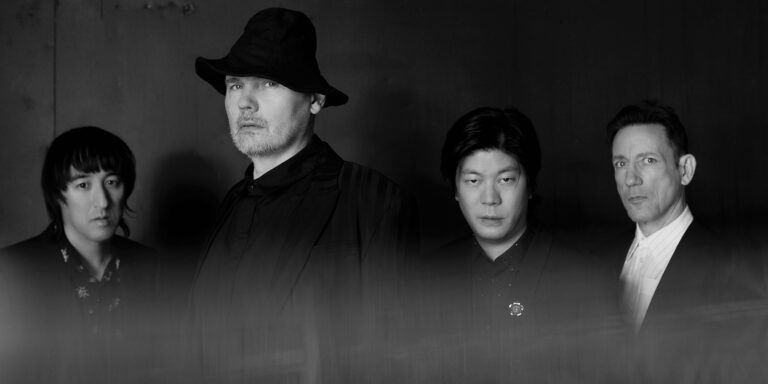
The Smashing Pumpkins have shared two new songs, ‘Confessions of a Dopamine Addict’ and ‘Wrath’. Both tracks are taken from Billy Corgan and co.’s upcoming album CYR, set for release on November 27 via Sumerian. Check them out below.
The group previously shared the songs ‘The Colour of Love’ and the title track. CYR marks the follow-up to 2018’s SHINY AND OH SO BRIGHT, VOL. 1 / LP: NO PAST. NO FUTURE. NO SUN. In addition to the new album, The Smashing Pumpkins have also created an accompanying animated series called In Ashes, the first episode of which debuts today (September 25) at noon ET.
Bruce Springsteen has released a new song called ‘Ghosts’, taken from his upcoming album Letter to You. It arrives with an accompanying Thom Zimny-directed music video which combines footage of the E Street Band tracking ‘Letter To You’ in-studio along with archival snapshots of Springsteen’s earliest years as a musician. Check it out below.
“’Ghosts’ is about the beauty and joy of being in a band and the pain of losing one another to illness and time,” Springsteen said in a press release. “’Ghosts’ tries to speak to the spirit of the music itself, something none of us owns but can only discover and share together. In the E Street Band it resides in our collective soul, powered by the heart.”
Letter to You is out October 23 via Columbia. ‘Ghosts’ serves as the second preview from the album, following the title track.
Luminous Kid, the indie/ bedroom pop project of singer-songwriter and photographer Olof Grind, has released his second single, ‘A Restless Heart Would Rather Float in Space’. Written under the northern lights in Norway, it arrives with an accompanying underwater video directed and edited by Grind himself. Check it out below.
“I wrote the song while I was living in a cabin at the end of a gravel road facing a fjord. It was just me and my painter friend,” Grind explains in a statement. “We left our phones back home to be able to fully merge with nature without any distractions. We wanted to access something close to complete isolation. Since we were staying above the polar circle, the sun didn’t rise above the horizon once for our entire stay, but the nights were all bright green and red from aurora borealis.”
The single follows the previously released ‘The Gutter of Our Ecstasy’. Read our interview with Olof Grind, where he discusses his debut single as well as shooting the cover artwork for Phoebe Bridgers’Punisher.
Pixies have returned with a new song called ‘Hear Me Out’. Taken from the sessions for 2019’s Beneath the Eyrie, the track will appear on a 12″ vinyl single along with a cover of T-Rex’s ‘Mambo Sun’, out October 16 via Pixies Recording/BMG. Check it out below, alongside a video directed by Maximilla Lukacs and filmed in Taos, New Mexico.
The video stars Paz Lenchantin, who currently holds down Kim Deal’s old bass/vocals position in the group, as well as Henry Hopper. “Hear Me Out” is about things not turning out the way we hoped, but knowing that it’s going to be ok regardless,” Lenchantin said in a statement. “Black [Francis] started the melody phrases on an old organ. I loved it right away, so he asked me to take a pass at the lyrics. The song has an evocative melody that inspired the lyrics to come out straight away.”
Early this year, Pixies put out an album of demos from Beneath the Eyrie.
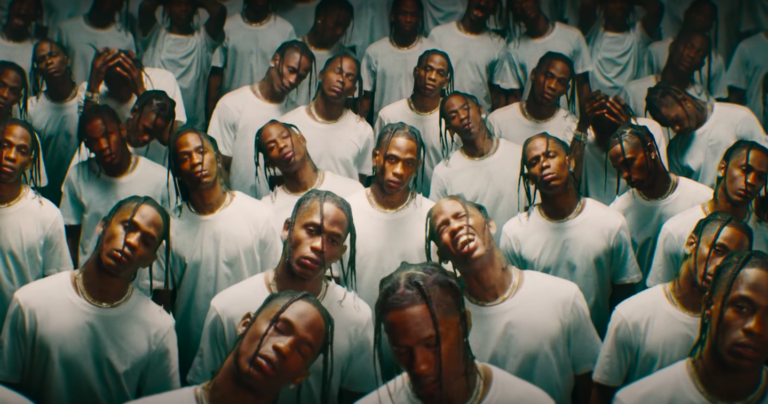
Travis Scott has shared a new song featuring Young Thug and M.I.A. called ‘Franchise’, out now via Cactus Jack/Epic. Produced by Chase B, the track arrives with an accompanying music video directed by Scott and White Trash Tyler and filmed on location at Michael Jordan’s Chicago area mansion. Check it out below.
Speaking about linking up with M.I.A. for the song, Scott said in an interview with Zane Zowe: “She reached out to me for something for her album and we tracked it in London. She’s just one of my favorite artists as humans.”
He added: “When I finished the song, I couldn’t think of nobody else that I could probably just maybe like, body this shit. You know what I’m saying? Body this shit like as hard as like anyone else, any other rapper, any other artists. And just that presence, man. We ain’t felt this presence in a long time. I’m just trying to get this gig shit like right man. We got to get better, right? You know what I’m saying? Like all of this, the energy man, music, beats, raps, God! Everything, she’s the illest of all time.”
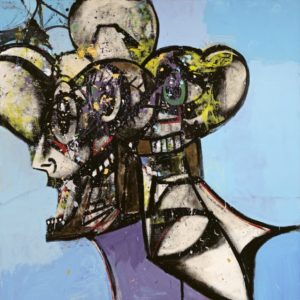
The cover artwork for ‘Franchise’, which you can check out below, was designed by George Condo, who created a series of paintings for Kanye West’s My Beautiful Dark Twisted Fantasy.
Michael Kiwanuka has won the 2020 Mercury Prize for his self-titled third album. One of our best albums of 2019, KIWANUKA won over albums by Charli XCX, Laura Marling, Dua Lipa, Porridge Radio, and others.
“I’m over the moon, so so excited,” he said on receiving the prize. “This [prize] is for art, for music, for albums – it’s the only thing I’ve ever wanted to do, so to win a Mercury is a dream come true… It’s blown my mind.”
Asked why he decided to give the record his name, he said he had experienced “imposter syndrome … it was taking things away from the experience of doing my dream job. So I made a decision when I was making this album that I wanted to be myself, enjoy it, and not hold back, and show myself as clear as I can be.”
The winner was decided by a 12-strong panel, which included musicians Anna Calvi, Jorja Smith, Jamie Cullum and Supergrass’ Gaz Coombes; broadcasters Annie Mac, Danielle Perry and Gemma Cairney; journalists Phil Alexander, Tshepo Mokoena and Will Hodgkinson; and industry figures Jeff Smith and Mike Walsh.
Kiwanuka had previously been nominated for his albums Home Again and Love and Hate, which were released in 2012 and 2016 respectively.
In this segment, we showcase the most notable albums out each week. Here are the albums out on September 25th, 2020:
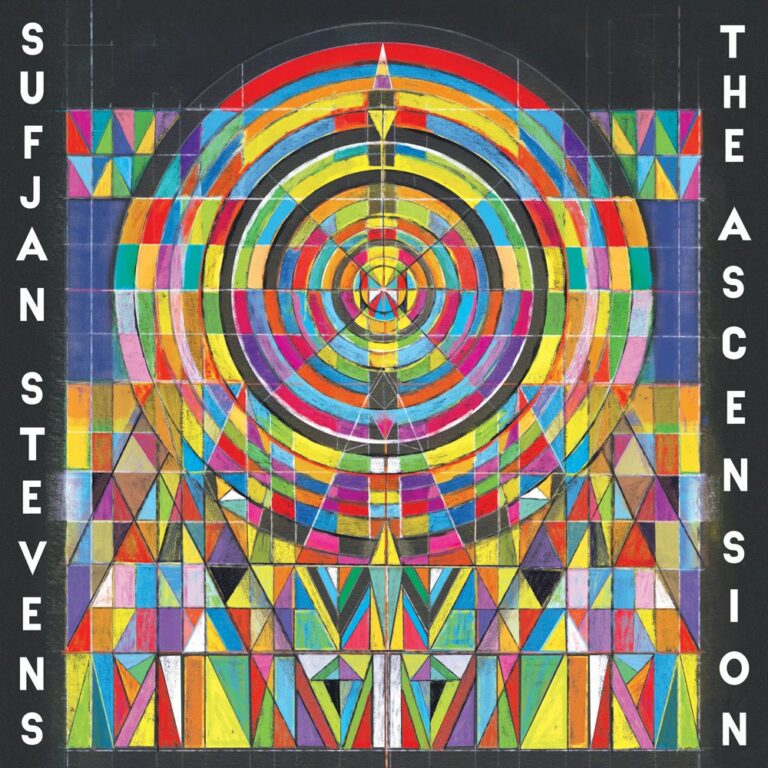
Sufjan Stevens, The Ascension
Sufjan Stevens has returned with his first full solo album in five years. The long-awaited follow-up to 2015’s critically acclaimed Carrie & Lowell, The Ascensioncontains 15 songs including the previously released ‘America’, ‘Video Game’, and ‘Sugar’ is accompanied by a 16-page booklet of original drawings by Stevens. Speaking to The Quietus, the singer-songwriter explained: “I had to do away with all my previous tropes. No stories, no characters, nothing representational, no metaphor and no self-mythology. I felt like the messages must be clear and coherent, almost editorial.”
IDLES, Ultra Mono
IDLES have come through with their third studio album, Ultra Mono, out now via Partisan. Following 2019’s Joy as an Act of Resistance, the UK post-punk outfit’s latest features guest spots from Kenny Beats, Warren Ellis, David Yow from the Jesus Lizard, and Jamie Cullum. In an interview withNME, frontman Joe Talbot explained: “With this album, instead of clamming up and becoming defensive, I’ve gone, ‘No, I need to be concise and clear in my message, which is: there is a class war and the working classes are being chewed up and spat out by the one per cent. There are food banks in this country. There is a complete disregard for human welfare.”
Deftones, Ohms
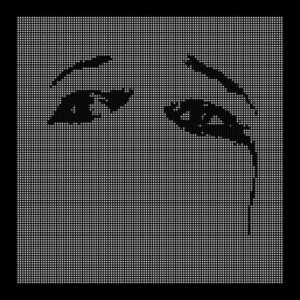
Deftones are back with their first new album in three years, Ohms, out now via Warner. The California rock band’s latest marks the follow-up to their 2016 LP Gore was made with producer/engineer Terry Date. Comparing the process of making the album to the band’s 2003 self-titled LP, Chino Morino told NME: “I felt like I had a little more perspective than I had on other records. The self-titled record was a really dark time. I was out of my mind on all kinds of substances. ‘Ohms’ isn’t anywhere near as dark and is quite optimistic, but there are some deeper themes. It’s just a little more introspective.”
Sylvan Esso,Free Love
Sylvan Esso have released their third studio album, Free Love, via Loma Vista. “It’s a record about being increasingly terrified of the world around you and looking inward to remember all the times when loving other people seemed so easy, so that you can find your way back to that place,” the duo, made up of Mountain Man’s Amelia Meath and Megafaun’s Nick Sanborn, said in a statement. The album follows 2017’s What Now and includes the previously released ‘What If’, ‘Rooftop Dancing’, ‘Ferries Wheel’, ‘Frequency’, and ‘Free’.
The Shins are back with their first new music of 2020 with ‘The Great Divide’. Co-written and produced by The Shins’ James Mercer, Jon Sortland and Yuuki Matthews, the track arrives with an accompanying music video directed by Paul Trillo. Check it out below.
In a statement, Mercer explained that the single is “an epic about longing and love in a broken world. I guess we wanted to try to provide a bit of warmth and sentiment in hard times.” He adds that the track is “a blend of futurism and nostalgia. We used everything from vintage synthesizers to iPhones, from a sixties Ludwig kit to an 808.”
Director Paul Trillo commented: “For me, “The Great Divide” is about coming to a turning point. The theme of the song speaks to this palpable rift we’re all feeling right now. So when Jon Sortland first reached out with a flurry of ideas, I got really excited at what this could be. We knew we wanted to craft something as grand as the song; something that was both wildly surreal yet also resonates on a human level. I wanted to place the current state of things, this “Great Divide” we’re going through, within the larger context of the universe. Like the song itself, It was both timely and timeless. That’s when I sort of stumbled on this idea of an infinite zoom out through time. The song also has this entrancing quality that keeps pulling you in further and further, so that continual motion made a lot of sense.”
The Shins have also released an Amazon Original “flipped” version of the track, which you can listen to below. Mercer explained: “When the Shins do a “flipped” version of a song, the goal is always to re-approach the production aesthetic and show a different side to the piece. The idea is that a song properly written can be framed in many different contexts and still remain engaging. Yuuki Matthews, Jon Sortland and I sat down and talked about how we could change things up. The original idea was to treat it like a piano ballad but that soon gave way to Yuuki‘s moody post new wave treatment. I immediately loved it and so the direction was established. When we flip a song correctly you should have a hard time picking which version you like best!”
Last year, The Shins released two tracks dedicated to Richard Swift, ‘Waimanalo’ and ‘Trapped By the Sea’. Their last album was 2018’s The Worms Heart.
Nana Adjoa, an exciting Amsterdam-born singer-songwriter, has published her new album Big Dreaming Ants — just today. The album comes after several single releases including ‘I Want To Change,’ ‘No Room,’ and ‘Throw Stones,’ all of which are on the album.
Talking about the first song of the album, ‘National Song,’ Adjoa stated: “Neo-nationalism is occurring all over the world… Our ‘nations’ and borders are no longer what they once were because of so many different and rapid changes in what used to be our small worlds. Growing pains of progress (I hope), which express themselves as a desire for conservative ideas rooted in a fear of change. Every occasion in which the old tradition of a national song is sung, it feels to me like a moment of doubt between the past and the future. It’s something I never used to think about twice and now makes me feel something different; there is something uneasy about it. The Dutch national song, ‘Het Wilhelmus’, is one of the oldest national anthems. Some countries don’t even have lyrics to their national anthem because there has already been a history of identity crises within the nation itself. Some countries don’t only have one, but two national songs, and some aren’t in the native tongue. What is this feeling of belonging to one nation worth nowadays, especially for people with mixed backgrounds like myself?”
Fenne Lily started writing BREACH following a period of self-imposed isolation way before there was any sign of a pandemic that would come hand in hand with an epidemic of loneliness. But like Phoebe Bridgers’ latest album, the Bristol-based singer-songwriter’s sophomore effort and Dead Oceans debut engages with the idea of loneliness as something that perennially pervades our lives, a reminder that it’s less a consequence of a crisis than simply an ineluctable part of being human. You can hardly call a record like that timely, but it certainly reverberates in a more profound way during these times – and its quietly defiant nature makes it feel like all the more cathartic.
The extent to which the COVID-19 pandemic will lead to a plethora of albums grappling with solitude remains to be seen, but BREACH stands out as one of the best records dealing with that subject to come out of 2020. More specifically, the album navigates the difference between being lonely and being alone, and in the process maps out the artist’s growth as she learns to be comfortable in her own presence. Part of that comes in the form of recognizing that emptiness as something shared: on the sprightly ‘Alapathy’, she sees “oblivion at capacity” and realizes that, “When it all breaks down, you’re a lot like me”; on the penultimate track, ‘Someone Else’s Trees’, she sings, “I’m not afraid to die, more so to be alive/ I know in this and more I’m not alone”. ‘Elliott’, a devastatingly gentle song that was originally inspired by someone who gave up a career in the music industry but ended up being about her dad’s childhood, finds the songwriter tracing those similarities down the family tree: “Elliott, remember to forget/ Everyone you ever wanted to be is dying the same death/ And you’ll learn/ And you’ll burn by different fire.”
Fenne Lily’s sound invites comparisons to the likes of fellow labelmate Phoebe Bridgers or Lucy Dacus, for whom she opened last year, but I find it has more in common with the intricate intimacy of Ada Lea’s excellent 2019 debut or the scruffier side of Feist’s Pleasure. While ‘Alapathy’ and the grungy ‘Solipsism’ stand out among the album’s highlights, the arrangements on the whole are delicate and plush, indicating a newfound sense of maturity and patience that might take repeated listens to truly sink in. BREACH might lack the abundance of immediate hooks or transcendent moments housed in those records, but Lily has clearly built something uniquely her own and worth continuing to mine for.
It wouldn’t work as well were it not for Lily’s wry sense of humour, which comes through most prominently in the songs dealing more directly with relationships. Rather than serving as vehicles for self-pity, songs like ‘I, Nietzsche’ and ‘I Used To Hate My Body But Now I Just Hate You’ frame the other person in a negative light by retrospectively pointing out their ridiculous behaviour: the first exposes how an intellectual obsession with nihilism underscored an inability to form meaningful connections (in a brilliant play on words, the hook sounds a lot like “And there’s nothing wrong with ‘I need you’”), while the latter is more of a sobering slow-burner in which she identifies her own faults without placing the blame on herself.
On that track and elsewhere on the album, Lily keeps returning to the idea of being on someone’s mind as something more sinister than is usually assumed: “You’re telling me I’m in your head like it’s a good thing,” she laments on ‘Birthday’. Having already established how deafening it can be to be stuck inside your head with your own thoughts, the sentiment makes complete sense. But BREACH offers a sense of peaceful resolve as Lily recognizes that she can live with those demons without allowing them to fully take over, just as she can reflect on past relationships without getting lost in a perpetual cycle of guilt and frustration. “It’s not hard to be alone anymore,” she repeats on ‘Berlin’, named after the city where Lily spent a month by herself after touring. Those fears haven’t ceased to exist – “Though I’m sleeping with my key in the door” is literally the line that comes after – so it’s not necessarily easy, either. But there is reassurance to be found in her warm voice and stark songwriting, the kind we could all use right now.






 Sufjan Stevens
 Deftones are back with their first new album in three years,
  Sylvan Esso