MUBI, a streaming service that champions great cinema, has announced their lineup of films for the month of April. The month of April will include Kurosawa’s Ran, Jarmusch’s Coffee and Cigarettes, and an exclusive premiere of The Whalebane Box by Andrew Kotting — to name a few.
April on MUBI Listings
01/04/20 – VISITOR Q / Takashi Miike
02/04/20 – NONA, IF THEY SOAK ME, I’LL BURN THEM / Camilla José Donoso / The New Auteurs
03/04/20 – THE WHALEBONE BOX / Andrew Kotting / MUBI exclusive
04/04/20 – COFFEE AND CIGARETTES / Jim Jarmusch
05/04/20 – SOUTHLAND TALES / Richard Kelly / Perfect Failures
06/04/20 – THE SERVANT / Joseph Losey / Joseph Losey Retrospective
07/04/20 – THAT MOST IMPORTANT THING: LOVE / Andrzej Zulawski
08/04/20 – SARABAND / Ingmar Bergman / The Inner Demons of Ingmar Bergman
09/04/20 – THE GRAND BIZARRE / Jodie Mack / Undiscovered
10/04/20 – BLUE VALENTINE / Derek Cianfrance
11/04/20 – L’ECLISSE / Michelangelo Antonioni
12/04/20 – MY BLUEBERRY NIGHTS / Wong Kar-wai
13/04/20 – ACCIDENT / Joseph Losey / Joseph Losey Retrospective
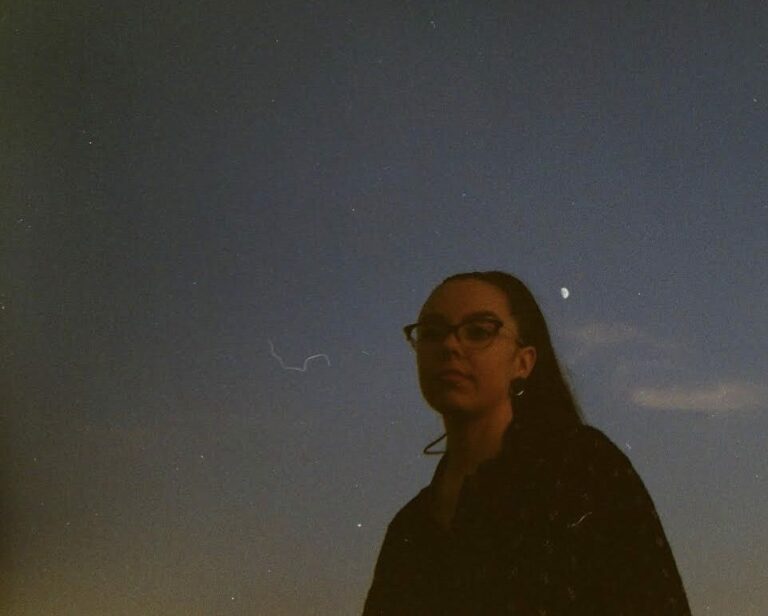
Samplelov is the moniker of California-based singer-songwriter Caitlyn Lopez, whose music wonderfully blends elements of lo-fi pop, R&B, and alternative rock. After releasing a series of singles on Bandcamp, as well as a dreamy, sun-drenched LP titled Love Tapes vol. 1, she has just come out with a new album, As You Are. Though similar in style, her latest feels distinctly more personal in nature, as indicated by the cover art, which features a picture of Caitlyn herself. Trading electric instruments for more acoustic arrangements, As You Are dwells on our relationship with ourselves as well as with others, offering the kind of intimate self-reflection one might subject themselves to in a time like this. Despite the simplicity of the compositions, which circle around a few acoustic chords and minimal embellishments, there’s a stark sense of hope and affirmation that shines through Caitlyn’s enchanting vocals and vulnerable lyrics, ultimately reminding us of the importance of self-love before all else – a message we all need to hear, and beautifully delivered too.
We caught up with Caitlyn Lopez for this edition of our Artist Spotlight series, where we showcase up-and-coming artists and give them a chance to talk a bit about their music.
How and when did you start playing music?
My music journey started when I was young. I always loved singing since I had an awareness of music, but playing instruments didn’t start until I was about 9 or 10. I learned to play clarinet in band class, and did that for about 6 years. I knew I wanted to learn to write and play original pieces, and I didn’t really get into playing more instruments and writing songs until about 4-5 years ago. I learned to record and use software in high school, and since then I’ve been committed to learning more and more about producing and recording my own compositions.
Where do you draw your influences from?
My musical influences are all over the place genre wise. To name a few, sounds by Nai Palm, Portishead, King Krule, Charlotte Dos Santos, Raveena, D’Angelo, Solange, Tennis, The Internet, and Jessica Pratt have inspired me within the last couple of years. R&B and Alternative Rock are typically the genres in rotation for me, but Hip Hop & Rap as well as Indie has been apart of my upbringing and continue to inspire me as an artist. Early 2000’s R&B artists like Ashanti and Tamia greatly inspired melodies in my most recent project as well.
What was the main inspiration behind ‘As You Are’?
As You Are was made with the intention of dedicating it to my loved ones and the world around me, as well as an ode to myself. I wanted it to act as a response to the chaos of our world’s condition and work as a reminder of the sweet things to savor in life despite the things we dwell on or worry about. It’s about caring for our inner child and experiencing the same adventure an wonder within our adult bodies. It’s about self-respect and showing appreciation for those around us, and the idea that celebrating the good things in life can coincide with being aware of the evils of the world. I think it’s healthy to celebrate the duality of sadness and happiness in this life. It’s a part of being human. Celebrating what makes us human is the goal.
Where is the opening audio on ‘Bella’s Affirmations/ Daian’ from, and why is it meaningful to you?
‘Bella’s Affirmations’ is actually a recording of my cousin and her daughter saying affirmations that they say for their nightly routine! My cousin, Daniella, shared it on her instagram story one evening and I asked for her permission to use it at a family gathering, and I feel so lucky to have been able to share it on the album! Hearing Bella say those affirming things at such a young age is powerful because young girls (especially young girls of color) being taught radical self love in not only their beauty but the contents of their character give them so much room to move in confidence. I really admired my cousin teaching Bella those things, and it kind of goes along with the idea of re-parenting our inner child to know those things about ourselves. I want to encourage listeners to take that mantra for themselves. We are strong, we are brave, we are kind, brave, smart, and beautiful.
What was the recording process of the album like?
Recording is actually where a lot of the song writing took place. I would always start with a chord progression on guitar and just an idea of what I wanted to write/sing about. Guitar and bass typically came first, then keys, then vocal layerings. I wanted to challenge myself for this project and push the boundaries of anything else I’ve done before.
What draws you to this kind of production process?
Many producers, myself included, benefit from starting with the basics and working the track up to more complex rhythms, melodies, and progressions. When I’m still developing a song, keeping it simple in the beginning stages gives me a lot of room to be more expressive in my lyrics and vocal stylings. Characteristics of a track heavily rely on what I want to say with my lyrics. With R&B and alt rock, you don’t always need complex production to make the song effective!
What are your plans for 2020?
2020 is the year for reaching new heights in skill and content. I want to continue to push the boundaries of what I’ve done previously as well as collaborate with many of the talented artists that surround me. I’m currently working on two collaborative EPs which I hope to complete this year. I’m also hoping to expand my artistic range, because music is not the only thing I do. I love the visual arts, and have completely fallen in love with ceramics. I hope to integrate all of these mediums to build on the message of duality and embracing the complexities of the human experience. In addition to art expansion, I want to prioritize chasing what I want. It’s easy to get complacent in the routine of life. I want to seize the time I have on earth more. I encourage everyone to do that too.
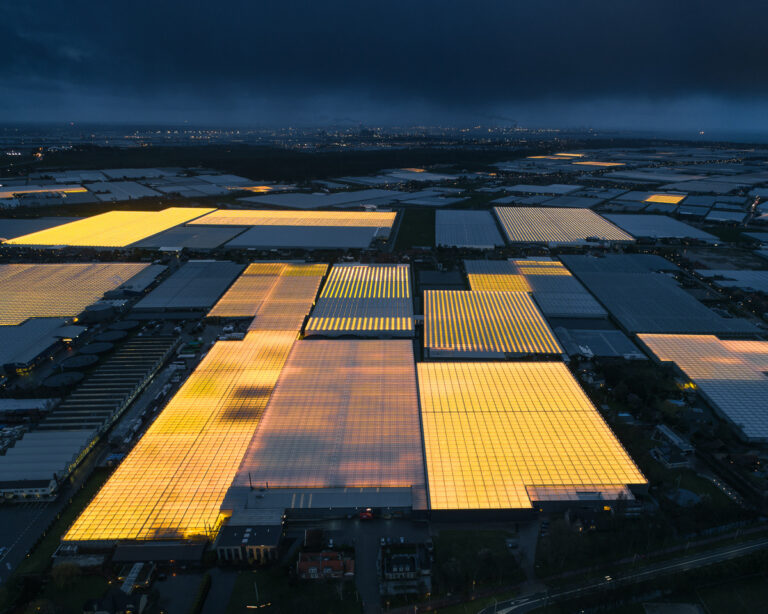
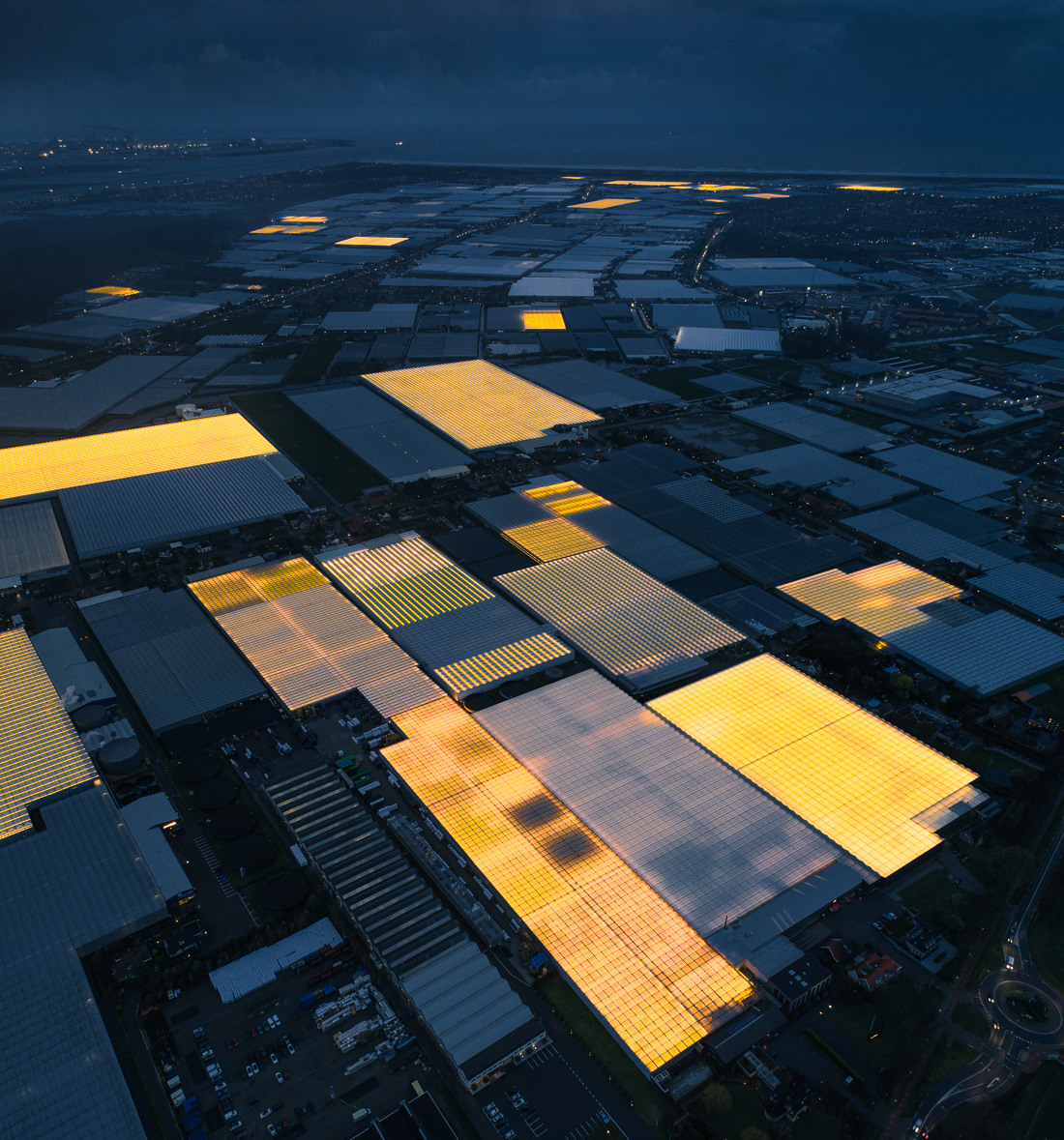
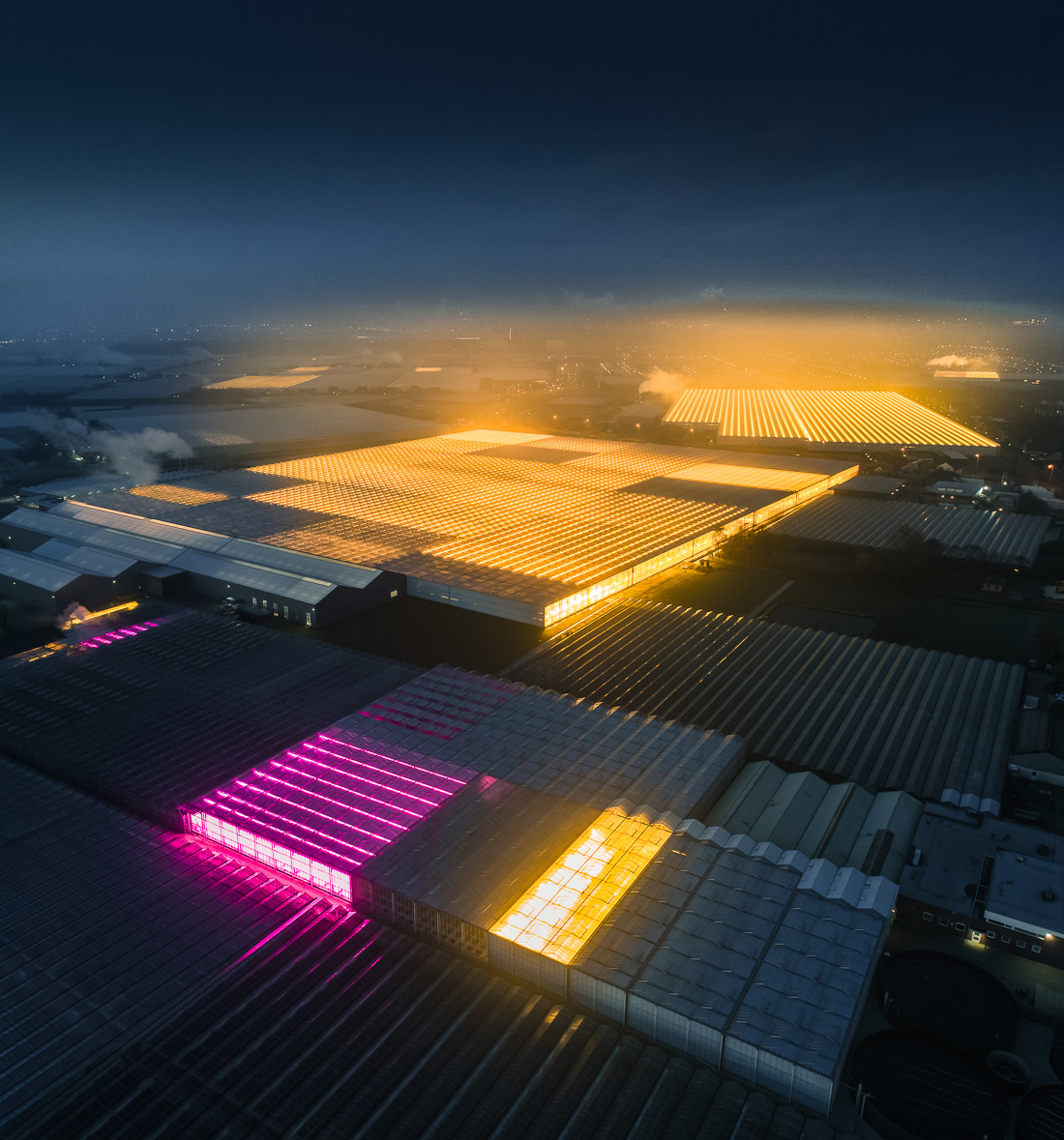
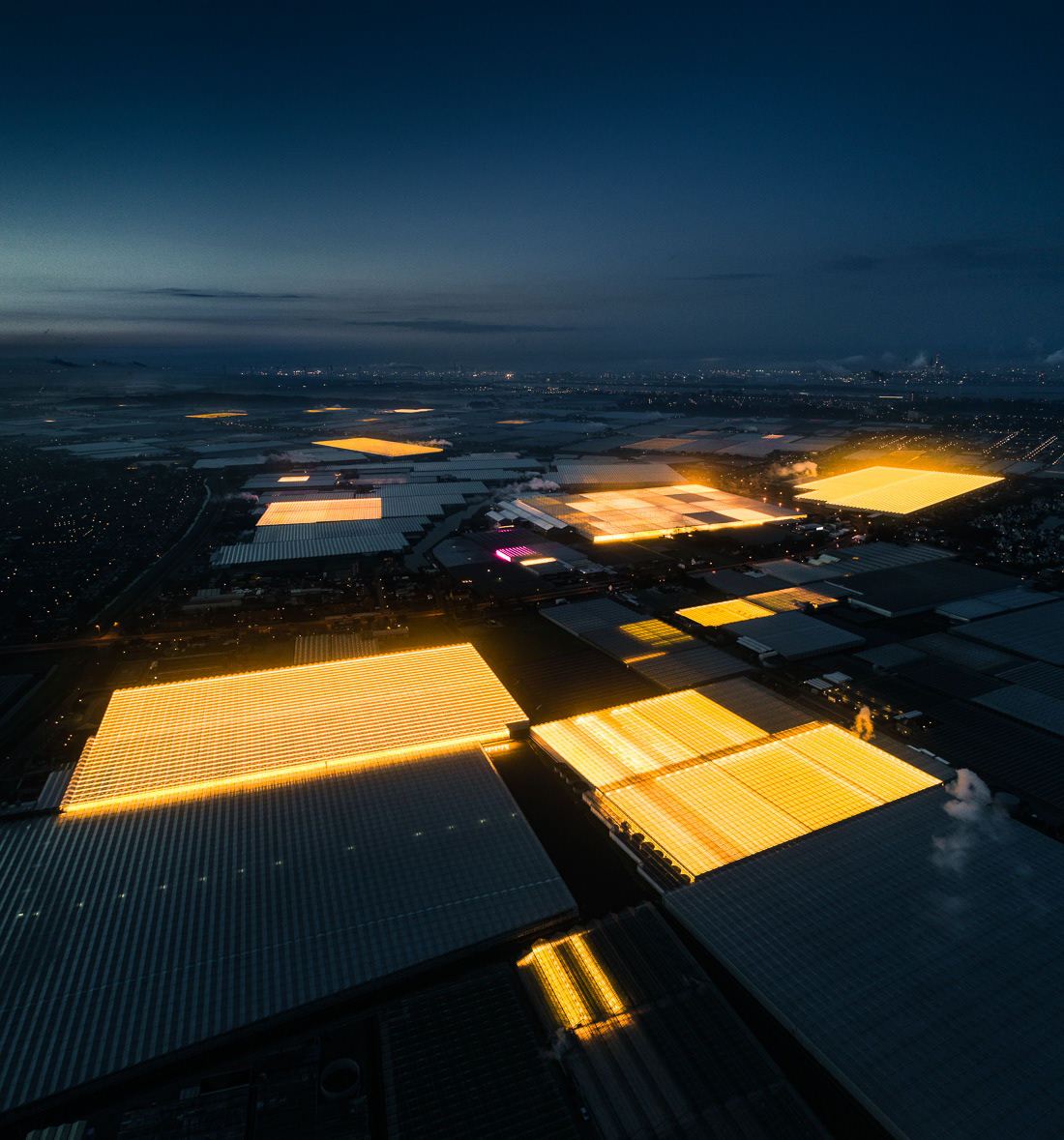
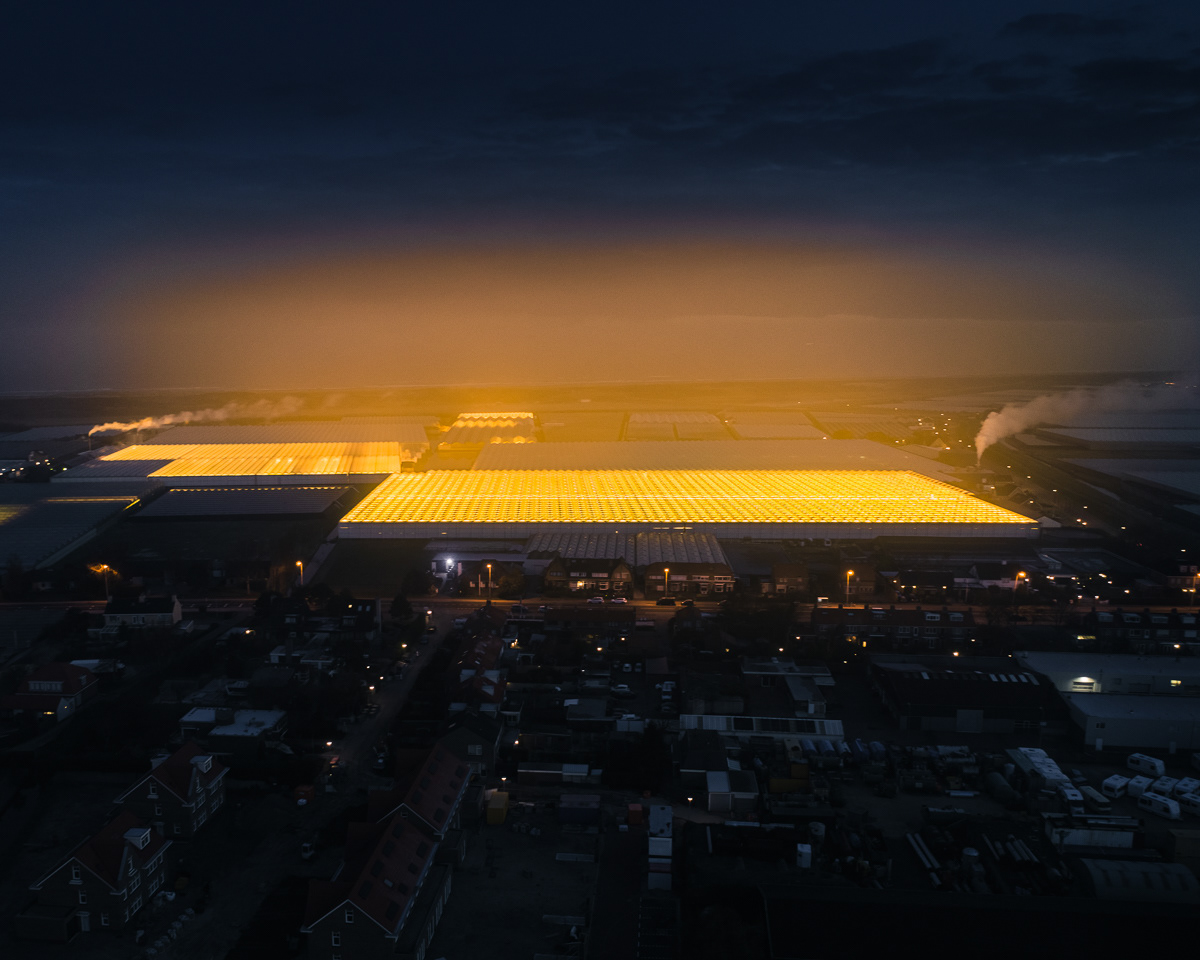
Tom Hegen, a superb photographer out of Munich, Germany, presented a new series which focuses on greenhouses and their importance with the population of the world growing so rapidly.
Writing about the series Hegen stated “The Dutch have created the most advanced area in the world for controlled environment agriculture and have become world leaders in agricultural innovation. However, there are also consequences this growing method brings with it, like light pollution or growing crops out of season and ship them around the world, so people can eat strawberries year-round. Ordinances have been developed in which up to 98% of the electric lighting must be contained within a greenhouse facility by using blackout screens and curtains along the sides and roofs.”
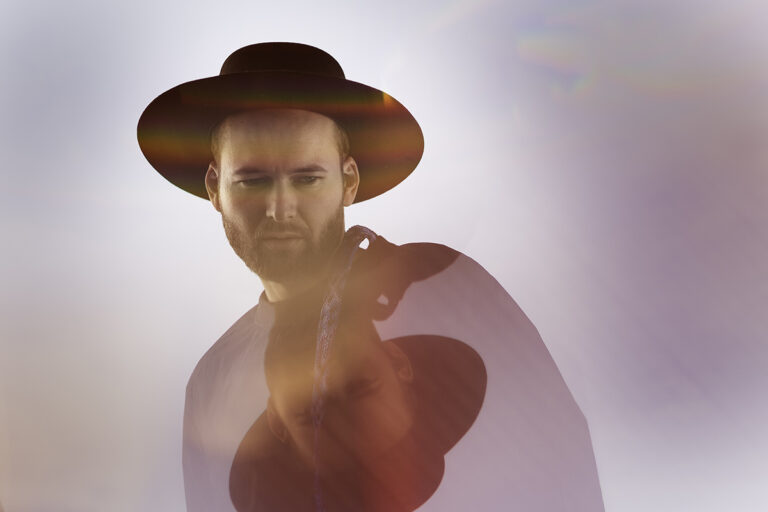
Before the release of his forthcoming album Sophmore, Monolink has released his new single Sinner. This release marks another stunning release in Monolink’s discography, having previously released a tonne of beloved music including The End and Swallow.
Talking about his forthcoming album Monolink stated “I’m very excited to finally unveil some new music. My second album is going to be released towards the end of the year but there will be a bunch of singles coming out in the meantime. With the first single ‘Sinner’ I wanted to explore a darker side of me, writing a fictional goodbye letter to a world that’s not worth living in anymore. On the musical side it’s got a driving beat and is hopefully gonna make people dance to turn it into something positive”.
Monolink will also be touring in April and May across North America. With COVID-19 happening, a lot of these events may be cancelled or postponed.
Tour Dates
April 10 – The Midway, San Francisco CA
April 12 – Coachella, Indio CA (postponed until October)
April 19 – Coachella, Indio CA (postponed until October)
April 23 – Union Rooftop, Minneapolis, MN
April 24 – City Hall, Chicago, IL
April 25 – Club Vinyl, Denver, CO
April 30 – Flash, Washington, DC
May 1 – Bijou, Boston, MA
May 2 – Kings Hall, Brooklyn, NY
May 3 – TBA
May 6 – Jade Room @ 45 East, Portland, OR
May 7 – Fortune Sound Club, Vancouver, BC
May 8 – Sound Nightclub, Los Angeles, CA
May 13 – Spin, San Diego, CA
May 15 – Pepsi Centre w/ Rüfus Du Sol, Mexico City, MX
May 16 – Corona Capital, Guadalajara, MX
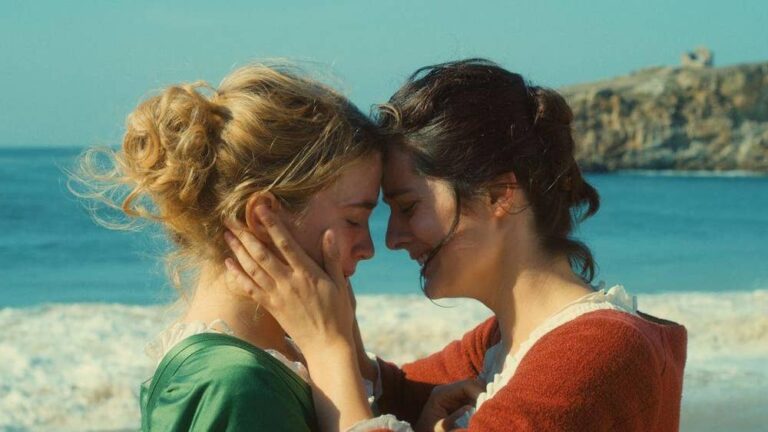
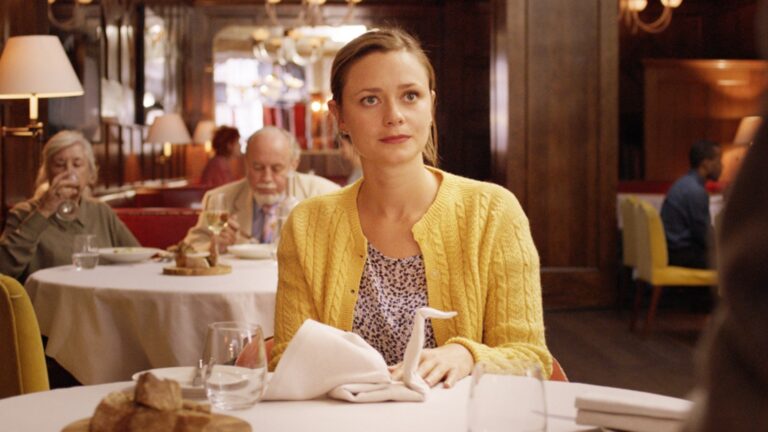
Adapting her 2011 short Lunch Date into a feature-length film, writer-director Sasha Collington delivers an enjoyably relatable romantic comedy with Love Type D. The premise is simple: when Frankie (Maeve Dermody) gets dumped by her boyfriend, Thomas (Oliver Farnworth), via his nerdy pre-teen brother Wilbur (Rory Stroud), no less, she soon discovers that she has more than just bad luck – she has the dumpee gene. Yes, the dumpee gene – as Wilbur informs her, a new study published in a scientific journal posits that all people are born with either the dumper or the dumpee gene, which has the power to determine one’s love life forever.
Dumbfounded, Frankie decides to carry her own little experiment: under the pretense of an HR investigation, she asks everyone in her office how many times they’ve been dumped, and it tests out: everyone is clearly in either one category. The newly-formed group of office dumpees is one of the most endearing elements of the film, and creates opportunities for plenty of effective comedic moments. But by far the most refreshing part of the film is Frankie’s unexpected but affecting relationship with the young Wilbur, whose wit, scientific curiosity, and downplayed compassion are key to the film’s succesful DNA.
Things start to get interesting when Wilbur comes up with a theorem that the dumpees have the potential to become dumpers if they date and dump every person they’ve ever been with, and Frankie and her fellow dumpees decide to take the challenge. Except Frankie’s task seems to be particularly insurmountable considering that she’s got eleven exes, chief among them her most recent one. And no matter what she does, she can’t help but embarrass herself with every attempt to break that spell.
There are a few moments that elevate Love Type D from an otherwise run-of-the-mill romantic comedy to a frequently imaginative endeavor surviving not just on its winning premise but also its refreshing personality. One sequence, for example, features some playful use of stop-motion as a means of facilitating an exchange between Frankie and the ghost of one of her exes. Elsewhere, the filmmakers get creative with the backstory surrounding another one of the exes. And finally, Collington’s script isn’t afraid to take the protagonist’s doomed obsession with Thomas to some hilariously absurd extremes as the plot progresses.
Not every scene is as exciting as the next, and while the film is not in any way groundbreaking, it’s nice to see the filmmaker taking risks and going slightly beyond the by-the-numbers formula of a romantic comedy, to the point where it barely can even be categorized as one. There’s not much of a love story here, except of course one of self-love as Frankie learns to gain confidence in herself – a familiar trope, yes, but not annoyingly so. When the story’s inevitable twist arrives, it doesn’t come as a shock as much as a comforting confirmation of what you’ve probably been expecting from the beginning. Love Type D might not be a gamechanger, but there aren’t too many flaws in its genetic code – it’s exactly what it sets itself out to be, plus a little bit more. And God knows we all could use a dose of harmlessly fun entertainment right about now.
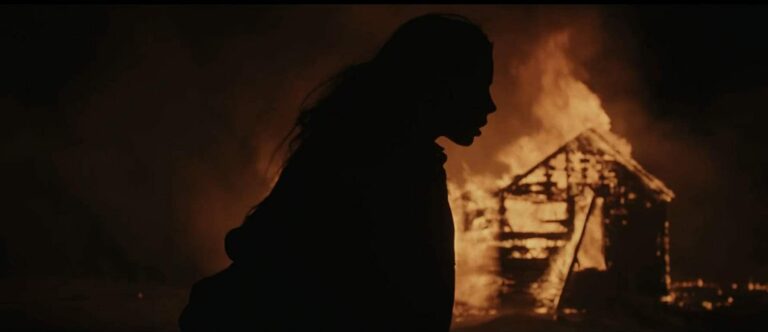
It’s almost impossible to separate Before the Fire from the current coronavirus outbreak, given that the film is… set in the aftermath of a global pandemic. It’s not, however, about the aftermath of a pandemic, or about much of anything, unfortunately, as it doesn’t go into any great lengths to explore the psychological implications of such a crisis, be it on an individual or mass level. It’s a shame, because the film kicks off strong enough, with dynamically immersive shots of people stuck in traffic and the deafening noise of panic and chaos reverberating through the streets of LA and all over the media. However chillingly pertinent, it’s not long until you realize that contextual relevance, which turns out to be both a blessing and a curse, is really the only exciting thing the film has going for it – and it barely even has that.
Well, not quite the only thing – Jenna Lyng Adams, who plays the lead character, Ava, a TV actress who used to star in a show about werewolves, gives a generally solid performance – though the script doesn’t give her much to work with – and the cinematography is quite good and even beautiful at times. But beneath its glossy veneer, the emotional core of the film turns out to be quite hollow, not to mention incoherent. The pandemic forces Ava to confront her traumatic past, as her boyfriend, Kelly (Jackson Davis), basically tricks her into flying back to her rural hometown in South Dakota, where she can be safe from the virus, while he stays in LA to… take photographs? In any case, when she gets there, she stays with Kelly’s family, including his brother Max (Ryan Vigilant), with whom she develops an interesting relationship that unfortunately doesn’t go anywhere.
Neither does the main storyline of the film, which revolves around a mysterious figure in the protagonist’s hazy past that has done her some kind of harm. But rather than slowly building up to some revelatory climax by progressively revealing more hints about that event, the film instead simply refrains from giving us much information at all in the hopes that the lack of it will keep us engaged (spoiler: it doesn’t). In the meantime, it wastes half of its runtime trying to create tension without the emotional stakes to back it up. Add to that plenty of questionable moments that don’t make any sense as well as too many shots of people just walking (or awkwardly yet aggressively coughing), and you’ve got a recipe for disaster, though not necessarily the kind that makes for a gripping cinematic experience.
Even if you set aside its narrative mishaps, Before the Fire simply doesn’t keep you emotionally invested long enough, despite having a decent lead at its centre. Because even though you’re probably rooting for Ava to survive the rising tensions, it becomes increasingly unclear what it is that she’s fighting for. If it’s getting back with her boyfriend, any investment in that relationship was lost the moment he lied to her. If it’s confronting her own unresolved trauma, well, the film doesn’t dig deep enough to tie those loose ends together, leaving many questions unanswered. In a way, the title is inadvertently fitting – we spend two hours waiting for the fire, but it never really comes.
Of course, it’d be unfair to expect the film to act as an unintentional yet deeply profound commentary on the current epidemic reigning over us, but it doesn’t even fulfil its own purpose of telling a compelling story about human trauma. There are moments that hint at how humanity’s darkest side is deadlier than any virus, but that potential is squandered by an underwhelming script and two-dimensional characters that you care less for as you go along. Despite some competent acting and decent production value, the fact that the film has a global pandemic serving as its backdrop and still doesn’t quite stick the landing should tell you everything you need to know. Before the Fire is not infectiously bad, but it’s probably safer to just stay away.
Joshua Caudwell, a photographer and artist out of the United Kingdom, released a superb short series of photos back in 2018 named Dusk. In this series Caudwell, explores shapes in abstract scenes with magnificent lighting that makes it eye-warming to the eye.
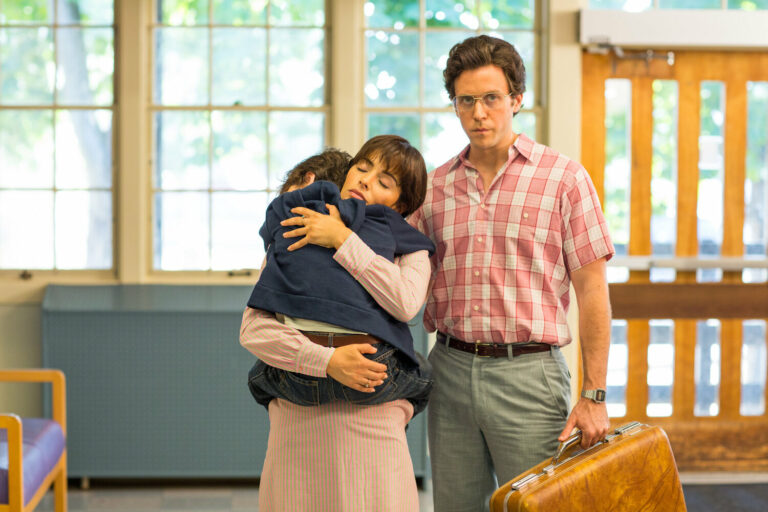
Though adapted from Stephanie Kallos’ 2015 novel of the same name, Language Arts immediately feels like a staggeringly personal effort from writer-director Cornelia Duryée (The Dark Horse, Camilla Dickinson), who infuses a lot of her own experiences into this heartfelt and sensitively drawn drama. The film is centered around Charles (played by Ashley Zuckerman, bearing a striking resemblance to a young Hugh Grant), a high school English teacher who, despite having an excellent grasp of the English language, nevertheless struggles to connect with those around him, namely his ex-wife, Allison (Sarah Shahi), and his autistic son, Cody (Kieran Walton). But when one of his students presents him with an idea for a photojournalism project (or, as she puts it, “photolanthropy”) documenting the lives of autistic youth and senior dementia patients, Charles reflects back on his own childhood, and all the ways in which moments from his past have shaped him into the person he is today, and the person he could become if he could just pull those pieces together.
In a crucial moment during Charles’ school years, Mrs. Braxton (Jane Ryan) explains the meaning of the word “protagonist” in one of her Language Arts classes. However common, we quickly realize that this simple definition of “a hero that we root for” is quite reductive, and barely even applies to the movie’s own complicated protagonist, or at least the adult version of him, who becomes increasingly despondent and ill-natured. But the young, reticent Charlie (Elliott Smith), still driven by a kind of innocent idealism, is helmed as a hero when he strikes an unlikely friendship with Dana (Lincoln Lambert), an autistic child who’s constantly made fun of. After all, he’s familiar with that feeling – being the teacher’s pet has put him in a not too dissimilar position.
As a parent, however, handling his relationship with his autistic son and the effect it has on his marriage proves to be an altogether different task, and we see him fall deeper into despair and hopelessness, which is nicely evoked through the shift in lighting. Duryée competently alternates between the different timelines (and time periods), tracing Charlie’s life in a way that sheds light into the full spectrum of his personality, which could have easily come off as flat or even unlikable. Ashley Zuckerman’s performance also provides further depth into his character, peeling off the layers of empathy beneath what might be interpreted as exactly the opposite, while Elliott Smith wonderfully demonstrates young Charlie’s maturity even at such a young age. It’s the supremely talented Lincoln Lambert as Dana that steals the show, however, as he captures the mannerisms of his character’s disability with truly impressive nuance, despite being neurotypical himself.
The story of Language Arts is touching on its own, but the treatment it receives in this adaptation elevates it into something deeply moving. This is largely thanks to Cornelia Duryée, who, as an artist with disability and mother to an autistic son (who appears in the film, and to whom the film is dedicated), has clearly poured her heart and soul into this project. One of the ways this becomes evident is the fact that the film ultimately reveals itself to be not about autism, but about unspoken love and the different ways in which it manifests itself. The irony, of course, is that the art of language, to which Charles dedicates his life to, proves to hardly be limited to the written word, and that a repetitive circular motion or the utterance of an unintelligible sound can be just as meaningful as any one of his eloquent sentences. And that turns out to be the key to solving Charles’ communication problems: sometimes, it’s not about saying the right thing, or saying anything at all, but about reconnecting with your own self and those around you. One of the final pieces Charlie’s protege presents has this beautifully profound quote attached to it: “You babblers may well rule the earth, but heaven’s the kingdom of the mute!”
In this segment, we showcase the most notable albums out each week. Here are the albums out on March 13th, 2020:
Porches,Ricky Music
Following 2018’s The House, Aaron Maine aka Porches has returned with a new record titled Ricky Music. Written and recorded at Maine’s New York apartment as well as Jacob Portrait’s Greenpoint studio, the album finds the artist embracing a more collaborative spirit, as it features contributions from the likes of Mitski, Zsela, and Dev Hynes, as well as co-production by Jacob Portrait. “This record is an account of the beauty, confusion, anger, joy and sadness I experienced during that time,” Maine explains. “I think I was as lost as I was madly in love. In these songs I hear myself sometimes desperate for clarity, and other times, having enough perspective to laugh at myself in some of my darkest moments. That’s sort of what this album is about, I hope you enjoy it.”
Code Orange,Underneath
Pittsburgh hardcore group Code Orange have come through with their fourth studio album, Underneath, out now via Roadrunner. The follow-up to 2017’s Forever, the album explores “the duality in ourselves as individuals and as a society in an overcrowded, overexposed, all-consuming digital nirvana,” as vocalist and drummer Jami Morgan explains. “Everyone has a voice and no-one’s seems to matter… plummet down the rabbit hole of your deepest fears, anxieties, and regrets to confront the monster that has been building underneath.”
Circa Waves,Sad Happy
Circa Waves have released the second part of their double album, Sad. The first part, Happy, was released back in January. Their fourth studio album, Sad Happy was written in Kieran Shudall’s Liverpool home, with the city acting as an important inspiration for the album, which “runs through thoughts on mortality, love and observations of people.” As Shudall further explains: “We live in a world split into two extreme halves. One moment you’re filled with the existential crisis of climate doom and the next you’re distracted by another piece of inconsequential content that has you laughing aloud. I find this close proximity of immense sadness and happiness so jarring, bizarre and fascinating.”
Grouplove,Healer
Another band releasing their fourth album this week, indie rock outfit Grouplove are back with a new release titled Healer, via Canvasback/Atlantic. Recorded at El Paso, Texas’s famed Sonic Ranch with the help of producer Dave Sitek (TV On The Radio, Yeah Yeah Yeahs, Weezer) and at Los Angeles’ Larrabee Studios with Malay (Frank Ocean, Lorde), the album marks the follow-up to their 2016 album Big Mess and is the first to feature Benjamin Homola, the band’s new drummer.
JFDR,New Dreams
JFDR is the moniker of Jófríður (pronounced Yo-Frida) Ákadóttir, an Icelandic artist who was previously part of groups such as Pascal Pinon, Samaris and Gangly. New Dreams marks her second album following 2017’s Brazil, and according to Jófríður, it differs from that record in various ways: “This record is more thought out,” she explains. “The person who’s singing is more honest, not as ‘coated’ or ‘poetic’ as on ‘Brazil’. It’s less eloquent, perhaps, but more what’s happening for me right now. The meaning isn’t always revealed to me until afterwards”.
Other albums out today:
Peter Bjorn and John, Endless Dreams; Niall Horan, Heartbreak Weather; The Districts, You Know I’m Not Going Anywhere.
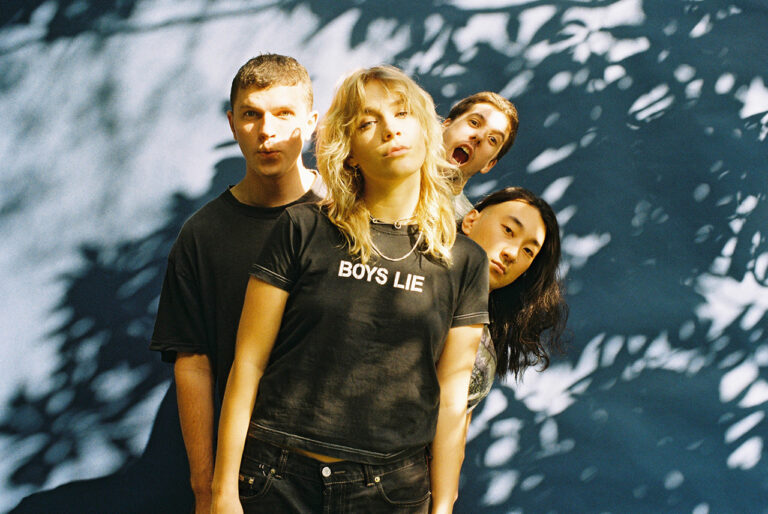
Miss June, an exciting band from New Zealand, are returning with a tour around the United Kingdom, Ireland and Germany. The band released their album Bad Luck Party, last summer and just yesterday shared a music video for their song Orchid. Talking about the music video Nick Giumenti, the director, stated “We put everything together extremely quickly as they only had one day here in Nashville while on tour, but they were fantastic performers and fully willing to try some of my more adventurous ideas. Massive credit to them for being willing to show up early and film for 8 hours and then go play a kick ass show the same night.”
Tour Dates
May 8th, La Cita, Los Angeles, CA
May 11th, The Mercury Lounge, New York, NY
May 14th, The Great Escape – Green Door Store, Brighton
May 15th, The Great Escape – Horatios, Brighton
May 16th, Gold Sounds Festival, Leeds
May 17th, Eastbound Festival, Dublin
May 18th, Nice N Sleazy, Glasgow
May 20th, Sebright Arms, London
May 27th, Prinzenbar, Hamburg
May 28th, Mtc, Cologne
May 29th, Privatclub, Berlin








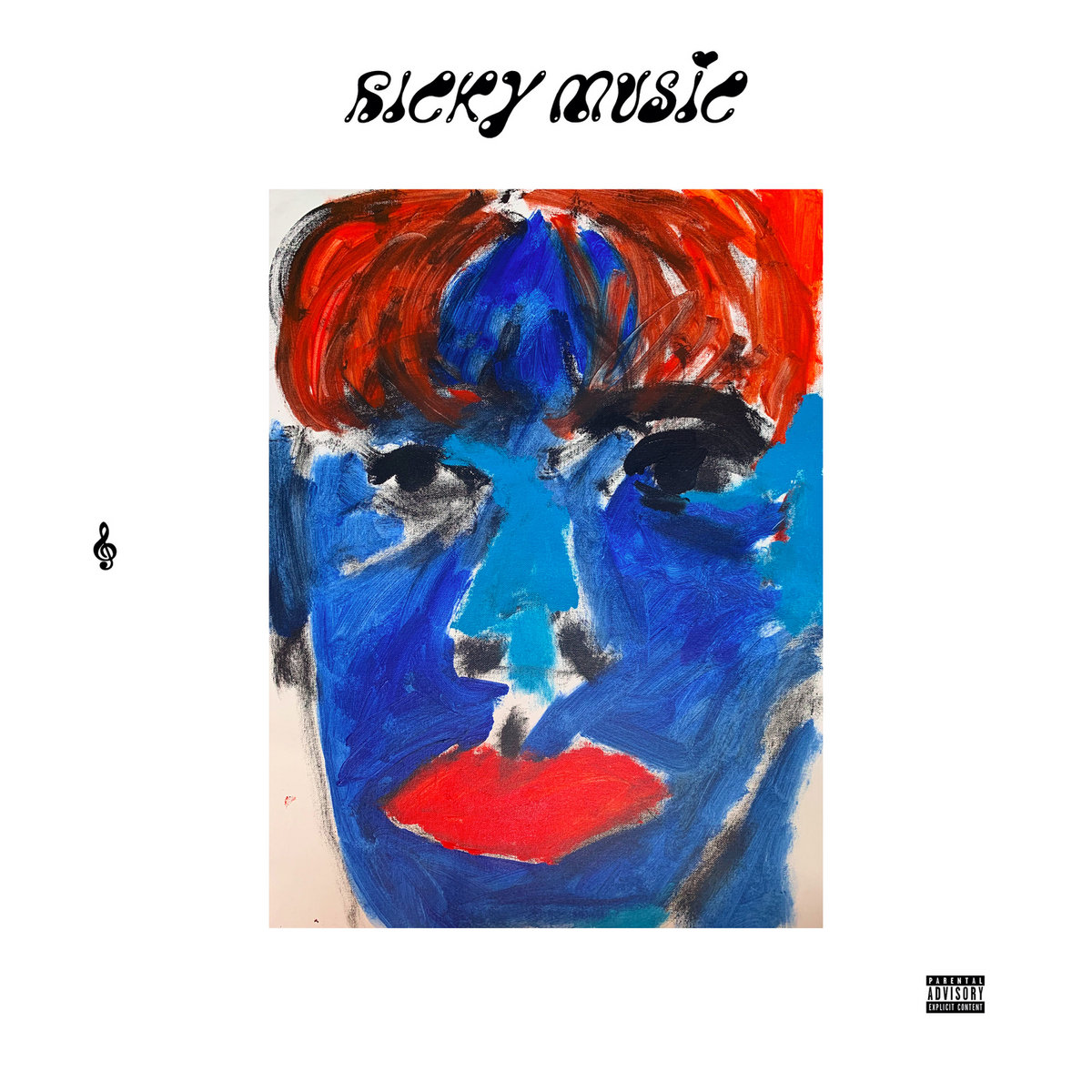 Following 2018’s The House, Aaron Maine aka Porches has returned with a new record titled Ricky Music. Written and recorded at Maine’s New York apartment as well as Jacob Portrait’s Greenpoint studio, the album finds the artist embracing a more collaborative spirit, as it features contributions from the likes of Mitski, Zsela, and Dev Hynes, as well as co-production by Jacob Portrait. “This record is an account of the beauty, confusion, anger, joy and sadness I experienced during that time,” Maine explains. “I think I was as lost as I was madly in love. In these songs I hear myself sometimes desperate for clarity, and other times, having enough perspective to laugh at myself in some of my darkest moments. That’s sort of what this album is about, I hope you enjoy it.”
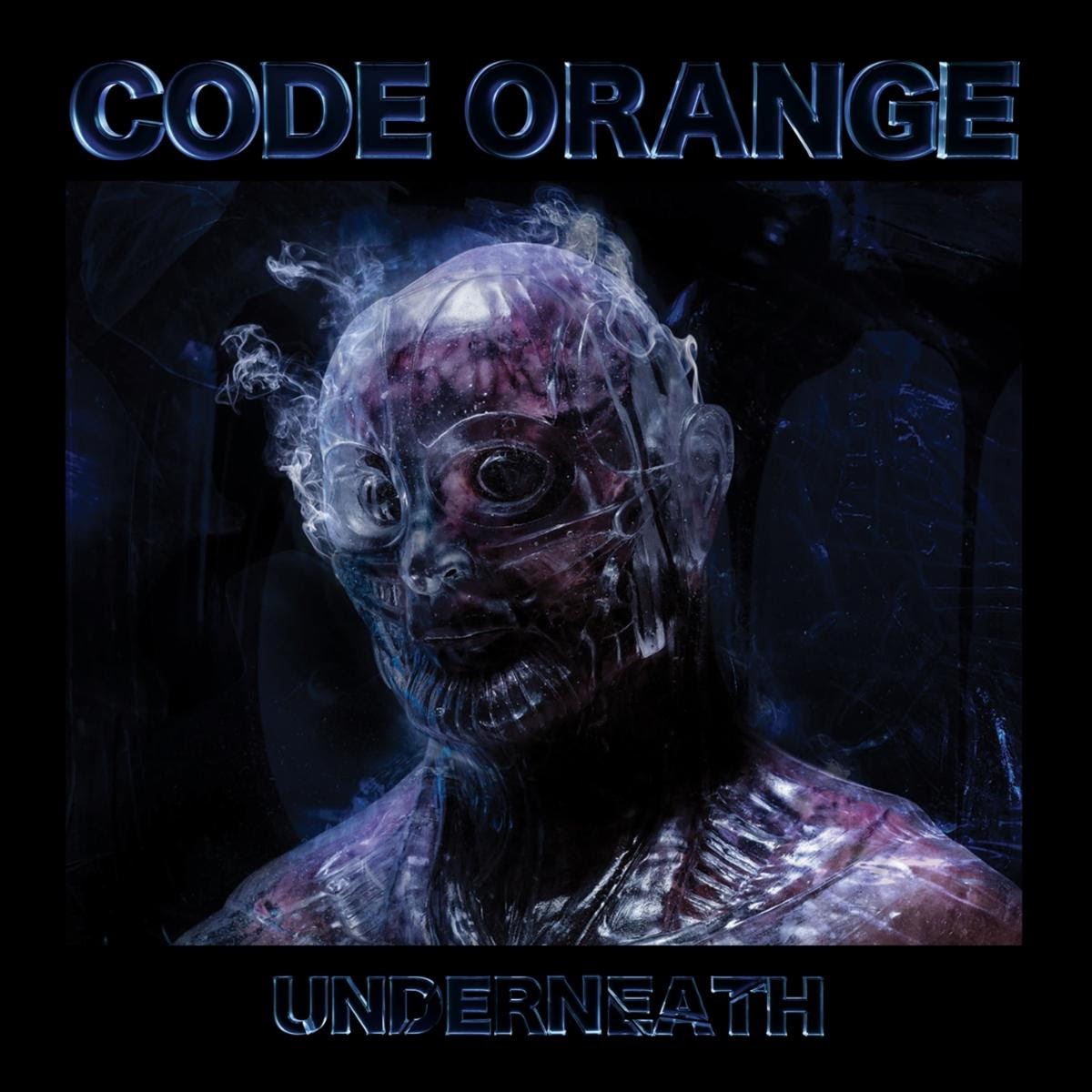 Pittsburgh hardcore group Code Orange have come through with their fourth studio album, Underneath, out now via Roadrunner. The follow-up to 2017’s Forever, the album explores “the duality in ourselves as individuals and as a society in an overcrowded, overexposed, all-consuming digital nirvana,” as vocalist and drummer Jami Morgan explains.
  Circa Waves have released the second part of their double album, Sad. The first part, Happy, was released back in January. Their fourth studio album, Sad Happy was written in Kieran Shudall’s Liverpool home, with the city acting as an important inspiration for the album, which “runs through thoughts on mortality, love and observations of people.” As Shudall further explains: “We live in a world split into two extreme halves. One moment you’re filled with the existential crisis of climate doom and the next you’re distracted by another piece of inconsequential content that has you laughing aloud. I find this close proximity of immense sadness and happiness so jarring, bizarre and fascinating.”
 Another band releasing their fourth album this week, indie rock outfit Grouplove are back with a new release titled Healer, via Canvasback/Atlantic. Recorded at El Paso, Texas’s famed Sonic Ranch with the help of producer Dave Sitek (TV On The Radio, Yeah Yeah Yeahs, Weezer) and at Los Angeles’ Larrabee Studios with Malay (Frank Ocean, Lorde), the album marks the follow-up to their 2016 album Big Mess and is the first to feature Benjamin Homola, the band’s new drummer.
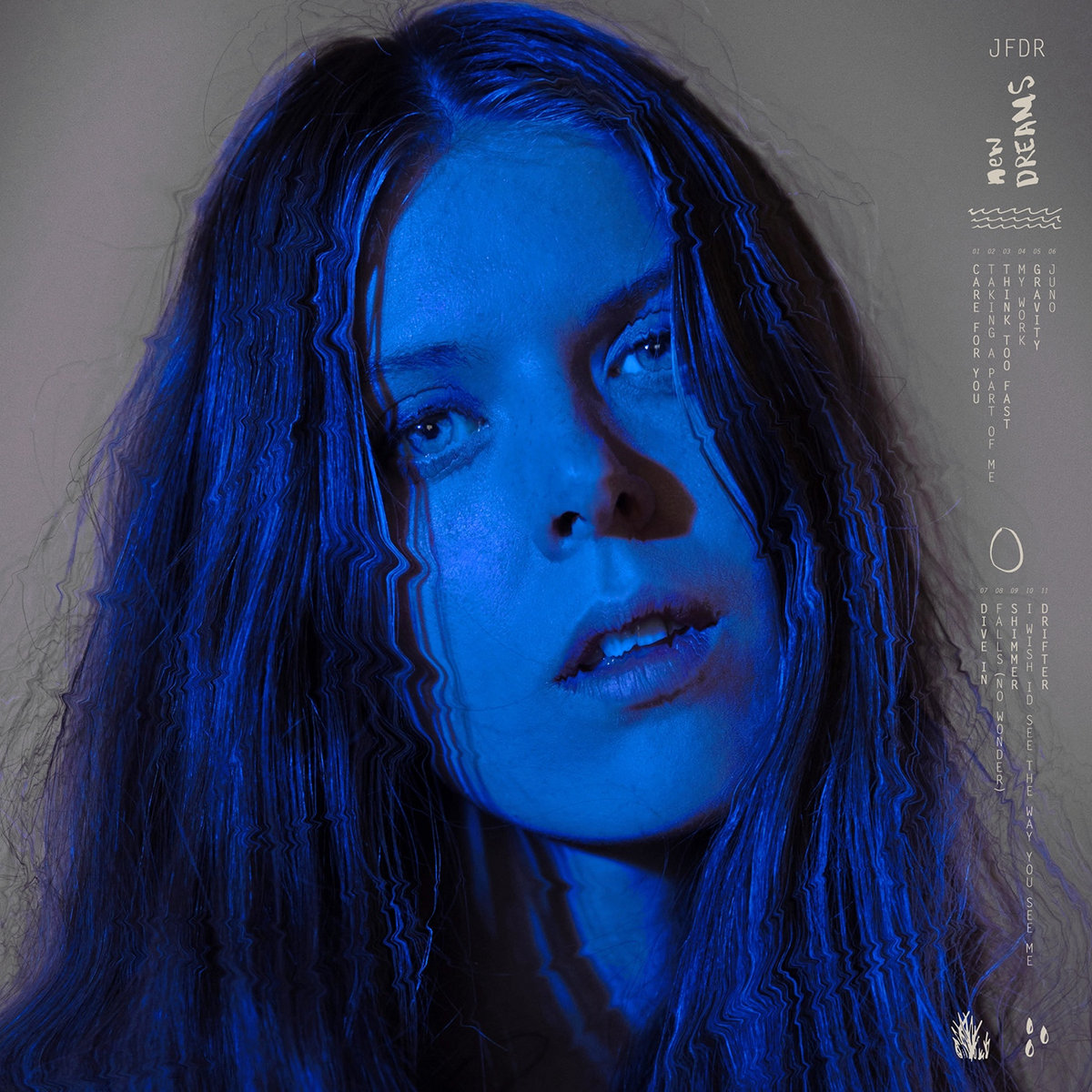 JFDR is the moniker of Jófríður (pronounced Yo-Frida) Ákadóttir, an Icelandic artist who was previously part of groups such as Pascal Pinon, Samaris and Gangly. New Dreams marks her second album following 2017’s Brazil, and according to Jófríður, it differs from that record in various ways: “This record is more thought out,” she explains. “The person who’s singing is more honest, not as ‘coated’ or ‘poetic’ as on ‘Brazil’. It’s less eloquent, perhaps, but more what’s happening for me right now. The meaning isn’t always revealed to me until afterwards”.