

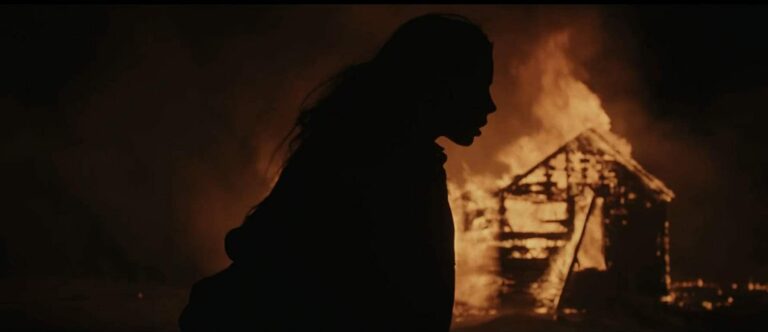
It’s almost impossible to separate Before the Fire from the current coronavirus outbreak, given that the film is… set in the aftermath of a global pandemic. It’s not, however, about the aftermath of a pandemic, or about much of anything, unfortunately, as it doesn’t go into any great lengths to explore the psychological implications of such a crisis, be it on an individual or mass level. It’s a shame, because the film kicks off strong enough, with dynamically immersive shots of people stuck in traffic and the deafening noise of panic and chaos reverberating through the streets of LA and all over the media. However chillingly pertinent, it’s not long until you realize that contextual relevance, which turns out to be both a blessing and a curse, is really the only exciting thing the film has going for it – and it barely even has that.
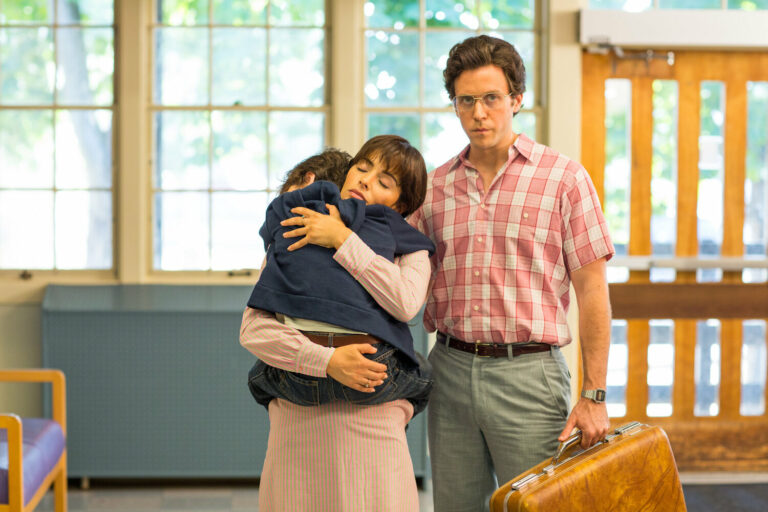
Well, not quite the only thing – Jenna Lyng Adams, who plays the lead character, Ava, a TV actress who used to star in a show about werewolves, gives a generally solid performance – though the script doesn’t give her much to work with – and the cinematography is quite good and even beautiful at times. But beneath its glossy veneer, the emotional core of the film turns out to be quite hollow, not to mention incoherent. The pandemic forces Ava to confront her traumatic past, as her boyfriend, Kelly (Jackson Davis), basically tricks her into flying back to her rural hometown in South Dakota, where she can be safe from the virus, while he stays in LA to… take photographs? In any case, when she gets there, she stays with Kelly’s family, including his brother Max (Ryan Vigilant), with whom she develops an interesting relationship that unfortunately doesn’t go anywhere.
Neither does the main storyline of the film, which revolves around a mysterious figure in the protagonist’s hazy past that has done her some kind of harm. But rather than slowly building up to some revelatory climax by progressively revealing more hints about that event, the film instead simply refrains from giving us much information at all in the hopes that the lack of it will keep us engaged (spoiler: it doesn’t). In the meantime, it wastes half of its runtime trying to create tension without the emotional stakes to back it up. Add to that plenty of questionable moments that don’t make any sense as well as too many shots of people just walking (or awkwardly yet aggressively coughing), and you’ve got a recipe for disaster, though not necessarily the kind that makes for a gripping cinematic experience.
Even if you set aside its narrative mishaps, Before the Fire simply doesn’t keep you emotionally invested long enough, despite having a decent lead at its centre. Because even though you’re probably rooting for Ava to survive the rising tensions, it becomes increasingly unclear what it is that she’s fighting for. If it’s getting back with her boyfriend, any investment in that relationship was lost the moment he lied to her. If it’s confronting her own unresolved trauma, well, the film doesn’t dig deep enough to tie those loose ends together, leaving many questions unanswered. In a way, the title is inadvertently fitting – we spend two hours waiting for the fire, but it never really comes.
Of course, it’d be unfair to expect the film to act as an unintentional yet deeply profound commentary on the current epidemic reigning over us, but it doesn’t even fulfil its own purpose of telling a compelling story about human trauma. There are moments that hint at how humanity’s darkest side is deadlier than any virus, but that potential is squandered by an underwhelming script and two-dimensional characters that you care less for as you go along. Despite some competent acting and decent production value, the fact that the film has a global pandemic serving as its backdrop and still doesn’t quite stick the landing should tell you everything you need to know. Before the Fire is not infectiously bad, but it’s probably safer to just stay away.



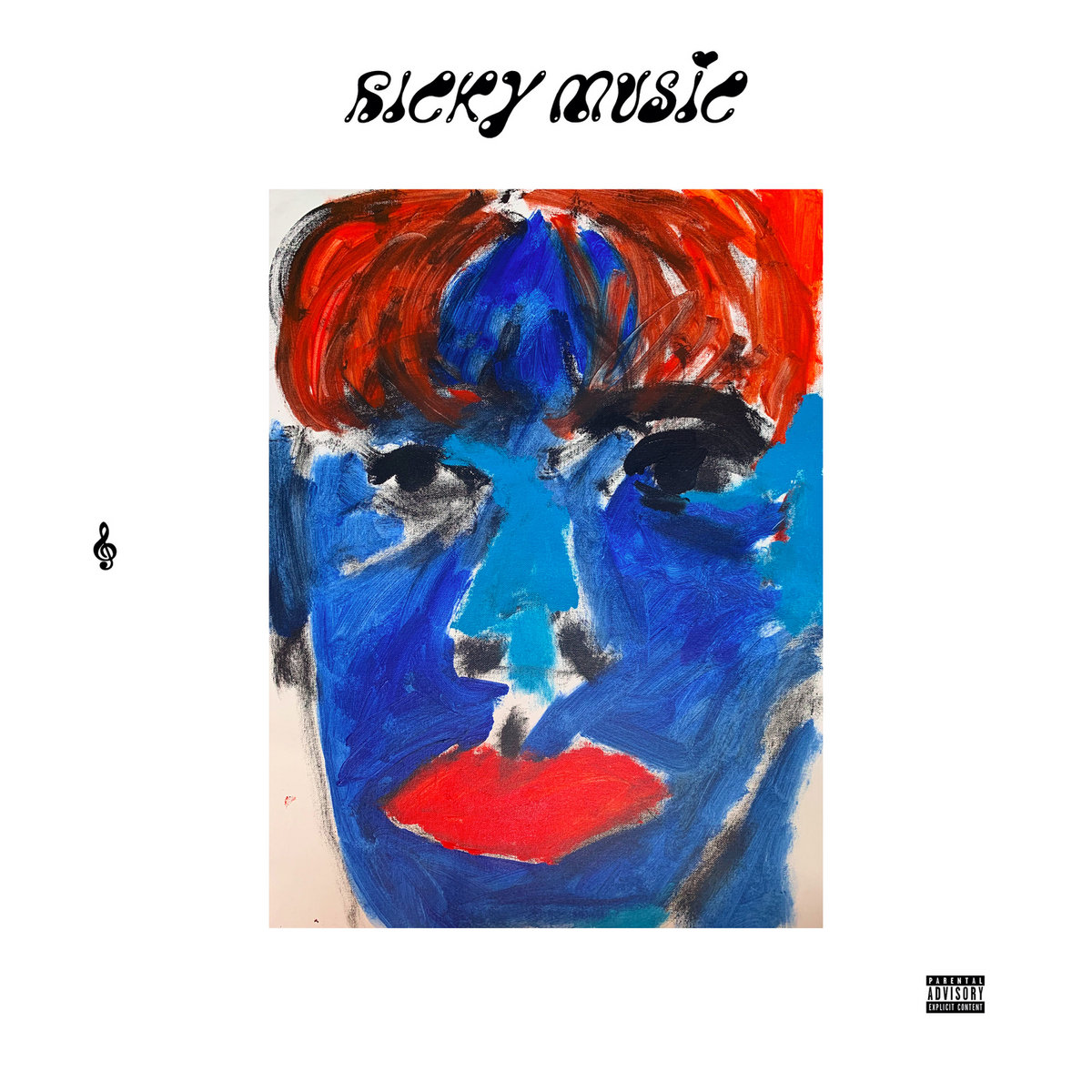 Following 2018’s The House, Aaron Maine aka Porches has returned with a new record titled Ricky Music. Written and recorded at Maine’s New York apartment as well as Jacob Portrait’s Greenpoint studio, the album finds the artist embracing a more collaborative spirit, as it features contributions from the likes of Mitski, Zsela, and Dev Hynes, as well as co-production by Jacob Portrait. “This record is an account of the beauty, confusion, anger, joy and sadness I experienced during that time,” Maine explains. “I think I was as lost as I was madly in love. In these songs I hear myself sometimes desperate for clarity, and other times, having enough perspective to laugh at myself in some of my darkest moments. That’s sort of what this album is about, I hope you enjoy it.”
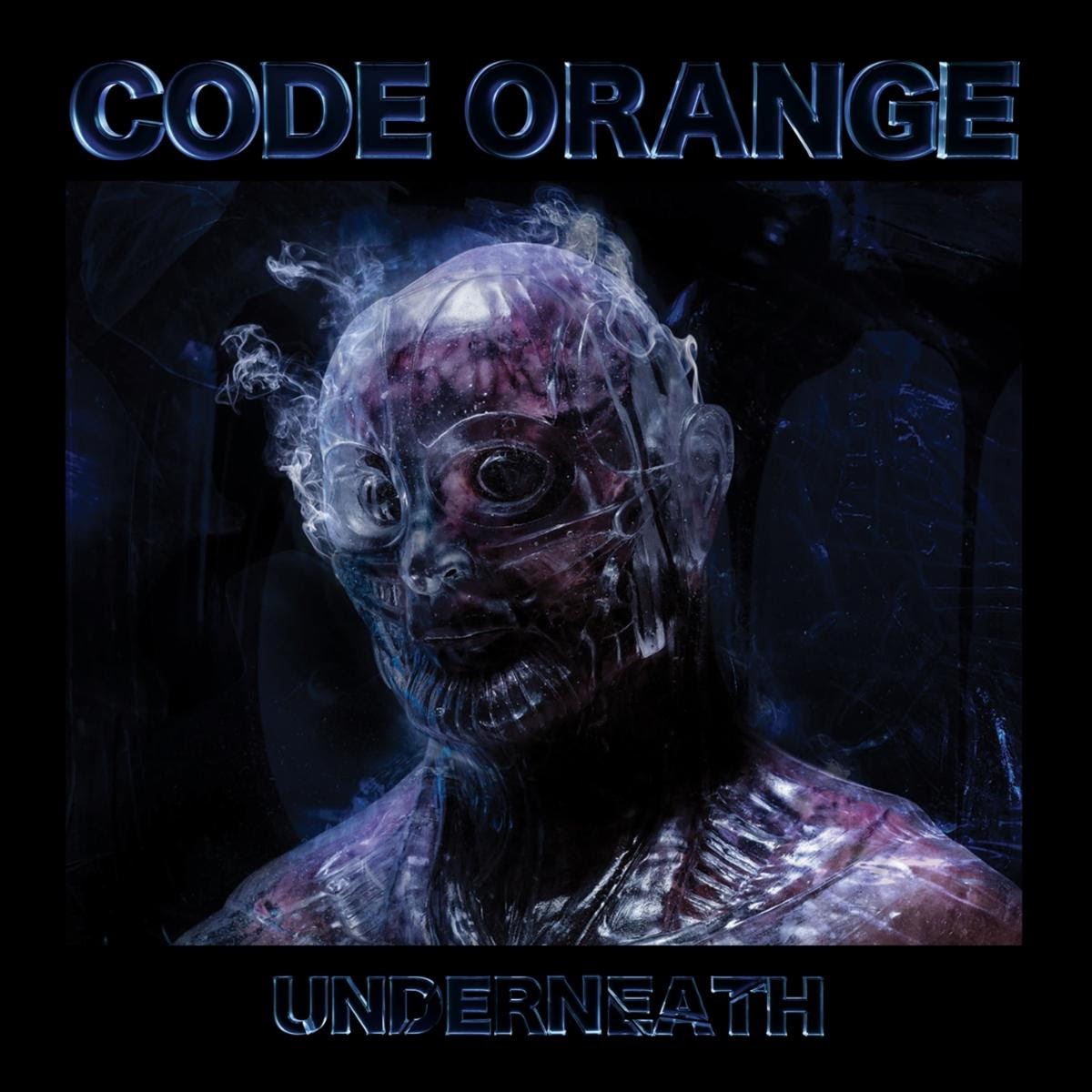 Pittsburgh hardcore group Code Orange have come through with their fourth studio album, Underneath, out now via Roadrunner. The follow-up to 2017’s Forever, the album explores “the duality in ourselves as individuals and as a society in an overcrowded, overexposed, all-consuming digital nirvana,” as vocalist and drummer Jami Morgan explains.
  Circa Waves have released the second part of their double album, Sad. The first part, Happy, was released back in January. Their fourth studio album, Sad Happy was written in Kieran Shudall’s Liverpool home, with the city acting as an important inspiration for the album, which “runs through thoughts on mortality, love and observations of people.” As Shudall further explains: “We live in a world split into two extreme halves. One moment you’re filled with the existential crisis of climate doom and the next you’re distracted by another piece of inconsequential content that has you laughing aloud. I find this close proximity of immense sadness and happiness so jarring, bizarre and fascinating.”
 Another band releasing their fourth album this week, indie rock outfit Grouplove are back with a new release titled Healer, via Canvasback/Atlantic. Recorded at El Paso, Texas’s famed Sonic Ranch with the help of producer Dave Sitek (TV On The Radio, Yeah Yeah Yeahs, Weezer) and at Los Angeles’ Larrabee Studios with Malay (Frank Ocean, Lorde), the album marks the follow-up to their 2016 album Big Mess and is the first to feature Benjamin Homola, the band’s new drummer.
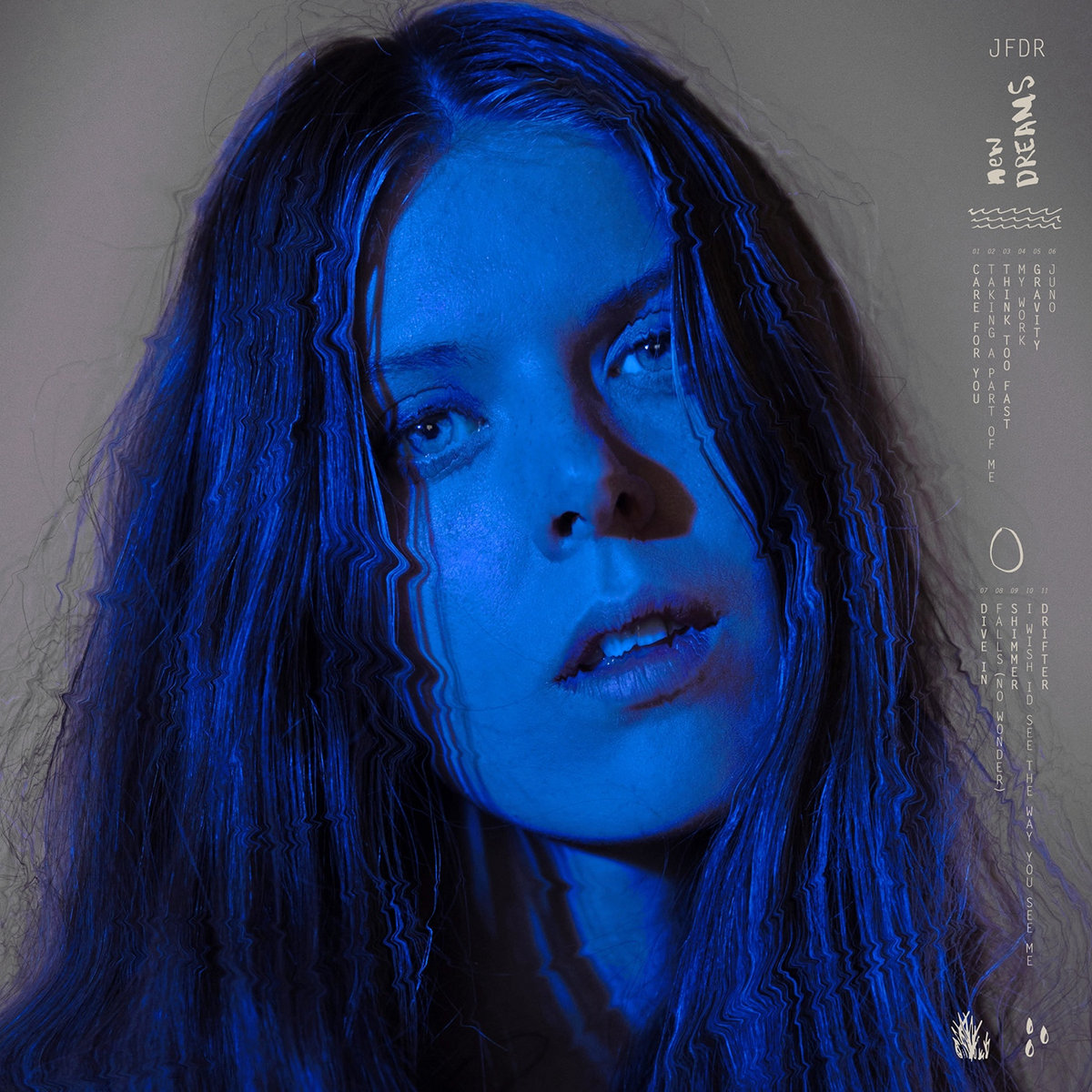 JFDR is the moniker of Jófríður (pronounced Yo-Frida) Ákadóttir, an Icelandic artist who was previously part of groups such as Pascal Pinon, Samaris and Gangly. New Dreams marks her second album following 2017’s Brazil, and according to Jófríður, it differs from that record in various ways: “This record is more thought out,” she explains. “The person who’s singing is more honest, not as ‘coated’ or ‘poetic’ as on ‘Brazil’. It’s less eloquent, perhaps, but more what’s happening for me right now. The meaning isn’t always revealed to me until afterwards”.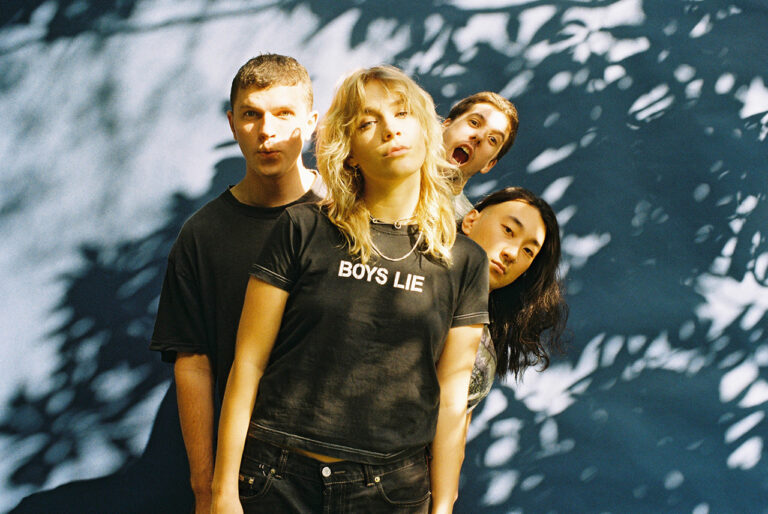
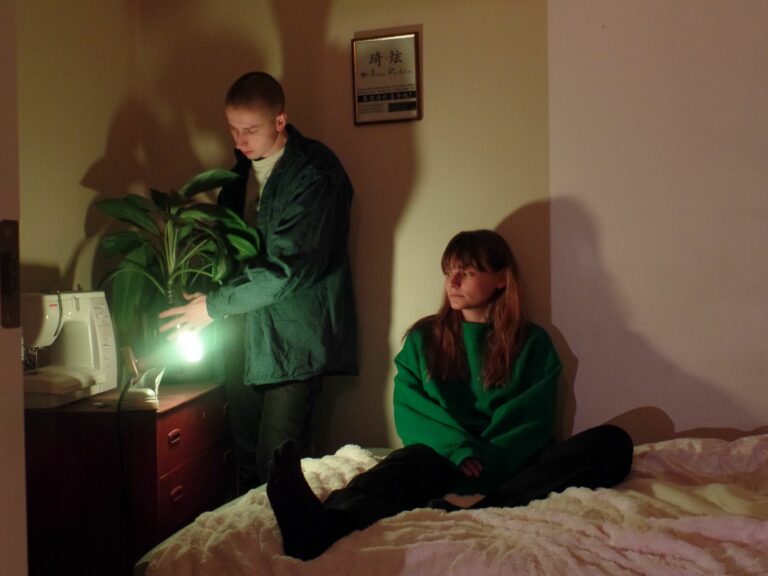




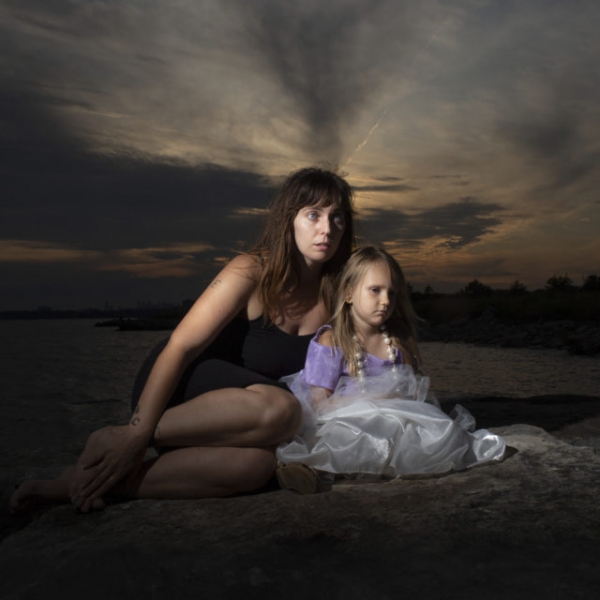 Following the release of 2018’s acclaimed In a Poem Unlimited, indie rock outfit U.S. Girls return with a new album titled Heavy Light, out now via 4AD. The latest from singer-songwriter Meghan Remy was produced by Remy herself and recorded live with 20 session musicians, including E Street Band saxophonist Jake Clemons. Named after Franz Kafka’s aphorism “a faith like an axe. As heavy, as light”, a press release describes the songs on the album as “reflections on childhood experiences that are collaged into moving spoken word interludes”. The album features reworked versions of the previously released ‘Statehouse (It’s A Man’s World)’, ‘Red Ford Radio’, and ‘Overtime’, as well as 10 new songs.
 Anna Calvi’s new record is a reworking of her acclaimed 2018 album Hunter, featuring an impressive list of collaborators including Courtney Barnett, Joe Talbot (IDLES), Charlotte Gainsbourg and Julia Holter. “During a break from touring I went back and listened to the first recordings I ever made of ‘Hunter’,” the singer-songwriter explains. “These recordings capture the very moment I first wrote these songs, and recorded them on my own, in my attic studio. I find something especially intimate about sharing these most private recordings with my favourite singers and asking them to lend their voices and artistic sensibility.”
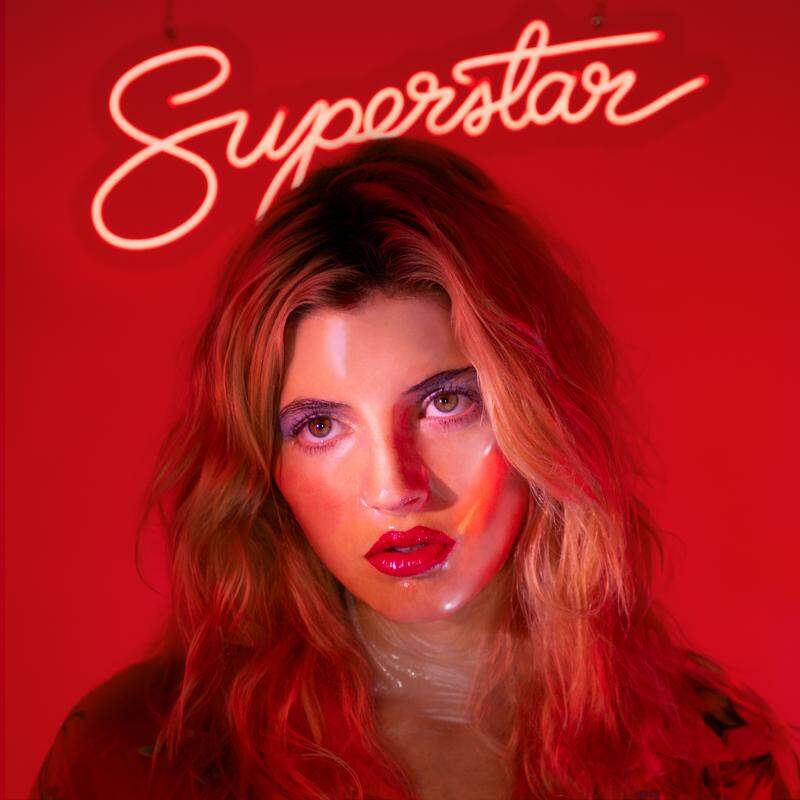 Singer-songwriter Caroline Rose has come through with her fourth studio record, Superstar. The follow-up to 2018’s Loner, which saw her going in a more pop-rock direction compared to her folk country roots, tells the story of an artist who leaves their life behind in pursuit of fame and is inspired by movies like The Bitter Tears of Petra Von Kant, Mulholland Drive, and Drop Dead Gorgeous. Caroline Rose explains: “To me, there’s both humor and horror in hubris and what it takes in order to be successful. I wanted to make a story out of those parts of myself that I find largely undesirable and embarrassing, then inject them with steroids.”
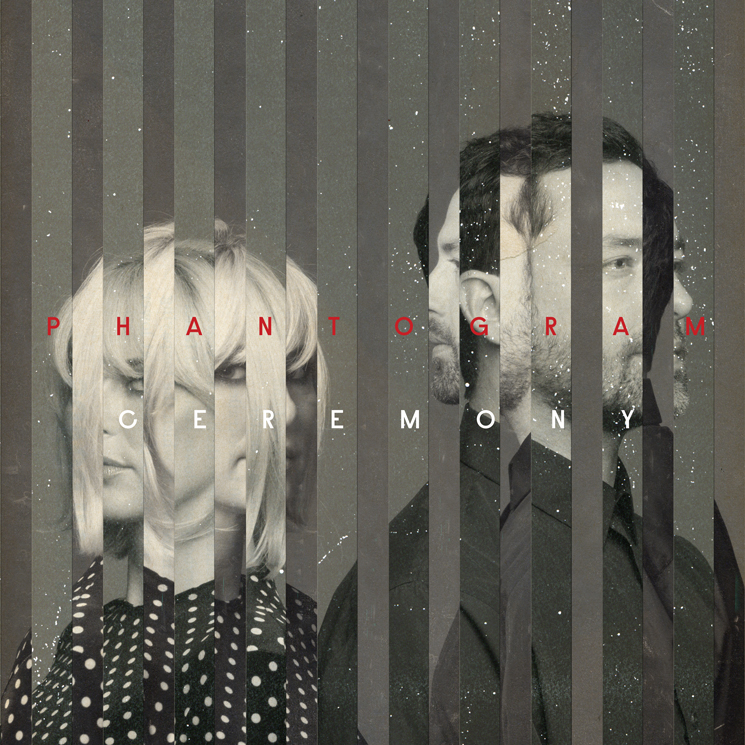 Alternative rock duo Phantogram have released their fourth studio album, Ceremony, out now via Republic. The band, consisting of lifelong friends Josh Carter and Sarah Barthel, recorded the album largely at Barthel’s new home studio as well as Rancho de la Luna studio in Los Angeles. The long-awaited follow-up to 2016’s Three was influenced in large part by the death of Barthel’s sister, Becky, due to suicide. Barthel explains: “Life keeps going while you’re in your album cycle bubble and when it pops, you have to pick up the pieces. And once you stop, all the distractions go away and you’re left with a lot of feelings, feelings that got trapped outside of the bubble. And those are what came out on Ceremony.”