Home Blog Page 33

The Future of Culture in Hybrid Form: Where Real Galleries and Digital Canvas Meet

You might find something surprising if you go to a modern art space today. To get to an augmented reality experience, scan the QR code next to a painting. NFT art is displayed next to traditional oil paintings on a digital screen. headsets that let you see how an artist works in virtual reality. The gallery is adding digital branches to its physical base.

This isn’t a short-lived trend or a way to get younger people to watch. It’s a big change in the way we think about, value, and see art. People in the future won’t have to choose between real and virtual. Both are important.

Why physical spaces are still important

Even though many people think that everything will be done online, there are still physical galleries. They’ve changed. Standing in front of a canvas and feeling the brushstrokes and how the light hits it from different angles is an experience you will never forget. Screens can’t show how big a big installation is or how close a small, detailed piece is.

Digital platforms can’t bring people together in the same way that physical spaces can. People who like art can meet other people who like art by chance, at artist talks, and at opening receptions. These social experiences give art a deeper meaning than what it looks like. You go to a cultural event, listen to stories, and talk about what they mean in different ways.

But galleries have real problems, like not having enough space for shows, high rent in big cities, and not being able to go because of where they are. A lot of people who might have been interested aren’t because of these practical problems. The digital solution is here, but it doesn’t take the place of anything; it adds to it.

Breaking Down the Gallery Walls

Digital galleries break down geographical barriers. A collector in Singapore can see an up-and-coming artist in São Paulo without having to fly. Students in rural areas can see the collections of big museums. Artists no longer need to be represented in expensive cities to reach people all over the world.

Also, technology opens up creative options that aren’t possible in real life. Digital art can change and grow over time, and it can also move and respond to how people interact with it. Artists can experiment with what they can do when they don’t have to worry about physical materials by making works specifically for screens. Some pieces are very popular and sell for a lot of money on the art market, even though they are just code.

Platforms that focus on this mixed approach are changing the industry. Eden Art and other places show that galleries can still follow curatorial standards even if they use digital distribution. These platforms not only digitize art that already exists, but they also let you find, interact with, and buy art in ways that aren’t possible in real life.

Applying the Hybrid Model

Smart galleries are integrating both worlds rather than treating them as separate entities. A physical exhibition might extend into a virtual space where additional works live. Digital previews let potential visitors decide if they want to make the trip. Virtual exhibitions can run alongside physical shows, reaching audiences who can’t attend in person.

This approach also solves practical problems. Storage and rotation become less restrictive when part of a collection exists digitally. Galleries can show more work to more people without needing infinite wall space. Artists can present comprehensive portfolios without physical limitations.

Some institutions are getting creative with the integration. Imagine viewing a sculpture in a gallery, then using your phone to see the artist’s previous iterations, sketches, and commentary. The physical object becomes a gateway to deeper engagement rather than the entire experience.

Collecting in Two Dimensions

This reality is causing the art market to adjust. These days, collectors create portfolios that include both digital and real paintings. Some pieces include a digital certificate or companion piece in addition to the physical artwork. Collectors are being given more options by this dual nature rather than being confused.

In the art world, it’s always good to know the history of an object. Blockchain technology makes this easier. Digital certificates can help you keep track of who owns physical works by sticking to them. It’s clear that using new ideas to solve old problems can make old ways of doing things better.

Young collectors are especially fond of this model. Because they grew up with digital experiences, they do not consider them to be less real. A well-made digital artwork has the same cultural value as a traditional medium. The hybrid gallery meets them where they are and exposes them to real art experiences.

The Rough Edges

There is friction in this evolution. The longevity of digital art is still up for debate. Are file formats going to become outdated? How can digital works be preserved for upcoming generations? Centuries of conservation expertise have been applied to physical art. The playbook for digital preservation is still being written.

There is also a conflict between accessibility and exclusivity. For galleries, prestige and scarcity have always been crucial considerations. How do you maintain that when everyone can see your work on a screen? The answer seems to lie in developing discrete levels of experience where physical interactions and ownership remain distinctive while digital access is widely available.

The Emerging Canvas

The trajectory suggests further integration. Before making a purchase, people will be able to see artwork in their homes thanks to augmented reality. Virtual reality might create entirely new forms of immersive art. AI could assist in curation, helping people discover work that matches their taste.

Still, the core experience is probably going to stay hybrid. After seeing significant pieces in person at galleries, we’ll continue our exploration online. After learning about artists online, we’ll look for their live exhibitions. The distinction between these experiences will become less clear until it seems as archaic to inquire about the physical or digital nature of art as it does to inquire about the authenticity of a photograph.

Culture has always adapted to new technologies while preserving what matters most. The hybrid gallery does exactly this, honoring the power of physical presence while embracing digital possibility. Neither replaces the other. Together, they create something bigger than either could alone.

5 Reasons Why 007 First Light is Not a Hitman Game in Disguise

0

It’s kind of hard to believe we haven’t had a proper Bond game since Rare’s GoldenEye 007 on Nintendo 64. So, when a new Bond game was announced, it was only fitting that Hitman developer IO Interactive was the one taking up the mantle. Dubbed ‘007: First Light,’ IO Interactive’s upcoming third-person adventure takes us back to where it all began for our beloved MI6 agent, retelling Bond’s origin with a brand new story, cinematic action and the studio’s own unique take on who he really is. If you watched IO’s first gameplay reveal of 007: First Light, you’d be forgiven for thinking it follows the same Hitman formula. 

However, that’s far from it. 007: First Light might share the studio’s signature level design and stealth-meets-action gameplay, but it promises to be a full-fledged Bond adventure that’s part stylish, part compelling and 100% its own. So, here we’ll talk about five reasons why 007: First Light isn’t a Hitman game in disguise.

  1. You can chuck your firearm at enemies like a makeshift projectile weapon

Perhaps the most Bond-esque and un-Hitman-like gameplay mechanic in 007: First Light is the ability to literally throw your empty weapons at enemies when things start to go sideways. If Bond’s magazine runs dry, as a last-ditch move, you can fling your pistol at an approaching enemy or even use whatever’s around you (things like bottles, chairs, or anything within reach) as makeshift weapons. And if there’s a rifle on the ground, you can stylishly kick-flip it into your hands and continue the fight. These new mechanics perfectly fit 007: First Light’s “younger and more off-the-rails” version of Bond, who’s always thinking on his feet.

  1. Activate “License to Kill” to get the job done 

One of the things that makes 007: First Light feel more like a James Bond game than Hitman is its “License to Kill” system. When a fight reaches a point where enemies clearly want you dead, the License to Kill UI will pop up, which gives Bond, well, the license to kill. Basically, this mode lets you combine guns, melee, gadgets, and environmental moves all in one go and you can even use Bond’s arsenal of creative gadgets to confuse attackers, throw empty weapons and if the level allows, even knock enemies off ledges.

  1. You can use Instinct to outsmart enemies

Instinct in 007: First Light is basically Bond’s natural quick thinking turned into gameplay. In a nutshell, it is a “spend-and recharge” mechanic that charges up as you take down enemies, perform objectives, or interact with the world around you and it lets you handle situations in ways Agent 47 never could. With Instinct, you can do things like lure a guard in for a stealth takedown, bluff your way past someone who’s getting suspicious, or slow down time during a gunfight to line up the perfect shot. Unlike Hitman, where being spotted usually requires you to fight or flee, Instinct lets Bond stay stealthy and adaptable.

  1. Gadgets in 007: First Light give you more ways to play

Bond’s selection of gadgets in 007: First Light gives him unparalleled control over every encounter. Unlike Hitman, where the bulk of the gear is built for clean kills, Bond’s gadgetry offers both lethal and non-lethal choices, letting you go about missions however you see fit. His classic spy watch can hack electronics, blind enemies, or even stun them with a laser. You’ll have access to a bunch of other Bond gadgets like smoke bombs, knockout darts, tasers, among others. Moreover, as you work your way through missions, you’ll unlock more contraptions that allow you to hack a camera to clear a path, use your laser to cut through a locked door, or distract a guard just long enough for you to get by.

  1. Vehicle missions and Spycraft

It wouldn’t be a Bond game without getting behind the wheel of flashy cars, racing through exotic locales, threading through traffic, and pulling off stunts and IO Interactive has dialled up the spectacle with over-the-top vehicle missions, cinematic set pieces, and high-octane action. However, there’s more to Bond than fast cars and chaos. 007: First Light features an innovative

Spycraft mechanic that gives you tools for the subtler side of the job. With Spycraft, you can eavesdrop on conversations for intel, steal a keycard from a distracted guard, or piece together clues from the surroundings that others might miss. 

From whatever little we’ve seen so far, 007: First Light seems to be nailing the kind of big-screen energy you’d expect from a Bond game and IO Interactive is working hard to deliver the triple-A 007 experience that’s been missing for a long time. 007: First Light will release on March 27, 2026, for PS5, Xbox Series X, Nintendo Switch 2, and PC.

Album Review: Danny Brown, ‘Stardust’

Somewhere along his journey to rap stardom, Danny Brown fell out of love with the thing that led him there. “You know what’s worse? I lost my thirst,” he raps on ‘The End’, the sprawling penultimate track of his new album Stardust, “I lost my thirst, I’m back now and I’m hungry.” There might be a self-reflective throughline across the 44-year-old’s latest effort – and first since becoming sober – but it doesn’t hinge on the introspective, natural flows of Quaranta. Instead, it feeds off the communal energy of a crew of cutting-edge, hyperpop-adjacent artists who help him affirm not just his status and lyrical dexterity, but the reason he keeps falling back in love with music. “You wondered what made things enjoyable when you were younger,” Angel Prost, one half of Frost Children, intones at one point. More than just wondering, Stardust – easeful and electrifying, relaxed and glitched-out – simply revels.


1. Book of Daniel [feat. Quadeca]

Danny Brown doesn’t delve into glitchy electronics right away; ‘Book of Daniel’ is set to clean guitars and piano that make for a revelatory introduction. Though he boasts about being part of the big three in rap along with Kendrick Lamar and Earl Sweatshirt, the track isn’t triumphant so much as a showcase of focused conviction, as if he laid it down after a good night’s sleep. “Fuck punching in, I’ma write till my wrists break/So they can see the words every time they hit play,” he raps. “Rewind a couple times to understand what I’m tryna say/ Still be doing this if the pay was minimum wage.” You won’t need to rewind ‘Book of Daniel’ to understand what he’s trying to say, but you might just replay it for the pure uplift.

2. Starburst

As a lead single, ‘Starburst’ announced Stardust as the rapper’s foray into hyperpop, and it might be the album’s most extreme example; the squeaky synth that keeps being pitched up is enough to ward off uninterested listeners. Then there’s the concluding spoken-word passage from Frost Children’s Angel Prost, which is aware of its own poetic quirks but earnestly builds a conceptual framework around the album. Brown’s victorious flow feels like a continuation of ‘Book of Daniel’, as if his message is impervious to what sounds his collaborators cook up.

3. Copycats [feat. underscores]

An instant earworm, ‘Copycats’ was made within the first 30 minutes of Brown and underscores meeting each other. The 25-year-old April Harper Grey’s greatest asset is helping the rapper churn out a hook that can summarize the entire previous song: “Rap star, pop star, rock star/ Gimme that.” The collaboration also feels effortless because it seems to close the generational gap between the two artists, who can relate on a thing or two about fame and the music industry.

4. 1999 [feat. JOHNNASCUS]

Brown follows up Stardust’s most infectious song with its most abrasive, an industrial slice of chiptune that actually animates him more than most sounds on the record. In the absence of drums, he takes it upon himself to mobilize the song and ends up with one of his most thrilling performances here, while JOHNNASCUS screams like the whole thing’s not frantic enough.

5. Flowers

After ‘1999’, it’s sad to hear Brown’s relentlessness be watered down on ‘Flowers’, which is as poppy but not as catchy as ‘Copycats’. He sounds slightly awkward over it, too, like he’s accommodating the production rather than commanding it.

6. Lift You Up

‘Lift You Up’ is not only as sincere in its positivity as the Romy and Jessie Ware collab of the same name, but leans just as much into house music. It’s reflective of Brown’s post-rehab headspace without really digging into it.

7. Green Light [feat. Frost Children]

Frost Children get a proper feature on ‘Green Light’, delivering a chorus that practically makes the song. I’d rather go with ‘Shake It Like A’ any day of the week, though.

8. What You Need

Quadeca returns for a jazzier, more heartfelt counterpart to ‘Green Light’ – way fewer sexual references, the same take on faithfulness. This is a glimpse of what Stardust could have sounded like had Brown continued down the Quaranta path, but it sounds fitting at this point on the album.

9. Baby [feat. underscores]

This is basically the third love song in a row, which is as crazy as any sound Brown has rapped over. Inspired by Dizzee Rascal’s ‘I Luv U’, the second underscores team-up cashes in on infatuation as pop music currency, and it’s a delight. “I’ve made so many ‘getting my dick sucked’ songs, and you gotta pay your tithes,” Brown said in a recent interview, “but I’m probably gonna be married soon, so it felt right.”

10. Whatever the Case [feat. ISSBROKIE]

You see another guest artist with an all-caps moniker and you already know the song’s gonna hit hard. ISSBROKIE is on the same wavelength as Brown – “I do this shit for the art, it just come with the money” – but her short verse steals the show.

11. 1L0v3myL1f3! [feat. femtanyl]

I’d love to say that ‘1L0v3myL1f3!’ is my favorite song on Stardust, but I’d rather pick another one than say that title. femtanyl concocts one of the most exhilarating beats on the album, blurring the edges of its hyperkinetic drum-and-bass to lend some emotional depth to Brown’s lyrics, which are a smidge wittier than #BLESSED.

12. ‘RIGHT FROM WRONG’ [feat. Nnamdi]

‘RIGHT FROM WRONG’ might register itself as a ballad, but Nnamdi’s presence renders it rhythmically off-kilter; at times you might find yourself tuning out of Brown’s flow to follow its percussive anomalies. As it fades out, Prost delivers the record’s most revealing lines: “You believe true icons don’t reflect on their success/ So arbitrarily, difunctionally/ But it’s hard to make the jealousy turn into actual inspiration.” It seems to flash back to before Stardust was even an idea. “That’s what I need, inspiration/ And everything will be restored.”

13. The End [feat. Cynthoni]

You feel that happening on ‘The End’, which not only showcases Brown’s ability to find some pretty obscure collaborators (and, presumably, inspirations) in Polish indie artist ta Ukrainka and Australia’s Zheani, but also recenters the attention on his lyricism. Stretching over nine minutes, the song is split into two parts, moving from regretful to reclamatory, but Brown really locks in on the second half. “Now I found myself and I got that help from everyone that I love,” he raps, having delivered the proof. “It’s better days, my life got saved, I’m focused on the future.” Prost’s final poem dwells on the magic of allowing yourself to be moved by something, even when you’ve already made it. “Can we enjoy something before we crest and sink into sleep forever?” Maybe that’s what prevents Stardust from falling into pastiche: Brown is actually enjoying it.

14. All4u [feat. Jane Remover]

Danny Brown reiterates every point he’s made on the album, but it feels more like an outbreath. Given his great guest verse on Jane Remover’s album, you’d hope ‘All4u’ had more to it as a collaboration, but it’s more concerned with giving Stardust a digestible, cathartic conclusion that’s less heavy-handed than ‘The End’. What’s more affirming than the acknowledgement that he’s doing it all for us is that he’ll keep doing it, come what may.

Digital Entertainment as Part of Modern Pop Culture

Pop culture no longer fits within a TV frame. It scrolls, streams, and interacts. It’s a world of screens where people live, laugh, and compete. Digital entertainment is not just a part of culture anymore; it is culture. Audiences don’t just consume; they participate. Social media comments turn into full-blown debates, and memes become modern folklore. This mix of sport and spectacle keeps fans glued to multiple screens at once. The rhythm of entertainment has changed,  no seasons, no breaks, just a constant flow of content where everyone plays a part in keeping the show alive.

Streaming: The New Stage

Once, fans waited for prime time. Now, the show follows them. Platforms like YouTube and Twitch let anyone perform, broadcast, and build an audience. Artists release singles directly to fans; gamers turn tournaments into live events. The screen has become the new stage – and the audience, the co-author.

Streaming also changed how we celebrate wins and losses. Sports, concerts, gaming – all of it happens in real time, often accompanied by commentary sections that buzz louder than the events themselves.

Betting: The Interactive Side of Watching

In the age of interactivity, even watching feels incomplete without participation. Betting has become one of the purest forms of digital engagement – where prediction meets instinct. On platforms like betting site, fans follow matches while placing wagers in real time.

It’s not just about guessing outcomes; it’s about feeling every shift in momentum. The numbers on-screen pulse with the same rhythm as the crowd’s energy. In this format, sports transform from passive entertainment into a personal contest of intuition and timing.

Digital betting’s popularity isn’t only about thrill – it’s about immersion. It lets fans play with the sport rather than just watch it, turning spectators into participants.

Online Casinos: The Modern Arcade

Casinos have moved from glittering halls to glowing screens. On online casino philippines, the variety feels endless: slots, live roulette, and fast games with a tap’s immediacy. The social element stays – chatrooms, tournaments, and real-time reactions recreate the spirit of classic gaming floors.

Modern casinos embrace storytelling and design. Visuals echo pop culture itself – superheroes, music icons, film motifs. Every spin feels part of a bigger narrative.

Here are some of the formats that draw global audiences today:

  • Live dealer sessions: blending real hosts with streaming technology.
  • Branded slot series: themed around famous shows or movies.
  • Fast games: for those chasing instant wins between daily breaks.

For many, casino play has become a micro-dose of excitement, a momentary break that fits the rhythm of online life.

Mobile Apps: Culture in Your Pocket

No corner of modern entertainment thrives without mobile access. The melbet app Philippines shows how convenience and community converge – users bet, play, and follow matches in one ecosystem. Push notifications replace halftime commentary; touchscreens become stadiums.

Mobile culture isn’t just about time-filling. It’s about creating micro-moments of choice and control. A user can watch highlights, place a wager, or launch a quick slot game while commuting. The result is continuity – entertainment that never pauses.

Apps like MelBet merge multiple layers of culture: sport, design, and interaction. They make it possible for pop culture to stay literally in hand, evolving every second the user taps.

Gaming and Esports: The Digital Coliseum

If the 20th century was all about cinema, the 21st century is focused on gaming. Esports tournaments fill arenas and lead livestreaming charts. Games like League of Legends and Valorant attract millions of viewers at the same time.

These events are not just competitions, they’re performances. Teams have fan bases similar to rock bands. Commentators act as influencers. Merchandise releases follow fashion trends.

Gaming has blended with mainstream culture so thoroughly that musicians, actors, and athletes participate in tournaments for attention. Esports are no longer separate from entertainment; they shape what entertainment means.

The Blended Future

Digital entertainment has broken down the barriers between fans and performers, as well as between reality and simulation. Everything, from betting to streaming and from casino play to mobile gaming, creates one ongoing conversation.

It’s quick, emotional, and very human. Pop culture used to mirror society; now it shapes it in real time. Every click means participation, every scroll is a performance, and every wager is a heartbeat in the global rhythm of play.

The Cultural Impact of Football: How the Beautiful Game Inspires Art, Music, and Fashion

The game sits atop a high tower of creativity and unity. The crowded stadiums of Asia and the makeshift fields of Latin America are a testimony to sport’s universal reach. Football even affects competition, transforming self-expression in fashion, art, and music. With immense success, the game embodies a trend that transcends any nation.

Football as Artistic Expression

In many parts of the world, football is more than just a game – it’s a cultural celebration. The excitement surrounding major tournaments brings families, friends, and entire communities together. Alongside the shared passion for the sport, friendly wagers have become part of the fun, adding an extra spark to the experience. Platforms like Melbet make this connection even easier, allowing fans to engage responsibly in sports predictions while staying immersed in the collective thrill of every goal and victory.

The beauty of football has also been exhibited in the contemporary galleries in Asia and Europe, where fan art, computer-generated images, and sculptures have been displayed. The painting is an indication that football is not only a game, but also a metaphor for life, struggle, and dreams.

The Social Spirit of the Game

The supporting attribute of football is that they never lack ‘togetherness’ and ‘feeling of affection’ for one another. During the match, fans will share food, sing joyfully, and, most importantly, unite in the jubilation of victory. Friendly wagering, in addition to the cultural buzz of substantial sporting events, elevates the enjoyment of the game, not as a form of antagonism, but as convivial competition. The MelBet app and similar ones in Asia are a perfect example of technology that enables fans to stay connected to football.

The joy derived in these moments is not simply in the victory, but in the bond created in a joyous place. Football viewing is not only a matter of personal pride. It brings together individuals of different cultures and backgrounds, allowing them to participate in the same cultural event.

Key Ways Football Shapes Culture

Football’s impact can be seen everywhere, but not just on the field; it is also influencing art, music, and even social identity around the globe.

  • Stimulates artistic creations, photographic works, and even large murals on the streets.
  • Shapes the music world, from anthems of nations to collaborations in the pop music genre.
  • Sets styles with jerseys, sneakers, and casual streetwear.
  • Sparks social interaction and community with integrated social events and collective viewings.
  • Fosters casual interaction through wagers and online gameplay.

These examples illustrate that football is just as much a cultural phenomenon as it is a sport.

Fashion and Streetwear: The Stadium Look

In this era of globalization, the bond between soccer and style is rather intriguing. The sideways capital ‘J’ in joggers, jerseys, and T-shirts, together with soccer trainers, has almost the same cultural meaning as the ‘club track suit ‘. The former is a common sight in Asia’s capital. The rest of the durable sneakers are also not in short supply.

The jerseys sponsored and worn during the crowning of the jersey fundraisers ceremony, designed for the rest of the fundraisers for the trophies, are the tools of understated luxury. To put on a soccer jersey is perhaps the most easily understood matter in terms of asserting personhood and possession. Wearing a soccer emblem on the jersey is a way to declare an affiliation with something bigger than oneself. To wear a football is to, akin to the tribal context, wear its skin. Local designers, on the other hand, adopt the global look with a trademark of pride in football fashion, sparking a cultural conversation.

Cultural Impact Overview

Cultural Aspect Football’s Influence Examples Across Asia
Art Public murals, galleries, and stadium design Street art in Bangkok, exhibitions in Tokyo
Music Tournament anthems, fan chants, artist collabs K-pop football campaigns, regional league songs
Fashion Jerseys, sneakers, streetwear crossovers Local designers reimagining club colors
Community Watch parties, social betting, shared fandom Public screenings in Kuala Lumpur and Jakarta

From the table, we can analyze the progression of football, now depicted as something creatively and artistically expressed, and its connection with leisure. How appreciated is it as a social activity, and how does it promote one’s unique identity?

Creativity Beyond the Game

Over the past decade, the game’s impact on other sectors of the economy has been rich in creativity. From stadiums, designers pick up on creative silhouettes, musicians record the sounds of the crowd, and even artists digitally capture the fervor of penalty shootouts. There is a shift in business partnerships with clubs, as they are no longer solely for promotional purposes. A deep and meaningful narrative is now at play.

This creative influence extends seamlessly into the digital world, where technology and culture merge through new forms of fan engagement. Online platforms like Melbet Malaysia illustrate how the modern sports experience has evolved beyond the stadium –  offering fans not just a place to follow matches, but an interactive space to connect, predict outcomes, and celebrate victories together. By combining entertainment, community, and innovation, such platforms embody the same creative spirit that drives football’s influence across art, music, and fashion.

Beyond the Final Whistle

Football also has an impact on people’s imagination even after the game has finished. The game’s pulse provides a foundation for various forms of art, fuels different types of music, and extends its influence into the world of fashion. The sport has seamlessly blended into the shared cultural fabric of many countries in Asia, as well as other continents. The heritage of football has always been an everlasting game, and also an unparalleled illusion, which surpasses reality to serve as an instrument of peace.

Why every traveller needs a leather weekender bag

There is an art to travelling light, knowing exactly what to take and how to take it. For the modern traveller, it is no longer just about reaching a destination but doing so with intention, ease and sophistication. The way we travel reflects who we are, and every choice, from our luggage to our wardrobe, tells a story. Enter the leather weekender bag, a timeless companion that blends elegance and practicality like few other travel accessories.

Whether it is a spontaneous escape to the countryside, a quick business trip or a two-day city break, a leather weekend bag embodies quiet luxury. It is an understated symbol of craftsmanship, confidence and freedom, made for those who appreciate the beauty of simplicity and the importance of travelling well.

The perfect travel companion for every occasion

A well-made leather weekender bag captures what modern travel should feel like: effortless. Compact yet spacious, it offers the perfect balance between refinement and functionality. It is large enough to hold your essentials but never bulky or cumbersome. You can easily slide it into an overhead compartment, place it in the car’s boot or rest it neatly in a hotel suite. It always fits in, wherever you go, adding a touch of distinction to your journey.

From short business trips to romantic weekend escapes, a leather weekend bag adapts to every setting with natural grace. It complements both tailored suits and casual outfits, always maintaining that sense of quiet confidence. It is the kind of accessory that does not shout for attention but commands it effortlessly, turning heads because it feels timeless.

Style meets function: the power of leather

What makes a leather weekender bag indispensable is not only its visual appeal but the way it feels and ages over time. Leather has a warmth and texture that synthetics cannot replicate. The smooth surface, the subtle scent and the way it softens with use give it a living, evolving character. Each journey leaves its mark, creating a patina that is unique to you.

Every scratch becomes a story, every crease a sign of adventure. Unlike other materials that fade or fray, fine leather matures beautifully. It develops personality, reflecting the journeys and experiences of its owner. This quality makes it more than an accessory; it becomes a companion that grows with you.

A leather weekend bag is not disposable fashion but a long-term investment. The durability of high-quality leather ensures it will endure countless trips, while its design remains as relevant as the day it was made. Brands such as Carl Friedrik capture this balance beautifully, crafting leather weekender bag options that combine modern functionality with traditional craftsmanship.

What to look for in a quality leather weekender bag

When investing in a piece that will accompany you for years, attention to detail is everything.

Size and thoughtful design

Choose a silhouette that fits seamlessly into your rhythm. It should be large enough for two or three days of essentials but easy to carry. Look for smart design elements like interior compartments, zipped pockets and sections for shoes or toiletries. These small details transform packing into an intuitive, organised experience.

Material and craftsmanship

Full-grain leather is the mark of true quality. It retains the natural strength of the hide, ensuring unmatched durability and beauty. Hand-stitched seams and solid brass fittings show that the bag has been made with care. Seek out artisans who treat leather as something to be shaped and perfected, not mass-produced.

Comfort that complements style

A refined weekender should be as comfortable as it is elegant. Padded handles reduce strain on the hands, while a detachable strap adds versatility. Balanced proportions are key: the bag should sit naturally against your body, neither too rigid nor too soft.

Packing with purpose: refined travel essentials

Packing for a weekend away should never feel rushed. With a leather weekend bag, the process becomes part of the pleasure. It encourages you to be intentional with what you bring, focusing on quality over quantity.

Consider the essentials that reflect the same quiet sophistication:

  • A linen shirt that transitions from strolls to dinners
  • A pair of timeless loafers or sleek trainers
  • A compact toiletry kit with your signature fragrance
  • A lightweight jumper or scarf
  • A good book or travel journal

It is not only about what you carry but how you carry it. With a leather weekender, even the simplest journey feels elevated.

From airport lounges to countryside escapes

There is an undeniable charm in walking through an airport lounge or hotel lobby with a leather weekender bag by your side. It conveys taste without the need to announce it. It suits every setting, from luxury hotels to countryside retreats.

A good leather bag pairs effortlessly with both formal and casual styles. It looks equally at home next to a tailored coat or beside a crackling fire. Its versatility is what makes it indispensable, as it complements your surroundings without ever feeling out of place.

True luxury is never loud or ostentatious. It is subtle, confident and timeless. That is what the leather weekender represents: a commitment to quality that transcends trends and seasons.

A legacy piece for the discerning traveller

A fine leather weekend bag is more than a purchase; it is an heirloom in the making. With care, it matures instead of ageing, carrying the marks and memories of every journey. Each trip adds character, transforming it into something deeply personal and irreplaceable.

In a world driven by speed and convenience, a beautifully crafted weekender reminds us that travel can still be deliberate, tactile and meaningful. It invites you to slow down and savour the experience, to enjoy the feel of well-made leather and the knowledge that your belongings are carried in style.

For travellers who value authenticity, elegance and endurance, this kind of bag is not just an accessory. It is a philosophy of travel. Among those who master this balance of timeless design and functionality, Carl Friedrik stands out as a name synonymous with refined travel and the perfect leather weekender bag.

Jana Horn Announces New Album, Unveils New Song

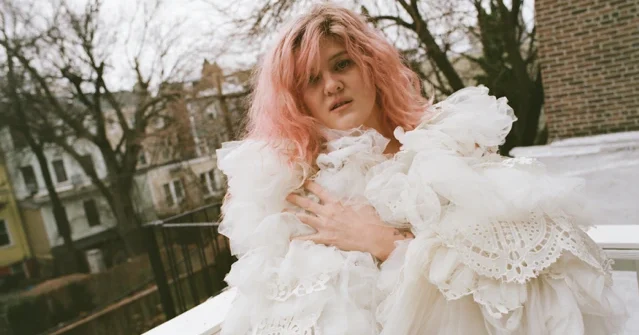
Jana Horn has announced a new self-titled album, which will be out on January 16 via No Quarter. To mark the news, she’s shared the quietly vivifying opening track, ‘Go on move your body’, with a video directed by Travis Kent and filmed around New York City. Check it out below.

Horn mostly wrote the album during her first year of living in New York, where she moved after completing a creative writing MFA in Charlottesville. ‘Go on, move your body’, though, dates back to her days in Austin, Texas, around the time that she self-released her debut album Optimism. “I can see how the conditions of my life may have caused it to resurface, but it wasn’t a conscious decision then,” Horn explained. “It just felt like it was time… to be reiterated.”

“Moving to New York after graduation had felt almost too right, like an arranged marriage,” Horn reflected. “I was pretty unhappy for a while. My life was still in Virginia, where my friends were, in Texas, where my mother was learning to live again after years of being passed from one hospital to the next… I drifted through the city in pajamas, at midday.”

Jana Horn follows 2023’s The Window Is The Dream. The singer-songwriter decamped to Sonic Ranch in Texas to record the album alongside drummer Adam Jones and bassist Jade Guterman, and she finished the last vocal and synth arrangements in her Brooklyn apartment. Adelyn Strei contributes flute and clarinet on a number of tracks.

“There’s some inherent conflict, I think, in any creation, but also apparently in our dynamic, and I wanted the recording to reflect that,” Horn said. “Our broken-down, elemental approach. As much as the music, the silence, space.”

Read our Artist Spotlight interview with Jana Horn.

Jana Horn Cover Artwork:

Jana Horn Cover

Jana Horn Tracklist:

1. Go on, move your body
2. Don’t think
3. All in bet
4. Come on
5. Love
6. It’s alright
7. Unused
8. Designer
9. Without
10. Untitled (Cig)

Mandy, Indiana Announce New Album ‘URGH’, Share New Song ‘Magazine’

Mandy, Indiana are back with the news that they’ve signed to Sacred Bones. They’ve also announced a new album, URGH, which is set for release on February 6. It’s led by the throbbing, visceral new single ‘Magazine’. Check it out below.

“‘Magazine’ is the expression of the frustration and deep-seated violence I felt while attempting to recover from being raped,” vocalist Valentine Caulfield shared in a statement. “Just like most victims of sexual assault, I will never get justice, and just like most perpetrators, my attacker will never be punished. My therapist encouraged me to channel my anger into something productive, so here it is: my primal, screaming call for retribution. It is the only way I will ever get to say to my rapist: you hurt me, so I’m going to hurt you.”

Guitarist and producer Scott Fai co-produced and mixed URGH with Daniel Fox of Gilla Band. The follow-up to 2023’s I’ve Seen a Way was written during residency at a studio house in the outskirts of Leeds and recorded across Berlin and Greater Manchester. Both Caulfield and drummer Alex Macdougall were undergoing multiple rounds of surgeries while the album was being written and recorded. “A lot of the record is a remix of itself,” Fair and Macdougall explained. billy woods notably features on a track called ‘Sicko!’.

Revisit our Artist Spotlight interview with Mandy, Indiana.

URGH Cover Artwork:

mandy indiana urgh cover

URGH Tracklist:

1. Sevastopol
2. Magazine
3. try saying
4. Dodecahedron
5. A Brighter Tomorrow
6. Life Hex
7. ist halt so
8. Sicko! [feat. billy woods]
9. Cursive
10. I’ll Ask Her

Daphni Announces New Album ‘Butterfly’, Shares New Songs

Daphni and Caribou are the same person. Daphni’s music tends to be dancier, but they’re both aliases of producer Dan Snaith, which makes one of two singles he’s released today a bit unconventional. ‘Waiting So Long’, which will appear on Daphni’s just-announced album Butterfly, features Caribou, and it does almost feel like a Daphni rework of a Caribou track. The other new track from Butterfly is called ‘Lucky’, and it’s cartoonishly trippy. Take a listen below.

Explaining ‘Waiting So Long’, Snaith said in a press release:

People understandably always ask about the difference between Caribou and Daphni music – how I decide which is which. I think there have been times where the music I’ve made under the two aliases has been farther apart and times – eg right now – where they’re closer together. One big thing that has always differentiated them is my voice. I’ve never sung on a Daphni track. When I started ‘Waiting So Long’ initially it was an instrumental. The lyric and the melody came to me as I was working on it and I just recorded it without thinking too much about it, but when I listened back to it a few days later it was the first time that i’ve had the sense that a track belonged to both aliases – like Daphni had sampled a Caribou vocal or something like that. I’m not in the midst of some existential crisis; I haven’t, hopefully, slipped too deep into the welcoming waters of the pool of Narcissus; I don’t agonise about what track ends up under what alias – in fact the opposite. I worry about it less than ever and just go with my gut instinct. On a practical level I just felt like this was a track that both Daphni and Caribou fans might want to hear.

Butterfly, the follow-up to 2022’s Cherry, arrives on February 6. It features the previously released songs ‘Sad Piano House’ and ‘Clap Your Hands’. “Daphni music is still music that I’m making primarily for the purpose of playing in my DJ sets,” Snaith said. “The majority of the tracks on this record I do play regularly in my sets. But then there are a bunch – slower, weirder – that I don’t usually play… or wait… maybe the point is that I’d only play them in the right club.”

He added:

Around the time I was finishing up this album I played a long set in a club called Open Ground in Wuppertal, Germany.” Snaith recalls, “It’s kind of, in one sense, the platonic ideal of the kind of club I’d want to play in. Every single decision has been taken, at great expense, with the aim of making the perfect sounding medium sized club room. But on top of it being the perfect acoustic environment it also is run by an amazing collection of people in a way that gives it a sense of community that dance music at its best provides. It is an absolute pleasure to play in that room to a crowd of people who come from all over. Playing in there you feel like you can play anything, and I played works in progress of pretty much every track on this album in my set there. Don’t get me wrong, I love playing a short set at a festival or in a more raw warehouse kind of club where you bang it out and only really functional music works but on record I guess the point of these Daphni records is to keep in mind a more expansive idea of dance music where the parameters are broad and the church is broad. I think that actually putting really functional stuff next to weirder tracks (both on an album and in a dj set) might be the thing that’s still most interesting to me.

Butterfly Cover Artwork:

Daphni-Butterfly cover

Butterfly Tracklist:

1. Sad Piano House
2. Clap Your Hands
3. Hang
4. Lucky
5. Waiting So Long
6. Napoleon’s Rock
7. Good Night Baby
8. Talk To Me
9. Two Maps
10. Josephine
11. Miles Smiths
12. Goldie
13. Caterpillar
14. Shifty
15. Invention
16. Eleven

Overwatch 2 Rolls Out Mid-Cycle Update for Season 19

0

Overwatch 2 has officially dropped a big mid-cycle update for Season 19. Specifically, it continues the masquerade theme that launched last October 14. This time around, the patch adds a new limited-time mode, fresh skins, fixes, balance adjustments, and many more.

Spirit Showdown

As revealed by Blizzard Entertainment, headlining the latest patch is Spirit Showdown. It is a limited-time mode where players switch heroes after every elimination. In the same way, losing twice without a kill leads to automatic hero change. The new mode challenges players to adapt and think quickly in a fast-paced fight.

“Every kill changes the tide, every respawn rewrites your story, and no two rounds will play out alike,” the studio said, hinting that this is a test of true skill in the game.

Mythic Cyber Fuel Junkrat and Junkrat’s Loot Hunt

The update also brings Mythic Cyber Fuel Junkrat. This new skin turns the demolition man into a cyberpunk-styled chaos artist. Also, it features unique visual and sound effects. These can even be customized when players unlock new colors, tires, and ambient glows.

At the same time, fans can also join Junkrat’s Loot Hunt. In particular, it is a returning event that lets players get up to 9 Loot Boxes. However, there is a new twist. In any mode, fans now earn a Loot Box every five matches. Plus, wins count double.

Story Feature, Champions Series, and Drives

Based on the announcement, the developers added a story feature. Players can learn about stories and lore through a central hub in the main menu. Particularly, it gives them a way to follow the legends through motion comics and cinematic content.

Similarly, the Overwatch Champions Series (OWCS) heads to DreamHack Stockholm for the world finals.

In the same way, Drives will come back to offer short progression tracks and rewards for dedicated players.

More Changes in Overwatch 2

Aside from the major content additions, the patch also brings general updates, 6v6 hero tweaks, and stadium adjustments.

For full patch notes, visit the official Blizzard Entertainment website.

Availability

The mid-season 19 update of Overwatch 2 is now live for all players. Also, Spirit Showdown will be available from November 11 to November 24. Junkrat’s Loot Hunt runs from November 20 to November 23 in the game. The OWCS starts on November 26 with live event finals on November 28 to November 30. Meanwhile, Drives will be open from December 4 to December 9.

With the new offerings from Blizzard, Overwatch 2 gives players a fresh gaming experience for the second half. It also builds momentum as the season nears its end with a December 9 wrap-up.