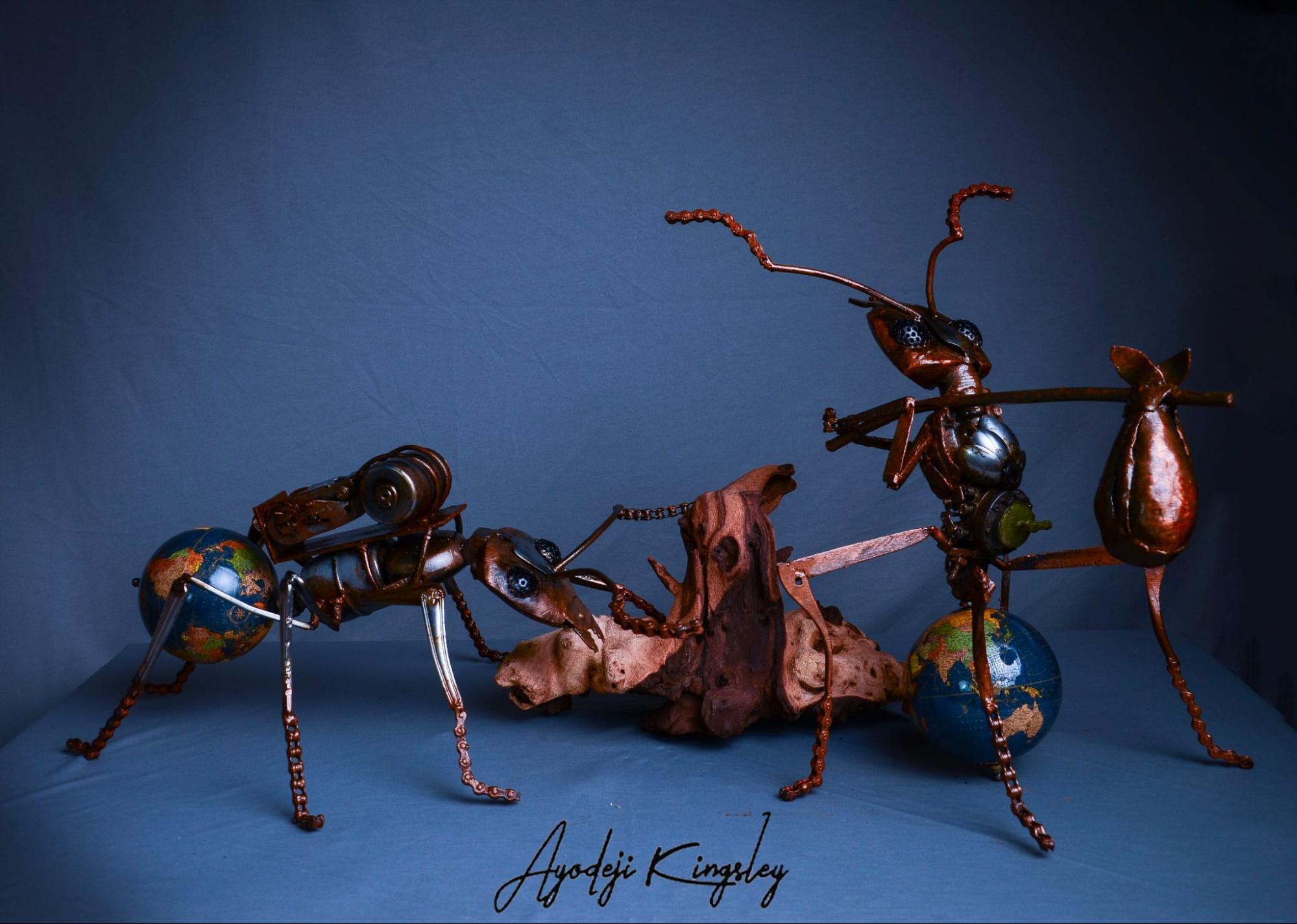
The Industrial Age enabled humans to expand so quickly, and one consequence is the climate catastrophe we’re living in today. While we may now be in the Information Age, it’s this industrial machinery that enables the modern comforts of living, yet it’s largely hidden from view. How many of us see how cars, clothes, and furniture are made? Ayodeji Kingsley brings this industrial machinery back into the foreground by transforming discarded machinery, tools, and industrial detritus into sculpture.
He uses these discarded parts to sculpt creatures from the natural world, in a knowing nod to the irony that the very machinery used to create the artwork has separated us from it. We have reached a point where many urban dwellers aren’t able to recognise some of the most common animals you may find a few miles outside of the city.
The peak of this irony may be seen in ‘Hoof Hearted’, a metal sculpture of a horse’s head. Until the dawn of the machine age, it was horses that did much of humanity’s heavy labour. Once supplanted, their numbers declined significantly, and they were retained only for leisure activities. In recreating a horse from metal, it recognises one of the most significant transitions in human history.
Kingsley’s heritage is Nigerian, which provides vital context for his work. A lot of the industrial and technological waste from the Western world ends up in Africa, and so creating works from industrial leftovers is a commentary on the unseen problems that old machinery creates and the recognition that we need to approach the globalised world through a more sustainable lens.
Art itself has had to face several questions about its sustainability, given its use of oil-based products and the carbon footprint of shipping. It’s through the use of discarded materials that I’m seeing a lot of the innovation in art. While the use of found materials goes back to Marcel Duchamp’s Urinal, the need to utilise them for sustainability feels like it’s only just getting started. The use of scrap metal in art is likely to increase as sustainability takes on a stronger role, and these works suggest that Kingsley is a forerunner of this movement.
This merging of the delicately sculpted and the readymade is evident in a work in which two rats scramble over a fire extinguisher. It’s a playful work but also reminds us that our detritus is also affecting the natural world, where animals work our rubbish into their lives, often to devastating effects, think of animals caught up in plastic causing them to suffocate.
Ayodeji Kingsley’s sculptures can be taken at face value as technically crafted artworks, the product of hours of skill and labour. However, there’s also deeper messaging within them about the Anthropocene age we’re living in, our disconnection from nature, sustainability, and our responsibility as the species that has damaged the earth and is also the one species that can save it.
More information on Ayodeji Kingsley’s work may be found on his website and Instagram.
When we see an artwork, we are seeing the final output of a creative journey. While it can be inspiring in itself, sometimes the value lies in witnessing how the work was created. Oluwaseun Ademefun applies this to her creative practice, opening it up so that others can see her creating art, and this extends to her participatory workshops.
Art has therapeutic benefits in viewing and creating it, and it’s this community value that the artist applies to her work. Community is vital in her native Nigeria, but here in the UK, it can often feel fractured, with many viewing our current generations as living through a loneliness epidemic. Her work embodies the idea of community and how it can create bridges across divides.
In her work ‘Generational Identities’, we see how persons from different generations are wrenched apart as the canvas curves away from the frame, leaving a gap between them. Yet it’s not a gap so large that it can’t be overcome. It’s recognising a communication problem, but it strikes me as hopeful work.
In her painting of Gbemisola, we see a young girl struggling to fit into British society while remembering her Nigerian roots. It’s a struggle that many immigrant children face as they want to assimilate with their new friends, adopting a Western name and values, while often putting their home country behind them. Yet it’s an identity that many of those same individuals return to as they age, proving that it’s what makes us different and stand out that is our strength. It’s an experience any first-generation migrant can identify with, and many second-generationers like myself also find personal.
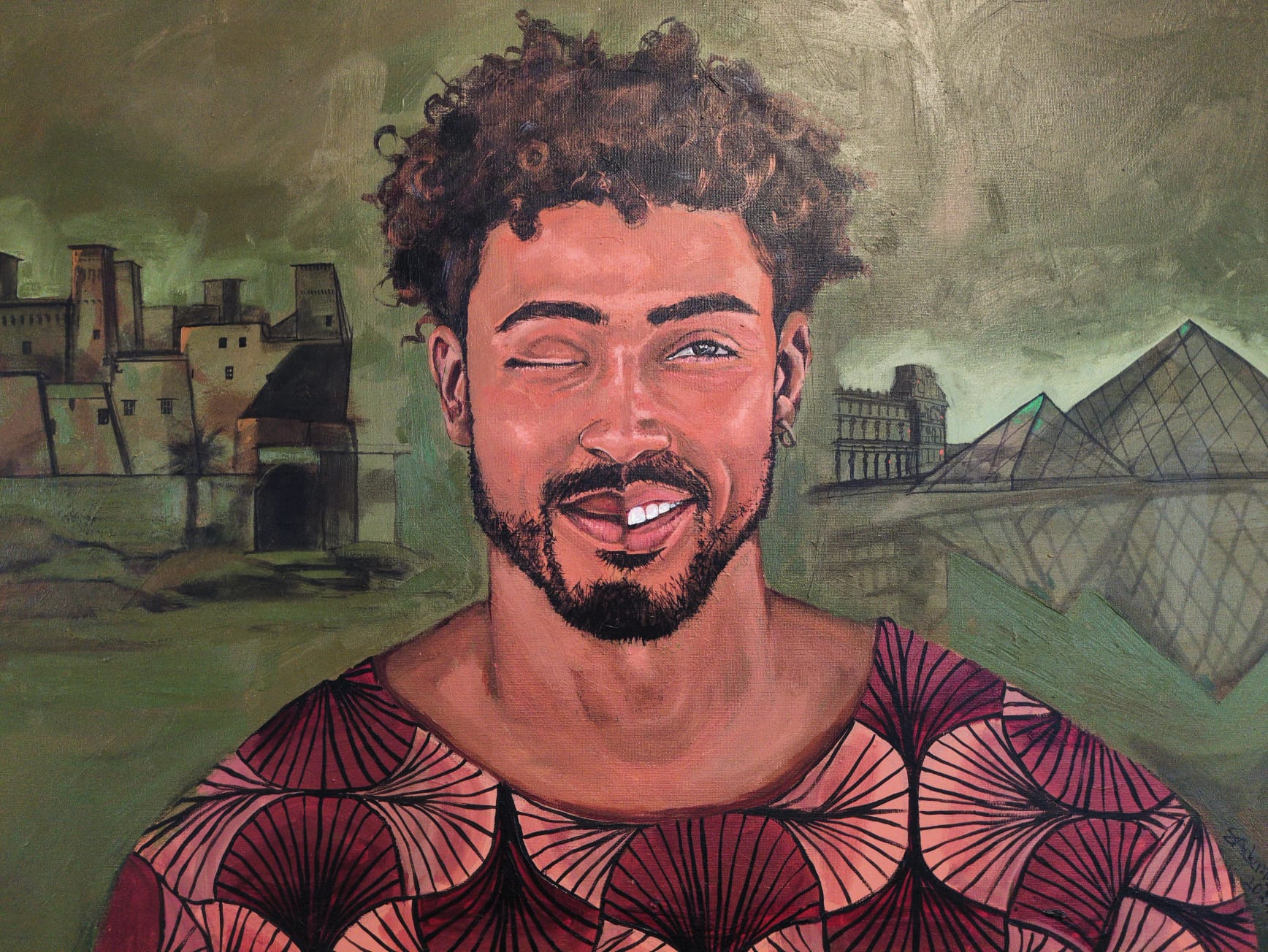
We see a similar story of dual identities play out in the painting ‘Morrocan’. On one side is his Moroccan hometown, and Le Louvre on the other, as he has travelled to Paris for financial opportunities. It’s that delicate balance of remembering one culture, while assimilating another, and many of us feel like we can never fully fit into either, becoming what are referred to as ‘third culture kids’.
Ademefun can also apply this vision to murals, as we see in one she designed in Southwark, now on display in Clichy, France. Some of her works incorporate discarded items, with a nude woman’s breast made of wine corks and a smoking man collaged from non-biodegradable materials. It’s a recognition that we are over-polluting the planet. If artists are going to provide a better vision for the planet’s future, they must also incorporate sustainability into their practice. Using other materials can add unique textures to artworks, beyond what paint alone can achieve. It also draws people in to interact with the works and study the intricate details and materials of each.
While recognising contemporary issues, including the climate catastrophe and the growing number of people living alone on a more populous earth, these aren’t works that espouse doom and gloom. They are a symbol of hope. Yes, we find ourselves in dark times. Still, it’s through community and collective engagement that we can create a better future for humanity, and Oluwaseun Ademefun’s work will continue to champion her wish for togetherness.
You can find out more about Oluwaseun Ademefun’s art on her website.
Light next to dark on a canvas may seem like opposites, but one cannot exist without the other. If there are no lighter colours to compare it to, how can the richness of the darker elements be evocative? It’s this dual harmony and tension that lies at the centre of the work of Azerbaijani artist Zibeyda Seyidova.
Works such as ‘Threshold of Night’ bring to mind those of the Abstract Expressionists and Colour Field paintings, particularly Mark Rothko’s Seagram Murals at Tate Modern. Both his works and those of Seyidova’s draw you in with the depths of their darkness, and the longer you stare into the darkness, the more they peer into your soul. Are they doorways to somewhere spiritual or something altogether darker?
Limiting her work to the lens of Western art history only highlights half the story. Her works draw upon Islamic philosophy, particularly the dialogue between ẓāhir (the manifest) and bāṭin (the hidden). Heavily layering her works gives them a sense of texture. Still, her process also involves scraping back layers to reveal what’s beneath, prompting questions about what she has revealed to us through her paintings and whether more elements will reveal themselves the longer we gaze at them.
Islamic art has a long history of excluding figures, a practice known as aniconism. Through Seyidova’s abstract works, she is channelling human emotions through abstraction in a process known as dhikr, or remembrance.
Her abstract works do feature representational elements, as we see in her work ‘Point of Equilibrium’, where the dark triangle slashing across a pale canvas suggests something in the foreground is casting a shadow. It’s a recognition that there are architectural elements in abstract art, and she uses this to significant effect when she displayed her work in a hospital with the pale colours and clean lines mirroring those of the institution where they were housed.
The interplay of light and shade continues in her representational works, including ‘Veil’, in which a cloth is lit by sunlight streaming through a window. The haziness of the light suggests a moment captured in a dream, while the thick impasto texture suggests we can reach into the painting and grab the cloth.
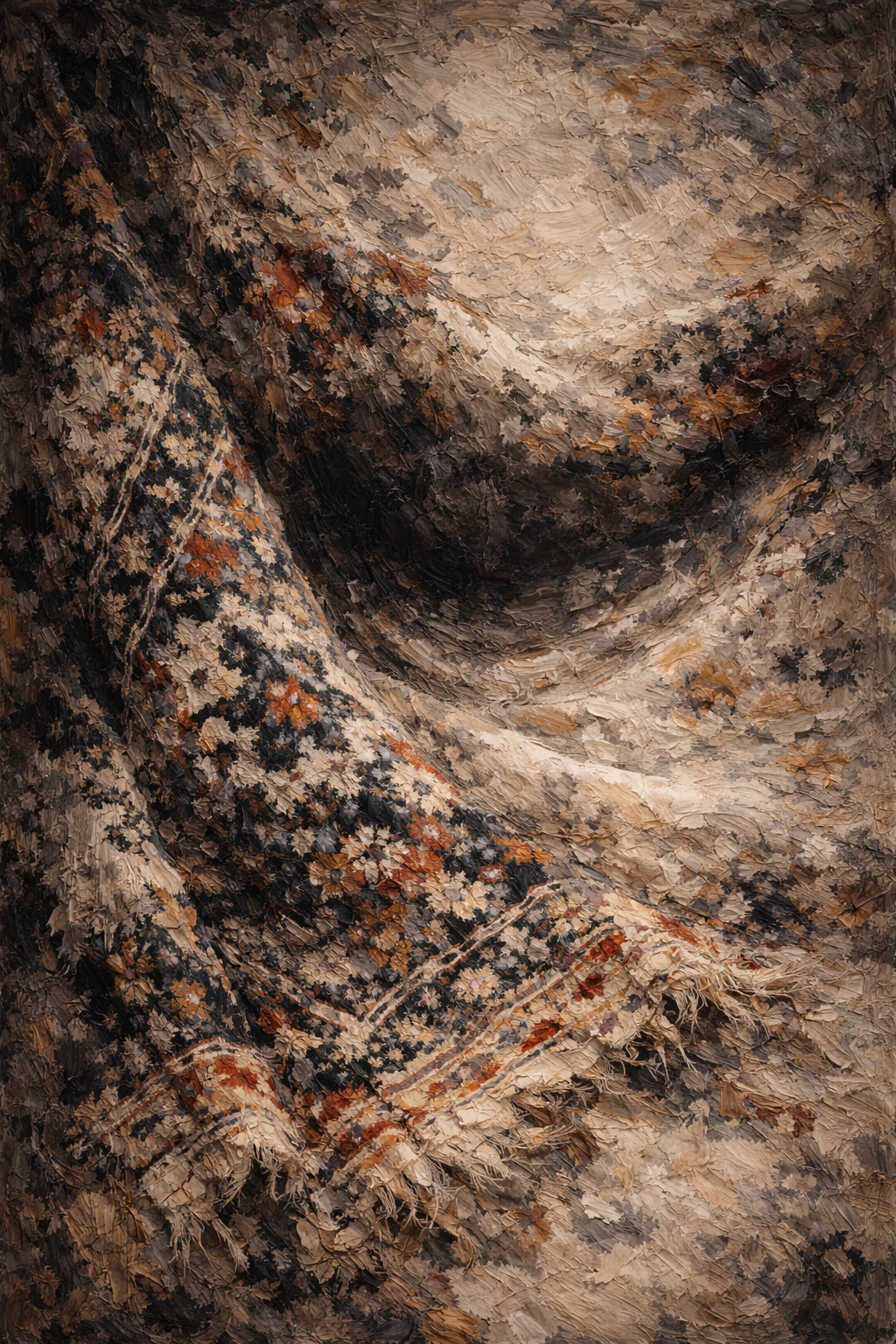
We see this again in her work ‘Transmission’, exploring the textures of a rug that makes you want to run your fingers along it. ‘Carried by Duration’ is the one piece where a human figure does appear, but it’s subtle, as it may not be noticed on first glance. Yet in the work, it feels less about the figure and more about how the light interacts with the textures of her hair and skin.
Spirituality is an essential part of Seyidova’s work, and these pieces, with their use of light, evoke the religious paintings of the Renaissance and Baroque eras. Whether viewing her abstract or more representational works, we’re asked to look deep into them, to discover what sits between the manifest and the hidden. Combining Islamic philosophy and Western art history gives her a unique voice within the world of abstract contemporary art.
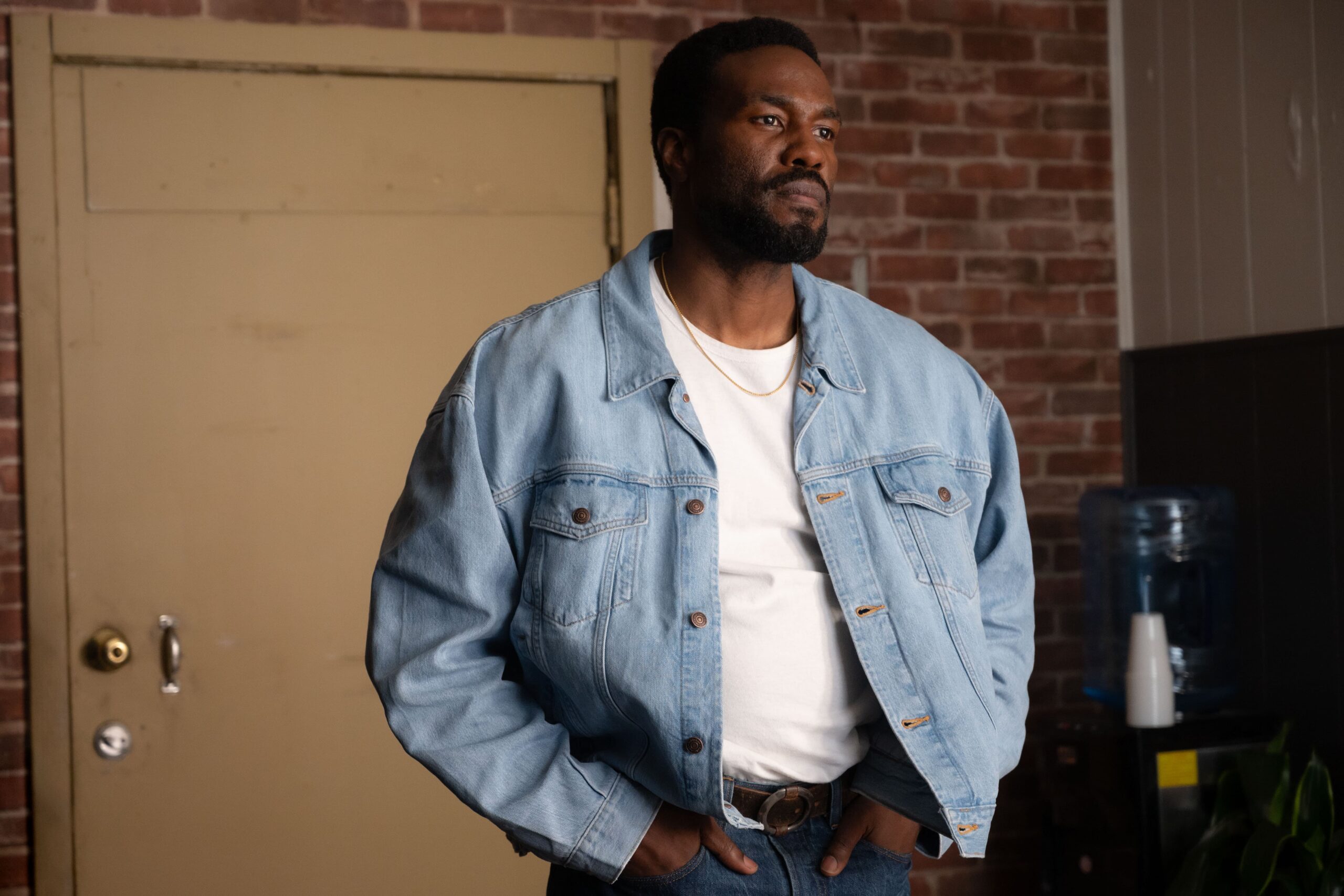
Auditioning to play a superhero is difficult enough on its own. Doing it while secretly being one is where the official trailer forMarvel’s Wonder Man drops us into. For a MarvelTV series set to arrive in January 2026, Wonder Man has flown unusually under the radar, with the studio keeping details close to the chest until now. The recently released official trailer for the series finally pulls back the curtain on Yahya Abdul-Mateen II’s Simon Williams, an “aspiring actor” with superpowers who finds himself auditioning to play a superhero in a big studio remake.
The movie in question is an in-universe Wonder Man reboot, set in motion when a legendary filmmaker comes out of retirement and opens the casting call to the public. Marvel is using the classic “film-within-a-film” (or here, film-within-a-series) trope to poke fun at where superhero stories are right now, and honestly, it looks absurdly entertaining, and far more self-aware than a standard origin story. With the series now just a few weeks out from its release, here’s everything we know so far about Marvel’s Wonder Man, including its release date, plot, cast, trailers, and more.
Marvel’s Wonder Man: Release Date
Marvel’s Wonder Man is set to premiere on January 27, 2026, on Disney+, making it one of the first MCU releases of the year. The eight-episode Disney+ series is co-created by Destin Daniel Cretton, who previously directed Shang-Chi and the Legend of the Ten Rings and the currently in-production Spider-Man: Brand New Day, and was developed alongside Andrew Guest, who’s also serving as the series’s showrunner.
Marvel’s Wonder Man: Cast
The cast lineup for Wonder Man features familiar MCU faces alongside actors making their Marvel debut. Leading the series is Yahya Abdul-Mateen II as Simon Williams, an actor trying to make a living in Hollywood. This marks Abdul-Mateen II’s third live-action comic book role, following his work on HBO’s Watchmen and his turn as Black Manta in DC’s Aquaman films.
The most recognisable Marvel return comes from Sir Ben Kingsley, who reprises his role as Trevor Slattery. Kingsley first appeared as the character in Iron Man 3 and later returned in 2014’s Marvel One-Shot short film All Hail the King and Shang-Chi and the Legend of the Ten Rings. Also returning is Arian Moayed as Agent P. Cleary, representing the Department of Damage Control, who we also saw in Spider-Man: No Way Home.
The supporting cast also includes Demetrius Grosse as Eric Williams, Simon’s brother, and Ed Harris as Neal Saroyan, Simon’s agent, alongside a broader group of actors. Here’s the currently confirmed cast for Marvel’s Wonder Man:
Yahya Abdul-Mateen II as Simon Williams aka Wonder Man
Ben Kingsley as Trevor Slattery
Zlatko Burić as Von Kovak
Arian Moayed as P. Cleary
Demetrius Grosse as Eric Williams aka Grim Reaper
Ed Harris as Neal Saroyan
X Mayo
Olivia Thirlby
Byron Bowers
Lauren Glazier
Béchir Sylvain
Manny McCord
Simon Templeman
Joe Pantoliano
Image Credit: Marvel Entertainment
What Will Marvel’s Wonder Man Be About?
Marvel’s Wonder Man is very much a superhero series, though it’s told from an unusual perspective. According to the official logline, the series follows “aspiring Hollywood actor Simon Williams is struggling to get his career off the ground. During a chance meeting with Trevor Slattery, an actor whose biggest roles may be well behind him, Simon learns legendary director Von Kovak is remaking the superhero film “Wonder Man”. These two actors at opposite ends of their careers doggedly pursue life-changing roles in this film as audiences get a peek behind the curtain of the entertainment industry.”
The Disney+ series is releasing under Marvel’s Spotlight banner, which essentially means the story will be more self-contained, with fewer ties to the wider MCU. Moreover, Marvel has been clear that this is not a typical superhero series and will instead focus on character work, performance, and the realities of trying to make it in Los Angeles.
Studio boss Kevin Feige has described Wonder Man as “extremely different than anything we’ve done before,” while executive producer Brad Winderbaum has called it a sincere and “beautiful” project that is a love letter to filmmaking and acting as a profession.
Winderbaum told Collider, “It’s a very new flavour for Marvel. It’s straight from the minds of (co-creators) Destin Daniel Cretton and Andrew Guest. Honestly, it is one of my favourite things ever. I think it’s the best show no one’s ever seen, and I’m very excited to see the audience reaction to it. I think it’s a love letter to what we do as filmmakers.” He went on to add, “It’s a love letter to acting as a profession, and it’s a very sincere, beautiful show.”
Is There A Trailer For Marvel’s Wonder Man?
Marvel kicked off the new year with the first official trailer forWonder Man, offering a closer look at the upcoming Disney+ series. The footage introduces Simon Williams (Yahya Abdul-Mateen II), an aspiring actor struggling to break through in Hollywood, and Trevor Slattery (Sir Ben Kingsley), a washed-up performer whose biggest roles are long behind him. Their paths cross when legendary director Von Kovak announces a reboot of the in-universe superhero film Wonder Man, giving both men what could be their first or last real shot.
The catch is that Simon is clearly hiding a rather large secret. When he shows up for an audition, he’s asked to sign a disclaimer confirming he doesn’t have superpowers. He answers with a casual “Yeah,” even though he’s clearly not telling the whole truth.
We also see Arian Moayed returning as Agent Cleary from the Department of Damage Control, who wastes no time in calling Simon an “extraordinary threat,” so it looks like keeping his abilities hidden might be the real challenge ahead for Yahya Abdul-Mateen II’s Simon.
Are There Any Other Shows Like Marvel’s Wonder Man?
While you wait for Wonder Man, you can check out Loki or WandaVision on Disney+, both of which are more meta in nature. Outside the MCU, Prime Video’s The Boys pushes the meta angle even further, with a far darker, more cynical spin on superheroes.
Entering the space of Kairós: Between Choice and Fate at Batsford Gallery has a very charged yet subtle quality. The gallery’s atmosphere seems more akin to a threshold than an empty box for exhibiting artworks. This feeling of being suspended is deliberate, and it makes perfect sense. The exhibition is based upon Kairós, the Ancient Greek term that refers to that critical juncture where chance, choice, and destiny are aligned. At first glance, the show sets itself up in that fragile space of uncertainty and choice as being experientially lived, as opposed to merely stated.
Kairós: Between Choice and Fate was organized by PA Art; PA Art is a long-standing supporter of contemporary visual art, curator experimentation, and the growth and development of artists. As such, PA Art functions within the changing landscape of London’s art community as a connective tissue between artists, ideas, and larger cultural conversations. That attitude is very apparent in this exhibition. The exhibition does not express one unified idea. Rather, it provides a platform for multiple voices to converge, intersect and sometimes contradict each other.
Hui Qi and Huan Zhou curated Kairós: Between Choice and Fate and have resisted the urge to represent freedom and fate as mutually exclusive. Instead, the exhibition treats freedom as an interdependent entity; as something that is often compromised and influenced by factors including our psychological habits, social structures, technology, and inherited stories. Therefore, the exhibition serves as a meditation on how choices emerge under constraints, and how the decisions we make are rarely as autonomous as we would prefer them to be.
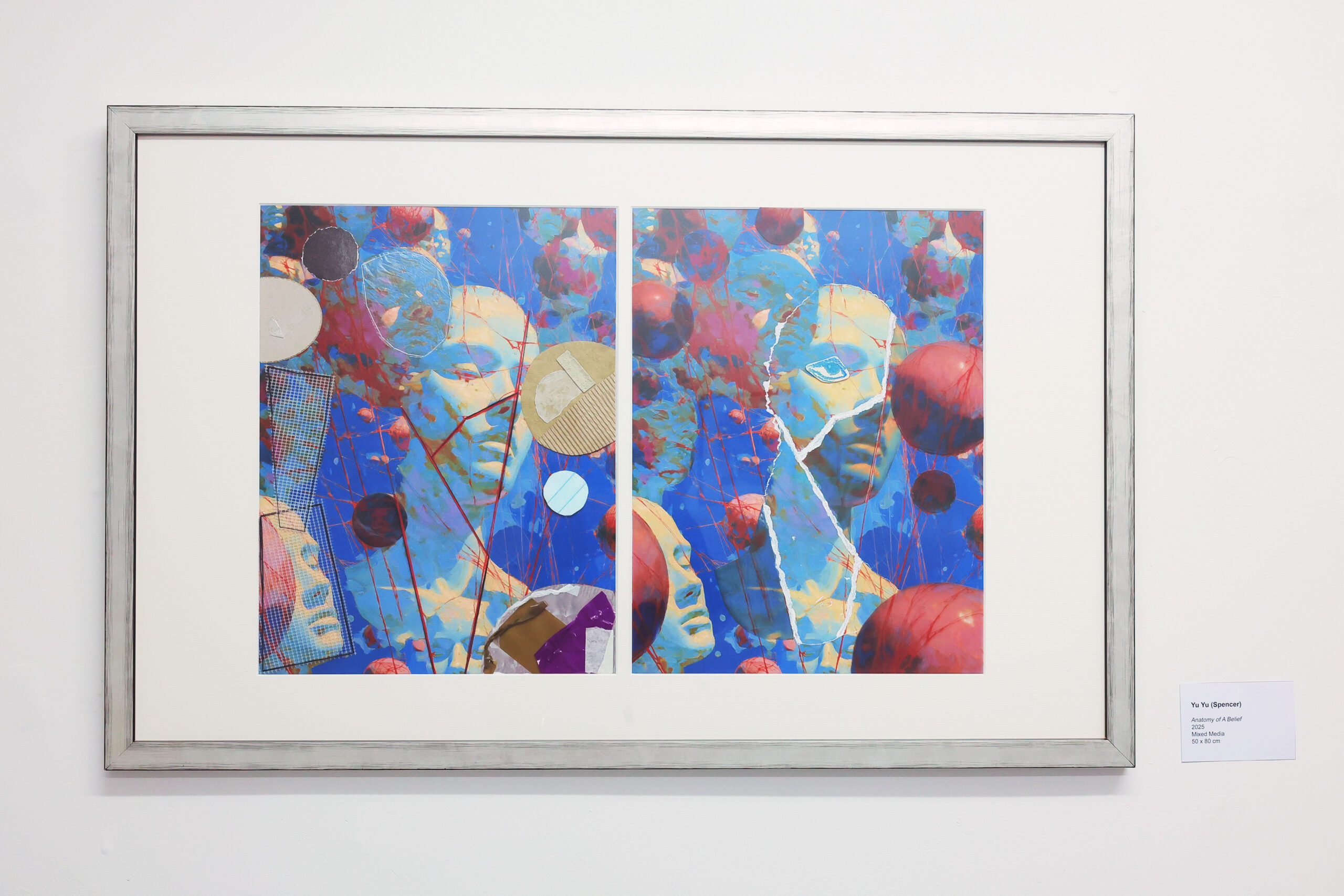
Anatomy of a Belief by Yu Yu (Spencer) is perhaps the most psychologically engaging work in the exhibition. The work is exhibited as a diptych composed of mixed media and relates to the phenomenon of confirmation bias. An abstract behavioral concept is rendered in a tactile and unsettling way. The left side of the panel is compact and restricted. Red yarn is threaded throughout fractured material and creates a visual enclosure which illustrates how information-based environments can confine thought and identity alike. The sense of confinement experienced here is similar to the experience of being surrounded by an algorithmically-supported belief system.
Credit: Jiaqing Chen
The right panel does not provide release, instead it creates disruption. The figure is broken apart and remade, with an additional eye symbolizing awareness rather than escape. Spencer portrays self-awareness as a laborious and disorientating process. To see is not to be free immediately, but to face the discomfort of realizing your cognitive boundaries. Within the exhibition’s overarching structure, the work represents the relationship between agency and inevitability. We perceive our beliefs as being selected by us, however they are frequently unconsciously constructed well prior to our recognition of them.
While Spencer examines the structural influences of belief, Manlin Zhang examines the origin of thought. Intelligence in Motion-Dreaming Butterfly is an oil-on-claybord painting that depicts intelligence before it develops into language or logical constructs. The surface is alive, and holds the forms of both intuition and computation in a state of ambiguity. Everything is fluid. Thought appears to be recursive, incomplete, and inconclusive.
Credit: Jiaqing Chen
A fragile equilibrium exists in the work, and there is an indication that meaning is forming, but that it has not made a decision as to what form that meaning will take. In the context of Kairós, this is a pivotal moment. It is the point of transition before a decision is articulated, and before an action evolves into a consequence. Zhang’s painting reminds us that freedom may be most active in those pre-symbolic realms where intelligence remains in flux and results remain undefined.
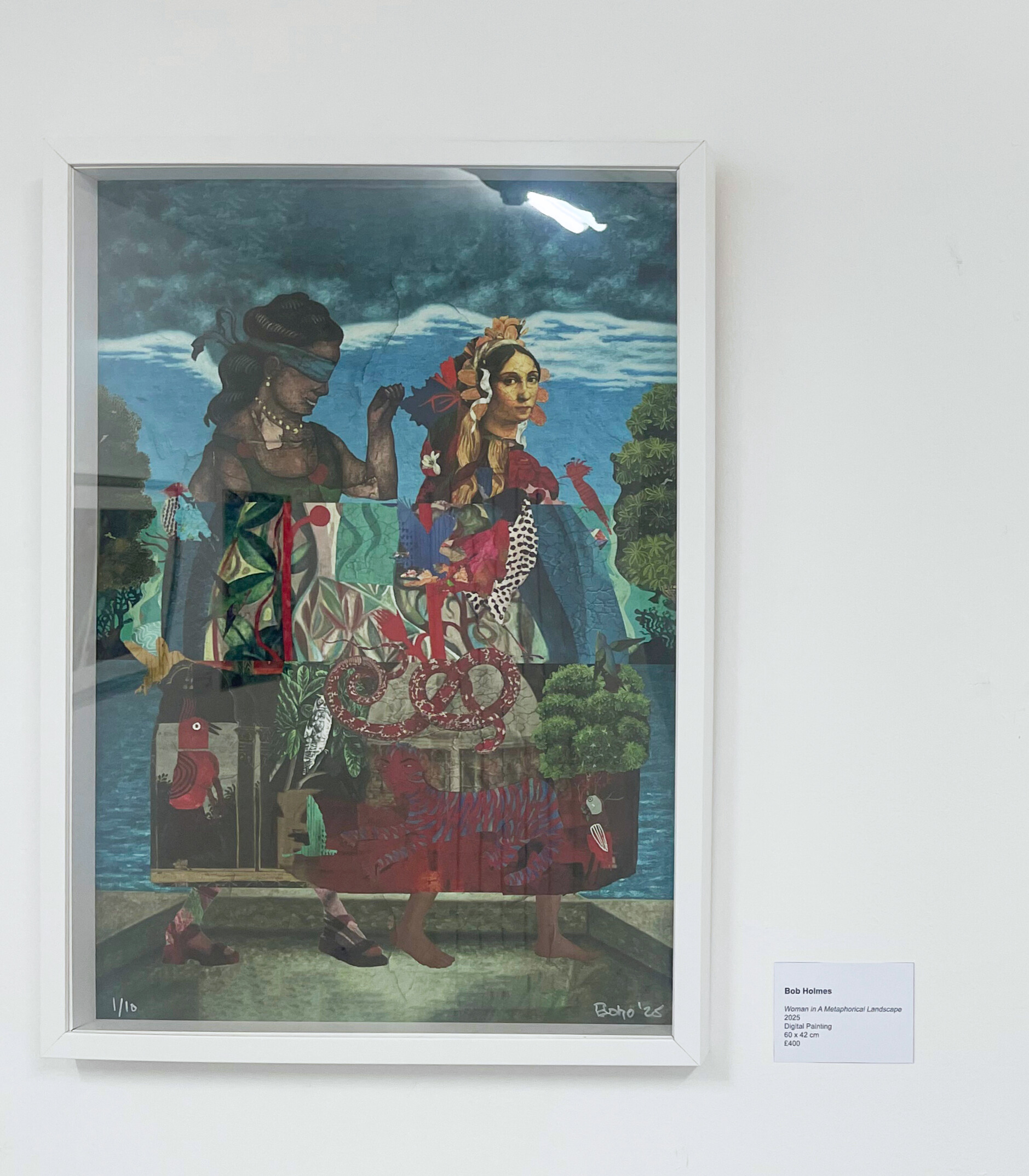
Bob Holmes’ use of a more obvious symbolism is evident in Broken Continuum. Two female bodies are merged into a single fragmented body, eliminating the distinction between the self and others, memories and perceptions. Blindness and awareness are present in an uneasy balance, indicating that insight is never total, and that vision is always incomplete. Animals and botanical motifs appear throughout the composition, referencing ancestral memories, folkloric traditions, and myths.
Credit: Jiaqing Chen
Holmes appropriates the visual elements of Classical Portraits; however, he disrupts them through their fragmentation, layering and disjointedness. As such, the portrait appears to be both solidified and at the same time disconcertingly unrecognizable. Justice, inner sight, and internal blindness to the divine emerge, but they do so without finality. In this way, the work occupies a state of ambiguity as opposed to one of moral clarity; thus, it is consistent with the exhibition’s reluctance to represent choice as being either positive or heroic. Ultimately, the work demonstrates that choice is intertwined with what we inherit, what we forget and what we fail to see.
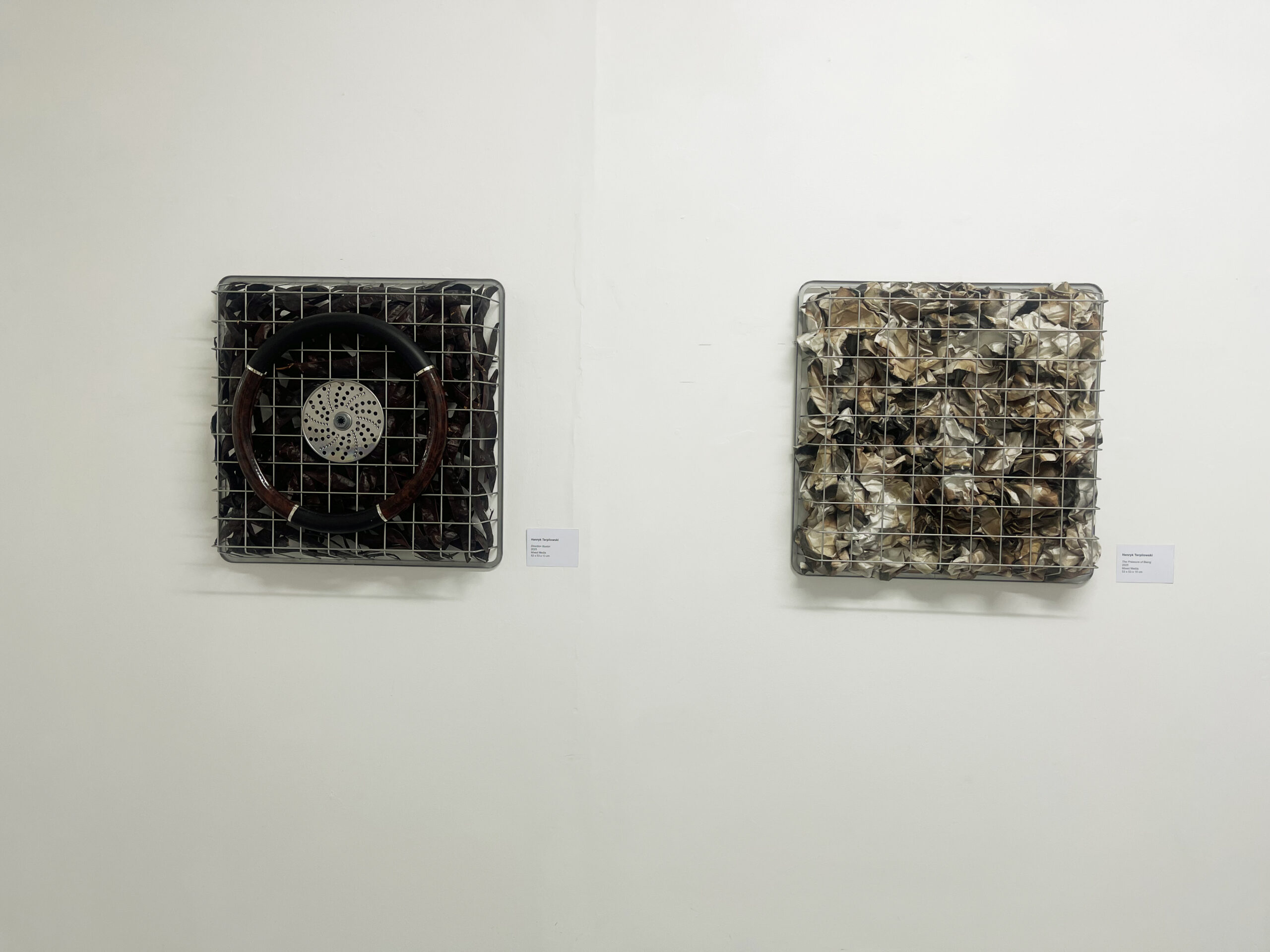
The opposition between apparent control and structural constraint is made visually explicit in Direction Illusion by Henryk Terpilowski. Compressed seed pods are a powerful symbol of growth and possibility which are embedded in a steel lattice grid. On top of the seed pods lies a found steering wheel; while the steering wheel is a ubiquitous symbol of human agency and direction, it is stationary. Therefore, it has no ability to turn.
Credit: Jiaqing Chen
The visual impression is immediate and subtle yet disturbing. Within a single object exist natural capacity, human intent and structural constraint. The work posits that our gestures of control are merely ritualized motions that occur within systems that determine the parameters of all possible outcomes. While the steering wheel implies choice, it provides none. It serves as a stark illustration of how quickly symbols of agency can camouflage structural limitations on freedom.
The presence of multiple artists (Alice Boot, Anastasia Neff, Eskild Beck, Gera Dunachie, Luke Bacon, Marian Obando, Rachel Barlow, Xiaohan Sun, Xiaoxiao Chen, Xiwen Xu, Yao Feiyun, Yilun Liu and Jiawen Zin Zhang) adds additional dimensions to the exhibition as opposed to each artist vying for attention. Their contributions collectively create a multilayered context of viewpoints. The overall atmosphere of the exhibition is conversational as opposed to didactic with each artist adding a unique nuance to the central inquiry of how choice functions in today’s society.
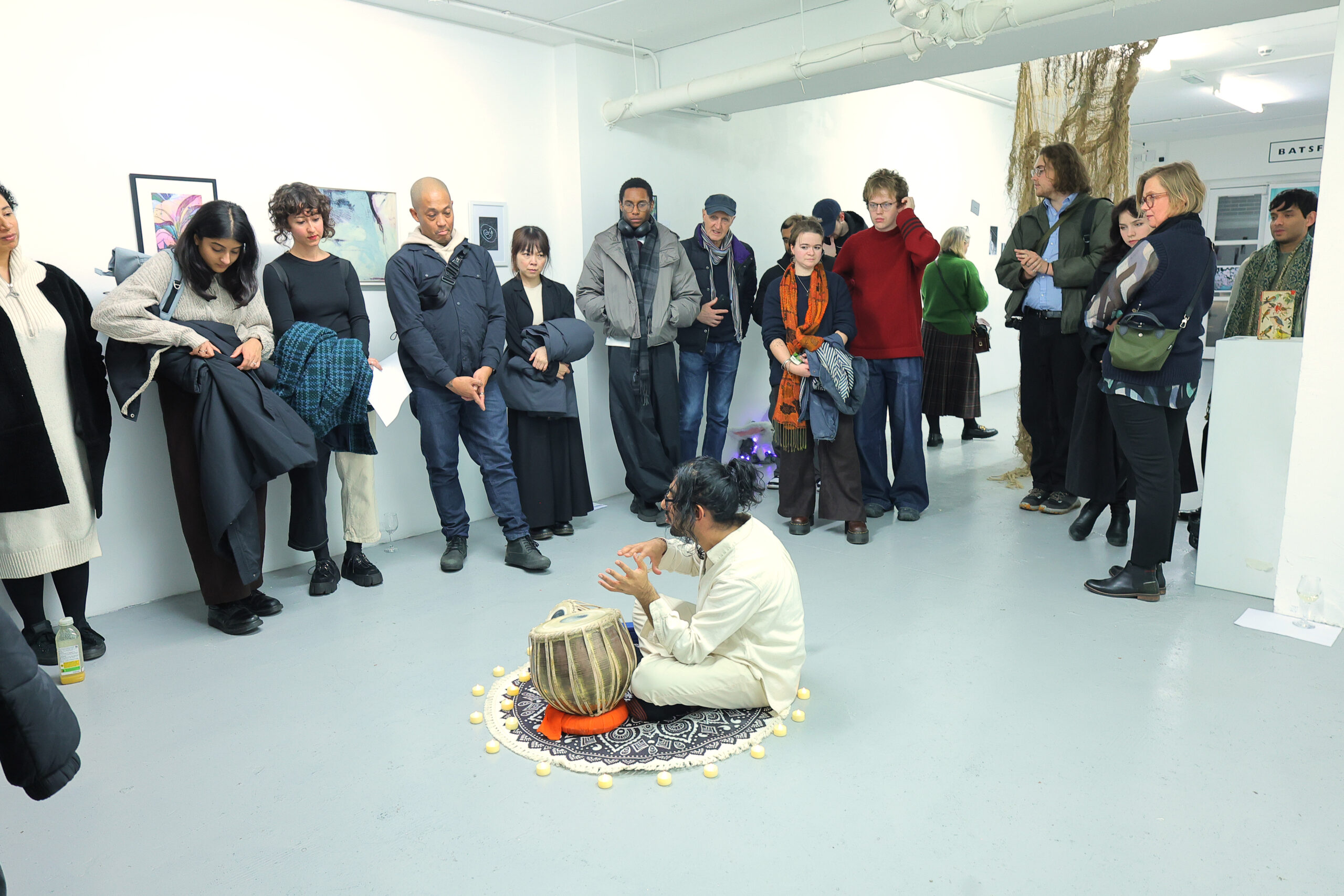
A live performance by Jay Mistry contributes to the temporal element of the exhibition. Performances take place solely in the present. They cannot be completely captured or replicated. The addition of performance reinforces the notion that certain types of agency are ephemeral, embodied and irreversible.
Credit: Jiaqing Chen
Ultimately, it is the exhibition’s willingness to leave questions unanswered and to avoid defining freedom and providing ways to regain lost freedom that distinguish Kairós: Between Choice and Fate. The exhibition creates a space in which ambiguity regarding freedom is both accepted and celebrated. Through the careful curation of Hui Qi and Huan Zhou, the exhibition develops into a space of reflection rather than conclusion.
Given the current cultural obsession with optimization, clarity and control, the refusal to provide answers or solutions to the dilemma of freedom seems relatively radical. The exhibition suggests that perhaps true freedom will not come about when individuals master systems, but rather when they recognize the points of intersection between decision and destiny. When choice does not cancel out fate, but instead comes close to it, there occurs a temporary shift.
Artists include Alice Boot, Anastasia Neff, Bob Holmes, Eskild Beck, Gera Dunachie, Henryk Terpilowski, Jiawen Zin Zhang, Luke Bacon, Manlin Zhang, Marian Obando, Rachel Barlow, Xiaohan Sun, Xiaoxiao Chen, Xiwen Xu, Yao Feiyun, Yilun Liu, and Yu Yu (Spencer).
The special performance is by Jay Mistry.
The exhibition is curated by Hui Qi and Huan Zhou.
Photography is by Jiaqing Chen.
Exhibition support is provided by Chün-Tse Chang and JiaJun Huang.
Birth is a miraculous part of any parent’s life, along this is the privilege of breastfeeding. Offering comfort, nourishment and strengthening the connection between mother and child. For some reasons, whether you may choose to stop breastfeeding early or after several years it’s important to have an understanding of this phase of parenthood. This transition can be approached gently and feel empowering if done with the proper knowledge and emotional preparedness. For a lot of families, everyday routines like using an infant carrier while walking or just for bonding moments can become an opportunity of reflection on their feeding patterns. This transitional phase of parenthood can help you have a better understanding of how you are able to transition into stopping breastfeeding in a comfortable and not forced way at all.
Deciding When the Time is Right to Stop Breastfeeding
The journey of breastfeeding, the connection mothers have with their child is unique on their own. And so is the decision about when stopping breastfeeding is necessary for them. For some parents, the decision can be based on health, personal comfort, emotional readiness and work commitments, some others follow through with their child’s natural pace and allow weaning to organically happen. Based on the World Health Organization’s recommendation, babies should be breastfed for at least the first 6 months and encourages to continue with breastfeeding alongside the solid foods for up to two years or longer. But it will really depend on each family’s preference.
There are signs that shows that your child may be ready to wean and closer into stopping breastfeeding, is when they aren’t that interested into nursing anymore, feeding sessions become shorter, a natural shift in their routine and better acceptance of solid foods. What matters most in this decision of stopping breastfeeding is that it comes from a place of balance and consideration, considering both your needs and your baby’s needs in this process.
The Gradual Approach: Slow Weaning for Comfort
The gradual approach won’t always be the gentlest method if you’re considering in stopping breastfeeding. But with this approach you can definitely minimize any discomfort, decrease the risk of mastitis and engorgement, slow weaning is the way to go. Other than reducing the risks and possibilities of discomfort, and other complication, it also helps your baby to adapt into the new routine gently. Keep in your mind that you should feel comfortable while doing this transition and also considering the feelings of your child that they won’t feel that they’re being deprived of comfort and love. Ensuring your comfort and that your child won’t feel deprived of their comfort.
To do this, you can start with eliminating one feeding session every few days or weeks, well, depending on how your body and your baby will respond to this change. Some mothers start with decreasing with the midday or non-essential feeds. This leaves bedtime or wake-up feeds for last due to the emotional importance of these sessions.
Aside from the balance that gradual weaning can help provide, there are other important advantages that it could help with. Like maintaining hormonal balance, preventing abrupt mood changes and decreasing risks of severe breast fullness. Other than this, it also allows flexibility for you to keep track on how your body is reacting to the change so you can adjust the pacing according to how your body and child reacts.
Managing Engorgement and Discomfort During Weaning
When you’re stopping breastfeeding, it comes with the concern of how to properly manage full and sore breasts. As your milk supply decreases, your body needs time to adjust to the change in how much it produces. Some strategies that could help,
Cold compresses to reduce the swelling
Hand expression or brief pumping only for comfort and avoid emptying the breast.
Wear a supportive bra that is firm but not too tight that it feels uncomfortable
Cabbage leaves are known to soothe inflammation
Using anti-inflammatory pain relief prescribed by your doctor.
It’s important to remember not to pump excessively and completely empty the breast, as this can signal the body to keep on producing milk since the milk supply is based on demand and supply principle. With the gentle, minimal relief, you can push through the process all while keeping the discomfort manageable.
Emotional Adjustments for Both Mother and Baby
More than the physical process, weaning is also deeply emotional. Those precious moments of holding your little ones close while breast feeding fosters the emotional bond which somehow turns into a comforting routine not only for the child but for the mother as well. Contrasting feelings, sudden outbursts, just some feelings that can make you feel uncomfortable, like guilt, longing and a feeling of relief that washes over you can be overwhelming. But these are normal when you’re transitioning into stopping breastfeeding.
At this transition period, babies too feel the need of emotional support. From a source of comfort and security, nursing is something that your little ones find familiarity the most. During this time, offering those extra cuddles, one-on-one time, and bonding activities like singing rocking, or gentle skin-to-skin contact is a great form of supporting them.
There are times when you’re going to experience and notice emotional swings and sudden changes. Keep in mind that hormonal shifts are a part of this weaning process. Don’t be afraid to lean on your support system. Taking good care of yourself and allowing these changes to flow through physically and emotionally can help you make peace with this transition.
Strategies for Weaning a Toddler or Older Child
When weaning or stopping breastfeeding for older children or toddlers it can be quite different from weaning an infant. Older children can be more invested and have stronger bond and feelings on breastfeeding, which makes the process needs more patience. Some effective strategies include,
Setting boundaries, like nursing only at specific times
Offer alternatives, like water, snacks, or hugs.
Some distraction techniques can also help, like playtime or outdoor activities.
Communicating openly, using simple explanations like “milk will be for later”
Introducing comforting routines like bedtime stories instead of bedtime nursing
Toddlers can have a better understanding of routine changes when you keep your calm, be consistent with it and empathetic with them.
Practical Tips for Reducing Feeds and Dropping Sessions
You may be weaning an infant or a toddler; the key is to stopping breastfeeding smoothly is planning and consistency. The gradual drop in feeding can help minimize the emotional pushback and physical discomfort.
Helpful tips for you,
Shortening each feeding session slowly.
Lengthening the time in between feedings to naturally reduce the demand
Offering more solid foods or other milk alternatives, if age-appropriate
Avoid nursing triggers, like certain chairs or activities that they associate with feeding
Staying engaged during the typical nursing times to redirect their attention
Over time, being able to incorporate these changes can be of great help for your little ones to guide them gently without feeling too overwhelmed.
Maintaining Breast Health After Stopping Breastfeeding
Even after you’ve completed weaning, at times your breast may continue adjusting and can look different. It’s important to keep your breast health in mind during this stage. Let me tell you, if you want to know more about post-weaning breast care, here are things you can do,
Redness or fever are possible symptoms of mastitis so watch out for them
Monitor for clogged ducts. Gentle massages can help if really needed.
Allow your breasts time to naturally shrink
Avoid any abrupt compression, as it can cause inflammation.
If you’re experiencing intense pain or suspecting infection, consult with a healthcare provider immediately. Most discomfort can resolve on its own within weeks as your milk supply continuously reduces until it has completely stopped.
Alternatives for Comfort and Nutrition After Weaning
Stopping breastfeeding doesn’t mean that you’re going to stop nurturing your little ones, it’s really a common misconception for many moms, they feel like they have to detach themselves with their child to stop them from asking milk. But don’t make this harder for you emotionally, as there are other ways that you can easily provide comfort, strengthen your love bond and keep them nourished as they grow stronger. For alternatives you can,
Rocking or gentle swaying
Skin-to-skin contact
Singing or reading together
Using transition objects like soft blankets or stuffed toys
If your baby is under one year old, it’s of utmost importance to keep breast milk or formula milk as the primary source of nourishment. Now when we shift and focus on older babies and toddlers, having a balanced diet with appropriate milk alternatives like a whole cow’s milk after age one, fortified plant-based milk or nutrient-rich solid foods can help them to continuously grow and keep them healthy and thriving.
When gracing your way into stopping breastfeeding, it’s important that you bring consistency, and security along in this period to help your little ones adapt to the change.
Conclusion
Breastfeeding is a wonderful but also an emotional journey, especially when you’ve decided in stopping breastfeeding. It’s a phase very different and unique from one person to another. Whether you start with gradually weaning, child-led weaning, or having a planned schedule, what matters the most is that this process supports your comfort and your child’s needs emotionally and physically.
Give yourself a break, there is really no “right” or “wrong” way when you’re into stopping breastfeeding. There’s only a way that can work best for your family and yourself, it’s not selfish to consider yourself when making decisions like stopping breastfeeding. With sufficient support, unwavering patience, and being mindful of these adjustments for your child, weaning can be as smooth and empowering transition for you to the next stages of parenthood
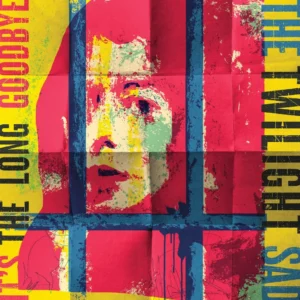
It’s the Long Goodbye marks the Twilight Sad’s first album in seven years. “It had to contain every element of emotion I was feeling,” singer/lyricist James Graham remarked, adding: “In the past I’ve used a lot of metaphors within my lyrics. With this, there’s not as much. The record is heavily influenced by my mental health, grief and loss, and the need to be strong in positions where you’re not feeling it. It’s a very human story, I think – this is just my version of it. I feel that everybody goes through something like this. Everybody loses somebody. Everybody questions life.”
In 2016, upon returning from a tour with The Cure, James discovered that his mother had been diagnosed with early-onset frontotemporal dementia. In November 2023, another tour with The Cure came to a halt as his mental health deteriorated. “And then my mum passed away in the January afterwards,” James said.
In addition to guesting on the record, The Cure’s Robert Smith – who provided additional guitars on ‘Waiting for the Phone Call, guitars/“Tron keys” on ‘Dead Flowers’ and six-string bass on ‘Back to Fourteen’ – offered “invaluable input on the demos.” “Then we had to piece together a band,” Andy MacFarlane recalled. Sometime Arab Strap player David Jeans and Mogwai live member Alex Mackay play drums and bass respectively. The LP was produced by MacFarlane at Willesden’s Battery Studios, with additional production from Andy Savours (My Bloody Valentine) and mixing by Chris Coady (Slowdive).
It’s the Long Goodbye Cover Artwork:
It’s the Long Goodbye Tracklist:
1. GET AWAY FROM IT ALL
2. DESIGNED TO LOSE
3. ATTEMPT A CRASH LANDING – THEME
4. WAITING FOR THE PHONE CALL
5. THE CEILING UNDERGROUND
6. DEAD FLOWERS
7. INHOSPITABLE/HOSPITAL
8. CHEST WOUND TO THE CHEST
9. BACK TO FOURTEEN
10. TV PEOPLE STILL THROWING TVS AT PEOPLE
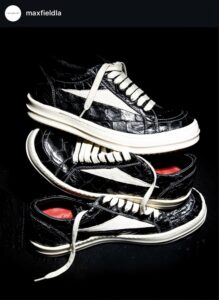
Los Angeles’ luxury darling Maxfield decided it was time to do sneakers with Rick Owens, naturally. Fashion’s appetite for exclucivity and rarity clearly isn’t satisfied yet, so the boutique’s debut footwear comes in 24 pairs and… well, fish. Exotic, I guess.
It seems creativity wasn’t exactly evenly split here. A generous portion went into the material, so by the time the collaboration’s name was due, it must’ve run out. “Vintage Sneaks by Rick Owens for Maxfield”, you judge. Nothing really crazy happened with the design either, it’s that familiar Concordians silhouette doing its best Vans impression, in a far more interesting finish this time, I’ll give them that. The sneaker sits low, laces up, has a toe cap, and a small leather detail on the side, nothing you haven’t seen before. The shark-toothed bumper sole steps in to carry the Rick Owens signature, while a red insole stamped with both names makes sure to remind you exactly who you’re paying for. Who knows, if I were Owens, I’d probably gatekeep the good stuff too, volumes, sky-heights, metallics, studs, and the list goes on.
@maxfieldla via Instagram
And that brings us to the fish, pirarucu leather, to be exact. Or arapaima. Or paiche. Enormous, freshwater, and frankly overqualified for sneakers. Its skin usually ends up on cowboy boots with scales that are thick, durable, and in lighter colors, borderline unsettling. So, of course, it’s black, it’s Rick Owens after all. Pirarucu is native to the Amazon, fished for food, its skin tragically wasted until fashion stepped in to save the day. Today, its capture is legally restricted to protected reserves, and the leather is reborn as a virtuous by-product, creating jobs, supporting Indigenous communities, and funding biodiversity preservation, all while conveniently ending up on a possible luxury sneaker. To be clear, this ethical framework comes from other Rick Owens products that used that leather. The sneaker itself arrives without much explanation, so fingers crossed. Same fish, same ethics, one would hope.
Among the many experiences, facing an accusation of sexual assault is one of the most overwhelming, particularly in Virginia, where the legal system can be complex. The emotional and social weight may be too much to bear. Understanding your legal options and available defenses is crucial during this difficult time.
“At moments like this, it is hard not to feel as though the deck is stacked against you, but let me be clear: An accusation is not a presumption of guilt, and every accused deserves a robust defense,” says Virginia assault lawyer Karin Riley Porter from Karin Riley Porter Criminal Defense Attorney. With the right legal representation, you can navigate these charges effectively.
You can beat sexual assault accusations with the following strategies, along with having professional legal help.
Consent
Probably the most salient question regarding sexual assault is, did both parties give consent to the act in question? If the act was an intimate activity between two consenting adults, a charge is unlikely to hold up under scrutiny.
Here is where it gets tricky: Virginia law defines consent as voluntary, active, and sober. Even the absence of clear verbal resistance can muddy this issue. An attorney may utilize testimony, written messages, or a timeline of events to prove that the act was not forced/coerced.
The problem in these cases is the gap between perception and reality. A court may hear two people describe the same event in completely different ways, underscoring the importance of presenting objective evidence of consent in the defense. Documentation such as text messages, emails, or witness accounts of the relationship dynamics can play a crucial role in establishing that consent was present.
Mistaken Identity
Sometimes it is a case of mistaken identity; the accuser has the wrong person in their mind. Though shocking, mistaken identity is a real problem and relatively common in sexual assault cases.
Think of cases where the scene was chaotic, poorly lit, or involved strangers. Eyewitness misidentification has led to wrongful convictions in the past, and attorneys generally make it a focal point of their defense. According to research from Cornell Law School, eyewitness misidentification is a leading cause of wrongful convictions in the United States.
That’s where modern technology can come in handy: surveillance footage, records of cell phone use, or DNA evidence that proves the accused wasn’t there at the time of the alleged incident. Even timelines can either confirm or reject a mistaken identity claim.
False accusations
While rare, there are, in fact, cases where someone will make a false claim of sexual assault. The reasons for doing so range from personal vendettas to custody battles to simply manipulating a situation.
What is particularly tragic about a false accusation is that it not only affects the person being accused but also brings doubt to actual victims of sexual violence. A reasonable defense attorney will scrutinize motivations or inconsistencies in the accuser’s story.
Things such as timeline discrepancies, conflicting testimony, or a lack of corroborating evidence can reveal a false accusation. It is not meant to demonize the accuser; instead, it seeks the truth. A thorough investigation into the accuser’s background, prior statements, and potential motives can uncover inconsistencies that support this defense strategy.
Lacking Evidence
Sexual assault cases, especially those without physical evidence, cannot stand on accusation alone. The state must prove the crime beyond a reasonable doubt. Without formidable evidence, it may not stand in court.
Insufficient evidence does not prove the incident did happen; it only means the prosecution has failed to prove guilt. The defense can point to loopholes in police investigations, a lack of forensic evidence, and untrustworthy witness testimony.
Everything counts in court; even the tiniest error, such as mishandling a piece of evidence, can inject reasonable doubt into the case. The burden of proof rests entirely on the prosecution, and any gaps in their evidence can be grounds for dismissal or acquittal.
Constitutional or Procedural Violations
This defense focuses on whether the police acted within the rules. If they did not, this might mean that the case collapses. For example, if evidence was obtained illegally, such as through an improper search and seizure, it might be barred from trial entirely.
Other constitutional rights violations of the accused may involve Miranda rights violations or an interrogation process that was not conducted as it should have been. An experienced attorney will review all aspects of the case handling for mistakes.
What’s more, procedural errors-such as failing to meet a court deadline or not turning evidence over to the defense-can weaken the prosecution’s case. In Virginia, more so than perhaps anywhere else in the country, the devil is in the details. Chain of custody issues, improperly documented evidence collection, or violations of the accused’s right to counsel can all serve as grounds for challenging the prosecution’s case and potentially having evidence suppressed or charges dismissed.
Conclusion
Facing sexual assault charges requires a strategic and well-informed defense approach. Each case is unique, and the defenses outlined above—consent, mistaken identity, false accusations, lack of evidence, and constitutional violations—can be powerful tools when applied correctly.
The key is working with an experienced attorney who understands the nuances of Virginia law and can identify the strongest defense strategy for your specific situation. Remember, an accusation is not a conviction, and everyone deserves their day in court with proper legal representation to protect their rights and future.
Xbox Game Pass has officially shared the first lineup of games for 2026. In particular, the wave of new offerings combines fresh titles and returning games.
According to Xbox Wire, 11 titles are coming to the service this month.
Arriving in Early January on Xbox Game Pass
Brews & Bastards
Launch Date: January 6
Game Pass Tier(s): Game Pass Premium, Game Pass Ultimate, PC Game Pass
Platforms: Cloud, PC, and Xbox Series X|S
Little Nightmares Enhanced Edition
Launch Date: January 6
Game Pass Tier(s): Game Pass Premium, Game Pass Ultimate, and PC Game Pass
Platforms: Cloud, Handheld, PC, and Xbox Series X|S
Atomfall
Launch Date: January 7
Game Pass Tier(s): Game Pass Premium
Platforms: Cloud, Console, Handheld, and PC
Lost in Random: The Eternal Die
Launch Date: January 7
Game Pass Tier(s): Game Pass Premium
Platforms: Cloud, Handheld, PC, and Xbox Series X|S
Rematch
Launch Date: January 7
Game Pass Tier(s): Game Pass Premium
Platforms: Cloud, PC, and Xbox Series X|S
Warhammer 40,000: Space Marine (Master Crafted Edition)
Launch Date: January 7
Game Pass Tier(s): Game Pass Premium
Platforms: Cloud, PC, and Xbox Series X|S
Final Fantasy
Launch Date: January 8
Game Pass Tier(s): Game Pass Premium, Game Pass Ultimate, and PC Game Pass
Platforms: Cloud, PC, and Xbox Series X|S
Arriving in Mid-January on Xbox Game Pass
Star Wars Outlaws
Launch Date: January 13
Game Pass Tier(s): Game Pass Ultimate and PC Game Pass
Platforms: Cloud, PC, and Xbox Series X|S
My Little Pony: A Zephyr Heights Mystery
Launch Date: January 15
Game Pass Tier(s): Game Pass Premium, Game Pass Ultimate, and PC Game Pass
Platforms: Cloud, Console, Handheld, and PC
Resident Evil Village
Launch Date: January 20
Game Pass Tier(s): Game Pass Premium, Game Pass Ultimate, and PC Game Pass
Platforms: Cloud, Console, and PC
MIO: Memories in Orbit
Launch Date: January 20
Game Pass Tier(s): Game Pass Ultimate and PC Game Pass
Platforms: Cloud, Handheld, PC, and Xbox Series X|S
Leaving on January 15 from Xbox Game Pass
Of course, the cycle continues. When the new batch of games lands on the subscription service from Microsoft, a set of titles will be removed from the catalog. This time, the games set to exit include Flintlock:The Siege of Dawn, Neon White, Road 96, The Ascent, and The Grinch Christmas Adventures.
What’s Next?
In the Xbox Wire announcement, Senior Community Lead Megan Spurr said that there will be more offerings very soon. Similarly, a report from Game Rant showed that there are four more Xbox titles arriving after the wave 1 roster. Particularly, the games to look forward to are Nova Roma (January 22), Menace (February 5), High on Life 2 (February 13), and Replaced (March 12).