Making your work publicly accessible is essential for breaking into the competitive world of professional creative photography. As is the case with any independent artist, having a strong online portfolio is one of the primary ways you will earn an income and grow your client base.
Bearing this in mind, a stunning portfolio is one of the most important tools you can use to make your craft sustainably profitable. So, how do you achieve that? While a sharp eye for detail and visual balance are already key traits of a professional photographer, knowing how to translate those skills onto a website platform can be tricky.
Let’s unpack the science behind a great photography portfolio and look at how you can create one that’s altogether beautiful, compelling, and able to generate income.
Neuroaesthetics: When Science Meets Visual Art
Let’s start off with a definition: neuroaesthetics is the way our brains interpret the signals they receive. The study of neuroaesthetics deals with the relationship between what our minds and bodies perceive and how we respond to it on a neurological level.
Now all of this might sound a little overly intellectual. But the basic principle is this: creating a solid, profitable portfolio is largely about knowing how to curate images and formats in a way that is most pleasing to people’s minds.
That involves developing an understanding of aesthetics, visual balance, color palettes, and contrast. And as a photographer, you probably already have skills in this area.
If you’re feeling overwhelmed by the prospect of setting up a digital portfolio for potential clients to browse, you’ve come to the right place. Below are eight tips for both professional and amateur photographers in need of stunning, functional, and profitable portfolios.
Tips For Making Your Photography Portfolio The Best It Can Be
Photography and graphic design may both fall into the category of visual art, but their rules, compositions, formats, and styles almost all come from different planets.
Whether this is your first time or your tenth time making a photography portfolio, everyone could use a bit of guidance. Take a look at these tips:
1. Use the right site
A strong portfolio starts with the right platform. While there are loads of portfolio sites to choose from that offer a wide range of templates, only a few will give you the creative freedom and quality that you need.
Look for portfolio sites that have been created with visual art in mind, as this makes it easier than ever for you to showcase your work at the highest resolution and presentation possible. The right platform will help you appear more professional, thus attracting higher-paying clients.
2. Determine your photography niche
To make your portfolio as profitable as possible, you need consistency in your work. Paying clients want to know that you excel at what you do—and you can show that side of your work by determining a niche to operate within.
This is true across all types of freelance careers. Clients tend to choose artists who specialize in a certain style or genre rather than a jack-of-all-trades, because it indicates that the person they’re hiring has deeper knowledge and experience in their particular craft.
Some niches also tend to be more profitable than others. For instance, in 2023, some of the most in-demand photography niches will include:
Event photography
Real estate photography
Fine art photography
Commercial photography
Social media photography
Portrait photography
If you don’t already specialize in any of these categories, it may be worth exploring them as additional skills to add to your toolbox. The more aligned your photography is with current market trends, the easier it will be to turn a sustainable profit.
Determining a niche is also good for creating aesthetic cohesion on your portfolio site. Consistency can lend itself to quality, creative direction, and career awareness.
3. Ask your photography friends for guidance
Even though your portfolio is ultimately all about you, that doesn’t mean you couldn’t use the perspectives of other professionals in your field. Now is the time to lean on your creative connections for feedback on the site and maybe even gain some insight into how you can improve it.
Making a portfolio is something that pretty much every serious creative professional has to do at some point. And the other photographers in your network may have valuable advice about how to make your work as profitable and attractive to clients as possible.
4. Make a good first and last impression
When clients are looking to hire a photographer, they’re looking to get impressed from start to finish. Making a good first impression is important because it sets a standard for the rest of your work and makes the portfolio as a whole more visually memorable.
But it would be an oversight to start off strong and get progressively weaker through the portfolio. Ending with work that’s as strong as the opening shots brings a necessary sense of visual completion and boosts clients’ perspectives of your work.
In your portfolio, you’ll also create your brand, and this needs to extend into other areas of your business too. You can use your branding everywhere, from your business cards and on other marketing material to your printable invoice templates and product packaging. This will create a lasting impression every step of the way.
5. Understand your target audience
One of the most powerful ways to make your photography portfolio more profitable is to gain a deeper understanding of your target market.
When it comes to selling any product, the first thing any business does is perform market research. The more you know about the kind of clients you are trying to attract, the easier it will be to curate your portfolio in a way that realistically appeals to them.
6. Get good copy to explain your profession
As much as a photography portfolio is about photographs, it should also be a place that potential clients can visit to learn more about you, the face behind the lens.
Bad copy looks unprofessional and sloppy—two things you naturally need to avoid if you want to earn money from your craft. If you’re not a skilled writer, bite the bullet and hire a professional copywriter to produce a top-tier artist bio and career description for your site.
Put Your Best Photos Forward
When it comes down to it, making a profitable portfolio is really just about showing off your best work and using a professional, tidy-looking platform. With the help of compelling visuals, seamless formatting, and easy-to-navigate layouts, your portfolio will sell itself.
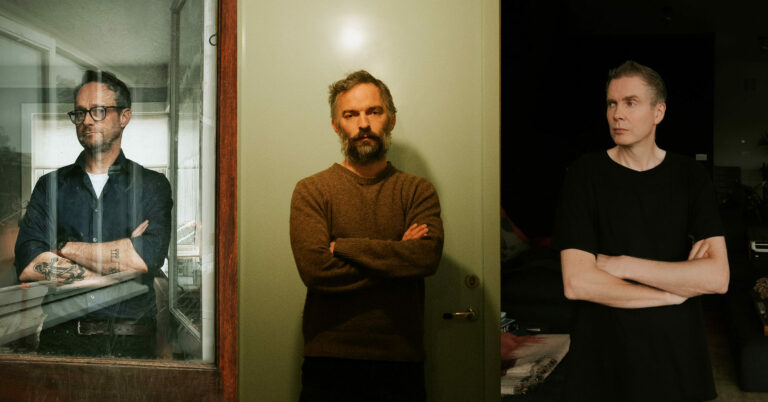
When Trevor Powers first started working on his next Youth Lagoon album, it felt like nothing was snapping into place. “Nothing really made sense,” he told me. “It seemed like I just kept hitting wall after wall.” He had released three acclaimed albums before putting the dream-pop project on hiatus, finding refuge at his Idaho home and experimenting with sound – sculpting, manipulating, and disintegrating it into something more fragile and personal on two tapes issued under his own name, most recently 2020’s Capricorn. Then, in October 2021, he suffered a severe reaction to an over-the-counter medication he took for a minor stomach ache that nearly cost him his voice. It was a chaotic and terrifying time in his life that, in addition to fostering a deeper appreciation for home, the people around him, and God, carried such spiritual weight that it pushed him to confront the fear that was choking up his creativity. On his new album Heaven Is a Junkyard, he applies this renewed perspective to peer into the haunted beauty of his small-town surroundings, blurring and melding with his own internal landscape in ways that feel not muddled or weightless, but revelatory and – once again, or rather still – comforting.
We caught up with Trevor Powers to talk about some of the inspirations behind Heaven Is a Junkyard, including Wim Wenders’ road movies, Idaho, people in his neighbourhood, and more.
Andrei Tarkovsky’s Stalker
Beyond their influence on the visual identity of the album, do you see a thematic or spiritual thread between the films you were watching and the ideas you explore on Heaven Is a Junkyard?
I definitely do. When I write, the main thing that I’m pulling from fuel-wise, when it’s not something that’s happening in my own existence – there could be sparks that come from a certain conversation I have with someone or some wild thing I see a neighbour do – the most consistent way for me to get new ideas is to just watch movies and find filmmakers and fall in love with their work. I find myself tapping into that side of things way more than I find myself tapping into other music. When I’m listening to a lot of other music, it’s much easier, because it’s the same medium to emulate that. With film, it’s a different thing altogether, so I could take all these feelings and everything that it’s giving me and then push that out in a way that it turns into its own beast.
Stalker is one of those films that, when I first started falling in love with the work of Tarkovsky, it was almost like I was being born as an artist for the first time. It’s that same feeling of being a little kid and you find something that’s so formative – we go through all these stage as kids that we take for granted. Say you’re 12 years old, every single thing that hits you, it becomes a part of you and your sponge and you regurgitate it, and somewhere along the line that gets lost in adulthood, for a lot of people at least. But that does not have to be the case. In adulthood, you have to seek it out a lot more, and you have to be willing to stretch yourself. It’s all about that constant state of discovery. I think the reason Stalker speaks to me so much is it’s such a naturalistic film, and there’s so much minimalism. But what really puts that movie over the top is the power of imagination; there’s just enough given to you that, somehow, he created the greatest science fiction film, in my opinion, of all time, without even showing you much in terms of what would be considered traditional science fiction. It’s all happening in your mind and in your subconscious. When I watched that movie for the first time, I was actually speechless.
Have you found yourself reaching back to it recently for that kind of inspiration?
I’ve rewatched it so many times, because whenever I get stuck, that movie is one of the big ones where when I watch it, it’s kind of like a hard reset. It helps me be able to refocus and set up my mind in this new way where things make a little more sense.
Wim Wenders’ road movies
Even beyond what’s categorized as Wim Wenders’ road movies, it seems like that idea of road and travel, that search for home or identity, is in pretty much every single thing that he’s done, and that’s what I relate to. Some of the stuff that makes his work so fascinating is when he has movies that take place in America, because he’s a German filmmaker, it has this fishbowl effect where he’s able to see things that Americans can’t see, and bring to light these things that we might be so used to seeing that we’re not really able to even witness the beauty about it. Paris, Texas is one of those. If Paris, Texas was made by a filmmaker that was born and raised somewhere in America, I think it would have been a dramatically different film – not to say it couldn’t have had magic, but I think the magic would have been very different. If you’re looking at something that you’re so used to looking at, it’s because we’re viewing things from such a one-dimensional point of view. It’s only if we move slightly to the side that then we see things for either how they really are, or it just gives us another way to understand what that thing is.
Do you actively try to adopt that perspective in your creative process? That seems to be where the song ‘Idaho Alien’ came from.
Yeah, that was totally it. I feel like that whole song was written from that perspective. That’s what I pulled a lot from. Alice in the Cities, which is one of my favorite films of all time, is a very different cinematic execution of what a road movie is and the boundaries that we set on that, but it’s again from the outsider’s perspective of travel and America. And with me having such an essential focus on home throughout the whole album, and I would say heavily on certain songs like ‘Idaho Alien’, some of Wim’s work pushed me to really force myself to move to the side, see what I see, move to the side again, see what I see – in terms not waking up and going through locks around my neighborhood and seeing the same old shit, because I was never really alive to that. It felt so numb because I was so used to seeing it. But if I put myself in someone else’s shoes every morning that I go for walk and I see what I see and I talk to the people I talk to – it did something in me with what I was able to pull from those experiences that I truly did feel like an outsider. Because often in real life I do feel like an outsider, and I do feel like there’s these worlds that exist in my head and in my head alone, and sometimes they’re playing out in real-time as I’m having “other real experiences” in actual life.
Idaho
I get the sense that your songwriting opened up on this album by being able zero in on what’s close to home. How would you paint a picture of Idaho to someone who’s never been there, and how do you feel that corresponds with how most people would describe it?
I’d say the experience living here is so dramatically different to what people might have in their head if they hear about Idaho. There’s so much crazy shit that goes down here, but then there’s also so much beauty, and it’s so multidimensional. First off, it’s a pretty big place, so it depends, obviously, on where you’re at in it. I live in Boise, and Boise is the capital, but even within Boise, the specific part of Boise that you’re in will determine the kinds of people you’re around, the kinds of ideologies you’re surrounded by, the kinds of religions that might be saturated within those areas, the images that you see on a daily basis. If you could live in the mountains, it could look like you’re in Alaska or you’re in Switzerland, because some of the forest is so dense and everything is just so fucking beautiful. But then you could also be in these areas where there’s prairies as far as the eye can see, and it feels like no man’s land. But that is also equally beautiful in a totally different way.
When you grow up here, it’s easy to take a lot of that for granted and not really see it. I’ll have friends that come to town, and we’ll go on road trips and just drive through Idaho, and a lot of what we see is some of the most beautiful stuff that they might have ever seen. And in their head they were thinking of it as being this – I have no idea what, but it’s not what they actually experience when they’re here. That being said, there’s also there’s so much in terms of the ideology thing – that’s another reason why it’s so easy to feel like an outsider. Politically, socially, everything that’s happening in my world is so different than what is common around some of these areas. It’s easier to be in certain parts of Boise, because certain corners can be way more progressive, more loving, accepting, gracious, all the above. But then other parts, you’re in a totally different world.
It’s so fascinating to have these two universes exist right next to each other. It’s not like some of these major cities like New York and LA, these places where you’re not constantly challenged by having conversations with people that you might never see eye to eye with. You’re forced to see them as a human being, to see that the reason that they are who they are is because of certain life circumstances, the way they were raised, the religions they were raised in, and it gives you this ability to have a little more grace with it all. I feel like that’s when we, as human beings, can truly start to transcend and advance more into this world that we want to be in. because if we’re not listening to each other, we’ll never get anywhere.
Do you feel like the past few years have solidified this idea of Idaho being home, or is it something you still wrestle with?
I definitely still wrestle with it, and I think I always will wrestle with it. I can’t tell you for sure where I’m going to be living in the next year, two years, three years, 10 years, there’s there’s no way to know. But I will say that, for the first time in my life, I’m having a firm grasp on what it is that home means, and it’s really attached to love. Wherever you feel that unbounded love, that’s home. One of the things I’ll bring up is, I have so many nieces, and being surrounded by that, their laughs and their smiles, it’s always so giving to my life. I might have certain parts of my life be chaotic, and then I come back home and I’m around them – it really fills my spirit. That’s not to say I’ll always be in Idaho, but it is to say that right now it’s continuing to give.
People around the neighbourhood
The neighborhood is sort of a character in itself on the album. When you think about it as a source of inspiration, do you have specific people or images in mind, or is it more abstract and imaginary?
It’s a combination of everything. If I’m playing with characters in a song, sometimes the characters will be an exact representation of some experience that I had; other times it’ll be a combination of multiple people in my life or multiple people I’ve kind of collected around me, if you will. I’m always trying to talk to people that I might not naturally have them be a close friend or choose to hang out with them all the time, but I’m always trying to meet new people and be in unexpected conversations, so I’m collecting those stories as they happen. The main thing throughout this whole album is the fact that I’m in all the stories. I’ll take these things that might feel a little bit like they’re coming from a fictional or semi-fictional universe, but I’ll intersperse them with lines that are pretty much directly out of my journal, so that, when there’s a line that’s coming directly from me, it feels much more powerful and piercing when it’s in the mix of these things that might be coming from other people. Because I noticed that when I’m writing purely from my own perspective, from my own part and soul, it can feel a little too weighty or on the nose. But if I have a little bit of separation andI’m putting that voice in the mix of what’s essentially other voices and other characters, then it means more.
Can you give an example of the sorts of unexpected conversations you found yourself in?
There’s so many different real-life characters on my street. I have a neighbour, for instance – she was divorced years ago and her ex-husband gave the house to their son, and then she ended up spiralling into meth addiction, mainly meth, that she hasn’t been able to stop her entire life. So her son felt some sympathy, gave her the house, and she’s turned it into this drug den where she’ll have drug buddies come, some of them sleep in her backyard in a tent. That was happening for a long time, and she didn’t want to pay for utilities, trash and recycling and all that, so they would burn their trash and recycling, and it would sometimes waft through my windows. I have really bad insulation around my windows, so some of the plastic trash smoke would come in and it’s a fucking nightmare. She had this boyfriend of hers that was living in the backyard that one night tried to stab her. She locked him out; the police found him hiding in the bushes.
I’ve kind of developed a friendship with her – I have to keep myself a little bit at a safe distance, but a little bit of a friendship. I saw her in the neighborhood one day, and she told me how much she still loves him, even though he tried to kill her. It’s just that kind of stuff where, I don’t even know how – first off, how to start in a response to her. And second, obviously, that’s so heavy, but then it’s couple with other things that could be really funny; like, she tends to mow her lawn at 3am. I have no idea why, I think that just it just makes sense to her and her brain And there’s been so many times I’ve come out to ask her, you know, she’s keep keeping me up, if she wouldn’t mind mowing in the morning, and then we start talking about Subway sandwiches, and it just spirals into these other things. So, I don’t know what else to do with some of those stories and what I’m surrounded by, except take take all that emotional fuel, or whatever you want to call it, and then channel it into some of these other things in music.
Do you always feel that need to channel these things, or is there also some reticence around it?
If I have some conversation with her, for instance, I wouldn’t feel okay sitting down and then writing a song about her mowing the lawn at 3am and our talks about Subway. That would feel a little too invasive. But what I can do is take some of the way that that makes me feel – and there’s so much horror there, but there’s also so much comedy – and that does feel kind of like a compulsion, to at least get some of that out. Also, she might just be a neighbor, but I have so many people and friends and family where it’s the same thing. My uncle, who is one of my best friends, he died of an overdose years ago. Reckoning with that, but also reckoning with the joy that he had at the same time – it’s so easy for people to dismiss other people as having xyz problem, but they’re dismissing what can be the complexities of humanity and everything that comes along with it, like joy, that can happen at the same time as some of these wrestling matches with the devil.
My uncle was full of that, you know. He was the fucking best dude ever to hang out with, and then he would piece out to go find crack, but he would hide it from my family. He’d come stay with my family and he’d hide it, because he knew that if he was caught with crack again, then my parents would kick him out, and he wouldn’t be able to stay with us. To me it’s like, he comes back, his eyes might look a little different, but that’s still my uncle. And I don’t know why he’s different, but he’s still laughing, and he’s still funny and telling the best jokes ever. It really drives me crazy when people try to categorize things as, you’re only in this category, and then you’re in this category. There are no lines, and if there are lines, the lines are so incredibly blurry that you can barely see them.
Friendship
It’s a similar thing with friendship, where people have such a narrow view of it even though the lines can be blurry. But it sounds like those experiences of talking to different people have changed your perspective on what friendship means, and that made its way onto the album.
I’m the kind of person that can be easily affected by the energy I’m around, so when it comes to day-to-day friends and people that I’m really going to invest my heart and soul into, it has to be a certain type of energy that I also want to feed in my life; I want to harvest that and grow it. I have to safeguard myself a little bit with being choosy on the kind of – I keep using the word “characters,” but I think one of the most important words that there is in terms of people would be character. If I see someone has a certain type of character that I want to emulate, then I’ll really surround myself with that, and if they don’t, then I’ll still invest and and love and try to understand and be there for people, but I have to keep a safe distance. That’s always this thing that’s circulating, where I have so many different types of friends; I have the friends that are the fucking diehard friends that I’d do whatever for, and they would do whatever for me, and then the friends were it’s more of a – I get exhausted being around them, but I will give and give until I have just enough, and then I have to piece out and go recharge.
Spirituality/God
How has your relationship to these concepts developed over time? You also mentioned meditation, so I wonder if it’s something that’s become more concrete or practicable.
Yeah, meditation has been huge for me; life-changing. I’ve always had the kind of brain that I could never figure out how to slow down, or I didn’t even think it was possible, to be honest. I just thought that was my neurotype and I was stuck with that for the rest of my life. But after I started meditating, it did this thing where, after about four months, I realized that I had more control over that knob of self-talk, and, more importantly, what the self-talk was saying. That was the game changer for me, because as soon as I had control of that knob, the more time that I invested in silence and stillness and pursuit of wholeness, the more that the good energy in my life kept increasing in size.
God comes into play – well, really, in everything in my life. The God that I grew up with was such a different type of God, because there was so many boundaries put on that –depending on people’s history with going to church or experiences around whatever church they might be in their in their general vicinity, even the word God can have a lot of stickiness. But to me, the older that I’ve gotten, and the more I’ve pursued that feeling of true beauty and true love and true grace and true acceptance – and I fall on my face all the fucking time, but it’s that pursuit of it – the more I see God everywhere I look. To the point where It, He, She, whatever you want to call God, is so prevalent that it’s undeniable. But I would and could never put words or vocabulary to try to define that in a religious sense, because there’s so much truth in so many different traditions and different people. You can find wisdom everywhere. And the funny thing about truth is when it comes to you, it might come in a package that you’re least expecting. But when it shows up, it completely knocks you over the head, and you kind of sense: Oh, this feels true.
This interview has been edited and condensed for clarity and length.
Los Angeles-based singer-songwriter and producer Jonathan Wilson has announced a new solo LP. Eat the Worm, the follow-up to 2020’s Dixie Blur, is set to arrive September 8 via BMG. To mark the news, Wilson has shared the new single ‘Charlie Parker’, which follows March’s ‘Marzipan’. Check it out along with the album details below.
“‘Charlie Parker’ is one of my favourite songs on Eat the Worm. It’s a fantastical and fictitious flight of fancy and fantasy,” Wilson said of the track in a statement. “It also touches on the ups and downs of my life over the past decade as a touring musician, and more. It’s filled with strings, horns, fuzzy guitars, tubular bells, and a few bebop elements as well, hence the name. In a way, ‘Charlie Parker’ encompasses what the new record is all about: adventure, fidelity and fun. We’ve created another amazingly trippy AI video to accompany it, and I think it captures the mood of the tune perfectly.”
“A lot of this batch of songs is a reaction to the production stuff that I do,” Wilson added of the album. “I would be in the studio, doing long days with folks, and I’ll have some wild off-the-wall ideas and they’re like, ‘no, no, no, that sounds crazy, JW.’ So I would save them up for my album. I’m finally at place to feel totally free to take chances and resist the urge to dumb things down. It’s got to be kind of strange.”
Eat the Worm Cover Artwork:
Eat the Worm Tracklist:
1. Marzipan
2. Bonamossa
3. Ol’ Father Time
4. Hollywood Vape
5. The Village Is Dead
6. Wim Hof
7. Lo and Behold
8. Charlie Parker
9. Hey Love
10. Stud Ram (Vinyl Exclusive)
11. B.F.F.
12. East LA
13. Ridin’ in a Jag
Hudson Moahwke has released a new song to soundtrack the official trailer for Wimbledon 2023. The track is called ‘Pushing On (Always Like Never Before)’, and it features vocals from GiGi Grombacher. Check it out below.
“I’ve been watching Wimbledon on TV since I was a young boy, so to be a part of this year’s Trailer feels surreal,” Mohawke said in a statement. “We’re seeing a new wave of legends define history in the tennis world, and I wanted to make a soundtrack that reflected this juncture and the tantalising mood that comes with it – it’s something that’s hard to put your finger on but you can just feel it in your chest. I’ve used terms such as ‘fearless’, ‘strong’, ‘stand my ground’ and ‘holding on’ in the vocals, to echo the nature of competitive sport and just how hungry this next generation of stars is for success.”
Last month, Mohawke shared collaborative EP with Nikki Nair, which followed his August 2022 LP Cry Sugar.
Lydia Loveless has announced a new album titled Nothing’s Gonna Stand in My Way Again. The follow-up to 2020’s Daughter arrives September 22 via Bloodshot. Lead single ‘Toothache’ is out today alongside an accompanying video directed by Katie Harriman. Check it out below and scroll down for the album cover and full tracklist.
According to Loveless, the new song was “inspired by a literal toothache and knowing there were way too many other things on my plate at the time to be concerned with my fucking tooth. The millions of little things that pile up when you’re broke and overwhelmed until you snap over the dumbest thing, like running out of dish soap…I struggled with whether or not I could write an anthem with the chorus just being ‘Now I’ve got a toothache!’ But I couldn’t get it out of my head. Sometimes you just have to go with your gut.”
Of the video, Loveless added: “I really wanted to do something Bob Fosse inspired. Am I Bob Fosse? Absolutely not. But I think the bleak frustration came across regardless. We shot from 10pm to around 3am at Secret Studios. We all just felt like lunatics by the end of everything which is what the song needed.”
Nothing’s Gonna Stand In My Way Again Cover Artwork:
Nothing’s Gonna Stand In My Way Again Tracklist:
1. Song About You
2. Poor Boy
3. Sex and Money
4. Runaway
5. Feel
6. Toothache
7. Ghost
8. Do the Right Thing
9. French Restaurant
10. Summerlong
Bambii has announced her new EP, Infinity Club, which drops August 4 via Innovative Leisure. Along with the announcement, the Toronto-based DJ and producer has shared the new song ‘Wicked Gyal’, a collaboration with Lady Lykez. Check it out below.
Infinity Club features the previously released single ‘One Touch’. In addition to Lady Lykez, it also includes contributions from Aluna and Ragz Originale.
Infinity Club Cover Artwork:
Infinity Club Tracklist:
1. You Are Now Entering The Infinity Club
2. One Touch
3. Hooked [feat. Aluna]
4. WICKED GYAL [feat. Lady Lykez]
5. Sydanie’s Interlude
6. rich girl [feat. Ragz Originale]
7. Body
8. Infinity Club
Sigur Rós are back with their first new single in seven years. ‘Blóðberg’ features the London Contemporary Orchestra conducted by Robert Ames, and it was mixed and co-produced by frequent collaborator Paul Corley. It’s also their first track since Kjartan Sveinsson rejoined the band. Check it out via Johan Renck‘s accompanying video below.
“I feel as nihilistic as one could regarding the future,” Renck said in a statement. “We are powerless against our own stupidities. Some aspects of this came to merge with my impressions of the themes of ‘Blóðberg.’ The music becoming a score to my own miserable thoughts, giving them beauty as only music can.”
Later this week, Sigur Rós are set to embark on a 41-piece orchestra tour, marking their first world tour in nearly five years.
Throughout the week, we update our Best New Songs playlist with the new releases that caught our attention the most, be it a single leading up to the release of an album or a newly unveiled deep cut. And each Monday, we round up the best new songs released over the past week (the eligibility period begins on Monday and ends Sunday night) in this best new music segment.
On this week’s list, we have Rosalía’s fun, sultry new single ‘TUYA’, which drawss inspiration reggaeton, Japanese instruments, and flamenco; the lead single from Ratboys’ new album, ‘It’s Alive’, which tackles malaise through invigorating hooks and sparkling production; another gorgeous, heart-wrenching song from Julie Byrne, ‘Moonless’, the first she has ever written on the piano; ‘Loveher’, the tenderly intimate yet vibrant lead single from Romy’s debut solo album; Fiddlehead’s ferocious, radiant ‘Sullenboy’, which accompanied the announcement of their third album; Madeline Kenney’s latest single, ‘I Drew a Line’, which carves a path forward by questioning and letting go of stories that no longer reflect reality in the wake of a breakup.
Fiona Apple has delivered a rendition of the Idaho State song for the May 26 episode of NPR’s This American Life, titled ‘Jane Doe’, as Stereogum notes. The episode follows the story of a 19-year-old intern at the Idaho state legislature who accused state Representative Aaron von Ehlinger of raping her in 2021. Though not widely available, Apple’s cover of ‘Here We Have Idaho’ can be heard at the end of Act Two, starting at the 1:00:52 mark in the online stream. It features backing from drummer Amy Wood, guitarist David Garza, bassist Sebastian Steinberg, and guitarist-engineer John Would. Check it out here.
Last year, Apple released the original song ‘Where the Shadows Lie’ for Prime Video’s Lord of the Rings series. More recently, she scored and narrated a short film about the importance of court watching.
Britain has a long history of movies set in the past. Here we have three movies – two classics and one recent blockbuster – that feature Brits acting in historical settings or recreating some of the most dramatic events in history.
Death on the Nile, 1978
Based on the book by Britain’s greatest mystery author Agatha Christie, Death on the Nile follows an upper-crust couple on an Egyptian honeymoon. Naturally, murder soon follows. Christie’s best detective Hercule Poirot investigates aboard a Nile paddle steamer.
It shares a fascination with ancient Egypt, using the temples and pyramid settings you’d expect to see. As one of Christie’s more exotic settings, it’s obvious why it’s one of her most popular stories as Egypt continues to inspire media past and present.
Even today, there are still movies and games inspired by one of history’s oldest, most mysterious civilisations. Popular games like Pharaoh’s Daughter and others in the fireblaze slots series use Egypt and other historical settings to add to the experience. In this case, the eerie still waters of the Nile provide a great backdrop for a murder mystery as the steamer passes Giza and other memorable vistas.
Following Peter Ustinov’s Poirot, it stars many actors that would be familiar to more modern audiences such as Maggie Smith and Angela Lansbury, while past greats like David Niven and Bette Davis also star. It also won a best costume design Academy Award and more recently, a 2022 remake by Kenneth Branagh and Ridley Scott was released.
Waterloo, 1970
An Italian/Soviet production shot in Ukraine, the production of the 1970 Waterloo movie is almost as famous as the battle itself. It still holds the record for most costumed extras, as 15,000 Soviet army members took to the field on horseback with no special effects. It also does a good job of balancing romantic, jingoistic heroism with the fact that almost 80,000 people died (and 7,000 horses) which is a tragedy no matter if they were British, Prussian or French.
Waterloo covers the battle between Britain and the Napoleonic French in 1815, the battle that broke Napoleon and his stranglehold over Europe. The movie (much like the battle itself) is biased towards the British, understandable given how the battle has come to be remembered. Christopher Plummer as the Duke and Rod Steiger as Napoleon are also particularly memorable.
1917, 2019
A more recent blockbuster that doesn’t need much introduction, 1917 was the Sam Mendes flick that won three Academy Awards. Shot in England, it’s inspired by stories from Mendes’ grandfather and delves into the gritty trench warfare of World War One, the less-portrayed war. Where new weaponry collided with old military tactics, we follow trench runners who sprinted through barrages to deliver important information.
That’s exactly the plot of 1917, as young British soldiers Will and Tom (George MacKay and Dean-Charles Chapman) must hurry to call off a doomed attack. You also find Benedict Cumberbatch, Mark Strong and Colin Firth in supporting roles. It uses uncomfortably long, wandering takes adds to the realism as we follow them through the chaos.
With 1917, it’s fair to say that British historical epics are still alive and well. While these movies used settings or events that interested people, they solidified their legacy through the costuming of Death on the Nile to the cinematic techniques that made Waterloo and 1917 possible.