Home Blog Page 1390

Midlake Announce First Album in 9 Years, Share New Song ‘Meanwhile…’

Midlake have announced their first new album in over 8 years. FOR THE SAKE OF BETHEL WOODS is out March 18 via ATO. Today, the Texas group have previewed the John Congleton-produced LP with the new single ‘Meanwhile…’, which you can check out below.

Midlake’s last album was 2013’s Antiphon, which saw guitarist Eric Pulido taking over as bandleader following the departure of Tim Smith. According to Pulido, ‘Meanwhile…’ “is a song referencing the time in between what transpired leading up to our hiatus in ’14, and what inspired us to reconvene in ’20. The former being an unhealthy and unsustainable place that called for pause and the latter a serendipitous visit from Jesse’s late father (Dave Chandler, depicted on the album cover) in a dream encouraging him to reunite with the band. Everyone had their respective experience during the uncertain time apart culminating in a confident and celebratory return to form.”

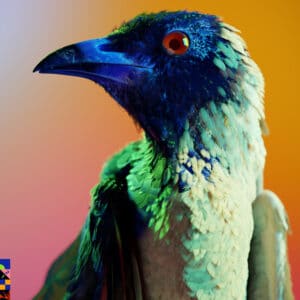
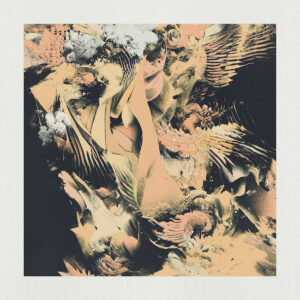
The new album’s cover artwork features a reproduction of an image of keyboardist Jesse Chandler’s father designed by visual artist Brian Lotti. “At age 16, my father and his friend hitchhiked from Ridgewood, NJ to the Woodstock festival in 1969,” Chandler said in a statement. “This image of him with his hand to his face appears in the 1970 Woodstock documentary, as the camera pans across the crowd during John Sebastian’s set. My father actually ended up moving to Woodstock, NY—where I grew up—in 1981. For me, the picture of that kid, my dad, forever frozen in time, encapsulates what it means to be in the throes of impressionable and fleeting youth, and all that the magic of music, peace, love, and communion bring to it, whether one knows it at the time or not. (I think he knew it).”

FOR THE SAKE OF BETHEL WOODS Cover Artwork:

FOR THE SAKE OF BETHEL WOODS Tracklist:

1. Commune
2. Bethel Woods
3. Glistening
4. Exile
5. Feast of Carrion
6. Noble
7. Gone
8. Meanwhile…
9. Dawning
10. The End
11. Of Desire

Interview: Hannah Lane

0

Hannah Lane, an animator and alumni of Cambridge School of Art , recently won the People’s Choice Award at OC Shorts for her film A Snowy Surprise. The film is about a girl who goes exploring in the snow. On her journey, she encounters a furry friend who seems like he may ruin all the fun, but with a heart-warming moment of forgiveness, it seems a friendship is born.

To find out more about the film and her process, we interviewed Hannah.

Hi, how are you and how did you get into film?

Hello there, I am very well thank you and very pleased to be chosen for the People’s Choice Award!

For the longest time I’ve always been into the creative side of things. I am always drawing and making things and I love learning new quirky skills. Around age 13 was when I first tried stop-motion animation, when I realised there was a feature on my camera for it. Having grown up with shows like Wallace and Gromit and Pingu, I was instantly inspired and gave it a go. Later on, when I decided to go to uni, I knew I wanted to pursue a career in animation, but I was nervous. Wasn’t sure if I’d be any good at it. So, I took a joint course of animation and illustration as I knew I could fall back on my drawing if need be. On my animation course I was mainly taught basics in 2D computer animation (which was fun and great skills to have) but I could never get stop-motion out my mind. So finally for my final major project I decided to take a chance because if I didn’t do then, when would I?

What films do you feel influenced your style the most as a filmmaker?

I watched a lot of older animation when growing up (I’m currently 23) including The Magic Roundabout and The Herbs. I wanted my film to have a nostalgic feel for people my age and above but also equally enjoyable for younger generations. Modern films that inspired my film as well would be The Little Prince. An absolutely stunning film with a combination of CGI and stop-motion, a family film for all! And of course, the amazing Wes Anderson Films like Fantastic Mr Fox and Isle of Dogs. I love the way those films feel home-made, for example you can see the smoke is literally cotton wool! It instantly makes the audience connect more with the film, when it feels like you could touch it. It’s what you don’t get with computer animation.

How did the idea for A Snowy Surprise come about?

A Snowy Surprise formed around me thinking about what I wanted to try to animate. As this was my first ever stop-motion short film, which I was making all by myself due to Covid, I didn’t want to make it too hard for myself but I also wanted to give myself a bit of a challenge. I thought of setting the animation in the snow. Why? Because all you just need a white backdrop! Easy, done. The idea then developed around that.
I wanted to make a story that was fun and family-friendly that would put a smile on anyone’s face, of any age. It was also important for me for the film to have a moral at the end that a child could take away from watching it, even if they didn’t realise it. In my case my film shows when to apologise and about forgiveness.

What challenges did you face making the film?

Oh, where to start… This film definitely came with plenty of challenges. Learning to problem solve was key for starting out with stop-motion animation. Every scene came with a conflict I had to overcome and if I wrote about every problem I faced, you’d be reading a 2000-word essay.

But to start, there was of course lockdown that put a spanner in the works. I was meant to be using the stop-motion studio at my university, however the uni closed and I was stuck at home. Therefore, I created this all in the spare room at my house where I built all my own puppets and sets.

In the opening scene you see the little girl (Willow) wipe the frosted window. This was actually done with multiple sheets of tracing paper. Each piece was sized to the window pane and cut in different stages. When swapping the sheets, I had to be very careful not the move the set as it would mess up the shot.

The snow was a big struggle when creating the footprints. This was done with icing sugar, which ended up being extremely messy and sticky! I had to use a rig (a metal support arm) to hold up the puppet when filming the birds eye view shot, however the rig was too short and the base kept messing up my lovely footprints! I ended up attaching the rig to the puppets hand which was out of shot, so I could keep her balanced but not ruin the pattern in the snow.

I had to make a few detachable rabbit arms here and there but one of the biggest challenges I faced was when my puppet’s leg snapped. I only had about 10 scenes left to shoot out of 52 but 3 of those included her walking or standing. Therefore, she had to go through emergency surgery, but with a bit of putty and extra stuffing, she was good as new again.

You’ve got a growing a career in film, what projects do you have planned next?

Right now, I am trying to expand my networks and get my film out there to get some recognition. I am working on a few personal projects, trying to hone my skills in puppet making. At the end of October 2021, I am working on a live-action short-film, helping out with props and costumes. It should be entering into festivals in 2022.

If you could give some advice to aspiring filmmakers looking to get started in film, what would it be?

I know it’s cliche but… follow your dreams! I never would’ve got to where I am with a degree in animation if I didn’t believe in myself and knew I could achieve what I wanted. It is okay to fail, actually, it’s normal to fail. You can’t get something perfect the first time. You just have to learn from your mistakes and you’ll do it differently next time. Follow your heart and what you believe in and you will make it. It’s important to try to keep active creatively and network with other people in the industry, either online or go to festivals/conventions. You can meet lots of inspiring people.

Lastly, if you could work with one director or writer who would it be and why?

There are so many up-and-coming animation directors who are absolutely awesome and I’d love to work with like Anna Mantzaris and Astrid Goldsmith. But if I’d have to pick one, I’d of course have to pick the genius that is Nick Park, creator of Wallace and Gromit. He influenced my childhood and inspired my career from the very beginning. I would be intrigued to just watch him work and see how his ideas come to life.

How To Do An Acrylic Pour Painting Art?

Have you ever thought about why people are curious about Pour Painting Art? We are pretty sure that you have always loved the idea of painting (even if you aren’t an artist). It’s fun to create and flaw your hands over the canvas and get a unique yet attention-grabbing art. Sounds tempting, right? Even though you’re not an artist, you can enjoy the fun of painting with acrylic pouring. Before you begin your art, it’s important to look at the supplies, technique and execution. Knowing these things beforehand will make sure you are happy with the result.

  • Gather The Materials You Need

Before you begin your fun process, it’s best to know which kind of materials you need. Keeping those items handy will make sure you aren’t missing any essential tools. First of all, you need to pick a flat primed surface. Next, you can pick either traditional stretched canvases, canvas boards or painting panels. However, the choice is entirely yours! Next, have your hands on suitable acrylic paint, pouring medium, gesso as well as a paintbrush. Once you’ve gathered all the items, move to the next step.

  • Kind Of Acrylic Pouring Paint

Multiple paints are suitable for your pouring technique. Soft or liquid acrylic paint goes best for the job. The reason is their fluid nature. When you open the pack of liquid or soft acrylic paint, they are already in thinned form. For this reason, you don’t have to mix it with water before using it. Make sure you pick high-quality paint to make your painting beautiful. Opt for Liquid or Fluid Acrylics, Soft Body Acrylics and High-Flow Acrylics. Acrylic Pouring Art is great fun. If you haven’t tried it, it’s time to enjoy the fun with unpredictable results!

  • Look For Right Acrylic Pouring Medium

Looking for the right acrylic pouring medium? Opt for Liquitex Acrylic Pouring Medium! These mediums are mixed with the paint to increase its flow. By keeping the colors separate from each other, it helps the painting look muddy. Furthermore, adding such mediums makes sure your overall painting has good volume, which prevents cracks. Whenever you opt for the medium, make sure it is high quality and blends finely to give a smooth finish.

  • Prepare The Painting Canvas

Now that you’ve got your hands on the materials, it’s time to prepare your painting canvas. For this, you need to have Gesso, Stretched Canvas, Flat Paintbrush or 2-3″ Polyfoam Sponge Brush, Small Plastic Dish, Small Dish of Water and Paper Towels. Take a plastic dish and pour gesso on it. Next, clean your canvas from dust, and then apply a thin layer of gesso over it. Repeat this process in the opposite direction and let it dry. Pro tip: Keep your brush damp to make it slide even better.

  • It’s Time To Mix The Paint

Mix your paints before a night to make sure all the air bubbles dissipate the next day. Cover the table area where you’re going to paint, and then mix acrylic paint with the pouring medium. Cover the cup for twelve hours after it is completely blended. Now gather your material and place your canvas in an upright position. Uncover the paint cups and make sure the paint is bubble-free. If you feel the mixture isn’t well mixed, use a wooden stick to mix it slowly.

  • Pour The Paint

Pour the paint cup as you desire. Now that you’re ready to tilt after pouring. Watch it carefully, and then proceed. However, this step is going to be fun and exciting at the same time. You need to tilt it carefully to watch what comes out as a result. Next, finish the edges but don’t make it perfect. As it goes without saying, messy always looks perfect! After pouring the paint, make sure you tilt it top to bottom and bottom to top. Keep it for two to three days to completely dry it. If you’ve opted for a thinner layer, it could take a little more time. So this was the last step in your Acrylic Pouring Art process.

Wrap up!

Fortunately, there are multiple colors and endless options for mixing them. Therefore, opt for the one that suits you best. To get more accurate results, you can prefer a little touch-up at the end. To complete your touch-up, you need to mix pouring medium with paint. Mix it well and use a small paintbrush to opt for an edge touch-up. However, the ultimate result is unpredictable. And this is what makes the painting process more interesting. Once you’ve got an idea of how to execute the process effectively, the result will be more satisfying. You can even try Pour Painting Art on glasses and plastic surfaces to get more exciting results!

The 10 Most Famous Art Periods

Artworks have constantly been evolving since the origin of humanity. With the passage of time, artists are coming up with new ideas, styles and patterns. Different groups of arts or styles are collectively termed art movements. Back in tens of thousands of years, art first came into account. Since then, many artists are coming up with new ideas, and now we have modern art movements being popular. If you’re looking to create new and popular artworks or you want to know about how art has evolved in years, it’s time to scroll the blogs of Art History Overview from artincontext.org. Ready to dive in and break down multiple art movements and styles? Let’s scroll!

  • Prehistoric Art (- 40,000 – 4,000 B.C.)

Art was traced to the old stone age when people started using stones to engrave designs and paintings. They started using walls to engrave different pictures and sculptures. Artists of prehistoric art used stones and natural pigment to create pictures of animals, objects, rituals and other civilization features. Want to have a look at the great example of prehistoric art? Check out the Paleolithic cave paintings, which are found in Lascaux caves in France.

  • Ancient Art (- 4,000 B.C. – 400 A.D.)

During this art period, artists started engraving inscriptions in different languages such as China, India, Mesopotamia, Persia, Palestine, Egypt, Greece and Rome. However, the way of art was different, yet it served a similar purpose. Most artworks were used to depict stories and display religious and symbolic images. People used to craft the items on stones, utensils, bowls and much more to remark on the best period of the time.

  • Medieval Art (500-1400)

This period saw a downfall when the Roman empire saw a deterioration in the cultural and economic phase. For over 1000 years, this artwork has covered the major places of Europe, Western Asia and Northern Africa. It depicted national and regional art, revivals, the artists’ crafts and genres. Technically, medieval artists lacked numerous factors such as lack of perspective, colors and tones. Lack of accuracy led to the origin of Renaissance and High Renaissance Art.

  • Renaissance and High Renaissance Art (1400-1600)

As modern art began to improve, it started focusing on humans and their lives. The pictures thus depicted man as independent and self-reliant. Two of the most popular artists of this time were Filippo Brunelleschi and sculptor Donatello. During this period, they made Renaissance painters compose more realistic paintings. This period gave birth to the use of proportion and foreshortening. Furthermore, it gave rise to the Sfumato, a technique of blurring the sharp outlines. Lastly, Renaissance painters involved the use of the Chiaroscuro technique. This means light and dark to give an illusion effect.

  • Baroque

Derived from a Portuguese word, Barocco, which means irregular pearl or stone. Starting from Rome, this artistry spread rapidly to other locations such as France, northern Italy, Spain, Portugal, Austria, southern Germany and Russia. It focused on how to intricate ornamentation. Baroque artists introduced cartouche, baskets of fruit or flowers, and others made in marquetry, stucco or carved, trophies and weapons. Similar to other periods, the Baroque period saw a decline, and many other art periods started to flourish. Being powerful and extravagant, this type of art helped people to draw their ideas and create an extra imagination.

  • Conceptual Art

Also known as conceptualism, this type of art flourished in the 20th century. However, it emphasized theoretical ideas and concepts rather than creating a visualization. The most important concept of Conceptual Art focused on how an artist uses a conceptual form of art. During this period, artists made a unique plan and then accomplished it to get desired results. To learn more about art and artists, make sure you check the blogs at Art History Overview from artincontext.org.


  • Photorealism

Photorealism is a new style of art that has evolved in years and now has become a major art that artists follow. During this time, artists made use of painting and photography techniques. Once the artists have captured the photos with their camera, they transfer them to the canvases for desired results. All in all, this artistry captured the eyes of the viewers and left a unique impression. Many artists still follow this unique technique to make their photography amazing.

  • Neoclassicism

Another famous art period that depicts unique styles, theories and philosophies of the time is Neoclassicism. It depicted the decorative and gaudy styles of the heroes of the time. This type of art is known as classical art.

  • Romanticism

Towards the end of the 18th century, Europe saw the rise of musical, artistic and literary events. It emphasized on individual aspects as well as emotion of an individual that preferred the medieval age. The artists of this period captured the beauty of human personality, mental potentials and its mood. Till today, we have a touch of Romanticism in literature, music as well as art.

  • Impressionism

The end of the 18th century saw the rise of Impressionism, a radical art movement. Being the first art of the modern period, Impressionism focused on nature as a subject. Claude Monet, who was a French artist by profession, gave the idea of Impressionism. Throughout his life, he captured new images and transferred them to achieve abstract quality.

Wrap up!

Fortunately, artistry has been growing and growing since it was launched in the world. Art periods and art movements come and go giving artistry a new and attention-grabbing look. One of the most popular art periods was Renaissance and High Renaissance Art. During this period, not only art but philosophy, literature, music and even science saw a great rise. Art periods are a vast topic. If you’re looking to know more about it, make sure you have a look at Art History Overview from artincontext.org.

The Role of Anime in Modern World Culture and Its Place in People’s Lives

Even if you haven’t succumbed to the allure of anime, the hugely popular animation style originating in Japan, the chances are you will be aware of it. The first examples of this artform appeared in the early 20th-century, but its cultural reach and influence have exploded over subsequent decades. There are now over 500 animation studios in Japan alone, with more in other parts of Asia, America, Europe, and Australia. Because modern world culture has taken anime to its heart, this form of entertainment has significantly impacted personal relationships.

The many facets of anime

Anime might essentially be cartoons, but they were tapping into much deeper aspects of Japanese culture, dwelling on traditional folklore and mythology that have been an important part of the culture for centuries. But where anime has undoubtedly resonated with an audience that continues growing is in the way it deals with contemporary issues, particularly relationships. The target demographic tends to be young adults, although huge numbers of adults are also aficionados. The combination of exquisitely illustrated animation, storylines exploring issues such as romance, sexual themes (including LGBTQ topics), and social issues has led to an entire sub-culture of anime dating. Singles are drawn to these dating platforms through a shared love of anime, but also the interests often running in parallel with the animation side, such as cosplay and video gaming. They can be their true selves on such dedicated platforms and find like-minded people for friendship and even romantic relationships. Being the easiest way of finding love nowadays, dating platforms for otaku and those who cherish anime culture continue to gain in popularity!

The anime industry

As well as getting together via matchmaking sites or apps (such as those typically aimed at ‘nerds,’ or ‘geeks,’) fans of animation, comics and games can connect in chat rooms and forums. They can also congregate at fan events, such as launches of the latest edition of a popular anime series or conventions celebrating manga comics and graphic novels. (The important role manga plays in peoples’ lives can be illustrated by considering the size of this market in Japan: as far back as the 1990s, it was worth around $6 billion; in the USA and Canada, it was valued at a quarter of a million dollars in 2020).

The otaku sub-culture

This obsession with anime, otaku, and computer games has been categorized as ‘otaku’ in Japan. This might have had negative connotations with social outcasts when first coined in the 1980s, but it has evolved into a crucial aspect of youth culture far beyond Japan. To be labeled ‘otaku’ is no longer a pejorative term. If anything, it is almost regarded as a badge of honor, indicating a passion for a potent form of artistic expression.

Anime: a global phenomenon

Although anime has been around since the 1910s, it wasn’t until the 1970s that this form of animated feature gained prominence. It is now estimated that more than 60% of animated TV shows broadcast across the planet originate in Japan. In Western countries in the 1960s, this fascination with the East Asian artform continued with anime being adapted into media franchises such as the cyberpunk movie Akira in 1988 Speed Racer. Companies marketed anime features throughout the 1990s and beyond. For any single with a keen interest in anime, a world of opportunities awaits.

Anime as a backdrop to social interaction

Many individuals are drawn to anime because they can empathize with what the writers and illustrators are telling their audience. There is so much to the stories than the eye-catching animation. There may be plotlines involving deities and supernatural elements, but these will be multi-layered, dealing with real-life dilemmas. Anime series have explored problems such as bullying, homophobia, and gender issues for years. For any fan who might be suffering from anxieties, they can find their concerns being tackled head-on in anime stories. Discussing these can help people feel less isolated

Anime may have been around for over 100 years, but its influence shows no sign of waning. As modern culture continues evolving, spilling into other areas, crossovers with computer games and live-action movies based on anime will ensure its popularity keeps rising. If you’re looking for playlists for parties or dates, there are even anime songs you can check out. Anime fans might be criticized for having an immature outlook on life, but nothing could be further from the truth.

Watch Circuit des Yeux Perform on NPR’s ‘Tiny Desk (Home) Concert’

Haley Fohr, aka Circuit des Yeux, is the latest artist to play a ‘Tiny Desk (Home) Concert’ for NPR. Her set, which was filmed in the May Chapel at Chicago’s Rosehill Cemetery and Mausoleum, features performances of three songs from her new album, -io:  ‘Vanishing’, ‘Dogma’, and ‘Stranger’. Watch it below.

­-io, Circuit des Yeux’s sixth album and Matador Records debut, arrived last Friday, October 22.

This Week’s Best New Songs: Parquet Courts, Obongjayar, Jlin, and More

Throughout the week, we update our Best New Songs playlist with the new releases that caught our attention the most, be it a single leading up to the release of an album or a newly unveiled deep cut. And each Monday, we round up the best new songs released over the past week (the eligibility period begins on Monday and ends Sunday night) in this segment.

On this week’s list, we have Jlin’s dizzying and hyperactive ‘Embryo’, the title track from the producer’s upcoming EP; Parquet Court’s raucous garage rocker ‘Homo Sapiens’, the final single from their new LP Sympathy for Life; Strange Ranger’s hypnotic new song ‘It’s You’, the closing track from their new mixtape No Light in Heaven; ‘Message in a Bottle’, the captivating first single from the Nigerian-born, London-based singer Obongjayar’s debut album; Nation of Language’s ‘The Grey Commute’, which layers its sharp political commentary over ‘80s synths and a propulsive beat; and the dreamy and evocative ‘I’m So Tired’ by Deserta, the solo moniker of former Saxon Shore/Midnight Faces member Matthew Doty.

Best New Songs: October 25, 2021

Jlin, ‘Embryo’

Parquet Courts, ‘Homo Sapiens’

Strange Ranger, ‘It’s You’

Song of the Week: Obongjayar, ‘Message in a Bottle’

Nation of Language, ‘The Grey Commute’

Deserta, ‘I’m So Tired’

How Brands Can Get Their First YouTube Subscribers

As the second most popular website online, YouTube is impossible to ignore for brands looking to reach a broad audience and one of the crucial metric of success on the platform is growing YouTube subscribers. Starting a YouTube channel is easy, but the level of competition makes it tricky to actually gain subscribers. It is crucial to get your videos found on the site, but also convince people to watch your content and subscribe. With the right approach, though, every brand can build a following, encouraging viewers to keep on returning to your videos. The following steps can be used to start your channel and set yourself up for success.

Identify an Appropriate Theme

Consistency is a crucial part of video marketing. Viewers will subscribe when they appreciate the content you are regularly creating. If your channel gets filled with all kinds of styles and themes, people won’t know what to expect. Try to settle on an overall theme that forms the basis of most content. You could choose to vlog, create tutorials, show product demonstrations, and more.

Design Your Channel

Designing your channel is a simple process, but it makes life easier for viewers. You can start by writing an enticing bio that explains who you are and the content you create. The page should then link to your website and all relevant social media channels. Finally, you can add a banner that could be based on your logo or the personalities that feature in the videos.

Create Content

Content creation is the most critical factor in the process as viewers won’t subscribe to low-quality channels. There is no single way to create content, with all styles represented across YouTube. Product demonstrations may work well in a simple location, featuring an attractive background. Vlogging can be improved with a quality camera that has a stabilization feature. While the styles can vary, look to ensure the production values, including lighting and sound, are a primary focus.

Use Creative Titles

Titles are a significant reason for a viewer to click on your video. A compelling title might create some curiosity, asking a question, or building an open loop. Alternatively, the title could feature the name of a person recognized in the industry. You may be tempted to use a controversial claim, but avoid this strategy if it won’t suit your brand. Clickbait can get some quick results, though it won’t always be a practical long-term approach.

Design Thumbnails

Thumbnails should stand out to YouTube visitors as they browse search results. Most effective thumbnail images use bright colors, often with the addition of simple text. Curiosity works well with these images, so you could experiment with blurring out parts of the image to generate interest.

Use Call to Actions

Getting people to watch your videos can be tricky, but turning them into subscribers is even harder. So often YouTube users find it easy to buy YouTube subscribers rather than trying years to increase their subscribers. Using a call to action is a critical step, as most people won’t naturally remember to subscribe. It is common to end a video explaining the button viewers should press, possibly using graphics to make it as simple a process as possible. If you are speaking directly to the camera in your content, adding a call to action earlier in the video can help.

Develop a Social Media Network

Social media is one of the best ways to promote your videos as followers have already shown an interest in your content. If you can get people to follow your Instagram or Twitter, you have found a way to engage them. Posting your YouTube videos, including the compelling title and thumbnail, will encourage a significant proportion of followers to then watch your video. Creating short trailers that suit the social platform can also help grow curiosity, leading to many people clicking over to YouTube.

Monitor Analytics

YouTube analytics can be a valuable source of data, helping you understand what is driving subscription numbers. Analytics will show you details on which subscription button was pressed, if people found you in the YouTube search results, whether the subscriber was directly on YouTube or viewing an embedded video, and more. This data can be used to focus your attention on a particular promotional method, so you gain the most subscribers for your time and effort.

Anyone can start a YouTube channel, but this simplicity leads to a vast amount of competition. Trying to get noticed on the site can be tricky, even before you begin to acquire subscribers. When you start to build an initial following, though, the process gets more manageable, with viewers liking and recommending your content. As long as the videos are engaging, viewers will stick with you and look forward to future content. Growing a following on YouTube might seem like an impossible task at first, but following these steps will help you start the process the right way.

Jay Black, Frontman of Jay and the Americans, Dead at 82

Jay Black, frontman of the ’60s rock band Jay and the Americans, has died at the age of 82. Black’s family confirmed that Black passed away on Friday (October 22) due to complications from pneumonia. Black also suffered from dementia.

Jay Black was born David Blatt in the Brooklyn neighborhood of Borough Park and earned the nickname ‘The Voice’ due to his vocal range. He was the second Jay to lead Jay and the Americans, joining the band in 1962 after the departure of their original singer John ‘Jay’ Traynor. After landing a deal with United Artists Records, the group scored a number of hits with Jay in the lead in the 1960s, including ‘Only in America’, ‘Come a Little Bit Closer’, ‘Cara Mia’, ‘This Magic Moment’, and ‘Walkin’ In The Rain’, with a total of 21 songs making the charts.

Jay and the Americans notably served as the opening act for the Beatles’ first US performance in 1964 in Washington, D.C. They also appeared on The Tonight Show with Johnny CarsonThe Mike Douglas Show, and The Merv Griffin Show. Though the group’s members split in 1973 to pursue solo projects, Black would continue to perform as Jay and the Americans with a rotating cast of musicians. His final performance took place in 2017.

“New and old fans continued to marvel at the strength and range of Black’s voice through his last concert in 2017,” Black’s family said in a statement (via Rolling Stone). “Appearing mostly in the tri-state area and Florida, Black’s concerts were heavily attended and mostly sold out. He had a special bond with his fans who flocked to his annual sold-out shows at The Westbury Music Fair. He thought of them as family, knew many of their names, and would dedicate songs to them from the stage and meet with them after the show.”

Black is survived by his four children, five grandchildren and two great-grandchildren.

Album Review: FINNEAS, ‘Optimist’

Perhaps a producer with eight Grammy wins and a James Bond theme under his belt doesn’t need to worry about where he’ll go next. Finneas O’Connell, in his debut album Optimist, certainly seems more wrapped up in the hollowness of fame than the promises that glitter behind it. With his phenomenal, genre-defying work for his sister Billie Eilish, O’Connell has cemented a reputation as one of the industry’s most influential producers. His solo work, however (he is known simply as FINNEAS) is slightly more elusive. His first record is by no means a brash attempt at seizing his sister’s fame, but it isn’t the explosive introduction that might be expected. Optimist offers a set of tracks that are never adventurous enough to challenge the precedent that FINNEAS himself has set. 

The album begins with an early single, ‘A Concert Six Months From Now’. Soft guitar and a sample of a crowd distantly cheering precedes nostalgic whisperings that hint at FINNEAS’ ability to craft clever emotional narratives, whether reflecting on “When Harry met Sally/ And you fell asleep” or capturing millennial relationships with the promise, “I’ll wait for years but I won’t wait alone/ And then someday you’ll wait for my face on your phone.” Midway through, the opening sample clashes with buzzing synth as drums erupt and a great wave of cymbals rears up, granting the track a kind of feverish energy. It’s an impressive and detailed soundscape – something FINNEAS is known for after his work with Eilish – but it doesn’t feel groundbreaking, and the rest of the record follows suit. In most of the remaining songs he flits between earnestness and irony, but often doesn’t commit to either compellingly.

In ‘The Kid Are All Dying’, a lolling keyboard melody tumbles into a heavy kick drum beat that backs tongue-in-cheek worldly analysis: “Do you have a dollar?/ Would you like to fund a war?” FINNEAS offers a sweeping view of 21st century dilemmas, making no claims to be profound; irony is particularly palpable in the bridge, where his breezy falsetto introspections serve as a self-deprecating aside (or at least it is hoped that the line “I’m whiter than the ivory on these keys” is not intended to be an example of songwriting genius.) A sample of inaudible chatter that steals in at the beginning and end of the track emulates the empty babble of political debate. This is self-conscious satire, but it doesn’t land with the witty sharpness that was perhaps intended, and in ‘Happy Now’ the line between complicity and complaint remains blurred. “Take a drive around town in my douchebag car/ Like the superstar that I pretend to be,” FINNEAS intones amid pops of electronic drums, and though his bewilderment is evident as he clamors, “If I’m not I’ll never be/ Happy now,” his spin on the reality-of-fame narrative doesn’t invite overwhelming sympathy.

Irony subsides in ‘Only a Lifetime’, which meanders down another well-trodden path by preaching gratitude and sincerity. The track’s dainty piano, however, effectively betrays a sense of urgency, echoing slightly with distortion, and judders of synth emerge at points, adding welcome depth. ‘The 90s’, another single, swerves back into nostalgia of a particularly millennial variety as FINNEAS gazes longingly back at a time “When the future was a testament/ To something beautiful and shiny/ Now we’re only counting down the time that’s left.” Warped vocals give way to blasts of synth that tremble and rupture to march the track to its entropic end. As the sole writer, producer and performer of every song on the record (with the exception of the opener’s grand string section), FINNEAS is flexing all his creative muscles here, revelling in his own versatility. He has the freedom to drop in an instrumental named after his dog, which is jarring in the context of a pop album, but further showcases both his talent and absolute creative liberty; and he abandons all political and existential qualms in a track entitled ‘Around My Neck’, in which slick drums and subtle snare glide into voice-cracking yelps of desire.

FINNEAS is certainly firing on all cylinders here, but what emerges is the sense that for someone so skilled, perhaps this is all still a bit too easy. Despite the record’s varied sounds, it doesn’t feel audacious enough, never following one experiment through to its rousing finale. Paradoxically, the standout track is the sonically uncomplicated ‘Love is Pain’, which boasts fluttering keys and harmonies that snatch at the fringes of FINNEAS’ most touching declarations. “There’s this dream I’ve had/ About mom and dad/ Makes me so sad I wake up crying,” he murmurs. “Can’t believe I’ll have/ To live through that/ Wish it wasn’t mandatory dying.” Abandoning the chase for irony and inspirational platitudes, FINNEAS presents agonising emotion effortlessly here. By the time the album closes, however – its final song is a colourful, disco-led celebration that drowns out the record’s general sense of dread with a cheery reminder that “If you wanna dance again/ You can dance again” – FINNEAS’ skill is clear, but his standpoint is still ambiguous, having at once renounced popular discourses and thrown his offering into the mix. 

Ultimately, there is depth to the record but little excitement. Idiosyncrasies in production offer themselves up if you search hard enough, but they blend safely into the broader landscape of the album – it lacks the jeering, in-your-face experimentalism that leaps out of Eillish’s releases. In all fairness, that might simply be Eillish’s identity, and not FINNEAS’, but in its own right the album begs something a little curiouser, a little grittier. Wishing for it, surely, can’t be too optimistic.