You probably gave away more personal information today than you realise. Maybe you ordered lunch through an app or logged into Instagram while waiting for it to arrive. You may have also replied to a work email or watched a video on YouTube before bed. None of those things feels particularly private because they are simply part of a normal day.
Now imagine someone keeping a record of it all. Where you went or what you bought. Who you spoke to or what you searched for. Which products caught your attention or even the things you almost bought. That thought can feel uncomfortable but most of us rarely think about it until something happens.
It Usually Takes One Small Incident
Consider the familiar experience of searching for something online only to see advertisements for it everywhere. You look up running shoes because you have started thinking about getting back into exercise. Then your social media feed seems to know about your new interest while an email arrives offering a discount on sportswear.
You mention the shoes to a friend over coffee only to wonder whether your phone was listening. It probably wasn’t the microphone spying on your conversation, as the explanation is often much less dramatic. Your online activity can give platforms enough clues to make accurate assumptions about your interests.
And this is where digital privacy becomes less abstract. Privacy isn’t only about protecting yourself from hackers. It is also about having some control over the trail you leave behind while living an ordinary life.
Your Phone Has Become a Diary You Carry Everywhere
Think about what is sitting inside your phone right now. It probably contains everything from photographs you would never post publicly to banking apps and years of emails. Your phone may also know where you have been recently or websites you visit regularly. Losing it can therefore feel very different from losing a wallet.
A wallet might contain your cards while a phone can contain the keys to other parts of your life. This is why using a different password for important accounts matters. If the same password protects your email or social media, one compromised account can create problems.
You don’t need to become a cybersecurity expert to avoid this. A password manager can help store passwords without forcing you to remember dozens of complicated combinations. Even a free password manager can help if it stops you from reusing the same password everywhere.
The Problem With Convenience
The strange thing about digital privacy is that the habits that put it at risk are often the habits that make life easier. You click “Sign in with Google” because creating another account sounds tedious. You accept cookies because you want to read an article. None of these decisions feels significant on its own.
The problem is what happens when you make hundreds of them over several years. Think about all the apps you have installed since you first bought a smartphone. How many do you still use? How many still have access to an account you created years ago? How many have your old email address? Digital clutter can also mean having too many forgotten accounts scattered across the internet.
Privacy Is Also About Your Future Self
Another reason to take this seriously is your future self. The information you share today can outlive the reason you shared it. You might sign up for a website for a discount. You might create an account to download something. You may barely remember doing any of it five years later.
But the internet is good at remembering everything. Digital privacy has become crucial in how we interact with online audiences but this does not mean you need to stop using online services. It just means becoming slightly deliberate about what you share. Ask yourself if an app needs contact access on your phone. Think about whether you would be comfortable seeing it again much later before posting something personal. That last question is surprisingly useful.
The People Around You Matter
Digital privacy is also about respecting the people around you. Consider a situation where you take a photograph at a friend’s birthday. You post it online because everyone looks great but someone in the background may not want their face online. Or perhaps a colleague appears in a photograph taken at work and would rather not have it publicly associated with them.
These situations rarely involve malicious intent but they happen because sharing has become so effortless. The same thing applies to private messages. A screenshot can turn a conversation meant for one person into something hundreds can see. The old distinction between a private moment and a public one has become much harder to maintain.
Privacy Is Becoming an Everyday Habit
The interesting thing about digital privacy is that it has moved far beyond technical experts. You don’t need to work in IT to care. You don’t need to have something to hide. You need to recognise how much of your ordinary life now exists online. Everything from your photographs to work has become part of a digital version of your life.
That version deserves attention too. The goal is not to avoid technology because it is too embedded in modern life to avoid. The goal is to use it with awareness because privacy is not about keeping a secret. Sometimes it is about deciding who gets to know something about you.
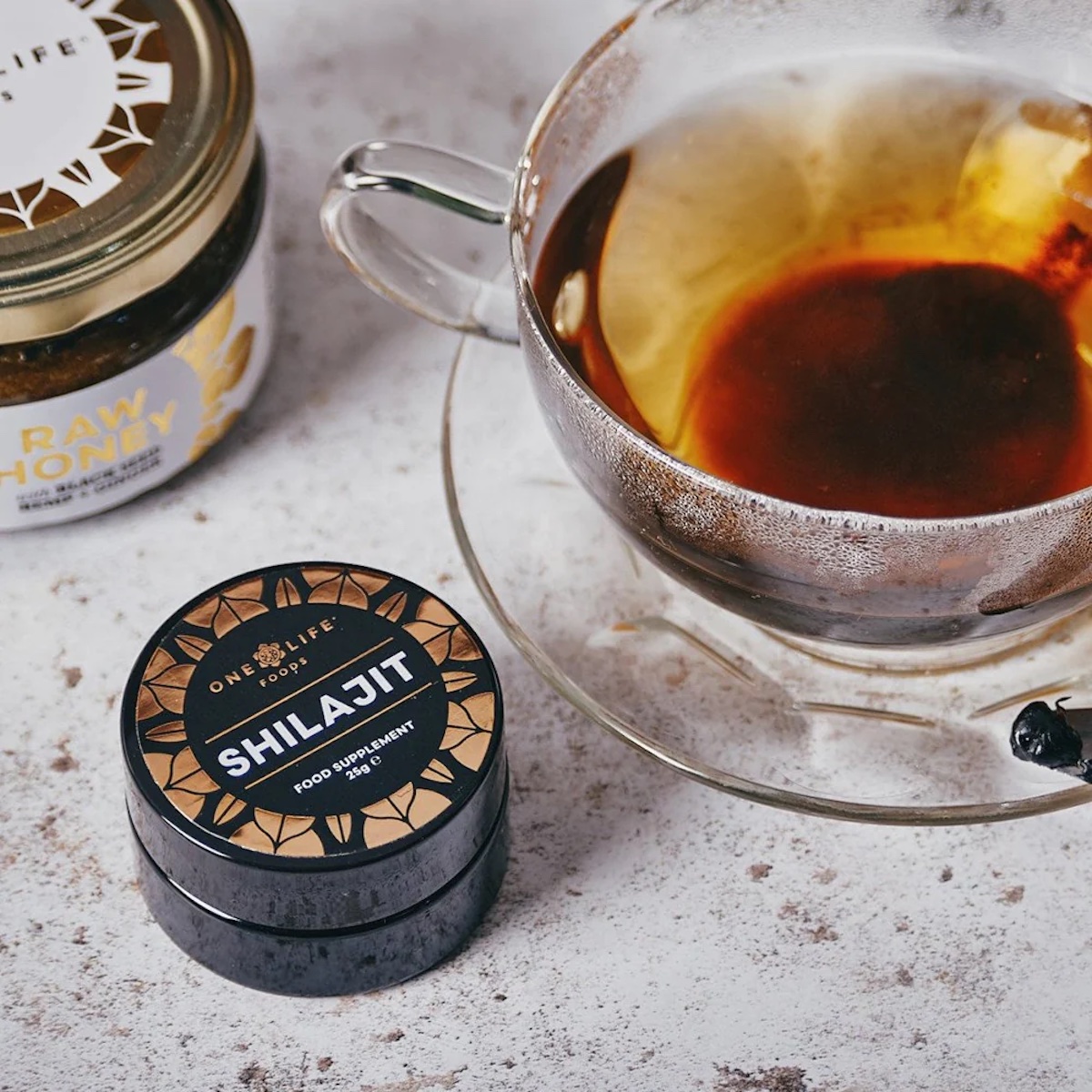
Long before Shilajit came in glass jars with lab certificates and fulvic acid percentages, it belonged to the mountains. Chris Simon, founder of One Life Foods, has watched it travel from relative obscurity to one of the strangest success stories in modern wellness.
Picture an older man leaving a village beneath the Pir Panjal early in the morning. There is no production line waiting for him, no extraction facility and certainly no GPS coordinates being passed between procurement departments. He knows the mountains because he has spent a lifetime around them, and he knows where to look because that knowledge has been learned over years rather than downloaded onto a phone. The journey might take hours, and in some regions collectors travel considerably further. The work is seasonal, physical and dependent on knowing the landscape. Raw Shilajit isn’t sitting there conveniently in black puddles waiting to be spooned into jars. What comes away from the rock can contain sediment, grit and debris, and the material carried back from the mountain still has a long way to go before anybody should be putting it into a cup of tea. So imagine the old man returning later with a modest amount of dark, Shilajit-bearing material gathered from the rock. Considering the effort involved, it probably doesn’t look terribly impressive, but the collecting is only the first part. Traditionally, the raw material is mixed with water so that the soluble fraction can be separated from stone, grit and other insoluble matter. It is allowed to settle, filtered, sometimes filtered again and again, and then gradually concentrated until the familiar dark resin remains. The precise process varies considerably between regions and producers, but the principle itself is remarkably simple: collect it, separate it, purify it, concentrate it, and wait. Some of the finished material might remain nearby, and the collector may keep a little for himself. The rest might be sold onwards, passing through several hands before it reaches a processor, an exporter, a brand and eventually a customer thousands of miles away. By the time it gets there, the old man and his mountain have usually disappeared from the story.
I first saw Shilajit in 1994
My own introduction to Shilajit came long before I ever imagined selling it. I was about 16 and, if I remember correctly, we were listening to what was, to us at least, a new phenomenon (the Wu-Tang Clan) when my friend’s grandad appeared, brew in hand, with a small piece of what we mistakenly thought was hash in the other. My friend’s grandad was a Pakistani migrant and he always had plenty of tales to tell. Today’s tale was about this mysterious black gold: a strange, sticky substance that looked nothing like the vitamins or medicines I recognised from my mum’s supplement shelf at home. To him, it was black gold. More memorably, he told us it was the secret to youth. At 16, I wasn’t thinking about analytical chemistry, heavy metals or the quality of human clinical trials. I just remember being fascinated by it. It felt mysterious, although not mysterious in the way products are deliberately made mysterious now, with Himalayan graphics, Sanskrit lettering and slightly breathless stories about ancient warriors. It was mysterious because I’d never seen anyone drop what looked like a piece of tar into a cup of tea and sip it as though it might solve all his problems. Then life moved on, as it tends to. I encountered Shilajit again in 2012 and this time started paying proper attention. By 2018 I’d introduced it to the One Life Foods range, but hardly anybody cared. That probably sounds strange today, when Shilajit can appear in your social feed several times before breakfast, but selling it back then usually involved explaining what the word meant before you could even begin explaining why somebody might want it. I nearly stopped selling it. Then, somewhere around 2020, something changed. People started arriving already knowing the name. Instead of asking, “What’s that black stuff?”, they were coming to us specifically looking for Shilajit. Over the following few years, the product I’d once struggled to explain became part of the global wellness conversation. Today you can buy Shilajit as resin, capsules, powders, gummies, drops and blended drinks. It gets discussed alongside creatine, testosterone support, adaptogens, nootropics and longevity supplements, while social media has supplied it with an entirely new mythology of its own. The substance hadn’t suddenly appeared, we had.
Long before the wellness industry
As we explain in our guide to Shilajit, its traditional history is considerably older than its current popularity. Scientific literature describes it as a naturally occurring brown to blackish-brown material associated with mountain rock, particularly across the Altai mountains, Himalayas and Hindu Kush, and it has a longstanding place within Ayurvedic and Siddha traditions. Historical texts place it within the broad concept of rasayana, traditionally associated with rejuvenation and maintaining vitality. I think that history matters. If people have used something for generations, it’s worth paying attention to, and Shilajit clearly had a place in these traditions long before the wellness industry got hold of it. But age alone shouldn’t be used as proof that every claim made for it is true. For that, I’d rather look at what has actually been studied in people and what the evidence can reasonably support. It may be less romantic, but I’d rather know what it can actually do than what somebody says it has done for centuries.
We do now have genuine human research on Shilajit. At One Life Foods, we recently went through the published human research we could locate and found 16 oral human studies in which the effects of Shilajit could be interpreted reasonably directly, alongside other research involving formulations, topical preparations and older studies that were considerably more difficult to interpret. There are randomised controlled trials among them, which is encouraging. There are also small studies, uncontrolled studies and trials using particular standardised preparations that shouldn’t automatically be treated as evidence for every black resin with the word Shilajit printed on the label. So, as is often the case, the interesting position sits somewhere between dismissal and evangelism. There is science, and some of it deserves to be taken seriously. There is also an awful lot the science hasn’t settled yet.
Then the world discovered it
There is something slightly absurd about the journey Shilajit has made. A substance associated with remote mountain communities and old systems of medicine now has to survive the logic of the modern internet, which means it needs a headline, a percentage, and a benefit people can instantly understand. Even better if the percentage is larger than the one claimed on another brands website. And so a remarkably complicated natural material becomes compressed into a handful of phrases: 80% fulvic acid. 85+ minerals. Lab tested. Testosterone boosting. Ancient superfood. The details are considerably harder to fit on the front of a label, and suddenly the mountain itself isn’t quite enough.
Once something becomes globally desirable, its supply chain changes too. What may once have been a relatively small local trade can develop into networks of collectors, middlemen, processors, exporters, laboratories, wholesalers and brands. That isn’t automatically a bad thing. Commercial demand can provide income to remote communities, whether that’s in the Himalayas, Hindu Kush or Altai. The wider Himalayan trade in medicinal and natural materials has long been economically important to rural households, and research from Nepal has documented substantial increases in both the volume and value of commercially traded medicinal products over time.
Scale can improve things as well. Processing can become more controlled, traceability can improve, finished products can be screened for contaminants, and laboratories can tell us things that the person collecting material on a mountain could never reasonably be expected to know. Romanticism is all well and good until somebody asks how much lead is in the black gold. Modern analytical chemistry certainly has its uses.
What does Shilajit look like at scale?
The image most people have of Shilajit is probably one collector and one mountain. Once you start producing it in any real volume, things can look very different.
Raw material may be brought together from multiple collectors and different sites before larger processors extract, filter and concentrate substantial batches. From there, it can pass through several more hands before eventually being packed under the name of a brand that may never have met the people who collected it, or even visited the region it came from. That doesn’t automatically make the finished product worse. A small supply chain can be badly run just as easily as a large one can be well run. What matters is whether you can still work out where the material came from and what happened to it along the way. Where exactly was it collected? Who collected it? Was material from different locations mixed together? How was it purified? Was too much heat used? Was anything added? Who tested it, what did they actually test for, and was the lab sample supplied by the manufacturer or taken independently from stock that genuinely reached the brand? Those are the questions I’d be asking.
And then come the fakes
A product like Shilajit almost invites imitation. It’s dark, it’s sticky, its natural consistency varies and most customers have never seen the raw material in their lives. Even people who have taken Shilajit for years can’t look at a spoonful of black resin and possibly determine its chemical composition.
The famous home authenticity tests don’t solve much either. Something dissolving in warm water doesn’t prove it’s genuine Shilajit, and neither does stretching it, freezing it or holding a flame against it. Lots of dark substances can be persuaded to behave fairly convincingly in a kitchen.
This isn’t merely hypothetical. In 2026, the official food-control laboratory CVUA Stuttgart reported results from 12 Shilajit products it had analysed. In three of them, investigators said there was reasonable suspicion that Shilajit was absent or present only in traces. Several showed signs of strong heating, four had elevated mineral-oil saturated hydrocarbons relative to orientation values used for other foods, and one sample was judged unsafe because of its mineral-oil aromatic hydrocarbon content. Perhaps the most revealing part wasn’t even the chemistry. Nine of the products were marketed as “lab tested”, yet CVUA Stuttgart considered eight of those claims misleading after looking at what had actually been tested and what the products contained. That’s worth remembering because “lab tested” isn’t a result. It’s the beginning of a question.
The percentage problem
Fulvic acid has become one of Shilajit’s great marketing battlegrounds. One jar says 40%, another says 60%, and somebody else appears with 80%. The natural reaction is obvious: eighty must be better than sixty. Except analytical chemistry has an irritating habit of ruining simple comparisons. Different analytical methods can define, separate and quantify fulvic fractions differently, and results may also be expressed on different reporting bases. Unless you know how a figure was produced, two impressive-looking percentages aren’t necessarily measuring precisely the same thing in precisely the same way.
We’ve spent rather too much time looking into this at One Life Foods. Possibly enough that “Shilajit geeks” is now a more honest description than “Shilajit experts”. Our own testing uses an IHSS-aligned approach implemented under ISO 19822:2018, and we’ve published the analytical methods alongside the results. That isn’t because we believe one lab number proves a product is premium. It’s because a percentage without the method behind it can tell consumers much less than they are encouraged to think.
Shilajit is also not simply fulvic acid with good branding. Its composition varies according to its source, local geology, processing and purification. And recent research comparing samples from different geographical origins has found substantial variation in their elemental profiles. (PubMed) Nature, inconveniently, doesn’t manufacture to a marketing specification.
What happens when demand reaches the mountain?
This is the part of the Shilajit boom I find most interesting, and probably the part the industry knows least about. What happens at the other end of the supply chain when millions more people suddenly want something that comes from remote mountain environments? There is an obvious temptation to tell a very simple story: Western consumers discover ancient substance, demand explodes, mountains are stripped bare. It makes for a good headline, but I’m not convinced we know enough to say that.
There isn’t good published evidence, at least that I’ve been able to find, quantifying global Shilajit reserves or showing exactly what current harvesting is doing to those reserves across the different regions where it occurs. There are places where collectors can’t simply go wherever they like; protected areas, permits and local restrictions can limit where material is collected, and the rules vary considerably from one region to another. But that still doesn’t tell us whether deposits are becoming harder to find, how quickly they replenish, or what increasing demand is doing to the resource itself. We just don’t have particularly good answers to those questions yet.
There is, however, plenty of research showing what can happen when commercial demand grows for high-value Himalayan natural resources. Studies from Himalayan regions have documented increased collection, pressure on wild resources and the difficult balance between conservation and the livelihoods those resources support. Shilajit isn’t a medicinal plant, so I wouldn’t use that research as evidence that the same thing is happening here. But it does raise questions that I think the Shilajit industry ought to be asking. Does a collector have to travel further today than he did 20 years ago? Are good deposits becoming harder to find? How has the price of raw material changed? Does higher value encourage people to harvest more carefully because the resource matters more, or more aggressively because there is more money to be made? And when genuine material becomes expensive or difficult to obtain, does that create an incentive for inferior material to find its way into the supply chain?
Then there’s the question of money. How much does the person doing the difficult work on the mountain actually receive compared with the eventual price of a jar in London or Los Angeles? I’d like the Shilajit industry to talk about those questions more. Including us.
Progress isn’t the enemy of tradition
It’s easy to become sentimental about the old way of doing things. An elderly collector, a mountain village, water, sunlight and patience. It sounds idyllic, and in some respects it probably was.
But “traditional” doesn’t automatically mean safe, sustainable or superior. Raw Shilajit can contain unwanted environmental contaminants, and geological materials can naturally contain potentially harmful elements. Published analyses have found considerable variability between samples, with researchers identifying lead, arsenic, cadmium, mercury, nickel, thallium and other elements across different raw materials and commercial products. That is precisely why proper purification and meaningful analytical testing matter.
The answer isn’t to reject modern processing. It’s to stop pretending that modern processing and ancient tradition have to be enemies. I’d rather buy material from a properly paid collector whose knowledge is respected, maintain meaningful traceability through the supply chain, purify the material carefully and then subject the finished product to modern analytical testing. There is no virtue in leaving a contaminant in something because removing it would somehow be insufficiently romantic.
At the same time, efficiency shouldn’t become an excuse to erase provenance, rush purification or treat a mountain resource as though it were an infinitely scalable industrial ingredient. If Shilajit really is going to become a global product, there has to be a middle ground where the knowledge that came before us isn’t discarded simply because the machinery has improved.
The secret to youth, thirty-two years later
I sometimes think back to that conversation in 1994. The first person who introduced me to Shilajit didn’t talk about testosterone trials or fulvic acid. There wasn’t a certificate of analysis, and he certainly didn’t tell two 16-year-olds what percentage of the hydrophobic fulvic fraction had been isolated using an internationally recognised analytical method. He called it black gold and told us it was the secret to youth.
More than thirty years later, the wellness industry is, in many ways, still selling essentially the same promise. We’ve simply found considerably more complicated ways to say it. Some of those complications are useful. We know more about Shilajit now. There is human research worth taking seriously, even if there is much more still to learn. Analytical science can tell us more about composition and contamination, and responsible producers can provide levels of testing and transparency that simply weren’t available to the person collecting the material generations ago. But something can also get lost when an old material becomes a global trend. Behind the polished jar, the discount code, the influencer and the spectacular percentage is still a substance that has to come from somewhere. Somebody has to find it, somebody has to collect it, and somebody still has to bring it down from the mountain.
That might be the part of the Shilajit story worth remembering most. The old collector probably doesn’t know his product is trending. The mountain certainly doesn’t.
Chris Simon is the founder of One Life Foods. He first encountered Shilajit in 1994 and has worked commercially with it through One Life Foods since 2018, with a particular interest in sourcing, analytical testing and the gap between supplement marketing and what the evidence can actually support.
Every week, we update our Best New Songs playlist with several tracks that catch our attention, then round up the best songs of each month in this segment. Here, in alphabetical order, are the best songs of September 2026.
Fine – ‘Everything in the shade’
Hushed and minimal as it is, ‘Everything in the Shade’ is nothing if not steadfast in its expression of love. What Fine Glindvad blurs on the deceptively simple first single from Jazz dreams are the markers around it: “This is promise, not a lie,” goes its chorus, but what is the promise exactly? Besides “to be the rain on the hill,” the answer is open to the imagination. The Danish singer-songwriter thanks her lover for “our time,” but there are no tangible signs of temporality here; “I’m here,” she proclaims, while unburdening herself from any sense of place. It’s less hazy than the delicate tunes on 2024’s Rocky Top Ballads, but still, Glindvad seems to manifest her presence in the form of a protective spell, buttressed by gentle piano, viscous bass and drums, and an impossibly smooth guitar solo.
Julia Jacklin – ‘If I Had the Hand of God’
On ‘If I Had the Hand of God’, the fantasy of divine power doesn’t involve curing disease, resurrecting the dead, or splitting the Earth into two. Julia Jacklin doesn’t yearn for superhuman strength – only the kind that others of her species seem to naturally possess, like the guts to “take a breath and call my dad” or understanding when to let a partner go. Musically, the song doesn’t assume some dramatic, Almighty form; its ambling groove has the feel of strolling around with a tightened fist. The chorus allows Jacklin’s voice to soar, a subtle dynamic shift that seems to bring her closer to the heavens. When it simmers back down, you might feel a little more relaxed.
Lily Konigsberg – ‘Free Byrd’
You may know Lily Konigsberg as a member of the art-punk band Palberta or from her solo records, but the arrival of ‘Free Byrd’ – her first release in four years – invites comparisons to her former collaborator, Water From Your Eyes/This Is Lorelei’s Nate Amos. Until not so long ago, Amos’ second most identifiable project was My Idea, his duo with Konigsberg, but know he’s probably best known as This Is Lorelei, having put out his cleanest and brightest LP a few weeks before Konigsberg’s return. ‘Free Byrd’, too, is leaner and catchier than anything in the songwriter’s discography, and no less direct in its lyrics: “I’ve been meaning to say/ I know that you want me but I’m going away.” The feeling she’s describing is, of course, timelessly bittersweet, but the song itself is too infectious to overlook.
Perfume Genius – ‘Natural High’
Two years ago, we named Fashion Club‘s A Love You Cannot Shake our Album of the Year, and its Perfume Genius duet ‘Forget’ was its indisputable highlight. Now, Fashion Club’s Pascal Stevenson is credited as a producer on ‘Natural High’, the fantastic first preview of Mike Hadreas’ latest project, a collaborative music and dance work between him and choreographer Kate Wallich. Unspooling over six minutes, the track doesn’t rely on Hadreas’ usual recipe of catharsis: majestic melodies crossed with glorious dissonance. Instead, it swims in a pool of transcendence (“Totally wired/ I’m untied, clear eyed”) – before making its perfectly timed transition to a dance workout, where the natural high translates, vocally, to Hadreas’ resplendent falsetto. “Scenes can shift immediately just because I feel like it,” he remarked in press materials, and the one that marks ‘Natural High’ is pure, brilliant instinct.
Sophia Stel – ‘I Do’
the greatest album of all time is imminent. That’s the tongue-in-cheek title of Sophia Stel’s debut album, which arrives mid-October, but with ‘I Do’, the Vancouver electronic artist has a case for at least one of the most quietly infectious songs of 2026. Suspended in a state of nocturnal reverie, the track finds the singer so infatuated she’s “wondering about a ring,” trying to counter accusations of cold-heartedness with a warm, straightforward pop tune. By the end, Stel recognizes her own delusions of grandeur, accentuating her loneliness. Still, she goes out with another powerful declaration, lowercase as it may sound: “Let’s stay awake til we’re on fire.”
The War on Drugs – ‘Who’s That’
Two verses. That’s how long it takes for the War on Drugs’ first song in four years to start getting truly existential: “Where do I belong?/ Will it change with time?” Adam Granduciel wonders, suddenly broad questions in a tapestry of poetic metaphors. Maybe it’s his unguarded self speaking, or maybe it’s his only his depression, baby. Throughout the song, Granduciel finds a dozen ways to personify it, the unknowable force that keeps creeping up with torrents of doubt. “I keep moving to the inside,” he sings, yet the band makes his internal world sound as vast and beautiful as any cosmic landscape.
There’s so much music coming out all the time that it’s hard to keep track. On those days when the influx of new tracks is particularly overwhelming, we sift through the noise to bring you a curated list of the most interesting new releases (the best of which will be added to our Best New Songs playlist). Below, check out our track roundup for Friday, October 2, 2026.
DIIV – ‘Trillions’
According to a press release, ‘Trillions’, the new single from DIIV’s upcoming album ZIRP!, belongs to “a new genre for music’s optimized VC-funded super deluxe remixed AI-enhanced algorithmically perfected wild west 2020s, where a million streams is great, a billion even better, and a trillion well within reach.” That’s funny. At the same time, ‘Trillions’ is the advance single that most sounds bears the mark of the album’s producer, A.G. Cook. It comes paired with a video directed by Jaxon Whittington.
Noah Kahan – ‘Draw You Out’
Noah Kahan has offered up his contribution to the upcoming The Hunger Games: Sunrise on the Reaping soundtrack. ‘Draw You Out’ hews close to Olivia Rodrigo’s ‘Can’t Catch Me Now’ (for the film’s predecessor The Ballad of Songbirds & Snakes) in terms of both its stripped-back arrangement and thematic alignment with the series. It was co-written and co-produced by Aaron Dessner. “Music is such a massive part of the Hunger Games in a lot of ways,” Kahan shared. “To be able to speak to what the director sees in these characters, what Suzanne Collins wrote these characters for, and to try to match that is a big task – but a really fun challenge. I just can’t believe that I get to be a part of it.”
IDER – ‘F**k Without Feelings’
IDER have kicked off a new chapter with their vibrant new single, ‘F**k without Feelings’, out now via Nettwerk. “It’s about catching feelings when it’s supposed to be ‘casual’; a classic situationship that leaves you more riled up than anything else,” the duo explained. “We wanted the song to sound joyful and full of life whilst we scream ‘mother**ker’. It’s very freeing.”
Ninajirachi – ‘CSIRAC’ (Dylan Brady Remix)
100 gecs’ Dylan Brady has flipped Ninajirachi’s ‘CSIRAC’, the latest in a string of remixes from Ninajirachi’s debut album. “I had so much fun making this remix,” he said of the track, which was teased at the Australian producer’s headline performance for triple j’s One Night Stand. “Nina’s music is so amazing.”
brakence – ‘crystallized’ and ‘death rolL’
brakence has announced a new album, marroW, which will arrive on October 23 through Columbia. Along with the news, the Columbus digicore artist has dropped two singles, ‘crystallized’ and ‘death rolL’.
The Big Moon – ‘F.O.R.E.V.E.R’
The Big Moon have previewed their forthcoming album Forever with the quasi-title track. “F.O.R.E.V.E.R is about comparing the interconnectedness of everything in the universe with our tiny lives here on earth and remembering that however small you feel, you still have an effect,” the band reflected. “You are still part of something much bigger than you and your body and whatever you might be wrapped up in.”
Jessie Marcella – ‘Aventurine’
Leeds-based producer and composer Jessie Marcella has dropped an expansive new single, ‘Aventurine’, which features additional production from Bicep. “Raw and euphoric, Aventurine is inspired by the immense power, unpredictability, and awe-inspiring scale of the ocean,” Marcella explained. “Standing before something so vast triggers a profound shift in perspective, a freeing reminder of our own smallness that transforms existential awe into a surge of inspiration. Structurally, the track’s soaring builds and wall-of-sound drops channel the ocean’s unstoppable force, mirroring the rush of crashing waves and the feeling of surrendering to something bigger than yourself. Named after the crystal associated with luck and opportunity, Aventurine serves as a sonic catalyst for throwing yourself into the unknown…a track built on a simple truth: against the scale of the sea, nothing matters anyway. So give life everything you’ve got.”
Hope Winter – ‘So Easily’
Hope Winter has unveiled a poignant ballad, ‘So Easily’, alongside a music video. “‘So Easily’ is a continuation of the narrative that I began telling in ‘If You Ever Loved Me’ and a song I wrote on my own sat at the piano in my bedroom, something I’ve done since I was 7 years old,” the London-based singer-songwriter. “It’s one of many ballads I’ve written over the years, something that feels very much part of my process as a songwriter.”
Dakota Johnson may have been born into wealth, but she’s also building a successful and lucrative career. Over the last few years, she has seamlessly moved between commercial and independent movies to establish a filmography that highlights her undeniable skill.
As a result, her net worth should be substantial by now, right? Here’s what we know about the actor’s earnings.
The bulk of it comes from her work as an actor. Johnson is the daughter of Don Johnson and Melanie Griffith. She made her screen debut as a child alongside her mother in Crazy in Alabama, back in 1999. That said, she waited until adulthood to pursue the craft more seriously.
Johnson started to populate her resume with supporting roles in 2010. She appeared in The Social Network, followed by Beastly, 21 Jump Street, The Five-Year Engagement, Need for Speed, and the short-lived sitcom Ben and Kate, among others. Her career took a turn when she landed the role of Anastasia Steele in Fifty Shades of Grey. The movie was a worldwide hit, and Johnson reprised the role in two sequels, Fifty Shades Darker and Fifty Shades Freed.
During this period, she also branched out into different genres. You might have seen her in the crime film Black Mass, psychological drama A Bigger Splash, or romantic comedy How to Be Single.
After wrapping up the Fifty Shades trilogy, Johnson gravitated toward more unusual projects. She played an ambitious young dancer in Suspiria, appeared in the ensemble mystery Bad Times at the El Royale, and starred in the adventure drama The Peanut Butter Falcon. Her subsequent credits include Our Friend, The High Note, The Lost Daughter, Cha Cha Real Smooth,Persuasion, Am I OK?, and Daddio.
In 2024, she returned to blockbusters with Madame Web. Her more recent work includes Materialists and Splitsville.
Besides acting, Johnson worked as a model and collaborated with various brands. She also co-founded the production company TeaTime Pictures and ventured into directing. Fans could recently watch her in Taylor Swift’s music video for Patient Zero.
Dakota Johnson Salary
Actor salaries are rarely public, but we do know that Johnson made around $250,000 for Fifty Shades of Grey. While that was low by Hollywood standards, the film was a box office hit, so her salary for the sequels increased to over seven figures.
For Madame Web, she is rumoured to have received $5 million. Her fee for independent films is likely to be much lower, depending on the project.
Dakota Johnson Highest Grossing Movies
Johnson’s highest-grossing titles are the three Fifty Shades films. The first made over $569 million worldwide, with the sequels earning big, too.
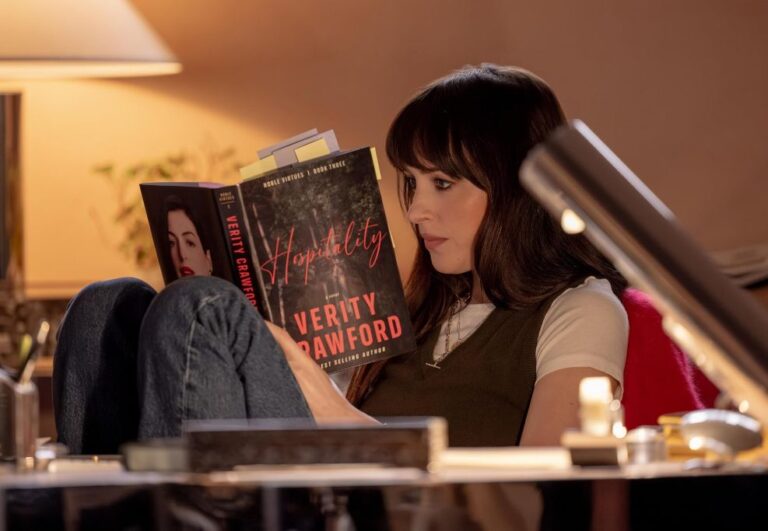
This year, you can see Dakota Johnson in erotic thriller Verity, opposite Anne Hathaway. The movie is currently in cinemas. Next up, she’ll star in drama The Three Incestuous Sisters.
Noah Kahan has released ‘Draw You Out’, his contribution to the soundtrack for The Hunger Games: Sunrise on the Reaping. Aaron Dessner co-wrote and co-produced the track at New York’s Long Pond Studio and Nashville’s Gold Pacific Studios and East Iris Studios. Check it out below.
“Music is such a massive part of the Hunger Games in a lot of ways,” Kahan said in a press release. “To be able to speak to what the director sees in these characters, what Suzanne Collins wrote these characters for, and to try to match that is a big task – but a really fun challenge. I just can’t believe that I get to be a part of it.”
Ninajirachi has shared a remix of the I Love My Computer track ‘CSIRAC’ by 100 gecs’ Dylan Brady. The Australian producer teased the track at her headline performance for triple j’s One Night Stand. Check it out below.
In a press release, Brady said he sought to recontextualize the “clubby, drummy, DJ moment” that Nina Wilson captured with the original ‘CSIRAC’. “I had so much fun making this remix,” he added. “Nina’s music is so amazing.”
Earlier this year, Ninajirachi teamed up with Porter Robinson for ‘WannaCry’. More recently, she enlisted Madeon for a remix of ‘iPod Touch’.
In this segment, we showcase the most notable albums out each week. Here are the albums out on October 2, 2026.
Greg Freeman, All Set the Bone
Greg Freeman has followed up last year’s Burnover with a raucously ambitious new album, All Set to the Bone. Divided across four sides, it serves as a “reflection of a lot of change, and a lot of tension,” according to Freeman, pulling together “inhuman events” into a “perfect tsunami.” Produced by John Congleton, it features the Vermont singer-songwriter’s longtime collaborators Garrett Linck and Sam Atallah, as well as new ones including Florry’s Joey Sullivan, The Rockin Worms’ Carney Hemler, Anna McClellan and Trinity Ace. “It should never feel comfortable,” Freeman remarked. “Every album should scare you.”
Wishy aim to cure lovesickness with Nature’s Pill, a record as heartfelt as it is blissfully melodic. It arrives on the heels of 2023’s Mana and Paradise EPs, their debut LP Triple Seven in 2024, and 2025’s Planet Popstar EP. “The songs were still flowing, but this album was more intentional,” the band’s Nina Pitchkites said in a statement. “There was also some pressure of knowing we were working toward a definitive project,” Kevin Krauter added, “It gave these songs a more cohesive world to exist in, even if that world is a Pandora’s Box of everything.”
The trio of Grouper’s Liz Harris, Scott Simmons, and Jed Bindeman are back with their first album in a decade, Linda’s Head. The follow-up to The Original Faces, released via Kranky, includes the previously released singles ‘Dead Shark II’ and the title track, which showcase the record’s intersecting shoegaze and twee sensibilities. As beautifully intimate as it is impenetrable, it’s the perfect addition to your fall listening rotation.
Florist’s Emily Sprague has unveiled a new solo album, Cyano. Though it follows a string of releases, including Memory / Mount Vision (2017 / 2019), Hill, Flower, Fog (2020), and Cloud Time (2025), it marks the artist’s first LP on lead vocals. The record began taking shape during a solstice trip to an Icelandic fjord, but it was later completed in a single month. “There’s a few different allegories that Cyano can be for,” Sprague told Post-Trash. “One of them is an internal world. One of them could be our world or an external world. I was thinking about what happens when a society or a planet tries to recover and heal from being destroyed by people not being able to communicate with each other and not being able to get through to each other or have empathy for each other.”
Miranda Lambert, Crisco; Johnny Marr, The Age of Everything; Deerhoof, Divine Schism; Victoria Monét, Frequency of Love; Stef Chura, Dancing Alone on the Concrete; The Album Leaf, A Body of Voices; Trusselina, The Point’s a Truss, My Trusselina; Kaitlyn Aurelia Smith, Ruin: It’s Just Not Music; Fat Dog, Cancel Me (I’m Tired); Charlotte Greve, Waterbodies; iiisa, tanto te he querido; Kodaline, We Were Only Young; Sons of Sevilla, Vacations; Alyssa Weinberg, Pieces of Light.
There’s so much music coming out all the time that it’s hard to keep track. On those days when the influx of new tracks is particularly overwhelming, we sift through the noise to bring you a curated list of the most interesting new releases (the best of which will be added to our Best New Songs playlist). Below, check out our track roundup for Thursday, October 1, 2026.
Lil Nas X – ‘World’s Greatest’
Lil Nas X is back with a new single, ‘World’s Greatest’. “‘Walk by faith, not by sight’ was my mom’s favorite phrase to say,” Lil Nas X wrote on Instagram yesterady, announcing the motivational six-minute track. “As I move through life it resonates with me more & more.” The song comes paired with a music video directed by Phillip Youmans.
Radio Free Alice – ‘Big Ideas’ [feat. Rachel Brown]
Australian post-punk band Radio Free Alice’s latest single, ‘Big Ideas’, is a breezy collaboration with Water From Your Eyes vocalist Rachel Brown. “From early on we felt that a second vocal would work well with the song, a kind of call and response,” frontman Noah Learmonth commented. “We’ve loved Water From Your Eyes for years, and had gone to their show when they came to Melbourne. We felt like Rachel would be perfect, they have such an interesting, distinctive voice.”
A Country Western – ‘I Found’
A Country Western have previewed their forthcoming album Audition Tape with a new single, the moodily propulsive ‘I Found’. “I’m really into the idea of recognizing a good chord progression or riff and sticking to it for a whole song – understanding when you’ve got something that can last,” the band’s Garrett Miades explained. “The verse progression felt mellow and soothing when I listened to it for long periods of time on repeat. The programmed drums emphasize the repetition of the chords, and so do the matching lyrics Paris and I sing, like we’re vowing the same thing.”
Blackhaine – ‘Consumer’
Blackhaine has detailed his first full-length, Saints in the Wethouse, sharing the luxurious lead single ‘Consumer’. Rainy Miller, Croww, Space Afrika, Ship Sket, Vanessa Bedoret, and Gabe Evans contributed to the LP, which is out November 13 via XL.
Holly Humberstone – ‘Too Cute to Be Lonely’
Holly Humberstone has announced Cruel World…So It Ends, the deluxe edition of her sophomore album, and unveiled a video for ‘Too Cute to Be Lonely’. “To me the fairytale doesn’t end, it just turns a page to a new chapter,” she said. “Cruel World was a journey of self discovery and finding my confidence in my voice, the songs within So It Ends feel more confident and self assured.”
claire rousay – ‘holy sedative’
After unveiling a collaborative album with Martyna Basta last week, claire rousay is back with news of a new EP, on holding. Arriving October 9, it will serve as the inaugural release on rousay’s new label quality sounds ltd. The early single ‘holy sedative’ is a delicate piano piece in which rousay lovingly fills the space between each note. According to the record’s Bandcamp description, it was “largely captured during tours throughout Europe and the UK in 2026, field recordings while in-transit, hotel room Ableton explorations, piano recordings made between sound check and showtime using the provided pianos at each venue, interviews with people at the concerts, and live recordings of sets on tour.”
THICK – ‘Heavy Metal’
Brooklyn’s THICK have returned with a wry, anthemic new single, ‘Heavy Metal’. “This song started as a verse or two after the Berkeley study came out about heavy metals being found in tampons and snowballed into a larger indictment of the systemic violations that we carry around every day,” the band recalled. “The violence and neglect we experience is a predictable result of systems that don’t see us as people, but objects to be exploited. You see it in the imbalance of consequences: Survivors of rape are often shunned if they go public or carry the weight of assault alone, a woman carries the full burden of contraception, health risks and medical costs around conception, putting money into insurance companies’ pockets while bodily autonomy continues to be challenged and eliminated in some states. Teachers are responsible for protecting kids from school shooters, while pharma companies see an opportunity for profit in the degradation of our mental health.”
They added: “We’re sold the idea that we can subvert the system with consumer choices, as if the main fix for a broken system is trying harder inside it. The real issue is who benefits when people are too broke and too tired to push back.”
HMLTD – ‘Umami’
“‘Umami’ is the closest thing we’ve ever written to a club track,” HMLTD said of the latest single from their upcoming record, FANGS. “Inspired by bloghouse, eurotrash and recession-pop era EDM, it is at once a celebration of the club as a conceptual meta-space for dionysian excess and expenditure, and an indictment of the club in its modern form, where it could not be further from this ideal.”
Willi Carlisle – ‘Gas Station’
Willi Carlisle co-wrote ‘Gas Station’, the latest single from his upcoming double LP The Universal Bubba, with Tyler Childers and co-producer Kenny Miles. “Coming into the recording session, this song felt like a strong draft, like something left in the fridge to proof or set like a dough,” Carlisle explained. “I liked it though: my whole life summarized. All this work, hauling, beating up the highway, singing for hours, just to eat dinner at the gas station. It was late in our two weeks of recording before we got to this song, and I kept wondering if we would cut it. But Tyler came into the studio, wild-eyed, guitar in hand, no shoes, a little haggard. He had an idea, and took my kinda simple blues progression and changed the feel. It became a lot more direct, less tongue-in-cheek. More honest. We stood, started singing, changing words here and there, agreeing and disagreeing. We cut a take with the drummer. We sat in a circle with pen, paper, instruments. Tyler suggested, “goodle days” instead of “good old days.” Kenny kept nodding, fixing mistakes. We kept shaping verses, agreeing that my choruses were working. Suddenly I realized, this was a cowrite! But the red light was already on, the tape rolling. We were writing and recording at the same time. Wild as hell. In the long run, it felt like we should both be singing it, so we doubled up on the choruses.”
Porij – ‘Valley Kudu’
Porij have released ‘Valley Kudu’, their first new music in over a year. According to the band, it’s “the most indie leaning track we’ve ever written. We’d been away for a while and booked a studio in the middle of the Suffolk countryside with the aim of writing the next album. It started out as a voice note and ended up as close to indie guitar music that porij can get. Sonically it feels quite coming of age, think frolicking about with your pals and montage moments. Lyrically it deals with a really difficult time in my life where my partner was very unwell. Ultimately it’s about not losing hope as you shift through the seasons and trusting that time will heal. It was fun playing around with the darker and lighter textures both instrumentally and lyrically and trying to strike the right balance. The title is a bit tongue in cheek as it’s an homage to Mount Kimbie, a band we adore.”
Strawberry Guy – ‘Only Gets Better’
Strawberry Guy has dropped an ethereal new single, ‘Only Gets Better’, lifted from his sophomore album Give Me a Dream. “‘Only Gets Better’ is a song about anxiety, really,” he explained. “But in a way where I guess I’ve written it for myself and others when they experience it – it’s kind of like an ‘it’s gonna be ok’ kind of song. A warm hug almost. A reminder that it can only get better if you are at your worst. One lyric I was particularly happy with is the opening lyric, ‘I saw the future today, it only gets better’… just thought it was a good opening line, aha.’”
Houston-born singer-songwriter Emma Ogier has signed to Lost Highway Records and will release her debut LP, Fly 1111, on November 11. Its newest single, ‘Hands Tied’, is out now, following the previously released cuts ‘Rocksteady/HeavyMetal’ and ‘Keep You’. Check it out below.
“What struck us immediately about Emma is how completely herself she is,” Robert Knotts and Jake Gear, EVP and Co-Heads of Lost Highway Records, said in a staetment. “Her songs are intimate and deeply human, but there’s also a restless creative spirit behind them. She isn’t interested in fitting neatly into a genre or following a prescribed path, which is exactly what we admire most about her.”
Fly 1111 Cover Artwork:
Fly 1111 Tracklist:
1. All These Dreams
2. Baby Don’t Hurt Me
3. Hands Tied
4. Land
5. Rocksteady/HeavyMetal
6. Believing
7. W2F
8. The Prize
9. Keep You
10. West And Down
11. Fly 1111
12. Private Power








 Greg Freeman has followed up last year’s Burnover with a raucously ambitious new album, All Set to the Bone. Divided across four sides, it serves as a “reflection of a lot of change, and a lot of tension,” according to Freeman, pulling together “inhuman events” into a “perfect tsunami.” Produced by John Congleton, it features the Vermont singer-songwriter’s longtime collaborators Garrett Linck and Sam Atallah, as well as new ones including Florry’s Joey Sullivan, The Rockin Worms’ Carney Hemler, Anna McClellan and Trinity Ace. “It should never feel comfortable,” Freeman remarked. “Every album should scare you.”


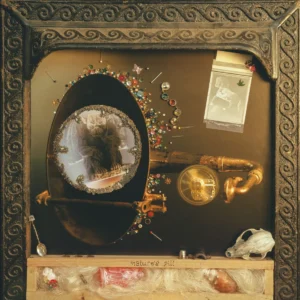 Wishy aim to cure lovesickness with Nature’s Pill, a record as heartfelt as it is blissfully melodic. It arrives on the heels of 2023’s Mana and Paradise EPs, their debut LP Triple Seven in 2024, and 2025’s Planet Popstar EP. “The songs were still flowing, but this album was more intentional,” the band’s Nina Pitchkites said in a statement. “There was also some pressure of knowing we were working toward a definitive project,” Kevin Krauter added, “It gave these songs a more cohesive world to exist in, even if that world is a Pandora’s Box of everything.”
 The trio of Grouper’s Liz Harris, Scott Simmons, and Jed Bindeman are back with their first album in a decade,
  Florist’s Emily Sprague has unveiled a new solo album,