JPEGMAFIA has shared a politically-charged new song titled ‘THE BENDS!’, alongside a self-directed music video in which he dances around a country road in a beekeeper’s suit. Check it out below.
In addition to referring to the current political climate as “sad”, the track also makes allusions to Radiohead’s sophomore album The Bends, as well as the band’s OK Computer single ‘No Surprises’: “No surprises, you know it’s the bends with me,” he raps.
The latest from Peggy follows a series of singles released in 2020, including ‘BALD!’, ‘Covered in Money!’, ‘BODYGUARD!’, and ‘CUTIE PIE!’.
Check out our review of JPEGMAFIA’s latest album, 2019’s All My Heroes Are Cornballs.
Japanese experimental metal band Boris have announced a new album titled NO, to be self-released on July 3 via Bandcamp. They also shared a searing new track titled ‘Loveless’, which you can check out below, along with the album’s cover artwork and tracklist.
The announcement came with a statement/ manifesto from Boris in response to the “closing” of international borders. “The anger and discontent we had no outlet for in our youth shone through in our music, helping us to channel negative energy channeled towards creative ends and leading us to new means of expression and artistry,” they explained. “We hope this latest album can be a mirror that gathers and reflects people’s negative energy at a different angle, one that is positive. That is the power and potential of the dark, extreme, and brutal noise music that we have experienced up to this point.”
They added: “Today’s society is littered with words that may or may not be true, making it easy to want to just not listen to what anyone has to say. But, that’s all the more reason why we hope that you will at least open your ears to these songs sung in the language of another land. These shouts that have no proper meaning as words will help release the raw, unshaped emotions within you. This is ‘extreme healing music.”
The album will also include a cover of the song ‘Fundamental Error’ by legendary Japanese hardcore punk band GUDON, as well as a guest appearance from guitarist Katsumi, formerly of the Japanese hardcore punk bands OUTO and CITY INDIAN and now a member of SOLMANIA.
Pre-orders are available now via Bandcamp. Boris’ last album was 2019’s LφVE & EVφL, which was released through Jack White’s Third Man Records.
NO Artwork:
NO Tracklisting :
1. Genesis
2. Anti-Gone
3. Non Blood Lore
4. Temple of Hatred
5. 鏡 -Zerkalo-
6. HxCxHxC -Parforation Line-
7. キキノウエ -Kiki no Ue-
8. Lust
9. Fundamental Error
10. Loveless
11. Interlude
Kelly Lee Owens has shared a new single from her upcoming album Inner Song. The song comes with an accompanying video directed by Kasper Häggström depicting a young man driving along the Norwegian coastline with his golden retriever. Check it out below.
“This is perhaps the most intimate and personal song I’ve written so far—the two halves of the track reflect upon sad acceptances of the truth and then the joyous aftermath of liberation that can come from that,” the producer/musician said in a press release. “This can definitely be heard in the production and arrangement of the track—the first half sonically connecting to the inner revelations and the second half, the liberation in action, the forward motion.”
Inner Song was originally slated for release in May, but was postponed to August 28th due to the coronavirus pandemic. Owens previously shared the singles ‘Night’ and ‘Melt!’, as well as a collaborative track with Jon Hopkins called ‘Luminous Spaces’.
Doja Cat has quietly dropped a new track titled ‘Unisex Freestyle’ via Soundcloud. Check it out below.
The rapper shared the link to the song on Twitter, writing: “I made some more horny shit check it out.” She originally revealed the track during an Instagram Live stream, where she described it as “kinda fire. I like it, I like it, and I know why it’s bad, but I still like it. But, it just needs to be mastered, like — made better. … And I made this beat, this song is cute as f*ck. … I like this song, it’s funny.”
In addition, she also shared a preview of the music video for her latest single, ‘Like That’ feat. Gucci Mane. Inspired by Sailor Moon, the video is set to be released tomorrow (June 26). Watch the preview below.
Doja Cat recently came under fire after it was alleged that she had taken part in racist video chats in the past, as well as for using a racist slur in her 2015 song ‘Dindu Nuffin’.
“I understand my influence and impact and I’m taking this all very seriously,” she wrote in response. “I love you all and I’m sorry for upsetting or hurting any of you. That’s not my character, and I’m determined to show that to everyone moving forward. Thank you.”
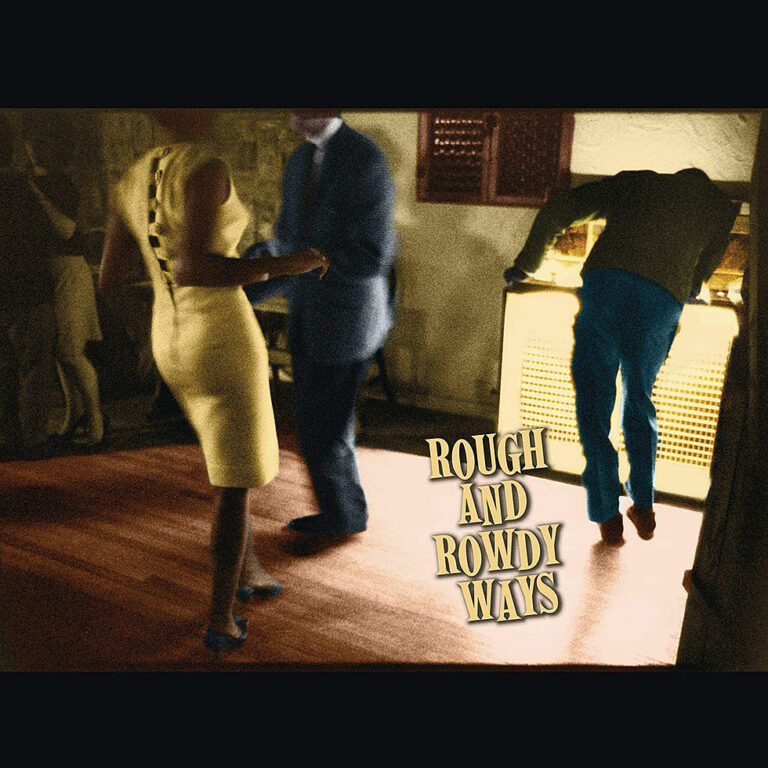
Bob Dylan contains multitudes, but he is also one of the few songwriters who can make that claim about himself without being accused of arrogance. (Though I can’t help but mention Moses Sumney, a man 50 years younger than Dylan, who powerfully proclaimed his own multiplicity on this year’s græ.) In addition to referencing Walt Whitman’s ‘Song of Myself’, opener ‘I Contain Multitudes’ sees him comparing himself to everyone from Edgar Allan Poe, Anne Frank, Indiana Jones, The Rolling Stones, and William Blake. Rough and Rowdy Ways, the bard’s 39th studio album and first collection of original songs since 2012’s The Tempest, is also full of contradictions. The songs here are heavily loaded with cultural allusions, but they can also be seen, as ‘False Prophet’ simply puts it, as “songs of love” and “songs of betrayal”. Musically, they are both gorgeously refined and frequently ambitious, and yet they are also some of his most immediate. If there’s one thing that’s certain, though, it’s that the record contains some of his best compositions to date – which says a lot, considering that he is, you know, Bob Dylan.
But ‘False Prophet’, the follow-up to ‘I Contain Multitudes’, is quick to denounce his unshakable status as one of the greatest singer-songwriters of all time. “You don’t know me, darlin’/ You never would guess,” he sings in his trademark gravel, rhyming the line with “I’m just here to bring vengeance on somebody’s head.” It’s a perfect example of how the album manages to deliver gruesome tales about murderers, thieves, and all sorts of sinners while also reflecting on Dylan’s own legacy. He takes on the role of Frankestein on the slow-burning ‘My Own Version of You’, assembling body parts in order “to be saved by the creature that I create” and vowing to “do things for the benefit of all mankind”. It might be framed as classic horror story and shrouded in cheeky references to “Mr. Freud with his dreams” and “Mr. Marx with his ax”, but it’s also about grappling with one’s mortality, with Dylan asking pretty much all the big questions, from “Can you tell me what it means, to be or not to be?” to “Is there light at the end of the tunnel, can you tell me, please?”
‘I’ve Made Up My Mind to Give Myself to You’ follows a similar formula, tracing an entire life spent on the road, “from Salt Lake City to Birmingham/ From East L.A. to San Antone.” On the surface, the track presents itself as a heartfelt love song, but it doesn’t require much digging to realize that it’s actually about accepting death as an inevitability. It’s also one of the album’s many sonically beautiful moments, from its serene instrumental to Dylan’s delicate and soulful delivery, which he’s evidently mastered afters years of perfecting American standards popularized by Frank Sinatra. Laced with the same kind of tender intimacy are the tracks ‘Mother of Muses’ and ‘Black Rider’, both of which combine finger-picked classical guitar and richly rendered production to different but stunning effect. ‘Black Rider’ is yet another meditation on death, and though more direct and earnest this time around, Dylan still isn’t afraid to crack a crude joke in the middle of it all: “Black rider, black rider, hold it right there/ The size of your cock will get you nowhere.”
While these elegantly understated moments make up some of the album’s most magnificent highlights, there’s a delightful swagger to the bluesier cuts here, including the strutting ‘False Prophet’ and the relentless ‘Crossing the Rubicon’. There’s also ‘Goodbye Jimmy Reed’, which is more straightforward and doesn’t have as much to offer as the other two, both of which perfect the art of taking a simple formula and knowing exactly when to pull back and when to give it all, making them well-worth their 7-minute runtime. The sound of the album is by no means boundary-pushing, but it is not only impeccably executed but also perfectly fitting for an album that seems locked into a completely different cultural era. And yet, this is perhaps where the album’s only major flaw lies; it’s not so much that it feels disconnected from the present – it doesn’t – but rather that it’s so fervently keen on latching onto established monuments of the past that it fails to challenge canonical readings of history in any significant way. But of course, that’s coming from one of those youngsters who, as Dylan said in a rare New York Times interview earlier this year, “have no past, so all they know is what they see and hear.” Fair.
Which brings us to ‘Murder Most Foul’ – the apocalyptic 17-minute closing track (and somehow, Dylan’s first No. 1 single) that starts as a take on the JFK assassination but slowly unfolds into a kaleidoscopic rumination that sprawls through the entirety of 20th century American culture. The way it blends fact and fiction, myth and history, Dylan and America – it all seems to contradict the notion that this is one of Dylan’s most down-to-earth albums; the idea that the lyrics here are “tangible, not metaphors,” as he put it in that same interview. But the reason it retains its resonance lies in the fact that it seems to stretch on forever, taking immense pleasure in honouring the legacy of so many artists before him. It’s tangible proof of what he so sincerely proclaims on ‘Mother of Muses’: “Man, I could tell their stories all day.”
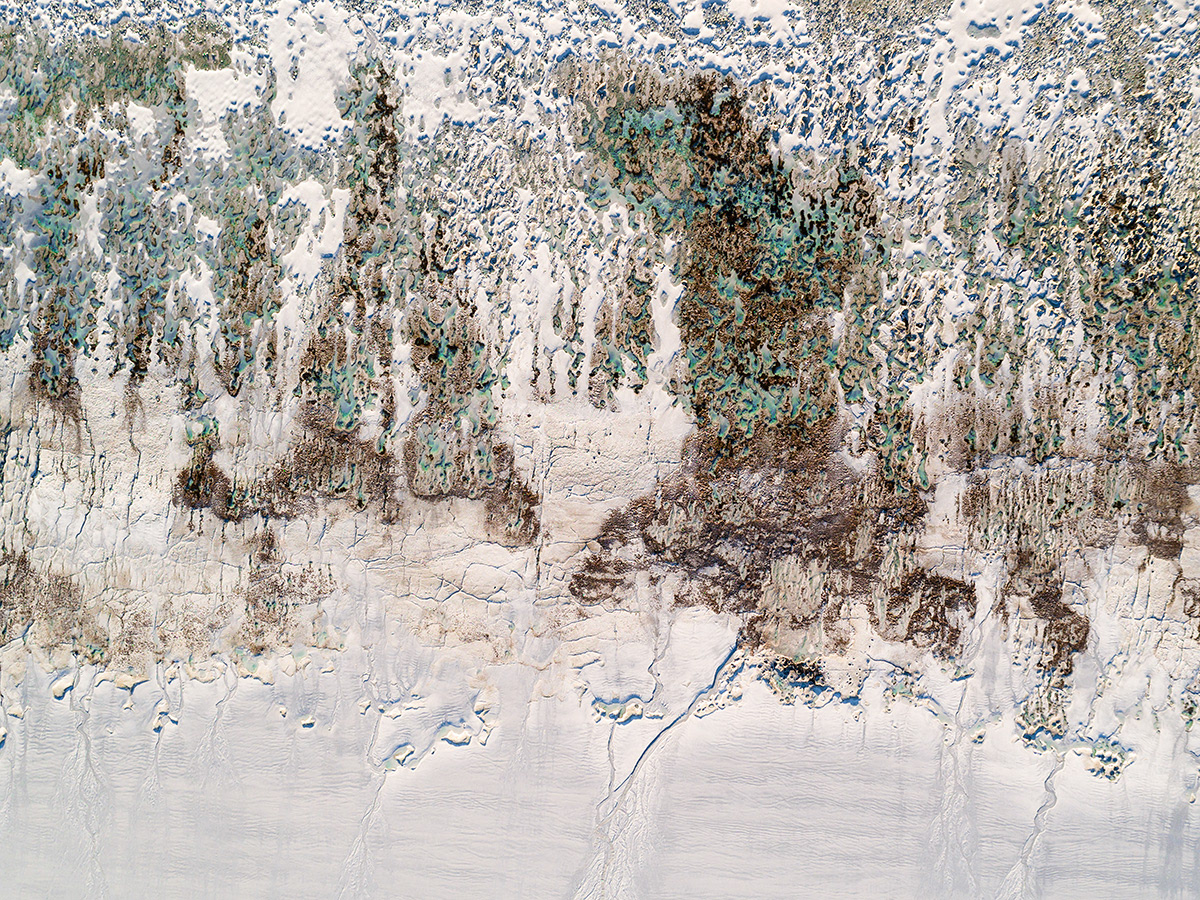
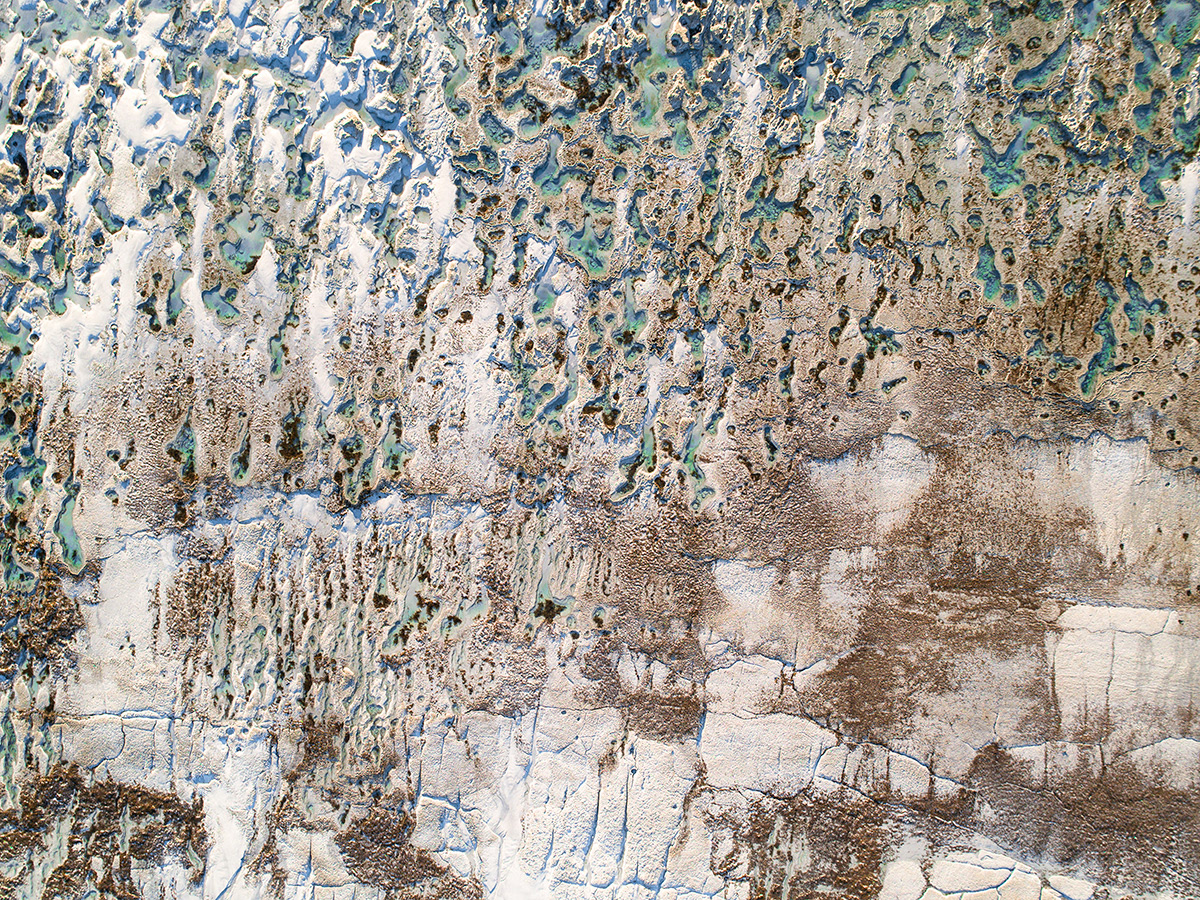
Kevin Krautgartner, a superb German-born photographer, has released a terrific series in which he explores large rock formations named Rock Wells. Krautgartner is known for some eye-pleasing aerial photography series in the past including Tropical Reefs, Australian Salt, and Norway from Above — to name a few.
Writing about the series Krautgartner stated: “The so called “Rock Wells” are huge rock formations which extend along coastlines with a high tidal range. Due to erosion the rocks are usually formed like big pools and are pretty rare to find. The diameter of a pool can be up to 2 meters. At high tide all these rock formations hide under the surface of the ocean, completely submerged and out of sight. Once the tide recedes, the shoreline provides the beauty of these natural phenomena. The large jagged pinnacles and deep wells maintain an aquatic habitat for the creates that become stranded in it. The beauty of these locations, along with the dependence the marine life have on it for shelter begs the name “Natures last resort”. Looking at these actually big rock formations from an aerial perspective you can have an overview of its unique structure and its color of the sea water which will never dry out completely.”
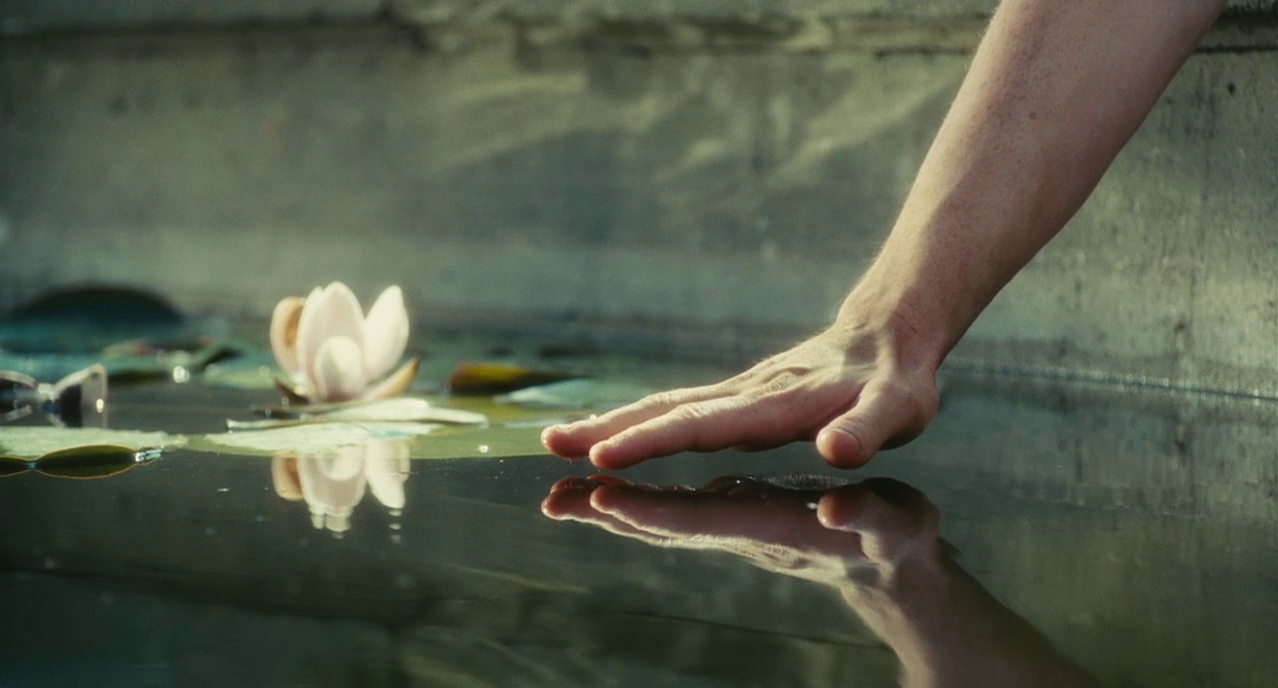
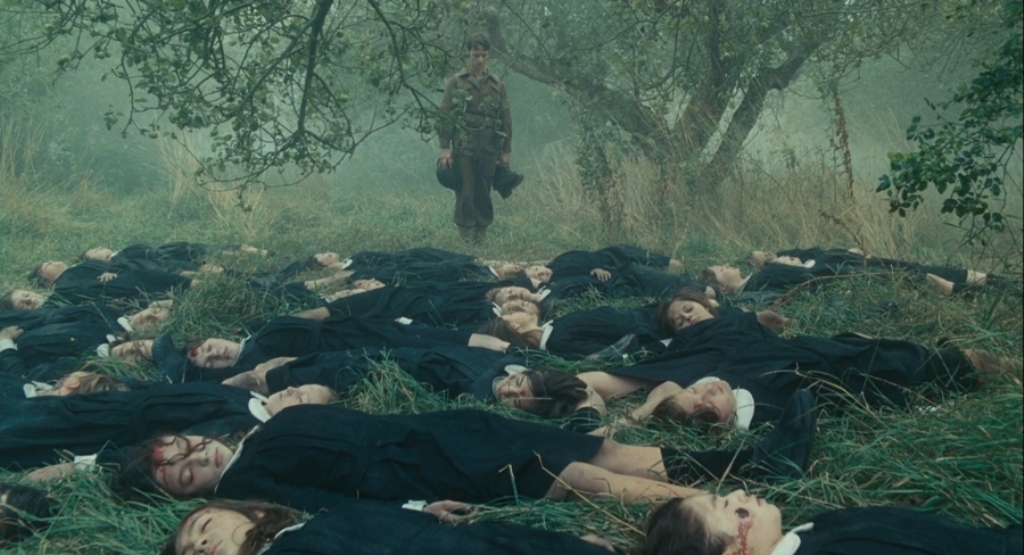
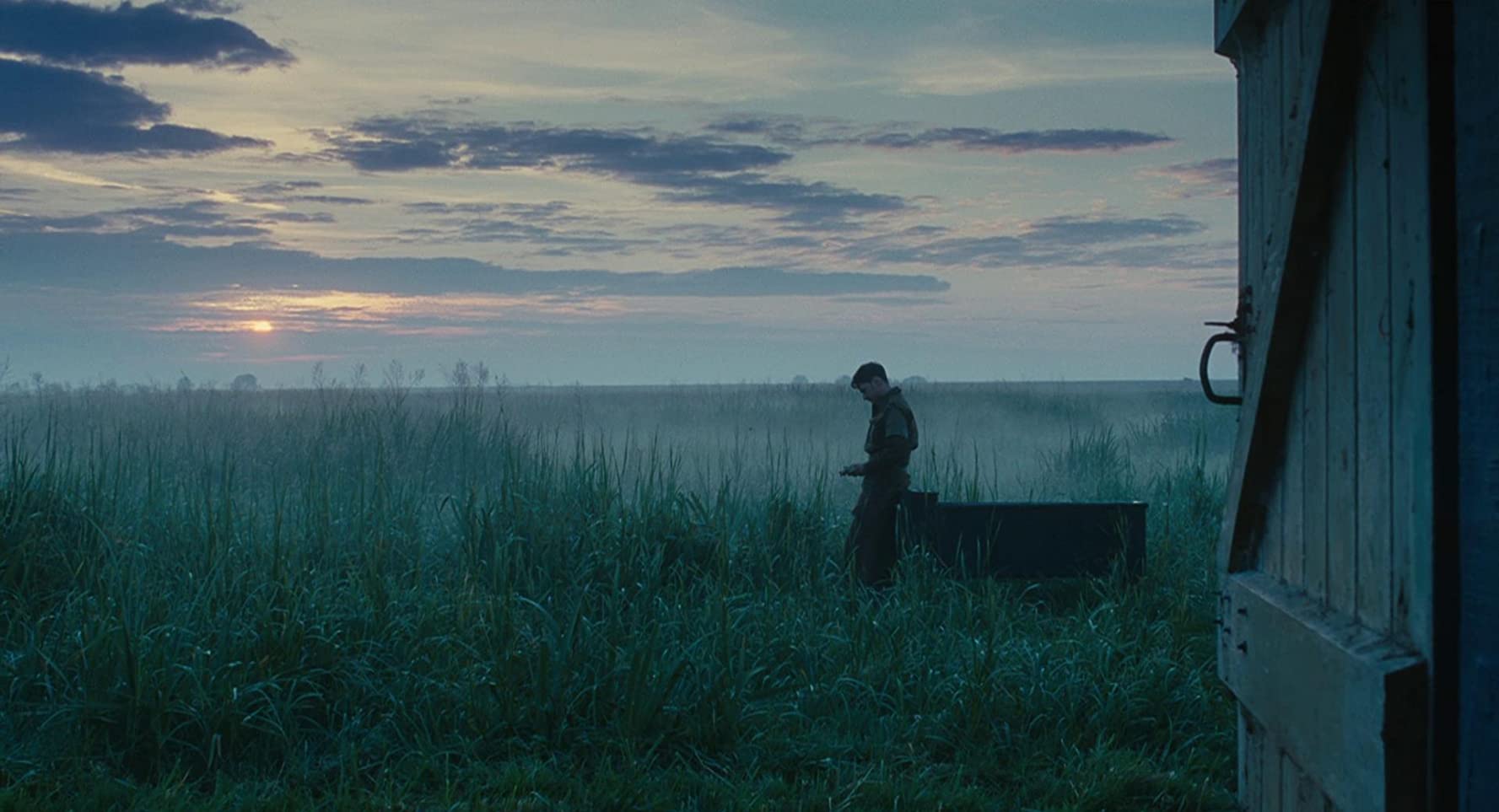
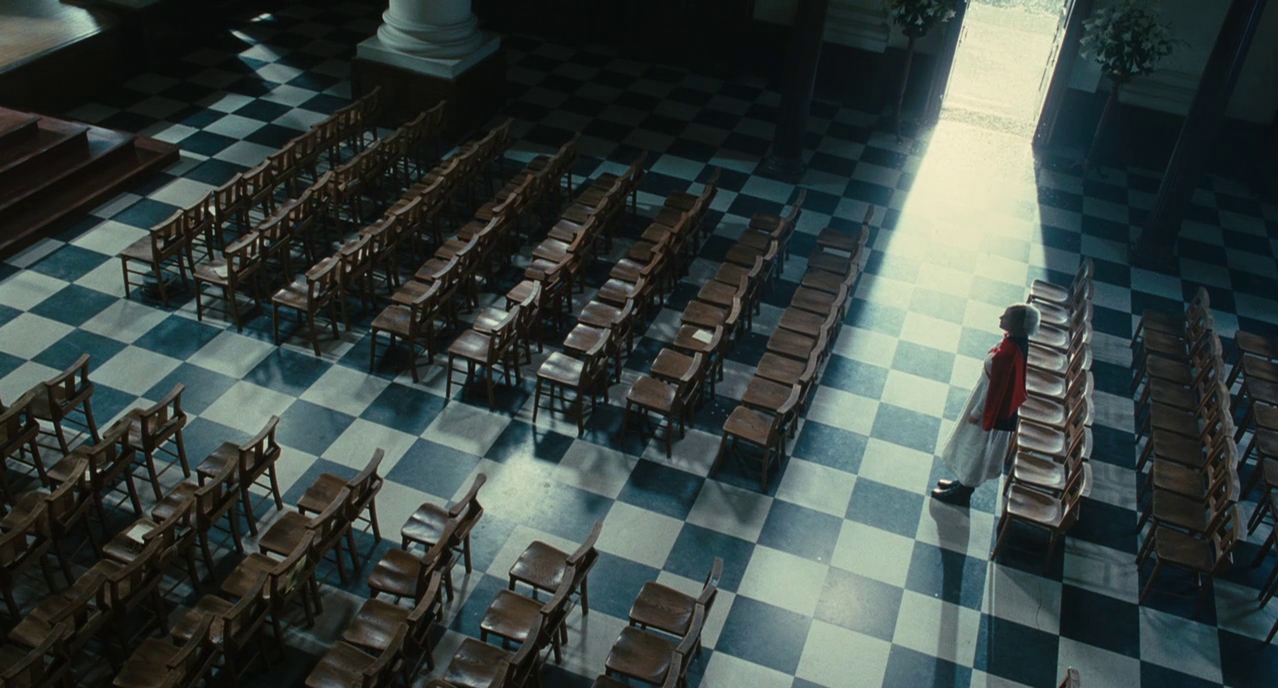
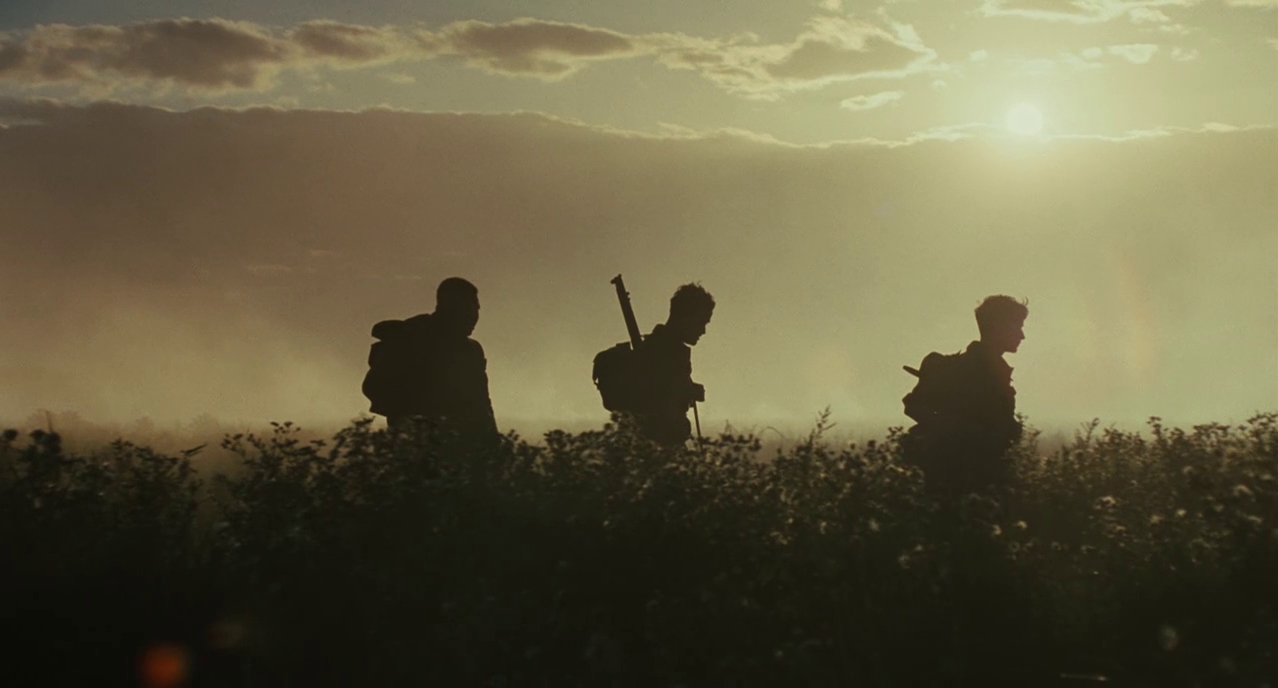
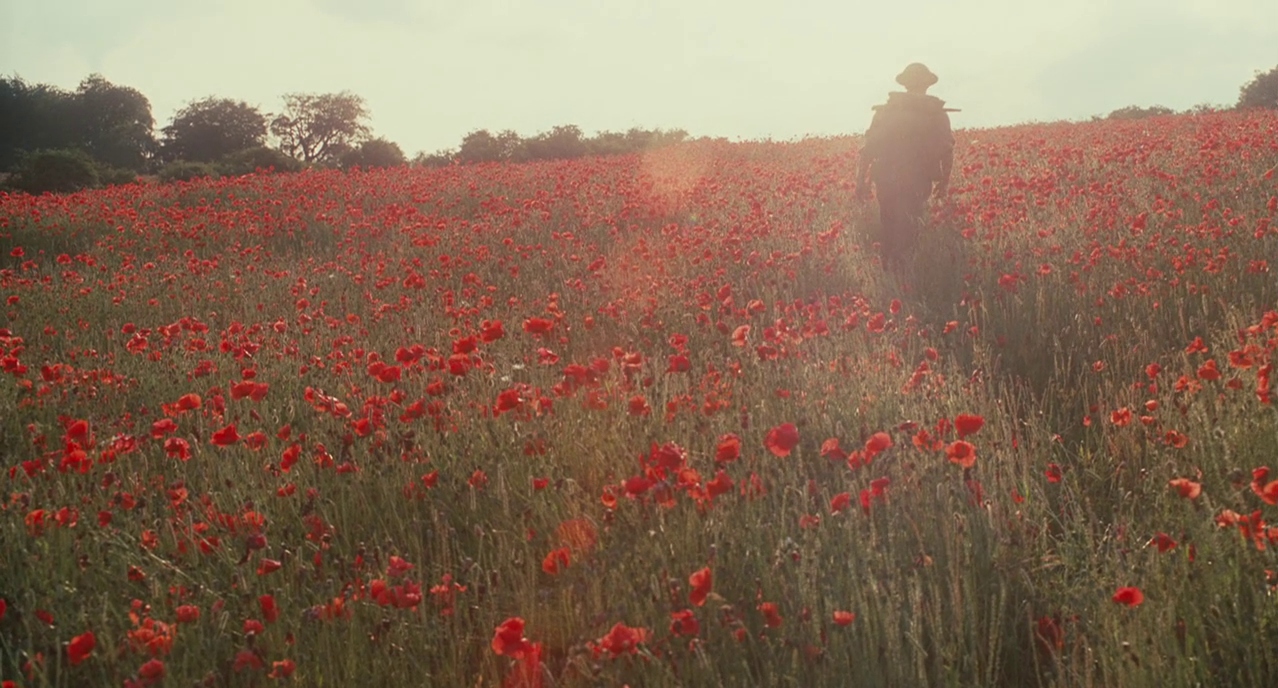
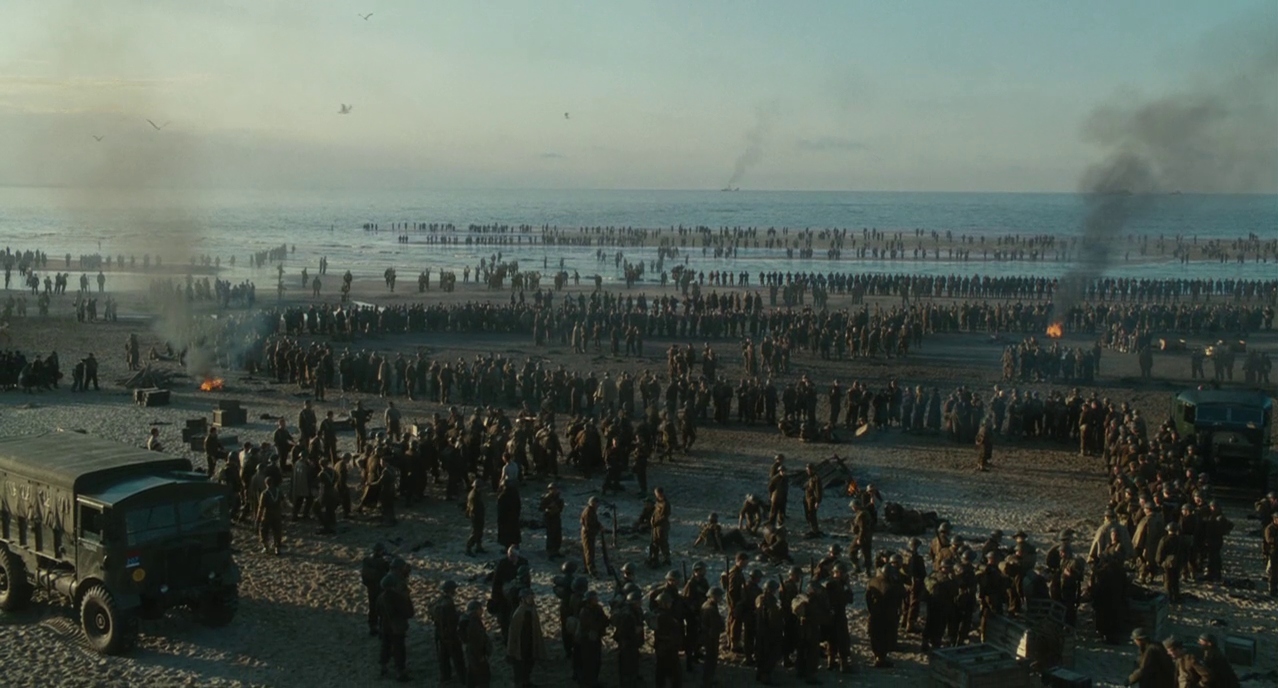
One of Joe Wright’s earlier directorial efforts, Atonement is a romantic war drama based on Ian McEwan’s novel of the same name. The film features a now-all-star cast, including Keira Knightley, James McAvoy, a young Saoirse Ronan, and Benedict Cumberbatch. Briony Tallis is the film’s central character, who in her childhood mistakenly accuses Robbie – a young man who works at the Tallis household and has been close with the family for years – of sexual assault. As a result, he is sent away to serve in the army, destroying his relationship with Cecelia, Briony’s older sister.
The critically acclaimed film earned an Academy Award and many other honourable accolades. It is widely known for its clever use of sound and cinematography. Here are ten of the film’s most beautiful stills.
For those theater-enthusiasts who are looking for a director whose varied and celebrated body of work spans across genre, sometimes courts controversy and always celebrates the art form, one needs to look no further than Travis Preston. Travis Preston’s esteemed career, spanning over decades and including over a dozen directorial pursuits, has thrilled and delighted fans and critics alike. His prestigious career has taken him all over the world, giving him the opportunity to direct a wide variety of talent and put his artistic take on many different projects.
Beginning his artistic career as a student at California Institute of the Arts, Travis Preston has enjoyed working with both professional actors and students alike, and cites his time there as being some of the most instrumental and rewarding in his career. During his time at CalArts, Preston has directed a number of highly-recognized and celebrated works, including Fantomas: Revenge of the Image, Prometheus Bound, and The Master Builder, which he directed along with celebrated actors Stephen Dillane and Gemma Arterton.
Travis Preston continues to enjoy directing and has recently put his artistic stamp on a number of celebrated works, including but certainly not limited to Sam Shepherd’s Buried Child last summer. Other productions he has worked on include Democracy in America, works of Shakespeare including Macbeth and King Lear (for which is unique, groundbreaking and somewhat controversial staging was highly celebrated and discussed among the theater community), The Ghost Sonata and Infrared in Copenhagen, Little Eyolf and Lulu in association with the American Ibsen Theater, and has achieved critical acclaim and praise at festivals around the world, including London, Houston, and Florence.
Travis Preston has worked with and collaborated with a number of seasoned actors, directors, orchestras and theater professionals, The Denmark Royal Family, and others; and has adapted plays by celebrated classic writers such as Shakespeare, Ibsen, as well as new works from celebrated modern authors and playwrights. His work has been showcased in many celebrated theaters around the globe, including Yale Repertory Theater, American Repertory Theater in Cambridge, and has performed/directed in Central Park.
For his celebrated contribution to the theater and years of service to the Arts, Travis Preston was awarded Chevalier of the Order Arts and Letters by the French Minister of Culture, who cited his “contributions to the arts in France and around the world”. With this knighthood, he officially became Sir Travis Preston.
In addition to his seasoned and esteemed career as a director, Travis Preston has also taught at several universities around the globe, including Yale, New York University, Hong Kong Academy for the Performing Arts, The National Theater School of Denmark, and Harvard, where he taught for six years, among other universities. Continuing as Artistic Director at CalArts Center, and the acting Dean of the CalArts School of Theater, Travis Preston continues to direct critically-acclaimed, highly celebrated and groundbreaking projects and will undoubtedly be contributing to the world of theater for many years to come.
After singing ‘Kyoto’ from her bathroom on Jimmy Kimmel two months ago, Phoebe Bridgers has now staged her own Carpool Karaoke while zooming in for James Corden’s Late Late Show last night. The singer-songwriter drove around in her skeleton suit while performing ‘I See You’, from her sophomore album Punisher, which was released last week.
Before her performance, Bridgers spoke to Corden about her decision to release the album a day early. “I just had a couple people reach out and ask me if I was gonna put out the record at all, with the political climate, or even push it down the line,” she said. “And I feel like the subtext of that is waiting for people to forget about Black Lives Matter or waiting for white people to talk about themselves on the internet again, which I find insanely cringey and offensive. So I just wanted to put it out and give it to people and connect the charities that I really care about.”
Sigur Rós singer Jónsi has announced his first solo album in a decade. The LP, called Shiver, is set for release on October 2 via Krunk. Following the release of single ‘Exhale’, Jónsi has shared a new song titled ‘Swill’, as well as an accompanying video directed by Barnaby Roper and animated by Pandagunda. Below, listen to the track and check out the album’s cover artwork and tracklist.
“It’s basically about when you get too drunk and do something stupid,” the Sigur Rós frontman told Rolling Stone about the track. “And you make a fool of yourself.”
Co-produced by A.G. Cook and Jónsi, the follow-up to his 2010 solo debut Go is set to feature appearances from Robyn and Cocteau Twins’ Liz Fraser. About working with PC Music’s A.G. Cook, Jónsi said: “We decided to work on one song together and see how it goes and it really worked. He stripped it down for me because when you’re doing everything yourself, you go a little bit crazy. He built the songs again from scratch.”
Shiver Artwork:
Shiver Tracklist:
1. Exhale 2. Shiver 3. Cannibal (with Liz Fraser) 4. Wildeye 5. Sumarið Sem Aldrei Kom 6. Kórall 7. Salt Licorice (with Robyn) 8. Hold 9. Swill 10. Grenade 11. Beautiful Boy