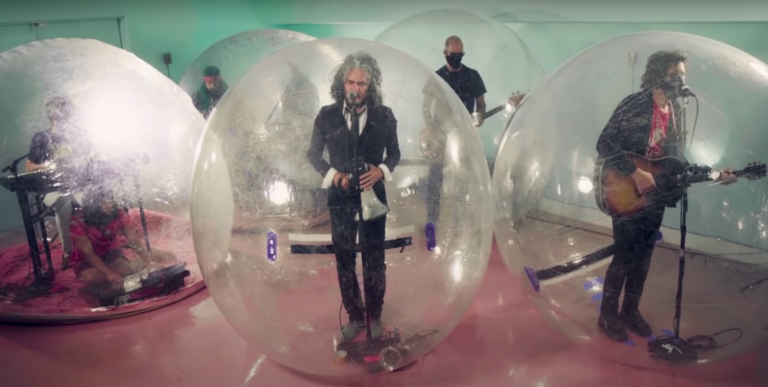
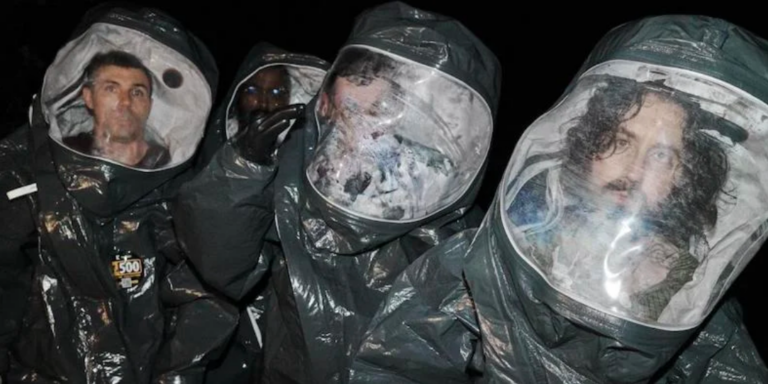
The Flaming Lips made an appearance The Tonight Show Starring Jimmy Fallon! on Friday night (September 11). The psych-rock outfit performed ‘God and the Policeman’, whose studio version features Kacey Musgraves, from their brand new album American Head. Each band member was enclosed in a giant bubble, as in their recent performance of ‘Race for the Prize’ on Colbert. Check out their performance below.
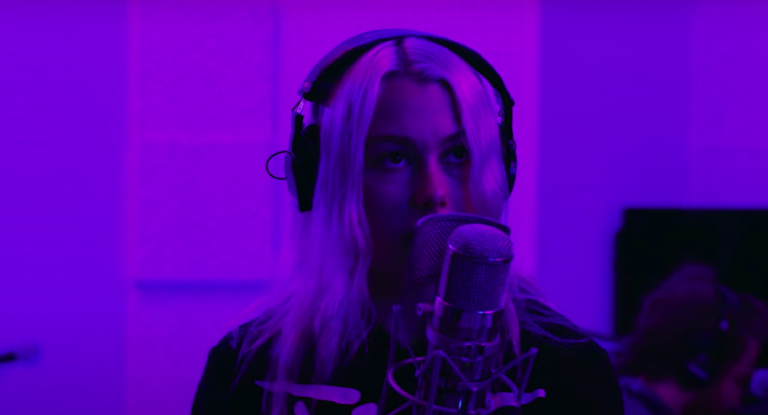
Phoebe Bridgers was the musical guest on CBS This Morning yesterday (September 12). The singer-songwriter played three tracks from her most recent album, Punisher: ‘Kyoto’, ‘Garden Song’, and ‘I Know the End’. Watch her performances below.
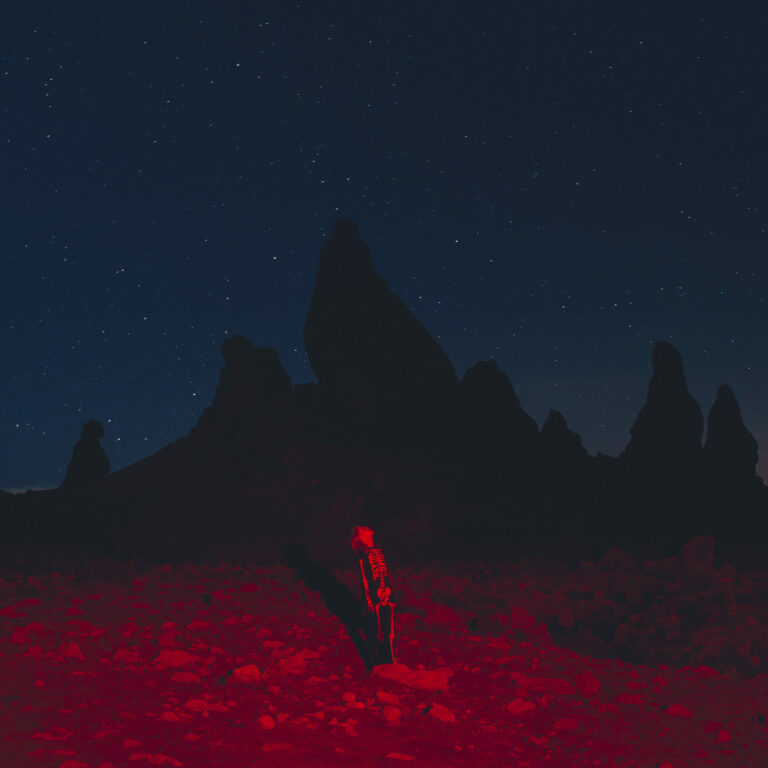
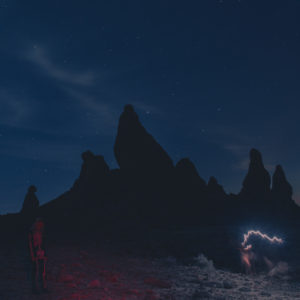
When I first saw the cover artwork forPhoebe Bridgers’Punisher, it immediately struck me as one of the most evocative album covers I’d ever seen. It seemed to hint at so much of what the album would go on to deliver just a few months later, encapsulating the whole atmosphere of the record in a single image. The setting captures a sense of desolation, Bridgers standing in the desert alone in her trademark skeleton suit, and yet its vivid tones are also imbued with the kind of warmth and beauty that permeates her soul-stirring music. There’s an otherworldly feel to it, too, as if the picture was taken on a different planet, or maybe right afterthe apocalypse; it also feels like a reflection of the way the album builds a world of its own, one that’s both haunting and profoundly human. Bridgers was nowhere to be seen on the cover of her 2017 debut, Stranger in the Alps; here, her presence is small but unmistakable, placed front and center. She is alone except for the large rocks that loom over her, which seem to almost have a life of their own, the one on the far left corner almost mirroring Bridgers’ own shadowy figure. She leans slightly backwards and looks up at the clear sky, not in search of some higher truth but simply a sign that we’re not alone. The rest, she lays out on Punisher.
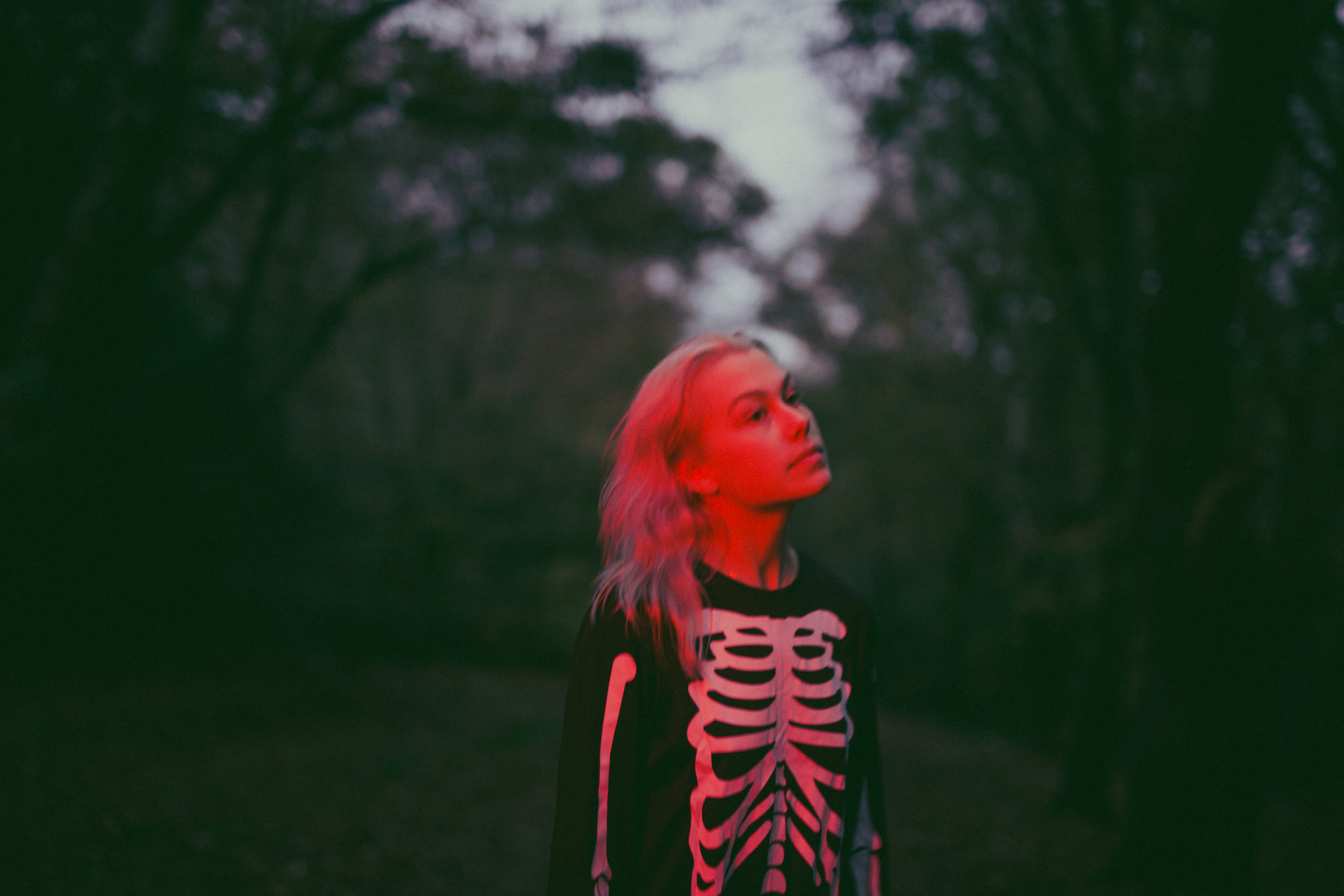
The photographer behind the cover, as well as some of the accompanying vinyl and press shots, is Olof Grind, a queer artist based in Stockholm, Sweden. Browsing through hisportfolio, it’s not hard to see why his visual style turned out to be a perfect fit for Phoebe Bridgers’ sound and aesthetic; his consistently stunning work often centers around intimate scenes set against wondrous and dreamy natural backdrops.
For the first instalment of ourBehind the Artwork series, we caught up with Olof and asked him a few questions about how he got into photography, working with Phoebe Bridgers, his debut single, and more.
How did you become interested in photography?
I started out at a very young age with my parents’ old analogue point and shoot-camera. I remember bringing it and shooting a roll on a spring break when I was 12, instantly falling for the format. My parents are both artists, so to create has been with me ever since I was a child. I grew up in the countryside of Sweden and got particularly caught with the possibility of capturing all the wonderful sceneries around where I lived. The foggy lakes in autumn and the flowing rivers covered with ice in the winter. I was quite a lonely child throughout parts of my adolescence, and spending time in nature with my camera was like meditation and a way to explore the world by myself.
‘Punisher’ middle spread photo
Are there any particular themes that you find yourself continually drawn to?
I always come back to nature and all the crazy beautiful places that I discover while traveling. But I’m also always drawn to humans’ relationship to this planet. We exist because of nature and our bodies will inevitably decompose and merge with the soil at some point in time. But still, we feel free to exploit it and destroy it however we like. I’m curious to explore the individual’s relationship to nature by shooting them stripped off belongings, emerged in some far off grid plain nature site where they can dive into their emotions and energies connected to the surroundings and the planet.
How did you become involved with the artwork for Phoebe Bridgers’ new album?
I met Phoebe through our common friend Emily Bannon when Phoebe was playing a live show with her project Better Oblivion Community Center in the spring of 2019 in Stockholm. Emily told me to text Phoebe since she thought we would get along, and I sent over a silly text message and ended up coming to their show and hanging out. We had a blast and went out for some drinks afterwards with the whole band. I hadn’t really heard any of Phoebe’s solo-project before that day, but ended up checking it out a while after we met and loved it instantly.
In the fall, her manager contacted me to plan a shoot in London since she was gonna be there for a concert and Sweden is not too far. I wasn’t super excited to shoot in London (especially in November with the weather) since I envisioned a more stunning natural scenery for the photos. One month before I was supposed to do the shoot with Phoebe in England I ended up going to LA to visit Emily. I thought that since I was there anyway I could suggest a bunch of different locations where I was excited to shoot throughout California to Phoebe and her management. And so we managed to fit in a 24-hour road trip shoot where we drove out into the desert, back down to the coast and stopped at a bunch of places in between.
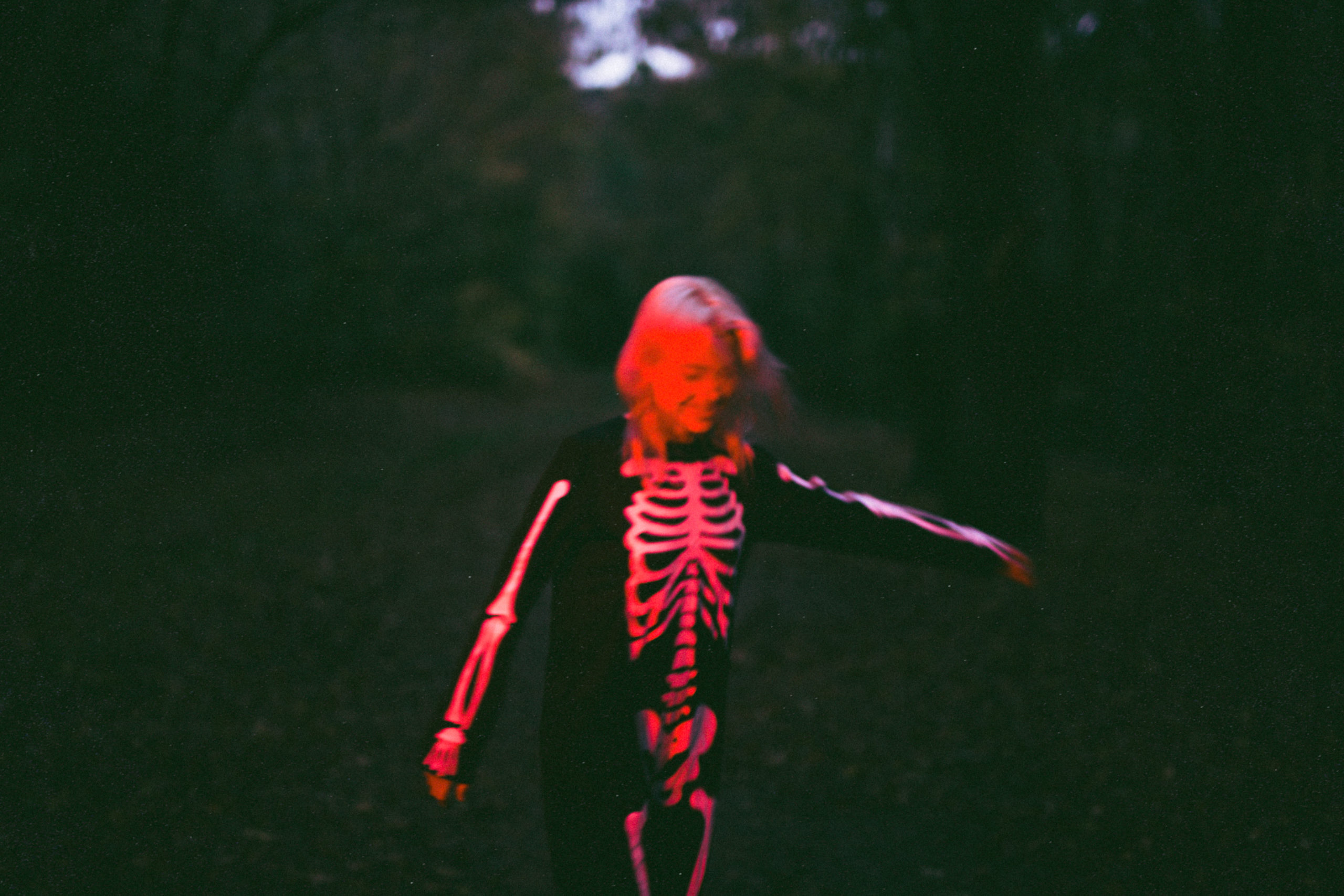
‘Punisher’ back cover
Could you talk about the inspiration for the cover? How was the process of shooting it?
So, when I was shooting in the desert it wasn’t set in stone to be the actual cover of the album. It was more like “let’s try all these different locations and ideas we have and see what we will get out of it”. But the red light-desert-scene was the one I was looking forward the most and had the strongest vision about. I used to do night photography a lot when I was younger and had always wanted to make a proper shoot for something in the desert with the clear sky above. Phoebe always told me that she liked my creepy images the best, so the creepier/the more surreal the better. I brought a flashlight and a red gel-filter and light painted the desert over a 30 second shutter speed, while she was standing completely still waiting to be beamed up by aliens. I always love a good adventure while shooting, and driving out in a pitch black desert at 3 AM on dirt roads definitely added to my excitement for the shoot.
Emily came along and acted assistant/creepy naked alien in the background of the scenery (you can see her make an appearance on the back cover of the vinyl). The idea with the skeleton costume actually came around the time when we did the second shoot in London, so in January when everything was set for the cover, I actually came back to LA, drove out into the desert again, set up the tripod at the exact same location and recreated the shot we had taken in October, but with her in a skeleton costume instead.
Was your approach in any way different to what you’d done before?
Not really, I always tend to overshoot and want to visit a million different locations when I get started. I literally sent over like 300 edited images to Phoebe because of all the various locations we went to.
You also worked on the accompanying artwork for the vinyl as well as press photos – what sort of mood were trying to evoke with those?
The artwork photos were shot as a complement to the rest of the package. I wanted to keep it in the same dreamy/surreal feeling with a hint of unease. I guess it’s a kind of vibe that goes through most of my work and the mood that I’m aiming at for my personal work as well. I feel like Phoebe’s music is floating around in the same spectra as my art, so I guess we hit it off pretty well creatively.
1 of 3
You recently released your debut single as Luminous Kid. How did you decide to get into music, and what was the inspiration for the song?
I’ve always played music, the piano and the guitar, but I found photography so early in life, so I never gave myself time to actually write music for myself. In 2018 I did a 6-month travel throughout South America, from Colombia down through Ecuador, Peru and Bolivia. I looked upon it as a creative exploration trip where I wanted to play my guitar, write, paint and shoot on film and focus fully on that, no commissioned work or distractions. I ended up with over 25 songs by the time that I came back and decided it would be fun to record an indie/bedroom pop-album from the songs I had gathered. It was kind of like making an homage to my teen-self where I used to sit and cover sad indie songs in my bedroom, not having the courage to write my own stuff.
The first single is about a three-week love story that I experienced in Paris one warm February. I fell in love with this boy and we started writing semi-ironic old style-love letters to each other after I left the city. Based on the letters and the time we had spent together I wrote the song. Production wise for this track I’m flirting a lot with the big ambient soundscapes of Sigur Rós, while the songwriting and singing is inspired by musicians like Elliot Smith and Leonard Cohen.
What are you currently working on?
I’m finishing up the last parts of mixing and mastering my debut album, it’s 13-track so there’s quite some work getting everything together. I’m also making music videos for coming singles and album art etc. I’m planning on releasing a photo book with the vinyl, so this is in the pipeline as well. But I also work full time with commissioned photography work so it’s a puzzle to get everything together. I’m releasing my next single in a few weeks, which feels very exciting!
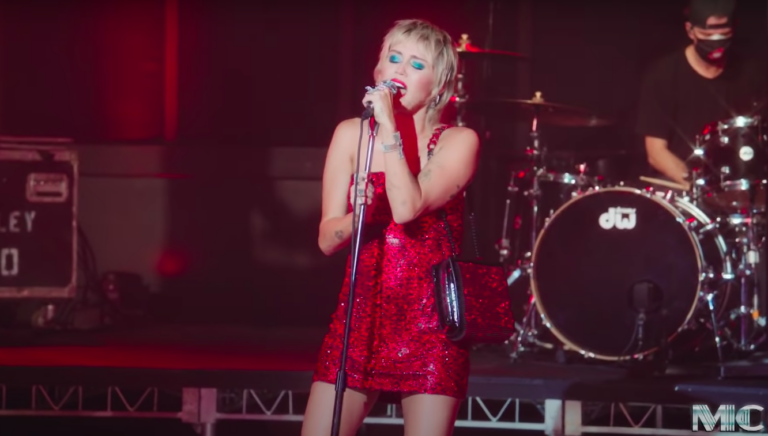
Miley Cyrus was the musical guest on last night’s episode of The Tonight Show Starring Jimmy Fallon, where she performed her latest single ‘Midnight Sky’ as well as a cover of Hall & Oates’ 1982 track ‘Maneater’. Check out her performance below.
Explaining why she chose to cover that particular song, she joked: “I think it’s very important to be transparent. I’m freshly single, so anyone watching that’s my future ex-husband, just know, I told you.”
Cyrus also discussed her relationship with her godmother Dolly Parton and clearing a sample with Stevie Nicks – you can watch that below as well.
‘Maneater’ originally appeared on Hall & Oates’ 1982 studio album H2O and became a number one hit, topping the Billboard Hot 100 and peaking at No. 6 on the UK Singles Chart.
NOTHING have announced their fourth studio album: The Great Dismal comes out October 30 via Relapse. The Philadelphia shoegaze outfit have also shared a new song called ‘Say Less’, alongside an accompanying music video directed by Jordan Hemingway. Check it out below, and scroll down for the LP’s cover artwork and tracklist.
“The Great Dismal refers to a swamp, a brilliant natural trap where survival is custom fit to its inhabitants,” NOTHING’s Domenic Palermo in a statement about the album. “The nature of its beautiful, but taxing environment and harsh conditions can’t ever really be shaken or forgotten too easily.”
The Great Dismal marks the follow-up to the band’s 2018 album Dance on the Blacktop. It’s set to feature contributions from harpist Mary Lattimore, classical musician Shelley Weiss, and singer-songwriter Alex G.
The Great Dismal Cover Artwork:
The Great Dismal Tracklist:
1. A Fabricated Life
2. Say less
3. April Ha Ha
4. Catch a Fade
5. Famine Asylum
6. Bernie Sanders
7. In Blueberry
8. Memories
9. Blue Mecca
10. Just a Story
11. Ask the Rust
Phoebe Bridgers, Waxahatchee, Beck, Jeff Tweedy, Fontaines DC, and many others paid tribute to Daniel Johnston last night in a special event presented by New York’s Electric Lady Studios, titled Honey I Sure Miss You, A Tribute to the Life of Daniel Johnston. Kevin Morby, Maya Hawke & Jesse Harris, Devendra Banhart, the Lemon Twigs, Cut Worms, and more also performed their favorite tracks from the late cult musician, who died one year ago yesterday (September 11) of a heart attack. Watch the livestream event below, and at the Electric Lady Studios website.
In addition to organising the event, Electric Lady Studios has also curated a collection of Johnston’s original artwork, as well as presenting a never-before-seen home movie of Johnston shared by his family.
Lee Foster, the managing partner of Electric Lady, said in a statement: “I’m just a huge fan of Daniel Johnston’s drawings and music and recognise how beloved he is, especially within the music community. If you’re a fan, you’re usually a fanatic, and when I started reaching out to musician and industry friends for video submissions, the answer was almost always an all-caps ‘YES.’ People want to celebrate him.”
Back in in July, a new box set titled The End Is Never Really Over was announced as part of Record Store Day UK, containing Johnston’s 1990 album 1990 and 1991’s Artistic Vice.
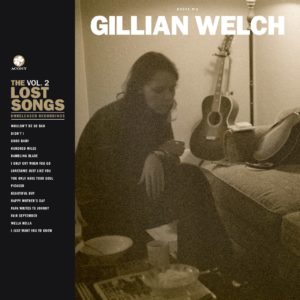
Gillian Welch has announced the second instalment in her series of archival releases. Boots No. 2: The Lost Songs, Vol. 2 arrives on September 18 via Acony. Below, check out the tracklist and cover artwork and hear two newly unveiled tracks, ‘I Just Want You to Know’ and ‘Beautiful Boy’.
The Lost Songs contains material that Welch and her partner David Rawlings wrote and recorded at home in between 2001’s Time (The Revelator) and 2003’s Soul Journey. They issued the first instalment in July. In 2016, they released another archival collection, Boots No. 1: The Official Revival Bootleg.
Boots No. 2: The Lost Songs, Vol. 2 Tracklist:
1. Wouldn’t Be So Bad
2. Didn’t I
3. Good Baby
4. Hundred Miles
5. Rambling Blade
6. I Only Cry When You Go
7. Lonesome Just Like You
8. You Only Have Your Soul
9. Picasso
10. Beautiful Boy
11. Happy Mother’s Day
12. Papa Writes to Johnny
13. Fair September
14. Wella Hella
15. I Just Want You to Know
Boots No. 2: The Lost Songs, Vol. 2 Cover Artwork:
KAYTRANADA recently unveiled the instrumental version of his most recent studio album, 2019’s BUBBA. Earlier this year, he teamed up with Lucky Daye for a single called ‘Look Easy’.
Future Nostalgia was released back in March. The recent remix edition features appearances from Missy Elliott, Madonna, Gwen Stefani, Mark Ronson, and more.
Fergus, an exciting singer-songwriter who is arguably most prominently known for his piece ‘Nobody Knows,’ has released his latest single ‘Enough for You’ — just yesterday. In this latest ear-pleasing piece, Fergus showcases his soothing, honeyed-like vocals with sombre lyrics which carry the song.
Talking about the song Fergus stated: “I wrote ‘Enough for You’ when I was feeling desperate after the same old fight with a mean drunk. I felt like I was trying really hard to be who they wanted me to be and make it work, but I kept getting shot down. It was one-sided and it hurt me more each time because only I remembered why. ‘Enough for You’ provides the context and sets the scene for all the songs so far this year, and the story is told in the order they were released.”
Blvck Hippie ‘Rhodes Ave’
Entering our radar with a melancholic, soul-driven piece named ‘Rhodes Ave’ is Blvck Hippie, a superb promising Indie Rock band out of Memphis, U.S. With their latest piece, they dive into themes of childhood and expectations, presenting a melodious sound that blends flavours and styles in a seamless-like manner whilst still maintaining a raw, unvarnished sound which keeps us guessing what is next for Blvck Hippie.
The band is currently comprised of Josh Shaw (Lead Guitarist & Vocalist), Casey Rittinger (Drums), Tyler “Chaucer” Marberry (Bass), and Matt Turner (Rhythm Guitar).
Everyone is a product of the environment they exist in, both currently and at any other point of their life, for however long they were there. You carry traces of the people you come across, the books you read, movies you watch, conversations you engage in, and many other things. All these come together to define who you are, to give you identity.
Sociology offers an intriguing view of how these things impact who you are, and how, ultimately, this influences how you interact with others. Those studying the subject in the university understand that there every aspect of life has a broad outlook, and understanding this requires investing in reading more.
Most school libraries have a vast array of choices on the best sociology books, but going in blindly might mean missing out on the best alternatives. Picking the right books allows you to present exceptional work like the one seen in our free examples of sociology essay. You will notice that, when exploring sociology essay examples, the subject matter is critically dissected to envision the passion for the conversation, which is necessary. If you’re looking to get essays written by someone professional check out CustomEssayMeister.
1. Pleasure Activism by Adrienne Maree Brown
This book explores how finding who you are and embracing that person should be the defining factor for our perception of the world. In this book, Adrienne talks about how the essence of who you are and your decision to be true to that person can be used to organize for activism.
Pleasure activism is an interesting choice in sociology books to read for college students with critical insight on self-reflection. The book advocates for understanding your deepest and most erotic desires and using that to fuel the courses that you stand for. The bottom-line is on how sticking to what you know to be true, and giving yourself the freedom to live by that truth without room for compromise, has a massive impact.
2. Biased by Jennifer L. Eberhardt PhD
Conversations on a bias are difficult to have, especially when someone insinuates that you are part of the problem. This reluctance leads to silence, which, in turn, translates to the continued propagation of the said bias.
Jennifer L. Eberhardt uses a series of tools, including scientific assessment, investigation, and personal experiences, to write this book that offers insight as to how to have these conversations.
Biased explores the different levels of oppressive culture, with the main focus being on institutional and individual and how this informs systemic bias on a broader scale. She highlights how easy it is to be biased without knowledge, but also offers reassurance that there are ways to identify, address, and curb it.
3. Identities and Inequalities by David M. Newman
Our race, gender, sexuality, and other identifying aspects give a complete definition of who we are. These things, bundled up, give us our identity. This intersectionality is something we have to live with every day. While it is an informing factor to some of our best experiences, it also influences the type of inequality and bias we go through.
In the book, David offers a crucial lesson on the essence of examining and understanding the workings of these diverse aspects of who we are. Like many sociology books, Identities and Inequalities, uses real-time examples, with statistics, on the impact of intersectionality in areas such as police brutality, sexuality.
4. The Sociology Book by Sarah Tomley, Mitchell Hobbs
This is one of the best sociology books, and it aims to simplify the explanation of many sociology concepts that might prove difficult for people to understand. It covers topics such as gender and how it impacts other aspects of life, government, interconnectivity in the modern world.
Other than using simple language to explain complex concepts, The Sociology Book also incorporates the use of structured summaries, enticing graphics, and quotes. To validate the ideas discussed in the book, it looks into the perspectives of re-known world thinkers whose focus was on human behavior.
Conclusion
Some of these incredible sociology books for students don’t make it to the class reading list. While your teacher might not require that you read them or mention them, they are a great resource during the exam.
They also offer additional input to the different papers you will be writing through the course as they cover a wide range of subjects. Ensure to check the library for these and other out-of-class alternatives.