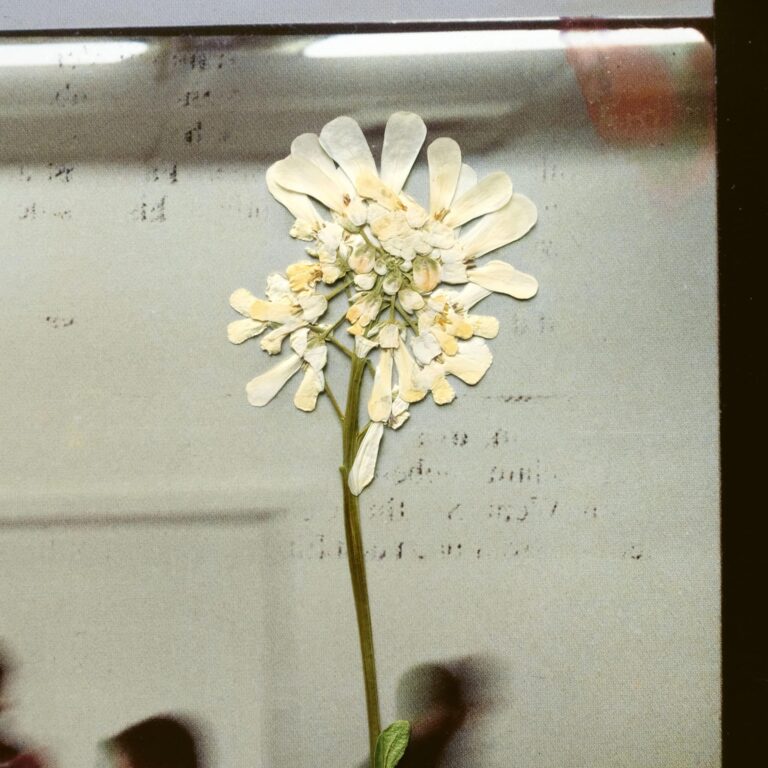
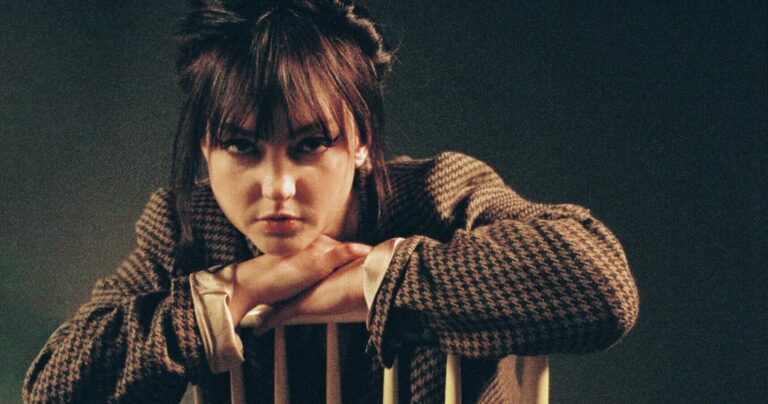
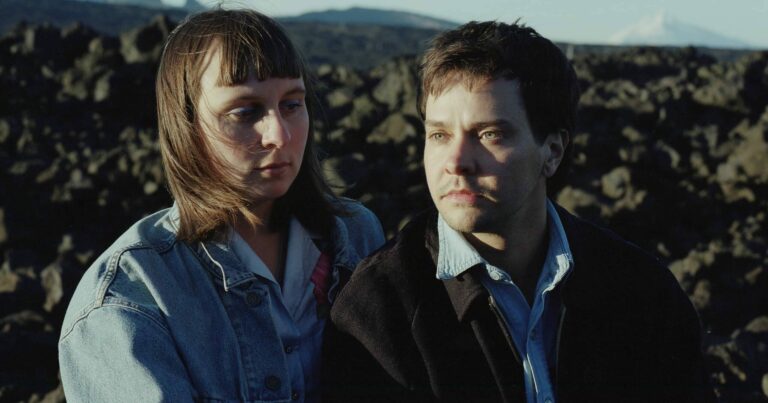
If you remember being a teenager around the 2013 release of Daughter’s debut album, If You Leave, the indie folk trio might have provided the perfect soundtrack to stare into the void: “Our minds are troubled by the emptiness,” frontwoman Elena Tonra sang on their breakout single ‘Youth’, a line that seemed to transcend the toxic relationship it’s about. But the lyrics that have left the biggest imprint on me come a little later: “And if you’re still breathing, you’re the lucky ones/ ‘Cause most of us are heaving through corrupted lungs.” Daughter’s music, with its heavy reliance on reverb and negative space, is meditative in the real sense of being locked into the fragility of breath, and all it holds: “You’re drowning in the pit of my stomach,” goes a signature line from 2017’s Not to Disappear. It’s language for the gaps our minds can’t fill up, the lapses of intimacy between people, and few bands mirror the suffocating feeling quite like Daughter.
Stereo Mind Game, their third studio album, arrives after the 2017 soundtrack to the video game Life Is Strange: Before the Storm and the self-titled first effort from Tonra’s side project Ex:Re in 2018. The time between projects adds another dimension to the theme of troubled, long-distance yearning that permeates its 12 tracks, which the band dives right into on the lead single and opener ‘Be on Your Way’. The song’s melancholy ache is washed over by a sense of serenity, and the way Tonra delivers the titular line suggests she’s not only accepted but internalized the fact that two lovers’ plans may not always merge into a single path. The estrangement is clear – if the person it addresses is on the same wavelength, the song offers virtually no indication – yet Tonra’s sincerity is wholehearted, even if her hope isn’t entirely unwavering.
It’s these internal fluctuations that the rest of the album drudges up. Despite featuring contributions from the London string group 12 Ensemble, Stereo Mind Game dials back on the expansiveness of Not to Disappear, leading to an overall less dynamic record. But its subtlety often underlines the heaving frustration that burns at the core of the songs. Tonra’s vocals against the sparse backdrop of ‘Neptune’ convey unhinged desperation: “I have never hurt so badly/ Writhing, laughing, laughing, laughing/ Dying, dying, dying, laughing/ Louder, louder, louder, louder,” she sings, as if tracing the rhythm of her body and imploring the world to echo the tension. The music stays minimal – it’s all in her mind – but before long, she’s joined by the voices of composer Josephine Stephenson and guitarist Igor Haefeli, lending support to her tender cries of passion.
In some of Tonra’s most vulnerable moments, like when an unhealthy relationship with alcohol stokes fear that “my friends are vanishing” on ‘Party’, the group’s performances are steady and robust, grounding her inner monologue. As she grapples with fractured communication, ‘Swim Back’ is propulsive and hypnotic, both driven and haunted by Haefeli’s string arrangement. Lyrically, the scale of the song is as vast as the ocean, but it’s in the domestic space that Tonra finds her most potent metaphor, observing, “The kitchen sink is in our heads.” The crushing ‘Isolation’ is most static, relying on the weight of the words rather than the music: “It will likely kill me/ That I must live without you.” Unlike ‘Be on Your Way’, which holds hope – if not for the future of the relationship, then an opportunity to one day reignite it – all ‘Isolation’ can strive for is a sense of self-composure. “I’ll get over it,” she sings, a promise just to herself.
The second half of Stereo Mind Game contains some of its most complex and intriguing songs, helping to animate what Tonra describes in ‘Junkmail’ as “the monochrome everything.” ‘Future Lover’ might be the strongest cut, retaining the band’s penchant for spacious warmth while evoking a creeping uncertainty. In it, against the odds, Tonra manages to be direct in her longing for clarity, not drown in it. It’s a newfound awareness she harnesses throughout the album. “I’d prefer us to be close,” she admits earlier on ‘Dandelion’, “I’d like to look you in the eyes.” Even with the void staring back at her, she keeps her cool. There’s good things on the horizon.
Angel Olsen has shared a new single, ‘Forever Means’, the title track off her upcoming EP that’s out this Friday, April 14 on Jagjaguwar. Check it out below.
Speaking about the song, Olsen said in a statement: “I’d thought of it as a kind of nod to George Harrison, who I’d been getting back into during the pandemic as I was finally calming down and finding moments of peace with myself.”
Forever Means features four previously unreleased songs from the sessions behind Olsen’s Big Time, including the recently unveiled ‘Nothing’s Free’, which made our Best New Songs segment.
Flasher have announced a new EP, In My Myth, which arrives May 5 via Domino. The four-track collection, which follows the duo’s 2022 LP Love Is Yours, was produced by Owen Wuerker and mixed by Jorge Elbrecht. Today, they’re previewing it with a new song called ‘Eastern Ave’, which you can check out via Mulitz’s accompanying video below.
“In My Myth is a collection of songs written in between tours and between coasts,” the band explained in a press release. “These songs are about reckoning with our own self-mythologizing, the sinister side of ‘wellness,’ watching relationships shift over time, and not being done yet.”
They described ‘Eastern Ave’ as “a love song to your hometown and those that matter to you most,” adding: “It’s a nostalgic dive back to those seemingly mundane moments that become markers of falling in love, or finding your people. The video takes a diaristic approach, juxtaposing our two parallel lives in our respective home bases – Emma in DC, Taylor in the Bay Area. It was inspired by watching Swampy’s Diary and countless other vlogs on YouTube.”
The Linda Lindas have dropped a new single, ‘Too Many Things’. It arrives ahead of the band’s performance at the 2023 Coachella Valley Music & Arts Festival, which takes place over the next two weekends. Take a listen below.
“We had a nonstop, jam-packed, and awesome 2022 playing shows, going on tours, and meeting fans and making friends across the U.S. as well as Spain, Germany, England, Japan, Canada, and Mexico,” the band reflected in a statement. “After taking a short break to catch our breath, recharge, focus on school, and go back into the studio, we are ready to share a song about how everything unfolds so fast all the time—the surprises, the disappointments, and the opportunities that pass us by at every moment. In the midst of all this, we hope you have space for ‘Too Many Things’ and are ready for more music, shows, and announcements coming soon!”
The Linda Lindas released their debut album, Growing Up, in 2022.
Girl Ray have announced their next album, Prestige, with a video for the new song ‘Hold Tight’. The follow-up to 2019’s Girl was co-produced by Grammy Award-winning producer Ben H. Allen and the band’s singer-songwriter Poppy Hankin. It’s out August 4 via Moshi Moshi. To celebrate the news, they’ve shared a new single called ‘Hold Tight’, which follows the previously released ‘Everybody’s Saying That’. Check out its Alex Cantouris-directed video and find Prestige‘s details below.
“Lyrically this song is about how appreciative I am to have found my partner, and how my mental load feels so much lighter and easier to bear now that I’m with her,” Hankin said of ‘Hold Tight’ in a statement. “The production on this takes some inspiration from Haim’s incredible record Women in Music Pt. III, and features a subby drum loop inspired by Atlanta’s hip hop scene.”
Of the video, Hankin added: “Despite being caught in heavy rain the whole day, falling over in the mud countless times, and Alex constantly holding an umbrella over the camera, this video was so much fun to make, and we will remember it as one of our favourite shoots.”
Prestige Cover Artwork:
Prestige Tracklist:
1. Intro
2. True Love
3. Up
4. Everybody’s Saying That
5. Love Is Enough
6. Hold Tight
7. Begging You Now
8. Easy
9. Tell Me
10. Wanna Dance
11. Space Song
12. Give Me Your Love
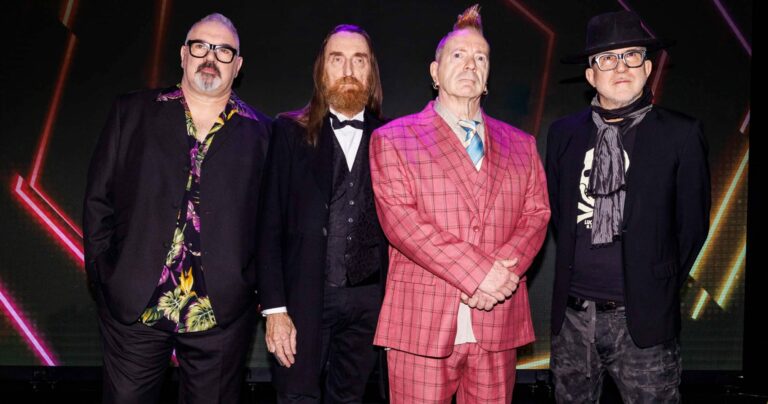
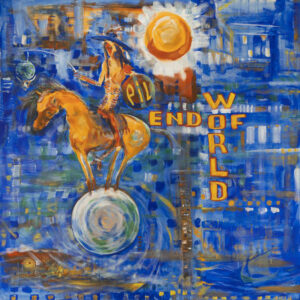
Public Image Ltd. have announced a new album, End of World, which will be released on August 11. It includes the previously shared single ‘Hawaii’, a love letter to John Lydon’s wife Nora, who passed away from Alzheimer’s on April 5. “Nora loved the album, she wouldn’t have wanted us to postpone it or change any of our plans,” Lydon commented in a press release. Today’s announcement comes with the release of the new single ‘Penge’, which he described as “something of a mediaeval Viking epic.” Check it out and find the album artwork and tracklist below.
End of World Cover Artwork:
End of World Tracklist:
1. Penge
2. End Of The World
3. Car Chase
4. Being Stupid Again
5. Walls
6. Pretty Awful
7. Strange
8. Down On The Clown
9. Dirty Murky Delight
10. The Do That
11. L F C F
12. North West Passage
13. Hawaii
Origami Angel have shared a new single, ‘Thank You, New Jersey’, alongside an accompanying video directed by Bob Sweeney. The track arrives ahead of the duo’s headlining US tour with Pinkshift and Sweet Pill, which kicks off next week. Check it out below.
Last year, Origami Angel dropped two EPs, the acoustic re:turn and the hardcore-leaning DEPART.
superviolet – the project of Ohio-based songwriter and former the Sidekicks frontman Steven Ciolek – has dropped a new single, ‘Locket’. It’s lifted from his upcoming debut album, Infinite Spring, which is due out next Friday, April 21 (on Lame-O Records) and includes the previously shared songs ‘Big Songbirds Don’t Cry’ and ‘Overrater’. Check it out below.
Fire-Toolz is the project of Chicago-based experimental composer, producer, and multi-instrumentalist Angel Marcloid, who has been making music under various monikers over the years. As her main creative outlet, Fire-Toolz serves to decompartmentalize the myriad genres Marcloid has been invested in since early childhood – from prog-rock to emo, smooth jazz to death metal, industrial to ambient – allowing her to explore a maelstrom of infinite possibilities. The resulting work is often overwhelmingly dense, chaotic, and ambitious, and I am upset because I see something that is not there., the fifth Fire-Toolz record to be released by Hausu Mountain, is no exception. It’s another wild, radiant collision of sounds, formative memories, and experiences both blissful and traumatic, all spliced together in ways that harshly contradict and beautifully juxtapose each other while eluding language. Informed by several spiritual and philosophical touchstones, Marcloid’s music rests in the airy, distorted space where nostalgia meets catharsis, yearning to see and be seen beyond the field of illusion.
We caught up with Angel Marcloid for the latest edition of our Artist Spotlight series to talk about gener fusion, how memory feeds into the world of Fire-Toolz, the spiritual framework behind I am upset because I see something that is not there., and more.
One of the main ways that your music has been discussed is through the lens of genre and your willingness to combine disparate styles. But thinking about it more broadly, it seems to me like one of the driving forces behind it is memory – as it relates to genre, but also as it relates generally to the realm of sound, spaces like the internet, or traumatic experiences
I think that that’s accurate. To a large extent, I think that the genre fusion is an incidental artifact of working with the memory aspect. You can trace back my interest in a lot of the types of music that I’m working with to my early childhood. I grew up on prog-rock, and then I got into extreme metal in my late single digits; I was in elementary school listening to Deicide and Morbid Angel. I’ve always been kind of experimental about music – every time I’ve been in a band, I’ve sort of pushed the band in that direction. When I was playing guitar in bands, mainly I would have a massive pedal board. One of the guitarists from the band Orgy said in an interview one time that they didn’t want their guitars to sound like guitars, and when I read that it just blew me away. I was like, “Yes, that’s exactly it.” And then maybe 13 to 24, I was completely immersed in early emo. All of these different styles that you hear in Fire-Toolz were very much rooted in stuff I grew up with. I don’t get as inspired by new music as much as I do by old music – I would say one of the only types of music that really inspire me now that’s kind of a new thing is deathcore.
In that sense, memory does play in as far as genre. And of course, memory plays in as far as the content. People knock nostalgia in the arts, a lot of people have a problem with it and say it’s contrived. But I’m not afraid to admit that nostalgia is a huge factor. I’m very nostalgic of the old days when everything felt simpler, more benign. I have a very strong sensory memory and I’m just hypersensitive in general, things make really huge imprints on me. That’s why I focus so much on that kind of thing in my music.
But I don’t set out to make music that combines different genres. That sort of happens automatically when I go to make music, because that’s how I think about music. There’s no real rules or limitations, you just kind of make what you feel. When there is a smooth jazz saxophone line over an industrial beat, or there’s a wall of harsh noise happening and then there’s a keyboard line that sounds fairly ‘80s, that just feels very natural to me. It feels very natural to shriek over a smooth jazz-type sound.
Whether it relates to sound or any other sensory experience, what kind of memories did you find yourself channeling on I am upset because I see something that is not there.?
As far as the lyrical content and what the songs are about, they are almost always about things that are very current. Subject matter-wise, I write about what I’m going through in the moment. But the nostalgia and the early memory aspect is more of a felt thing that comes out in just the way things sound and sometimes the melodies, so it’s hard to pinpoint the memories. If anything, it’s not anything that you would think would stand out. It’s not necessarily any specific events, but more just the way things looked and felt back then.
I get this visual a lot of times when I hear my music of the way that the sunlight looked when it would hit a wall or a field. Sometimes when I’m driving, I’ll look around and I’ll sort of snap back into my early childhood, a little bit dissociatively almost. And when I see something that looks very modern, like a very modern car or something, it sort of snaps me out of that. But if I’m going on the road and all I’m seeing is grass, concrete, maybe some old buildings, and the way the sky looks and the light looks and everything – if it looks like it could exist back then because there’s nothing super modern in my view, I will sort of go back to that place. And so, my music can do that same thing. Even though the music is very futuristic in a lot of ways, and I’m using some of the most modern technology that’s out there, it still brings me back to those times and makes me see those things in my head.
It’s hard to explain, but in those moments that you’re describing, it’s almost like the present is in step with the past.
Yeah, it’s almost like they’re fused, like you can’t tell them apart. Maybe we shouldn’t use the word memory, because it feels present and past at the same time. We’re not gonna do this because I’m not a physicist, but if you get really deep into physics you could start arguing about the past and the present and even the future being the same. And sometimes I feel like I snap into states where might be experiencing something like that, but I don’t know for sure. You’re right that it’s hard to talk about, because I think these things go beyond words. I think that words and our language kind of pixelate things that are really a much higher resolution in order for us to conceptualize it. But I think that there’s a sense that we have sometimes where something just is completely beyond explanation, and I think that what we’re talking about is definitely beyond explanation.
It’s interesting that you brought up physics, because one could argue your music leans more toward spirituality as a means of explaining it.
I feel like they are two different ways of looking at reality, and I think there is no disagreement between the two. I think the reason why we find disagreement is two things. One, we can’t embrace paradox or nuance – we just have a hard time doing that as a society. And two, I think physics, not as they currently are understood, but ultimately, if we were all-knowing, which will never happen, physics would be able to explain a lot of spirituality. We’re just nowhere near that. There are people that talk about physics and spirituality; there’s a a great book called The Tao of Physics. There’s a lot of spiritual philosophers that fuse what we know of quantum mechanics with spirituality and spiritual modalities. I think a lot of those people can get kind of kooky, but there are plenty of people that are really on to something. If your spirituality is more religious and fundamentalist, you will see staunch differences – you’ll see that physics and science study material reality, and spirituality is more about metaphysics and beyond. I just think that fast forward, I don’t know, 1,000 years, maybe more, it’s not going to be that much different.
It goes back to this idea of fusion. Whether it’s to do with a philosophical or musical or even experiential framework, that seems to be the main principle that guides your thinking and work.
Yeah. When it comes to the nature of reality and experience, it’s a non-dual way of looking at it. And as far as ways of studying it, it definitely is a fusion. Although I have the most limited amount of knowledge on physics – I can’t really say anything definitively, it’s just like not my place – I do watch enough Youtube videos by physicists, and I’m really fascinated by this stuff, so I use terminology in my lyrics often about physics and spirituality in the same lyric.
The album takes its name from a spiritual self-study program called A Course in Miracles. How does it tie into the thread of the album?
There’s two different ways I can talk about it, and it’s both things – seems to be a common theme. There’s a level of spiritual inclination that is necessary in order to fully embrace A Course in Miracles. It uses traditional Christian language, and in a way it’s really hard to read for someone like me who used to and still does somewhat associate Christian terminology with utter bullshit. I’ve come a long way and mystical Christianity is something I’m actually really interested in, I’m just light years away from any kind of modern application of it. I think that most churches that stand today have very twisted interpretations of the mystical implications of the teachings in the Bible. The Bible is very flawed to me, I definitely don’t believe in biblical literalism. I’m more into the ancient mystics who read between the lines and wrote their own books. So it can be hard to read because the terminology is very Christian, but the message is actually very different from the way the modern church interprets it. What it claims to do is clear up the misconceptions that the Bible and Christian movements over the centuries have perpetuated. It’s a very non-duality-oriented teaching.
One of the things it gets at is basically our belief in illusions. That can really relate to trauma, because when you experience a traumatic event, obviously it’s real, it’s really happening, it’s not an illusion – you’ve been abused, you’ve been assaulted, you’ve been in a car wreck, or even just things like breakups and loss and grief. All of these things are real traumatic events. But if you don’t properly process that trauma, and I would say that most people don’t, I think there is an extent to where we start dealing a lot with illusion and delusion. I don’t mean that in an insulting way, but let’s say that some things have happened in my last five romantic relationships that were really traumatic, and then I enter a new one. I’m so traumatized that I’m assuming all of the time that those things that happened to me in the past are going to happen or are happening now. So that’s why the title is I’m upset because I see something that is not there., because I am seeing danger where there isn’t any. I’m experiencing this safe moment as danger and I am approaching the situation from a place of fear, and that holds people back.
It’s the reason why there are wars, why there are shootings, why fathers hit their kids, why there’s animal abuse. I honestly think that trauma has a lot to do with it – well, I want to say communication, too, is a big part of it, but trauma and communication are kind of the basic causes of all of the strife in the world. And underneath the trauma and communication, you could just boil it all down to fear. I think that fear and love are opposites, and A Course in Miracles addresses fear very heavily.
I feel nervous to use any kind of Christian terminology with my following, because they’re mostly made up of, you know, queer atheist leftists. [laughs] There’s a lot of uncomfortable feelings around it, and I still feel uncomfortable with it. So I tend to be a little cryptic with it, but I’m getting better. And I incorporate just as much Buddhist, Hindu, Vedanta, Daoism into my spirituality and my music and my lyrics as I do Christian mysticism, because I’m definitely a universalist, interfaith person. I pretty much think that all spiritual modalities, many of them, are valid paths up the same mountain, and there’s no right or wrong way to experience reality, experience God, be one with the divine, however you want to define that.
Musically, has it been a challenge bringing those teachings into the world of Fire-Toolz, or has it been mostly intuitive?
It hasn’t been much of a challenge, because the intermediary between those teachings and my music is my personal experience. And if I make music about my personal experience, and my personal experience is assisted by these teachings and these ways of viewing reality and my life, naturally they were going to go into the music. If I was a political activist, plenty of that would go into my music, and I’m not really that. Sometimes people are surprised to learn that I don’t talk about transgender issues at all in my music, and I very rarely make any political points. It’s just not my thing. Because Fire-Toolz is a very honest project, musically and content-wise, there’s really no manufacturing that. I just write about my experience, and I can explain my experience, partially, through different spiritual points of view.
Trauma is woven into many of the tracks on this new album, but it’s almost foregrounded by how much of joyful and even fun process it sounds like it was making it.
I’m glad you perceive it, that’s really important. I’m not just sitting there being like, “This trauma is so horrible. I struggle so much.” There’s always light there. There’s a little more light than darkness all the time. Hope and light are inherent in the music, and I think with my first couple of albums that wasn’t necessarily true. It was a little bit, but not largely. I really was capitalizing on and almost exploiting my own traumatic experiences on the early albums, victimizing myself more than the actual experiences had victimized me, if you want to use that terminology. But ever since my album Interbeing, I think that’s where things took a big turn, to where there was more light. I was still talking about traumatic experiences, really horrible experiences and emotions and beliefs, but a lot of the tragedy in the lyrics was sort of concluded by some kind of spiritual statement that put a little sheen of hope or comfort on it. I don’t mean hope in the sense of optimism – see, we’re getting beyond words now.
When it comes to trauma, despite years of therapy, and despite all of this effort, there are a lot of things that are just not resolved. There are a lot of things that will never really be resolved. But I think it’s possible to get to a place where you can be present with the trauma without being controlled by it, and I think that’s the goal: to not be controlled by it, not listening to that voice – or hearing the voice, but not obeying it.
I read that the first voice we hear on the album is that of your wife. Why did this opening feel right?
It goes right along with the album title. It’s kind of uncomfortable, but it’s an authentic recording from a voicemail, and obviously, she gave me permission to put it there. But I was having an experience where I really thought something was happening that wasn’t, because I was interpreting some circumstances as meaning something they didn’t. It’s super vulnerable to put that line there, and sometimes I’m like, “Should I have even done that?” It’s just too real. If the album were an article or something, that would be the headline.
Can you talk about what the final track on the album, ‘Novaturient Wave-Form Collapse’, means to you?
I spend a lot of time listening to my own music before it comes out, because I do a lot of note-taking. Listening to it outside of your music production software really makes things sound different, so I think I was just driving and listening to it. And it just did something to me really, really profoundly, and I don’t know what. I know it sounds crazy and esoteric. The song is about a certain thing lyrically, but there’s just something about the last passage that feels more like part of a song, and every time I hear it now, like 95% of the time, I just cry – sometimes full-on, primal sobbing. I’ve been trying to figure out why, and I just don’t know. I think the whole song just sounds like I’ve just been through some crazy shit, and I’m sitting in the backyard – the lyrics refer to this, sitting in my backyard on the cheap swing that I bought from Wayfair – experiencing the breeze and the sunlight, and just looking back.
This interview has been edited and condensed for clarity and length.
The need to live more sustainably is becoming more and more apparent. From drinking Cuban Coffee to wearing sustainable. Green living is good for the planet. While it’s true that the people who can make the most significant impact are big businesses, there are things we can do to help in maximizing solar energy usage. And it all starts in our homes.
Green Living And Sustainability Matter: The Role Of Tech
Our modern world brings many benefits. We’re more connected, more knowledgeable, and have more at our fingertips than ever before. This has led to a new dawn in technology. And one of the areas that have improved at warp speed is home tech.
We can all do our bit to reduce our impact; green living is at the heart of that push. Home technology will play an essential role in this for years to come. It gives homeowners access to innovative solutions to reduce their environmental impact. And there’s a massive range of tech products on the market. From energy-efficient appliances and intelligent home systems to water-saving devices and renewable energy.
This post covers just six essential home tech products that can help you start living greener. Incorporating these into your home means reducing your footprint and saving money on your bills.
It’s time to take action and make a real difference.
Smart Thermostats
You’re probably already familiar with smart home systems. Well, you can now get smart thermostats. This nifty bit of kit enables you to make precise temperature changes and even access your heating remotely from your smartphone. So you can turn the heat down if the sun makes an appearance. Saving you a whole load of money.
There are plenty of systems to choose from. And some big names have their own versions, like Google’s Nest system. Of course, which you go for will mostly depend on how much capital you have to invest. But whichever you opt for, these eco-friendly gadgets can help you save up to 20% on your energy bills.
Energy-Efficient Lighting
Making the switch to energy-efficient lighting is one of the simplest ways to reduce your consumption and live greener. This lighting uses less energy and lasts longer. So it’s a no-brainer.
You can choose from LED, CFL, and halogen bulbs for efficient lighting. LEDs are definitely the most popular. They use up to 90% less energy than traditional incandescent bulbs, so it’s easy to see why they’re a crowd favorite. CFL bulbs are also more efficient than conventional ones but contain mercury. So disposing of them needs to be done correctly. And halogens are better than traditional, but LEDs and CFLs are more efficient.
Water-Saving Devices
Looking to conserve water? Install water-saving devices. The way they work is simple. These devices reduce the water you use without compromising your quality of life. Meaning you’ll save water, and you won’t even notice. And there are lots of devices to choose from, including low-flow showerheads, faucet aerators, and toilet dams.
Each of these options will save you money. And you can choose to install just one or every single one. Because so many options are available on the market, choosing a company you trust is best. Niagara Conservation, American Standard, and Kohler are some of the most popular brands. Opt for one that suits your needs, is reliable, and doesn’t break the bank.
Solar Panels
The use of solar panels in the home is on the up and up. They’re becoming increasingly popular because they provide clean, renewable energy. And of all the renewable energy types, solar is the most accessible for your own home. Solar panels capture the sun’s energy and convert it into electricity. Reducing your bills and your reliance on the grid.
With companies capitalizing on customer popularity, plenty of companies offer collar panels. You can even get a portable solar generator kit for power on the go. And many provide rebates or incentives for homeowners taking the solar plunge. If that’s not convincing you, there’s another benefit. Installing solar panels actually increases the value of your home. Solar panels are an excellent choice for providing your home with clean, renewable energy.
Home Energy Monitors
Home energy monitors are a powerful tool for reducing energy usage and utility bills. These devices allow you to track your consumption in real-time. Giving you the power to make smarter, energy-saving decisions. They help you identify areas where you can reduce your usage, like turning off lights your kids leave on and altering the thermostat to use less energy when you’re out.
Some models even allow you to track your usage from your smartphone or tablet. Giving you even greater control over how much power is used. Home energy monitor brands such as Sense, Neurio, and Smappee are popular options on the market. Prices and features differ between these devices, but all offer valuable insights into your energy usage to help you save money and the planet.
Smart Irrigation Systems
This is one you might not have heard of just yet. Unless you’re an avid gardener. Smart Irrigation systems use sensors, controllers, and software to optimize your water usage. Specifically your ware usage in the garden. They measure the moisture content of the soil and send the data over to a controller. This then analyzes that data and the weather and decides how much water the plants need and when. Plus, you can program the system for plant and soil types.
If you’re not green-fingered, you might not think this home tech product is for you. But whether you’re a produce-growing genius or not, intelligent irrigation systems have loads of benefits. They reduce water waste, lower your bills, improve plant health, and save you a lot of time and effort. No matter how long you spend in the garden, the Rachio Smart Sprinkler Controller is a great place to start. It uses weather data to adjust watering schedules, and you can control it via a smartphone app.
Wrapping Up
We’ve covered several essential home tech products to help you live a more sustainable and eco-friendly lifestyle. Incorporating them into your daily life reduces your carbon footprint, saves money on energy bills, and protects the environment. These offer an effective yet convenient solution for living green without sacrificing comfort or convenience.
It’s more important than ever that we prioritize sustainability and green living daily. And incorporating essential home tech products is an easy and efficient way to do so. As climate change and environmental degradation continue to worsen, it’s up to each of us to do our part in creating a more sustainable future.