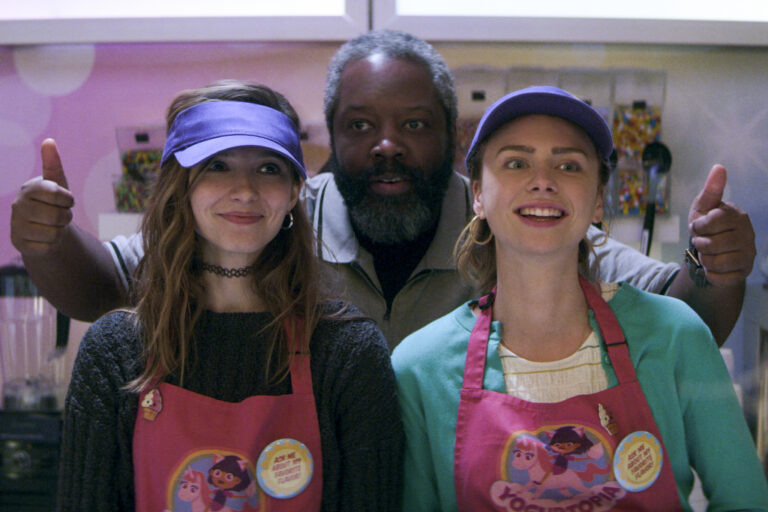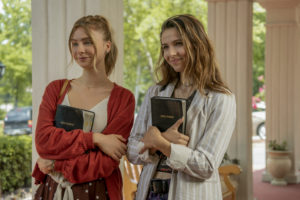
Based on Leo Tolstoy’s classic Russian novel, Anna Karenina is Joe Wright’s 2012 film starring Keira Knightley. Despite its criticism for being too preoccupied with style rather than substance, the film won several impressive accolades, including a BAFTA and an Academy Award.
Anna Karenina is a married aristocrat (Jude Law plays her husband) and the mother of a young son when she begins an affair with Count Vronsky (Aaron Taylor-Joy). The film opens with another affair, between Anna’s brother Oblonsky (Matthew Macfadyen, who was Knightley’s counterpart in Pride & Prejudice) and another woman. Because he’s a man, Oblonsky faces no consequences for his actions, while Anna’s entire life is ruined.
Wright uses stage design (literally; most scenes and transitions involve a physical theatre stage) to comment on the way that the world of this society is a stage. This, along with the Oscar-nominated music score, gives the film a whimsical and appropriately artsy quality. Here are fifteen of the film’s most captivating stills.
Tame Impala is the latest group to perform on NPR’s Tiny Desk (Home) Concert series. Kevin Parker, Jay Watson, and Dominic Simper performed three tracks from the psychedelic outfit’s most recent studio album, The Slow Rush: ‘Breathe Deeper’, ‘Is It True’ and ‘Patience’. Watch their livestreamed set below.
During the performance, Parker refers to this version of the band as more like ‘Tame Impala Soundsystem’. “I’ll get Jay (Watson) and Dom (Simper) and we’ll do this kind of electronic jam with heaps of equipment around us and we’ll recreate the songs with samplers and sequencers,” Parker explains. “I’ve wanted to do something like this for a while and thought Tiny Desk would be the opportunity to do it.”
A few days ago, Tame Impala shared Four Tet’s Kieran Hebden remix of ‘Is It True’, a track for which they also recently released an accompanying visual.
Bright Eyes performed songs from their most recent studio album, Down in the Weeds, Where the World Once Was, on a socially-distanced episode of CBS’ This Morning. They performed the early singles ‘Persona Non Grata’ and ‘Mariana Trench’. Check it out below.
During the performance, frontman Conor Oberst was accompanied by his bandmates Mike Mogis, Nathaniel Walcott, and bassist Anna Butterss, alongside the duo Lucius. Back in June, the freshly resuscitated group, who had big plans to tour in 2020, performed for the first time since their hiatus for a remote edition of The Late Show with Stephen Colbert.
Also over the weekend, Bright Eyes recorded a cover of Thin Lizzy’s ‘Running Back’ during a live performance at SiriusXM. You can take a listen to their rendition below.
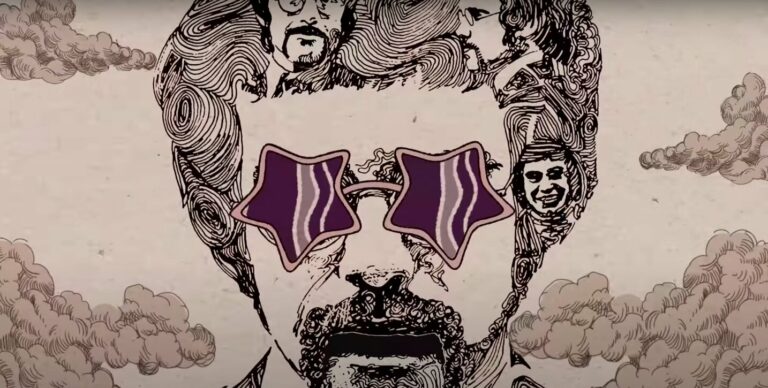
William Basinski has announced a new album called Lamentations. The experimental composer’s latest arrives November 14 via Temporary Residence. Accompanying the announcement, the artist has also shared the haunting, 7-minute ambient piece ‘O, My Daughter, O, My Sorrow’. Listen to it below, and scroll down for the album’s cover artwork and tracklist.
Lamentations consists of recordings captured and constructed from tape loops and studies from Basinski’s archives – some dating as far back as 1979. The album marks the second LP of archival compositions Basinski has put out in 2020; previously, he released Hymns of Oblivion back in March. A few weeks ago, he released To Feel Embraced under the moniker Sparkle Division, his collaborative project with Preston Wendel.
LamentationsCover Artwork:
Lamentations Tracklist:
1. For Whom the Bell Tolls
2. The Wheel of Fortune
3. Paradise Lost
4. Tear Vial
5. O, My Daughter, O, My Sorrow
6. Passio
7. Punch and Judy
8. Silent Spring
9. Transfiguration
10. All These Too, I, I Love
11. Please, This Shit Has Got to Stop
12. Fin
“We are starting over,” Conor Oberst declared on the final track of Bright Eyes’ divisive 2011 album, The People’s Key. Almost a decade later, the indie rock trio – also featuring Nate Walcott and Mike Mogis – is back with a new LP, and its de facto opener, ‘Dance and Sing’, begins with the lines: “Gotta keep going like it ain’t the end.” It serves as a kind of thesis statement for the album; a record as ambitious and emotionally engaging as any, but also one that seems to be in constant flux: oscillating between wholehearted optimism and casual despair, personal woes and societal collapse, intimate songwriting and grand, sweeping arrangements. In short, it’s quintessential Bright Eyes.
As indicated by its somewhat melodramatic title, Down in the Weeds, Where the World Once Was is an album largely about change. In the years between Bright Eyes’ last album and this, Oberst experienced different kinds of loss: he got married and went through a divorce – his ex-wife, Corina Figueroa Escamilla, is the one delivering the introductory Spanish language monologue on the album’s hallucinogenic ragtime opener – and lost his older brother, Matt. The impact of these events are explored throughout the album, but they’re often set against a larger backdrop of apocalyptic doom – similar to how Oberst’s collaborator Phoebe Bridgers framed her latest effort. As Bright Eyes albums often tend to do, Oberst frequently zooms out to look at the bigger picture, turning passing thoughts into potent observations about the weird and often cruel ways the world works.
But part of what makes Down in the Weeds such a fascinating listen is the way Oberst seems unable to settle on any particular worldview, instead marvelling at life’s many contradictions. One moment “Life’s a solitary song”; the next “Life is easy/ Hula hooping round the sun”. On ‘To Death’s Heart (In Three Parts)’, he concludes that “All that’s constant is that change”; later on the record, he echoes a sentiment from one of his recent solo recordings and proclaims that “Nothing is changing/ To state the obvious”. On one song he describes screaming at the absurd realization that he has good news, and on the next he laments: “If it ever occurred/ Just once in the world/ A love as absurd as ours/ I would scream what we lost/ From the mountaintop.”
To exactly no one’s surprise, the album is filled with such heart-wrenching moments. As insightful as the commentary on tracks like the bracing ‘Mariana Trench’ can get, the record’s most memorable songs also happen to be those that are the most simple in their earnestness. ‘Tilt-a-Whirl’ opens with the striking “My phantom brother came to me” before offering such uncomplicated truths as “Life’s a lonely love affair/ Kaleidoscope beyond compare”, while the downbeat ‘Stairwell Song’ cuts through with its vivid picture of a heartbreaking scene: “Nothing changed, you just packed your things one day/ Didn’t bother to explain what happened/ You like cinematic endings.”
But as profoundly melancholic as Down in the Weeds can be, it’s also bizarrely one of Bright Eyes’ most musically buoyant records. There are some stripped-back moments, sure, but for the most part, Oberst and company lean into their propensity for cinematic orchestral arrangements, enriching songs like ‘Dance and Sing’ and ‘One and Done’ with lush strings that have the effect of enhancing rather than stifling the emotionality at their core. Accompanied on many tracks by the tasteful bass playing of Flea and the momentous drumming of Queens of the Stone Age’s Jon Theodore, the album’s sonic palette often veers closer to 80s-inspired arena rock than the brand of emo folk the band are known for – to the point where you could easily imagine someone like Brandon Flowers singing atop the rousing cadence of ‘Stairwell Song’.
It’s a good fit for the hefty subject matter of the record, but Bright Eyes never wring out their ideas to the extent that it becomes predictable. Case in point: when someone tells you a Bright Eyes song includes the line “This world went down in flames and manmade caves”, you wouldn’t necessarily expect the instrumental to be driven by a bare-bones drum machine that makes it seem like the only thing that survived the fire was Drake’s ‘Hotline Bling’ – and yet that’s exactly what they’ve done on ‘Pan and Broom’. It’s these small eccentricities that prove Oberst’s wry sense of humour is anything but lost, and that makes the big moments hit all that much harder.
Down in the Weeds might be a somewhat fragmented record, but in its effort to balance out the highs and lows of life, it comes out not defeated, but defiant: the musical equivalent of dancing as the world burns, delivered with enough nuance and self-awareness to avoid vapid sentimentality. It all comes full circle with the closing ballad, ‘Comet’, but nothing resonates quite as loudly as this verse from ‘Dance and Sing’: “I’ll grieve what I have lost/ Forgive the firing squad/ How imperfect life can be/ Now all I can do is just dance on through.” It didn’t have to, and yet, Bright Eyes’ first album in nine years leaves you with more than a little bit of hope to hold onto.
Throughout the week, we update our Best New Songs playlist with the new releases that caught our attention the most, be it a single leading up to the release of an album or a newly unveiled deep cut. And each Monday, we round up the best new songs released over the past week (the eligibility period begins on Monday and ends Sunday night) in this segment.
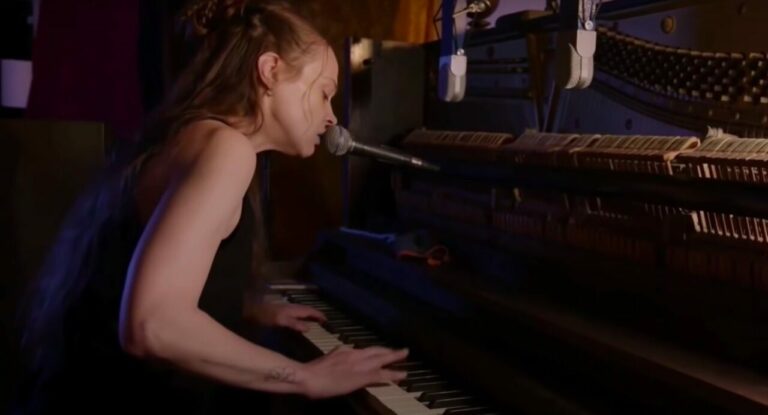
Compared to last week, there weren’t that many new bops to dance along to, but Carly Rae Jepsen came in and graced us with a euphoric quarantine tune that has excited for whatever she has in store for us in the future. On the other end of the musical spectrum, both established post-punk outfits Metz and newcomers TV Priest delivered bracing, fiery songs that pierce right through your brain, while Angel Olsen unveiled another stunning stripped-back track from her upcoming album. Echoing a similar kind of intimacy, Lomelda offered up the beautiful, shimmering ‘Hannah Sun’, the final preview from her upcoming record Hannah, while Tomberlin returned with an Alex G-assisted new tune that’s both subtle and playful. Finally, Open Mike Eagle announced his forthcoming album with a contemplative, vulnerable new track, while Father John Misty came through with not one but two piano ballads, one of which is just a tad bit more elegant and evocative than the other.
Justin Townes Earle, the Nashville singer-songwriter and son of country legend Steve Earle, has died at the age of 38. A representative confirmed the news last night on social media, writing: “It is with tremendous sadness that we inform you of the passing of our son, husband, father and friend Justin. So many of you have relied on his music and lyrics over the years and we hope that his music will continue to guide you on your journeys. You will be missed dearly Justin.” No cause of death has been disclosed.
Named after his father’s friend Townes Van Zandt, Justin Townes Earle was born in South Nashville, Tennessee in 1982. His father having left his mother when he was just two years old, Justin grew up spending much of his childhood without seeing him. “One thing that needs to be made clear is that people always say, ‘What’s it like growing up with Steve Earle,’ and I don’t fucking know,” Justin said in a 2009 interview. “You have just as good of an idea of what it’s like growing up with Steve Earle as I do. I grew up with Carol-Ann Earle.”
The singer-songwriter returned to live with his father after he got sober and immersed himself in Nashville’s music scene, playing in bands including The Distributors and The Swindlers. He briefly toured with his father’s band, The Dukes, but was ultimately fired due to his own struggles with drug addiction. His solo recording career began in 2007 with his debut EP Yuma; he released eight albums throughout his lifetime, his most recent one being last year’s The Saint Of Lost Causes.
The social media post also included these lyrics from Earle’s 2014 track, ‘Looking for a Place to Land’, from his record Absent Fathers: “I’ve crossed oceans / Fought freezing rain and blowing sand / I’ve crossed lines and roads and wondering rivers / Just looking for a place to land.”
Below, read tributes to the late singer-songwriter from Jason Isbel, Samantha Crain, Steven King, and more.
Had a lot of good times and made a lot of good music with JTE. So sad for his family tonight.
My friend, Justin Townes Earle, has passed away. Such a tremendous songwriter…he took me on 2 tours and always treated me so kindly….he understood struggle, he understood joy…I saw him at the peaks and valleys of both through the 13 years I knew him…we will miss you JT ❤ pic.twitter.com/rq74Qu3Hif
I am beyond heartbroken. You were my muse, my friend, and my brother. I will always remember your kindness. Your songs will live forever. You can rest easy now. #justinTownesEarlepic.twitter.com/E9vKDlQSWh
On what would have been Kobe Bryant’s 42nd birthday, Nike has shared a tribute video narrated by Kendrick Lamar. Watch the inspirational ad, titled ‘Better: Mamba Forever’, below.
“Kobe taught us to be better,” the rapper begins, followed by clips of Bryant in action. “Better dreamer. Better waker. Better stretcher. Better walker. Better talker. Better walking the walk and talking the talk.”
“Better leader. Better generation. Better nation. Just be better. Can you do that?” he continues.
Kobe Bryant died January 26 in a helicopter crash, along with his 13-year-old daughter, Gianna. Multiple artists have paid tribute to the late icon since his death, including Kanye West, Frank Ocean, Drake, Cardi B, Flea, and others. Earlier this year, Lil Wayne performed his 2009 single ‘Kobe Bryant’ in honour of the late NBA legend during the 2020 BET Awards.
In 2017, K. Dot and Bryant sat down for a talk in an interview with Complex. That same year, the rapper released his most recent studio album, DAMN., followed by the Black Panther soundtrack a year later.
Luxury fashion brand Louis Vitton has shared a recording of Ms. Lauryn Hill‘s livestream set, which she performed as part of its Spring-Summer 2021 menswear show. Accompanied by a full band, it included performances of her most recent single ‘Guarding the Gates’ as well as her 1998 hit ‘Doo Wop (That Thing)’. Check it out below.
Directed by Naima Ramos-Chapman, the 20-minute set was filmed in late July at MLH Studio in New Jersey. The set was then projected onto a shipping container during the fashion show, which took place in Shanghai earlier this month, marking one of the first fashion shows since restrictions were put in place due to COVID-19. “Ms. Lauryn Hill is, to me, forever a muse,” Louis Vuitton Men’s artistic director, Virgil Abloh, wrote in the video’s description.
Earlier this year, Hill was featured on Teyana Taylor’s ‘We Got Love’, from her third full-length LP The Album. She released ‘Guarding the Gates’ last year.
Survival Skills, Quinn Armstrong’s feature debut and an expansion of his 2017 short of the same name, is a jet-black satire of American law enforcement and an affecting rumination on society’s response to domestic violence that is presented with a unique aesthetic. Our Culture reviews the film here as part of its selection for the 2020 Fantasia International Film Festival.
Framed as an instructional video for police cadets entering the fictional Middletown Police Department – which exists to serve the equally fictional town of Ronald Reagan’s dreams, an Americana dreamscape that belongs to 1950s sitcoms and is, as our narrator (Stacy Keach) tells us, “89% white” – Survival Skills follows rookie cop Jim Williams (Vayu O’Donnell) during his first year on the job. Jim is conjured into existence via outmoded movie magic, is given a doting girlfriend (Tyra Colar) and a brightly decorated suburban home, and then sent out to work. But his rose-tinted glasses begin to slip when he is called to a domestic violence incident at the home of Lauren Jenning (Madeline Anderson), her daughter Leah (Emily Chisholm) and her violent husband Mark (Bradford Farwell), and he begins to see the world for what it really is.
Survival Skills employs a truly innovative formal system through which to communicate its narrative and themes; much of the film is designed to look like a lost VHS tape from decades ago, a shamelessly propagandist instructional video complete with early-1990s CGI, rampant tape hiss and the kind of cringe-worthy narrator common to corporate training materials everywhere. It is admirable that this aesthetic never feels like a gimmick; it is used for a specific and very clever purpose, satirising the false public image that any given police department would like to project – one that attempts to hide any number of systemic and deeply troubling issues that have long been endemic to American law enforcement.
Stacy Keach’s narrator.
In fact, the film generates much of its black, farcical comedy from the narrator’s attempts to (both figuratively and literally) control the narrative as Jim begins to develop free will and the whole thing veers off-course. And even once Keach’s narrator has lost all power and the rookie cop has started to dictate what we see and hear, it is interesting that scenes of violence are still hidden by heavy glitching and distortion, the film hinting at the side of American policing – and even American culture – that the establishment doesn’t want you to see.
Similarly to a film like Pleasantville (1998), then, Survival Skills borrows an outdated aesthetic to indict outdated values. In the second and third acts, hilarious retro cheese gradually gives way to the disturbingly surreal as Armstrong reflects on the ways in which America routinely fails to achieve justice for the most vulnerable (here represented by Lauren and Leah as they try to escape the abusive Mark). So this is a film that has not a shred of sympathy for the police as a unit, and utter contempt for the system individual cops represent. However, it clearly does ask us to identify with just one officer: Jim.
And sympathising with Jim isn’t difficult; O’Donnell gives a purposely wooden performance (Jim is often called “RoboCop” by those around him) to create a picture of a man who has been brainwashed into perceiving the world as a battle between the forces of good and evil, and his slow realisation that justice does not always prevail is genuinely heart-breaking. However, it must be said that it feels odd to sit down with a film that asks us to side with a police officer in 2020, given the charged debates that are currently raging around police brutality and accountability – and our alignment with him becomes genuinely uncomfortable at a point in the narrative when he chooses to take the law into his own hands, an action that threatens to undermine the film’s message.
But Survival Skills is based upon a 2017 short, which itself was inspired by Armstrong’s own experience of working in domestic violence shelters. While it has plenty of comments to make on the police, then, it is not a direct product of our current cultural moment and its primary concern is with drawing attention to a far more specific issue: America’s systematic failure of women. It undoubtedly succeeds in doing that – even if some elements of its narrative feel poorly timed – and does so in a genuinely inventive way.