Pusha T was the musical guest on last night’s episode of The Late Show with Stephen Colbert, where he delivered a performance of his recent single ‘Diet Coke’ in the middle of a snowstorm. Check it out below.
Today, Pusha T has also shared his contribution to A Bathing Ape founder Nigo’s upcoming compilation I Know Nigo, which is out March 25 and was executive produced by Pharrell Williams. It’s called ‘Hear Me Clearly’, and it was co-produced by Kanye West, ThaMyind, Luca Starz, and BoogzDaBeast. You can listen to it below, too.
Glastonbury has revealed the initial lineup for its 2022 edition. Billie Eilish, Paul McCartney, Kendrick Lamar, and Diana Ross are set to headline the festival, which takes place June 22-26 at Worthy Farm in Pilton, Somerset, UK.
The rest of the bill, which is presented in alphabetical order in the poster, includes Olivia Rodrigo, Mitski, Lorde, Big Thief, black midi, Phoebe Bridgers, Holly Humberstone, Charli XCX, Caroline Polachek, Turnstile, Yves Tumor, Doja Cat, Little Simz, the Avalanches, HAIM, St. Vincent, the Jesus And Mary Chain, Kacey Musgraves, Doja Cat, Caribou, Fontaines D.C., Cate Le Bon, Clairo, Jessie Ware, Courtney Barnett, Sleaford Mods, Squid, Wet Leg, Dry Cleaning, Khruangbin, Rufus Wainwright, Elbow, Bicep, beabadoobee, Primal Scream, and more. Check out the lineup so far below.
Both Kendrick and McCartney were set to headline Glastonbury 2020, which was canceled due to the pandemic. Taylor Swift is the only artist slated to headline in 2020 not announced for this year’s sold-out festival. Many more acts will be revealed over the coming months, with the full lineup confirmed in May.
Madi Diaz has today released her new Same History, New Feelings EP, which features four new versions of tracks from her 2021 album History of a Feeling, via Anti-. In addition to previously shared collaborations with Waxahatchee and Courtney Marie Andrews, the EP includes ‘Forever (New Feelings Version)’ with Angel Olsen and ‘History of a Feeling (New Feelings Version)’ featuring Natalie Hemby. Take a listen below.
“I’ve been listening as a fan to these four women for quite a while now,” Diaz said of the EP in a statement. “I’m honored to call them my friends and to have their voices singing these songs with me is something that I still can’t quite fathom. I’m so thankful for their artistry and their stories giving these songs a whole new world and a whole new life.”
Band of Horses stopped by The Tonight Show Starring Jimmy Fallon last night (March 3) to perform ‘Crutch’, the lead single off their brand new album Things Are Great. Watch their performance below.
Things Are Great marks the band’s sixth album and their first since 2016’s Why Are You OK. Prior to its release today, Band of Horses also shared the singles ‘In Need of Repair’ and ‘Lights’.
Nilüfer Yanya’s new album PAINLESS is out now via ATO Records. The follow-up to the London artist’s 2019 debut Miss Universe includes the advance singles ‘stabilise’, ‘midnight sun’, ‘anotherlife’, and ‘the dealer’. Yanya recorded the album between a basement studio in Stoke Newington and Riverfish Music in Penzance with Miss Universe collaborator and producer Wilma Archer, DEEK Recordings founder Bullion, Big Thief producer Andrew Sarlo, and musician Jazzi Bobbi. “It’s a record about emotion,” she said in press materials. “I think it’s more open about that in a way that Miss Universe wasn’t because there’s so many cloaks and sleeves with the concept I built around it.”
The Weather Station, How Is It That I Should Look at the Stars
The Weather Station has released How Is It That I Should Lookat the Stars, a companion piece to 2021’s Ignorance, via Fat Possum. Co-produced with Jean Martin, the album was recorded live in only three days just before the pandemic in March 2020 and features no percussion. “When I wrote Ignorance, it was a time of intense creativity, and I wrote more songs than I ever had in my life,” Tamara Lindeman explained in a statement. “The songs destined to be on the album were clear from the beginning, but as I continued down my writing path, songs kept appearing that had no place on the album I envisioned. Songs that were simple, pure; almost naive. Songs that spoke to many of the same questions and realities as Ignorance, but in a more internal, thoughtful way. So I began to envision How Is It That I Should Look At The Stars, a quiet, strange album of ballads. I imagined it not as a follow-up to Ignorance, but rather as a companion piece; the moon to its sun.”
Band of Horses have returned with a new LP, their first since 2016’s Why Are You OK. It’s called Things Are Great and it features the previously unveiled songs ‘Crutch’, ‘In Need of Repair’, and ‘Lights’. A few years ago, frontman Ben Bridwell decided to scrap an entire album, going as far as to switch producers halfway through the process. “We recorded it with Jason Lytle again and mixed it with Dave Fridmann again,” Bridwell told Uproxx. “I was just like, ‘I don’t think this is good enough.’ I was at that breaking point, where I’m like, ‘I want to take back control of my band.'”
Luna Li – the project of Korean-Canadian multi-instrumentalist, songwriter, and producer Hannah Bussiere – has today shared her debut album, Duality, via In Real Life. Blending indie pop and psychedelia, the album follows Luna Li’s self-titled 2021 EP and features guest appearances from Jay Som, Dreamer Isioma, and beabadoobee (on ‘Silver Into Rain’). “The songs never quite have only one feeling,” she said in press materials. “Each song had some element of light and dark — where there’s happiness there’s still uncertainty; where there’s anxiety there’s also beauty; and where there’s tension there’s freedom.”
Venezuelan/Guatemalan-American singer-songwriter KAINA has dropped her new album, It Was a Home, via City Slang. The follow-up to KAINA’s 2019 debut Next to the Sun features contributions from Sleater-Kinney, Helado Negro, and Sen Morimoto and was previewed with the tracks ‘Apple’, ‘Anybody Can Be in Love’, ‘Casita’, and ‘Come Back as a Flower’. The album delves into the different meanings of “home,” a symbol that KAINA explored on ‘Home’, the lead single off her debut. “Who am I outside of that?” she said in an interview with the Chicago Sun-Times. “Who am I once I have a pulse on my position and my identity in the world?”
Vein.fm, the Boston hardcore band formerly known as Vein, have put out their latest album, This World Is Going to Ruin You, via Closed Casket Activities. The 12-track collection, which follows Vein.fm’s 2018 debut Errorzone, was produced by Will Putney of Graphic Nature Audio in April 2020 and features guest spots from Thursday’s Geoff Rickly, Jeromes Dream’s Jeff Smith, and BONES. “Errorzone, as introspective as it is, it’s very bright and futuristic, and you’re exposed,” vocalist Anthony DiDio told Stereogum. “Whereas this one is a boarded-up house that’s much more expansive than you thought – this nightmarish world inside of a house.” The LP was preceded by the singles ‘The Killing Womb’, ‘Fear in Non Fiction’, and ‘Wavery’.
Kristine Leschper, The Opening, or Closing of a Door
Kristine Leschper, formerly known as the leader of Mothers, has issued her debut solo album, The Opening, or Closing of a Door, via Anti-. Featuring the singles ‘All That You Never Wanted’, ‘Figure and I’, ‘Ribbon‘, and ‘Picture Window’, the LP finds Leschper embracing the process of home recording and sound exploration. “With these songs, I wanted to explore themes of longing, encouragement, connectedness, these things that are both straightforward and complex, ubiquitous and vital,” she explained in press materials. “It is the foundation of our personal lives that extends broadly into our political lives. I wondered, what might a love song to my friends look like? What might a love song to myself look like?”
CMAT, the moniker of Ciara Mary-Alice Thompson, has released her debut album, If My Wife New I’d Be Dead, via AWAL Recordings. The record includes the promotional singles ‘I Don’t Really Care For You’ and ‘I Wanna Be A Cowboy, Baby!’. Describing her sound in press materials, Thompson said: “All the former versions of myself have Play-Doh-balled themselves into one big lump.” She added, “I learned how to sing through country music: it’s the number one influence on how I sing. So while I’m not a country musician, I do think I’m a country singer. It’s glam. It’s tacky. It’s beautiful. It’s fun. It’s vibrant.”
Other albums out today:
supernowhere, Skinless Takes a Flight; Michelle, AFTER DINNER WE TALK DREAMS; Guided By Voices, Crystal Nuns Cathedral; Charlotte Adigéry & Bolis Pupul, Topical Dancer; RZA, Saturday Afternoon Kung Fu Theater; Stromae, Multitude; The Cool Kids, Before Shit Got Weird: Episode 1; Peach Pit, From 2 to 3; Scott Hardware, Ballad of a Tryhard.
PC Music has announced the latest installment of its compilation series. Set for release on May 13, PC Music, Vol. 3 features appearances from A. G. Cook, Clairo, Charli XCX, Caroline Polachek, Hannah Diamond, Tommy Cash, umru, and more. Check out the full tracklist below.
The previous edition of PC Music’s compilation series, PC Music, Vol. 2, came out in 2016. The label recently released Hyd’s self-titled debut EP as well as new songs by Hannah Diamond, Ö, and umru. Charli XCX’s new album Crash arrives on March 18.
PC Music, Vol. 3 Tracklist:
1. EASYFUN – Be Your USA
2. Hannah Diamond – Invisible
3. Tommy Cash – Pussy Money Weed
4. felicita – marzipan (feat. Caroline Polachek)
5. Danny L Harle – Blue Angel (feat. Clairo)
6. umru & Laura Les – popular
7. Lil Data – Burnnn
8. Planet 1999 – Party
9. Namasenda – Dare (AM)
10. A. G. Cook – Lifeline
11. A. G. Cook – Xcxoplex (with Charli XCX)
12. Namasenda – ☆ (feat. Oklou)
13. caro♡ – over u
14. Hyd – Skin 2 Skin
15. umru feat. Tommy Cash & 645AR – check1
16. Ö – Good Things on the Way
17. ???????
18. ???????
19. Hannah Diamond – Staring At The Ceiling
20. ???????
Dave is back with a new single called ‘Starlight’, his first new music since last year’s We’re All Alone in This Together. The self-produced track interpolates Frank Sinatra’s 1954 classic ‘Fly Me to the Moon’ and arrives with a music video by Dave and Nathan Tettey. Watch and listen below.
The London rapper is currently touring in support of We’re All Alone in This Together, his sophomore album, which will keep him on the road through May. Last month, he played a flamethrower guitar solo during a performance of ‘In the Fire’ at the BRIT Awards, where he took home the award for Best Hip Hop/Rap/Grime Act.
Kurt Vile has shared ‘Hey Like a Child’, the latest single from his forthcoming album (watch my moves). Give it a listen below.
Kurt Vile’s new LP, the follow-up to 2018’s Bottle It In and his first for Verve Records, is due out on April 15. It features contributions from Sun Ra Arkestra’s James Stewart, Chastity Belt, Cate Le Bon, and both Warpaint’s Stella Mozgawa and Hot Chip/Harry Styles’ Sarah Jones on percussion. The Philadelphia-based artist previously shared the lead single ‘Like Exploding Stones’, which made our Best New Songs list.
Red Hot Chili Peppers have shared a new single called ‘Poster Child’. It’s the second offering from their upcoming album Unlimited Love, following last month’s ‘Black Summer’. Listen to it below.
Unlimited Love marks the band’s first album with guitarist John Frusciante since 2006 and their first with producer Rick Rubin since 2011. It’s scheduled for release on April 1 via Warner. The band will kick off a stadium tour in June with support from A$AP Rocky, Thundercat, Anderson .Paak & The Free Nationals, HAIM, Beck, the Strokes, King Princess, and St. Vincent.
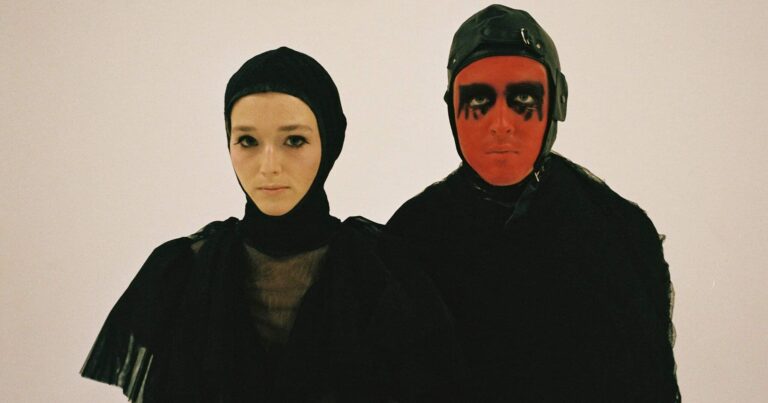
Jasper Llewellyn, Mike O’Malley, and Casper Hughes wrote a version of what would become their first single as caroline, ‘Dark blue’, on the day that they started playing together half a decade ago. Having met at university in Manchester, Hughes and Llewellyn moved to London to pursue music more seriously, and they soon invited Llewellyn’s old friend O’Malley – the two had been in an Appalachian folk group as teenagers – to join the band, which now also features Oliver Hamilton, Magdalena McLean, Freddy Wordsworth, Alex McKenzie, and Hugh Aynsley. It’s hard to say what mesmerizing quality emerged through that initial collaboration, but caroline has continued to build on the foundations of their musical identity – one that has ties to the UK post-punk scene but is stylistically and emotionally more aligned with a project like the Microphones (who they supported in late 2021), approaching something vague yet intensely absorbing through repetition and experimentation. Their self-titled debut album, released last week, attests to the obsessiveness with which caroline arrange each element of a track, but also the way they interact with the acoustics of the room and even the non-musical ideas that hover around it – nature, hope, death. It’s the sound of a band constantly exploring, their gestures both small and sweeping at the same time.
We caught up with caroline’s Jasper Llewellyn and Mike O’Malley for this edition of our Artist Spotlight interview series to talk about their earliest musical experiences, the formation of caroline, their collaborative process, and more.
The two of you grew up playing folk music together. What are your memories of that time?
Jasper Llewellyn: I don’t know why I’m laughing thinking about it, but basically just like really [laughs] – just immature 16-year-olds. Suddenly loads of memories flooding back of us being really childish. We used to earn money busking together, playing in the street. And then we’d not do anything interesting, just like get drunk in the day off money we made from playing music in the street. I just remember me and Mike being really naive and kind of innocent. It was good, though. But it was very different music to caroline – it’s messy in its kind of aesthetic, but pretty tight.
Mike O’Malley: Maybe the instruments were kind of messy, but the vocals weren’t really.
JL: Yeah. I was listening to David Eugene Edwards of Wovenhand today for some reason, I was looking him up again. We used to play a song – because this was basically a function band, a kind of wedding band. We did mostly do traditional music, it wasn’t like a creative project really. But we used to play a song by his band Sixteen Horsepower, and it’s such a good song. Like, dark evangelical Christian music, very God-fearing and Old Testament vibes. So we were listening to that sort of thing, and then we were doing these country American country covers.
M’OM: I guess we also liked, like, Gillian Welch and…
JL: Yeah, I always liked the kind of slower, sadder stuff.
Does it all feel more strange in retrospect?
JL: When we went and lived in different parts of the country when we were like 19 – some of us moved to Manchester, some of us moved to London – and I think when I showed people in Manchester the fact that I was in this American country cover band basically playing banjo, I didn’t really have any self-awareness that that was quite a strange thing to do. But I wasn’t this committed banjo player, I wasn’t obsessed with my craft, I just played banjo in this band because it was kind of a normal thing to do.
M’OM: But then everyone else listened to techno.
JL: [laughs] Yeah.
Could you share your impressions of each other at the time?
M’OM: I don’t know, I can’t remember. I mean, I think we liked hanging out together a lot. What did you think of me, Jasper?
JL: This is kind of music-relevant – and it’s obviously annoying to Mike and he knows what I’ll say – but Mike was always really good at music. [laughs] He’s always especially good at playing instruments, and I was always just not. It kind of persists as a thing, but I kind of found my own way of playing my instrument that worked for me. But that’s all I can think of really, just you being really good at guitar and me being like, “Ugh, why am I not better at playing the banjo?”
M’OM: Obviously that wasn’t how I saw it, though. I didn’t notice that difference between us. Because I think also we were playing a style of music that none of us had practiced that much. I felt confident playing the guitar, I’d played the guitar obsessively since I was about nine years old, probably. But the music we were playing at the time, we were learning how to do that together. And actually, it’s interesting that you say that because something that I felt not included in was how you guys could talk about, like, the relationship between chords or something in a theoretical sense from choral theory and stuff. I understood the feeling of it, but I didn’t know the names of those things, you know.
JL: I don’t think I did either. I was meant to know, because we all had A level music and had to have like grade five theory. Those friends of ours who were involved in choral singing, that’s how they learned how to talk about it. But I always found that very alienating and didn’t connect to my experience of playing music at all.
M’OM: Really?
JL: No. I know that’s a really classic thing to say, but it was really true. I spent years trying to learn how to talk about music like that, and I never could.
What was it like when you guys reconnected for caroline? I know that Jasper, you were playing with Casper as a duo for some time before that?
JL: It’s only like a couple of months. It wasn’t really a thing. I think sometimes the story of the project gets told that me and Casper started playing together and then Mike was brought in, but the project didn’t start until it was the three of us. There was no version that pre-existed Mike joining.
M’OM: It was just a different thing you were doing.
JL: Yeah, it was strange though. Me and Casper were playing, and Casper was basically shouting or talking playing one chord normally on guitar and I was playing drums. And we used to practice weirdly quite a lot in this two or three-month period before Mike joined. We moved to London, we had a practice room that was really cheap, we went every week. Me and him did this thing, we played one gig and made some recordings. It all was kind of weird. And then Mike joined – it was on the basis that you were going to join that project a bit, but literally as soon as you joined, we made entirely different music. And then all of the old music was completely dispensed with them and we just made caroline music.
What do you think caused that almost instantaneous shift in the music you made?
JL: It was quite a harsh landscape when it was just me in Casper playing. It was drums and then an occasional chord, because Casper basically didn’t really have the technical abilities to play very complicated things on guitar, so he could only really do one thing repeated. And I couldn’t do a lot of things drums either. It was all quite bare, and then when Mike joined, I think it could basically fill out the sound. And it meant that it was okay for Casper to just sit on one thing. It was still minimal and it was the three of us right at the start, but it had a slightly different feeling to it.
M’OM: There’s a massive shift in what you feel you’re allowed to do between two people or three people. Four people and five people is really similar, but two people and three people is not. When it’s just two, you can just run away with stuff forever. There’s a certain dynamic of three that’s kind of healthy, I think.
To take ‘Dark blue’ as an example, a song that has evolved over time, how do you feel your dynamic as a trio and as the whole group has changed since you started writing it?
M’OM: In some ways it’s kind of similar, because we quite quickly developed a shared idea of what each other thought was good collectively. Whatever good means – I guess just what we wanted to keep ideas-wise or what we felt was worth exploring. But we’ve probably just got even better at that as a shared thing.
JL: We can do a lot more stuff now. [laughs] I think we’re just more experienced in the way that we can see potential where there might be potential and we can we can imagine where something could go. Obviously, that comes with just having more people, there are instantly more options in terms of different combinations of people playing. But in terms of more of the outlook on making music, I think being confident that we’ll find something that we like, something that works if we persist for long enough, and just having a lot of experiences of trying to find things. And a lot of the time not finding them, but a lot of the time also finding them. I feel that we just trust in the process more now, that we will come across things that we like and that we want to work on if we just carry on working on them.
To delve more into the process, something I got from listening to your debut album is that the songs are growing and expanding, but there’s also a consistent focus on intimacy and minimalism. How do you go about practising restraint when you’re collaborating with all the members in the group? Is that something that you’re conscious of?
M’OM: That’s always going to be relevant if you’re composing something with a big group of people. Because the more potential elements there are in different instruments or people, the more overall restrained you might have to make something. There’s more to restrain, basically. I think often there’s an idea of the shape and arrangement of the piece of music that we’ve written before every single person from the band has started playing it, so often it’s kind of pre-imagined where things would happen. I suppose having quite long-duration songs helps as well because you can allow for things to develop and take time.
JL: Between me, Mike, and Casper, we’ve established a kind of aesthetic approach over the last years doing this which is quite restrained. It’s not like we’re all in the room writing the thing from the start and everyone can just put in ideas, as Mike says, the roles that people have are slightly pre-imagined and then we practice and then people improvise and they work on it themselves. But where in the structure they work on it is slightly predetermined, although not fixed. I don’t know whether that’s just kind of pessimistic, because maybe we could also write really restrained music with that number of people in a totally open writing situation. But that’s not how it’s worked for caroline so far. But it could, maybe, Idon’t know.
M’OM: I think that’s just how we learned to do it between the three of us anyway, so we just kind of stuck with that. But again, that’s for now, you know, we’ve only done this one record so far.
Do you tend to overanalyze your music, and if so, at what stage? Is it more in the arrangement, the recording, the performing of it?
M’OM: At all stages, I would say. [laughs]
JL: Not performing.
M’OM: The performing bit the least. Probably because everyone’s very talented and performs very well, so that’s not something that needs nitpicking. But obviously, the arrangement of a song is, because you just make that up. You’re kind of building that from scratch, so there’s infinite things to nitpick. But it’s been at times incredibly difficult, actually, writing – so emotionally draining and exhausting, because we nitpick so much. I think Freddy made a joke about how much before we start playing something for the first time, we’ll just talk about it for hours before we actually start playing. [laughs] It’s like, “Can we just play it?”
What aspects of the music do you talk about, like musical details or just the overall feeling of it?
JL: It’s more just the concept, basically. You’ve got these vague concepts and vague shapes of how different instruments can relate to one another and where there can be gaps and where the texture can be thick, and we just kind of explain them. We try and explain that to everyone and be like, “it’s this sort of thing.” We’re always describing things in those terms – “This is sort of ambient, so this sort of like vibe, at this point, and with these elements, maybe.” It’s always talked about like that. Then we play a bit, and then we talk about it for loads. We talk more than we play, a lot more. Actually, when it’s me, Mike, and Casper, we quite often improvise for like 25 minutes, and then we’ll talk for another same amount of time. So normally it would be in blocks like that, but when it’s with the full band, it kind of depends. Sometimes we just work on a little bit of something and other times it’ll be longer. I mean, we haven’t worked on new music with the full band for quite a long time, so we need to just see how it works again.
M’OM: Yeah, it’s true. It’s going to be interesting because the last time we did that was before we had played a load of gigs. We probably play differently and much better now than we did at the time as a group.
Can you share a moment where you felt connected to the group as a whole?
M’OM: I think every time we play the song ‘Skydiving onto the library roof’ is a good example of that, because it relies on that to be performed properly. You kind of have to get into this groove together – not like musical groove, just in the general sense of a groove. It’s necessary because the song is this kind of sort loop of a phrase which restarts potentially an infinite amount of times. There’s a lot of interconnectedness in how we play and bringing the song up and down together. Any other one from you, Jasper?
JL: I guess when we played at Southbank. It was such an undertaking – it was five hours long. It was a very intense experience. And going through that with everyone, and also improvising without any predecided constraints, it was just a really great experience. It pushed people’s playing a lot, all of us. It felt really good to do it together.
This interview has been edited and condensed for clarity and length.