The gap between a band’s debut album and its follow-up is always fraught with danger, but the journey has been more difficult for Goat Girl than most. Signed with Rough Trade when they were still teenagers, their 2018 self-titled record was widely acclaimed; a sense of indie ascension was palpable. Then an unprecedented pandemic hit, they lost their bassist, and the band’s Ellie Davis was diagnosed with Hodgkin lymphoma (after undergoing chemotherapy, she is thankfully in remission now). A lesser group might have crumbled under the duress of these challenges, but Goat Girl is built differently and On All Fours is a reflection of this. A little of the fire and fury of their searing debut has gone, but the end result doesn’t lack for its absence, instead revealing an increased level of maturity and wariness.
Goat Girl first emerged as one of the leading lights from the fertile South London scene based around Brixton’s The Windmill, but while On All Fours ostensibly remains a post-punk record, it takes them further away from the style of peers like Shame than they’ve ever been; off-kilter melodies, languid vocals, and swirling synths will do that. The rhythm is more melodious and playful, a closer touchstone being the bubbling and rambunctious electronics of Stereolab, particularly on songs like ‘Sad Cowboy’, ‘Badiba’, and ‘Where Do We Go From Here?’ More examples of imaginative instrumentation abound: ‘Closing In’ is buoyant and funky; ‘Once Again’ is filled with tuneful guitars and an emphatically rushing rhythm; ‘Jazz (In The Supermarket)’ adds the extra textures of a trumpet and viola on a near-instrumental track. ‘P.T.S. Tea’ is perhaps the only instance where the band wears their influences too prominently on their sleeves, as the song could easily be an outtake from Metronomy’s The English Riviera (the track’s witty title excuses any such misgivings).
It’s the opener ‘Pest’ that sets out Goat Girl’s atmospheric stall: hushed intimidation. Lead singer Lottie Pendlebury whispers softly but menacingly throughout, whether on the relatable millennial melancholia of ‘Anxiety Feels’ (“I don’t wanna be on those pills/ Heard they make you numb/ Find another way to get my fill,” she sighs amidst a lilting and lush rhythm) or on the more biting takedown of a lowlife on ‘Where Do We Go From Here?’ (“I’m sure it stinks under his skin/ Where pores secrete all the hate from within”). Songs like the latter are where Goat Girl stray from old London standards in their lyrics. Where The Libertines and various NME acolytes romanticised the messiness of the city, Goat Girl are among those who see it for what it is, a flawed and troubling place. Their songs are tales from the night bus, crossing London, taking the listener home from a gig, a bar, gazing from the window and seeing anxiety and disillusionment.
The lyrics betray a consistent fascination with body horror that becomes a thematic throughline: “Now I’m itching/ Nailing poison/ Bitten by her snake,” Pendlebury cries on ‘A-Men’. The band cleverly relates the idea of contamination to subjects like the current climate crisis and mental health. “Littered seas, feels like we’re an infection,” they ponder on ‘Badiba’; the line “Feel the burning on the skin/ Feel the turning come from within” is tied to deteriorating mental health after a breakup in ‘They Bite On You’. The comfort between the band’s members is so clear and there’s a real elasticity to their play. On ‘Badiba’, for example, each member swapped instruments for the track, yet it still sounds tight and streamlined.
On All Fours was produced again by Dan Carey, the person behind Speedy Wunderground and producer of recent records by the likes of Fontaines D.C., Black Midi, Squid, and Kae Tempest. Clearly Carey and Goat Girl have developed a growing partnership, judging by On All Fours’ increased experimentation and blossoming musicality. Carey’s other partnerships have found reward: Black Midi’s Schlagenheim was nominated for the 2019 Mercury Music Prize; Fontaines D.C.’s A Hero’s Death went even further, earning a Grammy nomination for Best Rock Album. With its combination of sombre but sharp lyricism and evocative, exploratory instrumentation, On All Fours deserves at least similar plaudits for Goat Girl.
It’s not so hard to earn a reputation as an enigmatic act when you only have a couple of singles to your name. To be hailed as one of the most exciting – even best – bands in the world, however, perhaps not so much. Yet London seven-piece Black Country, New Road, who formed in 2018 and have now come through with their debut studio album, For the first time, managed to achieve exactly that, despite the fact that coverage of the band has often tended to focus on their similarities with other acts in the UK’s burgeoning post-punk scene. Vocalist Isaac Wood winkingly acknowledges the band’s kinship with both their forebearers (“fled from the stage with the world’s second-best Slint tribute act”) and their contemporaries (“I told you I loved you in front of black midi”) in his lyrics, but those references mostly serve to accentuate the unique qualities that set them apart.
Trying to describe these qualities by using genre identifiers like free-form jazz, post-rock, and the Jewish tradition of klezmer – all of which are part of BCNR’s riveting stylistic blend – quickly proves to be a futile effort. Instead, you’re more likely to capture and appreciate the band’s sound if you pay attention to the contributions of each member accompanying Wood’s often absurd but impassioned musings, from Lewis Evans’ frantic saxophone to Georgia Ellery’s sweeping violin; Charlie Wayne’s agile drumming, Tyler Hyde’s menacing bass, and May Kershaw’s twitchy synths also form the backbone of the unnerving opening track and provide startling dynamics throughout the album. Though there seem to be virtually no limits to the band’s creative instincts, all seven members are perpetually in sync with one another, carrying momentum even when their incendiary crescendos come closer to approximating uncontrollable chaos.
But as original as BCNR’s approach undoubtedly is, the band have managed to preserve the aura of mystery that now pervades not just their image but their music. Part of it comes down to framing: you could start from the fact that their name came from a random Wikipedia generator, or the odd choice of using an image from Unsplash as the album’s cover. But structurally, too, there’s a sense of distance between Wood and the listener; considering the second line on the record is “And write the words I’ll one day wish that I had never said” (in reference to a previous version of the song, which Wood felt failed to capture his intended meaning), the fact that the first track is an instrumental could be interpreted as a form of reluctance, but ends up highlighting the band’s chemistry as a force to be reckoned with. Elsewhere, the strange scenarios Wood paints in his lyrics further enhance that chasm: “I’m not so vividly within this song; I’m more of an outsider,” he said of the album’s mind-blowing centerpiece, ‘Science Fair’, and it’s a perspective that finds its way into different corners of the record.
A misused sense of ironic detachment is often the biggest detriment when it comes to bands of BCNR’s ilk, but the album’s framing rarely registers as either overly satirical or anonymous. Wood’s wry humour, his endless series of “references, references, references”, or the band’s relentless experimentalism are not here in place of a personality – Wood’s vocal inflections belie a range of conflicting emotional states, a constant search for new identities that masks a deeper existential crisis. “I am invincible in these sunglasses,” he declares on the stand-out ‘Sunglasses’, but in relaying that particular scene, reveals his true state to his audience: “Cars are going “beep, beep, beep”/ And there are so many roadmen on this street/ And they cannot tell that I am scared.”
As inscrutable as Wood’s writing can be, it never detracts from the complexity or resonance of BCNR’s music, and For the first time serves as a dazzling display of the heights that music can reach. An unlikely highlight, and one that nimbly showcases the more evocative side of the band’s sound, comes near the end with ‘Track X’, which somehow manages to juxtapose the line “in the same room where we fucked as kids” with the tenderness that later seeps through in the form of a feather-light melody and soft backing vocals. Wood has described the song as a “glimpse” of their new material, which one can only hope will be a bit more substantive than this six-track effort, and maybe even a bit more open. For the first time ultimately leaves you with more questions than it answers – and I guess, in some way, that’s part of the magic of a really good first impression.
Throughout the week, we update our Best New Songs playlist with the new releases that caught our attention the most, be it a single leading up to the release of an album or a newly unveiled deep cut. And each Monday, we round up the best new songs released over the past week (the eligibility period begins on Monday and ends Sunday night) in this segment.
This week’s playlist features the latest single from Julien Baker’s soon-to-be-released third album, the tenderly evocative ‘Favor’, which features subtle backing vocals from her boy genius bandmates Phoebe Bridgers and Lucy Dacus. The Weather Station’s excellent fifth album came out on Friday, and latest single ‘Parking Lot’ is a testament to Tamara Lindeman’s growth as a songwriter; Miss Grit’s second EP Impostor is also out now, and the ambitious ‘Grow Up To’ served as an exciting final preview of the artist’s confident new sound. Danish punks Iceage returned with their first single for Mexican Summer, ‘The Holding Hand’, and it’s a thunderous, slow-burning epic. Philadelphia outfit Spirit of the Beehive announced a new album, ENTERTAINMENT, DEATH, with a hypnotic new single, while Hull-based five-piece Low Hummer delve into themes of cultural identity and isolation on the ethereal ‘Never Enough’.
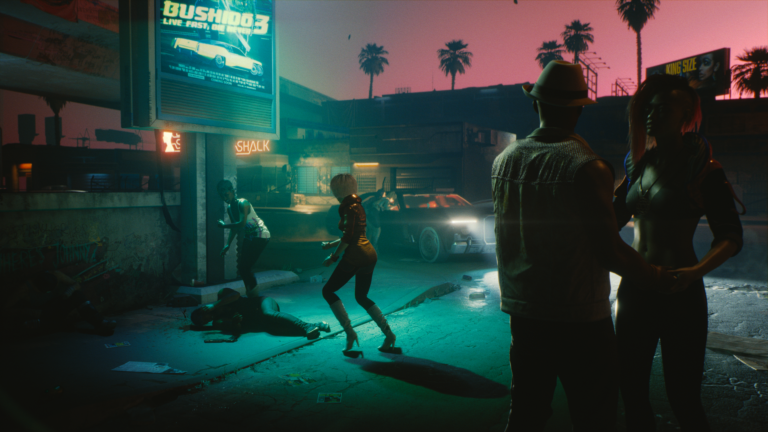
Cyberpunk 2077 had a highly disappointing launch, mostly due to the enormous amount of glitches found in the game by players. The game felt so unfinished that even Sony pulled the plug and offered refunds to people that bought the game. CD Projekt may not have delivered the game we wanted, but at least some of the glitches turned out to be very humorous.
Netflix which currently trades at $550.79 on NASDAQ have revealed the official trailer for Sentinelle, a new drama thriller film by Julien Leclercq. The film follows a highly trained French soldier Klara, who uses her combat skills to hunt down the people who raped and hurt her sister Tania.
Sentinelle will be available on Netflix from the 5th of March.
Marketed as a children’s book, Markus Zusak’sThe Book Thief tackles World War II in Germany through the voice of Death and the eyes of a child. Sometimes, a theme can be too formidable to condense into a story meant for anyone other than young readers.
Published in 2005, the book tells of Liesel Meminger’s youth after becoming an orphan. She is adopted by the Hubermanns: kindly Hans and severe Rosa. As she grows up under their roof, she learns to read, but books can be hard to come by in Nazi Germany, so she often has to steal them. Her friend Rudy Steiner – who doesn’t hide the fact that he’s in love with her – occasionally accompanies her on these ventures, but Liesel must keep a big secret from him; Hans and Rosa agree to take in a fleeing Jewish man and hide him in their basement. Max soon becomes a good friend of Liesel’s, and he encourages her to write as well as read.
The novel is aptly narrated by Death in a somewhat sarcastic voice, but the overall effect is poignant. Zusak masterfully weaves a tale of youth, war, tragedy, hope, and loss, never losing his unwavering control over language. This is truly a book for all ages and one that readers can gain much from. Here are eleven powerful quotes from The Book Thief.
“A small fact: You are going to die.”
“I have hated words, and I have loved them, and I hope I have made them right.”
“The only thing worse than a boy who hates you: a boy that loves you.”
“It kills me sometimes, how people die.”
“I am haunted by humans.”
“I wanted to tell the book thief many things, about beauty and brutality. But what could I tell her about those things that she didn’t already know? I wanted to explain that I am constantly overestimating and underestimating the human race-that rarely do I ever simply estimate it.”
“Together, they would watch everything that was so carefully planned collapse, and they would smile at the beauty of destruction.”
“… Leisel kissed her best friend, Rudy Steiner, soft and true on his lips … He tasted like regret in the shadows of trees and in the glow of the anarchist’s suit collection. She kissed him long and soft … She did not say goodbye. She was incapable, and after a few more minutes at his side, she was able to tear herself from the ground. It amazes me what humans can do, even when streams are flowing down their faces and they stagger on…”
“A snowball in the face is surely the perfect beginning to a lasting friendship.”
“A small but noteworthy note. I’ve seen so many young men over the years who think they’re running at other young men. They are not. They are running at me.”
“The consequence of this is that I’m always finding humans at their best and worst. I see their ugly and their beauty, and I wonder how the same thing can be both.”
Kislaw, an impressive music producer of out France, released his latest single ‘Glitter’ — just over a week ago. The single is lead by Akacia’s honeyed vocals and animated by the groovy potent beat of Kislaw who dips into an exotic summer vibe. ‘Glitter’ is the first single for Kislaw in 2021 and looks to mark a promising year with its intoxicating spirit.
Popcoin ‘Talk’
Marking their first release is Popcoin, a project by duo Aaron Black and Des Martin. Their debut single ‘Talk’ is a euphonious piece that embraces a groovy bass, crisp sounding drums and dreamy-like vocals, resulting in a lush perfectionist-like production. The duo impresses mightily with their first single and will undoubtedly look to grow from it with their forthcoming releases.
I like Reptilicus. I really mean that. I don’t like it in that peculiar, ironic way that so many approach genre films with. I also don’t like it because it’s “so bad it’s good”, which is just another brand of the ironic consumer. I like Reptilicusbecause I enjoy it, wholeheartedly.
Reptilicus tells the story of a giant, prehistoric reptile brought back to life. It wreaks havoc in Copenhagen before it is sedated and (presumably) destroyed by the military. However, the monster has regenerative abilities, and its detached limb twitches at the bottom of the ocean…
Two versions of the film exist: one Danish and one American. Both of these films (and they are very different beasts) deserve a renewed evaluation, one that takes their differences and backgrounds into account. Join me as we venture through the film’s unique genesis, its complicated distribution, and the differences between its iterations – all in defence of Reptilicus.
GENESIS OF REPTILICUS
The history of Reptilicusis wild and weird, making the film’s existence a point of interest in its own right. Producer Sidney Pink had a multi-picture deal with American International Pictures (AIP) after they had distributed his 1959 science fiction epic, The Angry Red Planet: an adventure story about a mission to Mars. The film’s Danish distributor, Henrik Sandberg, convinced Pink to produce further films in Denmark. After conferring with Samuel Z. Arkoff and James H. Nicholson of AIP, it was agreed that Pink’s next film would be about a giant monster ravaging Scandinavia.
Reptilicuswas co-produced by Denmark’s Saga Studio, who held distribution rights for Scandinavia. AIP would distribute everywhere else. Danish and English versions were shot simultaneously, with the cast performing in both languages. As Sidney Pink notes in his autobiography, “if the idea sounds complicated, in actuality it was worse.” Pink would direct his version of a scene, and then the film’s Danish director, Poul Bang, would re-arrange the camera and lighting setups for his version. It was, “a stupid way to shoot a movie”, Pink said. “It would have been faster had we shot one complete picture, then shot the other version.”
The cast of Reptilicus was an eclectic group of Danish actors, many of whom were cultural icons in their home country. In particular, though his part is small in the English version, Dirch Passer (who plays a bumbling nightwatchman) was a comedy legend in Denmark. Sidney Pink had worked with Passer on The Green-Eyed Elephant (1960), a TV pilot turned Danish feature comedy Pink shot in Denmark prior to Reptilicus. In its original TV pilot format, Pink had specifically written a part for Passer after seeing him in Henrik Sandberg’s soldier comedies like Soldaterkammerater Rykker Ud(roughly translated as Soldier Comrades Move Out, 1959). Pink was so impressed with Passer that he called him back for a similar role in Reptilicus.
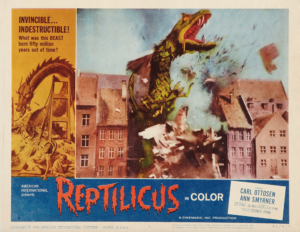
Lobby card for AIP’s release of Reptilicus.
Reptilicushas a scale that’s unprecedented for a film distributed by AIP, whose modus operandi was low-budget exploitation. Leo Bertelsen, one of the film’s financiers, was something of a Danish war hero with government connections. According to Pink, Bertelsen had been the leader of the fiercest Underground cell in Copenhagen during the Second World War; his group allegedly killed more Nazis than any other. Through Bertelsen, Pink was granted extensive access to the Danish military and navy. This was also made possible because Saga Studio’s owner, Fleming John Olsen, was a member of the majority political party in Denmark. As such, scenes in which the army battles the giant reptile were shot specifically for the production, departing from the use of military stock footage seen in many contemporary genre films, such as Invaders from Mars(1953), Beginning of the End(1957), and The Deadly Mantis(1957).
With production completed, Sidney Pink began assembling his English version. In this first cut, all of the Danish cast re-looped their lines in English except for Dirch Passer, Marlies Behrens (who plays UNESCO scientist Connie Miller) and Carl Ottosen (who plays General Mark Grayson). In fact, Sidney Pink himself dubbed Ottosen for this version.
Of course, AIP did not accept the film Pink submitted to them, and a convoluted legal battle ensued. Reports vary on who instigated it. According to Gary A. Smith’s American International Pictures: The Golden Years(2013), Sidney Pink sued AIP when they refused to distribute the picture. However, Bill Warren’s exhaustive Keep Watching the Skies! American Science Fiction Movies of the Fifties(2010) states that AIP sued Pink first for breach of contract. Warren’s account is arguably more substantial, as he refers to a Film Daily article dated 29th June 1961. The Film Daily article contains an excerpt from the suit, explaining that Sidney Pink, “agreed to produce and deliver a picture of the stated title [Reptilicus], conforming to several physical requirements, at a given date, now past, and did not perform the contracted production activities agreed upon.”
Warren goes on to explain that Pink retaliated by suing AIP and Monarch Books over the novelisation of the film – specifically because of the unauthorised use of his name, and because it was adapted without his consent. Pink also claimed that the book, which featured bizarre and overt sexual references, had subjected him to “public contempt” and ridicule.
Adding to the confusion, Sam Arkoff himself contradicts the implications of the Film Daily article. Speaking in his autobiography, Arkoff explained how he had gone to Denmark to see Pink’s cut of the film, and that he wasn’t pleased with the Danish accents: “Right now, it’s in a form of English that American audiences aren’t even going to recognise!” According to Arkoff, it was then that Pink tried to sue AIP for rejecting his cut. In both his autobiography and a 1988 interview with Tom Weaver, Arkoff explained how he’d pointed to the demands of Pink’s contract with AIP – which backs up the significance of the Film Daily article – but he stops short of talking about AIP’s own suit against Pink.
Meanwhile, Sidney Pink’s autobiography gives a broad comment that he and Sam Arkoff had “sued and countersued through the years”, and makes brief mention of his suit against AIP for the Monarch novelisation.
Irrespective of chronology, it seems all suits were settled and AIP went on to re-edit and re-dub the picture themselves for a late 1962/early 1963 release. Unfortunately, it is unlikely that we will ever see Sidney Pink’s first English version of Reptilicus.
AMERICAN INTERNATIONAL AND SAGA STUDIO: DIFFERENT BEASTS
Since its release, Reptilicushas been the target of scorn, ridicule, and derision; some of it justified, but much of it overstated. In a contemporary review, The Monthly Film Bulletin stated that, “the lame and plodding narrative is made worse by singularly bad acting.” More recently, Bill Warren has said that Reptilicusis, “an atrocity, easily one of the worst giant-monster-on-the-loose films ever made.” Critic Leonard Maltin echoed that sentiment, arguing that the film is “only good for laughs.”
However, it is important to remember that these charges were made against the AIP cut of the film. Indeed, the English version’s inclusion on Mystery Science Theater 3000’s eleventh season has likely contributed to the bad press.
It is a shame that the Danish cut is not widely available, for it is quite different – and arguably much more impressive – compared to its American counterpart. While I am sceptical that the Danish cut would totally change the current public perception (for that would require a wider reconsideration of older genre cinema), I am optimistic that if people were to see it, much of the criticism thrown at the AIP cut wouldn’t apply.
Whilst Poul Bang’s camera setups differ only slightly from Sid Pink’s, the main differences between the versions lie in entire scenes and shots that were excised by AIP. Many elements criticised in the AIP cut (most notably the special effects) appear significantly more accomplished in Saga’s version.
In the AIP cut, the monster swallows a farmer in an inexcusably poor shot. Photographs of co-writer Ib Melchior’s son were pasted over footage of Reptilicus, appearing to slide down his gullet. In the Saga version, this doesn’t happen; instead, Reptilicus crushes the farmer’s house. Saga’s version also features more footage of Reptilicus moving about – much of which is rather good. AIP cut most of it, and settled for repeating effects shots at a slower speed, which looks cheap. Perhaps most significantly, Saga’s version shows Reptilicus in flight. AIP removed this footage entirely.
The Danish cut (left) and the AIP version (right).
In terms of the story, Saga’s version is helped because of the cast’s original vocal deliveries. In hearing the actors’ actual voices, one discovers an urgency absent in the AIP cut. Moreover, Saga’s film also has more character backstory. There are light scenes of our heroes getting to know one another, which lend considerable charm. As pointed out by Kip Doto in his informative Reptilicus: The Screenplay(1999), Sid Pink did away with these scenes because he “didn’t want to be cute.” Consequently, AIP’s edition might seem more “serious”, but the characters aren’t nearly as endearing.
Saga’s version also features two musical numbers. In one of the film’s playful detours, General Grayson, Connie Miller, and Captain Brandt (Ole Wisborg) visit Tivoli Gardens in Copenhagen. While at a restaurant, they’re treated to Tivoli Nights as sung by Birthe Wilke. The song features in the AIP cut as well, but footage of Tivoli Gardens is inserted over the top. More significant is Tillicus, as sung by Dirch Passer to some enthralled children. Passer is in his comedic element here, as he leads the children around a garden singing, “Come on out, little friend, who is afraid of Tillicus!”
These songs may seem like an odd choice for a monster movie, but this might be a cultural misunderstanding. Musical numbers were a regular occurrence in several of the comedies Passer starred in. They can be seen in I Kongens Klæ’r(In the King’s Clothes, 1954, also directed by Poul Bang), Styrmand Karlsen (1958), the aforementioned Soldaterkammerater Rykker Ud, and MajorensOppasser (The Major’s Caretaker, 1964). As part of a Danish comedy mould, it makes perfect sense for them to appear in Reptilicus.
As it stands, Poul Bang and Saga’s versionis at least as good as – if not better than – many of the monster-on-the-loose films of the 1950s. It is not a perfect film, but it is enjoyable and often compelling, largely because of the charismatic ensemble cast. For Denmark’s first and (so far) only giant monster film, Saga’s Reptilicusis rather wonderful.
AIP’s Reptilicusis a different beast altogether, though I do not mean to support all of its harshest critics. While its elements can be lambasted in isolation, the sum of its parts is something else entirely. When one steps back, the English cut of Reptilicusis also something very special indeed – but for different reasons.
From a certain point of view, AIP’s Reptilicusis every element of what we perceive to be an “old monster movie” laid bare. While this author will firmly defend many of the superb science-fiction and monster films of the ‘50s and ‘60s, the AIP cut actively lives up to the negative charges made against this group of films.
The wonder of AIP’s Reptilicusis that – through its dubbed performances, expository narration, and special effects changes – the film inadvertently becomes a pitch-perfect amalgam of every genre cliché from the prior decade. It has the melodramatic performances, the shots of screaming crowds, and the orchestral swell. Although the charisma and technical accomplishment of Saga’s version are gone, the AIP version is still worthwhile because it hits all of the comfortable beats that we expect from a picture of this sort – and it does so without any irony.
Joe Dante’s marvellous Matinee (1993) features the wonderfully parodic Mant!, the film-within-a-film about a half-man, half-ant mutation. Dante affectionately peppers elements of ‘50s genre cinema into Mant!, from expository science lessons to actual samples from classic monster film soundtracks. If AIP’s Reptilicushad Joe Dante’s name above the title, we would think it a genius piece of parody. But the film is not a parody. AIP’s Reptilicus is earnest. Every line, every scream, and every special-effects shot was changed deliberately.
This means that the film’s glorious collation of familiar elements has happened naturally – or by accident. That it occurred through the most exceptional of circumstances only makes it more fascinating. For its sheer existence and inadvertently pure self-reference, the English version of Reptilicus should be celebrated.
But, in order for me to articulate what it is that makes both versions of Reptilicusso special beyond these abstract ideas, let’s dive in with further detail.
As discussed, the film’s special effects have been a barrier for many critics. Model artist Orla Høyer constructed at least two Reptilicus puppets; and while the larger of the two looks rather striking, its smaller counterpart isn’t as impressive. Another point in Saga’s favour is that this larger puppet features more prominently in the Danish cut, along with some larger-scale miniatures built to accommodate it.
No other screen monster has captured the look of European medieval dragon illustrations quite like the Danish beast. The unique nature of Reptilicus – both in terms of design and execution – makes him distinct amongst the pantheon of cinema’s great monsters. Whether or not one thinks the Reptilicus puppets look good (I happen to think they’re fine) is unimportant; nothing else like them exists.
Sketch taken from ‘The History of Four-footed Beasts and Serpents’ (1658)
That Reptilicus is shown on screen so prominently – in both versions – also stirs excitement. This is unlike several of AIP’s other efforts – like Voodoo Woman or Invasion of the Saucer Men (both 1957) – in which the monsters are seldom seen. On the contrary, Reptilicus boasts its monster. By seeing lots of it, the stakes are raised. We see the monster, and we understand how deadly the situation is.
The characters also feed into the comfortable melodrama. From the scientists in white lab coats to the stone-faced army generals, the characters in Reptilicusare perfect stereotypes of the sort that audiences expect to find in older monster films – irrespective of how often these films break from prescribed expectations. And while the Danish version frames them with humour and warmth, AIP’s dubbed dialogue pushes them into perfect parody.
My glee at the AIP cut – shortcomings firmly considered – might tempt you to read my enjoyment as the sort of ironic delight I decried earlier. However, it is anything but. I enjoy the AIP version because it is entertaining. Ultimately, that was what Sidney Pink and AIP set out to accomplish. This film was made to make a buck for AIP, and to entertain a predominantly-teenaged demographic.
Each individual element in the English cut might be flawed on its own. But, the sum of the film’s parts comes together to form an often-exciting and joyous film experience. All the way from its production history, to its fabulous title, and the film itself, Reptilicusis on its own level – for better or worse.
CONCLUSION
Ultimately, both versions of Reptilicuscan be enjoyed for how familiar they feel. It is admirable that Reptilicus meets all of the archetypical beats of ‘50s science fiction. Understandably, that won’t be the case for everybody. For this author, who enjoys watching and discussing these films day after day, Reptilicusis comforting. It’s familiar. For those who aren’t as keen on ‘50s monster pictures, Reptilicusmay well be a minor footnote. But for fans of this era of genre cinema, I urge you to give the film another go. Ultimately, Reptilicus presents a perfectly imperfect final hurrah for the previous decade’s science fiction.
I do not expect this to have changed many minds. Indeed, I do not expect you to suddenly treat Reptilicusas a masterpiece. In both its forms, the film has its flaws, and they might be enough to put off even the most ardent creature-feature aficionado. But it is hoped that this writing has offered an alternative way of looking at it. More than anything, it is hoped that readers will seek out Saga’s Danish version of the film.
Ask yourself, did you have a good time while watching it? I’m sure that a few will consider this and think, “no, I did not.” But for those who thought, “you know what? I did have fun”, hold on to that.
Reptilicusremains a fascinating part of sci-fi history, the circumstances of its genesis as strange and wonderful as the film itself. Cinema is better for it. At the very least, it was co-financed by a Nazi killer – that is something.
Long live Reptilicus.
A huge thank you to Revised Fiasco Design for creating the fabulous header image for this piece. Please visit their Instagram page to see more of their impressive work.
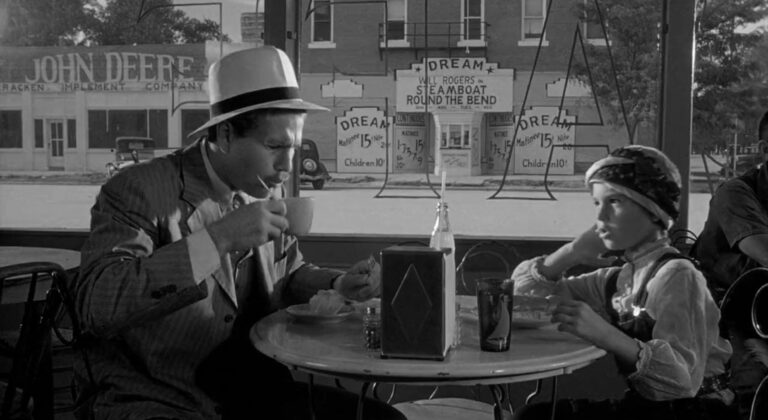
In Paper Moon, real-life father-daughter duo Ryan and Tatum O’Neal star as con-artists Moses Pray and Addie Loggins, respectively. Set in 1930s Kansas, nine-year-old Addie is orphaned after the death of her mother. Moses must take Addie to live with her relatives in Missouri, but Addie believes that he may be her father.
He tries to take her money, but she catches him in the act and makes him promise to get her $200 back. Grudgingly, he allows her to accompany him as he swindles recently widowed women into buying overpriced “special edition” bibles. Along their journey, they encounter some interesting characters, are chased by police, and have their tenuous relationship tested time and again.
Tatum O’Neal won an Academy Award for Best Supporting Actress in her role as the precocious Addie Loggins, becoming the youngest person ever to win an Oscar at age ten. The film is a nostalgic comedic delight whose characters brighten the monochrome landscapes. Here are thirteen memorable quotes from Paper Moon.
Addie Loggins: “Daddy, I need to go to the sh*thouse.”
Moses Pray: “Her name ain’t Precious.”
Trixie Delight: “Hurry up, Doctor! This baby gots to go winky-tinky!”
Addie Loggins: “Well, she ain’t my grown-up and I ain’t plannin’ no more to sit in the back. Not for no cow!”
Moses Pray: “Will you keep your voice down? And Miss Delight ain’t no cow. She’s a proper woman. She has a high school diploma. And right now she’s got to go to the bathroom, so you get on down to the car!”
Moses Pray: “You know what that is, scruples?”
Addie Loggins: “No, I don’t know what it is, but if you got it, it’s a sure bet they belong to somebody else!”
Addie Loggins: “I want my two hundred dollars.”
Moses Pray: “And his name ain’t Frank, it’s Franklin!”
Moses Pray: “We just have to keep on veering, that’s all.”
Moses Pray: “I now owe you one hundred and three dollars and seventy-two cents.”
Addie Loggins: “Seventy-four.”
Trixie Delight: “I just don’t understand it, Daddy, but this baby has got to go winky-tinky all the time.”
Addie Loggins: “But we just stopped for her to winky tink at lunch!”
Addie Loggins: “Where you from?”
Imogene: “Nowhere.”
Addie Loggins: “Well, you gotta be from somewhere.”
Moses Pray: “I told you, I don’t want you ridin’ with me no more.”
Addie Loggins: “But you still owe me two hundred dollars.”
Paris, beyond being the city of love, makes for an atmospheric and visually pleasing film setting. Whether the story involves characters falling in love, discovering something about themselves, or learning the history of France, the setting often makes the story more enjoyable for viewers and encourages characters to go exploring. Here are six great films set in Paris.
Midnight In Paris (2011)
Owen Wilson stars as a screenwriter named Gil Pender, giving an excellent dramatic performance, though still infused with his trademark comedic quirks. Accompanying Gil on his trip to Paris is his fiancé (Rachel McAdams) and her parents. He hopes to find inspiration in the city to write his first novel, even though he’s not sure he’s up to the task.
Every night, he goes for a midnight walk, but he doesn’t just walk through the Parisian streets – he finds himself travelling back through time to the 1920s, his golden age of literature. Gil meets Zelda and F. Scott Fitzgerald, Ernest Hemingway, Picasso, Gertrude Stein, and his other creative idols, all of whom seem to be awaiting his arrival, ready to give him writing advice.
Hugo (2011)
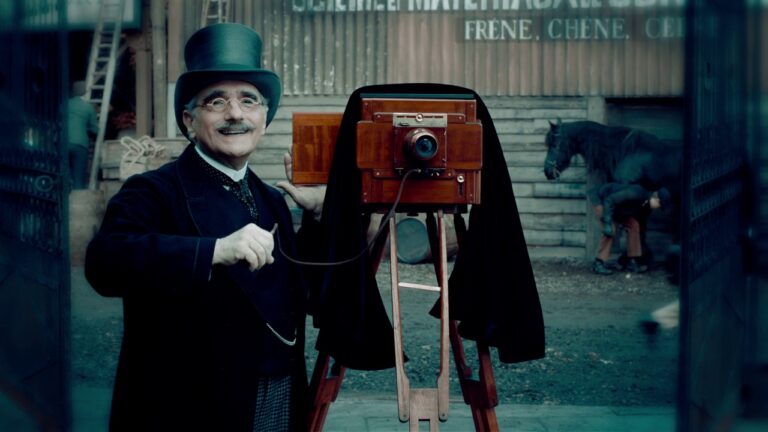
Martin Scorsese isn’t the first director one might think of for a children’s movie, but Hugo offers a story that transcends easy categorisation. The film begins as young Hugo Cabret (Asa Butterfield) is orphaned in the 1930s, left to fend for himself at a Parisian train station, where he operates the clocks after his father’s death. One of the few possessions his father (Jude Law) has left Hugo is his automaton that requires a special key to activate it.
Hugo befriends Isabelle (Chloë Grace Moretz) after stealing from her godfather’s toy store. She helps Hugo solve the mystery of his father’s automaton, which leads them on an adventure of discovery about the history of filmmaking.
Amélie (2001)
Audrey Tautou stars as the titular character in this charming French romantic comedy directed by Jean-Pierre Jeunet. Amélie is a quirky protagonist who is raised isolated from peers her age after her parents mistakenly diagnose her with a heart condition.
The film focuses on her young adulthood in Paris, where she’s surrounded by characters almost as quirky as her. A chance discovery of a box of childhood treasures in her apartment leads her on a search for their owner, which in turn leads Amélie on a search for love.
Les Misérables (2012)
Les Misérables has been made and remade for the screen many times, as well as staged for theatre productions. Many of the adaptations are worthy, but the 2012 version may be one of the most popular. Based on the classic French novel by Victor Hugo published in 1862, the story of Les Misérables follows Jean Valjean (in this movie, Hugh Jackman) as he tries to start a new life after being released from prison.
But after breaking parole, he is pursued by the ruthless policeman Javert (Russell Crowe). Valjean takes a young girl (Amanda Seyfried) into his care but can never escape Javert’s wrath. Anne Hathaway also stars in the film, a performance that earned her an Academy Award. The musical drama is guided by emotion to explore oppression, rebellion, and freedom against the backdrop of war.
Casablanca (1942)
One of the most iconic war romances of all time, Casablanca is an emotional tale of a nightclub owner named Rick (Humphrey Bogart) who helps his ex-lover escape into a better life with her husband. The story takes place during World War II, which makes the film very timely, and all the more resonant with contemporary audiences.
Though the primary story is set in Casablanca, Morocco, much of the significance behind Rick and Isla’s romance is centered around Paris. Paris becomes such an integral part of the story that it feels almost like a character, haunting them as their feelings for one another resurface.
Ratatouille (2007)
An animated film, Ratatouille tells the story of a rat who dreams of becoming a renowned French chef. He doesn’t take into consideration that humans despise rodents and would never even try a meal prepared by them.
The ideas presented within the film struck a chord with many viewers, young and old, and earned the film an Academy Award for Best Animated Feature Film.