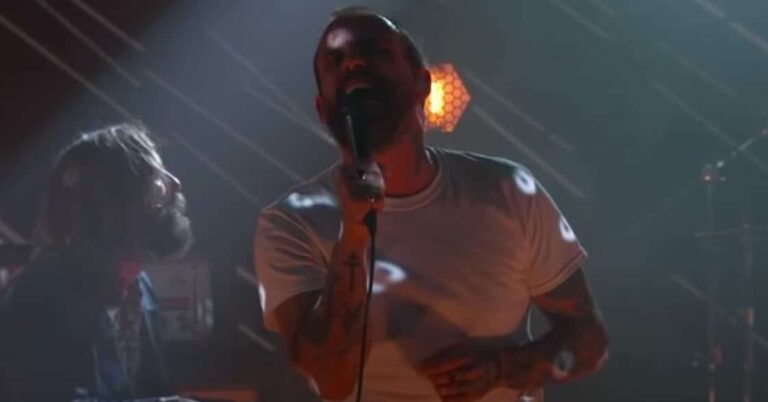
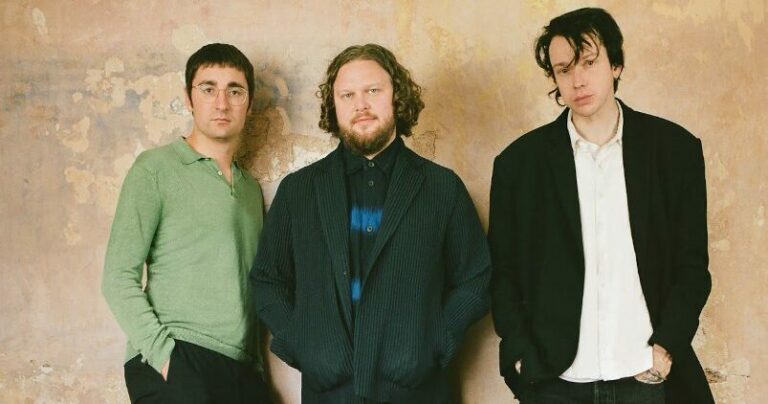
IDLES performed their recent single ‘The Beachland Ballroom’ on Jimmy Kimmel Live, marking the band’s US late night TV debut. The track, which is named for the Cleveland, Ohio venue, is taken from their upcoming album CRAWLER. Watch the performance below.
Yesterday (November 3), IDLES offered another preview of the album with the song ‘CAR CRASH’, which arrived alongside a Matthew Cusick-directed video. CRAWLER is slated for release on November 12 via Partisan.
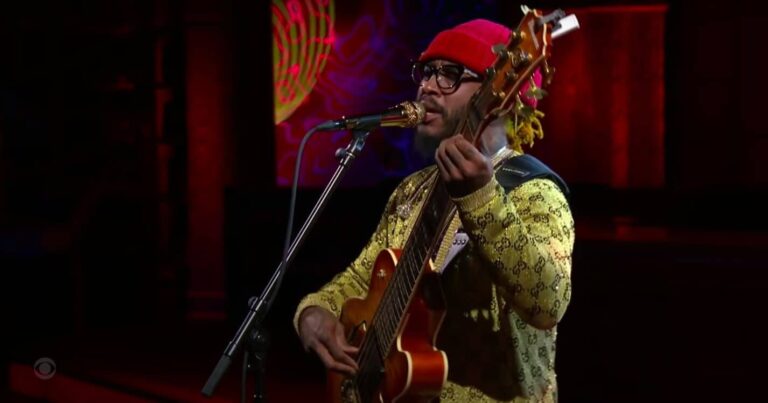
Thundercat appeared on last night’s episode of The Late Show With Stephen Colbert, where he was joined by Jon Batiste for a performance of ‘Dragonball Durag’. Watch it below.
Thundercut is currently on tour in support of his Grammy-winning album It Is What It Is. Earlier this year, he collaborated with Flying Lotus on a single for the soundtrack to the Netflix anime series Yasuke and joined Ace Hashimoto on his track ‘VAPORWAVES’.
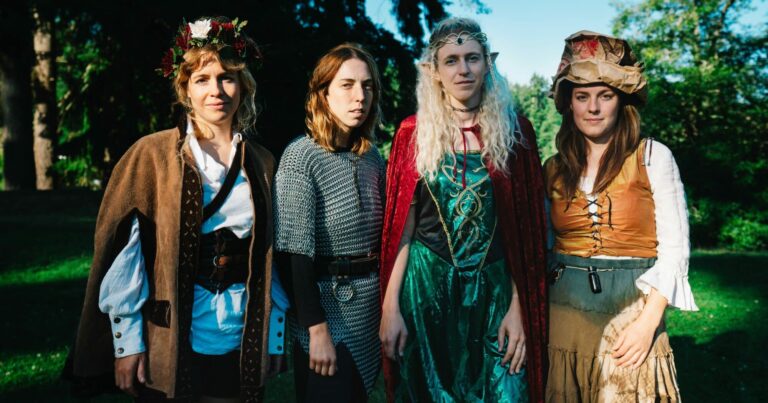
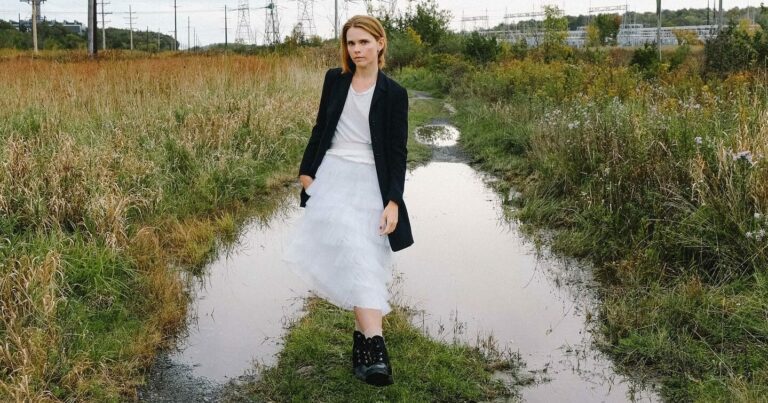
Chastity Belt have announced a limited 7″, ‘Fake / Fear’, which is out on December 3. Along with the news, they’ve shared a video for the new track ‘Fear’. Check out the Eleanor Petry-directed visual below.
Chastity Belt’s Lydia Lund said of the new song in a statement:
I wrote the song a few summers ago based around a dream I had. At one point in the dream, I was opening door after door, noticing the fear build, then dissipate upon opening, then build again when I realized there was yet another door. It felt like my dream was giving me practice in noticing my fear as something separate from the thing causing the fear, as something potentially more harmful and unbearable.
About a year later I was recording vocals out at my parents’ place. My mom knocked on the door – ‘is there anything you want to talk to me about? Is there something you’re afraid of?’ At that point I’d become so detached from the lyrics of the song it took me a minute to realize she thought I was doing some kind of primal scream therapy. And I guess in a way I am.
Eleanor Petry commented on the video: “The Chastity Belt girls are some of my dearest friends, and working on these videos with them felt like the culmination of so many years of growing together. Cheryl Waters (of KEXP) connected us with her friend Holly Taylor, who has a film background and does Equestrian Therapy. Through her we were able to shoot with a whole herd of horses on this amazing property on Vashon Island.”
The upcoming collection features outtakes and alternate tracks from Jenkins’ latest LP An Overview on Phenomenal Nature, which she recorded with Josh Kaufman. Talking about the story behind the new track, Jenkins said in a statement:
I woke up one morning with a voicemail from an unknown number while I was on tour in 2018. The area code was from the Texas border, and I had a sinking feeling my friend had gotten arrested on his way to come see us play in Joshua Tree. I’m fortunate to be close to someone who can speak so candidly about their incarceration and how the prison system has continuously affected their life. When we spoke recently about the voicemail in this recording, I asked him what he was feeling in that moment. He said, “I was really scared. So I called you, and I called a lawyer.”
I cherished this voicemail for years because, even in that difficult moment, I could hear a tenderness in his voice as he confessed, as well as avoided, reporting that he had spent the night in jail. What resulted is the poetic ambiguity that can arise from the struggle of searching for the words to tell someone we love exactly what has happened.
(An Overview On) An Overview On Phenomenal Nature arrives November 19 via Ba Da Bing Records. Check out our Artist Spotlight interview with Cassandra Jenkins here.
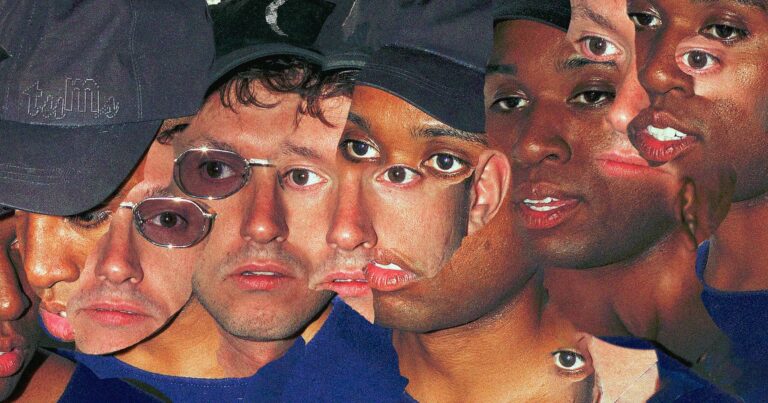
TNGHT, the collaborative project of Hudson Mohawke and Lunice, have returned with a new single called ‘Tums’. Dan Streit directed the video for the track, which arrives ahead of the duo’s show this Saturday (November 6) at the Catwalk in Los Angeles. Check it out below.
“‘TUMS’ was made from that collective feeling of, ‘OMG maybe there actually ARE going to be parties again,’” Lunice said of the new song in a press release. “That feeling seemed to inspire the first principles of the TNGHT project: Keep it really fun. Dumb. Hard-hitting. Don’t overwork it.”
Hudson Mohawke added: “This one really showcases our two distinct styles and how well they still work together despite their sonic differences.”
alt-J have unveiled a new song, ‘Get Better’, taken from their upcoming album The Dream. The track follows the previously released single ‘U&ME’. Listen to it below.
In a statement, singer Joe Newman explained that “‘Get Better’ is the union of two songs. The first was an improvised song I sang in 2018 to my partner. To her I sang, ‘Get better my Darcy, I know you can’ She filmed it and I kept revisiting the fragment with a plan to write more. The second was a chord structure I worked on in lockdown that focused on someone living through a bereavement. I felt a nervous heat when writing ‘Get Better’. The context of the Coronavirus pandemic lent my words a chilling weight and gave me a new sense of responsibility as a lyricist. Whilst the direct events described are fictional, I believe — or I hope — that it’s emotionally the most honest song I’ve written.”
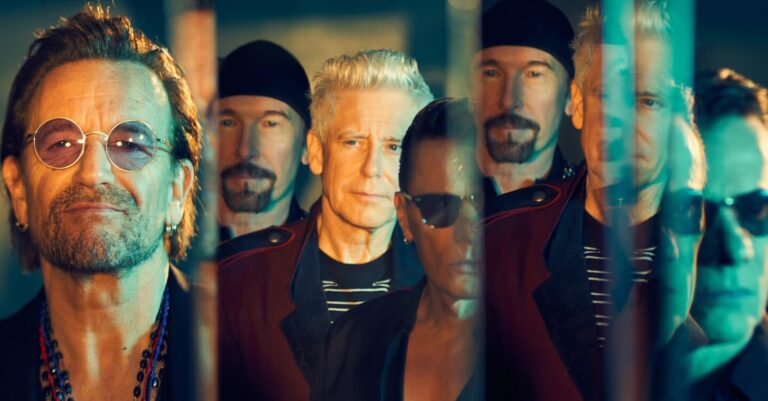
U2 are back with a new song called ‘Your Song Saved My Life’, which appears on the soundtrack to the upcoming animated film Sing 2. The movie stars Bono as a reclusive rock star/lion named Clay Calloway. Listen to U2’s new song below.
‘Your Song Saved My Life’ plays during the end credits of Sing 2, director Garth Jennings told Entertainment Weekly. “It’s just full of so much emotion and heart… It just says, ‘OK, here’s how we want your audience to feel as they leave the cinema,” he added.
‘Your Song Saved My Life’ marks the band’s first new music since releasing the A. R. Rahman collaboration ‘Ahimsa’ in 2019. Their last album was 2018’s Songs of Experience. Sing 2 is out in theaters on December 22.
Your college years can be the best time of your life, but also the toughest. The modern-day college student often has to juggle between classes, projects/ assignments, part-time work, and social life. On top of this, there’s an unspoken expectation for you to succeed. The demanding nature of this kind of life can lead to your mental health taking a nose-dive.
So, as you try to keep up with everything, it’s also vital that you take a step back and actually take care of the most important person in your life- you. To get you started, you can try a free therapy hotline, and these eight practical lifestyle changes you can make as a student that will boost your mental wellness:
Start Living an Active Life
An active lifestyle comes with tons of benefits to your brain health. Simple exercise like jogging or a brisk walk increases your heart rate, which gets more oxygen going to the brain. It also promotes the growth factors in your brain, leading to the creation of new neuro-connections.
But perhaps the best thing about including exercise in your daily life is the feel-good emotions you get from it. This rush of positive feelings has been associated with reducing stress hormones, and consequently, improved mental health.
Reduce Alcohol Consumption and Avoid Drugs
College is most often associated with an active party life. While it’s okay to experience this part of college, overindulging comes with a host of problems. Drugs and excess alcohol use can actually weigh you down, physically and mentally, making you less energetic and more irritable. Not to mention, using either to cope with stress or problems will actually make things worse. So, keep alcohol to a minimum and keep off drugs altogether.
Sleep Enough on Most Nights
It’s common for college students to burn the midnight oil studying for an upcoming test or completing an urgent assignment. However, doing so regularly is sure to take a toll on your mental health. Studies have shown that sleep and mental health are actually closely connected. The effects of sleep deprivation on the brain can range from mild to severe and include irritability/ moodiness, lowered concentration, mental exhaustion, memory issues, anxiety, depression, and so on. So, try to get 7-9 hours of sleep on most days.
Feed Your Body Adequate, Healthy Foods and Drinks
That’s right; what you eat also affects your mental wellness. Once your body digests the food you feed it, it distributes the nutrients to various organs in your body, including your brain. Apart from keeping your brain healthy and sharp, a good diet also affects the chemical processes in your brain that regulate your mood. That’s why eating a bowl of fresh salad gives you positive feelings while downing a large pizza and soda leaves you feeling bad. To maintain a healthy diet, you can find macro friendly recipes that support both physical and mental well-being.
Reward Your Accomplishments
One of the best ways to give your mental health a kick is to recognize your worth, strength, and resilience. Give yourself a tap on the back when you accomplish milestones you’ve set for yourself. It could be rewarding yourself with a new clothing item, eating out somewhere fancy, traveling, or any other thing you enjoy.
Set Realistic Goals for Yourself
It’s great to be ambitious but don’t mistake ambition with unrealistic expectations. If you pursue something that’s impossible for a given time frame, the odds are against you right from the get-go. Avoid the disappointment and mental torture of feeling like a failure by setting realistic and practical goals. Beware of signs that you’re overexerting yourself, and seek help like hiring an essay writer when you’re overwhelmed.
Keep Genuine and Positive People Around You
Many times, the energy you put out is not enough to ensure you live a fulfilled life. As humans, we depend on each other a lot of times. So, you likely have people you keep around you, and the energy they put out affects you too. So, audit your inner circle and keep just those friends that are actually good and genuine.
Adopt Good Stress Management Strategies
Stress is a part of life, especially when you’re in college. So, it is more realistic to look for ways to cope with it rather than avoid it altogether. The key is to recognize when stress hits you and get into stress management practices immediately. Some good stress management strategies include:
Deep breathing exercises
Meditation
Yoga
Guided imagery
Relaxing walks
Art or any other hobby
Quality time with loved ones
People can deal with stress in different ways, and it can manifest itself in a variety of manners. For some students, excess stress can often lead to poor drinking and eating habits, but for others it can also mean isolating themselves when they should be socializing. Finding a happy balance between being with your friends and finding time for yourself is the ideal way to deal with stress. You may find that going for a walk, doing a simple online crossword or cooking a healthy meal helps you to deal with your stress in an effective way for the long term.
Good Mental Health Can Help You Live a Happier and Longer Life
People are starting to recognize just how critical taking care of one’s mental health is from a young age. Adopting healthy lifestyle habits and understanding your own strength is one of the best ways to keep your mind healthy and happy. So, start the change today.
YouTube isn’t just a video-sharing platform anymore. From humble beginnings, YouTube has skyrocketed to the 2nd most visited site on the internet after Google.com (same thing basically). Along the way, it has created some pretty big stars, big names raking in millions of dollars in advertising, product creation, and product endorsement. Names everybody knows, or at least have heard of.
Google merging its powerful algorithms with the creativity and efficiency of the original Youtube gave a chance for content creators such as PewDiePie and the Paul brothers to take content creation to the next level, garnering them mass followers, and the power of advertisement. Creative niches have also been spurned courtesy of YouTube, with channels such as mega-girl – SuperCar Blondie-finding the world’s rarest cars, with 6.5 million followers to boot.
There are some lesser-known YouTubers, females particularly (guys, forgive the bias) who produce just as informative, fun content. Unfortunately, apart from entirely niche brands, the 7 female YouTubers produce lifestyle content that is always worth the data time. They might not be as famous as the biggest YouTubers, but they’ll soon become a part of your lifestyle if you give them a chance.
But you probably won’t be able to make time to go to their blogs if you don’t get an expert paper writer to work on your assignment. Getting free time is tough and this might be your one opportunity. Anyway, if you do get the time and chance, subscribe to these 9 female YouTubers asap!
Elena Taber
She markets herself as a content creator based in New York and describes herself as “a Californian at heart”. Her’s is a productive blog that teaches and explores financial literacy, backpacking, thrifting, and health through food recipes. She also teaches you how to save money, especially as a college student. Journey with Elena through her many travels around the world as she teaches you how to live your best and most productive life with a smile.
xoReni
XoReni might not have a million subs, but the advice she gives from her life experience at a fairly tender age sure feels like a million bucks. Here you’ll find great advice on financial literacy (including how she bought her first house at age 23), fashion and skincare on the cheap, and career-oriented videos.
Hitomi Mochizuki
If you’re more into positivity videos that give your day and life meaning and give you those feel-good vibes, Hitomi Mochizuki is the vlogger you’ve been looking for. Originally based in New York and later moved to Hawaii, the stunning Mochizuki isn’t afraid to be different, delving into deeper topics such as spirituality, yoga, consciousness, sex, love, and mental health. Her perspective isn’t abstract, and you’ll immediately feel connected to her.
Gabby Whiten
if you are a grad student in a tough STEM course looking for some YouTube motivation and how to get the best study-life balance that is also fun and exploratory, Gabby is the girl for you. Though currently having less than 9K subs, this NYC-based Ph.D. student produces Vlog-style videos that cover mostly a typical day in her life and her travel logs around NYC. She also has an amiable personality that will keep you locked on her channel.
Tanicha Rose
Tanicha markets herself as a beauty, travel, fashion, and career vlogger, and product reviewer. She’ll teach you how to budget, move apartments the right (and cheap way), how to do décor on your small apartment or hostel, what beauty products you should or shouldn’t use, and how to build an effective skincare routine, etc. The best thing about her You/tube page is that you can sort through different video categories and instantly find what matches your immediate needs.
Amy Lee
Amy Lee has reinvented herself into “Amy Lee Life Coaching, and with upwards of 500K subscribers, she’s no small matter. That hasn’t stopped her from opening up and being personal with everyone she comes across on her vlog. Amy does sensitive topics that get deep and personal, and insightful topics that cover trauma, mental health, and body positivity. Amy also gives great recommendations on podcasts, books, recipes, etc. She engages with her subscribers in an open and welcoming fashion.
Lisa Onuoha
If you’re looking for a chill vibe then Lisa Onuoha is the way to go. She glows with her great fashion sense and provides free advice on how to do it yourself. You’ll instantly notice how great her videos are and how much work she puts into them. You’ll also learn how she makes income on her various social channels, her morning routine, how to edit Instagram photos, and how to give your room a glam makeover.
Anything You Need You Can Get
Finding the right lifestyle vlog to subscribe to with less than one million followers isn’t the easiest thing. While not limited to this selection, anyone under the age of 25 will be able to find what they need for themselves and their preferences.
Sam Evian is the moniker of singer-songwriter and producer Sam Owens, who grew up in the woods of upstate New York before his family moved to a small town in North Carolina. After moving to New York City in the early 2010s, he worked as house engineer at Brooklyn’s Figure 8 Recording Studios and formed the indie rock band Celestial Shore. Under his real name, he’s spent the past decade producing and engineering records for the likes of Big Thief, Cass McCombs, and Cassandra Jenkins, as well as Liam Kazar’s recently released debut LP. His own music as Sam Evian has been earnest and introspective and often playful, and after signing with Fat Possum earlier this year, he released his third full-length, Time to Melt, last Friday.
The album follows 2017’s You, Forever, which Owens recorded with his band after decamping to a rented house upstate. A couple of years later, he and his partner, Hannah Cohen, decided to leave the city and build a quieter life in the Catskills, a transition that has left its mark on Time to Melt. Combing through more than 60 instrumental recordings, Owens shaped the album with a focus on creating a seamless, cohesive listening experience, curating it more like a DJ set where, in his words, “maybe someone wouldn’t even notice that the first half had already passed them by because they were just hanging out their friends.” This approach makes for a uniquely joyful and breezy listen that nimbly brings together the musician’s various ’70s influences, while also leaving enough room for him to experiment and showcase his skills as a songwriter and producer. However you decide to spend the album’s 40 minutes, it’s guaranteed to make that time feel a little bit brighter, and maybe even just a little bit more precious.
We caught up with Sam Evian for this edition of our Artist Spotlight interview series to talk about his upbringing, the making of his new album Time to Melt, and more.
You grew up in upstate New York, and then along the coast on the eastern side of North Carolina. What kind of memories do you associate with those place? Was there anything that, upon moving to the city, you reliazed about your upbringing there and how it has shaped you?
I was born in the woods upstate, and my parents moved down to North Carolina when I was nine. That’s when we settled down to the South. So my relationship with the South started off already a bit contentious, because I had been in this lush, green, woodsy area. We went to the eastern part of the state of North Carolina, and it’s a beautiful state, but there was a lot of culture shock for me, just the way – I mean, everybody has that sweet southern hospitality on the front end of everything, every conversation is “How you doing sweetie?” and all that. And it is sweet, but then you come to learn that underneath that, there’s a darkness to it all. And there’s a church on every block. I think I saw that as a kid because I approached living there with contention already. I basically couldn’t wait to leave North Carolina, and I moved to Brooklyn, and that was mecca for art and music and it was a beautiful experience. But then coming back up here to the Catskills just feels like it’s in my DNA, the style of living that I envisioned for myself.
It’s interesting that you say it already felt contentious, because it reminds me of the first thing that’s mentioned in your bio, which is that you knew as soon as you moved to Brooklyn a decade ago that you wanted to leave. How did you know?
I mean, living in most big cities is fairly absurd. There’s some that are a lot nicer than others, but Brooklyn is just an absurd place to live. There’s garbage piles everywhere, there’s hundreds of people, there’s calamity, there’s violence. It’s absolute chaos. And it’s really hard as some as a young artist to go there. I moved to New York with, I’d saved up like $1,000, and I was like, “That’s gonna be enough for a little while.” [laughs] I was so naive. And you know, I slept on floors, I just was trying to get by and hustle and it was so much anxiety. But I knew that I had to be there for like 10 years. I knew that that was where I was going to make a career and make a network of a tiny community of artists that I felt comfortable with and inspired by. But from the beginning, it always felt like, This is gonna be crazy for a while. But I knew I had to hold out there because it is a special place, despite the insanity of it.
So you were drawn to it mainly for its artistic energy?
Yeah. I mean, I grew up studying jazz and the narrative for jazz musicians is like, “Well, move to New York.” That’s what every jazz musician ever did. It was already kind of burned in my brain that I had to go there and make my way. Of course, when I was in New York, I wasn’t studying jazz, but I still grew up thinking that New York was mecca and New York is where it all happens and that’s how I approached it.
Both of your parents are also musicians. Do you mind sharing what you learned from them about music and living as a musician at early age, or even later on?
It wasn’t so easy in my early childhood, because they were trying to get by just by gigging. They were in this kind of class of musician that doesn’t really exist anymore. It was this concept of just being a gigging musician and playing every weekend and throughout the week, just at bars and restaurants and clubs, you know, wherever live music was. My parents were playing jazz, so that was more oriented towards that scene, but restaurant owners would just hire musicians to come in and play. I never see that anymore. I haven’t seen just a normal, background music live jazz trio playing in a restaurant in like 15 years or something. But that’s what they used to do, and they loved music, loved their community, and that’s how they made their living when I was really young. But it was hard, you know, because they were totally broke. They were trying to renovate this old farmhouse that they bought, but they were doing it really slowly because, obviously, they were broke.
And it was a tough life for them to try to make it work, but it was beautiful, too. A lot of my music appreciation comes from that, my sensibility and my ear, the way I write melodies, it all comes from playing with them. As soon as I was old enough, I started gigging with them. That was my summer job, playing at whatever gigs they were playing, and I would put out a tip jar and that’s how I made my pocket change when I was in high school. But also, my dad was 19 in 1969 and he went to Woodstock, and he has this great appreciation for music from that era, too, because he grew up playing guitar. There were always Beatles records kicking around, Jimi Hendrix, all that stuff. So I got a lot of that from him as well. And my mom, she was a little later but she was a big Beatles nut too.
Are there any memories that you could share of you playing together?
They had a weekly gig at this restaurant in town and they developed a little following, and it was just where I was learning how to improvise and learning how to perform. There were moments when you’re really connecting musically, and doing that with your parents is really special. That was something wonderful that we could share. I just have a lot of memories like that, when you’re just learning how to improvise and finally making those connections and feeling comfortable in a certain set of chord changes – it really feels magical. It feels like you’re doing magic, because you’re coming up with melodies over these chord changes and you know what’s coming and it just feels like your superpower. Doing that as like a 13-year-old kid with my dad was really, really special.
And doing that, improvising with other people, is something that you’ve carried onto the rest of your life.
Yeah. It’s like a language, and it’s just so useful to be able to speak that way sometimes instead of having conversations. [laughs] Sometimes you just need to play music.
Before the pandemic, you and your partner, Hannah Cohen, used to have guests over and play music in your new home. Do you see playing music as more of a social activity or kind of an introspective one? In your experience, is there a point where the two meet?
Yeah, it is both. I love my alone time and I love spending time in my studio by myself, which is how I made my record. But using that as a landscape to then go out and experience the social side of music, like having the band come and learn these songs that I’ve never played live before, it has been so wonderful and powerful because I didn’t get to do it through all of COVID. But speaking that language is so important to me and it’s in my DNA and it’s how I express myself. And it’s also how I socialise with people. I’m kind of awkward and quiet, or I used to be very, very awkward and quiet when I was younger. And that’s how I made friends and socialised and developed a community, was through playing music with people. Up at the house, it’s been really special because I run a studio here and we have artists come through and I get to sync myself into their world and speak their language. And my creative toolbox gets deeper every time I work with a new person or have someone here, because I’ve learned so much from everyone.
Working with people like Spencer Tweedy, Chris Bear, and Jon Natchez remotely for this album, did you find that you heard their parts differently when they sent them in? Did you get to experience that musical language in a different way?
It’s always a surprise to see how someone’s going to hear something and respond to it. You can never anticipate it, really, and that’s the beauty of creating with people. I’ve said this before, but like, we all see the colour blue, but you take for granted what your blue is and what someone else’s blue is. Everyone’s blue is just a little bit different, and often we might collectively assign that colour and say, “Yes, this is blue, we all agree on this,” but individually, it’s really impossible to know if we’re all seeing the same thing. I feel that way when I’m exchanging parts with someone or talking about a part or listening to the way they’re going to perform something, so it’s always a surprise. Like, “Oh, that’s where you hear beat one? That’s insane, I could have never heard it that way.” So it was thrilling to – it was COVID, so I just sent them the tracks online and they recorded at home and sent them back. And I felt like a kid again, just hearing a fresh take on what I’d been working on alone.
Does that also happen when you’re just working by yourself, in a way, where you’re seeing or hearing parts differently at different points in time or in different places?
Well, that’s what I call the rabbit hole of self-discovery through music. I spent a lot of time kind of obsessing over certain arrangements and sounds and parts. At the same time, I’m not too precious. I just try to have fun by myself and crack myself up. If it sounds interesting to me, then it’s probably gonna sound really insane, but it keeps it fun. That was my goal, to just tap into the feeling I was having when I was like 13 or 12 and finally having a language and being able to speak it. That’s kind of what I was trying to hold on to when I was working on this record.
How did you go about collecting and using the voice memos for the final song, ‘Around It Goes’?
I really did not anticipate that people would be so responsive to that request. But I just put out this thing, like, “Hey, send me a voice memo, I might use it on my record.” It was kind of random and I didn’t think people would respond, but I received like over 100. And obviously, I couldn’t use all of those, so I did pick and choose at random, I was just pulling them in and kind of tossing them into this song. If it worked, I kept it, and if it was too mumbly or something, I would remove it. But yeah, that was a really fun process. That all started actually because I got a random voicemail from a number I didn’t know, and it was a mistake. But it was this older lady, and she was calling someone to thank them for making them this delicious pasta the other night. But she went on and on about this pasta, it was like a two-minute thing. Like, “I just want to thank you so much for this delicious spaghetti and meatballs that you made us the other night. It was just so scrumptious and we loved every bit of it.” And she just went on and on. I was so amazed, and like, “I need to use this somehow.” So, hers is in there.
How early on was that? Because I feel like it kind of defines the vibe of the whole album.
I know, it really does. It was like in the middle, towards the end, because that song came towards the end. It just worked. The whole cooking theme is honest, you know, I was just cooking a lot when I was making this record, just like all of us. But I was really getting into honing my skills and trying to connect all these parallels I see in between working in the studio and working in the kitchen and adding spice and flavour where you see fit.
How much do you think the record was ultimately inspired by your move to the Catskills and the specific circumstances in which it was made?
I think my workflow has changed because of where we’ve moved. I have time and space to really pursue ideas at any given moment, and that’s a complete luxury that I didn’t have in in the city. But the record itself, the material – I mean, I’m always changing and I’m always shifting, and my goal is to just explore and find sounds that I love. I use my records as a place to explore new ideas that I might then use to work in context with other artists when I’m producing them. It’s a proving ground, and it’s a nice place to see if things work because I’m willing to try stuff out. It’s my record, you know, and I’m willing to take risks that I wouldn’t otherwise take with other artists, maybe. It’s exploratory – that’s kind of where this record is coming from. One of my goals was just to see how far I could take it by myself and, like, see if I could get away with playing drums on a couple of songs, which I did, or see if I could play bass on the whole record, which I did for the most part. It was just an excuse to get better at all these other instruments and also try to address what I was feeling and use that as my own kind of therapy.
One of the songs where you play all the instruments yourself is ‘Lonely Days’, and I wanted to ask you about that song in the context of the album. I hope it’s okay to call this a quarantine record, because I feel like it’s different from others of its kind in that it’s exploratory, like you said, and it explores aloneness in a way that many don’t – I think the phrase a press release uses in relation to ‘Lonely Days’ is “shared solitude.” What does mean to you, to share a solitude with someone?
I’m still figuring it out. I think a lot of partners or roommates or couples have had this pretty unique experience over the last two years, which was the feeling of loneliness that quarantine imposed on everyone; this vacuum that we’re all kind of sent into. But that song, you know, I was writing it with Hannah, my partner, in mind, and it’s just this acknowledgment that we’re going through this crazy thing together and we’re carrying each other through it. I feel lucky that my life has turned out that way. Yeah, it was a crazy couple years. [laughs] I feel like I have a lot of unpacking to do, still.
Hannah also helped you make and sang vocals on many of the songs on the album. If you’re comfortable sharing, can you tell me one thing that inspires you about her, whether that’s related to music or your day-to-day life?
Day to day, Hannah is just super caring. She’s like a golden retriever of a person, she’s just super loving and really open. Just really a funny person, also, she has all these hilarious voices that she does. And that’s kind of the opposite of me, I’m the other side of the spectrum, so she really pulls me out of the darkness in a lot of ways.
Musically, we have a really great flow together. I love her voice and I love working with her, and we’re actually working on a new record for her right now. We listen to the same music, we have a lot of the same sensibilities, so it just feels really good to be able to share that with her.
You’ve talked about wanting to make an album that will sound good while cooking, so I have to ask: What are you cooking tonight, and what are you listening to?
Well, Liam [Kazar] is here, so we’re gonna cook something delicious, I know that. Last night we made Bolognese. The night before Liam made this amazing eggplant with onions and rice. Tonight – I’ll see what’s in the fridge, I haven’t decided yet.
What about the record you’re putting on?
Honestly, the odds of you walking into our kitchen and hearing Brazilian music are incredibly high. There’s usually like Lô Borges or Caetano Veloso or Tom Zé. We just discovered the Lô Borges record that I think is self-titled, and we’re just obsessed with it. It’s very experimental and wild.
This interview has been edited and condensed for clarity and length.