Nordic noir thrillers rarely disappoint. That also seems to be the case for Blood Sacrifice, a Swedish crime drama currently generating buzz online. Besides having the kind of premise sure to draw in viewers, it tackles a messy father-son dynamic.
With 7 million views this week, Blood Sacrifice is the most-watched non-English show on Netflix. It’s also the #1 show in 16 countries. Does this mean a follow-up might be on the way? Here’s what we know so far.
Blood Sacrifice Season 2 Release Date
At the time of writing, there is no official news about a potential Blood Sacrifice season 2.
The Swedish title isn’t listed as a limited series, so it might come back for more. While the case at the heart of the series is solved by the time the end credits roll, future seasons could tackle fresh investigations.
“The series is designed as a love story [between father and son] that continues to develop and is constantly tested by the cases they find themselves facing. And if other people would also like to see more, then I’m absolutely up for it,” creator George Kay said in an interview.
In other words, it might all come down to how many people tune in. If all goes well, new episodes could arrive in 2027 or 2028.
Blood Sacrifice Cast
Jakob Oftebro as Thomas Berg
Peter Andersson as Alfred Berg
Electra Hallman as Natalie Eklund
Alexander Abdallah as John-Jo Persson
Henrik Norlén as Max Abrahamsson
Lisette T. Pagler as Charlotte Berg
Irina Björklund as Rebecca Björklund
Anders Mossling as Lucas Lind
What Is Blood Sacrifice About?
Blood Sacrifice follows detective Thomas Berg as he investigates a string of murders targeting police officers.
Two officers respond to an emergency call at an apparently empty vacation home, only to be later found dead. Thomas discovers that these new killings may be connected to an earlier one. The problem is that the person arrested for that crime is behind bars, suggesting that someone else is responsible.
As Thomas digs deeper, he reluctantly turns to his estranged father, Alfred, a former detective. The relationship between the two isn’t close, but Alfred’s unconventional investigative instincts prove valuable. Soon, the investigation reveals a disturbing pattern and a motive that points to larger systemic issues.
Without giving away spoilers, viewers find out who is responsible for the murders by the time the first season wraps up. Blood Sacrifice season 2, if it happens, will probably tackle a new case. The father-son duo, however, won’t be going anywhere.
Designer Dong Hyun Kim joined luxury fragrance brand ELOREA after graduating from the School of Visual Arts (SVA), where he received the Rhodes Family Award, one of the institution’s highest graduation honors. Rooted in Korea and shaped by his life and practice in New York, Kim hopes to develop a design practice that creates meaningful connections between the cultures that have shaped him. His work has earned more than 20 design awards and honors, including recognition from leading international design competitions across typography, branding, motion, and UI/UX.
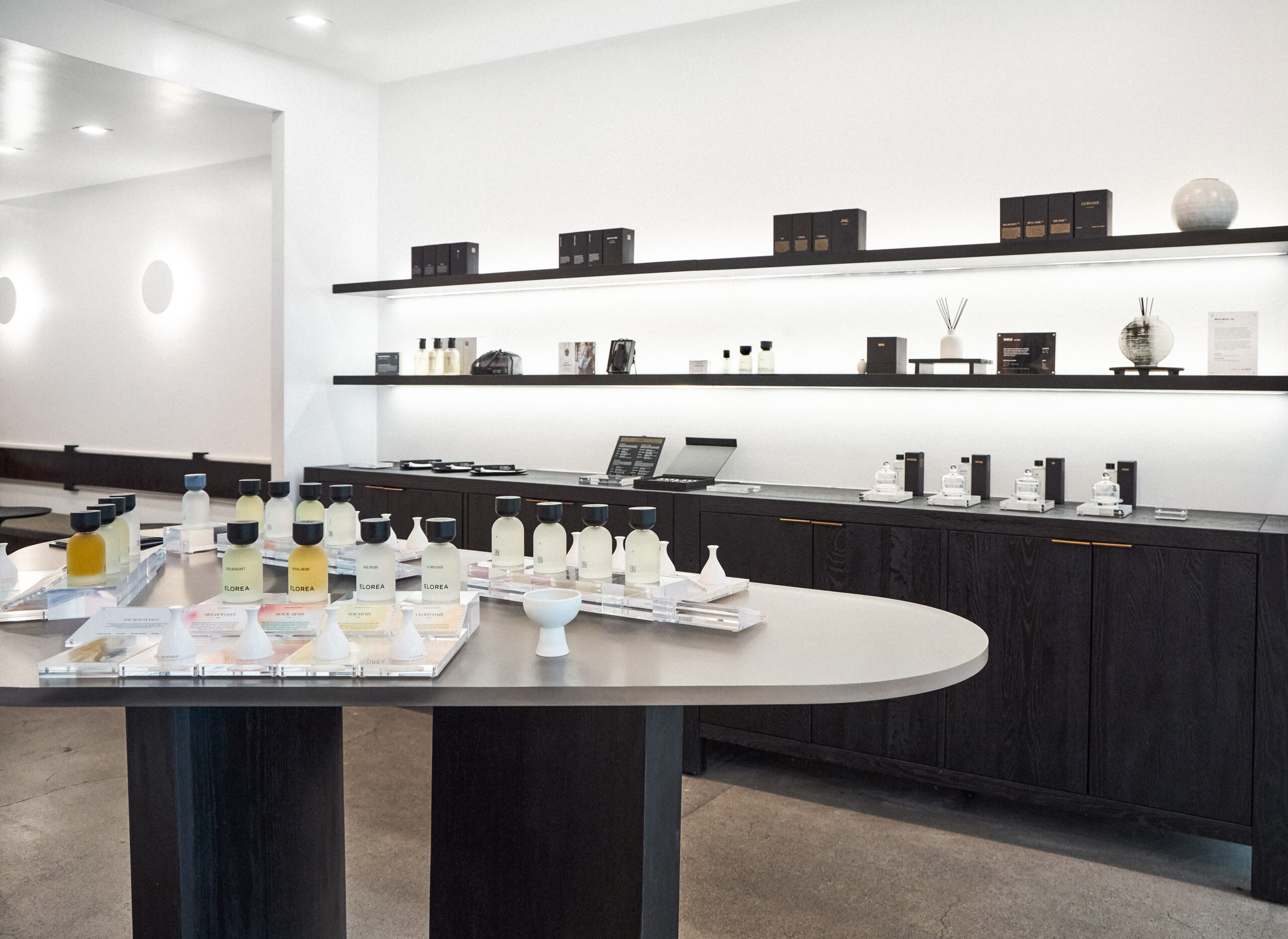
At ELOREA, Kim contributes across branding, digital products, and retail design, working on systems that shape how customers discover and experience the brand. His work extends into ELOREA’s New York and Los Angeles flagship stores, where he has contributed to fragrance display design and developed graphics that translate the character of scent into a visual and physical presence.
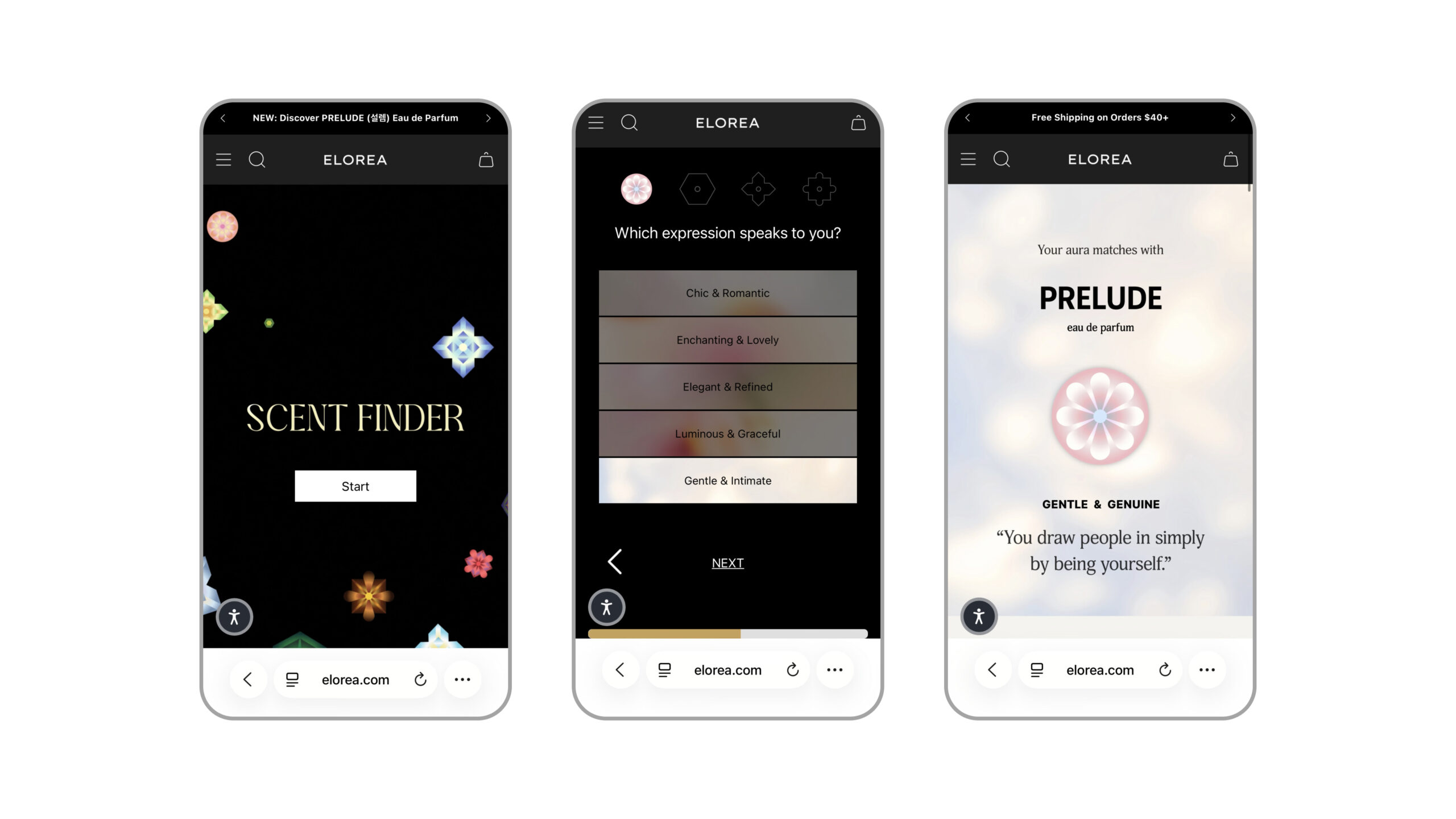
Kim contributed to the UX/UI design of ELOREA’s Scent Finder, an interactive fragrance discovery experience designed around users’ responses and personal preferences. The experience encourages customers to discover fragrances that reflect their individual tastes and moods, and build a more personal connection with the brand. It is available through in-store tablets as well as customers’ mobile and desktop devices, allowing the experience to continue across both digital and retail environments.
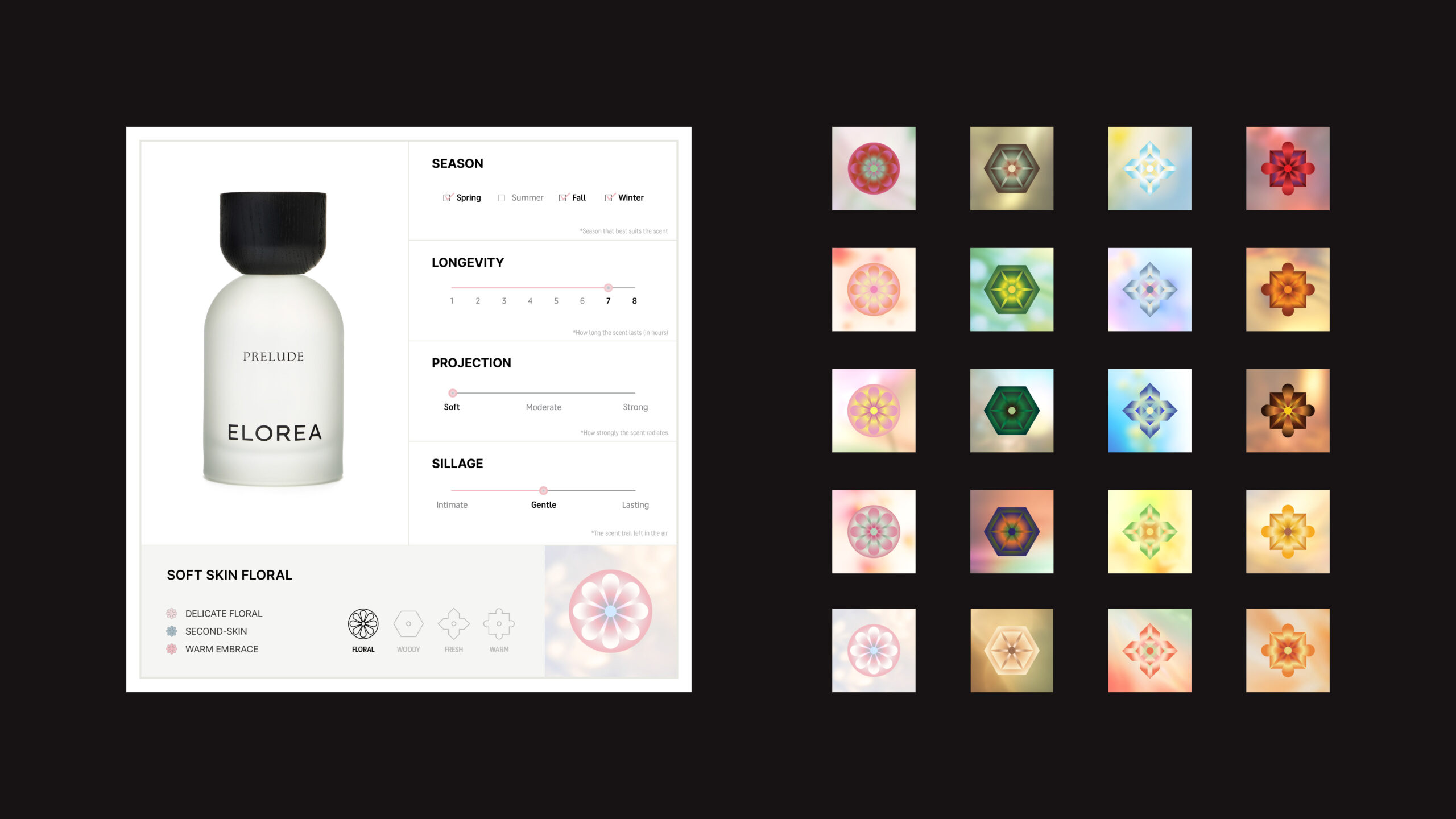
Kim developed an infographic system spanning ELOREA’s five fragrance collections and 22 fragrances. Inspired by traditional Korean Dancheong motifs, each infographic translates scent profile information into a visual format that helps customers understand fragrance characteristics when scent cannot be experienced directly online. As part of the system, Kim also created individual background graphics for each fragrance, visually interpreting the character of each scent. These fragrance-specific graphics extend across product pages, scent blotters, Scent & Sip experience cards, and retail displays, creating a consistent visual language across multiple brand touchpoints.
Through his work at ELOREA, Kim continues to explore how visual design can move across physical and digital environments, creating connections between a brand’s identity and the people who experience it.
Margaret Qualley may be only 31 years old, but her career already spans over a decade. She started working as a model when she was a teen and eventually transitioned to acting, with roles in both TV shows and movies.
Fast-forward to now, and Qualley is one of Hollywood’s busiest actresses. Her net worth is probably growing alongside her reputation, right? Here’s what we know about her earnings.
Most of it is thanks to her acting career, though her modelling stint was also lucrative. Qualley is the daughter of actress Andie MacDowell, so there’s no wonder she has talent to spare. She initially trained as a ballet dancer and made her runway debut at 16, walking for Chanel, Valentino, and Alberta Ferretti. Additionally, she appeared in many magazine editorials and ad campaigns, most notably for Chanel, for which she is a brand ambassador.
As far as acting is concerned, Qualley made her screen debut with a small role in Palo Alto in 2013. Her first major role came in HBO TV series The Leftovers, where she played the teenage daughter of Justin Theroux’s character. She also booked supporting roles in movies including The Nice Guys, The Vanishing of Sidney Hall, Novitiate, andDeath Note.
Qualley’s profile grew in 2019 when she played Ann Reinking in the FX miniseries Fosse/Verdon. However, her most acclaimed TV performance was in Netflix’s Maid. Qualley played a young single mother who leaves an abusive relationship and works as a cleaner. The performance established her as a compelling dramatic lead.
After a series of roles in movies including Io, Native Son, Seberg, and Once Upon a Time in Hollywood…, Qualley played the lead in My Salinger Year in 2020. After that, she began to take on increasingly unconventional material. The list includes romantic thriller Stars at Noon, dark comedy thriller Sanctuary, and crime comedyDrive-Away Dolls. She also appeared in Poor Things and Kinds of Kindness, both directed by Yorgos Lanthimos.
In 2024, Qualley delivered one of her most physically demanding performances in body-horror film The Substance. The movie was a success, both critically and commercially. Her more recent work mixes mainstream projects with auteur films. Last year, she starred in Richard Linklater’s Blue Moon, played the title character in Ethan Coen’s dark comedy Honey Don’t!, and had a supporting role in Happy Gilmore 2.
This year, she appeared alongside Glen Powell in How to Make a Killing and opposite Jacob Elordi and Josh Brolin in post-apocalyptic drama The Dog Stars, which is currently in cinemas.
Margaret Qualley Salary
Actor salaries are often private, so we don’t know for sure how much Margaret Qualley makes per film. However, reports suggest she was paid $400,000 for The Substance.
While that is less than the $5 million Demi Moore made, Qualley’s star is on the rise. Her paychecks will likely become heftier moving forward.
LéAna Clifton (b. 1971, Pretoria, South Africa) is a multimedia artist whose work distills the elemental forces of light, form, color, movement and time.
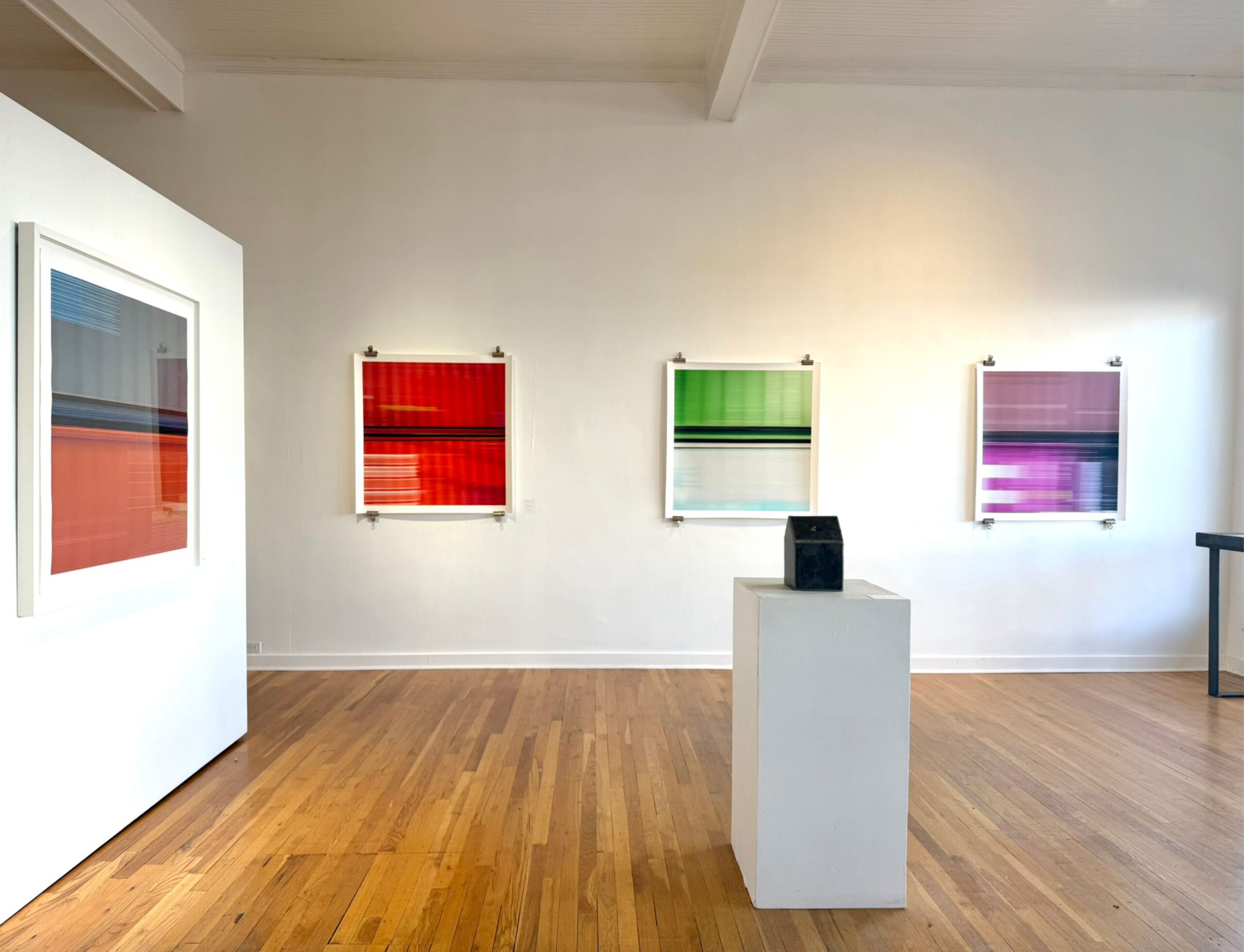
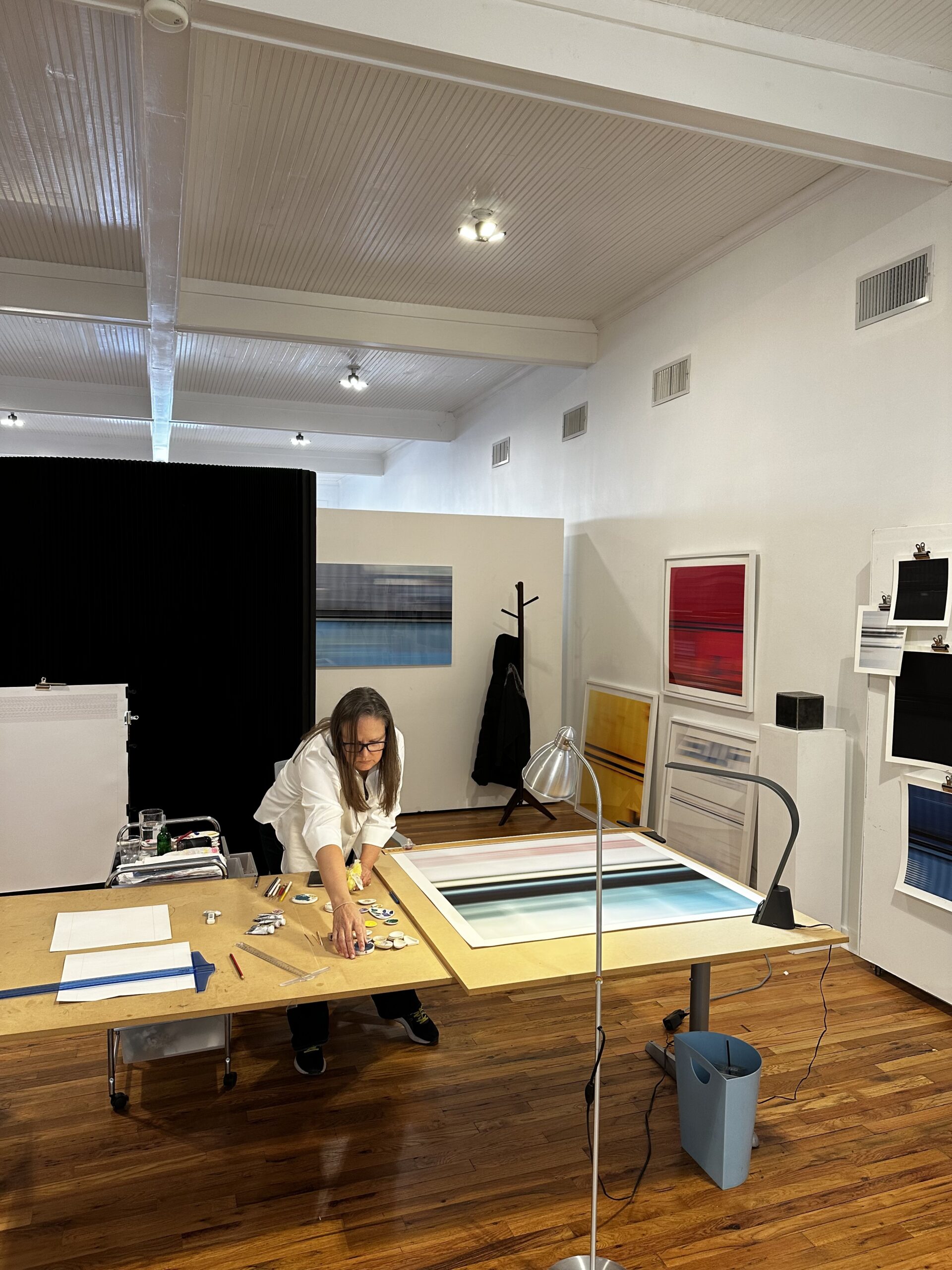
Her recent work focuses almost exclusively on creating abstract images of freight trains running through the far west Texas desert in Marfa, capturing their visceral drama. Drawn to movement—trains, shifting light, passing forms—she rejects the tradition of photography as a fixed instant, instead using long exposures and in-camera techniques to “paint” with light and motion. The ethereal quality of these works results from experimental processes that push the medium toward abstraction, creating images that reverberate with physicality, immediacy, and a deep sense of time and place.
Throughout her practice, Clifton recontextualizes overlooked and utilitarian subjects, using what she calls “visual sampling” of industrial and commercial forms as source material for transformation. In the darkroom and studio, she has pushed her work beyond the single frame, from shredding, deconstructing, and reconstructing photographic prints in her earlier series to more recently incorporating drawing and painting directly onto large-scale photographic works. These interventions emphasize the artist’s hand and expand photography into mixed media terrain.
Clifton was born in South Africa, where she was first exposed to photography at a young age by her father, an avid photographer. She emigrated to the United States in 1994, where she honed her craft as a professional photographer in Austin, Texas. She moved to Marfa, Texas, in 2007, where she has been pushing the boundaries of the medium throughout various bodies of work over the years.
She lives and works in Marfa, Texas.
How did your journey with photography begin?
The long version of the answer probably begins when I was very young, watching my father take photographs. He was an amateur photographer, and I loved observing him as he observed the world—people, places, and small, seemingly ordinary things.
My mother was creative in a different way. I remember her sitting in front of large pieces of paper with a pencil in her hand, quietly studying whatever she was about to draw. I loved being around both of them when they were creating. There was something deeply peaceful about those moments—the concentration, the quiet, the feeling of being completely absorbed in looking and making. Those memories are still very vivid for me. They carry a deep sense of joy, peace, and safety.
Without realizing it, my parents were teaching me to quietly pay attention. I didn’t know then that I was dyslexic, or that the way my mind worked would become such an important part of my life as an artist. I simply knew that I was naturally curious. I wanted to watch everything happening around me, to study it, and to find beauty in things that might otherwise go unnoticed.
As a teenager, I struggled in school. I often found myself trying to disappear into the background, hoping no one would notice me. Ironically, that created an extraordinary position from which to observe the world. I became very aware of people, their gestures, their relationships, and all the little things happening around me. Looking back now, I recognize that this was the beginning of the photographer in me.
A few years later, I met a young man who had been fortunate enough to study art in college. He always encouraged me to push my limits. When we immigrated to the United States, he was working a great deal, and he handed me a camera and asked me to photograph our life as young immigrants so that we could share it with our family. Before long, he told me, “You have a great eye.” I remember being confused by that. I didn’t understand what he meant. He laughed and explained that I had the ability to see the world with a unique vision. That stayed with me, and he encouraged me to keep photographing.
After the immigration process was complete, I continued photographing our life for a couple of years. Somewhere along the way, I had the extraordinary good fortune to work with the wedding photographer B. R. Wayland, who became my mentor. I became her shadow, assisting her and learning by watching her work. She taught me so much simply through example.
One of the great gifts in life is discovering someone who can see your potential even when you don’t yet know how to see it yourself. Because of my dyslexia, college had never seemed like a realistic path for me, but photography gave me another way to learn. It allowed me to trust my own way of seeing.
I worked as Miss Wayland’s assistant for a couple of years, until she immigrated to Canada. At that point, I started my own photography studio. I photographed portraits and weddings, as well as architecture and products, and I loved all of it. But my favorite work was always the photographic essay, taking my camera and walking through the streets of a city, a small town in America, or a village in Africa, simply looking for beauty in unexpected places.
When my husband and I moved to Marfa, that way of working became an important part of my life. I began creating photographic essays about Marfa on a regular basis. My husband and I would cycle through town with our cameras, stopping whenever something caught our attention. We photographed seemingly random objects, details, textures, buildings, and moments. There was no particular agenda other than to look.
By then, my obsession with trains had become pretty well developed. They fly through Marfa many times throughout the day. For a couple of years, I kept pushing the limits, photographing freight trains because I was fascinated by the dramatic and visceral experience of being close to one: the sound, the smell, the movement, the overwhelming wash of color and energy. It was terrifying, loud, obnoxious, and completely hypnotic all at once. I loved it.
Then, one evening, everything came together. My exposure was exactly right. My timing was perfect. I pressed the shutter, and when I looked at the photograph, I was completely blown away. I captured all those feelings in one image. Lightening in a bottle. In that instant, I knew I had found the beginning of my next chapter.
What was it about Marfa, specifically, that made you stay and shift your practice toward it after 2007?
There is something magical about Marfa that I still can’t completely explain. The first time I drove into Marfa, I had this extraordinary feeling that I had somehow driven home. Perhaps it was because it reminded me of South Africa, the enormous skies, perfectly formed clouds, endless grasslands, dry heat with a breeze that tickles your face, and even the sounds of lazy doves sitting in the trees or dogs barking in the distance. Whatever it was, Marfa captivated my soul. It felt strangely familiar, as though some part of me had been waiting for it.
I think one of the most profound things about living in Marfa is the light. I still can’t completely explain it either. Maybe it is the lack of pollution, the elevation, the extremely low humidity, or some combination of all of those things. But the light (and color) here can make everything feel almost otherworldly. It transforms the most ordinary things.
And Marfa is full of ordinary and forgotten things.
There are faded, sun bleached painted signs, broken-down adobe structures, very little sidewalk, thorns that look like the heads of tiny goats and can bury their way into your foot through your flip flops, rattlesnakes, dust storms, and yet somehow all of these things become beautiful. Even the challenges of the landscape become part of the character. One of the remarkable things about Marfa is that you can often see things coming from miles away. The horizon is so open that storms, light, and weather and yes, the train become events in themselves.
Marfa is also far away from everything. It is difficult to get to, and there isn’t an endless list of things to rush out and do. For an artist, that can be an extraordinary gift. There is very little here to distract you, so you begin to look more closely. You find yourself seeking and digging deeper, trying to understand what drives you.
Suddenly, the smallest flower becomes an obsession. You notice the way the wind moves it, sometimes softly, sometimes whipping it with such force, and yet it stands back up and beams with joy. So small that everyone ignores it. It knows its purpose.
I get to stop and observe it. Sometimes I lie down next to the tiny flower and study it for a long time. I wonder what it sees when it looks up at the sky. It’s enormous at that point. And the sky is impossibly beautiful with perfectly formed thunderclouds changing from brilliant white to spectacular pinks and purples, and then recomposing and disappearing.
I think that is what Marfa ultimately gave me: time. Time to look. Time to be curious. Time to become obsessed with something insignificant. Time to listen to the wind and watch the sky. Time to reconnect to the source. Time to discover what matters to me without the constant noise of the outside world telling me what should matter.
If you come to Marfa expecting someone to entertain you, you are probably going to be greatly disappointed. But if you allow yourself to slow down, Marfa gives you something much more valuable. It gives you the opportunity to let go of everything you think you are supposed to be and discover who you actually are.
For me, that changed my photography. I stopped simply photographing what was in front of me and began looking for what was underneath it: the feeling, the silence, the strangeness, the beauty, and the stories hidden in seemingly insignificant things. This led me to find the essence of things, which naturally led me more and more to abstracted images using long-exposure and movement. Marfa didn’t just become a place where I made photographs. It became a place that taught me how to think and see.
Walk us through what actually happens when you’re photographing a train. How much is in-camera versus what happens afterwards in the studio?
Photographing trains is challenging, first and foremost, because of safety. Trains don’t run on a schedule that I can simply follow, so I have to rely on seeing one or hearing the whistle in the distance. When I hear that whistle, I’m ready. I grab my camera setup which is always ready, and head toward my car, and as I’m moving, I’m already assessing the light, the time of day, and the direction the train is traveling. All of those things determine my exposure, my timing, and where I need to position myself. Once I have identified a place where I can safely intercept the train, I set up my tripod, take my light readings, and wait.
The exposure depends enormously on the conditions. On a bright, sunny day in the middle of the afternoon, I may intentionally overexpose the image, and my shutter speed and timing have to be very quick. Later in the day, or on a cloudy or darker day, I can allow myself more time. The train itself also determines everything. A train slowing down to stop creates a completely different photographic situation from a freight train traveling at 75 miles an hour. The speed changes the movement, the timing, the exposure, and ultimately the character of the image.
It is difficult for me to explain exactly what happens in that moment because I have been doing it for so long. There is a certain amount of automatic finger movement, timing, judgment, and reading of the atmosphere. It becomes almost like a language or dance. I’m not consciously thinking through every step anymore. I am responding. Kind of like a musician.
The movement in the photograph is primarily created in the camera, in the relationship between the speed of the train, the shutter, and my timing. I want to capture as much of what is actually happening in front of me rather than manufacture it later.
Once I have the images, I do very minimal post-production on the computer. I might remove a spot, crop an image, or straighten it, but I prefer to do as much of the photographic capturing and manipulation as possible in the camera in a single image. I have never been particularly interested in digital editing. Even though it can mimic what I did manually in the darkroom for many years.
For me, the real transformation happens afterward, in my art studio.
I print the photograph large on beautiful paper and then hang it and live with it. I look at it and begin thinking about where I want to take it next. The layering process begins. This is what takes most of the work. Where should the eye travel? Would lines help draw the viewer into the image? Should they be bold and thick, or incredibly fine and delicate? Do I want to work with the colors already present in the photograph, or introduce and interweave something completely unexpected?
That is where the photograph becomes a painting, or perhaps something between a photograph and a painting.
You’ve described your process as “visual sampling” of industrial and commercial forms. What draws you to utilitarian subjects, rather than more conventionally “beautiful” ones?
I think part of the answer comes from knowing what it feels like to be overlooked, misjudged, or not seen as an equal. Perhaps because of that, I have always been drawn to things that other people might consider unworthy, ordinary, ugly, useless, or even annoying. I have a tendency to look closely at those things and ask myself, “What am I missing? What is here that other people aren’t seeing?”
If I can take something as large, loud, and seemingly utilitarian as a freight train and isolate one small detail—a particular color, a piece of texture, a reflection, a line—and reveal the beauty within it, that makes me incredibly happy.
I often have people tell me, “Trains aren’t blue or yellow or orange.” And I’ll ask them, “Have you ever really looked at a train?” That question usually makes people stop and think.
Most of us don’t really look. When the booms come down and the train rushes past, we look down at our phones. We answer emails. We talk to the person next to us. We might even take a momentary nap. We experience the train without actually seeing it.
Sometimes, weeks later, someone will come back to me and say, “Oh my gosh, I finally looked at a train.” And suddenly they see it, the extraordinary colors, the layers of weather and rust and paint, the graffiti, the reflections, the enormous physical presence of it. They experience the sound and movement and color washing over them in a completely different way. And they are present.
That is what I love about my work. I like to take something unusual, overlooked, or even considered ugly, and sample it visually, isolating a fragment that catches my attention and representing it in a way that asks the viewer to look again. I am not necessarily trying to convince people that a train is beautiful. I am asking them to reconsider what beauty is and where they are willing to find it.
For me, beauty is everywhere. Sometimes you simply have to slow down long enough to see it.
How do you decide when a piece is finished? Since you’re layering drawing, pastel, and burnishing onto a photographic base, is there a point where you stop treating it as a photograph at all?
It is hard to know when a piece is finished, especially when you are having a great deal of fun creating it. I love taking my photographs and hanging them in my studio, then observing them for a couple of days, watching how the light changes the colors, what parts of the image catch my eye, and where I might need to add a little more work to draw the viewer in.
The challenge comes when you are enjoying the process so much that you begin to float into the color, almost becoming one with it. You start dreaming in color and experiencing the joy of creating. It is almost like meditation, or sometimes even a love affair. At that point, it can be difficult to step back and let go. But ultimately, you have to let go so that you can begin again.
For me, there is a very specific point when I realize that the piece has become something beyond its photographic beginning. The photograph is still there, but through the drawing, pastel, burnishing, and layers of color, it becomes its own thing. I’m no longer thinking of it simply as a photograph; I’m responding to what is happening on the surface and allowing the image to evolve.
It is wonderful when you can finally let go of a piece and allow it to enter the world, knowing it will bring joy into someone else’s life. That helps me get to the finish line. In all art, I think there comes a very specific moment when you have to stop, walk away, and trust that you have given the piece everything it needed. And then, of course, you get to start again.
Why do you think you’re drawn to things in motion, rather than to stillness?
Firstly, I’m drawn to the abstraction of these into still images that distill the elements of color, light and time into single, beautiful new images. The compression and expansion of time in these images particularly tickles my brain. Secondly, they create a beautiful and inspiring starting point for my handwork that I layer over the photography to create much more powerful works. Lastly, and this is a photography trick, I tend to get much more saturated colors using my long exposure techniques and I really love color!
Is there an artist that has felt particularly inspiring to you lately?
I have a few artists who inspire and intrigue me.
I love Agnes Martin because her work is so delicate and meditative. Her graphite drawings are especially inspirational to me. I also admire the way she never allowed herself to be defined by one body of work. She kept evolving, changing, and exploring.
Another artist I always return to is English artist McKenzie Thorpe, who has spoken about being dyslexic and the struggles he faced and overcame. His work is full of life, love, and hope. When you look at his images, they simply make you happy, and I really hope my work can do the same.
Very recently there are also a couple of fellow artists in Marfa who are very much at the top of my mind. Daniel Marty with his incredible, technically perfect monotone photographs, images that simply take your breath away. And Adam Borg who never stands still. He is constantly changing, experimenting, and finding new ways to express himself. It is such a joy to observe because he is literally a blur of creativity.
Being surrounded by such incredible artists truly lifts my spirit. They encourage me to keep growing, to be better, to try new things, and, most importantly, to keep creating.
2024 data revealed that71% of US adults who make travel arrangements experience stress. The figure even jumps by 7% when children are involved. Whether the numbers improved in 2026 or not, the point is that organizing trips can be a real struggle. It all sounds exciting until the browser has 27 tabs open. Flights. Hotels. Restaurants. Activities. It’s like the calm before the storm but reversed. But fortunately, AI travel-planning tools now exist to cut through that chaos.
But whichAI tools actually deliver? No need to worry! This guide explores the essential picks that save travelers from piecing everything together themselves.
Top Five Best AI Tools for Travel Planning
MindTrip
MindTrip offers reliable AI planning. Its core feature is delivered through chat conversations. Users enter their preferences. The AI returns a complete, tailored itinerary. The more detailed the instructions, the more personalized the suggestions. Interactive maps, photos, and real reviews make it particularly useful for any trip. For users with no idea where to start, MindTrip has a dedicated page with ideas and inspiration from other travelers. They can even use online travel content, and the AI treats it as a starting point for planning.
Key Features:
Built-in collaboration tools to plan with other trip members
Dedicated dashboard for tracking travel receipts and managing flights and hotels
Personalized local event discovery
Pricing:
Free to use (for travelers)
Real Use Case:
Tokyo is packed with diverse places and activities. With MindTrip, a group of friends can each save restaurants and attractions they want to try. Then, let the AI build an itinerary that balances everyone’s interests.
Wonderplan
Image Credit: Wonderplan
Wonderplan works like a personal travel agent that keeps itinerary creation straightforward. And it also does so through an AI companion. Feed it the specifics, like preferences, tastes, and travel requirements, and it generates a day-by-day plan. Wonderplan lets users rearrange or edit the itinerary manually to match their exact liking. Plans can also be downloaded as PDFs for offline access. What’s more, users can tap into its readily available itineraries for some of the most popular destinations (Japan, Italy, France, US, Indonesia, Thailand).
Key Features:
Building structured itineraries through prompts
Dedicated dashboard for finding the best deals, activities, and destinations
Form for users who don’t want to create a prompt from scratch
Pricing:
Free to use
Real Use Case:
Families planning a five-day trip to New York can turn to Wonderplan. They can specify a budget, sightseeing interests, and dietary preferences. The tool then provides a specific plan tailored to their needs.
iMean AI
iMean AI puts the entire travel planning process into one conversational experience. Travelers describe their budget and preferences and receive suggestions that match their needs. In short, users get a complete day-by-day itinerary. Other features worth noting are the built-in tools for finding the cheapest flights and high-quality hotels. And guess what? It also surfaces ideal destinations near the user’s chosen place. This makes it perfect for planning adventure getaways, family vacations, and more.
Key Features:
Real-time price scanning
Tools that help manage flights, hotels, and itineraries based on travel preferences
Deep Planning mode that delivers non-standard suggestions
Pricing:
Free Package
Premium Package – $6.99 per month
Real Use Case:
Couples who know they want a cheap beach getaway but haven’t chosen a destination can try iMean AI. The tool can use their preferences to generate suggestions. This takes the hassle out of comparing destinations, flights, hotels, and potential itineraries.
Wanderlog
Image Credit: Wanderlog
Wanderlog is a manual trip organizer first and an AI tool second. That said, it has an AI assistant layered on top for attraction and restaurant suggestions. Wanderlog can even answer destination questions and automatically fill days with recommendations. What makes it especially useful is the other AI-powered features. These include route optimization, reservation importing, budgeting, collaboration, packing lists, maps, and offline access. This gives users a plan that makes their travel experience hassle-free.
Key Features:
Dashboard for tracking and splitting expenses
Gmail scanning for automated travel reservation syncing
Generating easy-to-manage trips
Pricing:
Free Package
Premium Package – $4.17 per month
Real Use Case:
Groups taking a multi-city road trip can add hotels, restaurants, attractions, and reservations to Wanderlog or lean on the AI assistant once the manual planning stalls. They can even optimize the route to reduce unnecessary driving between stops.
Layla
Layla positions itself as an AI travel agent that works better than a generic chatbot. Users can tell the AI their budget, destinations, travel dates, and travel style. This enables Layla to tailor recommendations and build or modify a day-by-day itinerary. It also excels in helping people chase deals. With its live pricing feature, users can find the most suitable deals and offers on accommodations and flights. One noticeable difference is its ability to suggest hidden gems and out-of-the-ordinary tourist attractions.
Key Features:
Supports multiple languages and currencies
Combining trip planning with travel search and booking
Optional human travel expert support
Pricing:
Free Package
Premium Package – $49 per year
Real Use Case:
Travelers who are flexible on travel dates can use Layla to lock in on a route they’re watching. This way, they can get notified when the fare drops days later and book through Layla’s live pricing before the deal disappears.
Choosing the Must-Try AI Tools for Travel Planning in 2026
WithUN Tourism data suggesting a rise in international travelers, AI tools for travel planning become more important than ever. They turn activities, budgets,destinations, and preferences into organized bookings and itineraries.
MindTrip and Layla come closest to full done-for-you trips. iMean AI can be for genuinely complicated logistics. Wonderplan keeps itinerary creation simple. Wanderlog fits travelers who want to stay hands-on with an AI assistant nearby.
No option here necessarily tops another. The right AI travel tool depends on whether you want a finished plan or a canvas to build on. And also on what makes planning difficult for you. Make the right considerations, and you’re sure to choose the one that leaves enough room to actually enjoy the trip.
Once the travel planning is sorted, don’t forget about the money behind it. See how thebest AI tools for personal finance can help you keep the next trip from throwing your finances off course.
Linnan Liu started out writing stories, but she was captivated early on by cinema, and these days is a film colorist and sound designer. She’s worked across short films, documentaries, commercials, music videos, and vertical series, and enjoys the variety each format brings. That passion can be seen, and heard, in the different projects Linnan has applied her skills to.
“What makes me most proud is that many of the directors, cinematographers, and producers I’ve worked with continue to invite me back to collaborate on new projects,” Linnan comments. “Our relationships are rarely one-time collaborations,” she says. “And, to me, being asked to return for a second or even third project is one of the most meaningful forms of recognition.”
Mood and style
She is a film colorist first, shaping the visual language and emotional tone of a project through color grading. Linnan works with directors and cinematographers before they even start filming. Together, they develop a Show LUT that establishes the visual language before production begins. In that way, the visual language of the project is there from the outset, guiding the entire project from production through post-production.
Linnan developed the LUT for Tempting the Mafia Twins, a popular ReelShort series that debuted earlier this year, for example. For the project, Linnan and her collaborators created a cinematic color palette that reflected the emotional tone of the story, maintaining a consistent visual identity throughout productions. The series has accumulated more than 37 million views.
“This has reinforced my belief that color is not simply about making images look beautiful,” says Linnan. “It’s an essential part of storytelling that shapes atmosphere, emotion, and the audience’s connection to the characters.”
Rhythm and atmosphere
In addition to being a film colorist, Linnan has also built a career as a sound designer and re-recording mixer. She creates sound design and final mixes for narrative films, documentaries and animated shorts. “I help to shape each film’s rhythm, atmosphere, and sense of immersion,” she says.
Linnan’s work as a sound designer and re-recording mixer was recognized as a finalist for the Cinema Audio Society (CAS) Student Recognition Award. She continues to work on creating soundscapes that enhance storytelling. The responsibilities of a sound designer can include sound editing, sound design, dialogue editing, and final mixing.
“I always focus on how sound can support character, atmosphere, and narrative rather than functioning as a purely technical element,” she says. Her work in sound is not separate from her film color grading. Instead, color and sound fit together like hand in glove, Linnan says. There’s no barrier between them.
“I believe that color and sound are two complementary forms of storytelling, and together they help transform a script into an emotional experience for the audience,” she says. Her focus is on supporting a complete cinematic environment, and that mindset allows her to collaborate effectively with directors and cinematographers, contributing to a more cohesive final film.
Fascinated by story
Linnan caught the storytelling bug early. She started out writing stories in middle school, experimenting with long and short-form fiction, inspired by the people and experiences around her. Writing was one output, but when she discovered cinema, she was sold on the artform.
“I was fascinated,” Linnan recalls. “Film could tell a story spanning years, even a lifetime, and in just a few hours.” Film carried with it the depth of a novel, but there were images, sound, performance, all in one. She began to apply her storytelling skills in a visually driven format.
From short stories and novels, Linnan began to type up scripts. One of these she turned into a short film that became part of her college application. She also began to produce short videos.
“Although I was still learning, those early experiences confirmed that filmmaking was what I wanted to pursue,” she recalls. And pursued film she did, first by studying film production at Emerson College in Boston, an experience she describes as comprehensive. Later, she obtained an MFA at the University of Southern California. She continued to develop along the way, both in the classroom and out of it. She produced her own films in addition to her studies.
She also got a taste for color grading and sound design, which eventually emerged as her forte.
Transcending language
Having been educated in film — both at university and on the set — Linnan says she wants to keep working as a film colorist and sound designer, while broadening the scope of her collaborations. She wants to work with filmmakers from different countries and cultural backgrounds, for example, not just to help tell those stories, but to challenge herself too.
“One of the reasons I love both color and sound is that they communicate in ways that go beyond language,” she says. “Audiences may speak different languages, but they can all understand emotion, atmosphere, rhythm, and visual storytelling.”
That ability to reach more audiences through color and sound inspires Linnan. She’s also interested in working in different genres, and to collaborate with new directors, cinematographers, and post-production artists, each one of whom has something to share.
“Ultimately, I want to build a career that is defined not only by the projects I work on, but by the people I collaborate with and the stories we create together,” she says. “My goal is to contribute to films that connect with audiences across cultures and demonstrate that color and sound can communicate emotions in a way that transcends language.”
The biggest pop-culture stories of the moment are increasingly built around a familiar formula. Artists take something painfully private, make it specific and let the audience do the rest. Lily Allen’s “West End Girl” may be the clearest example yet. In the attention economy, celebrity heartbreak can be an extraordinarily powerful form of promotion.
How This Celebrity Divorce Album Captured the Culture
Released on October 24, 2025, “West End Girl” marked the first Allen studio album in seven years. The celebrity divorce album had been written and recorded with astonishing speed. Allen has said the record came together in 10 days, during an emotionally traumatic period surrounding the breakdown of her marriage to actor David Harbour.
While the campaign deliberately kept promotion relatively restrained, the songs became the news, and the strategy worked. Lily Allen’s “West End Girl” climbed to No. 2 in the UK, surpassing 275 million global streams.
Celebrity breakups have always sold, but Lily Allen’s comeback arrived at a moment when audiences are no longer satisfied with simply knowing that a famous relationship ended. They want the timeline, the clues and the receipts.
Weaponizing Autofiction to Drive Breakup Album Sales
Autofiction occupies the space between autobiography and fiction. The creator draws heavily from lived experience but reshapes events, characters and chronology for artistic purposes. In Allen’s case, that blurred boundary became an engine of curiosity. The audience knows enough to believe there is a real story underneath the songs, but they don’t know exactly where reality ends and artistic license begins.
That is the genius of the “West End Girl” marketing mechanism. The album collapsed the traditional distance between creator and audience. Fans became participants in the story rather than passive recipients of a campaign.
In other words, the promotional budget was partially replaced by audience curiosity. But there is an uncomfortable side to that equation. The audience can become convinced that it knows what happened while actually consuming an artist’s deliberately constructed version of events.
The Public Spectacle Versus Private Reality
There is an enormous difference between how celebrity divorce is consumed and how ordinary separation is actually handled. For most people, uncoupling is not a content strategy. It is paperwork, negotiation and difficult conversations to reach a workable resolution, away from public view.
In a typical mediation process, couples may be asked to organize assets and debts and provide financial documentation so that both sides and the mediator have an accurate picture of the household’s finances. These include bank statements, credit-card statements, pay information and tax returns.
Celebrity divorce operates under an entirely different set of incentives. Every ambiguous lyric can become evidence, while every social media post can be reinterpreted. Instead of allowing the public to construct the narrative of her divorce from David Harbour, Allen constructed an artistic narrative of her own through her music.
The Physical and Mental Toll of Celebrity Heartbreak
The commercial story can make heartbreak look almost glamorous. Pain becomes songs, songs become streams and streams become a comeback. The body does not experience it that neatly.
A high-profile separation combines the ordinary physiological stress of relationship loss with extraordinary exposure. Instead of processing a breakup privately, a celebrity may be dealing simultaneously with scrutiny, speculation, interviews, online commentary and the pressure of performing. The creative output may be exhilarating, but the circumstances producing it can be brutal.
When someone is navigating emotional upheaval while living under intense public scrutiny, the nervous system is repeatedly asked to respond to perceived threats. Persistent stress can also contribute to inflammatory and immune-system changes. For an artist, there is an additional complication. The artist is trying to heal from the event while repeatedly revisiting it in interviews, performances, lyrics and public discussion.
What This Means for the Future of Pop Music
Lily Allen’s “West End Girl” demonstrates why heartbreak remains one of pop’s most durable topics. Pain creates stakes, curiosity creates conversation and a breakup album produces sales. Allen transformed her divorce from David Harbour into a piece of art that audiences could not stop examining.
The closer pop music moves toward autofiction, the more audiences may feel entitled to artists’ private lives. The success of “West End Girl” could make that expectation even stronger. The next generation of pop stars might grapple with how much of a person’s real life audiences should expect to consume in exchange for the art and whether an artist should have to expose the wound for the audience to believe the song.
Jack Shaw is the Culture Editor for Modded, breaking down the trends, fandoms and more shaping today’s cultural landscape. His work explores everything from blockbuster franchises to local subcultures. Jack seeks to bring clarity, context, unique insight and a fan’s enthusiasm to every story. His writing can be found in Quartz, ComicBookMovie.com, The Outerhaven and more.
William Basinski has announced a new solo piano album, Passing the Cup of Sorrows, which comes out on October 23. It follows 2020’s Lamentations and the 2022 Janek Schaefer collaborative project …On Reflection. The album is composed of a single 40-minute work, an excerpt of which is out today. Listen to it below.
According to a press release, the album title is lifte dfrom “a hypnotherapy concept known as ‘Life Between Lives,’ where two souls who shared a tumultuous or destructive relationship on Earth undergo a purge and reconcile in the spirit world.” Blending solo piano with subtle electronics, the record “recalls fragments of traumatic memories and projects them as fractals in a slow-moving soft focus that’s as eerie as it is enlightened.”
Brennan Wedl is a Nashville-based singer-songwriter who was raised in Minnesota by a devout Catholic family. A decade ago, she left home to study songwriting at Berklee College of Music in Boston, where she co-founded the queercore outfit Dazey and the Scouts, which found a new audience on TikTok in the early 2020s. But Wedl has been putting out solo music since 2012, releasing two strikingly confessional records, Jersey Devil and Holy Water Branch, after relocating to Nashville. It was Snail Mail’s Lindsey Jordan who introduced Wedl’s music to Waxahatchee’s Katie Crutchfield, who would go on to produce Brennan Wedl with Brad Cook. Retaining the earnestness of her early outings, Wedl’s ANTI- debut is bolstered by sharp humour, dynamic instrumentation (including Jordan’s guitar playing on a couple of tracks), and no-holds-barred storytelling that make for a definitive musical statement. “This burning turns me into someone else,” she sings on ‘High Priestess’, yet firing up the record paints a picture of an artist who couldn’t sound more like herself.
We caught up with Brennan Wedl for this edition of our Artist Spotlight interview series to talk about the intersection of songwriting and business, assembling her self-titled album, being in the studio with Brad Cook and Katie Crutchfield, and more.
Given that your last record came out seven years ago, when did you feel confident or ready to start working on a new album? Was it an internal fight to get these songs out, or was it more about taking a step back?
I think between the last record and the singles in 2024, it was a lot of trusting the process and just waiting for the right time to put out my next album. I come from DIY roots, and I have a DIY mentality. This album came together in a time where I was growing my team – starting to work with a manager, a booking agent. The pieces all came together alongside this album coming together, and the patience paid off. In a time and decade where there is a lot of emphasis on quick turnaround, hustle, and content, I was trying to find my flavor of that that felt authentic. You know, I don’t think nature hustles or grinds. [laughs] I can understand why humans want to grind, and I go through my grindset seasons, of course. But time and time again, I was forced to just sit down and wait it out.
Was there anything surprising about assembling the album and the business team around it at the same time?
The songs live in a different realm from my business-guy side, but they both inform each other with deadlines and goals. With the realization of this album, I’ve been trying to merge the artist with the… business seems too broad, but maybe the disciplined side with the very loose, free, spontaneous songwriter, creative side. A lot of artists come to terms with that intersection in the age of social media, and it’s an intersection to reckon with and journal about sometimes.
Have you found yourself journaling about that intersection lately?
I think about it quite a lot, because there has to be a balance. I know that’s probably the broadest thing I can say, but it’s true in that there have been seasons of my creativity where I’m hyper-fixated on the campaign, the rollout – all the different hats besides the songwriter hat. It’s necessary, but at the end of the day, I’m writing songs, and I need to remind myself to put that high on the priority list right now: focus on the creating of the music.
Did these thoughts around the different sides of yourself feed into self-titling the record, what it means to put your name to something as an identity thing?
Absolutely. There is nowhere to really hide with a title that’s your name. And I don’t feel the need to hide behind any of these songs or ideas – I’m not sure why “hide” came out, but it’s really just putting your seal of approval on it, being like, “This is something I fully back.” I’m not going to put anything out that I don’t fully back, but I’m about to turn 30, I’ve put out a few bodies of work, and I think I feel the most in line with this one, the most reflected authentically by this one. I love a self-titled album. It’s a really exciting part of any artist’s discography, and I thought this group of songs would be good for mine.
The singles you announce the record with are also supposed to feel representative in that way. One of them was ‘Pretty Little Fantasy’, which also made me think about the intersection of different sides of your upbringing, how conservative values coexisted with the discovery of punk music. Was there a point in writing that song where you looked at that period in your life in a different light?
Yeah, with ‘Pretty Little Fantasy’, I am transported to this summer camp I got to go to called Girls Rock Camp. It’s a non-profit in Minnesota, and I was in middle school. I was pretty into pop culture, like TV, music, radio, and those things can send mixed messages to young people about image and values, specifically body image and body autonomy. I guess I just write that song for the young woman in me who felt like she had to look a certain way or act a certain way to be taken seriously, or to be considered anything. It’s a song of just stepping into maybe more of an aggro part of me, where it’s like, “What do you want from me? I’m me, I’m going to do my thing. Deal with it.” The more I think of it, I do believe that song is coming from a very young part of me.
Did playing loud music growing up feel like a form of rebellion at the time?
Yeah, it was so exciting. It felt scary, because you are very seen, and perceived, and heard when you’re learning how to play the electric guitar for the first time. I guess the rebellion was being seen and heard for what I want.
At which stage did this collection of songs feel like a record for you?
When Katie Crutchfield, Brad Cook, and I decided to collaborate on this, I sent them maybe 20 finished demos. I narrowed them down, mainly, but Katie absolutely helped me choose which songs tell a cohesive story together. Despite how far away from them I was, or how long ago I wrote them, they still apply. The meanings always change. The story was still coming together, even after we recorded it – deciding the track listing, the visual story of this whole record. I would say it became solidified when we got to Brad’s house, where we recorded. I was even changing some lyrics on the days we were doing vocals, so it’s never really over. And I like it that way.
I wanted to talk about recording vocals there specifically. In the liner notes, you mention a moment of needing to step out of the room after tracking ‘Fake Cowboy’. That’s a song where the details in the storytelling feel so vivid and emotional.
I remember that moment. It was the third day of tracking the album in the garage, and we were just really in the flow of things. We were playing ‘Fake Cowboy’, and I was just very touched by where a song can take you – whether that’s physically, mentally, in memory. In this case, in 2019, I moved to Nashville and was having all these incredible new experiences. I had a really goofy night with a guy pretending to be a cowboy, and many years later, it was on my album. I was not too far from Nashville, I was in North Carolina, but I’ve played that song all over the country, and it just makes me really grateful for experiences that can summon profound feelings that make you want to create something. I think sometimes a situation can feel so draining, so scary, so emotionally heavy, but when time goes by a little bit, we can see just how it might have sparked us in a way. So, in the studio that day, I tried to hide my tears. If I could turn back, I would probably show them to the whole band and say, “Thank you.” I think those tears were saying thank you.
Do you feel that spark to create hitting you a long time after something has happened, or is it usually in the moment?
It’s usually hindsight where I can do the best excavating of my takeaways; creative intel from a situation is probably a few months hindsight. That’s why keeping a journal is so important to me and my own process of songwriting and excavation. When things are hard, there are so many little catchphrases and slogans people say, like “let go and let God” or “one day at a time.” Those do help, but there are moments when my mom will remind me the shit you’re going through right now can help someone else when you digest it and find a way to alchemize it in songwriting. So that helps me stay accountable to really sitting with stuff. It’s definitely not in my best interest to brush things under the rug, even though it can be a relief to do so. That shit’s still there, and it’ll be there whenever you’re ready for it.
You mentioned your mom, and the real punchline of the story is when we get to her asking, “Are you having fun?” I also understand there’s something about reminiscing on a goofy night like that when you’re sober that induces certain feelings. Does sobriety play a role in how you see these songs? Katie Crutchfield is obviously a big reason why the album sounds the way that it does, but I’m curious if she was an emotional anchor, too, in navigating these things.
I appreciate that. Not drinking has definitely taken some of the chaotic situations that can inspire songs like ‘Fake Cowboy’ out of my life, and I think that is ultimately a positive thing. But with sobriety, it’s been one of my life’s new great mysteries: how I can find helpful chaos, or productive chaos? I don’t know if “productive” is the right word – maybe that’s one of the flavours of chaos. As a sober person, you probably know this song and dance: life changes when we change our routines and the places we go. It can be an isolating thing. Katie has always encouraged me to listen to my gut and hear my feelings out for what they are. The feelings were still there when I was drinking about them. But there’s a new lens that’s very new to me now, where a layer of illusion has been lifted, but there are 12 other illusions ready to step in, in place of alcohol. [laughs] Maybe the chaos is finding the harmony in how imperfect life is.
Flavors of Chaos sounds like a great album title.
I’m taking notes!
There is a kind of meta moment on ‘High Priestess’, where you sing: “My pen is bending nights of reckoning and hotel room blues.” I know you came up with the term “grungetry” for your music, but “hotel room blues” also sounds like an apt descriptor.
Being alone in a hotel room is really fun sometimes. [laughs] I love alone time, but too much of that can be pretty poetic when you’re in a hotel. I started writing ‘High Priestess’ after my first South by Southwest. I stayed in Texarkana, Texas, which is kind of, not really between Austin, Texas, and Nashville. After that whole week of socializing, meeting a ton of people, and having a great time, the dissonance of coming home to yourself at the end of the night just shook me a little bit.
I love the word “dissonance” because you mentioned the record being a cohesive story, and I feel like the tension is part of what makes it cohesive. It moves through these conflicting impulses, like being a homebody and a wanderer, which come into contrast between ‘Airplane Movies’ and ‘I Wanna Be Your TV’. The whole record begins with this longing for home in ‘Scorpio’. I wonder if you can speak to that push-and-pull.
I think many things can be true at the same time. Definitely, that was an affirmation I went through my 20s: trying not to be such an all-or-nothing or black-and-white thinker, and realizing that there’s nuance to this imperfect human experience. The cracks where the light shines in, that cliché. It might show the indecision that we feel in our 20s, like, “Is this the right decision? Is this going to alter my life forever?” No. Some decisions do – gotta be careful for those. But on the daily, life’s big questions aren’t that contractually binding. I guess that tone on the record is me exploring all the possibilities and realities that can come from a night at the honky-tonk with the fake cowboy, or the grief, bargaining, and solitude on ‘High Priestess’. Like, how far am I willing to go to deceive myself from reality?
I imagine all these different possibilities presenting themselves as different versions of songs in the studio. What made you feel comfortable there with this particular group of people?
We recorded at Brad’s house. Taking your shoes off at a place automatically introduces a level of comfort. Everyone on that session was so easy to talk to, so down-to-earth, and just genuine music nerds with huge hearts. To explore all sides of these songs in socks on a couch really benefited the earnest, no-smoke-and-mirrors nature of this album. I don’t think I would have been able to perform like I did if I were nervous or self-conscious. It just speaks to the genuinely good time we had making it. A lot of sparkling water, a lot of different flavs were flowing. I tried the sunflower – have you tried the LaCroix Sunshine flavor?
No. Does it taste like sunflower?
It kind of reminds me of the essence of sunflower. That wasn’t my favorite, that was the most memorable. Melted Popsicle was my favorite. Very American.
What do you remember about the day Lindsey Jordan came in to contribute her parts?
We were just hanging out, laughing – we were all showing each other our favorite YouTube videos. It was daytime and really hot, so being inside felt justifiable. Even though it was a beautiful day, it was too hot to go outside. And we were making an album, so it was justified to be inside. [laughs] We hung out for a few hours, and then Brad was like, “Hey, do you want to hear some of the songs? You wanna jam?” We pulled up a song called ‘Tasmanian Devil’ and just asked Lindsey to pick up a guitar and play, and she added one of my favorite parts to the album: the lead guitar part on ‘Tasmanian Devil’. She ate and left no crumbs.
Do you remember any of the YouTube videos?
Someone pulled up this video that really made me laugh so hard I was in a different universe. It’s of the Denver Nuggets mascot being lowered down from the ceiling during halftime, but he passes out in the mascot costume while being lowered down. I don’t know if I was just really tired in that moment, but it really made me laugh so hard I was in tears. He’s okay – the Denver Nuggets mascot is okay. I think it was just really hot in the mascot outfit, and he passed out. It’s a cursed video.
Are there things you took away from making this record that have made you consider how you want to go into the next one?
I haven’t really thought about the next album super critically, but I have started to write new songs, and I’m just trying to keep it flowing at a natural pace. I’m working on getting better at recording at home, doing home demos, and hanging out with my friend Taylor Wafford. She will record some demos with me, and we just have so much fun. I’m focused right now on the joy of writing new songs, learning about recording techniques, and just getting back to the basics again. There’s no finish line, of course, but with the album coming out next week, it’s lived a life, and it’s life-affirming to start a new cycle.
This interview has been edited and condensed for clarity and length.
Sometimes, a show needs time to find its footing. That seems to be the case with Tires, the Netflix sitcom that initially appeared to be built exclusively around comedian Shane Gillis. As more episodes dropped, however, it grew into an entertaining ensemble comedy.
Even better, people keep tuning in. Season 3, which recently dropped on the platform, amassed 2.8 million views this week alone. Moreover, Tires has already spent two weeks on Netflix’s charts, so it’s enjoying some momentum. Could this mean a follow-up is on the way? Here’s what we know so far.
Tires Season 4 Release Date
At the time of writing, there is no official news available about a potential Tires season 4. That said, it’s early days.
Viewership numbers are strong, and the series can’t be particularly expensive to make. A renewal could be right around the corner. As long as Netflix gives the green light, new episodes are likely to arrive in 2027.
Tires Cast
Shane Gillis as Shane
Steve Gerben as Will
Chris O’Connor as Cal
Kilah Fox as Kilah
Stavros Halkias as Dave
Thomas Haden Church as Phil
Sofia Hasmik as Lucy
What Is Tires About?
A raunchy workplace sitcom, Tires stars Shane Gillis as Shane, a foul-mouthed mechanic. He works alongside his cousin Will at his family’s struggling auto-repair shop, Valley Forge Automotive Center. Will is desperate to prove that he can turn the business around, but Shane’s refusal to grow up makes his job harder.
The show revolves around the dysfunctional garage and its employees. As a result, it mines comedy from customer interactions, workplace rivalries, family tension, and the characters’ questionable attempts to improve their lives. That makes it a fun watch, especially if you vibe with Gillis’ brand of humour.
In season 3, Valley Forge Auto is in financial trouble, putting even more pressure on Will and Shane to find ways to keep the shop profitable. The spotlight also lands on Shane’s romantic life, which gets increasingly messy. By the time the finale rolls around, a big change is coming, the kind that might force him to reevaluate his immature ways.
Whether or not that happens, it remains to be seen. Tires season 4 isn’t a sure thing yet, but we’re cautiously optimistic. There seems to be more story to tell.