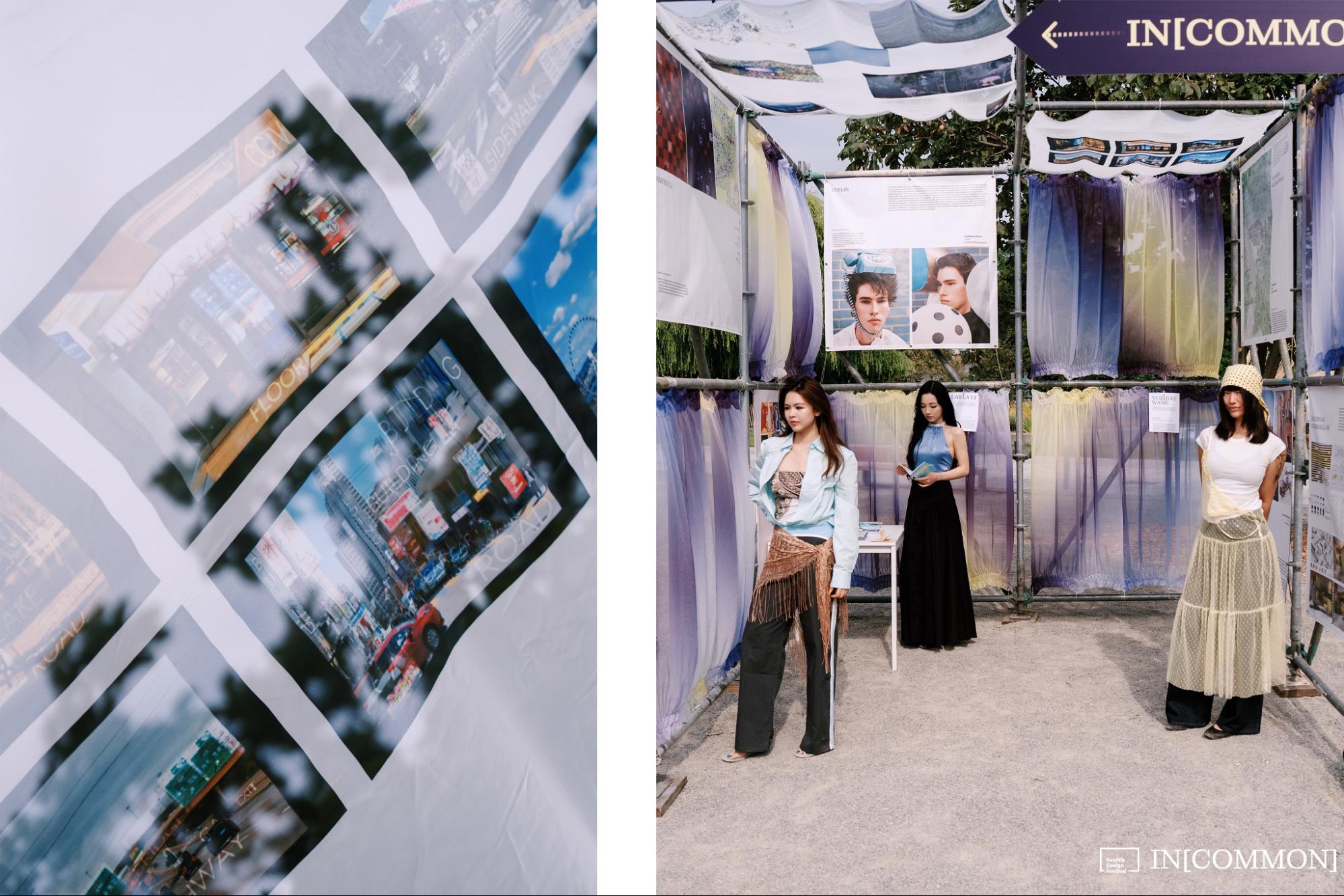
Summer is one of the best times to experience Seattle. Emerging from months of gloomy days and rainy nights, the city comes alive with families, creative communities, and colorful gatherings along Lake Union. This summer, that energy extended into the Seattle Design Festival, where installations, public programs, and the annual Block Party transformed the waterfront into a place to gather, interact, and experience design together.
Founded in 2011 by AIA Seattle, the Seattle Design Festival has grown into one of the Pacific Northwest’s largest community-driven design events, bringing architecture, urban planning, art, and experiential design into public conversation. Over the years, the festival has brought together voices from internationally recognized architecture and design firms including Gensler, HOK, and Mithun, alongside independent designers, artists, and community organizations, creating a platform where established practices and emerging perspectives meet.
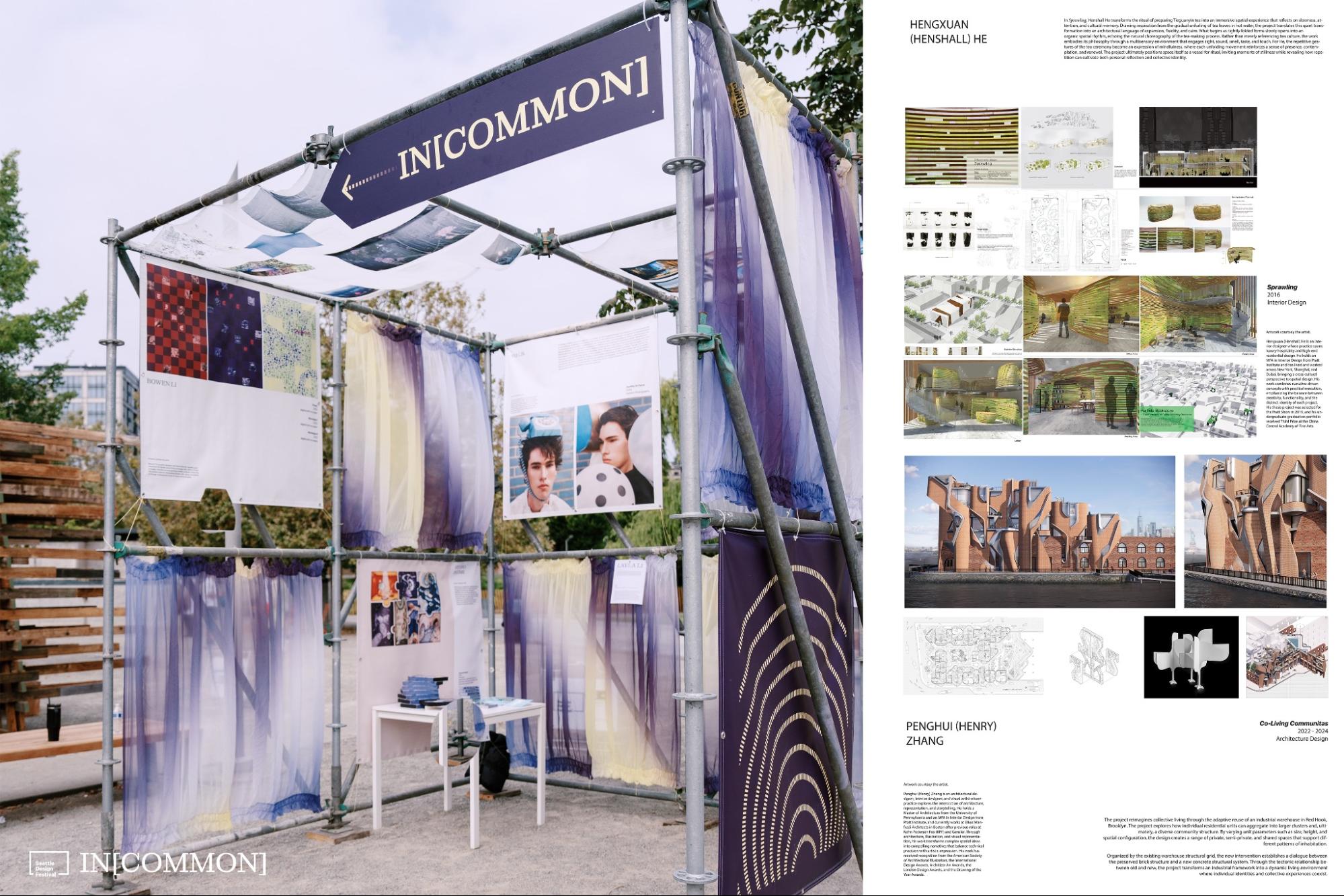
As part of this year’s festival, global curatorial nonprofit Artistry Edge led by Chenyang Nie and independent creative director Sophie Wei presented IN[COMMON], a group exhibition bringing together eight artists and designers from around the world. The exhibition also marked the official launch of 1Merge, their collaborative arts and design development program created to connect emerging and mid-career practitioners with international exhibitions, design festivals, public programs, and professional development opportunities.
What Do We Have in Common?
IN[COMMON] begins with a simple question: what do we actually have in common? Across architecture, photography, moving image, graphic design, illustration, publishing, and spatial practice, the exhibition looks at the experiences that connect us despite differences in discipline and background. Memory, identity, nature, ritual, time, and our relationships with one another become recurring threads. Rather than asking the works to look alike, IN[COMMON] places different perspectives beside one another to reveal how differently we can experience the same world.
Hengxuan (Henshall) He finds commonality through ritual. Sprawling transforms the preparation of Tieguanyin tea into an immersive spatial experience inspired by tea leaves slowly unfolding in hot water. A culturally specific tradition becomes a meditation on something universal: our need to slow down, pay attention, and reconnect with the present.
Bowen Li explores identity, uncertainty, and memory through contemporary visual communication. Works including Chaos and the Nostalgia series reflect the instability of locating ourselves between culture, recollection, and change—turning deeply personal experiences into questions that many of us share.
Yui Lin examines how we see and define one another. In Fluidity in Form, ribbons, balloons, toys, and delicate textures are placed alongside male bodies to reconsider masculinity through the female gaze. Softness and vulnerability emerge not as opposites of strength, but as alternative expressions of it.
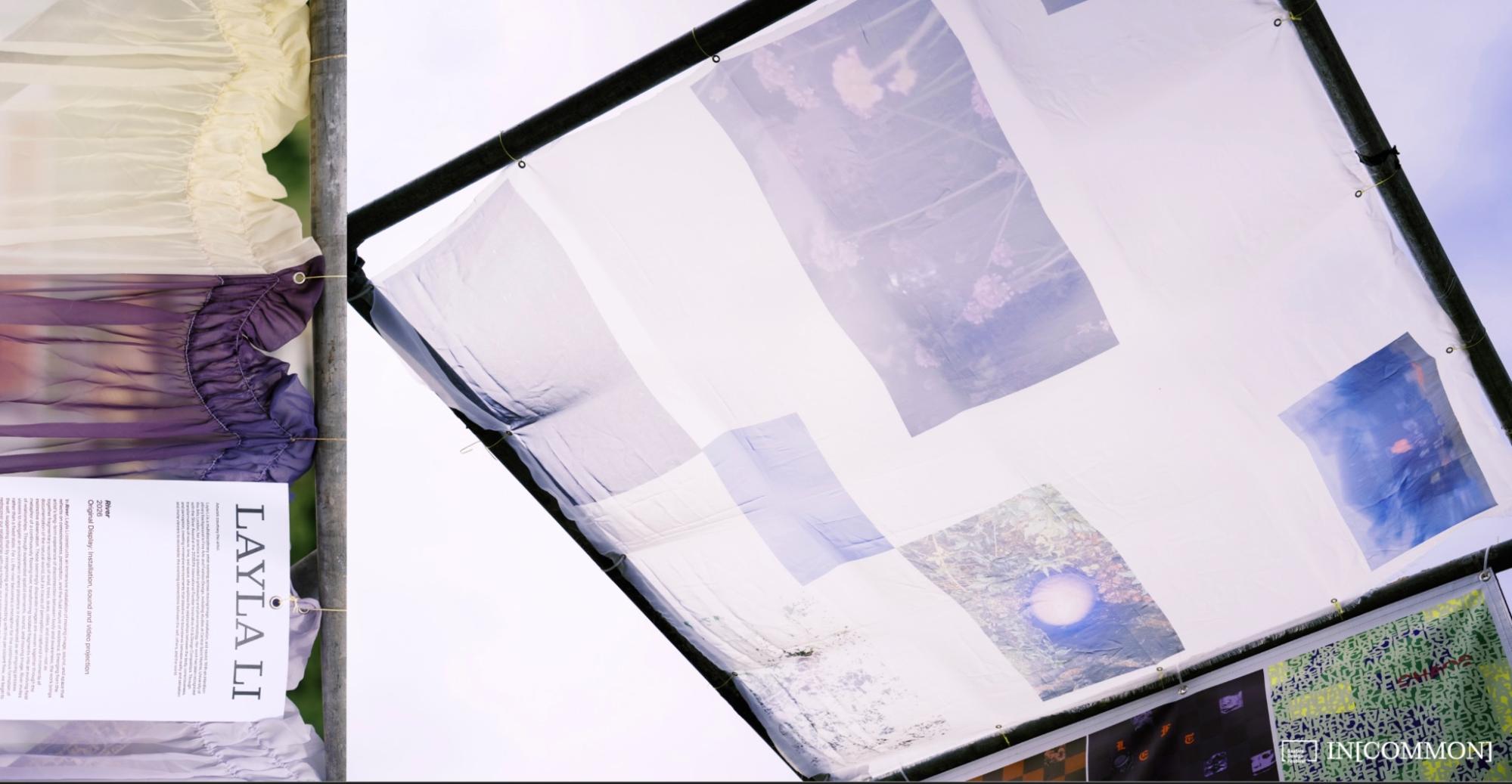
For Layla Li, what we share is continuous change. River weaves fragments of wind, trees, skies, cities, crowds, sound, and moving images into an immersive environment. Like a flowing river, the work suggests that identity is never fixed, but continuously shaped by our bodies, surroundings, and relationships with others.
Penghui (Henry) Zhang turns the idea of being “in common” into an architectural question. Co-Living Communitas reimagines an industrial warehouse as a collective living environment where private homes develop into clusters of semi-private and communal spaces, asking how architecture might support both individual identity and collective life.
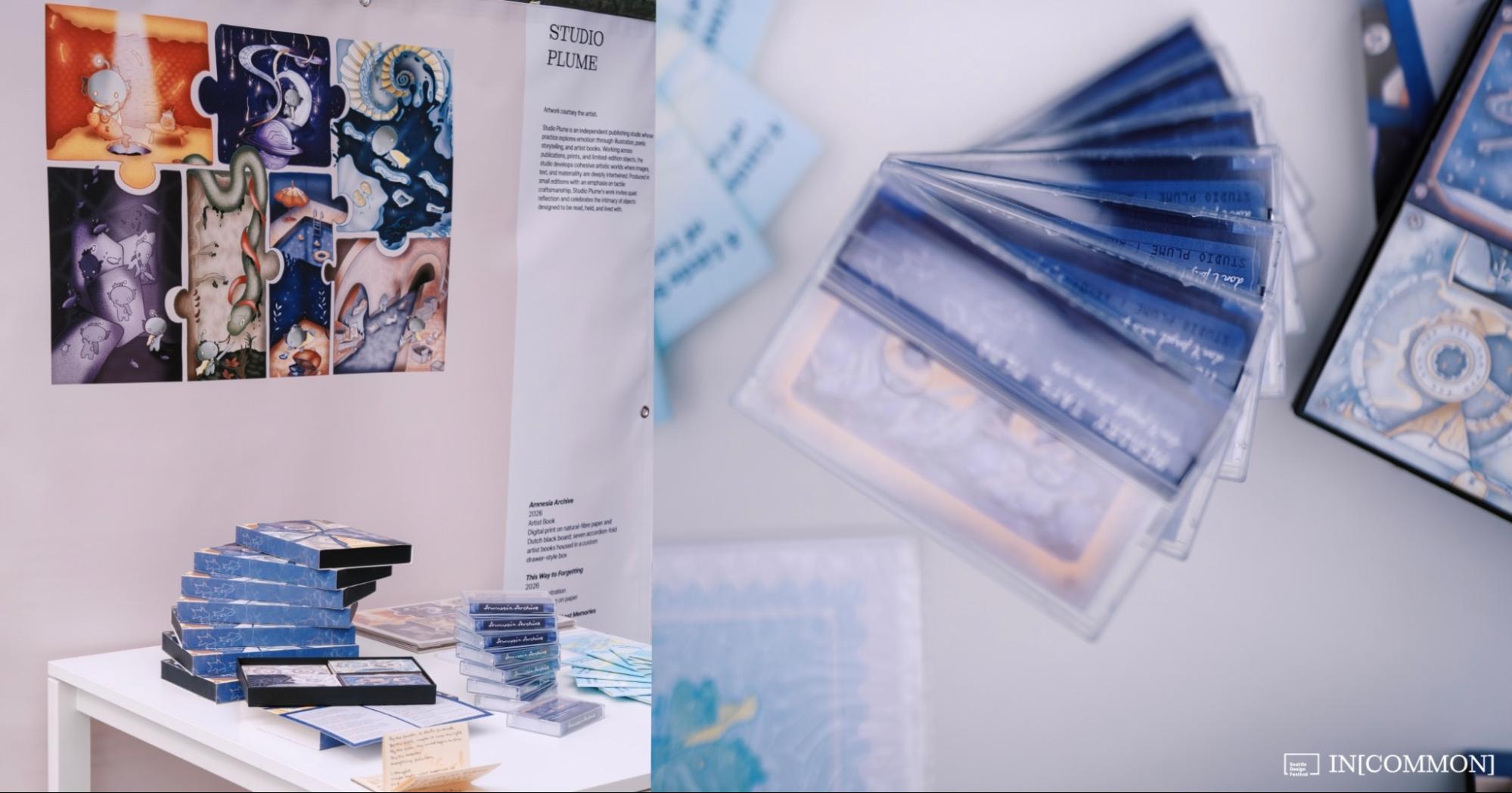
Studio Plume approaches the theme through remembering and forgetting. Artist books, illustrations, and Risograph prints including Amnesia Archive and A Little Sea of Lost Memories turn intimate objects into containers for emotion. Memory may be personal, but the desire to hold onto fleeting experiences—and the inevitability of losing some of them—is widely shared.
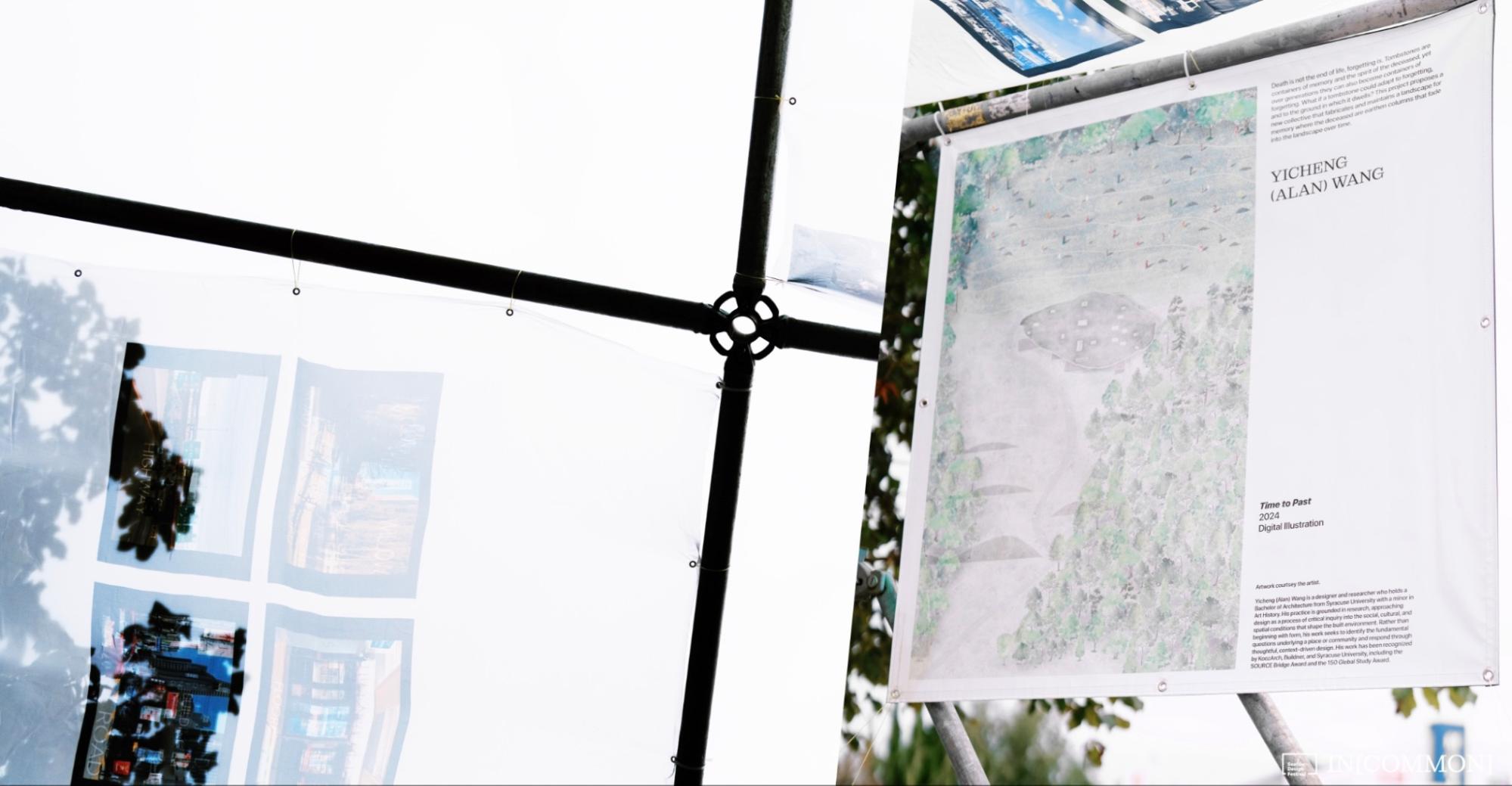
Yicheng (Alan) Wang extends this exploration across generations. Time to Past considers tombstones as containers of both remembrance and eventual forgetting, imagining earthen memorials that gradually disappear back into the landscape. Rather than treating memory as permanent, Wang presents it as something communities inherit, maintain, and eventually transform.
Ziyue Bai explores our shared relationship with the environment through eCO2, an interactive wearable backpack combining microalgae and sensors to visualize air quality. By turning invisible climate data into a living sensory experience, the project connects biotechnology, design, and everyday movement to make climate change feel immediate and personal.
Finally, Yuzhuo Wang explores the strange familiarity of places we have never known. In Isn’t This Familiar?, illuminated photographic landscapes blur memory and observation, showing how past experiences can make an unfamiliar environment feel unexpectedly recognizable. Here, what we have in common can be as intangible as a feeling—the sensation that somewhere unknown somehow feels like home.
Together, the eight practices suggest that being IN[COMMON] does not mean being the same. We remember, forget, change, inhabit, question, and search for belonging differently, yet these very acts form a shared human experience.
From Exhibition to Practice
IN[COMMON] also became the first platform for 1Merge’s “Designer in Practice” initiative, which invited emerging interior and experiential designer Tianyin (Hazel) Yu to participate in the development and fabrication of the outdoor exhibition. Rather than treating an exhibition only as a finished product, the initiative opens its process to emerging practitioners, giving them opportunities to translate creative ideas into physical experiences for real audiences. Yu brought a multidisciplinary background spanning interaction, interior, spatial, and experiential design to the project.
Behind 1Merge are two practices coming from different sides of the creative field. Artistry Edge, founded by Chenyang Nie, works across the UK, US, and China to support emerging artists through curatorial strategy and cross-cultural exchange. Sophie Wei is an independent designer, curator, and creative director working across branding, advertising, spatial experience, and cultural programming, with creative work and collaborations involving Lexus, Adobe, and HYROX. Together, they formed 1Merge to connect curatorial practice with a broader world of design, cultural programming, and professional creative practice.
Against the summer landscape of Lake Union, IN[COMMON] became more than a collection of individual works. It offered a small experiment in what an exhibition can do: bring different disciplines and perspectives into the same place, give emerging practitioners space to learn by making, and create unexpected moments of connection between creative work and the people who encounter it.
Borusan Contemporary is opening the first Turkish solo exhibition dedicated to Italian photographerOlivo Barbieri. Time Space Geometry will be running from September 19, 2026 through August 15, 2027. Curated by Fırat Arapoğlu, the show draws together five bodies of work spanning more than twenty years of Barbieri’s career, tracing a practice built around optical manipulation and shifts in scale that make recognisable places feel unfamiliar, even miniature. The exhibition is on view across the office floors of Perili Köşk, the Bosphorus-facing mansion that doubles as Borusan Holding’s headquarters and a public art venue.
At the centre of the show is a new series commissioned by the Borusan Contemporary Art Collection in 2023, for which Barbieri traveled across Türkiye photographing nine ancient sites, including Ephesus, Aphrodisias and Hierapolis. These images, shown publicly for the first time, sit alongside four earlier series: site specific_, which reframes dense cities like Shanghai and Rome from elevated vantage points; Alps – Geographies and People; Capri; and The Waterfall Project, which turns Barbieri’s lens on some of the world’s most photographed waterfalls.
It’s The Waterfall Project in particular that opens onto an environmental undercurrent running through the exhibition. Barbieri’s images register the tourism infrastructure and spectacle that now surround them, serving as a reminder that even the most iconic ‘untouched’ landscapes have already been heavily shaped by human use and consumption. The tension between nature and its packaging echoes in other moments of the show too, particularly in how the Alps series treats mountains not as terrain which is inseparable from the people who move through it.
Across all five series, the throughline is Barbieri’s interest in landscape as something capable of being constructed and observed, while also altered by the photographer’s own interventions in scale and perspective. By staging the exhibition inside a functioning corporate headquarters, Borusan Contemporary extends that same idea to the viewing experience itself. Time Space Geometry runs through mid-August 2027.
Anglo-Brazilian artist Caio Locke will present a selection of new and recent works at COMO The Halkin in London on 24 September, as part of an evening organised by Eclectic Gallery. COMO Conversation: Caio Locke will combine an exhibition viewing with an artist talk and informal Q&A, offering visitors an opportunity to hear Locke discuss the ideas and processes behind his intricate, imagined cityscapes.
Born between the cultural worlds of London and Rio de Janeiro, Locke originally trained as a lawyer before becoming a full-time artist in 2007. Working primarily in acrylic and oil, and informed by an early background in etching, he creates densely layered urban environments in which architecture and speculative futures overlap. His work has previously been shown at Christie’s and the National Museum of Scotland, while his public commissions have included the Fabergé Big Egg Hunt and the BFG Dream Jar project with Steven Spielberg.
The event will be taking place at COMO The Halkin in Belgravia from 6–8pm on Thursday, 24 September, with advance booking required.
Olivia Rodrigo has globally released her new song, ‘serena joy’, following the track’s exclusive physical debut on CD at Analog Records in Orange County, California. It arrives ahead of her sold-out music festival, Daisy Chain Fields, taking place August 29 at Great Park in Irvine, California. Rodrigo wrote the propulsive track with longtime collaborator Dan Nigro during the sessions for her third studio album, you seem pretty sad for a girl so in love. Take a listen below.
The beguiling power of Nick Hakim’s music lies, in part, in its malleability. On ‘Soft Wet Clay’, towards the end of the singer-songwriter’s latest album I Can See, you can hear the demo that he made on cassette fold into the version that came together at the fabled Sonic Ranch in the Texas border town of Tornillo. The intimate bedroom recordings, disarmingly atmospheric and vulnerable, took full shape there, as well as various studios in New York City, with longtime collaborator Andrew Sarlo co-producing. Though Hakim’s last album was 2022’s Cometa, these songs stretch back further, moulded and remoulded as he contended with the end of a record deal and the dissolution of a relationship, all while contributing to records by Adrianne Lenker, Miley Cyrus, and more. Without pretending to know the answers, or revealing all his tricks, Hakim trusts there’s magic in reconciling all the versions of himself that show up in the process, offering them a pliable voice within an open-ended yet contained sonic landscape.
We caught up with Nick Hakim to talk about West Texas, sobriety, the piano, and other inspirations behind I Can See.
West Texas
What was unique about not just the studio that you were working out of, Sonic Ranch, but the landscape and environment more broadly that fed into the record?
We started the record with the band in West Texas at the studio Sonic Ranch. I think a combination of things affected all of us so much. It was lockdown in July or August 2020; all of us had spent months in isolation. I invited some of my closest collaborators to come to the studio. Andrew Sarlo recommended we go there to work, and we figured it out. I was on a label at the time, so there was a resource to even make it happen and fully cover the costs of this phase of it. We were there for three and a half weeks, and every single day we were up until whenever we felt tired.
We were on the border with Mexico, which really felt heavy. There’s a part of that element of being in another place of extremities – this really beautiful space, but in close proximity to desperation. You’re in the thick of it, and technically in Mexico. In my opinion, Mexico is Texas and California – that’s all Mexico. Obviously, it’s the U.S., but that is indigenous Mexican land, and I always think about that when I’m there. I think there’s also the weight of being in the desert. I’ve never spent that much time in a desert environment, and the extremity of it being so hot and cooling down during the day.
West Texas, this certain area, being isolated in an environment where you could literally see the most stars at night that I’ve ever been able to see – it feels like you are actually just in the middle of nowhere. The way that time moves, the lack of needing to be on our phones – I barely used my phone – we were so focused. There were 10 to 12 people throughout almost a month, friends and the band, and it really felt like we were just celebrating each other, enjoying each other’s company. We ate every meal together, and it felt like recalibration in a time when everyone was so afraid. It was risky being there in West Texas with 12 people coming from different parts of the country, but no one got sick, and everyone was fine at the end of the day. There’s a song on the record, ‘7 Days’, that literally reminds me of that area outside of Sonic Ranch.
Sobriety
‘7 Days’ is also a song where you directly sing about sobriety. Having had some distance from it, can you see more clearly how it affected the journey of the record itself in a way you maybe weren’t so conscious of while making it?
It took an adjustment. I got sick for like a week when I first stopped drinking. It almost felt like a reset. I think when you’re navigating sober, when you’re navigating at zero, it’s literally an energy thing, where your body’s almost thanking you for not putting substances in after a while, and I had three months of recalibration of getting used to this feeling of not doing my pattern. I’ve gone through so many phases of working on this record, and I feel like whenever I would get frustrated, or anytime I would get in a hole, I would just be like, “Alright, I’m gonna go to this store, grab something to drink, and maybe this’ll help, maybe it’ll help me relax.”
It just took a while, but a big part of what I needed was someone to press record for me. Usually, I record myself by myself. I’m a private person when it comes to doing my vocals. I don’t really like to be around people, and I really don’t like it when people are like, “Can you just sing on this real quick?” I’m just like, “Mmm… I don’t need to.” Like, yes, I could, and I usually will, but I like to be by myself when I’m doing it. It helps me think. I’m also the type of person that doesn’t ask for help, and I think having someone record you is the bare minimum of something that, as when you’re doing a task like vocals, it can be so helpful to have. So I kind of hired a lot of my friends to help me record.
How did you get to that realization and actually reach out?
I think just being honest with where I’m at. I think I was in a moment of really trying to push through, and I was struggling in a lot of ways, but I was also just trying to finish something and make it the best that it could be. There are so many people that helped me record myself, or just pressed record at my studio and came through and were just like, “Alright, get in there, you’re not looking at the computer, you’re just focusing on your vocal.” I got to this place because it was just something that I just knew that I needed. And I did a lot of vocals by myself on this record, too. ‘You Can Make It’, that song I did by myself, and there are a few others.
‘7 Days’ also has that lyric: “I don’t need no liquor, don’t need no cocaine.” A lot of the lyrics were brainstormed and written with my mentor, friend, Arto Lindsay, and a really dear friend of mine, Julian Pratt from Show Me the Body. Julian and I write a lot of music together. We have like 15 songs together that we’re working on for another thing, but he just kind of chimed in on some vocals. And Arto had this poem that I used as a foundation for the first verse. Julian also helped with some of the lyrics on ‘Endlessly Waiting’ as well.
Before we got into the inspirations, you said something about there being a childlike aspect to sobriety. How did you notice that seeping into the record?
I think I have a lot of duality in how I express myself, and I think I’ve always had a very amplified way of expressing excitement, almost to a point where I used to not be able to even control it when I was younger. And because of that, I was put in special education, I was medicated for 10 years every day. But I’ve always had this really playful side of myself that a lot of my close friends know. Close people of mine know how silly, goofy, playful, and energetic I can be. There’s this part of me that I don’t really know how to show, and then it developed into me drinking and doing other shit that amplified that, but it was almost like a fake, not very present way of being. In sobriety, I’ve felt like my excitement just comes out in ways that are real joy – not dopamine-fueled joy, or masked by anything. Which also means high highs and low lows, but it’s learning how to navigate that.
One reason I say it feels childlike is when you’re a kid, you’re not drinking, you’re just exploring. I started drinking at a young age, at 13. I had a near-death experience when I was 15 years old with alcohol poisoning, so I’ve had a lot of issues surrounding this for a long time. I don’t know if it’s the best comparison to be like, “I feel like a little kid,” but it’s more like this pure joy that I wasn’t able to find when I wasn’t sober; I would seek it and numb myself. The cycle of trying to not do it with anything in your system is challenging, but when you tap into it, it feels pure – more of an interesting place than just going into it numb.
I’m not gonna lie, this shit is not easy. I don’t know how I’ve done this for this long, but I’m definitely grateful. I’m fighting the feelings every day – I still feel cravings, but I’m definitely happier, more honest with myself and the people around me, and just more present. It’s not perfect. Learning how to deal with these feelings is a real challenge. There are a lot of layers to why somebody enters these spaces of wanting to numb and not be present. To completely take that away is worth it, but you always have a little voice that says a lot of fucked-up things. I think music has helped me try to maintain an internal peace, and this record has been so therapeutic for me in trying to better myself. Even the title song, ‘I Can See’, sounds like a sobriety album. [laughs] It’s an internal joke for me, because I made the demo for that song when I was so inebriated I don’t even remember making it. I was a functioning person, but my point is that it started in a place of being intoxicated on a regular basis.
On top of whatever the meaning is behind it, it came at a time when I was really tapped into this feeling that was a throughline throughout the record. I made the demos for these songs within a week before going to Sonic Ranch; it’s interesting that a lot of the music from this record is from this week where I recorded everything on cassette by myself in full chaos. I made 30 compositions in a week. I was just so eager and honestly desperate to get something out of my system. It wasn’t just because of COVID; I had just gotten out of a long relationship, I had just moved out of a studio that I was kind of living in, I had put everything into storage – it was a big change in my life. I just had a moment of feeling extreme focus in a moment of turmoil. Which didn’t even feel like I was doing anything productive – it just felt like I was moving.
Community
You produced the record with Andrew, and there’s a whole community of artists credited not just as musicians, but collectively as engineers of the record. Seeing them collectively credited in that way suggests they’ve shaped the record in a particular way. But it also sounds like this community is extra-musical in the sense of guiding you through the process and helping you stay grounded.
First and foremost, my younger brother, Danny, wrote the music for ‘Barii’, and we replayed it in the studio with him. He has written a song on my last three records, including this one. `He’s my earliest collaborator. I recite lyrics about him on ‘River Rising’ and ‘Real Here Now’. I don’t know what I would do without him; he’s a North Star to my life. I just adore him, and I’ve always been very protective of him. We’ve been very close forever. Having him involved always helps me feel centered. Danny is the reason I got into music. When I started studying music and shaping my sound, I met a lot of the people who are playing on this record. I met them when I was 19 or 20, when I was a very shy person.
I didn’t have the desire to be front-facing, but I just wanted to make music with people I connected with. It wasn’t to be successful or for any external thing; I just wanted to craft this thing. A lot of the musicians playing on this were on my first project – at least three of them. Throughout the years, these are people who have played all over my records and toured with me. I’ve been through a lot with them and known them for a long time. I feel like I wouldn’t be the musician I am without being around them, because all of them are so incredible at what they do. I feel better when I’m around them, I learn when I’m around them, and I see how they approach things – even their posture. That’s how I learned music: watching better people do it. I’m a self-taught musician. I learn a lot from them, even just watching their body language when they play their instruments.
Bringing him up again, having people like Arto in my life – I learned about his music when I was very young, and I’ve developed a friendship with him to a point where I’ve helped him record a lot of his music. All the people listed as engineers, but especially June [McDoom], Evan [Wright], Leon [Kelly], and Benjamin [Julia]. Benjamin helped me record the vocals for ‘I Can See’; he just pressed record. He’s always like, “I didn’t really do anything,” and I’m like, “You did. You did a lot.” Leon was probably the most involved in terms of being in New York and coming to the studio at 11:00pm and us staying there. And then Evan and June helped me record the vocals for ‘Barii’. The communal aspect is obviously far deeper than just the engineers and the people that played on it, but I do think it’s important to recognize the people that helped shape this record – even if you just show up for a little bit, it means a lot.
Recording without a computer
It sets everything into a performance. It’s not a highly edited comp of a performance; it’s real human people playing throughout the song. This AI shit started to really come out while I was finishing this record, and I was just like, “Anything could be AI.” It almost felt like I was trying to do things to make them feel almost – ‘I Can See’ is something where someone could probably think it’s an AI-generated song, but it’s just a pitch-tape technique that you do on tape. You just record really slow, and then you bring it back up. It’s an extreme choice, but it’s…
A human choice.
Yeah, exactly. The reason I wanted to talk about this is I think it’s important to understand that the beginnings of this record were made on six cassette tracks. My demos are all on cassette. For this record, I had an MPC, a microphone going to an effect, an upright piano, and my guitar. You can hear the MPC2000XL rhythms on basically every song, even if they’re small. On ‘I Can See’, the beginning is just my demo that I made at home, and then you hear the band come in. On ‘Know My Name’, the nylon guitars, the hi-hatty drums, the vocals at the end are all from my demo, no computer. Thankfully, it was on a machine that has direct outs, so any channel recorded in can be recorded out, and you can get each individual file. It’s not like you just have two channels of everything. I was trying to blend bounces of the two-track, but then I realized that I could get all the stems.
When we went to Sonic Ranch – obviously, we had Pro Tools open, but we were recording everything on tape. All the takes were recorded as a performance. Some of the versions of the instrumentals recorded at Sonic Ranch were twice as long as they are on the record, which is insane because a lot of these songs are very long. And then we blended the two. The way that this record was mixed in 2025, we mixed it back in the same room that we recorded in 2020, and we set it up so that we didn’t use a computer screen to mix. We just ran it to tape and bounced down to tape – we did a completely analog mix. We didn’t look at the screen. We were just reacting to how it felt and the speakers that we were familiar with. Andrew and I mixed it together this way, using an actual house as an effect. We set up an echo chamber in a house in Texas at the studio called the Echo House. I was actually considering naming my album Echo House after it.
I would say recording without a computer forces you to get out of this visual representation of waveforms. I’m such a visual person that I’ll look at waveforms and see whether they’re small or big, and it’ll affect me. It’s almost like I have to not look at it and really listen, because when there’s a visual thing set to it, it can be confusing. I do that all the time; if I’m mixing or working on something, I usually have to reprint it down to a new track so that I can actually see what the waveform is. Doing these mixes like this was necessary for the music. It wouldn’t have felt right if we were just in Pro Tools doing it the way that we’ve done basically everything else.
It’s not even just about tape, because you can do the same concepts on a computer; you don’t need to record to tape. There’s limitations, and there are sonic things that happen that are really interesting. It almost creates a life and a character of its own like that. Every machine is different, old, and has different wear and technical flaws and characteristics that are amazing. It’s really like you’re bringing another person into the room. Recording without a computer is a big part of the process of making this record – but I will say a lot of stuff was done on the computer as well, to be fair. It was a real blend.
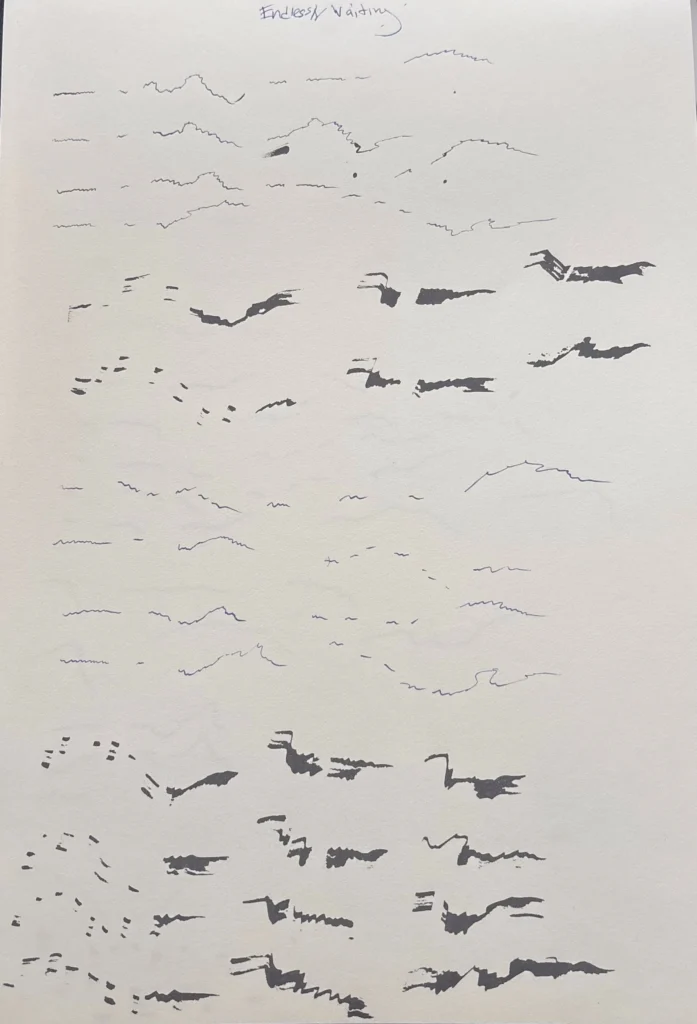
Calligraphic musical notation
That’s an interesting thing to bring up after you mentioned being a visual person, but being distracted by waveforms. And it’s also part of the record’s art direction with the calligraphy that was done by Evan McGraw.
A while ago, without any prompt or anyone telling me to do it this way, I started to make notation for each song. When I was at the point where I was like, “I need to finish this record,” I started to make all of these musical notations, and it’s the shape of the melody. I have actual scans of each of them, and some versions I had taped all over my walls. And then somebody was telling me, “You know, there’s Tibetan monk musical notation that looks like this.” I was like, “I had no idea.” I also sent it to Arto, and Arto was like, “Oh, this looks like music notation to me.” Which is a joke, because he doesn’t really think about music in that way – it’s all about shapes and concepts. I feel like, subconsciously, being around him helped me think like this. But I also think my relationship between visual arts and music helped me understand the shapes, and it almost made me feel grounded. It helped me when I was trying to fit lyrics into some of the shapes of these things. I was trying a lot of things to really reframe my perspective.
Then a friend of mine showed me this incredible calligraphy artist named Evan McGraw. Evan’s work really inspires me. He did the typography for the back cover of the vinyl for my record. I feel like this approach makes me feel inspired with my relationship to visual arts and to music.
Reconnecting with family in South America
I hadn’t been to South America in 16 years before I went. The first time I went back – I’ve been maybe four times now since six years ago – I felt so happy in so many ways to be back and to see everyone. I have a big family, I have family in Chile and I have family in Peru. My family in Chile is a lot bigger than my family in Peru. But I grew up in DC; I’m a first-generation American. I have this cultural upbringing with little pieces of my family that were brought to the States, but I was never fully immersed in this giant family that I have in that way. We did go when I was growing up sometimes, so it’s not like I was a stranger to it, but there was a 16-year gap of going back. Right after I finished touring Cometa in Europe, I was in London for three weeks, and then I went to South America for three weeks.
My grandmother is my only living grandparent – now she’s 99. Just being with her, being able to touch her hands, talk with her, and her still being able to remember me… It felt really beautiful. That was on my Chilean side. On my Peruvian side, on the Hakim side – I feel like this is a common thing, but the more you talk with relatives, the more you learn about your family. I learned that my dad’s first cousin, who he grew up with in Peru, was in this really famous hardcore punk band from Lima called Narcosis. He’s the guitar player in the band, his name is Fernando Vial. Their one album is known to be the most bootlegged album in Peruvian rock history. It’s so cool to me that we’re related. I found his record a year later in a record shop in Portland, Oregon, and I was like, “That’s my uncle.”
Reconnecting with the piano
My reconnection with piano is interesting because that’s what I started playing as a self-taught musician. I was learning everything by ear, and the whole time that I’ve toured, I always played guitar. I have my vocabulary, I have my thing on guitar, but I’ve always kind of written on piano. It’s been a big part of my understanding of music; I literally have a piano right next to my bed, right there. I wake up, and I’m just looking at it. I’ve always had a connection with the piano, but I always felt really shy to play in front of people. Throughout the past seven years, I’ve really found my rhythm and my feeling on it in a different way than I ever had before.
Andrew Sarlo, he’s always told me, “Man, you should just tour with just you and an upright piano.” He’s like, “There’s something in how you perform your songs by yourself, and your way that you play…” Honestly, he’s been very encouraging. And then Adrienne calls me to play piano on her record, Bright Future. Adrienne’s songs are amazing, and me having the ability to change keys with her – where on guitar it would be almost like just switching a capo or a fret, on piano it’s a whole other world. And this is another record that’s recorded on tape, no headphones. I learned a lot from her, and from recording with her – that was after we started this process for I Can See – but also touring with her with an upright piano every night, and then opening with just piano and vocals.
I’m just so obsessed with piano. I love sitting down and not even knowing what I’m playing – I know what I’m playing, but I’ve always maintained this kind of mystery. I have a certain vocabulary on the instrument, but I am very self-taught. I like being able to have my own approach. The only thing that I suffer is technique, because I feel like my hands kind of get fucked up sometimes. But it doesn’t matter, I don’t care about technique, it’s just something that’s happened. I have a really strong connection with writing on piano; I’m just sitting down with it. I feel like it’s a companion, and on this record, it’s the first time that I’ve really shown that. There are songs on my other records that are piano-based, but I think I’ve always tried to make more guitar-y kind of stuff. It is the center of where I started, and re-embracing it feels good.
This interview has been edited and condensed for clarity and length.
Nick Hakim’s I Can Seeis out now via Earseed/Stem.
The DC franchise has had its ups and downs recently. On the movie front, Superman was received with enthusiasm and became the tenth highest-grossing film of 2025. Supergirl, however, which came out this year, fared less well, with mixed reviews and a disappointing box office run.
Now, a fresh TV series set in the DC Universe is earning buzz online. Lanterns, which revolves around two Green Lanterns, a veteran and a newbie, premiered on HBO Max to great reactions from critics and fans alike. Is that enough to ensure a long run? Here’s what we know about the show’s future.
Lanterns Season 2 Release Date
At the time of writing, there is no official news available about a potential Lanterns season 2. That said, it’s early days.
Only two episodes are available so far, with more scheduled to arrive over the next few weeks. As long as viewers keep tuning in, a second installment is likely, especially when you consider that the writers are already working on what’s next.
“We feel good that we told the story in season one well. The question is whether [season two] is a story people are interested in. If that’s the case, then we’ll get to do another one. We’ll tell it in a slightly different way, so that it feels fresh, with characters you know and care about,” co-creator Chris Mundy told The Hollywood Reporter.
He also revealed that he’s been mapping out season 2 for a while, so things should move quickly once the show gets renewed. If all goes well, new episodes could arrive in late 2027.
Lanterns Cast
Kyle Chandler as Hal Jordan
Aaron Pierre as John Stewart
Kelly Macdonald as Kerry Kane
Garret Dillahunt as William Macon
Poorna Jagannathan as Zoe Macon
Ulrich Thomsen as Thaal Sinestro
Nathan Fillion as Guy Gardner
What Is Lanterns About?
Lanterns is an intriguing combination of superhero series, police procedural, and small-town thriller. The action revolves around veteran Green Lantern Hal Jordan and newly recruited John Stewart as they investigate a mysterious death in rural America. For those not familiar with the DC Universe, the Green Lantern Corps is an intergalactic peacekeeping organisation.
Their case points to a larger conspiracy involving secrets and extraterrestrial beings. As they work together, the two Lanterns must overcome their differences while also confronting the dangers surrounding the investigation. The show unfolds across two timelines, with a compelling twist ensuring that viewers will keep tuning in to see how the mystery evolves.
While Lanterns season 2 isn’t a sure thing yet, the first installment is just getting started. You can catch episodes weekly on HBO Max until early October.
Are There Other Shows Like Lanterns?
Already in love with Lanterns? Shows with similar vibes include Watchmen, True Detective, Superman & Lois, The Penguin, Daredevil: Born Again, andThe Boys.
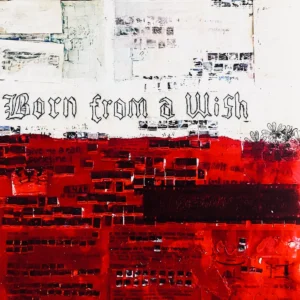
Addie Warncke has announced a new album as Computerwife. Born From a Wish, the follow-up to their 2023 self-titled record, comes out November 6 via Danger Collective. Check out the jagged, anthemic lead single ‘Foreverrr’ below.
“I wrote this after reflecting on being back in my home city during the lockdowns,” Warncke said of ‘Foreverr’ in a statement. “Atlanta looks totally different from where I live now and it was shocking to go back to. Once I adjusted I had a sense of closure, like I could fully appreciate living there as an adult for the first time. It’s about laying in the grass and reading poetry with my childhood friends during that summer, and walking through the forested streets at night going to the bars. It’s the same simple moments of peace I appreciate the most anywhere, just in this specific setting of where I grew up. This song is in respect for how it felt to live there.”
Born From a Wish Cover Artwork:
Born From a Wish Tracklist:
1. Thank You
2. Foreverrr
3. Autopsy
4. You Didn’t Know
5. Nobody
6. Pretty Ugly
7. Normal
8. Hammered
9. Honey
10. Failure
11. Surreal
12. Oh No I Threw Up
When you queue up a Jason Statham movie, you know what to expect. He made a name for himself playing violent, gritty guys in action thrillers. The kind who excel at what they do, no matter which side of the law they find themselves on. Even more impressive, he keeps that formula feeling fresh almost three decades into his career.
Given his hefty filmography, the actor’s net worth should be substantial by now, right? Here’s what we know about his earnings.
Most of it is thanks to his lengthy and lucrative movie career. Before that, he practiced martial arts from a young age and was a competitive diver. He also worked as a model and appeared in ads and music videos. His big break came in 1998, with a role in Guy Ritchie’s Lock, Stock and Two Smoking Barrels. Statham reunited with the director for Snatch, which allowed him to perfect his trademark dry delivery.
Before long, he built an eclectic resume. He appeared in movies like The One, Ghosts of Mars, and Mean Machine before landing The Transporter, where he plays a professional driver. The film turned Statham into a bona fide action star. More hits followed, including The Italian Job, Cellular, sequel Transporter 2, and Revolver, among others.
His career took another turn with 2006 movie Crank, which pushed his persona into deliberately ridiculous territory. He followed it with War, The Bank Job, Death Race, Transporter 3, Crank: High Voltage, and similar action flicks. In 2010, Statham joined other veteran action stars in The Expendables, which would become a successful franchise. Speaking of, he was also cast in the Fast & Furious series, where he plays Deckard Shaw.
In more recent years, Statham continued to be associated with the action genre. His credits span titles like The Meg and its sequel, Wrath of Man, Operation Fortune: Ruse de Guerre, The Beekeeper, and A Working Man.
Besides acting, Statham established his own production company, Punch Palace.
Jason Statham Salary
Actor salaries are often hush-hush, but you can safely assume that Jason Statham is one of the highest-paid actors in Hollywood. He reportedly made $25 million in 2024, courtesy of The Beekeeper.
While Statham only earned $18,000 for Snatch, he hustled for the kind of consistent workload that pays off. Rumour has it that the four Expendables movies alone brought him around $52 million.
Jason Statham Highest Grossing Movies
While hiring Jason Statham doesn’t come cheap, his movies also draw people to the cinema. His top earners are the Fast & Furious films, with Furious 7 making a whopping $1.515 billion at the box office. The Meg also delivered with $529 million.
This year, fans could catch Statham in action thrillers Shelter and Mutiny, the latter of which is currently playing in cinemas. Next year, he will star in action comedy Jason Statham Stole My Bike and sequel The Beekeeper 2.
Capturing live music without killing the audience’s experience requires a delicate balance of technical precision and stealth. Whether you are shooting with a single mirrorless camera or coordinating a full production team, start by locking down your audio capture.
This guide walks you through the exact steps to secure clean soundboard feeds, dial in low-light settings, navigate tight venues without blocking sightlines, and handle release paperwork before the first chord strikes.
Plan Your Audio Capture Around the Venue
Strong concert video starts with sound, not camera angles. Before the show, find the front-of-house engineer, ask about board feed options, and confirm where a small recorder can sit safely.
A direct board feed captures clean vocals and instruments, but it may miss the room. Add ambient mics near the mix position to pick up applause, crowd noise, reverb, and the size of the venue.
Also, bring your own cables, batteries, memory cards, headphones, and backup recorder. If you wait until five minutes before doors, the venue crew may not have time to help.
Use Low Light Settings That Keep Footage Clean
Concert lighting looks electric in person, but cameras see every problem: uneven color, fast movement, and sudden blackouts. Sony’s Nevion research found high visual quality matters to 30 percent of live-event viewers, so clean footage matters.
Start in manual when possible. Lock shutter speed, open the aperture, and raise ISO only when the image truly needs help. Use 24fps or 30fps for natural motion, and avoid auto exposure that pulses during lighting changes.
Test settings during soundcheck, then keep the basics simple:
Fast lens
Steady white balance
Faces exposed
ISO controlled
Know When To Bring in an Experienced Video Crew
Events in busy entertainment markets like Las Vegas move fast, requiring seamless coordination between lighting, sound, security, stage managers, and performers without disrupting the show. While phone clips work well for backstage moments or quick social posts, larger productions demand a dedicated professional setup.
An experienced crew handles multi-angle logistics, audio routing, and crowd-safe movement so artists and venues can focus on the performance. For major productions, brands and venues often partner with specialized production teams, such as AnytimePicture.com, whose event coverage experts in Las Vegas map camera positions, technical routing, and final deliverables before doors open.
A pro crew also plans for the edit before filming starts. Artists and venues often need reels, teasers, thumbnails, wide shots, crowd reactions, and email-ready clips ready to deploy the moment the set ends.
Move the Camera Without Distracting the Crowd
The best concert camera operator feels almost invisible. Plan movement before the set, then protect sightlines, walkways, and the crowd’s paid experience. You should:
Stay Low
Cross in front of fans only when needed, and crouch when passing through tight rows. Never hold a rig above someone’s face for an entire chorus.
Map Your Lanes
Use side aisles, back corners, balconies, or the sound booth for cleaner movement. If there is a pit, follow its rules exactly.
Move With Purpose
A few planned passes look better than constant wandering. Keep tripods, gimbals, and monopods clear of exits, bars, and busy paths.
Choose Between Phone Clips and Multi-Camera Coverage
Phone clips work best when speed matters more than polish. Use them for stories, backstage moments, fan reactions, and raw snippets that feel personal right after the show.
Multi-camera coverage is better when the footage needs to become a finished piece. A locked wide shot protects the edit, while roaming and side cameras capture emotion, movement, instruments, and crowd energy.
Many artists and venues get the best results by using both approaches. Polished footage can support websites, press kits, sponsors, and future bookings, while quick vertical clips keep the night fresh on social media.
Handle Performer and Venue Release Forms Quickly
Paperwork can feel boring until one great shot becomes unusable. Before filming, confirm who can approve performer footage, where cameras are allowed, and whether the venue requires posted notices.
Digital forms make the process faster at load-in. Prepare simple fields for:
Name
Role
Event date
Usage permission
Do not rely on a handshake for interviews, backstage clips, or close-up crowd moments. Store signed releases with the footage, flag any restrictions, and keep a backup copy so the final edit stays safe.
Let the Footage Carry the Energy Forward
A live show only happens once, but the right footage can keep its best moments moving long after the room clears. When every shot respects the artist, the audience, and the space, the final video feels less like documentation and more like an extension of the night.
Before filming the next set, think beyond the camera. Decide who the footage is for, where it will live, and what kind of feeling it should bring back when someone presses play.
Every media and arts team is chasing the same scarce thing: attention that actually turns into action. A packed inbox, a crowded feed, and a distracted audience make that harder than ever, especially when every brand sounds like it used the same template.
AI-powered outreach can help cut through the noise, but only when it makes messages more relevant, not more mechanical. This article breaks down how media and arts brands can use AI to personalize outreach, pitch smarter, protect trust, and keep the creative voice that makes people care.
1. AI-Powered Outreach Starts With Better Audience Understanding
Strong outreach begins long before a message gets sent. Media and arts brands need to know who they are speaking to, why that person might care, and what kind of relationship already exists. AI can organize those clues so teams don’t rely on stale lists or gut instinct alone.
A theater might separate first-time buyers from season subscribers. A magazine might sort casual readers from paid members or event attendees. A gallery might identify donors, educators, collectors, local press, and community partners without treating them all the same.
Nielsen’s 2025 Annual Marketing Report found that 71% of large-budget brands viewed AI for personalization and optimization as a major trend affecting their marketing strategy. For media and arts brands, the takeaway still holds in 2026: AI-powered outreach works best when it helps teams send more relevant messages, not just more messages.
2. Personalization Needs More Than a Name
Personalization is not “Hi Alex” pasted above the same generic pitch. Real personalization connects the message to a person’s habits, interests, role, or past behavior. Media and arts audiences can spot the difference between a thoughtful note and a mass email wearing a costume.
Good AI-powered outreach should help teams shape messages around details that actually matter, such as:
Past attendance
Reading history
Donation behavior
Beat coverage
Location
Event interest
Once those signals are organized, outreach can become much more useful. A festival team could send one message to past VIP buyers, another to local culture reporters, and another to first-time attendees who clicked on family programming. In workflows like this, GTM AI can help connect audience signals with personalized messaging and follow-up across the broader outreach process.
3. Journalists Do Not Want Lazy AI Pitches
Reporters are already buried in pitches. A media brand, film studio, festival, museum, or performing arts group does not earn attention by sending something vague and hoping AI made it sound polished. The pitch still needs a real angle, a clear reason for now, and a strong fit for the journalist’s audience.
AI can help with research, draft structure, and subject line testing. It can summarize a reporter’s recent coverage or help your team avoid sending the same angle to everyone. It cannot decide whether a story is actually newsworthy.
Before pitching, ask whether the journalist covers the topic, whether the timing makes sense, and whether the email gives them something useful. A smaller list with better fit will usually beat a giant list with weak relevance. In media outreach, restraint is often a competitive advantage.
4. Arts Brands Should Use AI Without Losing Their Voice
Arts organizations are already testing AI in practical ways. Many teams use it for first drafts, social captions, email variations, and campaign planning. According to HDK, 67% of surveyed arts organizations had tried at least one AI tool for marketing.
That adoption makes sense because arts teams are often small and stretched. One person might be promoting a new exhibit, updating the website, writing donor emails, coordinating press, and posting on social media. AI can remove some blank-page pressure and help the team move faster.
The risk is sameness. A ballet company should not sound like a SaaS newsletter. A local arts nonprofit should not lose the warmth, history, and community voice that made people care in the first place.
5. Trust Is Part of the Outreach Strategy
Media and arts brands depend on belief. People need to believe the story, the source, the artist, the venue, the critic, the curator, or the publication. AI can support that trust, but careless automation can quickly damage it.
Teams should create clear rules for AI-assisted outreach, especially around sensitive work like:
Quotes
Artist statements
Press materials
Image descriptions
Research summaries
Audience claims
Never let AI invent facts, reviews, credentials, or community impact. Always check names, dates, titles, prices, locations, and claims before anything goes public. Trust is hard to build and very easy to lose with one sloppy message.
6. Measurement Should Focus on Meaningful Action
AI tools can make dashboards look impressive. Opens, clicks, replies, impressions, and send volume can all climb while the campaign still fails. Media and arts teams need to measure outcomes that connect to real goals.
For a publisher, meaningful action might be a subscription, repeat visit, newsletter signup, or event registration. For an arts brand, it might be ticket sales, member renewals, donations, earned media, school partnerships, or first-time attendance. The metric should match the mission.
AI can help compare subject lines, channels, timing, and audience segments. Human teams still need to decide what a good result looks like. A campaign that reaches fewer people but fills seats, earns coverage, or brings back lapsed supporters is doing its job.
7. Human Taste Is Still the Edge
AI is good at patterns. It can sort data, draft options, summarize research, and help teams move through repetitive work faster. Media and arts brands still need people to decide what feels sharp, true, funny, moving, timely, or culturally aware.
That human layer is not a small detail. It is the reason a pitch feels fresh instead of recycled. It’s why an email about a new exhibition sounds like it came from someone who understands the work.
The smartest teams will not ask AI to replace taste. They will use it to protect more time for taste. When AI handles the busywork, people can spend more energy on the story, the relationship, and the moment.
Make AI-Powered Outreach Feel Worth Receiving
AI-powered outreach works best when it helps media and arts brands become more relevant, not just more active. Use it to understand audiences, sharpen pitches, protect trust, and measure what actually matters. The brands that win will pair smart tools with human judgment, clear voice, and real care.
Start with one workflow, such as journalist pitching, member emails, or event follow-ups. Improve it, review the results, and keep the human standard high. In creative industries, the best outreach should still feel like it came from people who know why the story matters.


![Inside IN[COMMON]: Exploring What We Share at Seattle Design Festival](https://ourculturemag.com/wp-content/uploads/image5-28-768x512.jpg "Inside IN[COMMON]: Exploring What We Share at Seattle Design Festival")