Home Blog Page 48

Nunu Fine Art Taipei Presents The Folds of Time

On 25 July 2026, Taiwanese artist Ya-Ting Kao is set to open her latest solo exhibition, The Folds of Time. The exhibition takes a look at the relationship between artistic creation and the passage of time through a series of works centered on flowers in different stages of decay. Kao specifically turns her attention to faded and shrivelled flowers, treating them as symbols of endurance and transformation.

Kao’s new body of works on paper combine oil pastel with watercolour and ink in large-scale compositions. The layered materials mirror processes of change within the natural world as well as human experience, creating richly textured compositions that blur the boundary between the primordial and the ephemeral. In these works, Kao seeks to capture what she describes as the “folds” of time.

Kao received her MFA in Painting from Taipei National University of the Arts and has exhibited at museums across Taiwan, including the Museum of Contemporary Art Taipei, the National Taiwan Museum of Fine Arts, and the Kaohsiung Museum of Fine Arts. Founded in 2014, Nunu Fine Art has built an international programme celebrating artists from Asia, Europe, and the Americas, expanding to New York in 2023 as the first Taiwanese gallery to establish a contemporary gallery space in the city.

The Folds of Time will be on view 25 July 2026 – 26 September 2026 at Nunu Fine Art Taipei.

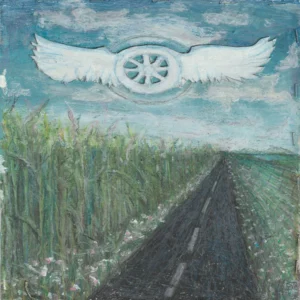
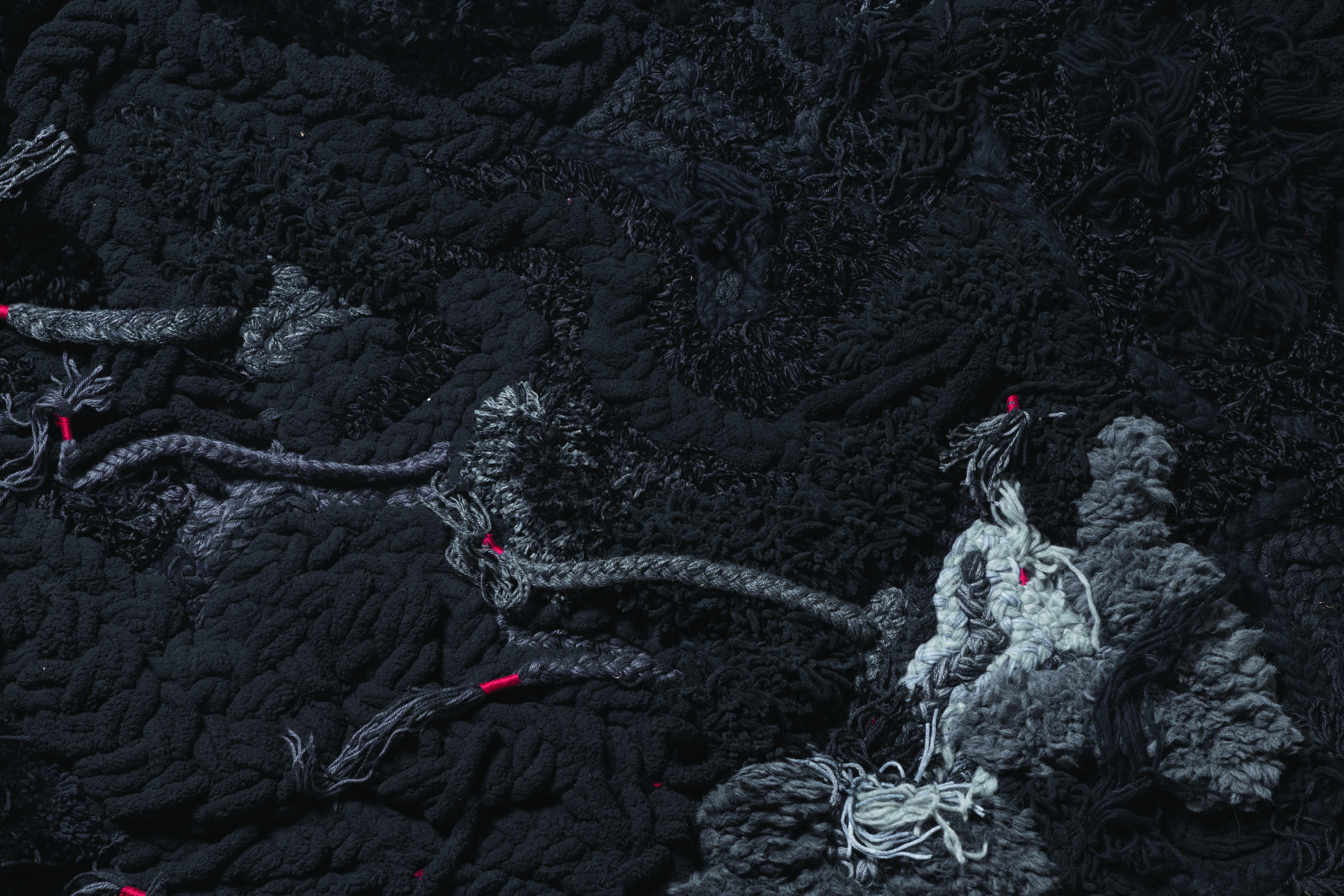
Evergreen and Madder Red by Ya-Ting Kao

Mariana Bravo: Redefining Museum Design Through Range, Leadership, and Precision

There is a version of architectural expertise that looks like mastery of a formula — a designer who has worked on enough hospitals, or schools, or cultural buildings to know the conventions and apply them reliably. And then there is a different kind of expertise: the kind that develops when a designer has engaged with the same building type under conditions so different that no formula could survive the comparison. The museum is a typology that tests this distinction with unusual clarity. Its cultural purpose is consistent. Its design demands are not.

Mariana Bravo, an architectural designer at Ennead Architects in New York City, has worked on three museum projects representing three fundamentally different starting conditions: a new building authored from scratch, a historic institution studied for strategic transformation, and an existing campus building expanded under tight constraint. Each required a different professional mode. Each produced a different kind of impact. Together they reveal something that no single project could: a designer who has already learned to lead, strategize, and execute at a level that most practitioners spend years developing separately.

Beginning From Nothing: The Brand Museum

The most complete form of design authorship is the competition entry for a project that does not yet exist — a blank site, an open brief, and full responsibility for the quality of what is submitted. Bravo led Ennead’s competition entry for a brand museum commissioned by one of the world’s leading technology companies, a manufacturer operating across consumer electronics, mobile devices, and automotive design. She directed a two-person team with autonomous design authority, taking personal ownership of the concept, massing, façade development, interior strategy, modeling, and rendering — from first sketch to final submission.

Leading a competition at this level is a responsibility that typically falls to designers several years her senior. The confidence Ennead placed in her judgment, and the standard to which she delivered, are themselves a measure of where she operates relative to her experience level.

The design demanded typological reinvention. The Brand Museum is not organized around a static collection — it is a space where exhibition and retail are fully merged, where discovering a product and engaging with it are part of the same spatial experience. Gallery spaces are built for technology rather than objects: projection, customization, interactive display. Visitors do not move past things in the conventional sense — they participate, configure, and experience in real time.

“It is closer to a science museum in energy,” Bravo explains, “but with retail embedded directly in the circulation and the exhibition. The design has to make that feel natural — not a store dressed up as a museum, and not a museum that happens to sell things, but a space where both activities belong to the same experience.”

This required holding the conventions of museum planning in one hand and setting them aside with the other — knowing the formula well enough to know precisely when it does not apply, and replacing it with something that serves a fundamentally different kind of institution. That capacity — to work fluently within a typology and reinvent it simultaneously — is not a beginner’s skill.

Beginning From History: City M

The second project — referred to here as City M, a prestigious New York cultural institution whose identity remains confidential — required a completely different professional mode. This was not a design commission. It was a feasibility study: a strategic investigation into whether the institution could vacate its current space, move into a historically significant building, and create a substantially better museum experience in the process. What the project demanded was not design leadership but strategic intelligence — the ability to hold architectural judgment and analytical rigor in the same frame, and produce work that an institution’s leadership could use to make a consequential real estate and programmatic decision.

Bravo conducted a thorough material and spatial analysis of the existing building before developing multiple new circulation strategies capable of expanding the institution’s gallery footprint by fifty percent. The planning challenge was fundamentally sectional: varying footprints, level changes between floors, and a structural logic that did not naturally support the loop circulation museum visitors expect. A central complaint of the institution’s leadership was the absence of continuous room progression in their current space — galleries that felt disconnected, sequences that dead-ended. Bravo’s task was to understand the building well enough to find where it could be opened, where selective demolition could create the flow the program required, and where the existing fabric had to be worked with rather than against.

“The loop is the baseline,” Bravo notes. “Visitors need to feel the experience is continuous — that each room leads naturally to the next and returns them to a clear starting point before they move up. When the existing building doesn’t support that, you have to understand it well enough to find where it can be opened up.”

Beyond circulation, the study required holding multiple simultaneous constraints: the structural implications of introducing an auditorium, acoustic isolation from a nearby subway line, and natural light opportunities for a café and academic program spaces. All of this was evaluated against cost — not only construction cost, but the premium of working within a historic building, including the potential expense of restoring historic elements the institution might choose to bring back.

City M required Bravo to operate as strategist and designer simultaneously — to produce analysis clear and credible enough to guide a major institutional decision. That is a mode of professional contribution that most architects do not develop until considerably later in their careers.

Beginning From What Exists: Florida Museum of Natural History

The Florida Museum of Natural History Earth Systems Addition at the University of Florida in Gainesville presented the third condition: an existing building that needed to grow, on a tight budget, without losing its relationship to what was already there. The project was an addition to a generic campus structure — without the formal ambition of a purpose-built cultural institution — and as it evolved, the program was progressively cut to meet a budget that kept contracting. What the project demanded, professionally, was discipline: the ability to do meaningful work within a framework that kept narrowing around it.

The design challenge was one of identity and continuity simultaneously. The museum needed a new façade, entry, ticketing, and expanded store — but the client also wanted to retain existing exhibitions and furniture already in place. New graphics had to harmonize with what was staying. The addition had to give the building more presence without declaring a break from its own history. The planning constraint was equally demanding: a new gallery, expanded office space, and a larger store each oriented toward a different side of a highly restricted footprint, with program pulling in three directions at once.

“Florida was about giving the building more identity from the exterior — something related to the place and the content of the museum,” Bravo explains. “The hardest constraint was the balance between what was new and what was staying. Everything new had to earn its relationship to what already existed.”

Bravo’s role here was not authorship in the conventional sense — it was precise, disciplined contribution within a constrained and collaborative framework: working closely with millwork and graphics consultants, translating design intent into detailed layout decisions for the lobby, store, and gathering spaces, and holding the quality of those decisions constant even as scope reduced around them. That discipline — the ability to do consequential work at a level of detail that matters to the visitor even when it is invisible to the critic — is a professional skill distinct from design leadership, and equally necessary.

Three Starting Points, One Designer

Taken together, the Brand Museum, City M, and Florida make a case that no single project could. Bravo has operated from every starting condition that museum design presents — from nothing, from history, and from existing fabric — and in each case she has contributed at a level that exceeds what her years of experience would conventionally predict. She has led a full competition team with autonomous design authority. She has advised a major cultural institution on a consequential strategic decision. She has held the quality and coherence of a design together under conditions of progressive constraint.

“Every museum project starts from the same place,” Bravo reflects. “You have to understand who is coming, how long they will stay, what they already know, and what the building has to communicate before they walk in. Everything else — the budget, the site, the history of the building, the nature of the collection — changes what those answers look like. The typology is the constant. The starting point is never the same twice.”

The ability to hold that constant understanding while shifting completely in the professional register — from author to strategist to executor — is not a skill that develops automatically with time. It develops through genuine engagement with problems that are fundamentally different, and through the discipline to approach each one on its own terms. At a career stage at which most designers are still learning a single mode of practice, Mariana Bravo is already fluent in three.

Quiet Power In Outdoor Culture: How Electric Off-Road Riding Is Changing Weekend Exploration

Outdoor culture is changing. For many people, spending time outside no longer has to mean a long expedition, a difficult hike, or a fully planned adventure. More people are looking for activities that sit somewhere between relaxation and participation—something active enough to feel meaningful, but not so intense that it turns the weekend into a challenge.

Electric off-road riding fits into this shift. It does not need to be framed around noise, speed, or extreme performance. At its best, it offers a quieter, more controlled, and more modern way to explore camp roads, private land, farm paths, and light trail environments.

For many weekend riders, an electric dirt bike is interesting not only because of its power but because it changes how people interact with outdoor spaces. Instead of watching the landscape pass from inside a vehicle, riders can feel the ground, adjust their pace, and become more physically involved in the route.

Outdoor Experiences Are Becoming More Participatory

A lot of travel and outdoor recreation focuses heavily on the destination. People drive to a viewpoint, take a photo, and move on. Hiking offers a deeper connection, but it is not always practical for every person, route, or schedule.

Electric off-road riding creates another rhythm. It covers more ground than walking, but it still feels more connected to the environment than driving. Riders can notice changes in the surface, feel the wind, slow down near a bend, or stop when the landscape feels worth taking in.

This is part of a broader cultural shift. People do not only want to arrive somewhere. They want the journey itself to feel real.

Quiet Riding Changes The Mood

Many people assume the main advantage of electric off-road vehicles is that they are quieter. That is true, but the impact is bigger than lower noise.

In outdoor spaces, quietness changes the feeling of the ride. The sound of wind, gravel, leaves, and open land becomes easier to notice. Around campgrounds, rural areas, and private properties, a quieter ride can also feel less disruptive when used responsibly.

This does not mean electric off-road bikes belong everywhere. Riders still need to respect land rules, trail access, wildlife areas, and local regulations. But in the right places, a quieter machine can make outdoor riding feel less intrusive and more connected to the setting.

Know Your Riding Style Before You Buy

Many buyers begin by comparing power, speed, and range. Those details matter, but they should not be the starting point.

The first question should be: how do you actually plan to ride?

A person riding near a campground, cabin, ranch, or private trail will have different needs from someone exploring longer and rougher off-road routes. For light outdoor use, handling, stability, and confidence may matter more than maximum output. For more advanced riding, suspension, brakes, tires, and range planning become more important.

Not every electric off-road bike should be judged by the same standard. The right model depends on the rider, the terrain, and the purpose of the ride.

Compact Bikes Make Light Adventure More Accessible

Compact electric off-road bikes are becoming more popular because they can make the experience feel less intimidating. For newer riders, being able to start smoothly, turn at low speed, and stop with control is more valuable than having the most powerful machine available.

For example, the X1 Spark M is a mini electric dirt bike with a 4500W peak mid-drive motor, a 60V 28.8Ah battery, 283 Nm of torque, and 14″/12″ wheels, making it a relevant option for riders who want compact handling and light off-road capability.

A smaller model is not about making the ride less serious. It is about helping more riders build confidence in appropriate outdoor settings before moving into more demanding terrain.

Technology Should Support Confidence

The technology inside an electric off-road bike should not be treated only as a list of numbers. The motor, battery, ride modes, suspension, and brakes should all work together to create a more controlled experience.

Ride modes are a good example. A lower-output setting can help beginners learn. A middle setting may suit relaxed trail or camp road riding. A higher-output setting is better left to experienced riders in suitable environments. Smart riding is not about using maximum power all the time. It is about choosing the right response for the terrain and the rider’s ability.

Suspension and braking are just as important. Outdoor surfaces are rarely perfect. Gravel, roots, grass, soft dirt, and small slopes all affect stability. Good suspension can reduce harshness, while reliable brakes help riders manage speed before turns, descents, and obstacles.

Electric Motorcycle Technology Needs Clear Boundaries

As battery and motor systems improve, more electric motorcycle products are being designed for outdoor recreation and light off-road use. But buyers should understand that these vehicles are not the same as standard commuter e-bikes.

Rules can vary by state, city, land manager, park system, campground, and trail network. Before riding, users should confirm where the vehicle is allowed and whether additional safety or access rules apply.

For most recreational riders, the safest way to understand this category is as outdoor equipment for specific environments, not everyday transportation that can be used anywhere.

Safety Gear Is Part Of The Experience

Outdoor riding should never be separated from safety gear. A helmet, gloves, knee protection, elbow protection, eye protection, and proper riding shoes should be considered basic equipment, even for short rides.

Before riding, check the battery level, tire pressure, brakes, chain, bolts, throttle response, and suspension condition. If it is your first time on the bike, practice in a wide, flat, open area away from people and vehicles before entering a trail or camp road.

Safety does not make the ride less enjoyable. It makes the rider more relaxed. A good ride is one where you understand the bike, respect the terrain, and know when to slow down.

Outdoor Riding As A Lifestyle Choice

From a cultural perspective, the rise of electric off-road riding is not only about vehicle technology. It reflects a wider desire for more flexible outdoor experiences.

Many people want to step away from screens and city routines without committing to extreme sports. They want movement, fresh air, and a stronger sense of place. Electric off-road riding can meet that middle ground. It offers mobility, physical involvement, and a bit of technical curiosity without requiring every outing to become a major expedition.

In the right setting, it can become part of camping weekends, cabin stays, ranch visits, and light trail exploration. It does not replace hiking, cycling, or road trips. It simply adds another way to experience the outdoors.

Renwei Liu and the Art of Fabrication

The Latin phrase ‘scientia potentia est’, or ‘knowledge is power’, seems especially relevant to our post-truth age of misinformation and deepfake technology. Social media is rife with out-of-context speculations and conspiracy theories, while mainstream media occasionally delivers reports with little adherence to concrete facts, with the worst tabloids leaning towards emotional manipulation. This is the framework from which Renwei Liu’s Edited Reality series is born.

Consisting of four animated videos, each segment revolves around a seemingly ordinary slice of life that the male protagonist has found themselves partaking, such as a subway ride or a walk in the forest. Then comes the twist; the protagonist suddenly embodies the role of a news reporter, narrating his situation as if it were a crime scene. In the subway scenario, an orange placed on a seat by a woman with a silver briefcase has been reframed as an attempted terrorist bomb threat. ‘I’ve seen so many stories like this on the news – bombs, attacks – but none of it has ever actually happened around me. So, I make it happen,’ says the daydreaming office worker with a morning routine that never changes.

Still Image of “Edited Reality III”, 2025. Courtesy of the artist.

Other scenarios involve a man in a tea restaurant spotting a fugitive celebrity, or a late-night session in a biochemical laboratory sensationalised as the beginnings of an apocalyptic crisis. Even the idea that aliens placed down large stones in a forest river seems oddly believable, depending on one’s belief in advanced civilisations visiting Earth and lending its civilisations a helping hand. Regardless, Liu’s simulated realities touch on important issues concerning how information can be easily manipulated and repurposed for dramatic effect. ‘In the eyes of those who pull the strings of viral traffic, I, and my laboratory, are nothing but the perfect raw materials for montage.’

Still Image of “Edited Reality IV”, 2026. Courtesy of the artist.

Edited Reality firmly sits alongside a rich corpus of works using the concept of altered narratives to examine how society reconciles with influxes of real and fictional datasets, such as Weronika Gęsicka’s Encyclopaedia or American Glitch by Andrea Orejarena and Caleb Stein. While both capitalise on photography’s traditional reputation as an agent of truth, the animated nature of Liu’s piece is inherently self-referential with regards to the audience’s expectation of a false reality. The extra reportage only serves to illustrate the point further, questioning the credibility of a news broadcast irrespective of format and how information is disseminated.

Still Image of “Edited Reality IV ”, 2026. Courtesy of the artist.

Liu’s practice poignantly acknowledges that the flow of information is a complex game of charades, dictated by algorithms, emotional impact, and hidden agendas. Combine it with a dash of AI deepfakes and you have an elaborate concoction that blurs the boundaries between fact and fiction.

Still Image of “Edited Reality IV ”, 2026. Courtesy of the artist.

To quote from the lab technician: ‘In this era, reality is never discovered. It is manufactured.’

8 Albums Out Today to Listen To: The Rolling Stones, Kelela, Jack White, and More

In this segment, we showcase the most notable albums out each week. Here are the albums out on July 10, 2026:


The Rolling Stones, Foreign Tongues

RollingStones-ForeignTonguesA couple of years after Hackney Diamonds, the Rolling Stones return with their third LP of original material this century. Working once again with producer Andrew Watt, Foreign Tongues clocks in at over an hour and includes a posthumous performance by longtime drummer Charlie Watts on ‘Hit Me in the Head’, covers of Amy Winehouse’s ‘You Know I’m No Good’ and Chuck Berry’s ‘Beautiful Delilah’, and contributions from the Cure’s Robert Smith and Bruno Mars on ‘Never Wanna Lose You’. “The thing about this record is,” Mick Jagger said of the band’s 25th and possibly final album, “the Stones are a rock band that also has the capacity to do ballads, country music or dance music. So we don’t get stuck in one kind of style.”


Kelela, new avatar

new avatar Cover ArtworkAs soon as PinkPantheress joins Kelela on ‘the bridge’, the penultimate track and final single of new avatar, she helps sum up the entire project: “Spare my eyes, I fear I get no sleep.” For the Washington, D.C.-born singer-songwriter, sleeplessness turns out to be both a blessing and a curse. The night is where negativity festers, curdling uncertainty, regret, and desire into pure nerves; it’s also what gets her gears turning, harnessing a formlessness eventually reclaimed by the morning light. For over a decade, Kelela has proven herself a master of liminal spaces, and the follow-up to 2023’s Raven, for all its rough edges and unpredictable twists, is her most illuminating. Read the full review.


Jack White, Frozen Charlotte

Frozen CharlotteJack White is back with a new album, Frozen Charlotte. The follow-up to 2024’s no-frills No Name was previewed by the singles ‘G.O.D. and the Broken Ribs’, ‘Derecho Demonico’, and ‘Dollar Bill’. A Frozen Charlotte, in case you were wondering, is a style of penny doll based on a folk ballad about a girl that froze to death, and the custom doll sculpture you see on the cover was created by White himself. “Welcome to the Garden of Eden,” Jack White howls on the opening track. There’s plenty of fun to be had. Read the full review.


Finn Wolfhard, Fire From the Hip

Fire From the Hip

Finn Wolfhard has followed up last year’s Happy Birthday, his debut solo album, with a new record called Fire From the Hip. Out now via Night Shift Productions/AWAL, it was tracked in February 2026 at Pachyderm Studios and engineered by Andrew Humphrey, introducing more hi-fi elements to the Canadian actor and musician’s DIY approach. “I’ll never forget recording this album,” Wolfhard said in press materials. “It was such a special experience being surrounded by some of my closest friends, whose support meant a lot to me. They brought so many incredible ideas to the table and their creativity helped shape the record into what it is.”


Panda Bear & Sonic Boom, A ? of WHEN

Panda_Bear_Sonic_Boom_-_A_of_WHEN_-_Packshot_RUG1597DFour years after Reset, Panda Bear and Sonic Boom have returned with another collaborative record, A ? of WHEN. They didn’t release any advance singles from it, and it’s only available on vinyl, CD, cassette, and as a digital download, but not on streaming services. “Going forward we’re looking to radio, live shows, listening parties, Q&A sessions & real life interactions to get back to a place we feel makes more sense,” the duo shared. “To that end, we’re asking you to join us offline, outside of social media. To meet us in the real world. IRL not URL…” The cover art was designed by Julian House, who has made covers for Broadcast, Stereolab, Pulp, and more.


Twisted Tweens, Florida Water Blues

Florida Water Blues cover artIf you’re psyched about the new Jack White album but have never heard of Twisted Tweens, I urge you to give Florida Water Blues a listen. It marks the New Orleans punk duo’s second album of 2026 and third overall, following February’s Blame the Clown. No less raucous but a little deeper (and longer) than its predecessor, it amplifies a previously contained duality in the band’s sound, which Caspian Hollywell describes as such: “The Kinks of living in a school bus with no wheels on it. The Rolling Stones of Jungian anarchism. The Buzzcocks of the poisoned bogs of south Louisiana. Punk inflected country music, or country inflected punk music idk. Memetic warfare via earworms (it’s extremely catchy.) Outperforms all other bands in every metric, drinks every night but still makes it to the gym.”


Show Me the Body, Alone Together

Show Me the Body have unleashed a new album, Alone Together, the follow-up to 2022’s Trouble the Water. It was made with an unlikely pair of collaborators, Robyn collaborator Klas Åhlund and Kenneth Blume III (fka Kenny Beats), which has the effect of heightening the immediacy, even danceability, of the hardcore band’s abrasive anthems. Recalling a conversation with Åhlund, frontman Julian Cashwan Pratt said: “There’s certain parts of our music that are distinctly Show Me the Body. And he was like, ‘Those parts only your band could do? You should just do that all the time. All the parts that sound like everybody else, you should just do less.'” It includes the previously released tracks ‘Eat for Peace’, ‘No God’, and ‘Dance in the USA’.


Suki Waterhouse, Loveland

Suki Waterhouse CoverSuki Waterhouse’s new album, Loveland, has arrived via Island Records. Spanning 14 tracks, the follow-up to 2024’s Memoir of a Sparklemuffin was created alongside Amy Allen, Aaron Dessner, Mick Fleetwood, Joel Little, Dan Wilson, as well as the English singer-songwriter’s longtime collaborators Jules Apollinaire and Natalie Findlay. “This album to me is like an ache of becoming where my freedom, devotion, and self-recognition are all in motion,” Waterhouse said in a press release. “It’s a personal and a private revolution of sorts, like a roller coaster of creativity, one that I feel like has ultimately led me right where I was meant to be.”


Other albums out today:

Ebbb, Shallow Hits; Baby Rose, YEARNALISM; Future, The Real Me; Ultra Lights, Pleasure’s All Yours; Hurry, Zoned Out; Allison Russell, In the Hour of Chaos; Will Sheff, Extra Mile; Gloorp, Gloorp LifeMagi Merlin, Power House; Jonas Bonnetta & Stefan Christoff, All in the Dawn.

The Linda Lindas Announce New Album ‘Gotta Get Out’ With Hayley Williams Collab ‘Closer’

The Linda Lindas have a new album on the way. Gotta Get Out comes out August 28 via Reprise/Warner Records, following up 2024’s No Obligation. Today’s announcement comes with the release of the soaring new single ‘Closer’, a collaboration with Paramore’s Hayley Williams. Check it out below.

“‘Closer’ is about feeling like you’re losing control of time, and watching yourself grow older from afar,” the band’s Bela Salazar and Lucia de la Garza said in a statement. “Lately, we’ve been realizing how important it is to stay present, especially when our lives feel constantly in motion. It feels perfect that Hayley Williams was down to collaborate on this song with us, because we’ve been fans of her throughout so many of her different eras – and she’s seen us grow up over the last ten years! We’ll always be honored that we got to write and get emo with the queen of emo herself.”

In addition to singing on the track, Williams helped write the bridge, and they all went to Halloween Horror Nights at Universal Studios once the session was over. Hayley later told them the song felt like listening to her teenage self; it might feel like that for you, too.

Gotta Get Out Tracklist:

1. Gotta Get Out
2. Burning Out
3. Helado de Limón
4. Blood On Our Hands
5. Closer
6. Nothing Left
7. High Horse
8. Break
9. I Could Be Wrong
10. Everybody Told Me
11. Okay
12. See You Next Time

Album Review: Jack White, ‘Frozen Charlotte’

It’s a fact that there are few guitar wizards like Jack White. Most musicians would die for that kind of reputation, less concerned with the quality and consistency of their recorded output, let alone how it makes its way into the world. But White’s solo discography has been more illustrious and discourse-churning than any White Stripes fan could expect: from his identity-defining first couple of records to the experimental trilogy that began with 2018’s truly bonkers Boarding House Reach. “I feel like a magician/ But the trick’s on me,” White, whose overflow of ideas sometimes gets the best of him, sings on ‘All Alone Again’ from the just-released Frozen Charlotte, in fact his seventh album (son?). With a title referencing a traditional folk ballad about a girl who froze to death because she refused to cover her dress, the new album contains any impulse to show off but still manages to impress, stripping things down in the vein of 2023’s No Name. (Another trilogy unfurling before us?) “To find a needle in a haystack/ Well it’s plenty easy/ You just burn down the haystack,” White quips, but only offers the illusion of starting over from scratch: behind every razor-sharp lick, every precise guitar tone, is a wealth of experience.


1. G.O.D. and the Broken Ribs

“Welcome to the Garden of Eden” are the first words flying out of White’s mouth, and from there he rumbles through the Genesis story as if retelling it for the first time, with cut-throat simplicity and fervor. It almost serves to justify his back-to-basics, “Watch me rock, then I roll baby” approach, delicious from the moment he grants the forbidden fruit the taste of a power chord over squealing keys. If all it takes for White to avoid doomer territory is a little religious revisionism and plenty of guitar heroics, let us all have a blast with it.

2. Derecho Demonico

Did White come up with the line about a twister storm first, or did he make his guitar sound like a twister storm and then fit some words into it? I’d bet on the latter, though Bobby Emmett’s keyboard solo is just as wild. “I got one rule: I don’t start nothing/ Nothing that I cannot finish,” White declares. Good thing he started this one.

3. There’s Nobody There

White is his Zeppelin bag here (I’d argue Physical Graffiti-era, while also echoing his own Lazaretto), sucking all the juice from an admittedly infectious riff: humming alongside it, shouting “Aye, aye, aye,” tracing his fingers all the way around it. When he’s done repeating the line “Well, if you know me then you’ll then never love me,” it seems to set off a bomb that could end the track then and there, but it’s not long before he regains his composure. 

4. Raising the Grain

It may not sound as raw as the previous tracks – not that the riff isn’t nasty, just slathered in delay – but White makes up for it with visceral, witchy language: “Girl, I will boil in linseed oil/ Crack the shellac make my blood boil.” Don’t try at home; just turn the volume up.

5. You’ll Never Fix Me

White gathers up a storm before landing on a shiny guitar lick that, true to the song’s title, hardly stays in one place. For a split second in the second verse, the bass creeps up to the foreground, enough to warrant a search of who’s playing. I’ll save you the data: Dominic Davis.

6. Nobody Knows

White gets explicitly philosophical again on ‘Nobody Knows’, pondering not so much “all the little things like where we came from or where we’re gonna go,” as he did on the opener, but human fragility. From Yuval Noah Harari’s next book: “Are the homosapiens the future aliens?” It sounds better than it reads, of course.

7. Dollar Bill

By giving space to the main guitar riff before ratcheting up the instrumentation, White sheds light not just on that particular series of notes so much as the impeccably fine-tuned effects that make it sound dizzying all its own. We don’t know what particular crime the female protagonist is accused of here, only that she did it “for the love and a dollar bill,” which fits into the album’s thematic preoccupation with vanity.

8. I Can’t Believe What I’m Hearing

Frozen Charlotte falls into a bit of a slump with ‘I Can’t Believe What I’m Hearing’, which has a solid foundation but doesn’t go crazy on it the way other tracks do. The final solo is good, don’t get me wrong, just slightly underwhelming following the titular lyric. 

9. Thick as Thieves

The duelling guitars get the message across as clearly as the lyrics: “If you will help me become a fool/ I will receive and conceive to help you too/ Your gentle hands will take the wheel as my sticky fingers steal.” White may be playing both parts, but it takes the whole group to get the job done.

10. All Alone Again

White spends more time rapping throughout Frozen Charlotte than you’d expect, so the way he rides the melody on the strutting ‘All Alone Again’ is refreshing. It retains the album’s bite and humour but dials up the emotion, especially when it’s reduced to just his voice and nimble guitar. You’ll end up alone, he suggests, but the we is far from silent.

11. She’s in a Frenzy

You bet the song called ‘She’s in a Frenzy’ is among the album’s most ferocious, its punk spirit augmented by Patrick Keeler’s tight yet flavourful drumming. The more White sings the titular chorus, the more it scans as an act of projection, even delusion: “I’m so filled with jealousy that I can’t see what is true.” It is perhaps the only track on Frozen Charlotte that doesn’t feel impersonal in its vilification, stinging like it’s supposed to.

12. Making Contact

A year after making headlines for purchasing a cell phone for the first time, Jack White now regularly posts on social media, so the sardonic couplet of “Making contact/ Making content” doesn’t totally come from a place of detachment. Everyone’s out there making their own secret garden, putting shame on Adam and Eve.

13. Neighbors Blues

“They want to keep an eye on me/ So they can get their licks,” White sings, “I’m gonna get some of my own.” Indeed, the one that opens ‘Neighbours Blues’ is among the album’s best, spiky and ominous in equal measure. Having recently watched the HBO show Neighbors, I can’t listen to the closing track without calling to mind scenes of people hard set on keeping each other out of their backyard. Even as a person in the public eye, and for all the cynicism that pervades Frozen Charlotte, White sounds more unsettled than sympathetic. Where does that sudden drive to fence off every aspect of our lives come from? Instead of abandoning that first riff for another idea, he reinforces it by piling on more layers. In the language of rock ‘n’ roll, that’s gotta count as hope.

Agent Kim Reactivated Season 2: Cast, Rumours & Release Date

A spy thriller is doing numbers on Netflix. Agent Kim Reactivated, which revolves around a father who has to rely on his long-buried skills to save his daughter, has already spent two weeks in the platform’s top 10 charts.

With 10.5 million views this week, the Korean production is currently the most-watched non-English show on the service. It’s also #1 in 11 countries. Does that mean a second season might be on the way? Here’s what we know so far.

Agent Kim Reactivated Season 2 Release Date

At the time of writing, there’s no official news available about a potential Agent Kim Reactivated season 2.

Unfortunately, the title is listed as a limited series on Netflix. Plus, Korean shows are often a one-and-done affair. It looks like one season is all we’re going to get.

Agent Kim Reactivated Cast

  • So Ji-sub as Agent Kim
  • Choi Dae-hoon as Sung Han-soo
  • Yoon Kyung-ho as Park Jin-cheol
  • Joo Sang-uk as Ju Gang-chan
  • Son Na-eun as Jung Sang-a
  • Seo Su-min as Kim Min-ji
  • Yu Ji-ahn as Ju Hye-ri

What Is Agent Kim Reactivated About?

Do you like shows that mix family drama with intense action? Then Agent Kim Reactivated might be right up your alley.

Adapted from the popular webtoon Manager Kim, it centres on Kim Do-hyeon, a seemingly ordinary bank manager and single father. He lives a quiet, almost invisible life while raising his teenage daughter, Kim Min-ji. To his coworkers, he appears timid and conflict-averse. What no one knows, however, is that he hides a dangerous past.

When Min-ji disappears without a trace, Do-hyeon is forced to abandon the peaceful existence he has spent years building. Drawing on dormant combat skills and intelligence networks, he launches a desperate search for her.

Turns out, Do-hyeon was once an elite North Korean black-ops operative who later defected and became a double agent. Because of his history, he remains on North Korea’s most-wanted list. Exposure could put both him and his daughter in mortal danger. Action ensues.

The show starts slowly, letting you get to know Do-hyeon as an awkward father, which makes the moment he unleashes his hidden skills far more satisfying. It’s a good chance you’ll be hooked from there.

While Agent Kim Reactivated season 2 is unlikely, the show is ongoing. Double episodes arrive weekly on Netflix until late July. We’re sure the finale will be worth the wait.

Are There Other Shows Like Agent Kim Reactivated?

If you’re enjoying Agent Kim Reactivated, check out some of the other international series streaming on Netflix. Recent additions include Viral Hit, Teach You a Lesson, The WONDERfools, If Wishes Could Kill, Sins of Kujo, and Bloodhounds.

Worst Neighbor Ever Season 2: Cast, Rumours & Release Date

If you thought your neighbours were unreasonable, this Netflix true crime series will make you reconsider. Over the course of four episodes, Worst Neighbor Ever has great potential to shake you to your core.

The anthology came out on July 1 and is currently climbing the platform’s charts. With 10 million views this week, it’s the second most-watched show on the streamer. It also made the Top 10 in 68 countries. Could this mean a sequel is on the way? Here’s what we know so far.

Worst Neighbor Ever Season 2 Release Date

At the time of writing, there’s no official news available about Worst Neighbor Ever season 2. Given the solid viewership numbers, though, there’s a very good chance the series will return.

Unfortunately, there probably are plenty more “neighbours from hell” tales left to tell. As long as Netflix gives the green light, new episodes could drop in 2027 or 2028.

Worst Neighbor Ever Cast

  • Bella Baskin
  • Ashley Lee
  • Frances Zaayer
  • Shawna Scott
  • Caroline Herrling
  • Melina Armstead
  • Lyndon Versoza
  • Miles Armstead

What Is Worst Neighbor Ever About?

A spin-off of Worst Roommate Ever and Worst Ex Ever, this four-part anthology examines real-life cases in which ordinary neighbourhood conflicts escalate. Through interviews and body-cam footage, the show explores how people living only a few feet apart can become each other’s greatest threat.

The opening episode follows a houseguest who becomes consumed by perceived slights and imagined grievances. The second episode investigates an explosion that shatters a quiet residential community, while the third follows two homeowners faced with a relentless harassment campaign launched by an evicted neighbour. The finale revolves around the mastermind of a multimillion-dollar fraud scheme.

What makes the series so gripping is that the stories are not only frightening, but hit close to home. They show how minor disagreements, financial desperation, paranoia, and resentment can escalate into life-changing tragedies. On top of that, they feature people who live across the street or occupy the apartment next door. In other words, people who are tough to escape.

A potential Worst Neighbor Ever season 2 would likely continue in the same vein, with each episode featuring a case meant to give viewers the creeps.

Are There Other Shows Like Worst Neighbor Ever?

If you found Worst Neighbor Ever addictive, we recommend checking out some of the other docuseries and true crime content on Netflix.

Recent additions include Michael Jackson: The Verdict, Trust Me: The False Prophet, Should I Marry a Murderer?, The Predator of Seville, and The TikTok Killer.

Madison Square Garden Reportedly Kept a Database Flagging LGBTQIA Celebrities

Madison Square Garden allegedly kept an internal database of celebrities and VIPs that included labels for sexuality, racial identity, and “risk” levels. In a new report by Wired, journalists Noah Shachtman and Maddy Varner examined documents that were published last month by the criminal hacker collective ShinyHunters and first covered by 404 Media. Among 39,539 entries in the New York City venue’s “talent” database, 93 people were flagged as “LGBTQIA,” including Phoebe Bridgers, Ricky Martin, and Geese guitarist Emily Green.

Some celebrities’ race and gender identity were also noted in the database, but not consistently. Around 400 celebrities were reportedly assigned a “risk” score; Freddie Gibbs, Lil Jon, DaBaby, and A Boogie Wit Da Hoodie were among those labelled “high risk,” while Morgan Wallen, Lily Allen, and Jadakiss were marked “medium risk.” Ice Spice, Selena Gomez, and Benson Boone were deemed “low risk.”

Some of the artists listed have already responded on social media. Geese drummer Max Bassin wrote on Instagram Stories: “Fuck you James Dolan, you absolutely disgust me.” Freddie Gibbs tweeted, “D’Fuck I got to do with this?”

Dolan is the executive chairman and CEO of Madison Square Garden Entertainment, the company behind MSG, Radio City Music Hall, Beacon Theatre, and The Chicago Theatre. He is also the executive chairman and CEO of MSG Sports, which includes the New York Knicks and New York Rangers, as well as Sphere Entertainment, which includes the Sphere in Las Vegas. According to reports, hip-hop producer and longtime Knicks fan DJ Pete Rock is currently marked as “DO NOT HOST” in the database, which he believes is connected to his previous call for a boycott of Dolan after former Knicks player Charles Oakley was forcibly removed from the venue. “You can’t stop me from being a Knick fan, but your controlling behavior towards people is very unprofessional,” Rock told Wired.

In a press statement, an MSG spokesperson said, “Wired‘s reporting is inaccurate and false. MSG is pursuing legal remedies.”