Ellie Goulding’s sixth studio album, I Know Too Much, is on the way. Here’s everything we know so far.
When will Ellie Goulding’s new album be released?
I Know Too Much, the follow-up to 2023’s Higher Than Heaven, is out September 4 via Polydor Records.
Has Ellie Goulding released any singles from the album?
The pop singer has previewed the LP with the singles ‘Black Prada Dress’, ‘4 Seasons’, and ‘Ravers’.
What does the album cover look like?
What has Ellie Goulding said about the new album?
“The album came from the idea that maybe we can know too much. There is a certain kind of freedom in the ease of not knowing,” Goulding said in a press release. “This album is a collection of songs that represent a crossroads in my life where I realized what the freedom of not knowing has gifted me in the past, yet a time when I am at the precipice of understanding the true power in knowing. Through the chaos of this great change, I went to my comfort zone and found my refuge in the studio. My initial instinct was I didn’t know where it was all going, but I just knew I needed to be in the studio. Writing a song has always been my best form of therapy.”
Speaking about the single ‘Black Prade Dress’, she explained: “’Black Prada Dress’ really sets the tone for I Know Too Much. The album came from the idea that maybe we can know too much. There is a certain kind of freedom in the ease of not knowing. This album is a collection of songs that represent a crossroads in my life where I realized what the freedom of not knowing has gifted me in the past, yet a time when I am at the precipice of understanding the true power in knowing. Through the chaos of this great change, I went to my comfort zone and found my refuge in the studio. My initial instinct was I didn’t know where it was all going, but I just knew I needed to be in the studio. Writing a song has always been my best form of therapy.”
Before the album was formally announced, Goulding teased it in an interview with The Sun back in 2024, saying, “I’ve been writing about what’s been going on in my life. But also just observations, friends, my connection with nature — the usual things that I tend to gravitate towards writing about, maybe slightly more elevated or evolved from the last album.”
Grades are just letters and numbers, they say. While that’s true to some degree, it’s not a healthy guiding principle when studying. Because if it is, then what’s the point of education? However, it’s understandable because studying can be difficult. Lecture notes pile up. Textbooks get highlighted until entire pages glow. Formulas still make no sense after three explanations. But the key is not to avoid it, but to make the work lighter. That’s why you need AI tools for studying.
According to a survey by theDigital Education Council, there’s a 6% increase in AI use among students. It brings the total to over 90%. And it’s not hard to see why. TheseAI tools support different parts of the learning process.
To give you a concrete view of what they offer, this article rounds up the essential options built specifically around the mechanics of studying: capturing what you hear, turning it into material you can review, checking your math, making sure it actually sticks, and more.
Top Five Best AI Tools for Studying
Gemini Notebook (formerly NotebookLM)
Google calls it an AI-powered research assistant. But Gemini Notebook isn’t like the usual research tools. Instead of just searching the web, the primary source of information is the sources users upload. PDFs, slides, lecture recordings, even YouTube videos. So students study what they actually need to focus on. They can ask questions about the material. Gemini Notebook answers and cites the exact passage behind every response. It puts study guides, mind maps, and summaries at the users’ fingertips.
Key Features:
Turning a stack of readings into an Audio Overview
Source-grounded answers with inline citations
Supports a broad range of file types
Pricing (via Google AI subscriptions):
Free Package
Plus Package – $4.99 per month
Pro Package – $19.99 per month
Ultra Package – $99.99 per month
Real Use Case:
Gemini Notebook helps graduating students avoid struggling with 200 pages of assigned readings. It can generate a 15-minute Audio Overview. This allows them to listen effortlessly and build a mind map to see how different topics actually connect.
StudyFetch
Image Credit: StudyFetch
StudyFetch works like a dedicated digital study environment. It has over 10 features designed to help students in studying. Users can upload course materials and use AI-powered tools to make a study plan, record lectures, and make structured notes. It also comes with an AI assistant called Spark.E. It’s like a tutor that answers any questions and tailors explanations to a student’s learning style. What’s more, it can turn learning content into flashcards, practice quizzes, and interactive games that make studying more effective.
Key Features:
Built-in AI companion for diverse studying methods
Keeps the learning process in one place
Converting uploaded materials into study resources
Pricing:
Free Package
Base Package – $7.99 per month
Premium Package – $11.99 per month
Real Use Case:
Business students who are behind on three chapters before a midterm will have no problem catching up with StudyFetch. The tool can generate a 20-question practice test targeting the weak areas. It can also deliver an auto-built flashcard deck. Learning resources that speed up the review process.
Wolfram Alpha
Earning its place on the list of AI tools for studying is Wolfram Alpha. It’s not one of those general-purposechatbots. At its core, it’s best for studying mathematics, science, technology, society, culture, and more. Wolfram’s standout trait is that it’s a computational engine that solves equations and plots functions. And users don’t need to guess how it reached the answer. This tool shows the actual steps. And using it is very simple: students ask questions in plain English.
Key Features:
Interactive explanations and step-by-step solutions
Supports advanced STEM subjects
Generating high-quality graphs and visual plots
Pricing:
Free Package
Pro Package – $9.99 per month
Pro Premium Package – $12 per month
Real Use Case:
Wolfram Alpha makes sure finance students’ calculations don’t go off track. They can enter a financial model and get results with a detailed breakdown. This way, students can compare the output to their own.
Traverse
Image Credit: Traverse
The Traverse premise is to cover the entire learning cycle. It does so by delivering connected note-taking, mind mapping, and spaced-repetition flashcards. This puts students in a better position to visually connect ideas, organize learning materials, and turn selected information into study resources. All in one place. Built around cognitive science principles, passive re-reading becomes an unnecessary studying method. This approach helps students achieve long-term retention of complex, interconnected subjects.
Key Features:
Connecting understanding and memory
Shareable mind maps for collaborative studying
Learning dashboard that tracks progress and areas of improvement
Pricing:
Free Package
Member Package – $15 per month
Enterprise Package – $35 per month/user
Real Use Case:
Some AI tools make it feel like students are studying isolated facts. With Traverse, MCAT students can conceptualize and master any content more easily. All thanks to its concept-mapping and spaced-repetition features.
Otter
Studying often means doing many things at once. But not every student is a multitasker. So Otter ensures they don’t skip one of the vital components of studying — note-taking. As an AI notetaker, it turns spoken lectures into searchable, editable text in real time. That means Otter tackles studying before the review session even begins. Therefore, students can confidently focus on a professor’s explanation instead of trying to write down every sentence.
Key Features:
Automated speaker diarization and takeaway tracking
Automatically joins discussions and classes once set up
Generating insights, summaries, and study guides
Pricing:
Free Package
Pro Package – $16.99 per month
Business Package – $30 per month
Enterprise Package – Custom Pricing
Real Use Case:
Otter allows psychology students to record a long lecture. Then, they can later search the resulting transcript for terms or generate a summary of key topics. A helpful way to prepare for an exam.
Choosing the Must-Have AI Tools for Studying in 2026
Look, studying isn’t just one task. So it makes sense that AI tools for studying support different areas. Like the ones recommended on this list. Gemini Notebook keeps you grounded in your actual readings. StudyFetch creates a more dedicated study workflow. Wolfram Alpha shows its work on technical problems. Traverse makes sure what you learn actually stays learned. Otter captures lectures for later review.
The trick is choosing tools that support various stages of studying. Not just five versions of the same chatbot. Use them with caution and be mindful of school regulations. So don’t treat them as shortcuts aroundlearning. Make them part of a study system.
Deepening your stock knowledge is beneficial. However, relying purely on it during examinations is not a strategy. But it’s understandable. Reading a textbook from cover to cover. Organizing notes. Reviewing lectures. Memorizing concepts. Getting ready for a test can easily be time-consuming and mentally exhausting. Yet, cramming or avoiding them entirely shouldn’t be an option. In fact, a study revealed that 75.5% of students experienceexam anxiety. And those two are part of the many reasons why. But what if we told you that a small stack of AI tools for exam preparation can turn things around?
If flashcards or quizzes are the only thing you’re after, we’ve got dedicated breakdowns of the best AI tools for making flashcards and creating quizzes. Some of the tools here can generate flashcards and quizzes, too. But this list isn’t just that. It also covers tools that reason through problems, organize scattered notes, and tutor you through concepts you’re stuck on.
Top Five Best AI Tools for Exam Preparation
Claude
Image Credit: Claude
Claude stands out for one reason. That’s explanations. No sugarcoating: it can and will break down a concept a third time without getting annoyed. Built by Anthropic, this general-purpose AI assistant is capable of handling long, messy documents. The AI can analyze textbook chapters, lecture notes, or a scanned problem set. This gives users a way to ask it to summarize key ideas or explain why an answer is wrong. Students learn the reasoning. A way to help them apply the same approach during the actual exam.
Key Features:
Breaking complex topics into logical, easy-to-follow steps
Evaluates different perspectives on a challenging question
Practice questions and study guide generation
Pricing:
Free Plan
Pro Package – $20 per month
Max Package – Starts at $100 per month
Real Use Case:
Pursuing a law degree is difficult. More so, taking the exams. But Claude can help students compare legal principles and highlight recurring themes using uploaded case summaries.
Gemini Notebook (NotebookLM)
The name changed. But the usefulness remains. Gemini Notebook is still a reliable AI partner, especially for exam preparation. How? It stays grounded in a student’s specific course material. The setup is simple. Create a notebook and upload the source materials. Like lecture slides, plain text, PDFs, websites, and URLs. These become the AI’s main resources for building a personalized knowledge base. Ask questions, and it answers using only that material. Each response even cites the exact passage it pulled from.
Key Features:
Explains exam-specific concepts to reinforce understanding
Source-backed summaries and citations
Audio Overview feature for a podcast-style learning
Pricing (via Google AI subscriptions):
Free Package
Plus Package – $4.99 per month
Pro Package – $19.99 per month
Ultra Package – $99.9 per month
Real Use Case:
Gemini Notebook can help a history student avoid trying to finish reading chapters at the last minute. It allows one to upload a semester’s worth of assigned readings. Then, a student could either generate an Audio Overview or ask specific questions.
Studley AI
Name anything required to get ready for a test. Studley AI has features for it. As a dedicated study platform, its principle is to help students learn faster and nail their exams. Like Gemini Notebook, the setup involves uploading class notes, webpages, or YouTube videos. What happens next is what sets Studley AI apart. It generates a full study set. Flashcards. Quizzes. Summaries. Virtual tutor. Podcast-style audio version. Users can even receive detailed feedback and access a dashboard to monitor the progress.
Key Features:
Real-time feedback and insights
Adaptive learning recommendations
Practice questions and revision support
Pricing:
Free Package
Unlimited Package – $3.74 per week (billed monthly)
Real Use Case:
Biology exams call for factual memorization and analytical reasoning. To prepare for one, students can turn to Studley AI. It allows them to review cell structures, complete AI-generated quizzes, and immediately revisit weaker topics.
YouLearn AI
Hiring a personal tutor is costly. But YouLearn AI gives you one for a fraction of the cost. Users can upload PDFs, lecture recordings, notes, and more. YouLearn AI builds a structured lesson. All with summaries and practice quizzes. It also offers a chat tutor that answers questions with references back to the source material. The tool also bundles a voice-driven study experience. In other words, it gives students an interactive way to understand confusing topics better and prepare for exams.
Key Features:
Supports multiple file formats
AI-powered question answering
Breaking down answers and tracking progress
Pricing:
Free Package
Pro Package – $20 per month
Max Package – $45 per month (billed annually)
Real Use Case:
YouLearn AI can help a student stuck on a particular lecture. With uploaded material, students can immediately review difficult topics or make connections across lectures that were never explicitly explained.
Notion AI
Image Credit: Notion AI
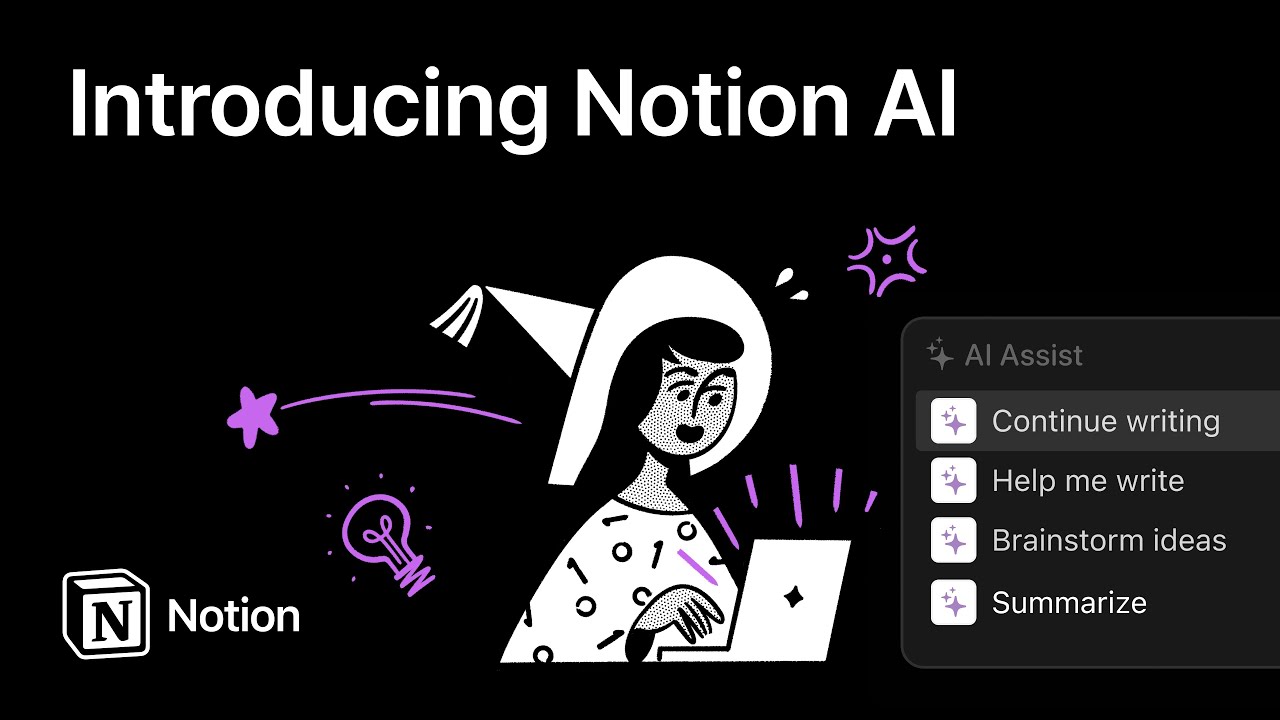
Notion AI helps address the most common pitfall of exam preparation: cramming the night before. What it does is offer organization. This way, preparation begins even before an exam is announced. At its core, it can automatically record and store notes in subject-specific folders. And now, Notion AI can also provide summaries and generate study schedules. What’s more, a chat feature lets users ask specific questions or get practice questions to facilitate faster recall learning.
Key Features:
AI summaries and note organization
Custom study tracking throughout the semester
Automated data extraction
Pricing:
Free Package
Pro Package – $12 per month/member
Max Package – $24 per month/member
Enterprise Package – Custom Pricing
Real Use Case:
University students can use Notion AI to keep weekly notes throughout the semester. Once the finals approach, they can generate a single consolidated outline that pulls the key concepts from every page recorded.
Choosing the Smartest AI Tools for Exam Preparation in 2026
Preparing for exams is crucial. So make sure your process is working. Don’t just study longer. Study smarter. That’s what AI tools for exam preparation offer. They reduce the time spent organizing notes, reviewing lectures, and identifying knowledge gaps. This way, the focus is on learning.
But realistically, no single tool covers everything. And that was the goal — let AI tools fill distinct roles. Studley or YouLearn for turning raw material into structured study sets. Claude or Gemini Notebook for reasoning through the hard conceptual questions. Notion AI as the glue that keeps it all organized in one place from day one.
The point is, the exam still has to be taken by you. However, the hours spent building study materials from scratch don’t have to be.
Selecting garments with care is a way to build a collection that fulfills daily needs and looks uniform. Shoppers often buy clothing or accessories because they feel a sudden urge but these pieces are frequently impractical or do not match what the owner likes. Planning systematically before a purchase is a method to lower waste, save money and ensure that owners are happy with what they own. Individuals who examine specific standards before they spend money are likely to choose items that match their long term objectives.
Identify a Specific Aesthetic
Aesthetic preferences are a primary consideration for any purchase. Identifying the colors, shapes and visual themes that are appealing makes it simple to find pieces that integrate with current belongings. When a shopper understands their own tastes, they are less likely to follow temporary trends that do not suit them. Reviewing the garments and accessories that are used most frequently provides information about wearing habits. Identifying recurring patterns among favorite items reveals what provides physical comfort and a sense of poise – this knowledge is a foundation for making decisions that remain pleasing as time passes.
Assess Compatibility with Current Items
It is necessary to determine how a new item fits with current possessions before buying it. A garment that coordinates with multiple existing pieces is more functional than one that is only wearable in one specific way. Planning outfits in advance helps a shopper decide if an item will be used regularly. Compatibility applies to accessories as well as clothing – For instance, a shopper who wants body jewelry should consider how the piece matches their overall appearance and current collection. Items that blend easily into a collection are more useful than those bought without a specific plan.
Examine Construction & Materials
Inspecting the build of an item before a purchase prevents future dissatisfaction. Garments and accessories that are constructed well tend to last for a longer duration, keep their original appearance and provide comfort. Examining the fiber content, the consistency of the stitching, the strength of the fasteners and the general assembly shows the durability of the product. High quality is not always synonymous with the highest price – Evaluation involves deciding if an item is worth the financial cost. A piece that remains in good condition for years is a better use of resources than many low quality alternatives that require frequent replacement.
Reflect on Practical Requirements
Clothing purchases should match the daily activities of the wearer. While an item may be visually attractive, functional needs are also significant. Deciding where and how often a piece is worn helps determine if it is a necessary addition to a collection. Functionality is also relevant for small details – A shopper who buys nose rings, for instance, is served – considering the comfort of the metal, the effort required for cleaning and how the shape fits into a daily routine – these details ensure that the item remains useful after the initial interest fades.
Prevent Hasty Decisions
Hasty purchases are often the result of feelings rather than logic. Price reductions, limited offers and internet trends create a sense of urgency. Pausing before a final decision provides time to confirm if the item is truly necessary. Waiting for a period before finishing a transaction is an effective habit – this delay allows a shopper to compare different products, judge the value and see if the item fits their goals – this practice reduces spending on unnecessary items and leads to better results.
Analyze Price & Utility
Shoppers compare the cost of an object to its practical value. High expenses are reasonable when an object resists wear, performs many functions and serves its owner daily. An inexpensive product is a disadvantageous selection if the manufacturer used low quality materials or if the object lacks a specific function. Owners determine the true value of clothing – dividing the total price by the number of times they wear the garment. Items that function well in diverse settings are more beneficial than those reserved for infrequent ceremonies. Careful buyers make logical decisions – prioritizing how long an object remains useful rather than focusing on the initial payment.
Conclusion
Effective garment selection requires more than choosing visually appealing items. Individuals develop better habits when they define their aesthetic preferences, verify how pieces fit together and examine construction quality. Daily practical requirements demand consideration to ensure every item serves a function. Avoiding impulsive purchases allows for a thorough analysis of an item’s long term value. Consumers who act with deliberate intent build collections that represent their specific identities and provide durable utility.
Finding a perfume with high standards is possible without spending large amounts of money. Many perfumes with lower prices are durable, smell pleasant and contain reliable ingredients when shoppers know what to seek. It is possible to discover perfumes that are useful and effective through research and careful buying methods.
Understanding Perfume Value
The value of a perfume is more than its price – Factors like how long the scent stays on the skin, the container and the reputation of the maker are what make a perfume a good purchase. A perfume that is inexpensive but lasts a long time and fits a person’s taste is often more satisfying than an expensive product bought without thought. Shoppers are encouraged to focus on their experience with the product rather than assuming that high costs are the only sign of excellence. Some fragrances with fair prices are made with specific ingredients and careful methods. It is helpful to compare options based on how they perform and if they are appealing to find perfumes that are worth the cost.
Researching Perfume Brands
Learning about different companies is an effective way to find inexpensive options that are reliable. Many established companies have products at different price levels – this allows shoppers to find well made perfumes without looking only at luxury items. Researching the history of a company, what customers say and the details of the product is helpful for making a choice. Some inexpensive perfumes are popular because they have attributes that people expect from expensive ones. As an example, people who like perfumes often consider Mont Blanc Explorer when they want a balanced product that smells sophisticated. Exploring companies that are not famous can lead to finding many good options.
Comparing Fragrance Performance
Performance is a key factor when deciding if an inexpensive perfume is a good purchase. A perfume that lasts for many hours and can be smelled by others nearby is a better value because the user does not need to apply it as often. It is useful to test how a perfume changes over multiple hours to understand its true performance. Comparing perfumes that cost similar amounts allows shoppers to see which ones have better results. It is better to observe how the scent changes over time rather than choosing a perfume based only on how it smells immediately – this method makes the quality of the perfume more clear.
Shopping Through Samples
Using small samples before buying a full bottle is a very effective way to find good, inexpensive perfumes. Samples allow shoppers to try different scents without spending a lot of money – this makes it less likely that someone will buy a perfume they do not like. Sample sets also allow for the comparison of many scents from different companies. Shoppers can find which perfumes have the best scent, durability and price – testing many options – this method leads to better decisions and prevents the waste of money.
Looking Beyond Popular Releases
Famous perfumes get a lot of attention but they are not the only good choices. Exploring perfumes that are less famous can help shoppers find inexpensive alternatives that are unique. Many companies make excellent perfumes that are not well known because they are not advertised heavily. Some individuals also look for perfumes that are similar to expensive styles. As an example, Versace Eros is a famous perfume but shoppers who want a good value can also look for other perfumes that work well at different prices. Looking for names that are not famous creates more chances to find good options.
Taking Advantage Of Smart Purchasing Options
The timing and the way a person buys a perfume can change the cost. Price reductions, gift sets and small bottles are ways to buy good perfumes for less money. It is also helpful to compare prices at different trusted stores to find the best deals. Buying a small bottle is a practical choice for people who like to try many different scents. It allows shoppers to use perfumes of high caliber without paying for a large amount – this approach is helpful for people who want many different items in their collection.
Considering Personal Preferences
The quality of a perfume is related to how much the person wearing it likes it. A perfume that has good reviews is not always the right choice if the scent is not what the individual prefers. Understanding which scents and strengths a person likes makes it easier to find inexpensive options that are satisfying. A list of preferred characteristics can make shopping easier – Shoppers are more successful when they focus on perfumes that match their tastes instead of following trends – this helps create a collection of perfumes that are enjoyable and have good value.
Conclusion
Finding good perfumes at low prices is possible with research, patience and comparison. Shoppers can find perfumes that are excellent without high costs – focusing on performance, looking at different companies and using samples. A well chosen perfume that is inexpensive is able to provide the same enjoyment as expensive options. Shoppers can build a collection that fits their tastes and their budget when they understand what makes a perfume valuable.
Grumpy have announced their debut LP, Unfindable Ring. It will be released on October 23 via Bayonet, following two EPs for the label, 2024’s Wolfed and 2025’s Piebald. Today’s announcement comes with the release of the new single ‘OBL’, which you can check out below.
“Touring across the country as a band full of trans people, we often worry about how we will be received, and sometimes wonder if we will be safe,” bandleader Heaven Schmitt said of the new track. “But what we usually find is love. We protect each other and laugh and live our normal lives. OBL is about how we experience joy (‘I’m so happy I could die’) despite those who don’t want us to be able to exist (‘they’re so happy we could die’).”
Of the accompanying video, they added: “We keep inadvertently making music videos, like ‘Crush’, ‘Rice’, ‘Bird Parts’, and now ‘OBL’—where I (Heaven) end up playing some kind of creep: lurking, staring, following people, usually the other members of Grumpy, many of whom are trans. It wasn’t intentional at first, but with ‘OBL’ it finally felt obvious why that character keeps showing up. We often wonder in real life; is the guy at the gas station staring because we’re trans? Is that disgust on his face? Confusion? We don’t usually get to know the answer. We’re left to wonder and go on experiencing joy and tenderness between us.”
Babehoven – the Hudson, NY-based project of singer-songwriter Maya Bon and producer and multi-instrumentalist Ryan Albert – have shared a new single, ‘Three Reds’. It’s the latest offering from their forthcoming album I See Them, I See Me, which arrives September 18 via Double Double Whammy. Check it out below.
“‘Three Reds’ is inspired by a game we play on tour — we gain points by counting cars of the same color passing by,” Bon explained in a statement. “The song plays with synesthesia and the tension between concealment and exposure, sitting with the idea that we are made of the same stuff as everything that came before us, and how that can feel like both a warning and a celebration at the same time.”
Sleep comes up at least half a dozen times on Lost Weekend. Phoebe Bridgers daydreams about sleeping; talks in her sleep; fakes sleep, which is nothing new. But one of the most gut-wrenching moments on her first album in six years arrives when she finds herself walking early in the morning, awake before her significant other. “I don’t know why I’m crying/ Until we’re dead or die trying,” she sings. We know why we get into and out of bed; we have to. Why tears well up in our eyes is harder to rationalize, but there’s a reason “crying” is the first word on the album, and Bridgers keeps stirring us to the edge of it, just as she’s forced to reckon with our proximity to death. With Ethan Gruska, Jack Antonoff, Tony Berg, and Alex G splitting production duties alongside her, it is by far her dreamiest album, a miracle of sound design and imaginative world-building. In a way, these are songs she wrote while hiding off from the world, sleeping in, with “too much money and nothing to lose.” But they are also the mark of a great songwriter who, in grief and in love, wakes to the double-edged sword of existing unalone, and can’t help but brave through the thought of oblivion: forthrightly, ambitiously, and right before our eyes.
1. The Outside
As if searching for a hidden frequency in pitch-dark space, ambient synths flatline for the first twenty seconds: we could be catching alien feedback, time traveling, or simply closing our eyes to the hum of a hospital room. Most realistically, though, we are in the middle of a funeral, the vocoder betraying a flash of dissociation (and a bit of influence from her partner, Bo Burnham, who accompanies her on vocals). “One more time for old time’s sake/ I’ll watch him get carried away,” she sings, letting the double entendre take her back in time, to a violent domestic scene that left her frozen in place, and then forward, to a concert where strangers kept her suspended in the air for what seemed like an eternity. “But I was on the outside, watching,” she repeats, yet something about the realization clears up her voice, gorgeous over Ethan Gruska’s unfurling piano and Rob Moose’s string arrangement. Raw emotion, synths fully in the rearview.
2. Lost Boys
An obvious single, ‘Lost Boys’ remains the sprightliest and most anthemic song in the context of the album, an exercise in flooding a song with intricate production while maximising its radio-friendliness; ‘Kyoto’ sounds simplistic (if still superior) by comparison. But Bridgers counters accessibility by rendering it the most lyrically ambiguous song on the record, opening it up to interpretation in ways that help frame the entire album – “Weightless but not scared” is basically an extension of the feeling on ‘The Outside’. You can hear it echo throughout Lost Weekend.
3. Kill Me
Bridgers zooms out, dodges the first person (“Times are scary”), and sinks her voice low and reverberant, a stark contrast to yet emotionally reminiscent of the Killer EP over a decade ago. This time, she sets the scene plainly (“Costume party/ When the veil was thinning”) and the plot moves fast: “He kissed me hello/ He tastes like a flower with chemical petals/ Bobby, you taught me that I know nothing.” (Ethan Gruska and Jack Antonoff are both credited with sound design, but none of their contributions overburden the arrangement; you have to lean in to hear the rustling percussion evoking the kiss.) If Lost Weekend is the Kid A to Punisher’s OK Computer, this is Bridgers’ ‘How to Disappear Completely’, and it makes sense that someone who indisputably sounds like Cameron Winter would be her Thom Yorke, referencing the case of a man who was found dead on a beach, dressed in a suit, with a scrap of paper in his pocket that read “Finished” in Persian. So the song – the longest on the album – cuts off abruptly, at the peak of its drama.
4. The Governor’s Waltz
With Christian Lee Hutson’s fingerpicked guitar and mandocello taking center stage, ‘The Governor’s Waltz’ hews close to the sound of his Bridgers-produced albums, while Alex G brings his We’re All Going to the World’s Fair ghostliness to the funhouse. Caroline Shaw’s vocals may be otherworldly, but Bridgers’ lyrics don’t leave much to the imagination, relaying the demise of a relationship in plain, if still playful, language. Someone had the fine idea to inject the echo of a dance beat as she sings of “dancing ourselves clean late New Year’s Eve,” before landing one of the album’s stingiest punchlines: “You deserved better, you wanted me.” And what does she want?
5. Bobby
The album pummels back to life with ‘Bobby’, and Alex G’s conspicuous absence is filled out by Antonoff’s banjo and head-spinning synths – not to mention electric guitar, which Jesu and Mike Kinsella also, astoundingly, supply on the same song. It’s a dizzying rush of infatuation that spins the portentous “end” in a positive light, cushioned by Burnham’s baritone and Shaw’s viola. “We’ve got stars on the ceiling and clothes on the floor/ And a thing in a box I don’t fuck anymore,” Bridgers sings. It’d be as radio-friendly as ‘Lost Boys’ if it didn’t end in a minute-long puddle of synths, like falling asleep to the light at the end of the tunnel.
6. Lost Weekend
The title track strips everything down to Bridgers’ voice and a droning church organ, mostly, with tender flourishes filling in the cracks of her vulnerability, palpable in her confession that “I had the thought you would outlive me/ I loved you, and you couldn’t forgive me for that,” or the more headline-grabbing “I’m supposed to be married, but I called it off.” What sounds at first like Bridgers giving herself some breathing room, steadying herself in a moment of upheaval, turns into an uplifting swirl of production – as soon as she runs out of words, the sky seems to open up and steal every string instrument from the musicians’ hands, streaking the clouds.
7. Haunted
And so we find Bridgers traveling above ground, fighting insomnia with painkillers and a streak of hope for the future. “I have no secrets, only feelings/ And I know those go away,” she sings, or at least she can escape the house that’s definitely not haunted by going on the road again. “I am not afraid,” she once again declares, but this time it’s a feeling that leads, not a clarifying sentence. It’s a country song complete with pedal steel courtesy of Greg Leisz, but its sense of propulsion is extra-human; three different people contribute drum programming, and it somehow works in carrying Bridgers away. Of course, it helps that her boygenius bandmates are right there beside her.
8. Panorama
The sky is once again Bridgers’ canvas, and for two whole minutes ‘Panorama’ revels in a kaleidoscopic array of strings, horns, and synths before settling into Ethan Gruska’s woozy piano. Checking in after a long trip, the singer is spent, and the hint of vocoder gives something away, pushing her unfiltered self, like a drink, further on the outside.
9. Still Standing
In the most delicately hushed voice, Bridgers returns to the violent incident alluded in the opening track, trying to make sense of the details still etched in her memory. How to reconcile the empathy and gratitude she feels in the wake of her father’s death with the indifference she’d grown accustomed to, a defence mechanism. Maybe she recognizes her own need to escape, as conveyed in ‘Haunted’, when she sings, “You left your suitcase by the bed/ Like you needed to know you could go whenever you wanted.” There are gaps and in her memory as well as her imagination, and when she tells herself it wasn’t so bad, “in a way” is doing a lot of the heavy lifting. It’s one of Bridgers’ most devastatingly conflicted songs, and all the more resonant for it.
10. Liberty Tree
It makes sense to follow ‘Still Standing’ with a joyfully carefree song about acting a little reckless in an abandoned mall and running through the airport; to have some fun while putting herself in the shoes of her child self, if you want to get psychoanalytical about it. “You were made in the image of god/ But you look like your mom/ In this picture of us,” she sings, giving Burnham a run for his comedic money, before landing on a crushingly sincere note: “Don’t die, Bobby/ Before I die/ It feels so good to have you in my life.” Instead of ending right there, the song balloons back into its cosmic melody, if only for a moment.
11. Never Going Back!
Bridgers repeats “The way it used to be is not the way it is” like a triumphant mantra, warm enough to huddle around the campfire. She even lets out a euphoric scream before the instrumentation is reduced to a simmer, making way for a sobering voice message from her dad. “I know you’re busy. Being a rock star takes up a lot of your time, I imagine,” he says, words strung with guilt after she’s basically boasted about all the other things she can do with it. After ‘Standing Still’, you wonder if this could really be the same person haunting Lost Weekend, and ‘Never Going Back!’ sounds like Bridgers wondering the same thing. “The past is looking brighter all the time,” perhaps, and yet it can’t be changed.
12. Other Plans
There’s a sadness reverberating through ‘Other Plans’, but the least decorated song on the album goes to show that love is only as simple as succumbing to fate, even against one’s best instincts: a beautiful, helpless feeling.
13. Lost Parade
A distorted memory or a twisted future? ‘Lost Parade’ offers some much-needed pause before the record’s breathless final stretch.
14. I Can’t Wait
‘I Can’t Wait’ might be Lost Weekend’s crown jewel, a bid to let life drag on in misty reverie, leaving the past behind. It’s a gradual liftoff, and with the return of “Son-John Johnson,” as the voice that now sounds even more like Cameron Winter is credited, a big payoff. “All my life/ Side by side/ Hyde Jekyll Hyde/ Finally together,” they sing in curious harmony, and there’s Conor Oberst peeking through with a harmonica. The credits may be rolling, but this is not the end; it feels like a satisfied yawn before the world stirs up.
15. As Above
The old Hermetic axiom that gives the song its title suggests that all life dissolves into what the occultist Helena P. Blavatsky described as an “etherealized astral planet,” which might as well be where the album is set. The acceptance of death’s reality and the possibilities of a new life coalesce in climactic fashion; the emotional rollercoaster leaves Bridgers wildly defiant, mustering all her strength to proclaim: “You won’t have to believe in magic/ Leave it to me, and I’ll make it happen.” Unlike Punisher’s epic resolution, the instrumentation seems to be working against her – shrinking, fading, highlighting the strain in her voice, the futility; and the magic.
16. Lost Weekend (Reprise)
The album grants itself a smooth landing, Bridgers’ voice clear and sober, even if the distant, wailing chorus of ‘Kyoto’ inevitably comes to mind as she resolves, “When a dream comes true, a fantasy dies.” Just like the reprised melody bears traces of ‘Graceland Too’, except there’s no moon to stare at, no stars in the sky – only on the bedroom ceiling, and if you’re lucky enough, one of 40 planetariums around the globe. It may not be as poetic or fantastical, but Bridgers doesn’t make it sound so bad, this earthly plane. In a way, there’s no universe where Lost Weekend could be any better.
“Actors should never judge their characters.” For NYC-based actor Vaibhav Taparia, the line is more than an acting philosophy. It is the foundation of how he approaches a character, whether he is performing on stage or in front of a camera. His work often gravitates toward complicated people whose choices are difficult to defend but whose emotional lives are impossible to dismiss. “Perhaps the most complicated thing, morally, is to relate to difficult characters. To play a rotten guy, someone very far from me,” Taparia says. That instinct to understand rather than judge has shaped a career that spans classical theatre, new work and an increasingly active slate of independent film. His training on stage has given him a rigorous approach to character construction, while his recent screen work has pushed him toward a different kind of performance, one built around restraint, physical detail and the smallest emotional shifts.
In Rajiv Joseph’s Guards at the Taj, produced by NextStop Theatre in Virginia, Taparia played Humayun, a young imperial guard confronted with an order of almost unimaginable brutality. Opposite Vish Shukla, he carried a ninety-minute story that moves from friendship and comedy into trauma and moral devastation. “The challenge in playing Humayun is not making him likable. It is making him understandable,” Taparia says.
To find that understanding, he looked beneath Humayun’s obedience and searched for the fears driving it: fear of his father, fear of authority and fear of losing the structure that has taught him how to survive. The performance reveals the vulnerable man beneath the uniform without excusing the choices he makes. That process of building a character from the inside out has become a throughline in Taparia’s work.
His recent theatre work includes the world premiere of Dakota Silvey’s Flaco at the International Human Rights Art Festival in New York, where he played a complex activist in the one-person show, as well as Stephan Morrow’s futuristic Cyrano reimagining, The Story of Sal B. and Barbranne: A Mob Fantasia, at Theater for the New City. The projects have allowed him to move between classical material, contemporary drama and experimental work, while developing the psychological approach that now informs his screen performances. “Each format asks for a different kind of listening,” he says. “A full production allows behavior to accumulate across weeks of rehearsal and repeated performances. A staged reading requires immediate choices without hiding behind elaborate design.”
But film has introduced another kind of discipline.
For Taparia, the camera demands that the actor translate the same psychological depth into much smaller gestures. There is no sustained stage performance to carry the audience from one emotional beat to the next. Instead, the character might be built through a look, a pause or a subtle change in physical behavior that the camera can capture in close-up.
His recent short film Shiela, directed by Sachin Narain, puts that approach to the test. The atmospheric independent film follows a man consumed by the memory of a woman named Shiela. What initially appears to be an ordinary encounter at a roadside establishment gradually becomes something more unsettling as the protagonist travels through desolate roads and suburban landscapes searching for her. The film ultimately arrives at Johannesburg Cemetery, where he discovers Shiela Higginson’s grave, revealing the reality that has been driving his increasingly obsessive journey.
Narain tells the story through atmosphere rather than exposition. Tight, claustrophobic shots inside the protagonist’s vehicle contrast with expansive aerial images of empty roads, suburban sprawl and the cemetery. A cracked windshield repeatedly distorts the world around him, functioning as a visual metaphor for his fractured perception and unresolved trauma. Taparia anchors that visual language with a restrained performance. Rather than explaining the character’s grief, he allows it to register through behavior and presence. The result is a performance that has to communicate a great deal while saying relatively little. The production itself presented significant challenges. “We shot this in winter, so it was freezing during the outside shots,” Taparia recalls. The cold was compounded by the limited daylight. With the sun setting early, the production had a narrow window in which to capture the necessary exterior shots while maintaining the correct lighting and continuity. The cemetery sequence added another logistical challenge. Narain wanted authenticity, so the production chose to film in an actual graveyard rather than recreate one. Securing the necessary permit was a difficult process, but it allowed the filmmakers to preserve the realism that is central to the film’s atmosphere.T hat authenticity becomes particularly important in the film’s final movement. The cemetery is not simply a backdrop for the revelation. It becomes an extension of the protagonist’s psychological state, giving physical form to the grief and denial that have driven the story.
The experience also reinforced what Taparia sees as the difference between performing for a live audience and working for a camera. “Film acting is more technical in a way,” he says. “So much of it is continuity, not looking at the lens, micro-moments.” He encountered that challenge directly in Insurrection, a film centered on the 2021 South African riots. Taparia plays a shopkeeper whose business, built over years, is looted and destroyed. The role required him to portray the character at different ages and emotional stages, moving from a bright-eyed and hopeful younger man to someone whose optimism has gradually been worn down by life, before finally reaching the point where the destruction of his store wipes out what remains of his hope.
The production required considerable attention to continuity. Scenes of the looting were filmed from different angles, meaning the shop had to be repeatedly reset while Taparia recreated the same movements and physical interactions. For the actor, the technical demands became part of the creative challenge. “What also made it tough was that I had to play the character younger and older,” he says. “To move from this bright-eyed, hopeful man to one who has struggled through life, and his hope has been dimmed a bit due to life, but then to it being completely wiped out once his shop has been destroyed.” The role gave him an opportunity to explore something he finds particularly compelling about screen acting: how an actor can communicate an entire history without necessarily verbalizing it.
That sensibility connects Insurrection with Shiela. One character loses his livelihood; the other is unable to accept the loss of a person. Both are stories about ordinary people whose internal worlds are transformed by experiences they cannot undo. Taparia is drawn to precisely those kinds of stories. “These are my favorite kind of projects,” he says. “I look to tell depth-driven stories through the lens of everyday people.”
That philosophy extends beyond the projects themselves to his broader approach to the profession. For Taparia, versatility is not simply about being able to move between genres or mediums. It is about making strong, specific choices and finding the emotional logic that connects a character’s behavior to their history “Ultimately, this is how the audience is also going to connect to the character, whether this is in a Broadway house or a movie theatre screen.”
That connection between stage and screen is increasingly shaping the next chapter of his career. Theatre has taught Taparia how to sustain a character’s journey, while film has challenged him to compress that journey into precise, often almost imperceptible moments.
His upcoming screen project Gravitas, made alongside fellow South Asian creatives, continues that movement toward film and expands his work with a new generation of filmmakers and performers.
For now, Taparia has no intention of choosing between the mediums. The scale may change, the technique may change and the relationship with the audience may change, but his central question remains consistent.
What does this person want? What stands in their way? And what happened to them that made them become this person?
Seth Rogen has come a long way since embracing stand-up comedy in the ‘90s. He quickly graduated to TV shows and movies, becoming one of the most well-known comedic actors of his generation.
On top of that, Rogen expanded his horizons to produce, write, and direct various projects, which means he’s well-versed both in front of the camera and behind the scenes. His net worth must be substantial by now, no? Here’s what we know about the actor’s earnings.
Most of it is thanks to his lucrative entertainment career. Rogen began performing stand-up as a teenager before making his TV debut in cult series Freaks and Geeks in 1999. While the show only lasted one season, the cast included several future stars. Rogen was no exception. From there, he pulled double duty as both writer and actor in TV show Undeclared, after which he and friend Evan Goldberg began developing screenplays together.
Rogen’s first bigger movie role was in The 40-Year-Old Virgin, followed by a lead credit for comedy Knocked Up in 2007. That same year, he co-wrote and executive produced Superbad. He continued to appear in comedies like Pineapple Express, Zack and Miri Make a Porno, and Funny People.
In the early 2010s, Rogen began taking more risks in his career. The actor appeared in The Green Hornet, which he co-wrote, as well as dramedy 50/50, Kung Fu Panda 2, and TV series The League. In 2011, Rogen and Goldberg founded a film and television production company that would go on to produce projects including Preacher, The Boys, Black Monday, Sausage Party, Good Boys, and Teenage Mutant Ninja Turtles: Mutant Mayhem.
Rogen made his directorial debut with This Is the End, followed by the controversial movie The Interview. On the acting side, he continued mixing mainstream comedy with more distinctive projects. You might have seen him in Neighbors, The Night Before, An American Pickle, Steve Jobs, and The Disaster Artist.
As for his most recent career, Rogen moved beyond the stereotypical stoner roles that had defined his early fame. Credits include romantic comedy Long Shot, Disney’s The Lion King remake, and Spielberg’s semi-autobiographical The Fabelmans. Rogen also created and stars in acclaimed Apple TV comedy series The Studio.
Besides his Hollywood gigs, Rogen wrote a book, co-founded a cannabis brand that expanded into home goods, and kickstarted a comedy-driven charitable organisation.
Seth Rogen Salary
Actor salaries are typically kept under wraps, but reports suggest that Seth Rogen’s paychecks are on the hefty side.
According to Variety, he is paid 750K/episode for Platonic. The Canadian actor also earned around $8.4 million from upfront and backend compensation for movie The Interview.
Seth Rogen Highest Grossing Movies
While Rogen’s salary is impressive, his movies also make a bang at the box office. His highest-grossing titles are voice roles: The Lion King, The Super Mario Bros. Movie, Mufasa: The Lion King, and Kung Fu Panda 2.
In 2026, fans can catch Seth Rogen in comedy The Invite, opposite Olivia Wilde. He will also star in upcoming dramedy Babies, alongside Anna Kendrick.