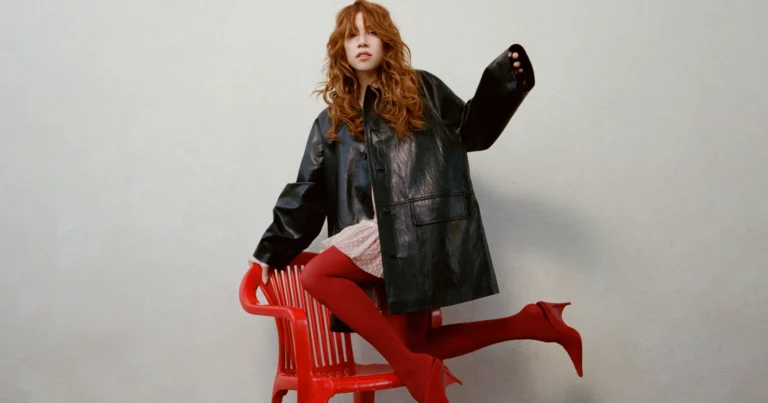
Premium Japanese sportswear brand Descente is gearing up for the summer launch of its highly anticipated 2026 Spring/Summer Golf Collection campaign, fronted by global ambassador and Chinese PGA TOUR professional Haotong Li.
The upcoming digital and social media push spotlights the label’s new Pro Series apparel and cutting-edge techwear upgrades, including Schematech Sky Knit fabrics and moisture-wicking compression layers engineered for the international tour.
Behind the camera, Los Angeles-based Director of Photography Honglin Zhu was tapped to helm the campaign’s visual identity, translating Descente’s high-performance tour apparel into a sleek, striking lifestyle narrative.
Zhu has built a reputation for navigating complex cross-cultural production frameworks; managing the visual pipeline from principal photography to the final color grade. His portfolio spans award-winning festival shorts like Mingling to viral, high-traffic 9:16 vertical series for platforms like TikTok Shop, ReelShort, and DramaBox—a specialized expertise that earned him a feature in The Wall Street Journal in March. For this brand rollout, Zhu leverages his unique dual-track mastery of high-end commercial polish and digital efficiency to give the campaign a distinct global appeal.
Lensing a global sports icon who has anchored Descente’s roster since 2020 requires looking beyond athleticism. Li is more than just an athlete, he is a sports legend and a cultural icon. For Zhu, the visual goal for this new Descente commercial was to translate Li’s on-course reputation into an aspirational campaign asset.
“For this commercial, I really wanted to look past the technicality of the swing and focus on his profound respect and raw passion for the game,” Zhu says. “Haotong is an incredibly expressive and emotional competitor on the course. He carries this intense fire, and you can see this deep, unwavering hunger for victory right in his eyes. That’s exactly what I wanted to amplify through the lens.”
The creative brief required showcasing the collection’s technical silhouette—including structured, ultra-stretch Pro Series pants and athletic perforated jackets—without rendering the content clinical. “It’s about capturing those quiet, high-stakes moments of focus—the grit, the determination, and the spirit of a true athlete,” Zhu notes. “To me, that emotional drive is the perfect reflection of what a premium brand like Descente stands for.”
Having shot major commercial campaigns for VOGUE China, FILA, and TikTok’s Super Brand Day, Zhu tailored the Descente campaign’s grammar to how modern global audiences digest digital content.
“Because China is so technologically and digitally integrated, the Chinese audience processes visual information at an incredibly high velocity,” said Zhu. “This directly shapes the commercial aesthetic. When I approach a Chinese commercial, the visual language needs to be highly kinetic and visually dense.”
He explains: “The camera movements are sharper, transitions are seamless, and there’s a strong embrace of a glossy, futuristic aesthetic—think clean, high-key lighting, vibrant color palettes, and a flawless digital polish that instantly pops on a screen. It’s also inherently mobile-first, so the framing often maximizes vertical space and blends mixed media or UI elements organically into the cinematography.”
Domestic campaigns generally pull from a different visual tradition. “An American commercial often leans into cinematic realism and texture,” he explains. “Western audiences still heavily sub-consciously crave that legacy film look.”
His cinematic approach in the US involves more textured lighting, leveraging natural shadows, richer contrast and a slower, more grounded camera pacing “that allows the narrative to breathe,” said Zhu. “For commercials in China, I’m capturing a hyper-efficient, polished future; for the US, I’m often chasing an organic, character-driven intimacy.”
Whether operating as a gaffer on vertical dramas like Vicious (65 million views) or serving as DP for commercials starring sports icons like Ying Ruoning and Lily He, Zhu anchors his commercial methodology in what he defines as “polished authenticity.”
“Absolute realism can sometimes look flat or unpolished on screen,” Zhu says. “My approach is to find the sweet spot where truth meets beauty. I keep the logic of the lighting natural and organic—so the audience believes the world we’ve built—but I wrap the light to make the skin tones pop, clean up the backgrounds, and ensure the overall image feels bright, premium, and aspirational. It’s about elevating everyday life into something captivating without losing its soul.”
Zhu, an alumnus of Hong Kong Baptist University and Chapman University’s Dodge College of Film and Media Arts, recently won awards for his gangster-themed gritty short film Mingling, which screened at Mumbai Shorts International Film Fest, FIRST Fantastic Film Festival, and won the Remi Award at the WorldFest-Houston International Film Festival.
To execute his aesthetic to realism across tight commercial schedules, Zhu relies on exhaustive technical preparation long before arriving on location.
“The fashion and commercial worlds move incredibly fast, and to stay sharp, you have to be a lifelong student,” Zhu explains. “My approach to staying versatile is simply being the most prepared person in the room. Pre-production is where the real work happens.”
He spends a lot of time in research mode; digging for visual references online to align with the director’s vision, and then backing that up with concrete tech preparation. “For example, I will run lens tests to see how the glass behaves, do lighting tests to perfect the contrast, and make sure the entire package is dialed in,” said Zhu. “When you do your homework, you can handle any curveball a major fashion shoot that Descente or a VOGUE China shoot throws at you.”
Earlier this week, the Killers frontman Brandon Flowers announced a new solo album, THRASHER, arriving August 21 via Island. Today, he’s shared its twangy first single, ‘Plans’, which was recorded in Nashville with longtime collaborators Shawn Everett and Jonathan Rado. Check it out below.
THRASHER marks Flowers’ first LP in over a decade, following 2015’s The Desired Effect. The last Killers full-length was 2021’s Pressure Machine. You might recall that one featured Phoebe Bridgers, who also released the first single from her upcoming album today.
A couple of years ago, a flood of joy was visible on the horizon of Tasha’s music. All of This and So Much More was the titular refrain of her last album, which is deeply actualized on the New York-via-Chicago artist’s fourth LP, You Are Spring!, out today. The via is an important part of how it came to be: after portraying Nacna in Illinoise, the Broadway adaptation of Sufjan Stevens’ landmark album, Tasha relocated from her native Chicago to New York, where she quickly went back to working on her next album. All she knew, to start, was that she wanted it to be released in the spring or summer, because all of her past records had come out in the fall.
In fact, discussing Tell Me What You Miss the Most half a decade ago, she’d told me she rarely feels the urge to sit and write in the summer. Now, Tasha talks about being inspired by looking at the sun out the window while crafting most of You Are Spring! the same way she found comfort, back then, in “sitting alone in my room with the radiators kicking.” But the point of Tasha’s work is never linear progression, changing while moving from one place to the next, so much as the beauty orchestrating and constantly rearranging itself in between; past selves seeping through the present; via as home. “There’s life to be found now,” she sings, echoing Gwendolyn Brooks’s foundational poem ‘To the Young Who Want to Die’ while harmonizing with Brooklyn’s L’Rain and Chicago’s Jamila Woods. Halfway through beloved cities, but most of all: right here.
We caught up with Tasha to talk about cities, sunsets, the clarinet, and other inspirations behind her new album, You Are Spring!.
Cities
As much as there is a lot of nature imagery, I think this record is also really inspired by what it feels like to live in a city, as someone who grew up in a city and now is living in a new city for the first time. I’ve lived in the city where I was born for almost my entire life. Honestly, moving to New York and experiencing the seasons changing in a new place is really inspiring to me. It’s like experiencing a season change for the first time, almost. Becoming familiar with a new place, learning to love it, learning how to be comfortable in it. is so connected to thinking about time passing and the emotional rollercoaster that comes with that.
Even though I was here for one spring before when I was doing Illinois, it was different because my time was different, my life was different, and my life was really structured around that show, so I was processing things in a different way. Whereas 2025 was kind of my first real entrance into spring. I had already started recording – I went to LA in May of 2025. I hadn’t written all the songs yet, but I’d written a bunch, and I didn’t have the intro track written yet. I didn’t have the title yet. Listening to ‘Clarion’, which was a really big part of it, I just realized my relationship to spring, and what it means to sort of find one’s footing and to really feel so much possibility.
What shape did that sense of possibility take for you during that particular spring?
I think I was just really thinking about what it meant to make a life that was really mine, and that was really shaped by my own desires and dreams. Moving here was such a big decision because Chicago has shaped me so much – both that city and the people there, and my family, who are all still there. It was very dramatic to decide to leave. I think that the first few months here were very fun, but it’s completely disorienting. Anyone who moves here can tell you that. Even though, again, I’d been here for many months, my life looked really different. I think I see those months of writing songs through March, April, and May as me really reveling in this freedom.
I think sometimes about the way one record connects to another. All of my albums are really different and have been written and recorded in very different ways, from different places in my life. But I do think there’s sometimes one song from the last record that feels like the thread or the catalyst that springboards into the next one, whether I know it or not. When I think about All This and So Much More, the big theme and refrain of that whole album and the way that it ends is this idea of “you could have all this and so much more.” It was me just getting this taste of “there’s all of this goodness to come.” I think You’re Spring! is sort of the aftermath, the fruition of that. It was really important for me in that time of year to capture what that joy and excitement felt like.
Sunsets
In ‘Special’, I have this line, “The sunsets still dazzle everyone.” I feel like a lot of what I was experiencing was this sense of, “Okay, Tasha, open your eyes, see what’s around you. Look at how wondrous it is.” I have this window in my room here with a little fire escape. There’s a view where I can see a little bit of Lower Manhattan and downtown Brooklyn. It faces sort of southwest diagonally, but I get some really incredible sunset views. In this period of what was a cycle between loneliness, thrill, and self-actualization, there was a lot of reflection that happened sitting on the fire escape and watching the sunset. There were times when maybe someone else was sitting there with me, but mostly alone. A lot of reflection time happened in this little corner that I have here.
New York – everyone says this – demands so much, and it’s so oppressive to the senses when you’re out in it. [laughs] Having a shelter, a bubble of peace from it, really does wonders for one’s nervous system when living here. This was really my bubble, my shelter zone, my little fire escape sunset view. A lot of songs were written sitting in this room and looking out the window. ‘Perfect’ and ‘Porous’ were the last songs I wrote, and those were written when I went to a writing residency in Nantucket last September. I knew I wanted to finish writing the record, and I was about to go to LA right after the residency to finish recording, so I needed some more songs. ‘Quick!’ was written sitting on a blanket in the sunshine last June, and ‘Summer’ was written in the little apartment I was staying in when I was doing Illinois on Broadway. I was staying in the West Village. And then all the other songs were written in this room, so they really feel like a product of my internal processing, my place of respite, my own sort of emotional workshop zone.
Having some distance from the other songs and being in a different season, how had your perception of the record developed when you were finishing the album?
I think there’s this acknowledgement that I get to really indulge in this joy because I know that it’s temporary, just like everything else. I feel like by the time I was writing the last couple of songs, they felt a little bit like the bow that gets tied. By the time I wrote ‘Perfect’, it was September, the season was changing again, and the quality of the light was different. But like I said, the reason that I think season change in general feels important to this record – I have a line in that song that says, “I’m falling for the changing season’s light.” Dusk and sunsets are in there again, and this line, “I’m not brave, I’m not tough, I just need to see a dream come true somehow.” I feel like I am just thinking about how so much of that whole period of time was about dream-following and dream fruition – various dreams of various sorts.
Then, in ‘Porous’, the last song that was written, there’s a sunset in there, too. Looking at the lyrics, it’s funny to see how many times it comes up. [laughs] I honestly think ‘Porous’ feels like a really big representation of what that whole year was feeling like. Because there’s missing, there’s lovers that have come and gone, there’s the sunset over the city I’ll learn to love. It’s thinking about rushing toward a dream and still having fear, but having trust. A place feeling like home; so much of this is also homemaking and what home means. And this line, “My future’s all mine” – again, coming from the last record, coming from ‘Love’s Changing’, it’s really thinking about what the future looks like and what time passing looks like. ‘Porous’ does feel like this ecstatic recognition of, “Everything that I’ve wanted, I have.” So much of life, especially as an artist, makes it easy to compare what you’re doing to other people because other people’s achievements are broadcast with such proximity. Having made so many records now at this point, I think I have moved internally to a place of, “Everything that I have, I’m grateful for.”
Home
As someone who’s always explored the shifting nature of home, something that struck me about this record is how much stock you put in homemaking as almost a separate thing.
I’ve said this about ‘Clarion’ – it’s named after this town in Pennsylvania that I was driving past a lot between Chicago and New York. I went back to Chicago six times or something last year for various reasons; I just had a lot of stuff to do there. So there was a lot of thinking about this transition of home. In ‘Clarion’, I say the line, “Clarion, I’m halfway home.” Home is both Chicago and New York, and to me, in my mind, “I’m halfway home” is pointed in either direction. At that time, I wasn’t sure yet if I could call New York home, even though I lived here and had no plan to leave. There was a way where it was like, “That’s not my home, though. Chicago is my home.” But that continued to shift as I processed what making a home meant. In Chicago, home was different because it was the place I’m from, the place I grew up, and the place where my deepest and longest relationships still reside. It’s the place where I lived with a partner for the first and only time, so homemaking was very much centered around that.
Here and now, homemaking is, yes, my physical space, but it feels almost more external. It’s about finding the people here who can be my home people, relationships I can nurture and invest in. It’s about finding places, corners, and activities in the city that feel personal to me and important to who I am. And it’s music-making, too. It’s playing enough shows and being in enough rooms with people where I get to share my music, because that’s really important to me. I really had that in Chicago. I have it sort of here, but I’m kind of building it from scratch. So there are a lot more intricate puzzle pieces that I have to put together.
Recording in LA with Gregory Uhlmann
I like what you said about music-making and homemaking being intertwined. With that in mind, did recording the album in LA with Gregory Uhlmann shift the energy at all?
It’s interesting because we didn’t have that much time to record. It happened really fast, and a lot of recording happened remotely. Greg did a lot of tracking on his own and sent things to me. I recorded the vocals in New Jersey with my friend because our schedules were crazy. Greg is very busy with his many music projects, as I’m sure you’re aware, so we were squeezing it into a short amount of time. He has his own influences and musical references, and his musical imagination is just insane. So many of the projects he plays in are different, from SML to the stuff he does with Meg Duffy in their duo, or his years playing with Perfume Genius. He can take my demos, which are just guitar and vocal and really find ways to make them into entirely new universes.
Our recording process is most of the time just the two of us, and he has a really lovely little studio attached to his home that has a beautiful garden and outdoor space. It feels very LA to me – it’s very lush, sunshiny, warm. While I think that was present a little bit on the last record, it feels really present on this one, too. As far as the references, we were both listening to a lot of really lush music. We both listen to a lot of old Brazilian samba and bossa nova, like Milton Nascimento and Gal Costa. He has a bunch of nylon-string guitars, and a lot of the record was recorded on nylon-string guitar. But I feel like that sort of expansive quality of the music feels very indicative of recording in LA with Greg. He’s so great at creating these layers and layers of sparkle. I don’t think it would sound like that if it was recorded in Brooklyn. [laughs]
How did the sense of familiarity of working with him again influence the process?
The turnaround from the last record was kind of fast, and I wanted to work with him again because I knew I wouldn’t have to go through the process of becoming familiar with someone. It requires so much trust, and I’m kind of protective of my songs or feel a bit shy sometimes, to be honest. I was really counting on working with someone where I knew I could send the songs and wouldn’t have to feel nervous or shy about what they might think or if they would want to work on them. I obviously asked Greg, “I have a few songs, I think I’m gonna work on another record, do you want to do this one again with me?” He was immediately down, which I love. I really appreciate his friendship, his excitement, and his trust in me to make something like this.
Having worked together before allowed us to work a little quicker, and it allowed me to have a little bit more of a voice in the recording process. With every record I’ve made, I think I’ve learned more. I don’t really consider myself an executive producer – I haven’t cultivated and perfected those kinds of skills – but I do see myself as more of a producer than I was two or five years ago. Working with Greg for a second time really opened up that door in a bigger way, gave me more confidence, and allowed me to feel like I had more say. Also, I just know how to communicate with him. Not to say I can’t do that with a new person on the next record, but he has a real softness to his temperament that I really value and appreciate. It allowed for a very intuitive time in the studio.
The clarinet
You mentioned ‘Special’ before, where you make your clarinet debut. What inspired you to take it up and make it a part of the record?
I have clarinet on the last record – my friend Adeline Strei recorded some clarinet on All This and So Much More – and I have flute. I think it was partially meeting more musicians who play other instruments, and just becoming kind of musically intrigued and excited by that. It sounds kind of basic or naive to say, “I met other people who play other instruments.” [laughs] But it really was a part of it, and I was listening to so much more music. I was listening to a lot more jazz and classical – which I always have, but the volume was increasing. I wasn’t really playing a lot of guitar or feeling super inspired by it, actually, and I wanted to play something else that was going to shock some inspiration into me. I don’t have room for a piano in my apartment, so I’d been thinking about the clarinet and just decided to go for it. I reached out to some friends and found a place I could rent a clarinet from. I found a teacher, though, to be honest, I only took two lessons; most of my learning was just teaching myself and doing it on my own. It was immediately so fun and really inspiring.
‘Special’ was written because I wanted to write a clarinet song. I wanted a song that I could play clarinet along to, and I could only play so many notes at that time since I’d only been playing for two months. So I played these guitar chords as a vehicle for being able to play clarinet to the song. And it did what I wanted it to do. It sort of reverse-engineered this inspiration that I needed. A lot of songs have clarinet on them on the record, and I recorded all the clarinet. It’s such a cool instrument. Woodwinds are beautiful – I love the tone, and I love the texture that it can add. It actually felt, and continues to feel, intuitive to me in a way. I’m not saying this as a humble brag, like, “I just can’t help but be really good at clarinet!” But I think as a singer, there’s a way that I relate to that instrument melodically, the way that I relate to my voice, the way that I think about melody, harmony, and composition
Ross Gay’s Catalog of Unabashed Gratitude
That brings us back to Gwendolyn Brooks’ poem ‘To the Young Who Want to Die’, which gives the album its name. Did something dawn on you when you came across or revisited it? Did it complete or guide the record in some way?
It did feel like such a light bulb moment. I’ve known this poem for years, it’s been a really important poem to me. There’s a book by Ross Gay called Catalog of Unabashed Gratitude that really feels in the orbit of this whole record for me, of what it means to write about joy and gratitude. Ross Gay is so good at that and has been a real touchstone for me for many years. For this Gwendolyn Brooks poem, many people have written work in response to it, especially Black people. Ross Gay has a poem that is inspired by the Gwendolyn Brooks poem, so there’s a lineage and certainly a cadre of people – I’m not the first, is what I’m trying to say.
But having written ‘Clarion’, a few other songs, and having been thinking about spring, I think it was maybe May or June that I wrote the first track. This poem just kept coming into my brain, and I couldn’t decide if I wanted to hold on to that or if I wanted to be like, “No, that is its own thing, it’s not my place.” Eventually, I just couldn’t stop thinking about it. I was like, “I think this has to be a direct part of this work that I’m trying to make.” The line that kept returning to me was, “Green’s your color, you are spring.” It was just there in my head, so then I was thinking through all of the feeling and the sentiment of that poem. The words for my song ‘Spring’ came out, and I recorded this little voice memo of the first part of that song. I didn’t even know if it was gonna be on the record, and I didn’t know what I wanted to do with it. I knew it wasn’t a full song, and then I was like, “Wait, no, this is it—this is all it is, actually. I think it should just be voice.”
In the same way that the OG Tasha fans maybe will remember from Alone at Last, from the poem that I have at the beginning – I don’t really revisit that work so much, just because it feels very baby Tasha. But I started writing songs because of my love for poetry, because I was a poet, and because I performed poems as a teenager, in college, and after that. I grew up in the poetry scene. Another reason having Jamila’s voice on that song is so important to me is because we used to read poems at the same open mics in Chicago when we were in our teens and our twenties, because she is such a fixture of the Chicago poetry scene. The work of Black women poets is such a huge part of her work and her entire oeuvre. Having Jamila [Woods] on there is a dream come true. I mean, she’s a friend, but also I’m a fan, so that felt like a really important part of the orbit of this work.
Having this opening track feels like the overlapping of all of those pieces of my identity as a poet – even my previous life as a poet. Also, thinking about young people, thinking about my younger self, thinking about my love for poetry in general. Honestly, thinking about Alone at Last and opening that album with a poem and having this little moment of return and acknowledgement where it’s less about the production and the arrangement and more about the language and the feeling. I actually hadn’t really thought about that until just now, all of those layers of connection. But allowing myself to hold on to that as a tenet of what this record could be was a huge answer.
Future generations
It’s interesting how that ties into how the record thinks about future generations – not just calling back to your younger self, but considering young people moving through the world right now.
At the end of ‘Quick!’, there’s this outro, a little lullaby part. I do see that as being sort of an offering to both a younger self, but also a young person. I was kind of thinking about my nieces. I have two baby nieces, and this line, “Little girl asleep, tell me what you dream.” I think I am thinking about a child, and that is both me and not me. There will be a video for ‘Quick!’ that will come out in a couple of weeks, but I think we’re gonna incorporate some old VHS footage from my childhood into the video. It feels top of mind because I was just looking at some of the footage that we’re digitizing just yesterday, and it’s so insane to see. But I do think ‘Quick!’ really does tie it back to that. It’s for me, but it’s also for this sort of non-linear past me, and future child, and baby child now. I think there is a lot of kind of generational and message-passing, prayer-passing, through the circle of the record.
What inspires you about your nieces? I feel like there’s a lot of cynicism when we talk about younger generations abstractly, but not so much here.
I think this question feels connected to the song ‘Ending’, too, which is thinking about the multiplicity of this life, and the way that this joy and euphoria exists alongside terror, fear, and a real, almost impossibility of imagining a future. And then this response, I think, is really insisting on that imagination. Recognizing: How am I leaving this place? What is the impact that I am having? What choices have I made to make my presence in the world important, not just to me, but to everyone around me – to the world, to the people before and after me? And the response being this hopeful and optimistic insistence. I think the poem does this: that your life, your choices, your beauty, your joy, and your work are important.
As someone who’s not sure if I will have kids of my own, I think having my nieces and my nephew – and also, one of my best friends has two kids — there are a lot of babies kind of around me. I think it is the surest reassurance that there is so much beauty to witness, and also that it is my responsibility and our responsibility to make sure that they get that. That the world that they also get to receive and grow into. It’s sort of a duty, but not out of obligation – out of love.
This interview has been edited and condensed for clarity and length.
Award-winning comedy-drama The Bear is back with season 5, which is sure to make viewers both laugh and cry. Following the restaurant folks as they scramble to own the kitchen is just as fascinating as it was back when the show premiered in 2022.
Since then, The Bear has consistently received acclaim for its acting, writing, and directing. On top of that, many real-life culinary professionals have praised it for its realism. That must mean it could go on for years, right? Here’s what we know so far.
The Bear Season 6 Release Date
Unfortunately, we have bad news: The Bear season 6 isn’t happening. The show’s fifth season will be its last.
Turns out, creator Christopher Storer wanted to end the series even sooner, with season 4, but eventually changed his mind. However, he felt that season 5 was a natural ending point.
“As much as I’ve loved making the show, it’s time for it to end. It finishes on its own terms in a strong, in-character way. Everybody is taken care of story-wise. I’m dumbly proud of it. I hope viewers feel the same satisfaction I do,” star Ebon Moss-Bachrach recently told The Guardian.
The Bear Cast
Jeremy Allen White as Carmen “Carmy” Berzatto
Ebon Moss-Bachrach as Richard “Richie” Jerimovich
Ayo Edebiri as Sydney “Syd” Adamu
Lionel Boyce as Marcus Brooks
Liza Colón-Zayas as Tina Marrero
Abby Elliott as Natalie “Sugar” Berzatto
Matty Matheson as Neil Fak
Edwin Lee Gibson as Ebraheim
What Is The Bear About?
The Bear revolves around Carmen “Carmy” Berzatto, a world-renowned fine-dining chef. He returns to his hometown of Chicago after the death of his older brother. Leaving behind the world of Michelin-star restaurants, Carmy takes over his family’s struggling Italian beef sandwich shop.
From there, he attempts to transform the chaotic neighborhood joint into a world-class dining establishment. The show is a fascinating mix of fast-paced kitchen drama and intimate character studies. It doesn’t shy away from exploring complex themes like grief, the price of aiming for perfection, mental health, purpose, found family, and more.
If you need a refresher, the fourth season ended with Carmy accepting that he needs to step away from the kitchen in order to heal. The fifth installment picks up from there and is set over the course of an eventful day that will test everyone.
The Bear season 6 might not happen, but the final ride is one worth taking. In the UK, all episodes are streaming on Disney+.
Are There Other Shows Like The Bear?
If you enjoyed The Bear, shows with similar vibes include Industry, BoJack Horseman, The Pitt, Shrinking, and Succession. Strictly into the cooking? Boiling Point, Sweetbitter, and Kitchen Confidential might work.
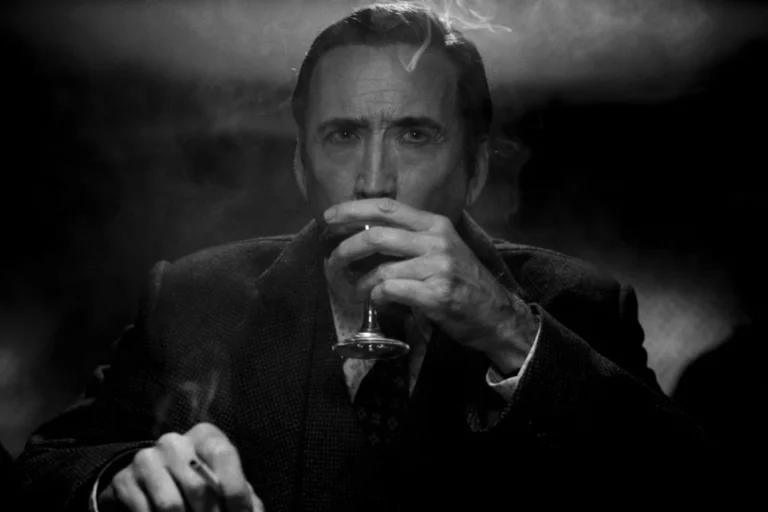
Nicolas Cage has been a Hollywood staple since the ‘80s. Known for his expressive acting style, he tends to deliver unpredictable performances that have become his trademark.
On top of that, his versatility is the stuff of legend. Cage has starred in everything from action blockbusters to horror to hard-hitting dramas and comedies. He seems to enjoy a challenge, which means that his popularity continues to be high decades after he first embraced the spotlight.
As a result, Cage’s net worth should reflect his decades-long career, right? Here’s what we know about the actor’s earnings.
If that number seems low, given his stuffy filmography, it’s because Cage experienced financial difficulties during the late 2010s. Due to lavish spending habits, he accumulated significant debt. Repaying it took a big chunk out of his fortune, once estimated to be around $150 million.
Cage began his film career in the early 1980s with roles in Fast Times at Ridgemont High, Valley Girl, and Rumble Fish. He broke through in the late 1980s thanks to acclaimed performances in Raising Arizona and Moonstruck.
The actor’s career reached a new level in 1995, when he won the Academy Award for Best Actor for his memorable performance in Leaving Las Vegas. The following years turned him into one of Hollywood’s biggest action stars. He appeared in beloved flicks Con Air and Face/Off. Plus, he continued to deliver box office hits like City of Angels, Gone in 60 Seconds, National Treasure, and Ghost Rider.
His mainstream success slowed in the 2010s, and he later had to accept roles in a series of low-budget and direct-to-video productions to help with his debt repayment.
Since then, however, he began to embrace unconventional projects that earned him renewed critical acclaim. You might have seen him in Pig, The Unbearable Weight of Massive Talent, Dream Scenario, and Longlegs. More recently, he played the main role of Ben Reilly / The Spider in Prime Video’s TV series Spider Noir.
Next up, Cage is set to star in Madden, a biographical sports film directed by David O. Russell. He’ll play John Madden, who was an American professional football coach and sports commentator in the NFL.
Nicolas Cage Salary
Actor salaries are typically kept secret. That said, deal details sometimes come to light.
According to The Hollywood Reporter, Cage entered a career renaissance with the movie Pig, making him a sought-after name once again. He was reportedly paid $7 million to star in The Unbearable Weight of Massive Talent and close to $3 million for a supporting role in Renfield.
According to the same source, he used to demand up to $20 million per film in the late 1990s and early 2000s. The actor might be earning less per project now, but he’s certainly back on track to consolidating his fortune.
Nicolas Cage Highest Grossing Movies
Cage’s highest-grossing movies won’t come as much of a surprise. Animated hit The Croods takes the lead with approximately $587 million in earnings, followed by the two National Treasure movies.
Cage is set to reprise his role as Spider-Man Noir in 2027’s Spider-Man: Beyond the Spider-Verse, the third movie in the Spider-Verse franchise. Given the popularity of the first two, this one might break his personal top 3.
In this segment, we showcase the most notable albums out each week. Here are the albums out on June 26, 2026:
Beth Orton, The Ground Above
Beth Orton’s last album, Weather Alive, had a revelatory air to it, meditative in nature but nebulous in its rich sonics, striving for a coherent mood more than any set of answers. The Ground Above is naturally framed as the wakeful and, well, grounded follow-up, situated at least one level above the subconscious. Orton still treasures liminality – “I’ve been waiting at the edge of a dream/ To jump and fly and find my beautiful wings,” she sings at one point. The Ground Above is about coming alive to each day with a wondrous sense of alertness, neither unweathered nor unkind to the dirt below. Read the full review.
Summer is pretty much in full spring, and it’s the perfect time to soak in Tasha’s beautiful new album. Opening with a title track that features Jamila Woods and L’Rain, You Are Spring! was produced with frequent collaborator Gregory Uhlmann. Commenting on the early single ‘Quick!’, the New York-by-way-of-Chicago artist reflected: “When writing the song on a warm day last June, I was thinking about how summer time always reminds me of every summer I’ve ever had. It’s a reflection on time and holding on to precious moments – but releasing scarcity. Every moment is precious but preciousness is abundant and never ending.” Read our inspirations interview with Tasha.
Chanel Beads’ transfixing new album, Your Day Will Come, has arrived. That sentence was true a couple of years ago, when the New York artist released his first album with the same title. He may be laughing at the marketing gods a little with that one, but it’s easy to sink into the new record’s hazy swell of songs, which certainly aren’t retreading old ground. The LP features contributions from Tchad Cousins (Urika’s Bedroom), Mari Maurice (more eaze), Anastasia Coope, Bella Litsa, and Isaac Eiger (Threshold).
With her twin sister Romy, Sari Lightman has made music under the monikers Tasseomancy, Lightman & Lightman, and Lightman Sisters. Today, she’s releasing her debut solo album, The Way I Saw You, which was produced by Hand Habits’ Meg Duffy, with whom Lightman shared a neighbourhood after relocating to Los Angeles. “As my friend, and also just as a producer, I knew they were just a sensitive and really thoughtful musician,” she said in our Artist Spotlight interview. “I wanted it to be this flow back and forth between us, like when we go on our walks, or even the way our friendship is – it’s very easygoing. There was no strife.”
knitting have followed up their 2024 debut, Some Kind of Heaven, with a new album called Souvenir. The Montreal grungegazers recorded and produced the album in-house, with guitarist Sarah Harris helming the engineering and the rest of the band – frontperson Mischa Dempsey, bassist Piper Curtis (Sunforger), and drummer Andy Mulcair – contributing to the production. The studio sessions took place between Dempsey and Mulcair’s home of Montreal, Quebec, and Harris’ home of St. John’s, Newfoundland and Labrador. The early singles ‘I Want to Remember Everything’, ‘I Wasn’t Fully Cooked’, and ‘Here Comes’ previewed the LP.
Los Angeles singer-songwriter Harmony Tividad, formerly of Girlpool, has dropped her sophomore album. Dreamier and altogether stronger than her solo debut, Gossip, the new album was preceded by the tracks ‘Best Dressed’, ‘Mulholland Drive’, and ‘I’m Still Learning How To Leave You’. “‘Lifetime’ is my yellow brick road,” Tividad said in a press release. “It’s me trying to negotiate with ‘living in truth’ and to accept life’s many complexities and nuances. This life is messy and it contains so much mystery that we simply have to surrender to. That is the beauty and the pain of it.”
In a funny coincidence, Brutalismus 3000 have also released their second studio album, and it’s called Harmony. The Berlin-based duo’s blend of hardcore techno and dubset is at its most ferocious on the follow-up to 2023’s Ultrakunst, which features collaborations with Boyz Noize and Underworld, as well as a spoken-word interlude from Anya Taylor-Joy (fresh off her appearance on a Rolling Stones music video). Read about lead single ‘I Bring My Gun to the Function’ in our list of the best songs of April 2026.
One of the main songwriters in Robber Robber, Zach James has dropped his latest album as Dari Bay, Surprise Wish. Ahead of the release, he shared a series of hooky singles: ‘The Joke’, ‘We’re Gonna Be Okay’, ‘Chevy’, and ‘On Your Side’. That’s nearly half the album, and the rest is just as casually enjoyable. “There’s a lot of pressure to act like you know exactly what’s going on and be smart all of the time,” James said in the album’s bio. “A lot of the record is like, ‘Fuck that.’”
Muse, The Wow! Signal; proun, Maybe Luck; Pomelo, Loreless; cate kennan,shadows; Truck Violence, The Weathervane Is My Body; Spacemoth, Inward Eye; Girl Trouble, As Is; Downtown Boys, Public Luxury; Alien Nose Job, How A Mosquito Operates; Aliya Ultan, Looks Far Woman; Basic Rhythm, 8 Bar Techno; Bernardo Castro, Cycles; Amy Rose Mills, I Think We’ve Met Before; Temples, Bliss; Push for Night, That Porous Line.
There was a time when luxury houses fought for the right corner on the right avenue. Chanel at Rue Cambon, Louis Vuitton at Champs-Élysées, Gucci at Via Montenapoleone, prestige was, indeed, measured in postcodes. In 2026, bucket-list destinations and inconvenient views seem to work best. As Rolex prepares to plant its flag on Fifth Avenue with its long-awaited new headquarters, the Swiss watchmaker has also opened its highest boutique yet, 3,000 meters above sea level. Because if you’re going to dominate luxury retail, you might as well cover both Manhattan and the Swiss Alps. Welcome to Mount Titlis.
Somewhere between the snow, a piece of telecommunications infrastructure has been sitting since the 1980s. Welcome to the Titlis Tower, designed by the Pritzker Prize-winning architectural firm Herzog & de Meuron, whose portfolio includes Tate Modern, Beijing’s Bird’s Nest, and Munich’s Allianz Arena. So what does one do with a disused 56-meter telecommunications tower? You certainly don’t replace it. You simply layer new glass-and-steel volumes into the existing structure and add vertical circulation cores, built to handle extreme alpine conditions. And then, of course, open the doors to Bucherer, the retailer brought under Rolex control in 2023.
Yet Bucherer wants you in a train, two cable cars, and the world’s first revolving gondola before you even lay eyes on it. Good thing a 360° view of the Swiss Alps doesn’t sound all that bad. Then, you can finally snap a picture on the Horizon Deck observation platform, enjoy a hot meal at Joseph’s Restaurant, the Alpine Lounge’s hospitality, and last but not least, Rolex’s waitlist. Most brands open stores to increase sales. Rolex’s demand already exceeds supply. The boutique is about tightening control over how, and where, the brand exists: image, positioning, cultural presence. The hardest part isn’t climbing the mountain. But it may be buying the watch.
Carly Rae Jepsen has shared ‘On Wires’, the lead single from her just-announced album Day and Night. The 24-track double LP unfolds within a 24-hour cycle, and the radiant, guitar-driven ‘On Wire’ is part of the day period. Jepsen wrote the song with frequent collaborators Kyle Shearer, also on production, and Nate Cyphert. Check it out via the accompanying video below.
Charli XCX has dropped ‘Wink Wink’, the third offering from her upcoming album Music, Fashion, Film. “I’m not a bad girl anymore,” she cheekily proclaims on the track. Check out the Aidan Zamir-directed video for it below.
Music, Fashion, Film, the proper follow-up to BRAT, is set for release on July 24 via Atlantic. It includes the previously released singles ‘Rock Music’ and ‘SS26’.
Phoebe Bridgers has released ‘Lost Boys’, the first single from her highly anticipated third album Lost Weekend. It marks her first new solo music in four years, following April 2022’s ‘Sidelines’. The propulsive track comes paired with a medieval-themed music video co-directed by Lance Oppenheim and Pablo Rochat and starring Bridgers alongside Skyler Gisondo. It’s got the kind of hook you can sing along to by the second chorus. Check it out below.
A look at the credits on ‘Lost Boys’ confirms some of Lost Weekend‘s rumoured contributors. Co-producing the song with Bridgers is a list of boys: longtime collaborators Tony Berg and Ethan Gruska, as well as – you guessed it – Jack Antonoff. Additional production comes from Alex G, who also played drums. Bridgers’ boygenius bandmates Julien Baker and Lucy Dacus provided backing vocals.
The list continues with some more usual suspects: Christian Lee Hutson on acoustic guitar, Will Maclellan on drum programming, Blake Mills on synths, Rob Moos on strings, Caroline Shaw on vocals, Sebastian Steinberg on upright bass, Chris Thile on mandolin, Marshall Vore on drums, Nate Walcott on trumpets, and Harrison Whitford on electric guitar.
Announced earlier this week, the follow-up to 2020’s Punisher is due August 14 via Dead Oceans. It was preceded by a series of US pop-up shows that culminated in a sold-out performance at New York’s Madison Square Garden. In September, Bridgers will go back on tour across the US, UK, and Europe.





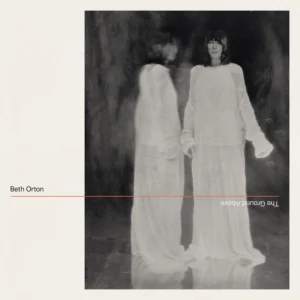 Beth Orton’s last album, Weather Alive, had a revelatory air to it, meditative in nature but nebulous in its rich sonics, striving for a coherent mood more than any set of answers. The Ground Above is naturally framed as the wakeful and, well, grounded follow-up, situated at least one level above the subconscious. Orton still treasures liminality – “I’ve been waiting at the edge of a dream/ To jump and fly and find my beautiful wings,” she sings at one point. The Ground Above is about coming alive to each day with a wondrous sense of alertness, neither unweathered nor unkind to the dirt below.


 Summer is pretty much in full spring, and it’s the perfect time to soak in Tasha’s beautiful new album. Opening with a title track that features Jamila Woods and L’Rain,
  Chanel Beads’ transfixing new album,
 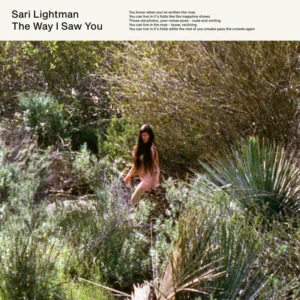 With her twin sister Romy, Sari Lightman has made music under the monikers Tasseomancy, Lightman & Lightman, and Lightman Sisters. Today, she’s releasing her debut solo album, The Way I Saw You, which was produced by Hand Habits’ Meg Duffy, with whom Lightman shared a neighbourhood after relocating to Los Angeles. “As my friend, and also just as a producer, I knew they were just a sensitive and really thoughtful musician,” she said in our
  knitting have followed up their 2024 debut, Some Kind of Heaven, with a new album called Souvenir. The Montreal grungegazers recorded and produced the album in-house, with guitarist Sarah Harris helming the engineering and the rest of the band – frontperson Mischa Dempsey, bassist Piper Curtis (Sunforger), and drummer Andy Mulcair – contributing to the production. The studio sessions took place between Dempsey and Mulcair’s home of Montreal, Quebec, and Harris’ home of St. John’s, Newfoundland and Labrador. The early singles
  Los Angeles singer-songwriter Harmony Tividad, formerly of Girlpool, has dropped her sophomore album. Dreamier and altogether stronger than her solo debut, Gossip, the new album was preceded by the tracks ‘Best Dressed’, ‘Mulholland Drive’, and
  In a funny coincidence, Brutalismus 3000 have also released their second studio album, and it’s called Harmony. The Berlin-based duo’s blend of hardcore techno and dubset is at its most ferocious on the follow-up to 2023’s Ultrakunst, which features collaborations with Boyz Noize and Underworld, as well as a spoken-word interlude from Anya Taylor-Joy (fresh off her appearance on a
  One of the main songwriters in Robber Robber, Zach James has dropped his latest album as Dari Bay, Surprise Wish. Ahead of the release, he shared a series of hooky singles: ‘The Joke’,