Ancient Chinese Taoist thinking returns repeatedly to the question of the boundary between the self and the other, the living and the dead, treating it as a passage to be traversed. This enquiry into the limits of reality and imagination finds further articulation in contemporary practices of mise en scène in photography. As Jean-François Lyotard argues in “The Unconscious as Mise-en-Scène,”1 the act of staging in art shares a similar mechanism with the unconscious in psychoanalysis. Just as psychoanalysis reads the symptom as the visible surface through which an unconscious drive makes itself legible, Kaiyuan Yang approaches ritual as the staged surface through which a collective desire persist.
Yang’s project Ghost Marriage (2024) sits precisely within these registers. A series of six photographs accompanied by sculpture pieces, takes as its subject the posthumous marriage rite. The family of a deceased unmarried son procures a deceased bride of similar age to complete the lineage in the afterlife. Throughout the project, Yang meticulously recreates the imagined dreamscape in which the ghosts gather to fulfil the wishes of the living. In 三扇门交易 (Three-Door Transaction), three central figures stand in front of the gates that signify a connection to the underworld. They are connected by red strings, each dressed in clothing that identifies them with different but entangled social classes. In 蜘蛛网(Spider’s Web), the three figures occupy a vast red web that marks the inescapable nature of ritual in Chinese tradition. Yang poses the question of whether the wealthy classes exercise control over such rituals, or are, in fact, themselves at the mercy of tradition and the unethical practices it perpetuates. Thirteen figures stand behind them around the periphery of the red web, silent witnesses who form part of the ghost marriage.
Ghost Marriage – Spider’s Web, 2024. (Photography on Giclée Print), Courtesy of the artist.
The red bridal palanquin, referencing traditional Chinese wedding customs, becomes the recurring motif at the centre of Ghost Marriage. Although the bride remains unseen throughout the series, the palanquin carried aloft by the procession signals her presence. Her concealment operates as a gesture of ownership, shielding the bride from the spectator’s gaze. Yang photographs the mountain passages along which the ritual procession advances towards an imagined site of union between the living and the deceased.
Ghost Marriage – Walking along the cliff, 2024. (Photography on Giclée Print), Courtesy of the artist.
By capturing rituals that deceptively belong to a distant past yet continue to haunt contemporary society, the work foregrounds the question of the collective unconscious. Yang’s photographic practice, grounded in mise en scène, demonstrates how the boundary between the real and the imagined dissolves, and how human desire remains the one red thread connecting generations. Ghost Marriage registers the troubled persistence of rituals whose ethical violence has never fully receded. By staging these dreamlike spectacles, Yang invites the viewer, positioned as the imagined audience of such rituals, to reflect on what our societies take for granted in their service to human desire.
There are 16 personality types in Tomodachi Life: Living the Dream, and getting every personality can feel a bit confusing at first, especially when the game does not clearly explain how the traits work. Traits are the hidden sliders that decide how a Mii behaves on your island, and they are split into Movement, Speech, Energy, and Thinking. Each one affects different aspects of a Mii’s behaviour, from how active and expressive they are, to how much they plan ahead or react on instinct.
Personalities come from how these four traits are balanced and different combinations place a Mii into four broader groups namely, Reserved, Ambitious, Outgoing, and Considerate. Each group contains four distinct personality variants, each with its own temperament, reactions, and social tendencies as your island life develops. So, if you are looking to build every type, here’s how you can get all personality types in Tomodachi Life: Living the Dream.
Tomodachi Life: Living The Dream: How to get all personality types
To get all personality types in Tomodachi Life: Living the Dream, you need to adjust a Mii’s Movement, Speech, Energy, and Thinking traits to match the combinations used for each of the game’s 16 personalities. These personalities are divided into four main groups: Reserved, Ambitious, Outgoing, and Considerate, with four variants in each group. The Overall stat does not affect personality type, so you can ignore it when aiming for specific results.
If you want to unlock all 16 personality types in Tomodachi Life: Living the Dream, the easiest way is to work through them one at a time, using known stat combinations as templates. A good starting point is to create one personality from each group first, then go back and fill in the remaining variants. Since you can edit personalities whenever you want, you can also reuse the same Mii and adjust traits repeatedly to test different combinations.
Here’s every personality in Tomodachi Life: Living the Dream, as well as the stat combinations you can use to get them:
Reserved (Green)
Perfectionist
Perfectionists are imaginative and detail-oriented, often happiest when creating or refining something. You can get this personality by setting Movement 3, Speech 5, Energy 7, and Thinking 1.
Observer / Introvert
As the name suggests, these Miis keep to themselves, show emotion subtly, and remain calm and private. Observer personality comes from Movement 1, Speech 1, Energy 1, and Thinking 1.
Strategist / Patient
To create the Strategist personality, set Movement 1, Speech 2, Energy 3, and Thinking 4. Patient Miis are measured, composed, and rarely rush into decisions.
Thinker
Thinkers are analytical, reflective, and often approach situations carefully and you can create this personality by setting Movement 5, Speech 4, Energy 3, and Thinking 2.
Ambitious / Confident (Blue)
Achiever / Busy Bee
Busy Bees are efficient, organised, and good at following plans through. Busy Bees personality comes from Movement 6, Speech 5, Energy 4, and Thinking 3.
Maverick / Individualist
With Movement 6, Speech 5, Energy 2, and Thinking 3, you’ll land on a self-assured Mii that prefers doing things its own way.
Visionary / Leader
Set Movement 7, Speech 6, Energy 5, and Thinking 4, and you get a confident Mii that’s comfortable taking charge and making decisions.
Headstrong
Set Movement 8, Speech 8, Energy 1, and Thinking 1, and you get a determined Mii that acts on instinct without hesitation.
Outgoing / Energetic (Red)
Merrymaker / Bubbly
Bubbly Miis can be created by Movement 6, Speech 6, Energy 6, and Thinking 6 and are a balanced, upbeat personality that is friendly and easy to get along with.
Charmer
To create the Charmers personality, setMovement 4, Speech 5, Energy 6, and Thinking 7. Charmer is a socially adaptable Mii that reads situations well.
Go-Getter / Adventurer
Adventurers are spontaneous, bold, and constantly looking for something new. You can create it by setting Movement 8, Speech 8, Energy 8, and Thinking 8.
Dynamo / Hot-Blooded
Just like the name, these Miis are passionate, impulsive, and act quickly. To create them, set Movement 8, Speech 7, Energy 6, and Thinking 5.
Considerate / Easy-Going (Yellow)
Daydreamer / Dreamer
Dreamers are imaginative, romantic, and often a little lost in thought. You can get them by setting Movement 3, Speech 4, Energy 5, and Thinking 6.
Sweetie / Softie
Softies are sensitive, empathetic, and highly attuned to others’ emotions. To create the Softie personality, set Movement 1, Speech 1, Energy 8, and Thinking 8.
Cheerleader / Optimist
Setting Movement 3, Speech 4, Energy 7, and Thinking 6 creates the Optimist personality, who not only stay positive but also lift the mood of those around them.
Buddy / Carer
Carers are dependable, kind, and make great friends on your island and can be created with Movement 2, Speech 3, Energy 4, and Thinking 5.
For anyone who has played the original Tomodachi Life on the 3DS, these are the same 16 personality types, and they follow the same stat combinations across both versions. You can also change a Mii’s personality at any time by selecting Edit Mii and adjusting the Personality Type sliders again.
And that does it for our personalities in Tomodachi Life: Living the Dream guide. For more gaming news and guides, be sure to check out our gaming page!
This June, Art Basel returns to Switzerland with 290 galleries from 43 countries and a programme built around a simple but ambitious idea, namely, that there is nowhere else on earth you can see this much important art all at once.
The headline addition for 2026 is Basel Exclusive, a new initiative developed in dialogue with participating galleries that asks exhibitors to hold back a selection of major works for their public debut at the fair’s VIP opening. It is an intentional move to restore some of the surprise that define the best fair experiences.
Elsewhere, the Unlimited sector gets a new curator in Ruba Katrib, Chief Curator and Director of Curatorial Affairs at MoMA PS1, who has assembled 59 large-scale projects spanning installation, sculpture, performance and film. Parcours, the outdoor strand winding through Basel’s streets and historic spaces, is curated this year by Stefanie Hessler of the Swiss Institute, with 22 projects opening up along Clarastrasse and up to the Rhine.
On top of this, two new site-specific commissions will be unveiled across Messeplatz and Münsterplatz as part of the inaugural Art Basel Awards, adding a civic dimension to the week’s programming.
Brazilian artist Sandra Cattaneo Adorno is presenting a new exhibition at Palazzo Bembo in Venice this summer, running from 9 May to 22 November 2026 alongside the 61st Venice Biennale. Called Fragments of Light and forming part of the 8th Edition of Personal Structures: Confluences, the show is curated by the artist in collaboration with architect Danilo Vespier and art historian Andrea Verganti. This marks the debut of her three-dimensional work.
The exhibition brings together a large-scale video installation, thirteen monochromatic photographs printed in silver metallic ink on dark blue paper and a new photomosaic installation of 24 prints made from a single image of the Santa Monica pier. The works are mounted on mirrored panels, which serves as a way of incorporating the viewer’s reflection into the piece. Throughout the space, bossa nova recordings by João Gilberto and Stan Getz play, referencing Cattaneo Adorno’s Brazilian background, which has been a recurring influence across her practice.
The show is presented by the European Cultural Centre Italy and admission is free. Previews take place on 7 and 8 May at Palazzo Bembo, Venezia. At its core, Fragments of Light is an exhibition about how we look and what we might miss.
Silver metallic print on Sirio Blu paper, from Fragments of Light, 2026.Silver metallic print on Sirio Blu paper, from Fragments of Light, 2026.Video projection, from Fragments of Light, 2026.
Eaux Claires, the music festival co-founded by Bon Iver‘s Justin Vernon and the National’s Aaron Dessner, takes place July 24-25 this year. The lineup includes Dijon, Daniel Caesar, Lil Yachty, Aimee Mann, Kevin Morby, Julianna Barwick & Mary Lattimore, Hotline TNT, and “Bon Dylan.” When it was announced, the nature of “Bon Dylan” was unclear. Today, we get the details: it’s a covers band.
Vernon will be performing as “Bob Dylan circa 1994,” backed by a group of friends and frequent collaborators: JT Bates, JP Brooks, Camaja Byrd, Sean Carey, Phil Cook, Ben Lester, Michael Lewis, Katira Lutterman, John Pieter, Courtland Pickens, and Jeremy Ylvisaker. In a video talking about the set, Vernon sings a version of ‘Not Dark Yet’, from 1997’s Time Out of Mind. That take was recorded during a Bon Dylan rehearsal in March.
In the video, Vernon says: “Oh, it was about a year ago. Bob Dylan came through town. I went with my dad and about 16 of my friends. I’ve lived here for 44 years. And it’s been too long to remember since the town felt that together. So we thought we’d better get the festival back going. And then the question of whether Bon Iver should play or not. It was on the table. Here’s what I’ll say. I haven’t felt much like being what I’ve been, or been seen to have been. Or what I wanted to have been. Or what I’ve become… so I thought it’d be cool to try to be Bob Dylan for a night. I’m trying to turn Bon into Bob.”
Duran Duran have shared their first new music of 2026, teaming up with longtime collaborator Nile Rodgers on ‘Free to Love’. In a press release, Simon Le Bon describes the sleek dance track as “disco for the 2020’s.” Check it out via the accompanying video below.
“Every time we plug in and play with Nile, the electricity he generates could light up a whole city,” Nick Rhodes commented. “We share a common belief that music is a force for good and something that brings positive energy into the world. ‘Free to Love’ is our call to all the people out there who want peace, hope and understanding to prevail. An anthem for freedom, which is the most valuable currency we have, and something that should be truly and freely available for everyone, everywhere. ‘Free to Love’ has a simple message: There is nothing more important than freedom and love. We certainly need a lot more of both in the world right now.”
Rodgers added: “True love is free and unconditional. My love for Duran Duran, and what our music together has always been about, is the love we share for our song’s deepest meanings. Whatever chaos is going on outside, inside the studio we’re free to love our peace.”
My New Band Believe is the new project of Cameron Picton, who was a founding member of the experimental rock band black midi. The name came to him in a feverish haze while touring China with his former band, when the musician was overwhelmed by flashes of odd imagery and fragmented text. Initially reluctant to pursue another outfit following the band’s dissolution in August 2024 – frontman Geordie Greep was the first to release a solo album, The New Sound, later that year – Picton tested out different aliases, but it was this phrase that stuck when it was time to seriously consider how to move forward. The original idea was to make a collaborative album with the avant-folk octet caroline, but it ended up being a more open-ended studio endeavour that included most of that group, as well as members of Black Country, New Road, shame, and more. Just as he handled most of the writing by himself, Picton then helmed the editing process, creating a magnificent illusion of natural coherence – the way dream logic convinces you this scene makes sense after that one, before the waking mind offers ambivalent interpretations. Fluidly arranged and no less tender than it is delirious, My New Band Believe makes the frantic possibilities of a single night, record, and group structure feel infinitely, intimately mutable.
We caught up with My New Band Believe’s Cameron Picton for the latest edition of our Artist Spotlight series to talk about the visuals accompanying their self-titled album, the openness of the recording process, the future of the project, and more.
You’ve put out a couple of music videos after the album’s release, and you’ve said you’d like to do one for every track. Is that something you’re still working on?
We have videos for half of the tracks. There were some people that I approached – I thought it would be really cool to get them to do a video, but I don’t think they know how to use their phones.
What do you mean?
As in, I don’t think that they know how to access DMs on Instagram or anything like that. It’s kind of hard to get in touch with them, so maybe I just need to let go of that idea. But we’ll see. Maybe at the last minute, they’ll be like, “Hello?”
I imagine it may be trickier to commission or conceptualize ones for the longer songs.
Possibly, but what I’ve said to most people is that there’s a small budget. Basically, the way it’s worked is that instead of doing a big budget video, – there’s not exactly loads of money flying around for this project, but instead of putting all the money into one extra single, it’s split amongst the rest of the songs. It’s not much money, but the director then has kind of total creative freedom to do what they want, and in some cases, they can repurpose old footage, like the Park Kyujae video for ‘One Night’. He just had a roll of film that he hadn’t developed yet and developed it. If you have an idea that you haven’t had a chance to do, that you’re not sure if it’s gonna work or not, why not do it on this, where it’s low stakes.
With the live shows, you’re treating the afterlife of these songs as a fluid thing, whereas it sounds like the videos are less of an extension of the album’s narrative world. It’s more of an opportunity to showcase and work with different artists.
Yeah, and I don’t really like it when music videos are particularly tied to the narrative of the song anyway. In the past, when I’ve been quite prescriptive about a narrative in the song and then it comes out in the video, I’m always a bit disappointed. But with this, I’ve tried to steer away from that as much as possible and to push people into abstraction.
In the ‘Numerology’ statement, you briefly mention the artist who did the cover painting, Kuo Jun You. Could you talk more about that cover in a less numerological way? I know it’s a scene lifted from a dream, but what did it stir up to see it brought to life?
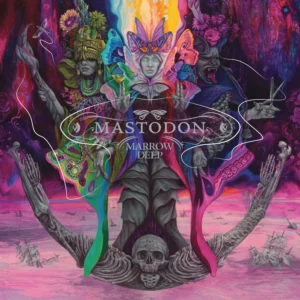
I was interested in recreating it as a photo initially and trying to restage the scene, which obviously would have been really expensive, and that’s why we didn’t do it. But I looked at different ways of bringing the image out through different mediums. I had an idea of maybe getting someone to embroider it, or getting a miniatures artist to do it, and then obviously, painting is the easiest one. I was gonna approach multiple people to do it, but I ended up approaching Kuo Jun. He said that he would get a sketch together, and then end up doing the finished painting, and I thought that, obviously, he did a really good job. It just ended up being like, “Well, we’ve got this now, we don’t really need to approach the other people.” I was keen to get a frame, because I don’t love it when the album cover is just a scan of the painting, and I wanted the painting to have some reverence as an object. It took a while to work out the best way to do that, and the painting was, not stuck, but it was in Taiwan for a long time. Once it came to England, there wasn’t that much time to photograph it, so we did it at a gig. It was hung up above our heads, so that was cool.
And the spotlit quality of it – I don’t know how you feel about the animated thing on Apple Music, but it emphasized something for me in terms of the shifting lyrical perspectives, where it sometimes feels like you’re illuminating a part of the scene, moving around, and then suddenly in the next verse you’re looking at a different part of the same scene, or from a different vantage point.
The Apple Music video thing is funny. It’s one of those things that the label asks you to do. Obviously, it must have some kind of benefit. So I just thought, it would be good to do something with it that deepens your understanding of the artwork itself, or the situation. I think people don’t really fully get that the cover is an actual photograph in real life, so I think it goes some way to remedying that. And like you said, helps you focus on different parts of the painting. The deluxe CD is a cardboard cutout – you pull out the inner sleeve, which is the painting, and the circle is over the man with the detonator.
Do you tend to analyze your dreams and what they symbolize? The birds on the cover, for example, are this watchful, sickening force at one point on the record.
I mostly just forget my dreams after having them. It’s like when you’re falling asleep and you’re having the most amazing idea that you’ve ever had in your whole life and the whole world is gonna be changed by this idea, but you’re really being pulled into sleep, so you can’t quite bring yourself to get up and write it down. And then the times that you do write it down, it usually doesn’t mean anything.
Do you find yourself being pulled to write at night or in that sleepless state?
If I have a good idea or something, then I’llkeep working at it until late at night. But it’s more just about getting really into that focused state, where nothing else really matters and you’re working on this one thing. It doesn’t necessarily have to be late at night or early in the morning, or a sleepless thing, or any kind of altered state – having drinks or anything like that. It’s just about, “Keep going at it.”
Another thing about the cover is that it was finished in two days, which speaks to the spontaneity of your own approach on the record. Part of what intrigued me about you working with caroline is, I remember them telling me around their debut about how over-analytical they are every step of the way. I’m curious if you found those tendencies clashing or complementing each other in ways that you maybe previously hadn’t experienced.
Yeah, I like to work very quickly. One of the reasons that I went in with them in the first place was that I knew that they worked quite differently than me, and I wanted to have something to push against, or to open my eyes to a different way of working. When you’re working with a band, there’s a set group dynamic, which is quite interesting. That was one of the reasons why I was keen to work with a band, as opposed to a producer, or to put a band together; I just thought it was interesting to come into another band’s dynamic. And then also found the same thing touring with Black Country, New Road at various different points. It’s just interesting to see different groups of people that have worked together for a long time work things out and talk things through.
Those guys, yeah, they talk for hours before doing anything, which works really well for them. I think that there were certain things in this that it helped with, in terms of not just doing something for doing something’s sake, and for having a narrative or conceptual reason for doing everything on the record. It was useful to talk through, before other people came in, what actually we wanted from it. But I also generally find doing things and then working it out later is my preferred way of working.
Seeing caroline, seeing Black Country, all those group dynamics post-black midi – I wonder to what extent you find yourself adapting to or absorbing those different approaches, as opposed to just observing and working with them.
Whoever comes in, hopefully it’s a mutually beneficial thing, where you’re both thrust into a strange dynamic. I did it with this band [called Popstar] the other day, where they don’t really have any music out, but they’ve known each other for a long time, and two of them are cousins. They play quite different music, and the songs are usually quite static, and the things that they play with in their music is a lot different. But they’re the band for one of the shows coming up. On the one hand, they’re trying to work out how to adapt the way that they play to the songs, but also, I’m trying to do the same. It’s a thing where you’re both pushing each other to try and do something different. The challenge is often trying to convince people that they can just play how they want, how they see the music should be played, or how they want the music to be played. The songs themselves are obviously reasonably set, but the way that they’re played doesn’t necessarily have to be the way that it is on the album, or the way that it’s been done in shows before.
It’s just trying to convince people that it is actually open. Because people often say, “Oh yeah, the music can be whatever” – and this kind of happened to an extent in black midi – but then, “But not that, and not that, and not that.” This hopefully is a more open proposition where there is actually space for it to be anything. Maybe it’s not gonna necessarily be good, but if it’s for a show, then it’s a one-night thing. The risk of it potentially being good is also what makes it worth it, because sometimes you have a rehearsal and you think, “Oh, that was a bit rough,” and then you come into the space of performing it, and everyone actually realizes, “Let’s just go for it,” and it suddenly becomes really good.
Have you imagined what the album might have sounded like if the timelines had aligned in such a way where you collaborated with caroline from start to finish? What was the benefit of finishing the writing of the songs on your own? Is that something that you’d like to arrange in a different way next time around?
I guess the way that I’ve been working with this has only really come about in the last few months since finishing the album. I wanted to make the record in a way that the way that I was performing them solo suggested in what felt quite natural ways. Moving forward, we’ll see – I’ve got lots of songs, and lots of half ideas, and lots of songs that even are kind of recorded, but not quite finished. I think it’s just a case of probably needing to spend a month putting stuff together, and then we’ll see about hopefully doing some more recording over the summer. I also have this idea about developing live recordings. I think that hopefully by the end of the year, we should have some kind of other big release that could happen, whether it’s a live record or studio record. There’s no reason to commit to it.
With the writing and the lyrics, are you still inclined to keep that part to yourself, at least in those initial stages, or when you’re whittling down and tinkering with ideas?
I’ve got a lot of ideas, and it’s useful to have people that can be honest about what they think about it. They’re kind of few and far between, because it’s quite hard to have a good relationship with someone where they can feel like they can tell you an idea is bad, and vice versa. But there’s hopefully a few songs that are in the stage of, “Okay, let’s stop showing this to people now.”
Now that I said this, I’m remembering the part of your ‘Numerology’ statement that mentioned a good deal of words being credited to others.
Oh, yeah. That was more just some lines I’d taken from conversation. Or, some lines were from a friend’s diary entry that she’d told me about, that I then put in the song. Another was from another friend’ song that I guess already existed. That was more just a thing of crediting people for their contributions, even if it was me taking it from somewhere else and putting it in a new context, at least just acknowledging that that’s their line. But for example, in ‘Numerology’, there’s a couple of lines where I would write out the lyrics with Seth, and he’d go through and be like, “Does this line work?” And then you say, “This line could be better,” and then I’d find a different one. That’s happened a few times, but lyric writing and doing the vocals is a very sensitive thing for a lot of people. People generally aren’t really massively open to criticism, because it’s something that we can take quite personally. But also people don’t really want to suggest stuff because it can be quite hard to get people to be really critical of your work, even if you want them to.
Which is why I’m fascinated that you say some lines were from a friend’s diary. I mean, some of the lyrics are confessional and diaristic, but I wouldn’t expect in such a literal way.
Well, it was something she kind of told me in jest, but I obviously asked her if it was okay. It was a thing that she told me that she wrote in her diary when she was a kid, which was kind of a funny line. It wasn’t anything particularly revealing or anything like that.
You mentioned vocals being a sensitive thing, too. There’s different singers on the album – 21, I believe – but only you sing lead. That one voice works in an interesting way, given those perspective shifts. But I wonder if there were times where you thought about someone else taking on another vocal part, or if it’s something you might be interested in in the future.
Most of the way that I’m writing at the moment is just for one voice. But that doesn’t necessarily have to be my voice, I guess. I’ve done it in shows recently where someone else has come and sung one of the songs.
Did that affect you in some way?
Yeah, it was interesting. But it was the first time I was also performing that song [‘One Night’], so I was focused on different things. Also, the show that we did had a different band for every song.
You were talking about the flexibility and openness of the recording process. I think people may perceive that as an enticing thing to try out, but it also sounds potentially very chaotic. Is there a part of it that’s maybe less exciting to talk about that has to do with reining it in when it gets messy, or organizing possible ideas and contributors?
I think that you have to have some kind of executive thought about each thing that happens. Sometimes, you have to think about how everything is obviously about that song and serving the song, as everyone always says. It’s more just about coming through it afterwards, giving people the space in that moment to play whatever they feel is good. But obviously, when you do five or six takes across the whole track, you can’t use everything. So it’s just about whittling it down and making sure that the best stuff is used. Which is sometimes just one chord.
I know caroline’s Jasper Llewellyn and Mike O’Malley are credited as producers alongside you. Would you describe yourself as being more in that executive role?
They were very present for all of the studio sessions up to towards the end of the process, when they were doing the album campaign for caroline 2. From then on, I took it over, so the edit stage of the album was basically me. A lot of the overdubs, and obviously all the guitars I just did by myself. But any session with an external contributor, they were present and helping give notes and making sure that we got the right performance and the right sound out of every musician.
What appeals to you about that part of the process that’s stitching together different recordings and editing, compared to the writing and recording?
I think it’s interesting and rewarding to create something that couldn’t have been done in real life and to try and make it sound natural and like it was performed in the room. A lot of the album, when you consider the parts and how they work together, it’s not really plausible. But it’s making something unnatural sound very natural. There’s times on the record when I’ve tried to push beyond that, where there’s a big distortion riser or anything like that, trying to remind you that this is an edited performance rather than something that’s actually happening in a room.
Or making something that was recorded in different studios sound like one room. It’s obviously easier for you to discern which parts were recorded where, but that’s not necessarily the case for an outside listener. One moment, though, that really kind of stands out as illuminating that space is the bedroom-recorded intimacy of ‘Opposite Teacher’.
Yeah, it’s just one mic. I intended to record it again later, and I was like, “We’ll just cut this in, this section later, and I’ll just do this as a placeholder.” There’s a couple of moments where it just cuts to one microphone, like in ‘Target Practice’, the first chorus was recorded in my friend’s bedroom. And there’s also the end of ‘Pearls’, where the microphone physically leaves the studio and goes out into the street outside and starts clipping from the wind.
Do you collect a lot of phone recordings? Beyond demos, do you have ones that are just you humming melodies or lyrics?
Yeah, it’s just a useful and convenient way of recording any ideas, so I use it frequently. Every so often, if I have a long car ride or something like that, then I’ll go through them and delete or keep as appropriate. But mostly they’re just kind of sat there.
I know that you set some rules for this record that weren’t necessarily there for you to stick to, but helped you frame this record. Is there another set of limitations that you’d be interested in exploring, even if you still break out of them?
Well, I guess this trying to get different people every time is its own limitation in a way, because we can’t really develop anything over a period of time. Despite every day supposedly being different, you don’t necessarily get this thing of trying to work out something a bit more complicated, or something that requires a bit more thought. It’s obviously fun to work on instinct, and you get a lot of good stuff out of it, but I think it’ll become more appealing as time goes on to start pulling people back a bit more, and say, “Come and do this tour,” or, “Why don’t we do three or four shows, and then maybe go into the studio after that?”
This interview has been edited and condensed for clarity and length.
We still talk about the internet as if it solved geography for good. In theory, a digital platform should feel the same wherever you open it. In practice, that idea keeps falling apart the moment access becomes specific. A service may look global in branding, design, and cultural reach, yet still behave very differently depending on where a person lives, logs in, or tries to use it. That gap between global appearance and local experience says a lot about how the modern internet actually works.
The internet still runs on local rules
A platform can reach users almost anywhere, but it still has to operate through local law, licensing, and distribution rules. That is one reason digital access often feels less borderless than people expect. Apple says that availability can vary by country or region, whether the issue is apps, subscriptions, or particular kinds of media. That is a useful reminder that the internet may feel universal on the surface while still running through a framework that is shaped by place.
The same logic applies far beyond music, films, or app stores. The moment access depends on legal approval, content rights, or market-specific eligibility, the user experience stops being fully global. It becomes local again, even if the interface never changes.
Platforms feel global until access becomes specific
Most people only notice this when something stops lining up. A platform they assumed worked everywhere suddenly behaves differently in another state or country. That is why region-based access matters so much. A page about pa online casinos works here not because gambling is the point of the article, but because it shows how digital access can still be defined by state-level regulation rather than by the broader promise of the internet. The platform exists online, but the actual experience still depends on where the user is.
This is where the illusion of a flat, open web tends to break. A service can look universal right up until location starts deciding what is available, who can sign up, or which features appear at all. Once that happens, the local layer becomes impossible to ignore.
Place still shapes digital culture
That is also why digital culture never becomes fully placeless. Platforms influence how people find media, share work, and participate in communities, but they do not erase the structures underneath them. Even articles about access to arts and culture still sit inside a wider reality where access, reach, and participation are shaped by infrastructure and platform design. Netflix makes the same point more directly when it explains that titles may vary by region. What looks like one platform often turns out to be a patchwork of local rights and local conditions.
That is why digital platforms still feel local in a supposedly global internet. The technology connects people across borders, but the experience keeps getting filtered through territory, regulation, and availability. The internet may be global in ambition, but platforms still reveal just how local digital life can be.
The kind of outfit that feels natural, not forced. Like it just came together without trying too hard. But if you break it down, there’s usually a structure behind it.
The best streetwear outfits aren’t random. They’re built step by step, starting with a strong foundation and layering up from there.
And a lot of that foundation comes from real culture, especially skate style.
Start With the Influence: Skate Style Still Shapes Streetwear
Before getting into individual pieces, it helps to understand where streetwear comes from.
A big part of it is skate culture.
Skate style wasn’t designed for fashion. It was built around function. Skateboarding itself evolved as a street-based activity that shaped not just movement, but also clothing choices, favoring durability and flexibility .
People needed clothes that could handle movement, falls, and constant use. That led to a very specific look:
Over time, that practical style became an aesthetic.
Even if you don’t skate, the influence is everywhere. Modern streetwear still pulls heavily from that relaxed, slightly oversized, easy-to-wear look.
That’s why outfits inspired by skate style tend to feel more natural. They’re rooted in real movement and everyday use.
Start From the Ground Up: Shoes First
The easiest way to build a streetwear outfit is to start with your shoes.
Footwear sets the tone for everything else. It tells you how the rest of the outfit should feel.
Common options include:
classic skate shoes like Vans
chunky sneakers for a modern edge
minimal sneakers for a cleaner look
If you start with skate-style sneakers, the rest of the outfit naturally leans in that direction.
For example, Vans or similar shoes instantly push the outfit toward a more relaxed, skate-inspired feel.
That’s why starting from the ground up works. It gives you a clear direction.
Build Around Relaxed Fits
One of the biggest differences between streetwear and more traditional fashion is the fit.
Streetwear tends to favor relaxed, slightly oversized silhouettes. This comes directly from skate culture, where movement and comfort mattered more than structure.
But there’s a balance.
Too oversized, and the outfit looks sloppy. Too fitted, and it loses that streetwear feel.
A few easy combinations:
baggy jeans with a more fitted top
relaxed pants with an oversized hoodie
loose layers balanced with cleaner sneakers
The key is keeping everything intentional.
Use Skate-Inspired Pieces as a Base
If you want to lean into the style, start with a few core pieces inspired by skate outfits.
These include:
skater jeans or loose denim
hoodies or crewnecks
graphic or plain t-shirts
simple sneakers
These pieces are easy to mix and match, which is part of why they work so well.
A typical skate-inspired outfit might look like:
Vans sneakers
loose-fit jeans
oversized hoodie
simple t-shirt underneath
It’s simple, but it works because everything fits together naturally.
Keep the Color Palette Simple
Streetwear doesn’t need complicated color combinations.
Neutral tones work best:
black
white
gray
earth tones
You can add one standout piece if you want, but keeping the base simple makes it easier to build outfits that feel cohesive.
This also makes mixing and matching easier.
Layer Without Overdoing It
Layering is a big part of streetwear, but it should feel effortless.
A common structure is:
base layer (t-shirt)
mid layer (hoodie or sweatshirt)
outer layer (jacket or overshirt)
The goal is depth, not bulk.
If it starts to feel heavy or restrictive, it’s probably too much.
Focus on Small Details
Streetwear often comes down to subtle details.
Things like:
how your pants sit on your shoes
slightly rolled cuffs
how layers overlap
simple accessories
These details add personality without needing bold statements.
Comfort Is Still the Priority
Even though streetwear has evolved, it still comes from movement.
That means comfort is still essential.
If your outfit doesn’t allow you to move freely, it’s missing the point.
That’s why skate-inspired outfits work so well. They were designed for movement first, style second.
Make It Your Own
The biggest mistake people make is trying to copy outfits exactly.
Streetwear works best when it feels personal.
Take inspiration from skate style, but adjust it to fit your preferences.
Maybe you prefer slimmer fits. Maybe you like cleaner sneakers. Maybe you want a slightly more minimal look.
That’s fine.
The goal isn’t to follow rules. It’s to build something that feels natural to you.
Build, Don’t Overthink
At the end of the day, building a streetwear outfit is about starting simple and layering from there.
Start with your shoes. Add relaxed pieces. Keep the fit balanced.
The less you overthink it, the better it usually looks.
Because the best streetwear outfits don’t look styled.
If you’re about to get married, or you’ve been appointed best man, then you’ll want to spare some considerable thought to your choice of destination for your stag do. This is a man’s final outing as a bachelor, and it deserves a little bit of extravagance. At the same time, you’ll want to ensure that costs are as reasonable as possible for your guests.
Several destinations have developed a distinct reputation for quality stag dos. So, what do the best cities have to offer, and how can you get the best from them?
Prague
The Czech capital has developed an amazing reputation among stag-do organisers, thanks to a compelling blend of virtues. The beer here is cheap and high-quality, and the nightlife is varied and endlessly entertaining. You’ll be able to cruise the river during the day, and crawl the pubs during the evening. There are also a number of great group activities to choose from during a Prague city break, too.
Newcastle
If you’d prefer to stay within the UK, then a trip to Tyneside might be in order. The drinks here are priced competitively, and you’ll find plenty of amazing bars along the Quayside and the famous Diamond Strip. You might go quad biking, go-karting, or clay pigeon shooting.
Liverpool
For much the same reason, Liverpool might appeal. Much of the city’s tourist appeal stems from its association with the Beatles, and you’ll find two museums dedicated to the famous band, alongside countless other locations. You might also tour one of the local football stadia, and sample the iconic nightlife.
Benidorm
You might associate this Costa-Blanca resort town with family holidays in the sun, but it’s seen a marked increase in stag-weekend activity in recent years. The drinks are cheap, the sunshine is reliable, and there’s an impressive variety of activities on offer. In other words, it’s perfect for a weekend abroad.
Bristol
Finally, we come to a unique little city in the southwest. You’ll get plenty of opportunities for adventure and outdoor fun, as well as an amazing cultural scene. You can expect galleries, venues, and bars, all of which occupy a particular niche. By the harbour, the nightlife is particularly vibrant – no wonder this city is among the strongest options when it comes to stag dos in the UK.
In Conclusion
When booking a stag do, you’ll want to think not just about what’s right for the average man, but for the guests who’ll be actually coming along for the trip. The tastes of the groom, in particular, are paramount. Above all, try not to let anyone feel pressured into spending more than they can reasonably afford to spend.