Do you dread having long and tiring conversations about good financial skills and quality money management with your teenager? Do you fear that these conversations can’t go smoothly or efficiently? If any of these worry you, this is the article for you.
Not exactly a fan-favorite topic, conversations about finances often get the best of us. And as important as this matter is, it is not exactly what your teen is looking forward to on a Tuesday afternoon when they might rather be hanging out with friends from school.
And yet, there is no running away from this crucial talk, as good money skills from an early age can help set up your teenager for success in the long run. So, what can you do to teach teens about money and do it without any arguments or headaches? We’ve got you covered.
Should parents talk about money with kids?
As nerve-wracking as this can be, it is advised that parents have constructive conversations about finances with their children. Research shows that it is never too early to start introducing kids to the basic concepts of money and finance management.
This not only relates to your teens’ allowances but also their savings, part-time jobs, as well as the next grocery list and its impact on the overall family budget.
To put it simply – there are better and worse ways to go around this. What you do want to make sure of is that you are not inciting any fear, anxiety, or stress when discussing it. This will only produce negative feelings and an aversion to understanding money management.
Fear not, science is on your side. Science says to go for it and involve your children in money matters even before the age of seven. However, it is not too late to start breaking the topic down in their teenage years, all the while providing good examples and patience.
Encourage your teen to save money
Knowing how to save money is just as important as knowing how to make money. There is no point in telling kids to study, be committed, and take on a job if they are not going to know how to properly manage their income once it arrives.
The advice is to start small. Start involving your kids with savings. You can do it old style with a cute piggy bank safely stashed away at the top shelf or you can opt for a modern solution like BusyKid that will have your kids saving, spending, and doing their chores all in one go.
Involve your teen in family finances
Just to clarify, this particular piece of advice does not mean that your teens should be aware of your entire financial situation. Whether you are doing great or you have temporarily hit a bad spot, the length to which you will involve your teens entirely depends on you.
However, you do want them to know that there is a limited amount of money available each month. You will be clarifying that it is good management that ensures that things keep going smoothly as you plan your family’s necessities, wants and needs out. Have them join when you are drafting your next grocery list or have them do the shopping with you.
Make finances fun, not scary
This cannot be emphasized enough. Having quality conversations and practices relies on the fact that you ensure a stress-free environment. If your children become terrified of money or managing their small amounts, it is safe to say that we have not achieved our goal here.
Some practical experience in a safe and fun environment won’t hurt and it will give your teen some financial freedom to practice the things you previously only talked about.
Leave room for mistakes
You must leave some room for mistakes. After all, they are bound to happen. Do not be quick to react badly when some mistakes occur, but rather try to keep to your idea of promoting financial responsibility, reaffirming the benefits of good money management.
If at all possible, provide a safe environment for any future mistakes and tell your teen not to hide it from you when this happens. This is crucial.
Conclusion
As we’ve said, teaching good financial habits to your teens is not the easiest task, but it doesn’t have to be the most tricky either. Remember – make talking about finances a conversation in which your teens can approach you freely for confessions and advice.
Randy Duke (aka. Lewis) is a one-of-a-kind enigma. After his 1983 album L’Amour was discovered some twenty-five years later in a flea market, a generation of internet sleuths took up his case. L’Amour features ten tracks of soft synths, gentle acoustic strumming, and quiet crooning. Each song trembles with palpable romance, hinging on the earnestness and vulnerability of Lewis’ voice. The album’s aura of mystery catapulted it into the ranks of outsider art classics. Little was none of its creator: a handsome, Canadian, white-suited quasi-cryptid. An internet investigation into Lewis’ history brought an avalanche of stories, fact largely indistinguishable from fiction. The end result is a modern mythos built around the footsteps of an enigmatic, larger-than-life artist content on staying vanished from the public eye.
In his achingly tender short film I Thought the World of You, which played this month at TIFF, Kurt Walker plunges into Lewis’ mythology, sidestepping the trappings of conventional musician biopics. He embraces Lewis’ impenetrable mystery, telling his story through speculative (and dialogue-free) recreation, a narrative of Lewis’ contemporary reception, online discourse citations, and even an interpolation of F.W. Murnau’s Faust. Throughout the movie, Lewis remains an ambiguous figure, filmed from behind, his face always obscured. Yet the film’s romance and affinity for the unknowability of its subject is undeniable. I Thought the World of You conducts a séance with a world lost to time, finding beauty in uncertainty. It’s a haunting and bold work from a rising voice in the Canadian experimental film scene.
I spoke to Kurt Walker about I Thought the World of You, the trappings of the biographic genre, his eclectic influences, and the endless mysteries of Lewis.
What interests you about Lewis?
I guess I have to go back to 2014, when I first discovered the music amidst “the big summer of Lewis”, and when it was this international news story. At that time, there was this online search effort for him and for more music as well, which I loosely was a part of via the online message board Hipinion. I was just immediately beguiled by the music and its ethereal, impressionistic, elusive nature that was seemingly completely echoed by the man himself, who was similarly this kind of diaphanous, elliptical figure. It’s a beautiful mirroring between the artist and his art. And really, his image, whether intended or not, and his persona (or personae) and mythology is all part of the art. It’s an artwork in itself in a way that’s probably not consciously authored.
I also just fell in love with the music, plain and simple. Its romantic, ethereal nature immediately grasped me. It appeared after that phase of augmented reality games like Cloverfield and that Nine Inch Nails album or Lost. But this was the real thing. It wasn’t designed by a corporation or something. It was like: who is this man? What is this? Is he related to Doris Duke? Is he a stockbroker? Did he date Christie Brinkley? Is he a Canadian? Is there more music? When Lights in the Attic finds him and offers him the $20,000 cheque, he turns it down and walks away and has zero interest. And meanwhile, a significant number of people were fawning over him! It was just a very special internet moment too, you know? It was purely positive. It was just a Lightning in a Bottle moment of an audience unifying to unfurl the uncanny. Everything has a paper trail now. Everything is clearly tracked via internet archives and whatnot. And here is this thing that wasn’t and felt like one of the online world’s remaining mysteries. And still is, from my perspective, in that this film doesn’t really resolve anything. If anything, my ambition was to deepen or complicate the mystery further. And there is more music out there too. Some of which I got to hear in the making of this film, but also apparently there’s a third album made in 1989 that’s floating around Europe somewhere that no one’s found yet.
What was some of the music you got to hear that hasn’t been released?
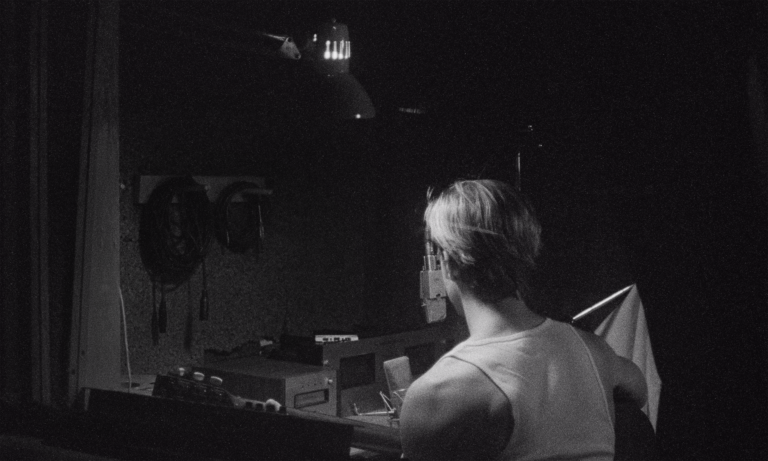
I wanted the film to be as true to place as possible. I wanted to shoot in locations where Randy may have been or concretely had been. And so, we shot at the Fiasco Bros. recording studio in New Westminster, B.C., where he recorded basically a quadruple album of material from roughly 2001 to 2006. Somewhere around there. For many years, he would come in and work with the engineer, Len Osanic, who makes a small cameo in the film. Randy (Lewis) would come in every few months and rent the studio for a whole day and just record primarily working on one track just all day. And he had a very methodical approach that was really apart from the clientele there. It took a while for Len to adjust and acclimate to working with him. Naturally, we had to shoot there to concretize its ghosts and history on 16mm. The recording studio in the film is intended to be LA’s Music Lab circa 1982, but it’s actually where he recorded his music circa the 2000s. Back to your original question: I researched this film for years before going to Vancouver for four months, where I spent some time with Len at Fiasco Bros., and he kindly indulged me and shared with me some of the demos that Randy recorded there. They’re obviously quite beautiful and I hope one day they’ll see the light of day. I’m afraid I can’t say much more.
Your past movies, Hit 2 Pass and s01e03, both zero in on the dynamics of very specific social communities. This one’s no different: Lewis’ story is framed with tidbits of discourse from online fans speculating about his life. Was that internet community perspective an entry point into Lewis’ story for you from the very start, or was it an angle you found yourself adopting as you further developed the movie?
It was the primary perspective from the very start because I was a part of that community, or at least was a lurker. The internet search for him, particularly on the Hipinion side of things, was my entry into the music and the story. And thus this framework was just a natural extrapolation upon s01e03, where I have characters communicating almost exclusively to each other through messaging expressed via what are essentially silent film intertitles. And so for I Thought the World of You, it was about evolving that device: where could I take it further? It was also an attempt to modify or complicate the scenes that surround them, as the comments are filled with speculation, mythologizing, and potential facts.
So you first found out about Lewis in 2014 when the internet did. But when did the idea to turn it into a movie arise?
Honestly, right then in the Summer of 2014. I was finishing my first film Hit 2 Pass at the time and I was immediately attracted to the idea. But it also felt like… look, this was covered in The Guardian and The New York Times and the LA Review of Books. Meanwhile, I had heard rumors that all these filmmakers are descending on Vancouver and trying to do a Searching For Sugar Man-kind of thing with Lewis. I’d spoken with Len Osanic back then too and he made it sound like his phone was ringing off the hook with producers and filmmakers reaching out. For the longest time it felt like it was out of my reach as a 23-year-old, no-budget, largely experimental filmmaker. I moved on and started working on s01e03, which proved to be a five or six-year project. Upon finishing and releasing that film, I started my Master’s at York. And I was like, “Okay, no one’s done this yet. I think it’s time.” And I knew at that point, through making s01e03 in particular, I had arrived at an approach of how to execute it. That film’s narrative ellipses, intertitles, and online community really paved the way for both the fragmentary storytelling and shape of this film.
We have an onslaught of musician biopics these days—the Freddie Mercury one, the Elton John, Aretha Franklin—we could be here all day. But they’re all movies that are essentially the opposite of I Thought the World of You. They’re trying to move beyond mythology into straight biography. Did I Thought the World of You’s relationship to this broader musician biopic genre cross your mind while you were working on it?
Totally. It was partly an academic project. I certainly didn’t want to make an academic movie, but it was made during my time at York. I actually did a specified directed reading which involved diving into a lot of particular music artist’s biopics, which cumulatively helped affirm and solidify for me that I needed to take an alternative approach. Because you just can’t do that format with Lewis. And I also couldn’t from a budget-financing-practical perspective either. There was no long-winded, traditional movie in this material. Plus, no one wanted to fund this project anyways. It just made sense philosophically and practically to pivot this in another direction–towards myth and enigma. Hardly anyone close to the story wants to talk about Lewis. And the people who might know something are practically unreachable. Every time I got a little closer, learning something more, a door would close. It quickly became about following the closed doors and embracing what I didn’t know. And taking this route towards the unknown.
I couldn’t help but think of Straub–Huillet’s The Chronicle of Anna Magdalena Bach while watching your movie.
You called it. I definitely looked at that film a lot.
They’re both portraits of artists largely framed from behind, de-emphasizing their faces and the words in the movies are, mostly, transcripts of written texts instead of dialogue. Both also share a fascination with the artists’ hands. Was that an inspiration for I Thought the World of You?
Absolutely. I mean, my dream was to make this actually performance-oriented in the way that film is. That approach didn’t work out but I still embraced that film for its ellipses and its remove. Bach frequently is deep in a crowded frame, surrounded by individuals–one isn’t given easy access to a narrativization of the artist. It’s mediated from Anna Magdalena’s perspective, giving further space to think about the art in ways biopics typically fail, simply because you’re in such close proximity to their personal lives and not the art itself. I think that’s something that’s often lost. Even though there will be ten needle drops by the subjected musician in a biopic, it doesn’t really give aesthetic space to truly experience the art. Not in the way that the approach of Huillet/Straub does where you just see process in this really clear, unfettered way. Not that my film entirely accomplishes that, but it was certainly a guiding light.
Even beyond the “musician genre”, were there specific filmmakers on your mind while you were working on the film?
You know, I’ve never been to LA and obviously missed the 1980s. So I was looking at Michael Mann’s Manhunter a lot for its description and feeling of LA. I also connected with its plot of an obsessed detective in a way the online detectives, myself included, in my film likely echo. I also looked at William Friedkin’s Cruising plenty, which maybe seems like a stretch at first, but I just find that film to be singularly enigmatic. Despite fulfilling a genre, it doesn’t reduce itself to any answers: I still don’t really know who the killer is in that film, I don’t think it can be known. By its end, it describes this kind of diaphanous figure that can’t be resolved. Additionally, the French filmmaker Jean-Claude Rousseau’s short film Faux depart. It’s a really precise, cryptic piece of portraiture in which there’s a subjected person but there isn’t psychology or characterization. These films just can’t be resolved–they really stir and stick with you. In a way, I’m really interested in that affect of making work that’s hard to shake. And then on the other hand, I’m probably something of a romanticist. One of my favorite filmmakers is the great old Hollywood auteur Frank Borzage. I love his so-called sense for transcendental romance. That was certainly another affect I was looking for in this film. This isn’t a common interpretation thus far but, for me, I was trying to tell a love story between Lewis and Karen. All the songs, particularly on L’Amour, are love songs. It’s more than likely some of those tracks are inspired by their time together, which I know practically nothing about. So, I merely theorized and speculated and tried to tell this in the space of a 17-minute short film: a love story that spans time and is documented in this forgotten work of art and later unfurled by an online community susceptible to mythologizing. Anyways, that’s my weird, and probably disparate, list of influences.
I can definitely see Frank Borzage in there. The way the images just kind of like dissolve into each other.
Totally.
How much did Lewis’s music itself influence your approach?
Yeah, that’s the number one influence in the end. I mean, I’ve long been obsessed with L’Amour in particular. Leading up to the shoot, I was pretty much listening to L’Amour on loop most days and just trying to let its texture guide my pre-visualization process. At points, I was even listening to the music on set. Before telling a story or doing a speculative biography, I was trying to adapt the music’s aural texture into cinema, you know? The emotions, the quietude, the impressionism. So that’s why, from day one, it was going to be 16mm. Thankfully, I got to work with the very talented Jessica Johnson and Ryan Ermacora: the foremost landscape filmmakers in the country. They have a new film this year, Anyox, which should have been at TIFF, if you ask me… It’s a beautiful work that unfurls a complex history of labour in a remote mining town in B.C. It’s about to play at VIFF and Festival du nouveau cinema. Anyways, to return to your question, the music was always there. It was the thing I had to honour above all.
Your past movies, I’d say, have extremely digital aesthetics. Did you find it was a challenge transitioning into 16mm?
The challenges were mostly practical. Foremost, I was alongside and supported by the aforementioned collaborators. Otherwise, the answer to that is probably a boring one: it’s just a lot more cumbersome and slow to work with. And this was a very small, shoestring production with a lot of locations. It was a lot slower to move and shoot. But otherwise, it was thrilling and ignited new processes and approaches.
With this film, I also wanted to take a conscious break from this kind of video game cinema that I was hitherto developing/working in. I also tried to do something entirely different. I tried to pre-visualize and map and design the film before going to camera. I really matured as a director, and I think shooting on 16mm was a part of that in that it necessitated growth on my part to be more precise.
Was there a challenge of how to preserve Lewis’ elusiveness while simultaneously telling a version of his story?
Frankly, I don’t know if it was a challenge because after a year of research and turning everything over, and reaching out to everyone I possibly could, I don’t know that much more than I did in 2014. You know, I learned some stuff that’s not in the public realm. But for the most part, Lewis remains pretty much a mystery to me. He’s far from demystified. And if he was, this film may not have taken shape.
One more question: as one of the comments that you cite in the movie suggests, should we accept the mystery?
Yeah, definitely. Mystery, and particularly this mystery, is just intoxicating, you know? It’s a rabbit hole with no end. I think we need more enigma again. In both cinema and in life. So if this film can provide a little bit of that, then I’m pleased. And likewise, if we can introduce people to Lewis, not only the rabbit hole of myth but also the music, then I’m fulfilled.
This interview has been edited and condensed for clarity and length.
Kurt Walker’s I Thought the World of You played in TIFF’s Wavelengths 2: Crisis of Contact programme. It will screen in the VIFF Short Forum: Program 1 on October 1st and 3rd and the Festival de nouveau cinema’s The New Alchemists 3 competition on October 9th and 13th.
Blazers are the perfect addition to any man’s wardrobe. They’re versatile and can be worn with just about anything, which makes them an essential item for every guy’s closet. The great thing about blazers is that there are so many styles to choose from. Understanding the different types of blazers for men is crucial, as the type of blazer you wear can definitely make a statement, which is why it’s vital for every guy to know what each one looks like.
Regular
A regular blazer is the most basic of all. It’s just a single-breasted jacket with two buttons at the front, and it doesn’t have any other features. Regular blazers are often worn in business settings because they’re simple and professional looking.
They’re also worn by men who want to look stylish without being too flashy. This is because regular blazers don’t have any other features, such as epaulets, which can make them look more casual.
Slim
A slim blazer is basically a regular one that’s cut more closely to the body. This makes it ideal for men who want to show off their physique or those who are naturally thin. They are also suitable for casual wear because they’re not too restrictive and can be paired with jeans or chinos.
Skinny
Skinny blazers are similar to slim ones, but they’re cut even more closely to the body. This makes them perfect for men who want something that shows off their muscles and helps them look more stylish. These days, they come in many different colors and patterns, so you can find one that matches your style preferences.
Single-breasted blazer
Single-breasted blazers are a classic way to look smart. They’re perfect for anyone who wants to wear a suit but doesn’t want the hassle of dealing with a double-breasted blazer. They can be worn open or closed, depending on your preference and the weather conditions.They usually have one row of buttons down the front side seam and two rows of buttons on each sleeve. These are typically placed about halfway between the shoulder and elbow joint; however, this may vary according to brand and style.
Double-breasted blazer
Double breasted blazers are an excellent option for anyone who wants to show off their chest. They are an undeniably classy look that is perfect for formal events and occasions. They can also be worn casually and with jeans, giving you more versatility than many other types of jackets.
This style is perfect if you want something that will make you stand out from the crowd without being too flashy or over-the-top. It’s a great choice for men who want to add a little extra flair to their wardrobe without making a huge statement about it.
There are many different types of blazers to choose from, each with its own look and style. Whether you’re looking for a casual option that can be worn with jeans or a more formal piece that will make you stand out in a crowd, there is something out there for everyone’s unique style.
When choosing a blazer, it’s essential to keep your personal style in mind. If you like to wear casual clothes, then it’s best to opt for something more relaxed and laid-back. If you prefer more formal attire, then look for something that will add some flair without being over-the-top or too flashy.
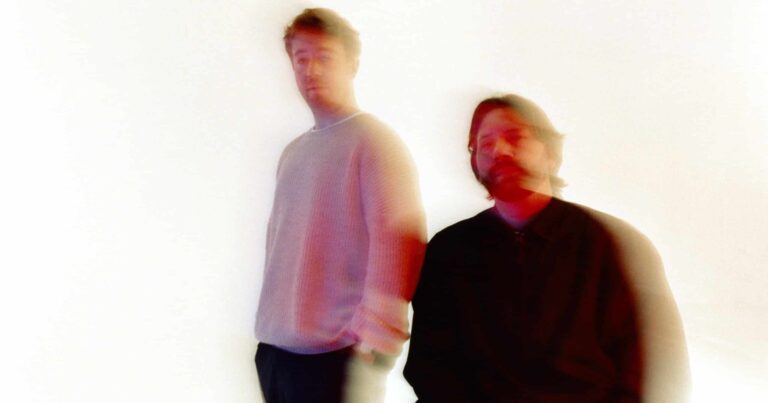
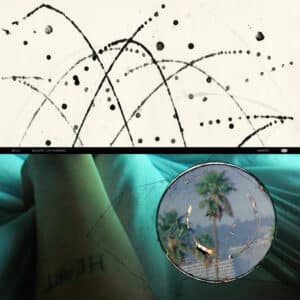
Mount Kimbie have announced a new double album titled MK 3.5: Die Cuts | City Planning, which will be released on November 4 via Warp. Each side of the record is produced by a different member, with Dom Maker helming Die Cuts and City Planning being Kai Campos’ contribution. Today, the duo has previewed the collection with a track from each album, the Kučka-assisted ‘F1 Racer’ and ‘Zone 1 (24 Hours)’. Check them out along with the album’s cover art, tracklist, and the non-album cut ‘locked in’ (produced by Maker and featuring Maxo Kream and Pa Salieu) below.
MK 3.5: Die Cuts | City Planning features collaborations with James Blake, Keiyaa, Wiki, and more. Previously, the duo shared the songs ‘In Your Eyes’ (with Slowthai and Danny Brown), ‘A Deities Encore’ (featuring Liv.e), ‘Q’, and ‘Quartz’.
MK 3.5: Die Cuts | City Planning Cover Artwork:
Die Cuts Tracklist:
1. DVD [feat. Choker]
2. In Your Eyes [feat. Slowthai and Danny Brown]
3. F1 Racer [feat. Kučka]
4. Heat On, Lips On
5. End of the Road [feat. Reggie]
6. Somehow She’s Still Here [feat. James Blake]
7. Kissing [feat. Slowthai]
8. Say That [feat. Nomi]
9. Need U Tonight
10. If and When [feat. Wiki]
11. Tender Hearts Meet the Sky [feat. Keiyaa]
12. A Deities Encore [feat. Liv.e]
City Planning Trackilst:
1. Q
2. Quartz
3. Transit Map (Flattened)
4. Satellite 7
5. Satellite 9
6. Satellite 6 (Corrupted)
7. Zone 3 (City Limits)
8. Zone 2 (Last Connection)
9. Zone 1 (24 Hours)
10. Industry
11. Human Voices
Melody’s Echo Chamber has unveiled a new track, ‘Norfolk Hotel’. It’s set to appear on the upcoming rarities compilation Unfold, which will accompany the 10-year anniversary reissue of the French musician’s self-titled debut album arriving this Friday. Check it out below.
“I think this song soundtracks the metamorphosis experience, those spellbound waves and rhythm shifts,” Melody Prochet explained in a statement. “I guess the finale’s crumble kind of predicted the future ruin field. The music naturally recorded as a live duo, as I was just blossoming into my own intuitive guitar playing. A very joyful and endlessly inspiring playground of musical memories.”
Samia has announced her second album, Honey. The follow-up to 2020’s The Baby will arrive on January 27 via Grand Jury. Today’s announcement comes with the release of the lead single ‘Kill Her Freak Out’, alongside a video starring Lucas Hedges (Manchester by the Sea, Boy Erased). Check out the video, co-directed by Samia and Muriel Margaret, and find the album cover and tracklist below.
“I wrote ‘Kill Her Freak Out’ at my loneliest and most delusional,” Samia explained in a statement. “I’d been quieting my true feelings for fear that someone would leave. The chorus is a reaction to constantly downplaying the emotions that felt wrong; it was cathartic to say the opposite of what I’d been saying for so long to this person I was trying to impress. I didn’t want to kill anyone, obviously, I just wanted to yell. It sort of marks the end of The Baby’s story.”
Honey was produced by Caleb Wright and recorded at Sylvan Esso’s recording studio Betty’s in North Carolina. The album features contributions from Christian Lee Hutson, Briston Maroney, Jake Luppen, Raffaella, and more. “This record is about learning to see the love around you,” Samia said. “Sometimes the only thing I can be certain of is the way it feels. Even when I zoom all the way out, the little things matter the most. I was trying to imagine looking back at the end of life and what I’d have to say about it right now. This is a little bit of it. Telling stories, making amends, trying to show people I love them. It’s a community record – I made it with Caleb Wright and our friends in the woods in North Carolina.”
Last year, Samia released her Scout EP, which landed on our best EPs of 2021 list. More recently, she formed the group Peach Fuzz with Raffaella, Sara L’Abriola, and Victoria Zaro (Ryann), releasing the Can Mary Dood the Moon? EP in July.
Honey Cover Artwork:
Honey Tracklist:
1. Kill Her Freak Out
2. Charm You
3. Pink Balloon
4. Mad At Me
5. Sea Lions
6. To Me It Was
7. Breathing Song
8. Honey
9. Nanana
10. Amelia
11. Dream Song
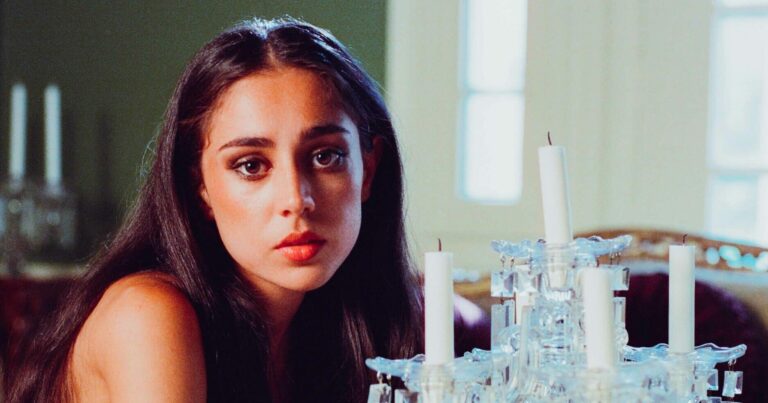
Elanor Moss is back with a new single, ‘Sorry Song’, which comes with an accompanying video. Recorded in Brooklyn with frequent collaborator Oli Deakin, the track follows the singer-songwriter’s debut EP Citrus, which arrived earlier this year. Listen to it below.
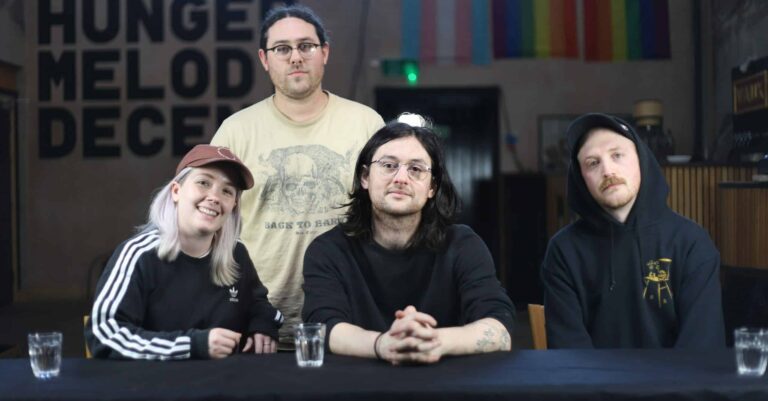
“‘Hope Gets Harder’ is a song about England: a uniquely fucking terrible idea,” the band said in a statement. “A place governed by the most absurdly mediocre people in history. Selfish, rich, thick, malevolent ghouls propped up by a bootlicking, self-congratulating, stenographic, client-journalist news media that puts North Korea to shame. England is a grey, damp artifice, vibrating to a quasi-fascist background hum, where the majority live miserable hopeless lives, so that a tiny minority can live in extravagant luxury. As we lurch violently from one crisis to the next, it feels like the light of any hope for the future is slowly dying. But we have to try and find hope in one another, and together we have to fight like hell for a more socially and ecologically just world. No fate but what we make for ourselves. Abolish england. Fuck the king.”
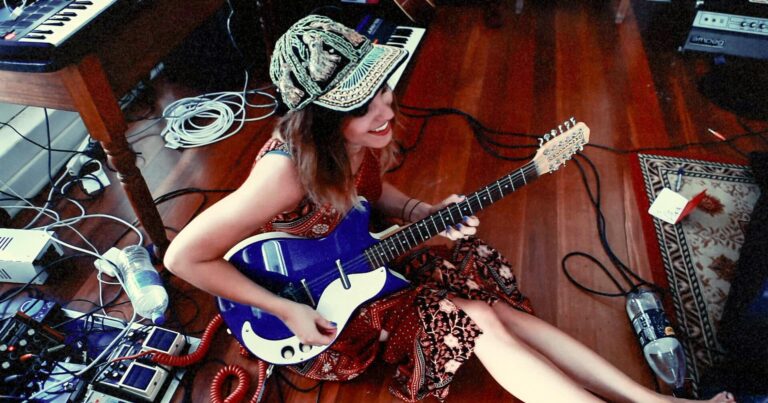
Melbourne-based songwriter Gena Rose Bruce has released a new song, ‘Foolishly In Love’, which was co-written with Bill Callahan. Check it out via the accompanying visual below.
“I was asking myself: ‘am I meant for one sort of relationship?’,” Bruce said of the new single in a statement. “I think it’s an important question to ask, to really just have a frank conversation about those feelings.” She added, “Working with Bill was very poetic and brought a feeling of nostalgia. We have only ever had written correspondence, sending lyrics back and forth to each other, with sometimes weeks in between responses, just analysing lyrics, there was no small talk, just keeping it about what’s important – the music.”
Gena Rose Bruce’s debut album, Can’t Make You Love Me, came out in 2019.
Run the Jewels appeared on Jimmy Kimmel Live last night (September 26), where El-P and Killer Mike were joined by DJ Premier and Greg Nice for a performance of their single ‘Ooh La Lala’. Check it out below.
‘Ooh La La’ is taken from the duo’s 2020 album RTJ4. Earlier this year, they teamed up with Black Thought and Danger Mouse for the song ‘Strangers’, which also features A$AP Rocky. Having completed their first run of shows in the US, Run the Jewels’ tour with Rage Against the Machine will pick back up in February 2023.