

In the midst of gaming console wars between Microsoft, Sony, and Nintendo, a band of PC warriors has risen to claim their own stakes in the debate over which platform is best. However, PC video game players are unique in the sense that there appears to be two separate sects of players who fall within this category: those who buy their PC and those who build it with the help of companies like What Hardware.
What are the advantages to each approach? What are the drawbacks? If the answer was clear-cut, then the debate over who’s right and wrong wouldn’t be so simple. So, instead of trying to persuade you into the light of one camp versus the other, we’re here to present all the information you should be aware of to make an informed decision on your own. Let’s get started.
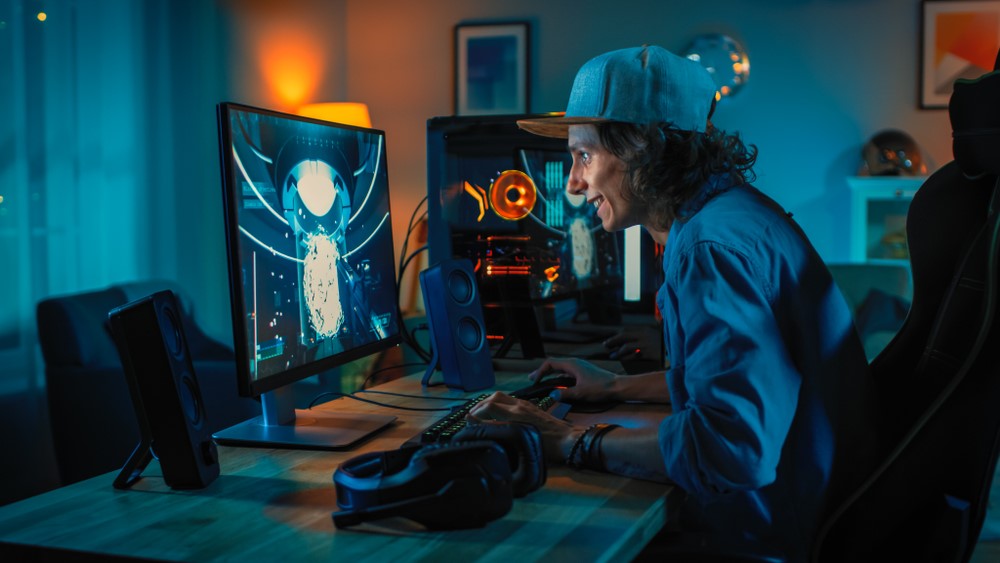
Benefits of Buying a Gaming PC
First thing’s first: you can only start a conversation about purchasing a PC for gaming if you have the room in your budget to do so. Why? Because shopping out of your means will lead everyone to drive you crazy, as they’ll inevitably get on your case for playing your new platform on end rather than getting up and paying off the credit card. If you settle on buying a gaming PC that falls within your tight budget, chances are that you wind up with a refurbished model or a processor that lacks the power you need to rise to the tops of the leaderboards.
Now that that’s out of the way and we’ve established that you can afford to buy a PC of decent quality (think about spending roughly $800 – $1,200 before peripheral accessories), then you should know that there are a number of benefits that make buying a PC from the store seem so simple and appealing.
For starters, your device will almost always come with a warranty, which you can choose or decline to extend. That means the next time you swipe your arms open in pure, elated victory, you won’t have to worry about the knocked-over soda can frying your hard drive (or, if it does, have peace of mind knowing you’re covered with accidental damage protection).
Also, if you’re like me, you probably can’t wait to fire up the latest AAA game title and start knocking out levels ASAP. In that case, you’ll love the ability to play right out-of-the-box almost immediately. As an added bonus, immediate practice means immediate improvement, but it also means you won’t have to face a learning curve when you alter a component of your custom-built PC.
Last but not least, stock gaming PCs deliver a cohesive experience in terms of third-party manufacturers; playing under one umbrella will offer seamless compatibility better than a mix-matched setup could provide. If you shop at the right time of year, you might be able to find a bundled deal that includes a gaming mouse, mousepad, and keyboard along with the PC hardware—helping you save massive amounts of money along the way to owning an epic gaming rig.
Benefits of Building a Gaming PC
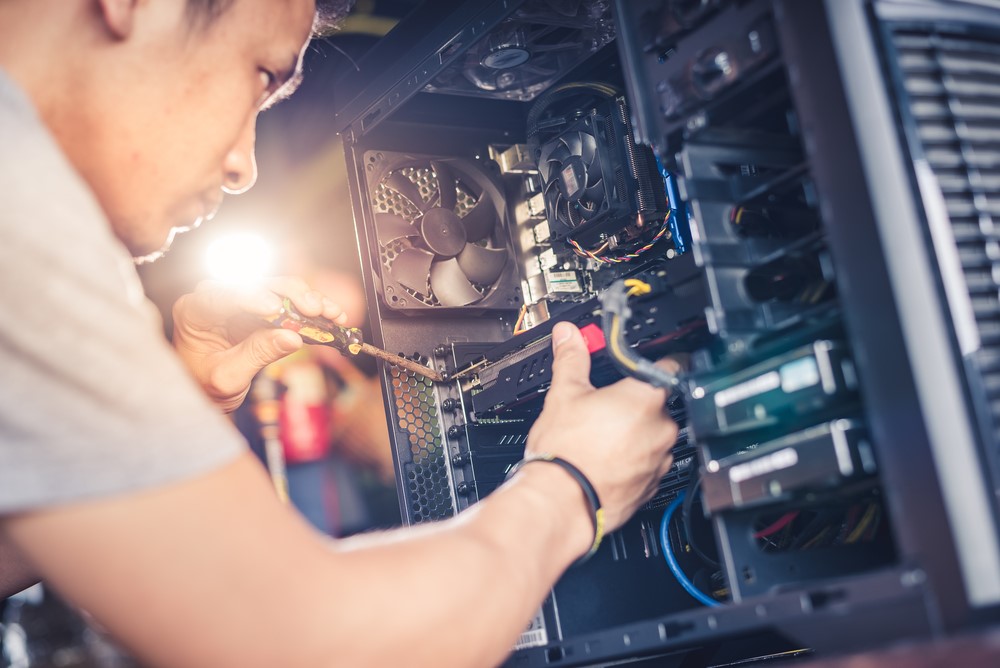
If you’re a PC builder, then you know that there’s plenty of reasons why a gamer might take it upon themselves to custom-construct their hardware from the ground up. You can score incredible graphics at a quarter of the cost, decide which features are most important to your console and which you’d rather not pay for, and ensure that you have the processing power necessary to play all your favorite games without a single glitch.
Building a gaming PC is incredibly rewarding, mostly because it’s super time-consuming and the feeling of firing it on for the first time will fill you with pride—unless it doesn’t work, in which case you’ll be frustrated beyond belief!
Before you set out on such a tech-savvy endeavor, make sure you know a list of all the parts you’ll need to build a PC including how to configure them precisely. There are plenty of tutorials available to you online, but take it slowly and don’t rush through the process by any means!
At the end of the day, there’s no clear answer between whether buying or building a PC is better. Perhaps we should add it to our list of some of the most divisive gaming topics out there. What’s your take? Let us know in the comments below!
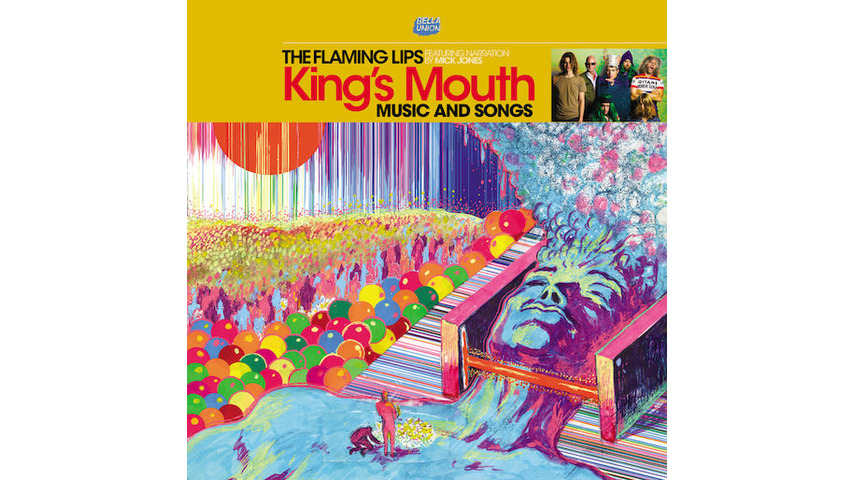 The Flaming Lips, King’s Mouth: Originally issued earlier this year on Record Store Day as a limited run of 4,000 gold-colored vinyls, The Flaming Lips’ fifteenth studio album is officially out and available to stream today via Warner Bros. Records. A follow-up to 2017’s Oczy Melody, King’s Mouth has been described as a return to form for the psychedelic band, and features narration from Mick Jones of the Clash on “nearly every song”. The album was conceived as a soundtrack to a 2017 art exhibit of the same name by frontman Wayne Coyne.
 Nas, The Lost Tapes II: A sequel to 2002’s positively received The Lost Tapes, which compiled tracks that did not make it into Nas’ albums, this is the long-awaited fifth compilation album from American rapper Nas and a follow-up to last year’s Nasir. Originally announced in 2003, The Lost Tapes II has been continually delayed for the past sixteen years due to label complications as Nas switched from Sony to Def Jam. Now, fans are finally getting what they have long been asking for. The compilation features guest appearances by Swizz Beatz, RaVaughn, David Ranier, Al Jarreau, J Meyers and Kenyon Harrold.
 Ada Lea, What We Say in Private: Ada Lea is a Montreal, Quebec-based musician who is also a visual artist, and this is her debut album out now via Next Door Records. She cites female artists from across the artistic spectrum as inspirations, from Sylvia Plath to Frida Kahlo and Nina Simone. The purposefully-lower-cased what we say in private is the result of deep introspection following the end of a relationship and a period of documenting her emotions in different forms to create “a world that I can build around me and sit inside.”
 IDER, Emotional Education: Duo Megan Markwick and Lily Somerville describe themselves as ‘conscious pop’, and based on the singles we’ve heard so far, that’s an apt categorization. Their debut album Emotional Education, which was mostly written in their London flat over a period of six years, is out now via Glassnote. The title explains a lot about the album: “It came from a song [‘Saddest Generation’] that I had written,” says Megan Markwick, “but then Lily had put in that lyric – ‘Where’s the emotional education we’re all looking for?’ And it was a penny drop moment. It’s such a perfect example of the way we work, this partnership that is all entangled.” “Emotional Education is what we give each other,” adds Lily Somerville, “and what we’re going to give you with this album.”

























 A lot of people might hate on Ed Sheehan for shifting away from his trademark acoustic style in favour of a more pop-centric sound, but that’s not really a fair criticism. If anything, the summery opener to his new album, ‘Beautiful People’ feat. Khalid, proves that he can incorporate electronic elements into his music in a way that pleasantly suits his vocal delivery and lyrics. Instead, the problem with his latest effort, which is a collaborative project featuring some of the biggest names in hip-hop, pop, and beyond, is that rather than the guest artists making an appearance on an Ed Sheehan song, it feels more like Ed Sheeran deliberately copying the guest artist’s style to the safest and most radio-friendly version it could be (see ‘Anstisocial’ feat. Travis Scott or ‘Remember the Name’ feat. Eminem and 50 Cent). The exceptions to this pattern lead to the album’s best and worst tracks: ‘Best Part of Me’ is a heartfelt acoustic love ballad as good as Ed Sheehan has ever written and featuring an emotive performance from YEBBA, while lead single ‘I Don’t Care’ feat. Justin Bieber is a lifeless and annoying pop song evoking the worst moments off Sheeran’s previous album, Divide. It’s also not unlikely that Sheeran’s going through some kind of identity crisis, uncertain whether he wants to humbly portray himself as an ultra-rich superstar or the same old insecure guy from a small English town. I’m not sure we’d get the Led Zeppelin knock-off that is ‘BLOW’ (featuring Bruno Mars and Chris Stapleton of all people) if that wasn’t the case. A collaborative project is probably not the best opportunity to redefine yourself, but still, No. 6 Collaborations Project is not much more than just listenable, inoffensive pop music.
 The Mississippi rapper’s fourth studio album is his official return following his ambitious and epic 2017 double album 4eva Is a Mighty Long Time, a project that saw him parting ways with his then label Def Jam to embrace a new kind of artistic freedom. It was definitely for the best – it’s one of the few double albums that actually work – but the following EPs he dropped in 2018, which were released as a compilation earlier this year, were somewhat underwhelming for a rapper of Big K.R.I.T.’s caliber. His new mixtape, theoretically a sequel to 2010’s K.R.I.T. WUZ HERE, sees him going on a similarly more commercial, less conceptual route, but with more memorable hooks and production this time around, and K.R.I.T. on top form as usual. There are bangers like the opener ‘K.R.I.T. HERE’, in which here reflects on his time with Def Jam, or the more thoughtful and inspiring ‘Believe’, as well as trap-influenced cuts, some of which tend to suffer from a lack of originality (two notable exceptions being ‘High Beams’ and ’Energy’). More soulful tracks like ‘Make it Easy’ or the wonderfully jazzy ‘M.I.S.S.I.S.S.I.P.P.I’ help give some personality to the project, while perhaps the biggest highlight is the infectious single ‘Addiction’ feat. Lil Wayne & Saweetie. Some of the features are spotty, but K.R.I.T. IZ HERE is proof that a Big K.R.I.T. album doesn’t need to be high-minded to be good.
 In describing his new project, Dev Hynes, aka Blood Orange, explained that he normally writes and records a bunch of songs after putting out an album, but that he only shares them with friends, despite the fact that he puts as much effort into them as the official release. Having grown older, he’s decided there’s no reason not to release material at the same pace at which he makes it. The result is Angel’s Pulse, a half-hour mixtape that serves as an epilogue to last year’s critically acclaimed Negro Swan, a thoughtful left-field R&B album that requires patience to truly sink in. While Angel’s Pulse feels understandably less focused and essential, it flows surprisingly well for something with such a wide range of musical influences scattered all over the place. The songs here are laid-back and loose, with Hynes comfortably bringing together his knack for writing sticky hooks (he’s produced for the likes of Kylie Minogue, FKA Twigs, and Mac Miller) and experimenting with his production style. See for example the IDM-influenced beat on ‘Baby Florence (Figure)’, the shoegaze-inspired ‘Tuesday Feeling (Choose To Stay)’, the Sparklehorse-eque instrumental on ‘Take It Back’, or the hypnotically multi-layered guitar solo on ‘Something to Do’. With the music being this good, let’s hope he keeps releasing it at this pace.
 Banks is back stronger and more confident on her new album III, a follow-up to 2016’s The Altar. The alternative R&B singer’s third album opens with two of its best songs: the bold production on ’Till Now’ is certainly an attention-grabber, but it’s also an emotionally engaging track that immerses you into the singer’s devastating feelings of mindset. Single ’Gimme’ continues on this maximalist pop path, with its rich, distorted bass and an infectious hook to bring it all together. Once Banks returns to familiar R&B ballad territory, though, the tracks become somewhat weaker and more forgettable, as in the nearly 5-minute long ‘Contaminated’ and ‘Hawaiian Mazes’, or the poppier ‘Look What You’re Doing To Me’, which doesn’t do much justice to Banks’ compellingly personal lyrics. ’Sawzall’ is the exception here, with its quietly affecting guitar in the background as she sings “I go over every word you said to me/Every single syllable I could repeat/Certified to scuba dive in my memory.” Despite being somewhat unfocused, there are more hits than misses here, and III is a welcome new direction for Banks.









/cdn.vox-cdn.com/uploads/chorus_image/image/55901081/1_DdcEkh6BjZYkyh8ToLeYlA.0.jpeg)
