Stuck at home, our mundane lives went into overdrive. For most people, their flat became their office, living space, and place to socialize with their peers (online).
Luckily, there are online activities like online iGaming that broke that cycle and brought some excitement back on the table.
Time goes fast when you are having fun. And what better way to have fun than playing online jackpot games. Before we go any further, let’s explain the difference between a regular slot game and a jackpot game.
A jackpot game is a type of casino game that is identical to the regular slot game but differs in the bigger end-game reward – a progressive jackpot. A percentage of the bet is added to the pot from every game played online on the same slot. Every player has the chance to win the jackpot.
This article will show why jackpot slots are so popular in the online community.
You can play from anywhere in the world at your time of choosing
Now games like poker and blackjack require a quiet atmosphere where players concentrate on the game and need no distractions. Once they lose focus, they might make a mistake and lose their bet. This can never happen with a jackpot game.
These games are designed for the fun of it, not to get a headache of too much thinking. Just one tap on your phone or your computer, and you see the rows. If there are any winnings, the game will inform you. That’s why the flexibility is endless with jackpot games. Whether you are on the train in the morning on your way to work or sitting in the park late at night, no pressure, no headache – only fun.
Jackpots that can reach six digits or more
Regardless of your bets, all players have the chance to win big rewards. Jackpot games are designed to offer enormous payoffs for those who play the games more often. Some jackpot slots have limited jackpots, and they usually come once per week or, in some cases, once per month.
However, there are jackpot slot games that have progressive jackpots that can make you an instant millionaire. This is especially the case of the most popular slot games on the iGaming sites. If thousands of players play the same slot, the progressive jackpot fills faster and gets bigger. With lady luck at your side, anything is possible!
Worthy Welcome Promotions
Those experienced iGamers, who have tried dozens of casinos, know what a welcoming casino means. Usually, casinos offer a 100% deposit casino bonus and a couple of free spins on their most popular games. However, in recent years, the best online casinos have shown others how it’s done.
Their bonuses can reach up to 200% deposits and offer dozens of free spins on every slot in their library. Not only that, but they reward their most loyal players with daily, weekly or monthly promotions that can add even more bonus spins.
Rich Library of Jackpot slots
We’ve all seen iGaming sites that offer only a dozen slot games that are 4-5 years old. -Boring! Now, a decent jackpot casino has a rich library with variations in themes and different jackpot rewards. Whether they are for high-rollers or designed for the casual player, everyone can find a game that suits them.
Speaking of themes, in the last few years, we’ve witnessed games designed around our favourite pop-culture characters and universes. Not only that, but they are investing heavily in better software that will surely bring more longevity in smart-device playing and increased security against cheaters and hackers.
Conclusion
Now it is clear why iGamers prefer jackpot slot games more than anything in an online casino. The flexibility, the huge library of games, free spins and welcome bonuses and huge jackpot payouts all play a role for players to be attracted to one particular online casino. We think that you are ready to embark on this journey that is filled with fun, excitement and, more importantly, huge rewards.
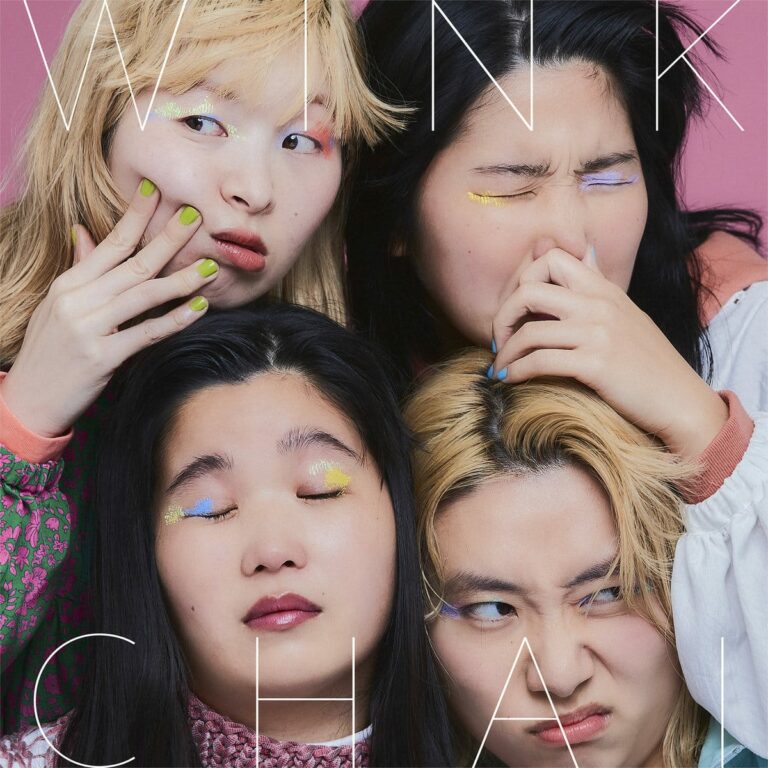
Towards the beginning of Olivia Wilde’s Booksmart, one of the most infectiously brilliant coming-of-age movies in recent memory, the film’s protagonists are struck by the realization that they should’ve spent more time enjoying themselves in high school. They’d assumed their bookishness was a strength, but when they find out everyone who went around partying also got into prestigious colleges, it suddenly hits them that their calculations were flat-out wrong. That CHAI would name one of their songs, ‘Nobody Knows We Are Fun’, after a quote from the movie, might at first seem like an odd choice: surely, no one who’s heard their first two albums or caught them live would accuse them of being overly pretentious. Made up of twin sisters and vocalists Mana and Kana, bassist/lyricist Yuuki, and drummer Yuna, the Japanese band’s music thrives off the kind of joyous, frenetic energy that’s built on the foundations of friendship and self-love.
But the phrase “nobody knows we are fun” is hardly self-pitying; in the film, the task of proving they’re not who their classmates think they are is only a way for the main characters to get to know each other, and themselves, better. CHAI embark on a similar path on their third album and Sub Pop debut, WINK, putting emphasis on the second part of that phase – especially the we (“After the ‘i’ of PINK and the ‘u’ of PUNK – which represented the band’s act of introducing themselves, and then of centring their audiences – they have come full circle with the ‘we’ of WINK,” a press release explains.) Though they’ve already done more than most acts to showcase their genre-defying approach, WINK sees them embracing styles that had only occasionally made it into the mix before – specifically hip-hop and R&B, which they found themselves listening to in quarantine. The result is a mellow, comforting album brimming with bright hooks, bouncy instrumentals, and a homespun warmth coming through the vocals – still irresistibly fun, but in a whole different way.
‘Nobody Knows We Are Fun’ might also the brightest example of the group switching gears, diving into those smoother, silkier tones effortlessly and with finesse. The strutting electro-funk of ‘IN PINK’, buoyed by production from guest artist Mndsgn, is similarly delightful. The charming playfulness that characterizes CHAI is all but gone: on tracks like the 8-bit dance cut ‘PING PONG’ featuring chiptune group YMCK, the colourful instrumental and CHAI’s animated vocals help pick up the pace on an otherwise chilled-out album. Even at its most serene, though, WINK radiates with expressions of joy that are as powerful as they are uncomplicated: their love of food can be a source of fulfillment (‘Donuts Mind If I Do’, ‘It’s Vitamin C’) as well as a means of empowerment and body positivity (‘Maybe Chocolate Chips’). ‘KARAGEE’ might be the most endearing song comparing romantic tenderness to the enjoyment of an animal-based meal that’s ever been written by someone who’s since stopped eating meat.
It’s as easy to miss the frenzied unpredictability of CHAI’s earlier material as it is to revel in the pure sweetness of WINK. Though it loses some of its spark on the second half, the album still showcases a band being unapologetically themselves, and having a ton of fun doing it. Some of the simple pleasures they celebrate may be ephemeral, but like these songs, that’s partly what draws you to return to them again and again. And like the schoolgirl duo at the center of Booksmart, it’s the band’s chemistry that ultimately shines through the most: not only do they make it clear that there’s more than one side to them, but they make you feel part of that we, too. Thousands of listeners may already be aware of their coolness – the band’s or their own – but CHAI insist more people should join the party.
For many of us, the only thing better than watching TV and movies is tearing them apart. Nonsensical plotlines, characters with no interest in self-preservation, and zero in-depth understanding of a topic are all favourites here, as we throw our hands up in the air and declare frustrations.
The more you get involved in the world the more unrealistic aspects of visual media seem to become, and that’s the inspiration for this article today. Having recently gone through the home-owning process for the first time, we thought it would be interesting to have a look at some major media misrepresentations, to see how the real world stacks up.
Myth: Buying a House is a Nightmare
There’s no doubt that the house-buying process is complicated, but there’s a fairly wide gulf between challenging and nightmarish. In movies and TV, people buying a house is always a frustrating event, with buyers constantly left in the wind or struggling through some unexpected outcome.
Back in reality, modern technology has made buying a home a remarkably streamlined process. One such example is found in contemporary mortgage broker services, such as Trussle. With this system, 12,000 mortgage deals from 90 different lenders can be compared quickly and easily, making what used to be a difficult process now a very simple one. This isn’t just the case with mortgages either, as many other online tools have essentially mitigated huge parts of what might otherwise be a stressful buying experience.
Myth: Your Property, Your Rules
Many of us growing up were enthralled by movies like Home Alone, which pitted home-based ingenuity against potential invaders. Though the included physics were obviously non-sensical, the idea of being able to modify our homes in whatever form we saw fit was a fun one. It doesn’t just stop at weaponizing your stairs, however, as we also ponder concepts like waterslides and moats, two things we’d never actually implement but love the idea of.
In the real world, the somewhat less exciting landscape of building consent and insurance problems make these concepts a non-starter. These concerns extend even further when taking the safety of others into account. Even if you don’t have a child, you need to have a child-save pool setup, and the interior of your home also needs to be safe for emergency personnel. Of course, there’s also the threat that people could end up like the Collyer brothers, which nobody wants.
Myth: It’s a Constant Flood of Friends
Perhaps the most unrealistic idea that movies and TV give us about homeownership is that we’ll spend the majority of our time hosting friends. Even if just hanging out like in Friends or Seinfeld, the idea is that groups will gravitate towards somebody’s home, essentially using it as a hub in their daily lives. It’s a nice idea on its face, but this idea is not reality. In real life, people are usually too busy for this sort of daily dalliances, where careful planning and coordination is a far more accurate path. Hosting guests is something most people like to do but doing it constantly is often unfeasible when you take into account the amount of preparing, cooking and cleaning you have to do – especially if you have your own family to look after,” comments Ruban Selvanayagam of quick auction house Property Solvers.
Despite the picture we’ve painted, we don’t want to imply that being an adult and owning a home is a bad thing, far from it. It’s just that, in the real world, we aren’t gifted with exaggerated ideas of TV and movies. What’s more, the older we get, the less the ideas pushed by movies and TV mean to us.
Even if we could install a water slide in our homes, can you imagine how annoying it would be to maintain? Sure, hanging out with friends is fun, but constantly no matter how you’re feeling? The older we get, the more we appreciate these facts over the romanticised fiction, and for the sake of our good moods, we’re hoping that will always be the case.
The internet lets us watch TV shows and movies from all around the world — something that was unimaginable only years ago. But many streaming sites, like Netflix, use geoblocking to hide some content from us. This guide will explain what geoblocking is, how sites use it, and how you can get past it.
What is geoblocking?
Geoblocking, or region-locking, is where websites offer different content and services based on your living place. Each computer has a unique numerical identifier, known as IP (Internet Protocol) address. Each time your computer requests a server for content, your IP address is sent with that request, so the server knows where to send the requested content.
Geoblocking is most commonly associated with its use to restrict access to premium multimedia content on the internet, especially for copyright and licensing reasons. But it is also used for blocking malicious traffic or enforcing price discrimination, location-aware authentication, fraud prevention, and online gambling.
At first, it may sound like only governments can practice it, but often businesses take advantage of it. For example, many online shops would show different products to visitors from other countries. Also, online sellers use geoblocking for commercial reasons to either deny access to websites and content in other countries, re-route traffic to local websites or apply different prices. The EU banned such activities in 2018 but made an exception for streaming sites like Netflix, meaning they can offer various libraries of content depending on your location.
The legislation in 2020 proposed a 30% European content minimum for streaming giants, including Netflix. However, both Netflix and Apple TV+ have less than the required percentage of the European content on the platform and could see them being banned from the continent.
Netflix is famous for using geoblocking. If you travel abroad and log into your Netflix account, you will see several new shows available — and some of your old favorites gone. This is because Netflix hosts a unique library of content for each of the 190 countries it streams. Some shows are available worldwide, but most are not.
The way Netflix uses geoblocking is:
You visit Netflix on your computer or phone,
Your IP address contains information about your location,
Netflix uses your IP to observe where you are.
And then, it only shows you the appropriate content for your country.
The Copyright law makes Netflix only stream content if they have bought the rights to it. For Netflix’s original content, that is not a problem. But for everything else, buying the rights is expensive — especially for the US markets. That is why most shows are only available in a small number of countries.
Geoblocking in Netflix alternatives
There are several alternatives to Netflix out there, which generally use one of three styles of geoblocking.
Sites with US-only geoblocking
Most streaming sites market themselves just towards Americans (and sometimes Canadians). The reason behind that is because streaming is more popular in the US than anywhere else — more of them pay for streaming services over cable TV.
A US region-lock also lets sites prioritize building an extensive library of content at the expense of viewers elsewhere in the world.
Crackle, for example, is currently only available in the US and Canada. It is owned, in part, by Sony Picture Television, so it has a lot of classics from the Sony vault, plus its original programs. Similarly, IMDb TV is only available in the US, despite being a spinoff of Amazon Prime Video.
Sites with non-US geoblocking
While many Netflix alternatives are US-only, TV stations often have streaming sites locked to their country of origin. For example, BBC iPlayer is available in the UK but geo-blocked in the US. That is because the UK funds iPlayer with a television license, which Americans do not pay. Although BBC Select will bring some shows to the US in 2021, iPlayer still has many great British dramas available for free, like Peaky Blinders or The Pact.
Sites without geoblocking
The best kind of geoblocking is none at all.
Classic Cinema Online, a free site for old out-of-copyright films and TV shows, is a good example. Most content is on YouTube already, but a well-designed directory of golden oldies is always appreciated.
You will not find the latest blockbusters here, obviously, and the videos are not precisely DVD-quality. But this site is still a great place to catch up on some of the greatest films of all time, like 12 Angry Men or All Quiet on the Western Front.
VPNs route your internet traffic through an encrypted link to a private server which masks your IP address with its own. For example, if you connect to a VPN server in London, you will get an English IP address.
The very simple method to circumvent geoblocking on sites like Crackle or BBC iPlayer is:
Find which countries can access the content you want.
Install a VPN.
Connect to a VPN server in a particular country.
Visit the website as usual. The geo-blocked content will then be unlocked.
Once you are done, disconnect from the VPN to set your IP address back to normal.
Streaming sites will try to block your connection if you are using a VPN, so you may have to try multiple servers from your desired country to find one that works.
Conclusion
Many websites use geoblocking. News organizations, for instance, often block visitors from the European Union so they can avoid complying with the GDPR. As more sites hide their content behind an American region-lock, VPNs become necessary to fully enjoy the internet.
But geoblocking is most annoying on video streaming sites because we pay for accounts that can only access some of the site’s content. While there is a lot to like about Netflix, its unique libraries for every country make it challenging to choose the country and the content you want to watch.
Sites like IMDb TV and Crackle are better for VPN users. With their more flexible geoblocking policy, you only need a VPN with good servers in one country — the US — to watch everything, rather than in every country on the planet.
Throughout the week, we update our Best New Songs playlist with the new releases that caught our attention the most, be it a single leading up to the release of an album or a newly unveiled deep cut. And each Monday, we round up the best new songs released over the past week (the eligibility period begins on Monday and ends Sunday night) in this segment.
Last week, two of the biggest forces in indie music, Angel Olsen and Sharon Van Etten, joined forces for a grand, emotional single called ‘Like I Used To’, and it’s everything one might have expected from the collaboration and more. We also have a couple of songs on this week’s list that sound seasonally appropriate as summer is approaching: Vundabar’s ‘Aphasia’, buoyed by a catchy, intimate chorus, captures a beautiful sense of nostalgia; Lucy Dacus taps into a similar feeling on‘VBS’, which builds on her unique knack for personal storytelling and subtle instrumentation. CHAI’s ‘IN PINK’, meanwhile, taken from their new album WINK and featuring producer Mndsgn, exudes a more mellow summery vibe that’s pretty irresistible. A little-known artist named Olivia Rodrigo also released an album on Friday, and ‘brutal’ is a startlingly raw opener and an undeniable standout from her debut. Japanese Breakfast delivered another upbeat, sparkling track from her upcoming album, ‘Savage Good Boy’, alongside a Michael Imperioli-starring video; black midi previewed their upcoming LP with the tense, dizzyingly fierce ‘Chondromalacia Patella’; and Jack Antonoff’s Bleachers announced a new album with the anthemic ‘Stop Making This Hurt’.
In this new segment, film critic Elias Michael takes us through his weekly film picks. He’ll offer up his selection, where you can watch them, and why you might want to take a look.
It’s been an interesting few weeks for film. We’ve seen the hype, discourse, and aftermath of the Academy Awards; Knives Out 2 has started announcing its cast; and films new and old come and go from our favourite streaming giants. Join me as I talk about some of my recent viewings, and why you might want to check them out as well.
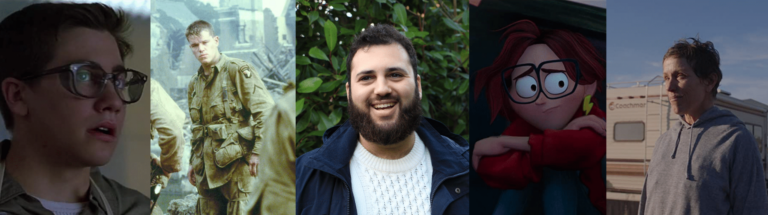
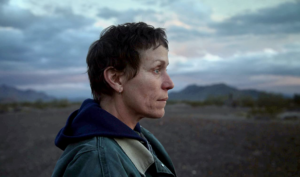
Nomadland – Disney+
Frances McDormand stars in Chloe Zhao’s Oscar-winning Nomadland.
Starting off this month with the Best Picture winner, Nomadland follows Fern (Frances McDormand) travelling around the United States after the death of her husband and the closure of the sole industry that kept her hometown afloat. While working various jobs, Fern meets other ‘nomads’, a community of people who live out of their vans and never settle in one area. Ultimately, Nomadland is about humanity, the people you surround yourself with, and the kindness they can offer. The film conveys the struggles of post-recession America but never gets bogged down in overt politics; though it does pick apart the understated and sometimes awkward ideas of prescribed modes of living. Side note: every film needs to have a Ludovico Einaudi score. 4/5
Saving Private Ryan – Sky Movies
Tom Hanks leads a tour-de-force in Saving Private Ryan.
Saving Private Ryan is Spielberg at his peak. Upon hearing the news that three of the four sons of the Ryan family were killed in action, General George C. Marshall orders the safe return of the sole living brother – James Francis Ryan. Three days after a horrific battle on Omaha Beach, John H. Miller (Tom Hanks) leads several members of his company to go out and find Ryan and bring him home. Along the way, they struggle with the fight against the enemy and amongst themselves, questioning if risking their lives is worth it for just one man. Saving Private Ryan is truly one of the greats. The famously overwhelming opening immediately slams the viewer with the horrors of war. The film’s technical prowess is staggering, not least because many WW2 veterans have attested that the film is the most realistic depiction of combat they have seen. The rest of the film follows the individuals who endure the combat, exploring their backgrounds and reactions to the bloodshed that unfolds around them. This powerful experience is truly a must-see, so please add it to the top of your watchlist and make sure you have a strong stomach. 4.5/5
The Mitchells vs. The Machines – Netflix
Striking colour abounds in The Mitchells vs. The Machines.
If you’re looking for a fun, energetic, and hilarious family movie, look no further than The Mitchells vs. The Machines. The incredibly talented Lord and Miller (The Lego Movie, the Jump Street films, and Into the Spider-Verse), alongside director Mike Rianda and writer Jeff Rowe, have brought the world a charming and imaginative story of a dysfunctional family who are the last hope to save humanity from a robot uprising. We follow the daughter, Katie (Abbi Jacobson), an aspiring filmmaker who has just been accepted into film school. Although she is excited to finally mix with people who ‘get her’, her father (Danny McBride) wants to fix their strained relationship by taking the family on a cross-country road trip as a last bonding experience. However, on their journey, they have to learn to work as a team to take down an AI system led by PAL (Olivia Coleman), who is planning to send all humans into space. Helped by a fantastic supporting cast, this animated roller coaster captures a heart-felt father-daughter story with dazzling, fast-moving animation and palpable energy. 4/5
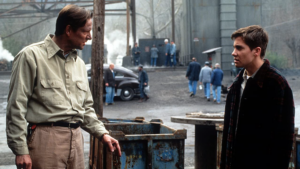
October Sky – Amazon Prime
Chris Cooper and Jake Gyllenhaal star in October Sky.
October Sky is a delightful coming-of-age film that follows Homer Hickam (Jake Gyllenhaal), a young teenager who, upon seeing the launch of ‘Sputnik 1’ in 1957, begins to have big dreams of space and rockets. Troubled by constant pressure from his father (Chris Cooper) to work in the mines instead, Homer fights through the norms set by his surrounding; he teams up with the math ‘geek’ Quentin (Chris Owen) and his friends (William Lee Scott & Chad Lundberg) as they begin to construct small rockets with support from their teacher (Laura Dern). Set at the start of the Space Race, October Sky separates itself from the scaremongering that Americans felt when the satellite was launched and differs from Cold War espionage films. Rather, it focuses on the beauty and fascination of space travel and the curiosity that humans naturally have – all through the innocent eyes of our main character. October Sky is a very pleasant watch. 4/5
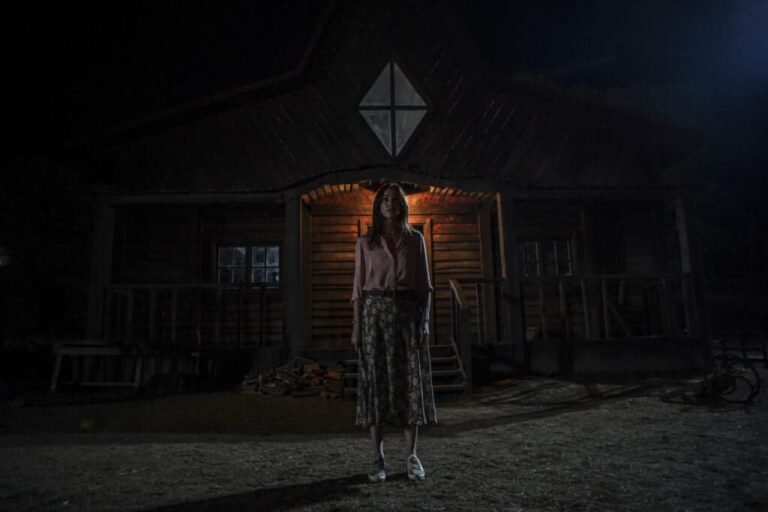
Bringing more cinema to their service, Netflix have unveiled a short 52-second teaser trailer for their upcoming project A Classic Horror Story. Whilst the teaser doesn’t give much away, Netflix has put this description behind it “Music for children, an abandoned house, five strangers: it looks like the classic horror movie and instead…”
A Classic Horror Story current known cast includes Matilda Anna Ingrid Lutz, Francesco Russo, Peppino Mazzotta, Will Merrick, Yuliia Sobol and more. The film is directed by Roberto De Feo, who is known for directing The Nest (2019) and Paolo Strippoli, whose previous works include short films such as Nessun Dorma (2018) and Senza tenere premuto (2019).
Netflix is currently trading at $497.89 on NASDAQ.
A Classic Horror Story will be available from the 14th of July, only on Netflix.
Watch the teaser trailer for A Classic Horror Story below.
The title of BABii’s debut album, 2019’s HiiDE, might at first have seemed like a contradiction. The Margate-based artist arrived with a more fully realized sound and style than most: beyond showcasing her lowercase i-loving aesthetic, the album presented a captivating mix of icy instrumentals, whispery vocals, and the occasional hints of maximalism that would explain her longstanding collaborative relationship with Iglooghost and Kai Whiston. The title might have also alluded to the overarching theme of keeping secrets in a dying relationship, but BABii, whose real name is Daisy Emily Warne, did more than hide behind those futuristic soundscapes; what set her music apart was the kind of emotional vulnerability and poetic earnestness that shone through on intimate moments like ‘STRAY’ and ‘POiiSON’. But there was also a sense that the album’s polished exterior and overall reserved nature served as a sort of protective shield; a sense that she was holding something back.
That doesn’t seem to be the case on her sophomore full-length, MiiRROR, which follows her 2020 EP iii+. Filling out the gaps left by its predecessor, she sets out to convey the full scope of her ambition and establish herself as a dynamic creative force in her own right, not just as a collaborator (in addition to releasing the exhilarating XYZ as part of the GLOO collective with Iglooghost and Kai Whiston in 2019, she also had a hand in Iglooghost’s own sophomore LP Lei Line Eon). Both musically and conceptually, MiiRROR is a step above HiiDE, accompanied by a book, alternate reality game, and audiovisual show immersing the listener in an expansive narrative world that’s rooted in fantasy as much as self-reflection; BABii digs through the wasteland of childhood memory to find it’s filled with imaginary beings – be it majestic dragons or inner demons that never really left – as well as things one might find in a junkyard – strange artefacts, broken glass.
All of these feature in the video for ‘DRiiFT’, the album’s standout opening track, which takes the vague feeling that “something’s missing” and twists it until it cuts to the core. While a sense of anxiety burbled beneath the surface on HiiDE, here its presence becomes jarring, almost ear-shattering. This is where the album, like so many others of its kind, could have crumbled under its own weight, losing sight of the emotional resonance that made BABii’s music unique in the first place. Indeed, the original idea was to have the project be an all-too-literal representation of a mirror by splitting it in half, one side reflecting darkness and the other light. And to an extent, that duality is still present: following ‘DRiiFT’ is the soft, airy ‘BRUiiSE’, which has none of that abrasive energy, while ‘SHADOW’ is the closest she’s come to exuding the confidence of a pop song.
But the album’s strongest moments are those where BABii embodies those chaotic contradictions within a single song, letting them clash against each other in a confined space. When she collaborates with Iglooghost and umru on ‘WASTE’ and ‘HUNTED’ respectively, the experimental textures they help provide hint at the full complexity of the fractured soul she sings about on ‘DRiiFT’. But it’s on the record’s longest and most daring track, the penultimate ‘VOiiD’, that BABii finally sinks into that abyss, and the result – a 9-minute odyssey punctuated by foreboding synths and hypnotic vocals – is utterly mesmerizing. On the other end of that lack, of course, is ‘MOTHER’.
Where BABii’s debut album focused on the dissolution of a romantic relationship, MiiRROR fixates on her difficult, on-and-off relationship with maternal figures and the absence they’ve left behind. Issues around secrecy suggest a common thread: “I don’t wanna be, I don’t wanna be, a secret, do you want to keep me?” she sings on ‘WASTE’. This time though, inspired by her reconnecting with her mother for the first time in 15 years, she confronts those personal struggles with striking directness. On ‘TRACKS’, her typically cold, flat delivery, revolving around a repeated phrase, carries a subtle emotional charge before taking on an accusatory tone: “You left your tracks in the dirt where you left me.” More than a stylistic choice, the ghostly echoes that permeate her music become a haunting evocation of the lingering pain of abandonment.
The musical world BABii inhabits might be one defined by escapism, but few artists are able to combine a knack for world-building with deeply personal storytelling the way she does on MiiRROR. Opening up about her experience in a short personal essay titled ‘Smoke & Mirrors’, she imagines an “alternate reality where I have a mother” that is “carelessly utopian, an eternal bond, a warm touch, a loving understanding,” while at the same time recognizing that her journey “has forever been a labyrinth of bewildering emotions.” At its best, the album mirrors the “hazy ambivalence” of those conflicting impulses, even if it still retains an aura of mystery around the person behind the art. BABii floats about without reaching any clear resolution, but that might be the sound of fragments coming back together at the end of ‘MOTHER’. If there’s still a sense that something’s missing by the end, it at least comes with an understanding that you can’t always find a piece of yourself in someone else’s reflection.
heka is the project of multidisciplinary artist and singer-songwriter Francesca Brierley, who grew up in the Italian hills but currently lives in London. That dual sense of identity, subconsciously or not, has informed her creative process over the past few years that she’s been releasing music: her SoundCloud bio sums up her sound as “butchered folk,” while on Bandcamp, she swears by the motto “lofi till I die.” Whether leaning more into the experimental folk stylings inspired by 22, A Million-era Bon Iver and Jesca Hoop or the hushed, raw intimacy of a bedroom recording, heka’s intuitive approach to songwriting and production has a way of blurring the boundaries between them.
Her new EP, (a), out now via Balloon Machine Records, is her strongest outing yet. What connects its four songs is a porous sense of space and time: textures seep in and out of its three-dimensional sound like a warm summer breeze or a precious memory, fragments Brierly often evokes through the use of field recordings and visual storytelling. Her lyrics range from abstract (“i shed all emotion and you tell me you’re free”) to grotesquely visceral (“i take a dab of you and lick my finger”), and their intensity is heightened by heka’s voice, which carries more tension and subtlety than is usually found in the lofi genre. The result is one of intoxicating beauty, a short but mesmerizing project that’s tied to the promise of bigger things to come.
We caught up with heka for this edition of our Artist Spotlight interview series to talk about her upbringing, the process behind her new EP, and more.
What are some things you associate with your upbringing and the place where you were raised?
I grew up in the countryside, so if I was to say the first thing that popped into my head, it would have been like, just being on trees and in the field most of my childhood, really. [laughs] I go there pretty much every year, so I’m still pretty connected to it. I moved to London when I was like 19, so most of my formative years growing up were done there. And I spent quite a lot of time there this year, actually, because I escaped London in February to try and get some vitamin D. And it’s really nice. I really like the connection to the countryside and being able to be outside and on walks, and I feel like when I’m there, I always write slightly differently. It just happens to be a slightly more folky, more songwriter-y kind of vibe – I don’t know why. Maybe the countryside inspires that kind of music. Whereas when I’m in London, I feel like I write more with a beat in mind, more electronic stuff.
There’s definitely a duality to your music, and maybe that’s a reflection of the places you’ve been in as well.
I feel like that affects my songwriting and the way that I am a lot. I’m also half-English and half-Italian, so I have half of my family and half of my identity, I guess, but I’ve always kind of felt in between the two things. So I don’t feel English and I don’t feel Italian fully; I just kind of inhabit the space in between. I don’t mind it – I quite like not necessarily subscribing to one cultural identity. But I definitely feel like it might be the reason why I find it really frustrating to be isolated into one genre or one sound. I think it’s definitely a theme in my life, being hybrid between two or more things, constantly in movement.
What were you like as a teenager?
I was a lot more put together than I am, I think. [laughs] I didn’t really act up much. I definitely got my teenage phase later in life, so I feel like I was quite grown up when I was 18. And then in my 20s I, like… [laughs] lost it.
[laughs] What happened?
[laughs] I don’t know, I mean, I think when you grow up, you have a certain role in your family, and that was my role. And then when I left home, I suddenly had the freedom of messing up and doing stuff on my own terms and just exploring and experimenting, so I think that’s what happened. But yeah – teenager, pretty chill, I think.
You said you moved to London when you were 19. What does that city mean to you now?
Because of the point that we were making before, I think London is where I’ve kind of grown up the most as an adult. It’s definitely been the environment where I’ve realized things about myself, and it’s the first interaction with a place that’s not home and a completely different world. I feel connected to London, in a way, because I feel quite [makes fast rhythmic sound] in my head, so the rhythm resonated with me. You know, stuff is happening everywhere and it’s so rich and active, so I definitely fell into that pretty easily.
Did you start making music before moving there?
I started when I was 14, I think. I studied classical piano growing up, but never really did any writing with it. And then one summer, this really old friend of mine – she isn’t old, I mean we’ve been friends for a long time – she’s like one year older than me. And you know when you have a slightly older friend when you’re in your teens, it’s like, “Oh my god,” they’re so cool and you want to do everything that they do. And we were on holiday one summer with our families, and she picked up the guitar, she started playing it, and she taught me a little bit of what she knew. And that’s kind of how it happened – I never before had even thought about picking up a guitar or doing anything like that. And then from there, we had a guitar at home and I just literally started writing and never stopped. [laughs] Pretty intensely at the beginning, like I feel like I was writing a song every other day. I think the fact that I was using an instrument that didn’t have any rules, for me, that didn’t have the structure of the classical piano – I had the freedom to just be intuitive with it.
Did you feel a desire to put any of that music out at the time?
I didn’t really at the beginning want anyone to hear what I was writing, because it was mostly, like, pining over this crush that I had. You know, just really personal, embarrassing stuff. And I just was singing because it made me feel good, and writing because I needed to, clearly. I’ve always written in English – for me, the fact that it was this language that, I mean, people understood, but not really immediately, it kind of felt like I was playing and singing in this secret language. It gave me that other level of freedom to just say whatever I wanted. And it took me maybe a year before I even played to anyone apart from people in my family. And then through a friend I met this group that had put together this little artist collective, and I went and played for them one night. I think that was the first time that I played to anyone other than my parents and my sisters. And that’s when started thinking in that way, to share and play in front of other people.
In the video description for ‘redwoods’, you talk about your songwriting process as being very subconscious; how your songs come from a particular place inside you and can contain multiple meanings that reveal themselves over time. Could you describe what that place is like for you, and how do you go about accessing it?
Most of the time, I’ll sit down and start playing something and then something clicks – I don’t know how, I don’t know why – I go down this road that I suddenly see or write something from that. I don’t have a specific process to do it because it feels playful, it feels like experimenting, even if there is subconsciously something that I always do the same. I like that there’s still a bit of unknown and magic in the way that it happens for me. I was thinking about this the other day because someone else asked me something similar, and I was like, “Actually if I think about it, I feel like I’m always in my brain kind of doing that.” I feel like, you know, you’ll have your internal monologue and think about stuff and you see things, and really what the brain is doing is collecting all this data. And I feel like the connections are already being made in my brain as I move into the world. And then what happens when I kind of sit still for a second and channel it into making something with music, for example, is that that stuff is there and suddenly becomes available to us. And I think that’s why most of the songs are really personal and intimate, because it’s literally like an extension of me.
Your lyrics often revolve around very visceral, bodily imagery, going back to your single ‘repaired // you won’t be dead’ and especially on your new EP with songs like ‘(a) dab’. What do you think draws you to that type of writing?
I think some songs are quite visual for me, and especially for ‘(a) dab’, I remember seeing the scene in my head and then describing it. So, some of these songs came more from a visual place and others come more from a talking place. And I feel like I quite like comparing things that are physical and attached to you with feelings – the connection between the body and the emotions that the body feels. I mean, some of them are slightly macabre, I don’t really know where that comes from.
Have you thought about it?
I haven’t, actually. I should, because I don’t have an answer. And that’s why I feel like there are definitely themes in the stuff that I do that I have absolutely no idea why… Maybe influences from stuff I’ve read, I don’t know.
Are you influenced by a lot of horror narratives, be it in music or film, that have a lot of grotesque imagery?
I’m usually not, I really don’t like that kind of stuff. [laughs] You know who I really love though, is Jenny Hval, and she does quite a lot of that. I quite like very visual lyrics, but I’m not necessarily conscious of saying, “Okay, I want to make this sound a bit dark and macabre” or whatever. It’s just what flows out of me. [laughs]
I know that you’re also working on some visuals to accompany the EP, so I’m curious how the visual world is connected to the songs in your mind.
So, not necessarily just the EP but in general, I really like video editing and I really like editing for music videos. And in the experience that I’ve had with other tracks as well, what happens usually is that as you make the video, all of these other layers of the song appear that you didn’t know before. You’re suddenly tuning into something that you wouldn’t have tuned into before, not just the words but the feeling of the song, you know, the pace, the rhythm. And I like for the visuals to have sort of an instinctive connection to the song, not necessarily narrative in any way. I quite like using images as percussive elements. So I think for this collection, when I was doing the production for it, what I really wanted to try and accomplish was to have this group of songs that kind of moved from one to the other, like some type of connecting tissue between them. And I think that’s where the idea of making one video for the whole thing came from, because I wanted to try and reinforce this idea of this one collective thing.
Could you outline the process of integrating found sounds and field recordings into your music?
I record a lot of stuff with my phone, just all the time when I’m out and about or when I hear some sound that’s really cool or I’m in a place that I want to remember. I feel like sound has this incredible power of bringing you back to a place, even if there isn’t a particular sound that’s like, not a main sound but just the environment, the soundscape that you get from any given place. And when I’m recording, I’ll have an intuition of what I want. It’s almost like going through the archives on my phone and listening back to the stuff.
How was your approach for this EP different from what you had done in the past? Did you think of it in a more holistic way?
Yeah, definitely. I’ve had in my mind to have these four songs released as one for a couple of years, and I knew that I wanted all the songs to be kind of connected. It’s something that I’ve always found really hard because historically, I’ll write two songs that are similar and then the next week something completely different. And in the past, that’s always been really frustrating, but I think more recently I’ve found a space of songwriting that I am more aware of now, and it was easier in that sense. I definitely want to experiment more in the future with writing – these were songs that were written at different times and then brought together, and I feel like it would be interesting to sit down one morning and the whole week and just write a whole EP in one go of songs that connect and that have references to each other within the songwriting and the production.
I do think it’s interesting the way that you’ve structured the EP, the progression of it, even if it’s just four songs. For example, the symbolism of the mask in the first song – to me, the “you” in that song is almost like society at large, and then it becomes less abstract and more personal from there. I don’t know if it’s different in your mind.
It’s definitely one of the least personal experience-based songs – it’s more of a philosophical lyric. And it’s to do with, yeah, this idea of conformity, and how we walk around with a mask that we construct. The concept of saying, “Oh, you let go of your mask or your ego, and suddenly you’re free.” And I like that the lyrics are open-ended in a way, that they don’t resolve, and they don’t necessarily say that doing that is right or that doing that is wrong. Because there’s also this kind of like, “You tell me I’m free,” but it’s not saying “I am free.” It’s almost just presenting this idea and it can be read either as a critique of it or an enlightened account of it.
To me, at first, it felt like there was less freedom in that act, because of the haunting and visceral imagery that the rest of the songs turn out to have. Or there’s a threat to that freedom as well. But with the closing track, it feels like there’s a bit of a sense of catharsis in the way it’s embracing anger.
That’s something I hadn’t even thought about, but it works. You have the opening track that’s talking about being above emotion and being free because of that, and the last track that’s saying that actually indulging in cathartic anger is what sets you free. That song comes a little bit from this article I read a few years ago, and it was this philosopher [David Whyte] who talked about how anger is actually one of the purest emotions – not anger in its practical application, but anger as the sort of pure anger, and in the sense that it’s care; it’s like a form of extreme care. I’ve always felt that anger isn’t always bad, and I’ve definitely found a lot of catharsis and some freedom through being angry. I feel like when you experience something that’s traumatic or intense in any way, the first thing that you do is shut down. And what happens after is, when you can finally be angry about it, it’s almost like this rebirth. It signifies the emotions coming back and your vitality coming back and you suddenly having the energy to go against whatever has happened, or like, react. So I think sometimes indulging in strong emotions isn’t necessarily a bad thing. In that sense, I feel like I would disagree with the first song, in that that’s not always the case; being detached isn’t always necessarily what frees you.
This interview has been edited and condensed for clarity and length.
It’s been three years since Walsall’s Jorja Smith released her debut album Lost & Found to seemingly overnight success. The album peaked at number three in the UK album charts; she was named Best British Female Artist at the 2019 Brits and was nominated for Best New Artist at the Grammys that same year. Guest spots with everyone from Drake to Kendrick Lamar arrived. A new queen of British soul had been crowned before she had really even begun, still just 21 years old.
Reflecting an honesty with herself and a commendable patience, Smith decided not to rush the follow-up album to Lost & Found, where most would have been tempted to cash in. So we have Be Right Back, an eight-strong EP that she’s released for fans while they await her next full-length, due to come out next year. These songs were deemed not quite right to make the cut for that record and it can be felt in the demo-esque production quality, particularly in the middle portion of the project. Tracks like ‘Home’ and ‘Burn’ are too dry, too bare, unable to maintain one’s interest.
Smith puts the strongest efforts before these at the beginning. ‘Addicted’ is immediately attention-grabbing, full of moody beats and smouldering vocals. A twinkling piano and a hesitant drumbeat then fill ‘Gone’. Lyrically she continues the themes of young love and self-discovery that flourished in Lost & Found (she’s still only 23). “Tell me how to keep my world moving on without you,” she begs in ‘Gone’; “Nah, I’m not here to hug you, I’m just for the night,” she reminds someone in ‘Time’.
Overall the beats remain a sweet fusion of bleary-eyed R&B and smoky soul, probably hinting at a similar sonic path in the upcoming album. ‘Bussdown’ And ‘Digging’ are the only significant departures, the former possessed with a slight dancehall element with rapper Shaybo being given a chance to shine, and the latter reverberating with murky ’90s energy. Whatever one thinks of the production, Smith’s voice is still the standout: she’s still able to stun and stop whenever she chooses as each word is delivered with a graceful sigh. On the closing track ‘Weekend’, most prominently, a simple piano line allows her gorgeous falsetto to fly into the sky.
It takes an artist possessed of poise and self-confidence to name a record Be Right Back: this is a minor release, she’s strong enough to acknowledge. Jorja Smith is still growing, but as she sings on this EP, “You should be addicted to me”: a listener would do well to heed those words and continue with the artist as she heads into her second full-length album.