Home Blog Page 66

Steps to Take When Substance Use Begins Affecting Daily Life

It can be surprisingly easy for substance use to shift from an occasional habit into something that starts affecting everyday life. Often, the change happens gradually, making it difficult to recognise when support is needed. Over time, substance misuse can impact physical health, emotional well-being, relationships, work, and overall quality of life. Taking action early can make a significant difference and help prevent longer-term harm.

Recognising the Problem

The first and often most difficult step is acknowledging that substance use has become a problem. Many people minimise the impact at first, especially when they are still managing day-to-day responsibilities. However, when substance use begins interfering with work, relationships, finances, sleep, or mental health, it may be time to seek professional support. Substance misuse not only affects physical health. It can also contribute to anxiety, low mood, emotional instability, and social withdrawal. Recognising these patterns early allows individuals to access the right help sooner. Across Wales, organisations including PCP Cardiff provide support and structured treatment options for people struggling with dependency and related mental health challenges.

Communicating Effectively

Once the issue has been acknowledged, open communication becomes incredibly important. Substance misuse can feel isolating, causing many individuals to withdraw from friends, family, and support networks. Unfortunately, isolation often makes recovery more difficult.

Talking honestly with trusted people can help reduce feelings of shame and loneliness. Friends and family members may be able to provide practical support, emotional encouragement, and accountability throughout the recovery process. Even a simple conversation can be the first step towards meaningful change.

Seeking Professional Support

Professional guidance can play a crucial role in recovery. Healthcare professionals, counsellors, and addiction specialists are trained to help individuals understand both the physical and psychological aspects of substance dependence.

Structured support can help people identify triggers, develop healthier coping mechanisms, and safely manage withdrawal symptoms where necessary. Treatment plans are often tailored to the individual, recognising that no two experiences with substance misuse are exactly alike. Accessing professional help early can provide clarity, structure, and reassurance during what can otherwise feel like an overwhelming time.

Prioritising Mental Health

Substance misuse and mental health difficulties frequently go hand in hand. Stress, anxiety, trauma, depression, and other emotional challenges can contribute to unhealthy coping behaviours, while substance use itself can worsen mental health symptoms over time.

Addressing mental well-being alongside addiction recovery is essential for long-term progress. Therapies such as cognitive behavioural therapy (CBT), counselling, mindfulness practices, and stress management techniques can all support recovery. In some cases, medication or additional mental health support may also be recommended.

Building a Reliable Support System

A strong support network can make a major difference during recovery. Support groups such as Alcoholics Anonymous (AA), Narcotics Anonymous (NA), and SMART Recovery offer safe spaces where individuals can share experiences and encouragement with others who understand similar struggles.

Support systems do not have to be large to be effective. A combination of supportive family members, close friends, mentors, healthcare professionals, and peer groups can provide stability and reassurance during difficult periods.

Making Positive Lifestyle Changes

Small lifestyle adjustments can significantly support recovery and overall well-being. Regular physical activity, whether that’s walking, swimming, yoga, or going to the gym, can help improve mood, reduce stress, and provide structure to daily life.

Healthy eating habits, proper hydration, and consistent sleep routines also contribute to better physical and mental resilience. Creating healthier routines can help reduce the likelihood of relapse while improving confidence and energy levels over time.

Final Thoughts

Substance misuse should never be ignored or dismissed as something that will simply resolve on its own. Seeking support is not a sign of weakness — it is a positive and important step towards regaining control and improving quality of life.

Recovery can feel challenging, but with the right support, treatment, and encouragement, meaningful change is absolutely possible. Taking that first step towards help can open the door to a healthier, more stable, and more fulfilling future.

A Look at Our Two Favorite Brands from Australian Fashion Week Resort 2027: Haluminous and Nicol & Ford

0

It’s been nearly two years now since IMG, the sponsor that once “long-time” applied to, and Australian Fashion Week parted ways. After Australian designers spent months in a state of cold-sweat uncertainty, the event made a 2025 comeback under NSW Government backing and a newly arranged sense of stability. A necessary shift, arguably forced, moved more and more emerging designers into Sydney’s Museum of Contemporary Art, a setting fitting enough for the week’s 30th anniversary.

Australian fashion week
@haluminous_official via Instagram

Hannah Teresa’s Haluminous, a brand seen as part of The Frontier group runway, clearly has a thing for gothic romance and Victorian references, always given a modern gloss. The brand’s Petal Nocturnal collection had just one more task to complete: make jersey sexy. Or, as they put it in an Instagram caption, “In our studio, we needed to discover ways for jersey to thrive in the most luxurious way, not as a T-shirt or casualwear, but as something sculptural, resilient and beautiful. That balance of lightness holding weight, structure and beauty became the core technical message of Petal.” And just like that, veiled eyes guided a body drenched in 3D rosettes, red structure, and romantic volume down the runway.

Australian fashion week
@nicolandford via Instagram

Katie-Louise and Lilian Nicol-Ford’s namesake brand is known for its celebration of queer communities and its ethical core. Their task, however, was to translate painter Adrian Feint’s art references and the 1958 film Auntie Mame’s glamour into a resort collection. The result was a Newtown-based retro Dolce Vita, with hand-painted florals, rich silks, coque feathers, decorated hips, voluminous hair, and silicone bodices that look like Murano glass, being quite a big part of it. Australia suddenly looks like a very tasteful diva.

The World Is His Frame: Chengrang Cho and What AI Can’t Replace

From the streets of New York to the quiet alleys of Taipei — media artist and visual storyteller Chengrang Cho has built a visual language out of the places and moments most people walk right past.

There’s a moment somewhere between landing in a new city and figuring out where to go when most people stop really seeing. The novelty wears off. The streets start to feel familiar before they ever really were. Chengrang Cho is not most people.

Born in Taiwan and now based in New York after graduating from New York University, Cho has spent years moving between cities — Tokyo, Taipei, and across Europe with his camera and a near-obsessive attention to what others overlook. Not landmarks. Not curated destinations. The light on wet pavement at 7am. Architecture that sits quietly, almost strangely, out of place.

His practice spans photography, filmmaking, immersive media, and creative technology. Through collaborations with Higgsfield AI, DJI, Insta360 and PLAUD AI, he has produced campaigns and creator-focused visual content at the frontier of imaging technology. Working closely with these companies gave Cho early access to some of the most advanced creative tools in the industry, and also sharpened a distinction he returns to often: what technology can accelerate, and what only lived experience can create.

Through those projects and a growing international presence across social media, Cho’s atmospheric approach to documenting cities and everyday life has found an audience that recognizes something genuine in the work, even if they can’t always name exactly what it is.

Chengrang Cho hosting a seminar in New York

“The technical barrier is disappearing. Anyone can generate visuals now. But your perspective, your instincts, your experiences and taste, that’s the part AI can’t replicate.”

Your photography travels the world but never feels like typical travel work. How do you think about shooting a place?

I’m not interested in collecting the shots everyone already knows. What I want is the emotional identity underneath — the rhythm and texture of a place that doesn’t show up in postcards. Tokyo has this tension between density and silence at 6am. Taipei has a warmth built into its neighborhoods. I try to find that feeling before it disappears.

That sensibility carries directly into his commercial work. Collaborating with companies building the next generation of imaging tools has given Cho a front-row view of where visual production is heading, and reinforced a simple conviction: technology expands what is possible, but it doesn’t replace what is personal.

Working with leading companies like Higgsfield AI, PLAUD AI, Insta360, and DJI — what did that do to your creative process?

It clarified things. I saw exactly what these tools can do — generation, enhancement, speed , and where they genuinely fall short. AI doesn’t have taste, they don’t have intention the way a person does. A lot of my decisions are emotional. I shoot something because it reminds me of a feeling from years ago. That’s not something a model can generate. I use AI to explore ideas faster and refine direction, but the core of the work still comes from my skills and lived experience.

New York shaped him more than he might admit. The city is a constant exercise in attention — a place that forces you to decide, quickly and repeatedly, what actually matters amid relentless visual noise. He built those instincts over years of working as a creative in one of the world’s most demanding visual environments, and they continue to inform both his artistic and commercial practice.

Where does your focus on quiet, overlooked moments actually come from?

From being an outsider everywhere I shoot. When you’re not from somewhere, you don’t have the filter that makes locals stop seeing what’s there. I grew up in Taiwan, moved to New York, kept moving — and every time I arrive somewhere new, there’s this window where everything feels unfamiliar and worth paying attention to. I’ve tried to extend that window for as long as I can.

As artificial intelligence continues reshaping creative industries, Cho represents a generation of visual artists and content creators working directly with the tools transforming the field, not resisting them, but refining their authorship through them. His collaborations with some of the most advanced creative technology companies in the world didn’t replace his process. They clarified it.

Photo by Chengrang Cho

For Cho, AI is a tool for exploration, never origin. The final image still comes from something slower, more personal, and harder to replicate — a memory, a feeling, a moment that no model was trained on.

Watch his work closely and you’ll notice a consistency that has nothing to do with presets or color grading: every image feels inhabited. Like someone was genuinely there, genuinely paying attention. In an increasingly automated visual landscape, that kind of attention still stands apart.

Hew Release New Single ‘Reconciliation’

Houston, Texas emo band Hew have released a new single, ‘Reconciliation’. It’s taken from their debut LP, Your Version, which is slated for release in July via Tiny Engines. Check it out below.

Hew was formed in 2024, with Lindsay Minton (guitar, vocals) and Mercy Harper (Bass VI) of football, etc., who were later joined by Amador “Moe” Lerma on drums and Kris Hoffman on bass.

Album Review: feeble little horse, ‘bitknot’

You thought 2026 would go by without a feeble little horse album? Despite the steady proliferation of equine musical acts, most of them have curiously decided to stay silent during the first half of the year. horsegiirL’s debut album comes out at the start of June – not to be confused with Horsegirl, the Chicago indie band whose latest LP is well over a year old – but the noise-pop disruptors have beaten the Berlin DJ to the punch, surprise-releasing their new album bitknot on a Tuesday – incidentally or not, the day albums used to come out up until the last Year of the Horse. Once again recorded across the trio’s homes in Pittsburgh, Pennsylvania, the follow-up to 2023’s mesmerizing Girl With Fish isn’t exactly nostalgic for a time when tech and money were only responsible for human suffering in different ways, but it does grapple with the kind of discombobulation of memory and self that’s particular to this cultural moment. Using digital tools as an extension of their knotty group dynamic and Lydia Slocum’s wiry introspection, it interlaces sugary melodies and dizzying left turns that hardly pale in comparison to its predecessor, making it feel far from a tossed-off release. 


1. Doorway

If Girl With Fish set the scene by teasing some amount of distortion, bitknot wastes no time letting the floodgates open, mirroring the feeling of icy wind hitting you on a Christmas morning, probably one deposited in the recesses of your memory. “The lawn is coated/ My tongue is frozen/ Against your silver neck,” Lydia Slocum sings, suffusing the bleary atmosphere with a tactile sweetness. It’s only twee for a brief moment (“In the center/ Best friends Forever”) before being eroded by the lack of remembering, juxtaposed by a physical archive that serves as a “yearly jumpscare.” Sebastian Kinsler makes a fun little game out of this thirst for permanence, chopping and screwing her vocals into a whimsical outro. 

2. Poison

Less studio trickery foregrounds Slocum’s vulnerable reflections, which center around the toxic cycles of creativity within a capitalist culture. Abstract as they are – “Ladder to the tree, I was chosen/ Leaning on the part that was broken/ Sucking on the fruit that was rotten” – they’re accented by rough-hewn guitars that offer a taste of the bittersweet. 

3. Rewind

Slocum makes you chew on the album’s first real infectious chorus – “It’s harder to rewind than/ To see it at the same time/ But if it doesn’t add up/ Then I’ll see you at the end of the line” – as if switching up meaning with each repetition. There’s a sense of continuity in the album sequencing that’s refreshing, as the tinge of regret over success bleeds into the personal, pondering whether it’s divergent paths or selves that caused a dent in the singer’s friendship. Jake Kelley’s drumming remains dynamic without distracting from the arrangement’s remarkably clean surface, suggesting there’s no resentment hiding between the lines of Slocum’s fervent curiosity. 

4. Shady

There’s a crackle of distortion simmering underneath what seems like another cleanly produced track, underscoring the slight discrepancies that can throw off a friendship – one no longer tied to the past. The melody forces Slomac to stretch words in a way that’s mellifluous, even meticulous, which highlights the detailed effort the singer makes to curate her social image, not for the whole but for every single person: “I tailored this bit for you to read/ And I’ll tip-toe as I go from A to B.” Slyly, of course, the group structures the record in much the same way. 

4. Dior

After a string of shorter, more subdued tracks, ‘Dior’ brings blown-out guitars and shapeshifting production back to the fore, which animates Slocum’s sense of humour. She tells a guy his chances are “slim like my Virginias,” and all the fuzz culminates in her not going to the Wednesday show, where “Kate saw you and she saw ✿.” (That’s how the lyric sheet transcribes the bleep censor.) It’s delightful from start to finish. 

5. Paris

Woozy synths complement Slocum’s “Oui, we don’t have to talk” in a bubble of playful disorientation. Prime jet lag entertainment. 

6. Cradle

Back home, domestic bliss – or the echo of it? – soothes the mounting confusion, at least for a short while. Unadorned, airy guitar chords lull the listener into a similar kind of trance. 

7. Upside Down

After letting it out to dry, feeble little horse steep their sound in a flurry of samples and synths, running with the concept of being twisted inside out. The details are specific to them, but it’s the band’s closest equivalent to a Porter Robinson song. 

8. Guts

Slocum’s knotty poetic associations hit their peak on ‘Guts’, matched by an especially wonky electronic riff. A bit of context is offered through the album artwork, which “is based on the coincidental core memory matrix, which was used in old computers to store memory / access information using 0s and 1s. Each core, or ‘bit,’ is accessed through the grid of wires, like a knot that stores secret details and memories.” What happens when those bits are auctioned off, monetized, diluted by our own patterned subservience? Will we have the guts to hold off our own destruction?

9. Shopping

Catchy and torrential, ‘Shopping’ epitomizes feeble little horse’s approach while delivering the album’s stickiest hook: “And would you fuck with these shoes?/ I wanna look just like you.” Parasociality teeters into paranoia, a thin line relayed in plain, relatable terms, so long as you’re familiar with Ssense and Ben Doctor. 

10. DMT

If you’re chronically online enough to identify the “That’s my shit right there” sample stitched in before the song’s glorious breakdown, bitknot is both for and about you, the average consumer grateful to have their customized coffee order readied at the touch of a button while accruing debt just for being alive. If tracks like ‘Shopping’ leaned into the blissful ignorance just a bit, ‘DMT’ puts the discordance front and center. It’s also a pleasant send-off who might have assumed we wouldn’t be getting another ‘Pocket’-like moment of screaming and crashing out – only this time squarely into oblivion. 

Dutton Ranch Season 2: Cast, Rumours & Release Date

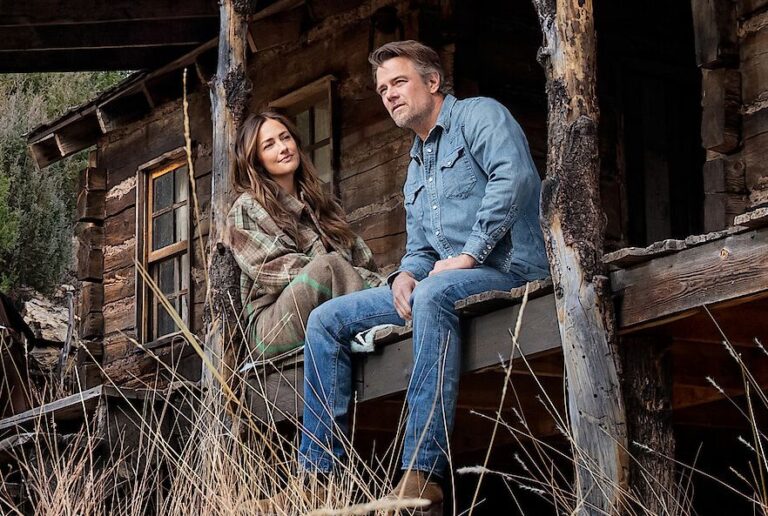
To call Yellowstone a hit would be an understatement. The show lasted for five seasons and revitalised the cowboy genre in the process. Not only that, but it was a ratings hit which spawned an entire TV franchise, with multiple spin-off series vying for fans’ attention.

The most recent one, Dutton Ranch, also acts as a direct sequel. That’s mainly because it revolves around two prominent characters from the original, Beth Dutton and Rip Wheeler. Will it last beyond the first season? Here’s what we know so far.

Dutton Ranch Season 2 Release Date

At the time of writing, there’s no official news available about a potential Dutton Ranch season 2. Given the success of the Yellowstone franchise as a whole, however, a renewal is likely just around the corner.

The show has been received with positive reviews from fans and critics alike, so there’s no reason why it wouldn’t continue. If all goes well, new episodes could arrive in 2027.

Dutton Ranch Cast

  • Kelly Reilly as Beth Dutton
  • Cole Hauser as Rip Wheeler
  • Finn Little as Carter
  • Juan Pablo Raba as Joaquin Jackson Reyes
  • Jai Courtney as Rob-Will Jackson
  • R. Villarreal as Azul Ramos
  • Ed Harris as Everett McKinney
  • Annette Bening as Beulah Jackson

What Is Dutton Ranch About?

Dutton Ranch picks up after the events of Yellowstone and follows Beth Dutton and Rip Wheeler as they leave Montana behind to build a new life in South Texas. Alongside adopted son Carter, they purchase and operate a massive ranch.

As you might expect, the goal is to escape the grief tied to the Yellowstone legacy. Since this is a Dutton story, peace lasts about five minutes. Before long, they are tangled in brutal rivalries and local power struggles. A wealthy neighboring ranch family becomes their biggest threat, and old ghosts continue to haunt the couple.

The tone of the show is very much classic Yellowstone. Think family loyalty, violence, revenge, ranch politics, and emotionally unstable people staring dramatically into sunsets. In other words, the perfect spin-off for fans missing the original show.

While Dutton Ranch season 2 isn’t a sure bet just yet, the spin-off is just getting started. In the UK, you can stream new episodes weekly on Paramount+. The season 1 finale is scheduled for early July.

Are There Other Shows Like Dutton Ranch?

If you like Dutton Ranch, you will probably enjoy The Madison. Starring Michelle Pfeiffer, it is also available to stream on Paramount+. Ransom CanyonVirgin River, and Tulsa King might be up your alley as well.

Roni Horn Explores Language and Fluidity in New London Exhibition

Roni Horn has opened her first solo exhibition in London in over a decade entitled Seizure of Hope, presenting new works on paper alongside a cast-glass sculpture that continues the artist’s long-standing engagement with language and unstable forms of perception. The Hauser & Wirth exhibition centres on Horn’s ongoing Seizure of Hope series, in which the phrase ‘I am paralyzed with hope’ is written and rewritten across densely layered drawings.

Drawn from a line originally spoken by comedian Maria Bamford and first incorporated into Horn’s 2021 installation LOG (22 March 2019 – 17 May 2020), the repeated phrase accumulates across the works like a stream of consciousness, reflecting the pervasive states of anxiety and emotional unease in contemporary society. Using wax crayon, Horn partially distorts the text so that the words appear to dissolve into the page, recalling water-damaged ink or handwriting viewed beneath a moving surface. Across more than 45 drawings, repetition serves as a visual structure as well as a psychological condition, with hope presented as a state of suspension rather than reflecting optimism.

Accompanying the works on paper is Horn’s cast-glass sculpture Untitled (“What happens to the hole when the cheese is gone?”) (2022), a unique example of the artist’s cubic glass forms. As with much of Horn’s practice, the work exists in a fluctuating state shaped by light and reflection, shifting between solidity and transparency. Water remains a linking conceptual thread throughout the exhibition, serving as a visual reference and metaphor for the fluid nature of identity.

Roni Horn: Seizure of Hope is now open in London through 1 August 2026.

How modern cinema subverts classical tailoring

It has always been the case that the language of cinema is in visual shorthand to create power dynamics way before even a line of dialogue is uttered. Hollywood has used formal menswear as a symbol of institutional stability (or, sometimes, effortless heroism). Think of Cary Grant’s mid-century poise or James Bond’s immaculate MI6 uniform. It was a safe but fairly aspirational fantasy where a crisp fit meant moral clarity.

But filmmakers are twisting these classical codes on their head. High-end tailoring is no longer a just a lazy nod to luxury, but a psychological weapon used to deconstruct class and interrogate the very nature of masculine performance.

Saltburn & Succession: The modern antihero

In recent cinematic hits, formal attire has been less of a celebratory garment and more of an oppressive, or claustrophobic uniform. Emerald Fennell’s Saltburn uses black-tie dress codes to highlight the psychological tension between the aristocratic elite and the parasitic outsider. When Oliver Quick tries to assimilate into the Catton family estate, his interactions with formal evening wear are really what exposes his alienation. He is a boy playing dress-up in a space where everyone else was born wearing a cummerbund. It turns a celebratory dinner into a battlefield of social anxiety without saying a word.

Cinema has always weaponized this sense of hyper-formality, for good or bad. When a director strips a character of their casual wardrobe and places them in a sharp Tuxedo suit, it isn’t just about aesthetics, but an expression of class, expectation, status, and sometimes, masked intent. It can become the reason why we instantly trust a character or suspicious of them.

We see a similar tension play out in Christopher Nolan’s Oppenheimer. The transition from fluid, academic tweeds into high-waisted and rigid military and political tailoring is what mirrors J. Robert Oppenheimer’s entrapment within the bureaucratic machinery of the state. It is the visual metaphor for the story arc. The clothing becomes a cage for him, turning historical figures into tragic archetypes trapped by their own public images.

The slouchy, unstructured suits of his early physics days were to show freedom in an intellectual sense, that he could think outside the box. The cold formality of his later years shows a man compromised by his own creation. But depending on the arc, the opposite can be expressed, where characters grow into status and formality.

The subversion of the sartorial gaze in independent cinema

This cinematic change has been reflected in broader cultural skepticism towards the traditional power structures. For many, it’s a shame, and something we will see cycle back one day, perhaps. Directors like Ruben Östlund (Triangle of Sadness) and Mark Mylod (The Menu) use strict black-tie environments to stage satirical executions of the ultra-wealthy. In these, the immaculate lines that have been so carefully tailored are ruined by chaos and violence. A subversion.

And, even for those who wear suits in daily life, there is a certain satisfaction in watching a multi-millionaire struggle to maintain their dignity while their luxury evening wear gets slowly ruined throughout the scene. A guilty pleasure of turning structure on its head.

By subjecting the highest echelons of fashion to physical degradation, modern filmmakers can strip these garments of their power and expose the fragile vulnerability hidden beneath. But, as we grow accustomed to this play, we may see a cycling back to placing more status onto formal attire once again, especially as we have seen the peak of working from home in daily life.

Ponies Season 2: Cast, Rumours & Release Date

Have you missed Emilia Clarke? You can catch up with her in Ponies, a Cold War espionage drama that expertly blends tension with dark comedy. Throw in some emotional stakes, and it’s no wonder the show has a 97% score on Rotten Tomatoes.

Ponies premiered back in January in the US and is finally available to watch in the UK via Sky and NOW. One question remains, though: will it return with season 2? Here’s what we know so far.

Ponies Season 2 Release Date

Unfortunately, Ponies hasn’t been renewed for additional episodes yet. The story is far from over, and the showrunners have plans for what’s to come.

“We’re ready to dive into season two as soon as the starting gun goes off and we hope someone fires it soon!” creators Susanna Fogel and David Iserson told Deadline after the first season wrapped up.

Fast-forward four months, and there’s still no official word on whether the series will make a comeback. All we can do for now is keep our fingers crossed. If all goes well, Ponies season 2 could arrive in 2027 or 2028.

Ponies Cast

  • Emilia Clarke as Beatrice “Bea” Grant
  • Haley Lu Richardson as Twila Hasbeck
  • Adrian Lester as Dane Walter
  • Artjom Gilz as Andrei Vasiliev
  • Vic Michaelis as Cheryl Szymanski
  • Nicholas Podany as Ray Szymanski
  • Petro Ninovskyi as Sasha Shevchenko

What Is Ponies About?

Set in late-1970s Moscow, Ponies follows Bea Grant and Twila Hasbeck, two American embassy wives.

Their lives implode after their CIA-agent husbands supposedly die in a mysterious plane crash. Refusing to accept the official explanation, the women are recruited by the CIA and transformed from overlooked “PONIES” (“Persons of No Interest”) into covert operatives inside the Soviet Union.

Outrageous premise? Sure. If can suspend disbelief, however, the show is a very good time.

Bea is polished and emotionally guarded. Twila, meanwhile, is more impulsive and intuitive. As they work missions across Moscow, they uncover evidence suggesting their husbands’ deaths were connected to a mole inside the CIA itself. The paranoia ramps up, especially once they suspect that almost everyone around them could be compromised.

We won’t give away any spoilers, but the first season ends with multiple cliffhangers, suggesting that the women are nowhere near done with their espionage ways. Ponies season 2 would continue their story, likely with even more chaotic twists meant to keep viewers glued to the screen. We can hardly wait.

Are There Other Shows Like Ponies?

If you like Ponies, shows with similar vibes include Slow Horses, The Americans, The Residence, Killing Eve, The Diplomat, The Night Manager, and Black Doves.

What Are the Best Teen Mental Health Treatment Programs in Phoenix?

If your teenager has been struggling emotionally, you already know how exhausting and frightening the search for the right help can feel. Phoenix has a wide range of teen mental health treatment programs, but not every option fits every family or every situation. Some teens need intensive daily support, while others benefit from flexible outpatient care. The key is understanding what is actually available, what to look for, and how to make the process as manageable as possible. This guide breaks it all down so you can move forward with clarity and confidence.

Types of Teen Mental Health Treatment Programs Available in Phoenix

Phoenix provides several levels of teen mental health care, and the right level depends on the severity of your teen’s condition, their day-to-day functioning, and your family’s circumstances. For example, Avery’s House helps teens struggling with mental health conditions in Phoenix by providing structured, clinically sound treatment tailored to adolescent needs. Understanding the different program types is the first step toward making a well-informed choice. Some teens may need full-time residential care, while others may benefit from outpatient therapy, intensive outpatient programs, or partial hospitalization. Looking at these options side by side can help parents choose support that matches both the teen’s needs and the family’s daily reality.

Residential Treatment Programs

Residential programs provide around-the-clock care in a structured, live-in environment. Teens who attend these programs stay at the facility, receive therapy daily, and follow a structured routine that supports healing. This level of care is best suited for teens with severe depression, trauma, suicidal ideation, or conditions that have made daily life at home or school unsafe.

These programs typically combine individual therapy, group sessions, family therapy, and psychiatric medication management. The goal is not just short-term stabilization but the development of real coping skills that carry into everyday life. Most residential programs in Phoenix last between 30 and 90 days, though the duration depends on the individual teen’s progress.

Intensive Outpatient and Partial Hospitalization Programs

For teens who do not require 24-hour supervision, intensive outpatient programs (IOP) and partial hospitalization programs (PHP) offer a structured middle ground. A PHP typically runs five days a week for several hours each day, while an IOP meets three to five times per week for a shorter daily period. Both allow teens to return home at the end of the day.

These programs work well for teens who are stable enough to live at home but still need more support than a weekly therapy appointment can provide. They are also commonly used as step-down options after a residential stay, helping teens transition back into their routines with ongoing clinical support.

What to Look for When Choosing a Teen Mental Health Program in Phoenix

Not all treatment programs are created equal. Before you commit to any program, there are several factors worth examining closely.

First, look at the clinical staff. A quality program should have licensed therapists, psychiatrists or psychiatric nurse practitioners, and staff who specialize specifically in adolescent mental health. Generalist care is not the same as adolescent-focused care, and that distinction matters significantly during the teenage years.

Second, ask about the treatment approaches used. Evidence-based methods like cognitive behavioral therapy (CBT), dialectical behavior therapy (DBT), and trauma-focused therapy have strong track records with teens. A program that cannot clearly explain its clinical approach should raise concern.

Third, consider family involvement. The most effective teen programs treat the family as part of the recovery process. Look for programs that offer regular family therapy sessions, parent education components, and open communication with caregivers throughout treatment.

Finally, assess the program’s environment and culture. Your teen should feel safe, respected, and understood, not judged or institutionalized. A tour, a consultation call, or a conversation with alumni families can give you a clearer sense of whether the program’s culture aligns with your teen’s needs.

How to Navigate Insurance and Paying for Teen Mental Health Care

Cost is one of the biggest barriers families face, but the financial picture is often more manageable than it first appears.

Start by contacting your insurance provider directly. Ask specifically whether the program you are considering is in-network or out-of-network, and request a clear explanation of your mental health benefits. Under federal law, insurance plans that cover mental health are required to offer coverage comparable to what they provide for physical health conditions. This is known as mental health parity, and it can significantly reduce your out-of-pocket costs.

If your teen requires residential care and your insurance does not fully cover it, ask the treatment program about a pre-authorization process. Many programs have dedicated staff who work directly with insurance companies to obtain coverage approvals. This step alone can save thousands of dollars.

For families without sufficient insurance coverage, there are other options. Arizona’s Children’s Behavioral Health Services provides state-funded mental health care for eligible minors. Some programs also offer sliding-scale fees based on income, and nonprofit organizations may offer financial assistance for families in need. The point is to ask, because there are more resources available than most parents realize.

How to Support Your Teen Before, During, and After Treatment

Your teen’s treatment does not happen in isolation. The support you provide at every stage directly influences their outcomes.

  • Before treatment: Have an honest, calm conversation with your teen about why you are seeking help. Avoid framing it as punishment or a last resort. Instead, present it as a decision made out of love and concern. Teens who understand the purpose of treatment tend to engage with it more openly.
  • During treatment: Stay involved without overstepping. Attend family therapy sessions consistently, follow through on any tasks the clinical team assigns you, and keep communication with your teen warm and steady. Resist the urge to minimize their struggles or push for fast results. Recovery has its own pace.
  • After treatment: The transition home is one of the most delicate phases. Work with the treatment team to build a solid aftercare plan that includes continued therapy, possible medication management, school support accommodations, and a clear plan for what to do if symptoms return. A strong aftercare structure is what separates lasting progress from a short-term fix.

Through each stage, remember that your own well-being matters too. Parents who seek their own support, whether through therapy or peer groups, are better positioned to show up consistently for their teens.

Conclusion

Finding the right teen mental health treatment program in Phoenix takes time and research, but the effort is worth it. You now have a clearer picture of what is available, what questions to ask, and how to support your teen through the process. Trust the clinical professionals around you, stay engaged as a caregiver, and know that with the right support, meaningful recovery is absolutely possible for your teen.