


Critics listen to a lot of new music every day, which means they get to spend every December – or November, since that’s when several year-end lists have started popping up – harping on about how some of their favorite albums couldn’t make the cut. For the first time in my five years as music editor of this publication, we’re expanding the annual best albums list to highlight 100 rather than 50 albums – and there are still many records I’ll be coming back to that just aren’t included. The always slightly arbitrary nature of ranking means that albums that are relatively low on this list, including by previous AOTY holders, might have been higher during a less eventful year. What’s certain is that no two albums here are quite alike, and you’ll find at least one thing that might have slipped under your radar. Here are the 100 best albums of 2025.
100. Star 99, Gaman
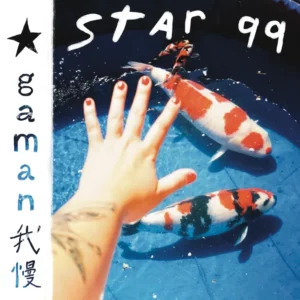 On their sophomore LP, Gaman, Star 99 are still making punchy, exhilarating songs while pushing beyond – though not necessarily past – the twee sensibilities of their 2023 debut Bitch Unlimited, making way not just for the confrontational nature but the poetic nuances of their songwriting. As Saoirse Alesandro and Thomas Romero trade vocals, revealing the core emotions that bind their songs – insecurity, resentment, isolation, often fueled by the fire of generational trauma – you get less of a sense that these are separate people bringing songs to the table than just two friends, in a band, facing similar strifes – and getting through them. Which is, definitionally, the art of gaman. Check out our Artist Spotlight interview with Star 99.


99. Mei Semones, Animaru
 Featuring nearly the same backing band as last year’s Kabutomushi EP, Mei Semones‘ full-length debut deepens her seamless blend of dreamy bossa nova and jazz-inflected indie rock, maintaining a gorgeous atmosphere while dynamically maneuvering from one odd feeling to another. There’s so much heart and charm in it, though, that no part of its eclectism feels alienating. “There’s something I like about it,” she sings of the ‘Dumb Feeling’ that opens the album, then spends the rest of it elaborating in a musical language entirely her own. Read our Artist Spotlight interview with Mei Semones.
98. Frankie Cosmos, Different Talking
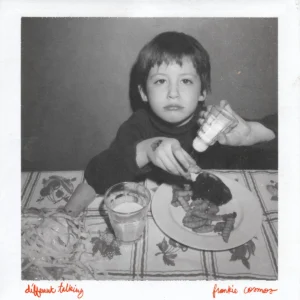 Different Talking is the first album Frankie Cosmos recorded as a unit with no outside studio producers, tracking it at a house in upstate New York that they all lived in for a month and a half. Which, in a funny little way, means that it is the first self-produced Frankie Cosmos since Greta Kline first started posting sparse folk-pop songs on Bandcamp. More than reevaluating the meaning of home-recording at a different point in life, of course, Different Talking considers and embodies home, grief, and all those microcosmic, universe-expanding feelings the heart seems to produce in circles as the world flashes by. “We can all agree/ That time is both frozen and moving faster than we can see,” goes a song titled ‘One! Grey! Hair!’. We can all agree, and Frankie Cosmos can play to its rhythm. Read our inspirations interview with Frankie Cosmos.
97. Danny Brown, Stardust
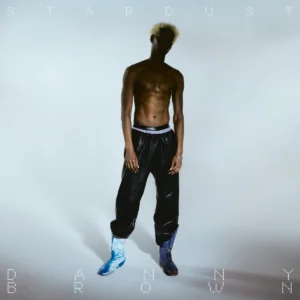 There might be a self-reflective throughline across Danny Brown‘s latest effort – and first since becoming sober – but it doesn’t hinge on the introspective, natural flows of his last album, Quaranta. Instead, it feeds off the communal energy of a crew of cutting-edge, hyperpop-adjacent artists who help the 44-year-old affirm not just his status and lyrical dexterity, but the reason he keeps falling back in love with music. “You wondered what made things enjoyable when you were younger,” Angel Prost, one half of Frost Children, intones at one point. More than just wondering, Stardust – easeful and electrifying, relaxed and glitched-out – simply revels. Read the full review.
96. Sword II, Electric Hour
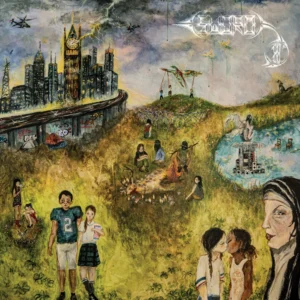 While Sword II‘s debut album, Spirit World Tour, focused on abrasive experimentation, the Atlanta trio’s follow-up finds them honing in on their collaborative songwriting: still eclectic and radical in spirit, only this time channelled through lush arrangements, greater lyrical clarity – not to mention longing – and warmly inviting harmonies. As blissfully disorienting as it is renewed with purpose, the new album was recorded in a basement of an old home they rented where the wiring was so faulty they had to use acoustic instruments to avoid electric shocks. “You’re so puzzled/ Trying to believe in something/ On your own,” they sing on ‘Halogen’. But together? That’s a whole different world of possibilities. Read our Artist Spotlight interview with Sword II.
95. Teethe, Magic of the Sale
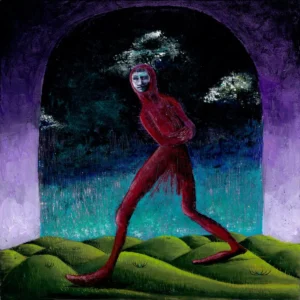 For their mesmerizing second album, Magic of the Sale, Teethe‘s recording process, split between their current home bases across Dallas and Austin, stayed virtually unchanged: tracking demos and uploading them to a shared folder. This time, though, the group of trusted contributors that helped bring to life their tender-hearted melancholy and warm existentialism widened: Charlie Martin of Hovvdy, performing additional piano; Wednesday/MJ Lenderman’s Xandy Chelmis on pedal steel, producer Logan Hornyak of Melaina Kol, and Emily Elkin on cello. “Hear your words like photos felt in sound,” a muffled voice sings on ‘Iron Wine’, stirring a wave of distortion. “Holding what our eyes can’t make up now.” Magic of the Sale sounds like slowing down the blink of an eye, where the smallest, most precious emotions seep into view. Read our Artist Spotlight interview with Teethe.
94. Hatchie, Liquorice
 When it comes to love, Hatchie knows that even the fleeting stage of infatuation encompasses more than just ecstasy. “Something lingers in the sea between/ Much more than this midwinter kiss,” she sings on ‘Sage’, a highlight on her new album Liquorice, which triangulates the dizziness, desperation, and disillusionment of young romance like it’s something you can bite into, savouring every layer. Recorded at Jay Som’s home studio in Los Angeles, Liquorice brims with nostalgic influences, but Pilbeam’s maturing perspective – she’s 32 and married to her longtime collaborator Joe Agius – makes it feel worlds away from the project’s beginnings almost a decade ago. “I’m still stuck with these pathetic dreams,” she sings on the closer, a sentiment that could suck the life out of anyone. For Hatchie, it’s all colour. Read our inspirations interview with Hatchie.
93. Keaton Henson, Parader
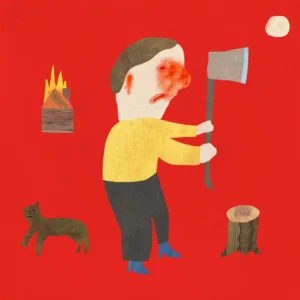 Parader is torn between Keaton Henson‘s present reality of living in the English countryside and the fragmented memories that reverberate through it; fittingly, production duties were split Luke Sital-Singh, who grew up with similar emo and hardcore influences as Henson, and Alex Farrar – in his words, “the king of that loud, snarky American DIY sound” – who helped him tap into a grungy, guttural, arguably American confidence that used to be as formative as it was aspirational, even mythical. “Do I really have any business now/ Singing this song and sounding like I did when I was eighteen?” he sings on ‘Past It’. Singing to him, maybe, the part he knows would be stoked about being part of the whole parade. Read our inspirations interview with Keaton Henson.
92. bloodsports, Anything Can Be a Hammer
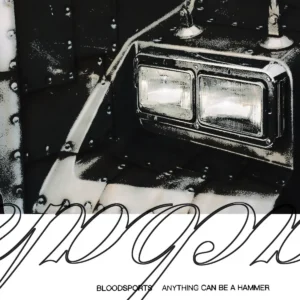 From their first rehearsal together, it took less than a year for bloodsports to record their blistering debut LP, Anything Can Be a Hammer. Produced by Hayden Ticehurst, the album innervates the band’s slowcore foundations, its volatile songs often beginning with spare, somber guitar parts before bursting with noise, though never exactly in the direction you expect them to. Murphy’s lyrics teeter between sweet stream-of-consciousness and nightmarish dejection, blurring the line between fragility and confidence. “It forces an odd reaction/ Coarse and affirmed/ Cuts like a razor,” he sings almost self-consciously on the closing title track, which might leave you feeling the same way: no less alone, but strangely moved by the ever-evolving chaos. Read our Artist Spotlight interview with bloodsports.
91. PUP, Who Will Look After the Dogs?
 “I got caught in the teeth of the thoughts that keep me awake,” Stefan Babcock sings on ‘Paranoid’, a blistering highlight off PUP‘s Who Will Look After the Dogs?. Gnawing at intrusive thoughts is baked into the Canadian punk outfit’s DNA, but the despair that pervades the follow-up to 2022’s The Unraveling of PUPTheBand is so visceral that it threatens to throw the band’s signature mix of darkness and snark way off balance. Babcock wrote more, and more alone, than he has for any other PUP record, and while learning to be aware of his headspace was a crucial part of the process, inspiration also struck by practicing the things that grounded and distracted him. Read our inspirations interview with PUP.
90. Rocket, R Is for Rocket
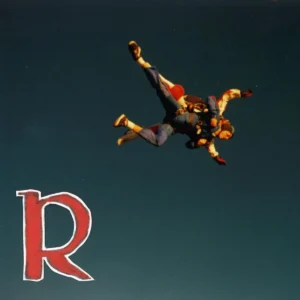 Named after a song by ‘90s post-hardcore outfit Radio Flyer, Rocket‘s debut album was recorded between 64 Sound and the Foo Fighters’ Studio 606, but rather than calling in a big-ticket indie producer, guitarist Desi Scaglione helmed the process himself. All but one of the record’s early singles were tracked at Studio 606, pushing forth its most thunderous and anthemic qualities; but what makes R Is for Rocket such a refreshing, fully-realized debut is its emotional range and earnest experimentation. “I wanna be the one to make it out of your dreams,” Alithea Tuttle repeats on ‘Another Second Chance’, as they all sound like they’re living their own. Read our Artist Spotlight interview.
89. Flock of Dimes, The Life You Save
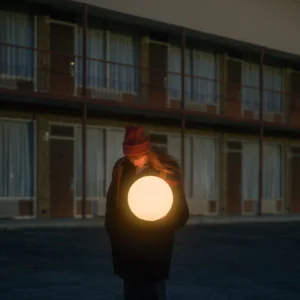 Jenn Wasner’s radiant new album under the Flock of Dimes moniker creates a warmly inviting, deceptively straightforward environment to accommodate its complex ideas around addiction and co-dependency. Two decades into her career – with several solo records under her belt aside from her work in Wye Oak and collaborations with Bon Iver, Sylvan Esso, and many others – the simplicity of its songs can feel subversive, and, more importantly, the only way to really sit with and wrench the truth out of them, paradoxical as it may seem. As she reminds herself on ‘Defeat’, “I’m inside it, after all.” Read our inspirations interview with Flock of Dimes.
88. Fust, Big Ugly
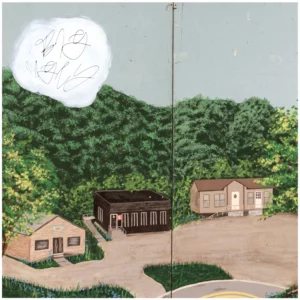 After releasing their sun-kissed, soulful debut Evil Joy in 2021, Fust – now a seven-piece featuring songwriter Aaron Dowdy, drummer Avery Sullivan, pianist Frank Meadows, guitarist John Wallace, multi-instrumentalist Justin Morris, fiddlist Libby Rodenbough, and bassist Oliver Child-Lanning – decamped to Drop of Sun to record Genevieve with producer Alex Farrar, with whom they reunited for their astounding new album, Big Ugly. Named after an unincorporated area in southern West Virginia, around which Dowdy’s family has deep roots, the record is conflicted yet aspirational: homey while grappling with the mystery of home, hopeful when hope rests between the promise of a new life and relenting in old, slow, ragged ways. As the title may suggest, it wrings beauty out of the most unexpected places, honing in the band’s knack for making small feelings appear monumental – that is, closer to their true experience. Read our Artist Spotlight interview with Fust.
87. Stella Donnelly, Love and Fortune
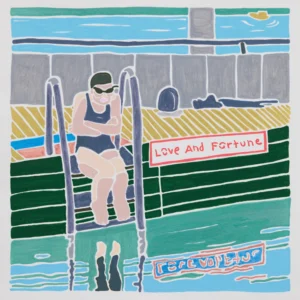 “I’m undressed, paperless, filter gone,” Stella Donnelly sings on ‘Year of Trouble’ as she begins to confront the loneliness of a friendship falling apart. She does dress up other songs, like its brattier counterpart in ‘Feel It Change’, but that nakedness is what helps the record move from one chapter to the next, like taking heartbreak by its daily swings. Searing and unguarded, Love and Fortune is not just a record about bridges burned and straining for reconciliation, but a reclamation of the dozen selves pecking for attention in the midst of solitude. “Take back my little life, and push you away/ I set myself on fire, for someone else’s flame,” she sings on ‘W.A.L.K.’. More than careful not to reignite it, by the end of the ride, Donnelly sounds caring, kind, and turns out, more than a little fortunate. Read our inspirations interview with Stella Donnelly.
86. Kali Uchis, Sincerely,
Kali Uchis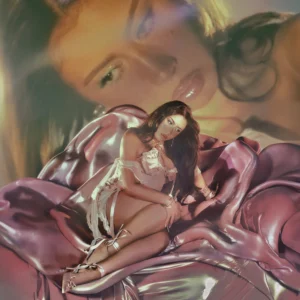 ’ records tend to feel like a breeze, even when the Colombian American singer-songwriter drifts between styles and languages. But Sincerely, seals itself into her very own paradise. Though it elicits many of the same pleasures as 2024’s Orquídeas, it feels like a world apart: the album boasts no guest features, with the majority of the songs growing out of voice notes and sung entirely in English. Its dreamy, timeless euphoria may scan as one-dimensional, but there’s delight in hearing Uchis luxuriate in the transformations of her life, still admitting insecurities while letting the good parts bleed together. Her music often feels sun-kissed; here, she soaks it all up. Read the full review.
85. Guerilla Toss, You’re Weird Now
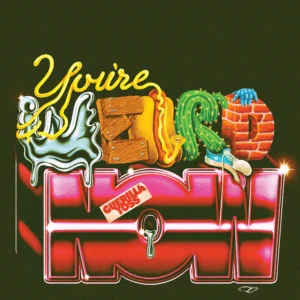 “I’m so sorry,” Kassie Carlson proclaims on the opening track of Guerilla Toss‘ new album, emphatic enough to instantly register as irony, “I came to party.” She gets lost as her head throbs on the way to another party on ‘Red Flag to Angry Bull’, where her friend is “Telling me he’s gonna eat the sunshine/ Though he isn’t walking in a straight line.” The burst of positivity is hallucinatory, intoxicating, and downright maddening, yet it also makes complete sense considering how and where the experimental rock band made You’re Weird Now. The album keeps twitching and triumphing in its communal cacophony, precise-engineered to convince you that even if today feels a lot more like a hellhole than a party, you are certainly not alone in it. Read our inspirations interview with Guerilla Toss.
84. Austra, Chin Up Buttercup

Austra‘s majestic fifth album traces her journey of grieving the end of a relationship by translating its chaotic emotions through the lens of Greek tragedy, the euphoria of Eurodance, and science fiction that overwhelms with its humanity. These filters do nothing to restrain the purity of Katie Stelmanis’ performances, embodied equally in their humour, brokenness, and hope. “I don’t wanna cry about you forever,” she sings on ‘Look Me in the Eye’, not hiding the time it’s taken to get there; savouring the yawn instead of rushing into a new day. Read our inspirations interview with Austra.
83. Eliza McLamb, Good Story
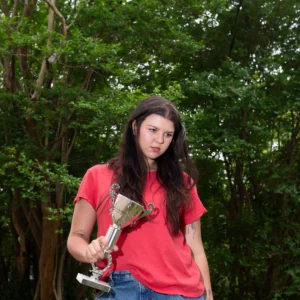 Written after she relocated from Los Angeles to New York, Eliza McLamb‘s sophomore LP as wry and introspective as her Sarah Tudzin-produced debut while leaning into feelings of absurdity and chaos; not just taking stock of the changes in her early 20s, but unpacking the self-narrativizing patterns behind them. “Writing it down and making it real/ Skipping the step where I remember to feel,” she sings on the title track, reconciling by holding the stories lightly and reminding herself the present is all she has: boring and difficult, sacred and eternal. Read our Artist Spotlight interview with Eliza McLamb.
82. Hand Habits, Blue Reminder
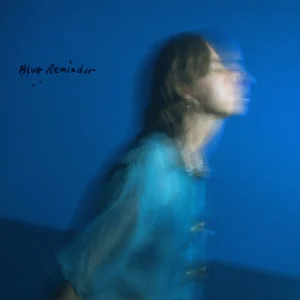 Sometimes, even beautiful words aren’t right for a piece of music that can transport you on its own, a skill Meg Duffy cultivates by going long periods of time making only instrumental music and playing in other people’s bands – previously Kevin Morby, now Perfume Genius. While Hand Habits‘ Blue Reminder is wonderfully arranged and subtly cinematic, the lyrics feel all the more carefully intimate, the phrasing more precise, the singing more confident – if only to serve the unspoken feeling of the song. “We don’t need to Talk Talk,” they sing early on, sneaking in a double entendre, “too much.” Which is enough to say they’re hungry for more. Read our inspirations interview with Hand Habits.
81. Youth Lagoon, Rarely Do I Dream
 After finishing his tour in support of 2023’s Heaven Is a Junkyard, Trevor Powers stumbled upon a shoebox of home videos from his childhood in his parents’ basement. It’s no surprise, given his textured, self-reflective approach to songwriting, that audio samples from the tapes would end up on his next album as Youth Lagoon, Rarely Do I Dream. Powers’ most powerful tool, however, isn’t nostalgia but juxtaposition, which he employs to harden the line between the innocence of childhood and the violent currents of today, between juvenile dreams and intoxicated fantasies, obliviousness and imagination; and to diffuse it, too. It’s relentless and revitalizing – proof that whatever Powers does next might look to the past, but will hardly look like the thing that came before. Read the full review.
80. The Weather Station, Humanhood
The Weather Station ’s work has earned praised for its seamless elegance and fluidity, especially since Tamara Lindeman expanded the project’s folksy origins on 2021’s breakout Ignorance. But never has the Toronto-based singer-songwriter paid attention to the seams – the parts of life and art that, as she acknowledges on the closer ‘Sewing’, most people are willing to ignore – as she does on her visceral new album, Humanhood. Affording space to both the sophistipop grandeur of Ignorance and the free-flowing intimacy of its companion LP, 2022’s How Is It That I Should Look at the Stars, Lindeman and her remarkable band trace the process of dissociation, laying out the broken pieces and the possibility of reintegrating them, the shakiness of truth and all the purpose it provides. Humanhood keeps moving like that, imperfect but enlightened, the music an “undulating thing,” as Lindeman puts it, “this blanket I seem to be making from pride and shame, beauty and guilt.” Read the full review.
79. Lifeguard, Ripped and Torn
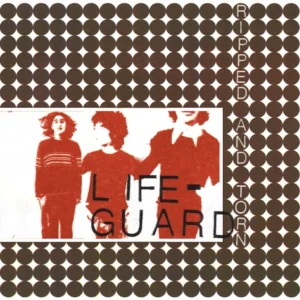 Produced by No Age’s Randy Randall, the debut album from the Chicago trio is buoyant, destabilizing, and incandescent, splicing together bursts of power-pop, dance-punk, dub, and concentrated noise with the playful, organic immediacy of a group constantly tuning into each other as much as their influences. Lifeguard’s music may occasionally sound unsettled or claustrophobic, but it’s never totally, well, guarded; as a collective and part of a broader DIY community, their goal is to keep opening it up. Read our Artist Spotlight interview with Lifeguard.
78. MIKE, Showbiz!
 The music MIKE makes instantly feels like an intimate dialogue, and Showbiz! is no exception. Between his richly lackadaisical delivery and hypnagogic use of samples, the looseness and fluidity of the New York rapper-producer’s approach keep the listener engaged but never more than arm’s length away. Yet what remains beyond grasp for MIKE, always at an odd distance, is the perfect sense of home, something he keeps searching for across the LP – though “home” is where he recorded all of it, in phases after stretches of touring. Similarly, he muses on the idea of breakout success more than simply lounging on it. “The prize isn’t much, but the price is abundant,” he raps on ‘Artist of the Century’, an apt summation of the whole project.
77. Florist, Jellywish
 Emily Sprague has no trouble baring her soul out in her lyrics. Intimacy, like tenderness, has and never will be a difficult thing for the Florist enterprise, or “friendship project,” as they call it, which includes Rick Spataro, Jonnie Baker, and Felix Walworth. The challenge, bigger than ever on their first album since their resplendent 2022 self-titled effort, is sounding at peace with a world hurtling towards catastrophe; staying soft, friendly, and curious when grief continues to bear its mark on you. But the music can also only be as delicate as the line between the threads of consciousness Sprague bounces between – waking, altered, existential – thin enough to let light slip through yet expansive enough to get lost in. For all its quiet optimism and awe, Jellywish is never quite restful or easygoing; much in the same way that, for all its introspection, it never truly stands alone. Read the full review.
76. Pulp, More
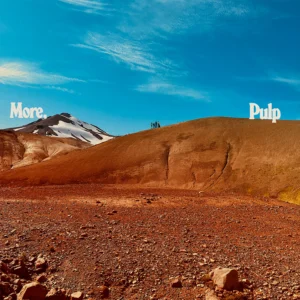 On their first album in 23 years, Pulp are still caught up with the inexplicable nature of beauty and love. But for perhaps the first time in the group’s history, Jarvis Cocker seems less fazed by those things, homing in on the feeling and spelling out the ineffable, sometimes literally, as on the early single ‘Got to Have Love’. More is the product of waiting, not taking, a long time to make something – of your fears, of missed opportunities, of time itself. “The universe shrugged, then moved on.” And then it hits you. In the wake of longtime Pulp member Steve Mackey’s death in 2023, as well as the passing of Cocker’s mother early last year, the follow-up to 2001’s Scott Walker-produced We Love Life feels effortful yet elegant in its insistence on expressing love, not just the kind that endures, but the ones that disintegrate or never even really existed. Read the full review.
75. Greet Death, Die in Love
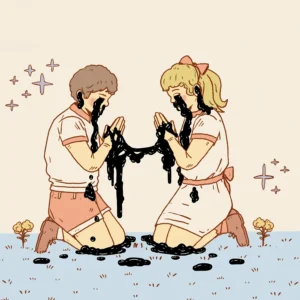 Greet Death co-vocalists Logan Gaval and Harper Boyhtari have been friends since elementary school, spending much of their preteen and adolescent years in the same basement in Davisburg, Michigan where they recorded their first album in six years, Die in Love. But while the record was written during a period of profound change and loss, and starts riotously with the title track, much of it sounds relaxed in its melancholy, not quite resigned but strangely comforted by the inevitable embrace – the idea that, “At the end of the day, we’re lucky to lose people we care about,” as Boyhtari said in press materials, a sentiment echoed in Boyhtari’s chorus of, “Emptiness is everywhere, so hold each other close.” Read our inspirations interview with Greet Death.
74. Baths, Gut
 It’s one thing to write music from the stomach versus the heart, as was Will Wiesenfeld’s intention for Gut, his first Baths album in seven years. It’s not a guarantee the songs will actually hit like that. In Gut’s case, though, there’s really barely any separation between the philosophical and the guttural, the feeling and its translation, eschewing the fear of being lost in both. Since releasing his first album under the moniker, Cerulian, in 2010, Wiesenfeld’s work has always been characterized by an unshakeable and downright mimetic physicality, boundless in its erosion of boundaries between real and fantastical worlds. But the self-released Gut – which features live drums on more than half its tracks – is newly unfiltered and unruly in a way that carves a path forward for the project. Read our inspirations interview with Baths.
73. YHWH Nailgun, 45 Pounds
 45 Pounds is as trashy as it is taut, as harsh as it is relentlessly hooky. It’s a combination that brings to mind contemporary purveyors of controlled chaos such as Gilla Band and Model/Actriz, though what’s remarkable about the New York-based experimental outfit’s corrosive, improvisational blend of punk, hardcore, and electronic music is how fully realized – and funky – it sounds on their debut full-length. Zack Borzone’s vocal chops manage to stand out amidst the discombobulating interplay between Jack Tobias’ radiant synths and Sam Pickard’s frenzied percussion, which peaks on the penultimate track ‘Blackout’. It sprints forward while keeping you on your toes.
72. Japanese Breakfast, For Melancholy Brunettes (& sad women)
 Don’t let the title – itself a nod to a John Cheever short story – fool you: the deeper you listen to For Melancholy Brunettes (& sad women), the harder it is to pigeonhole it. It’s less for any kind of female archetype than it is about a certain brand of foolish masculinity it frames as both timeless and contemporary. It’s about Michelle Zauner, too, a singer-songwriter and author who, following the pop-inflected glee and success of Jubilee, her 2021 breakthrough as Japanese Breakfast – not to mention her similarly lauded memoir, Crying in H Mart – felt the need to shuffle through a cast of fictional characters variously removed and reflective of her own pensiveness. Her nuanced, moody vignettes are matched by richly baroque and luscious production courtesy of Blake Mills, who lends mountainous resonance even to the subtlest songs. Read the full album review.
71. Colin Miller, Losin’
 While he continues to build an impressive resume as an engineer, Asheville musician Colin Miller found time to make and release Losin’, the heart-wrenching follow-up to 2023’s Haw Creek. Featuring MJ Lenderman on drums and guitar, as well as his Wednesday/The Wind bandmates Ethan Baechtold (bass, keys, aux percussion) and Xandy Chelmis (pedal steel), the album was recorded at Drop of Sun with producer Alex Farrar. There are a couple of layers to its title: the record untangles a period of intense grief following the death of Gary King, who owned the Haw Creek property and served as a father figure to Miller; it’s also a literal reference to trying to win the lottery in hopes of buying the home, which he rented for 13 years. Even when the pain swells, echoing in every note his friends play, Miller keeps up the effort – if not for the unattainable, then simply to keep the engine running. Read our Artist Spotlight interview with Colin Miller.
70. Westerman, A Jackal’s Wedding
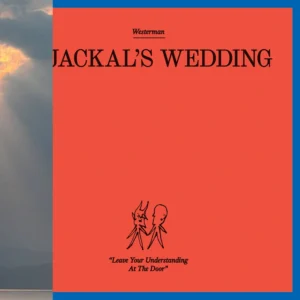 There was one thing Westerman and producer Marta Salogni could not escape during their five-week residency in the Greek island of Hydra: the searing heat, which forced them to work through the night. There’s a dazed, liminal spontaneity to the record that offsets its conversational tendencies, much like its unadorned moments are balanced out by the sweltering light of ‘Adriatic’ or ‘Weak Hands’. In the dark, sleepless hours between recording and not, you can imagine the artist gazing up at the sky: “Home found/ Then forgotten/The gamble,” he sings on ‘About Leaving’, “Awake, and looking starward.” Read our inspirations interview with Westerman.
69. Ela Minus, DÍA
 DÍA is no less self-reflective than Ela Minus’ breakout debut, 2020’s acts of rebellion, a record whose fragile, blurry intimacy was tied to a year of pandemic isolation. Though it revs up every strain of electronic music the producer and singer-songwriter, born Gabriela Jimeno, likes to toy with – from icy synthpop to sinewy ambient to brazen electroclash – the new album only vows to dig deeper. In hindsight – and by expanding the setting of her creative process to include not only her native Colombia but also the Mojave Desert, Los Angeles, New York, Seattle, Mexico City, and London – she grew warier of the blind optimism that spreads through the genre and sought to punch through the façade of her own project. “Writing DÍA I thought, ‘Wait, who am I really?’” she said. Definitive or not, the answer it provides is heartfelt, gritty, and self-affirming. Read the full review.
68. Lily Seabird, Trash Mountain
 Trash Mountain is named after a pink house sitting on a decommissioned landfill site at the back of Burlington, Vermont’s Old North End, which Lily Seabird has called home for several years now. Rough-hewn yet warmly realized, the album centers on Seabird’s captivating voice as it lingers on a moment, trembles in grief, or sighs around a melody for just that bit more relief. “Where the wind blows everything I try to remember and forget/ On the edge of town/ Where when I’m home I rest my head” is how she describes Trash Mountain, recording to bask in its comfort a little longer. Read our Artist Spotlight interview with Lily Seabird.
67. Turnstile, Never Enough
 Plenty of popular music has taught us that fame can be isolating, but Brendan Yates has been singing about loneliness way before the breakout success of 2021’s Glow On. What’s changed with their new album Never Enough, which has received a more muted but still loving response, is the vantage point. “This is where I wanna be/ But I can’t feel a fuckin’ thing,” Yates declares on its track ‘Sunshower’. While seeing them live in the wake of Glow On provided a rare example of how jubilant and light-hearted moshing can be, the remarkable thing about seeing them at the same festival right after the release Never Enough was how similarly riled-up the audience could get despite the overriding melancholy of the new songs. Never Enough sounds a hell of a lot like Glow On, except the rip-roaring songs are phased out by tastefully meditative synth passages, or playfully augmented by horns. It still works, above all, because the underlying sentiment rings true.
66. The Beths, Straight Line Was a Lie
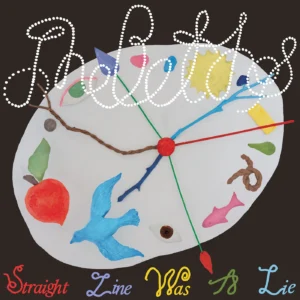 Linear progression is generally a myth, yet one often projected onto artists, who must continually level up their sound without straying from their original vision. The Beths have indeed tightened, coloured, and expanded their approach since their 2018 breakout Future Me Hates Me, and while they’re not quite making a statement about their own trajectory with Straight Line Was a Lie, the titular realization extends to the way they handle both lyrics and instrumentation: careening between the immediacy, anxiety, and tenderness of their previous albums, but leaving space for different shades of weariness and anhedonia, a void that doesn’t dull so much as activate a new side of New Zealand quartet’s sound. “Let me be weak/ With a sad tear drying on my cheek,” Liz Stokes sings on ‘Best Laid Plans’, closing out an album all about gathering the strength to let it roll down. Read the full review.
65. Hayden Pedigo, I’ll Be Waving As You Drive Away
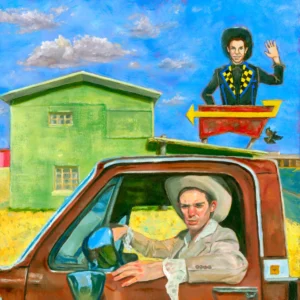 I’ll Be Waving As You Drive Away is hardly a solitary affair. Along with William Tyler collaborator Scott Hirsch, Pedigo brought together a group of musicians that includes violinist Nathan Bieber, pianist Jens Kuross, pedal steel player Nicole Lawrence, and “phaser suggester” Forest Juziuk. But while the arrangements are richly spacious and uniformly warm, Pedigo ensures nothing overshadows the simple majesty of his fingerpicking, which hums to its own rhythm. Written on a 20,000-acre in Wyoming, Pedigo shades in the vacuum of memory like there’s just as much beauty in forgetting as remembering, in observing landscapes through a window and noticing them blur together in your mind. Without saying a single word, no album in 2025 could make you more at ease with the passage of time.
64. U.S. Girls, Scratch It
 Over the past decade or so, U.S. Girls have carved a lane as one of the most critically acclaimed alt-pop projects thanks to Meg Remy’s graceful, razor-sharp, and increasingly accessible songwriting. But what if, as Remy puts it on the final song of their new album Scratch It, “to live is to lose face”? For the Toronto-based artist, the question extends from a loose catalog of shame, vulnerability, and powerlessness often relating to her life as a performer, but also a diffusion of that same identity through the fuzzy, fascinating lens of history. Recorded on 16-track tape in Nashville with Dillon Watson on guitar, Jack Lawrence on bass, Domo Donoho on drums, and Jo Schornikow and Tina Norwood on keys, it’s unburdened and free-flowing, suggesting there’s so many ways to make a U.S. Girls record; and so many ways, of course, to live and grow yourself without losing it.
63. Ada Lea, when i paint my masterpiece
 Following 2021’s kaleidoscopic one hand on the steering wheel the other sewing a garden, relentless touring forced Ada Lea to restructure her life and priorities as a musician, which is not to say she stopped writing songs – in fact, she wrote over 200 over a period of three years, 16 of which made it onto the new album, and most of which originated in the Songwriting Method, a community-based group she kept up that required submitting songs with a deadline. On songs like ‘it isn’t enough’, you can almost hear her rushing to get a song down before midnight, singing, “Today I lost/ Today is gone/ Today I really fought.” Far from impatient or forced, however, when i paint my masterpiece sounds unhurried and precious, glad not to have slipped into past tense. Read our inspirations interview with Ada Lea.
62. Jenny Hval, Iris Silver Mist
 The follow-up to 2022’s Classic Objects, named after a fragrance made by Maruice Roucel for the French perfumerie Serge Lutens, doesn’t dwell on Jenny Hval’s love of perfume but draws on it as a means of interrogating her relationship with performance. Though ISM has evocative properties for Hval, she was more directly inspired by a comment she came across online that it “would be what the ghost in Hamlet could wear.” It resonated with her, she said, “because it was how I thought of myself as an artist — a ghost from a time when music mattered, still hammering away — and my record, which to me was sounding ghostly and was invaded by hazy, smoky and powdery textures.” Vaporous and haunted, Iris Silver Mist is also gripping and sensuous enough to convince you that it still matters, here and now. Read the full review.
61. S.G. Goodman, Planting By the Signs
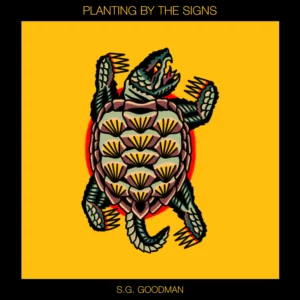 In the first hours of 2023, S.G. Goodman found herself explaining the old practice of ‘Planting by the Signs’ to the two people left in her living room after a New Years Eve gathering: her friend and mentor Mike Harmon, and his partner of twenty years, Therese. The Foxfire books, which richly lay out the ancient beliefs, were stacked beside them, and Goodman already knew she wanted to base her next album around what was intrinsically passed down to her through her Kentucky upbringing: the implicit importance of timing everyday acts in accordance with the cycle of the moon. The concept seeps into every corner of her poised, poignant new album, so much so that it is named after it – and even if the listener remains ignorant of it, there are traces of a kind of elemental power in its striking, dreamlike production, courtesy of Goodman and longtime collaborators Drew Vandenberg and Matthew Rowan. Read our inspirations interview with S.G. Goodman.
60. Smut, Tomorrow Comes Crashing
 Catchy and aggressive from the get-go, Smut‘s music softened on How the Light Felt, their second LP and first for Bayonet, where catharsis was tinged with melancholy and draped in various shades of shoegaze. They cut back on the haze on their latest album, Tomorrow Comes Crashing, still well-versed in the nuances of dreamy music but dialing the intensity back up when necessary – earnestly vacillating between the confidence and self-doubt, even when the latter fuels some of their most visceral performances. Invigorated by the new lineup and a keen-eared producer in Aron Kobayashi Ritch (Momma), Smut recorded the album in Brooklyn just shortly after Roebuck and Min got married back home – and they play their hearts out. However much nostalgia is still baked into Tomorrow Comes Crashing, the future is what keeps them pulsing. Read our Artist Spotlight interview with Smut.
59. Cass McCombs, Interior Live Oak
 “I never lie in my songs,” Cass McCombs repeats on ‘I Never Dream About Trains’, a highlight from Interior Live Oak, his 11th album, which means he has certainly released over a hundred. Lest you take his words at face value, the odd specificity of the ensuing lyrics should elicit some skepticism (“I never dream about holding you tight/ On the sand in Pescadero”). What he sings on the previous song, though, is much closer to the truth: “I mean everything I say, or something quite like it.” The meaning of Interior Live Oak, a 12-song double album that follows 2022’s excellent but much more concise Heartmind, remains elusive, but McCombs manages to weave it all together, singing through a cast of unreliable narrators that only cement his own musical consistency and earnestness. They are dancers and cynics, real and imagined, brutally honest and spiritually truth-bearing. If they all, at times, seem buried in sleep, that’s because dreams, they say, have no lies to hide. Read the full review.
58. Humour, Learning Greek
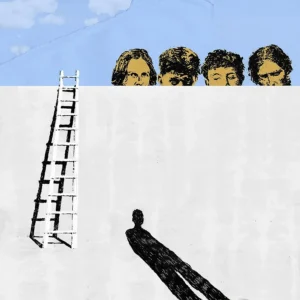 The title of Humour‘s debut album is taken from a line from discarded songabout Andrea Christodoulidis’ decision to start learning the language as a second generation Greek, and though he spends most of the album screaming in an American accent that bears out the characters he’s inhabiting, you can hear him speaking it a bit in conversation with his father on the eponymous track, where they read Andreas Embirikos’ poem On Philhellenes Street. “This searing heat is necessary to produce such light,” he writes of the overwhelming weather in Athens, not unlike how Humour’s alluring, dreamlike hooks and tender revelations radiate through their blistering post-hardcore. Christodoulidis amalgamates personal, familial, and mythological stories much in the same way the group bridges styles, resulting in a record that is as fiercely heartfelt as it is surrealist, and, well, humorously absurd. Read our Artist Spotlight interview with Humour.
57. Total Wife, Come Back Down
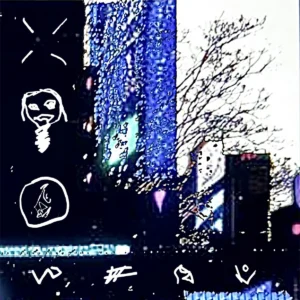 After more than a couple of influential records in the increasingly saturated shoegaze genre – 2021’s self-titled LP, 2022’s a blip, and 2023’s in/out – Total Wife did the opposite of fading into obscurity, signing to Philadelphia label Julia’s War and cementing their status with their latest, come back down. It’s a breathlessly inventive and unconventionally dreamy record whose tides are difficult to predict or even identify – mind-melting guitars that get blown out and repurposed as synths, vocals whispered right beside your ear then chopped to oblivion, and a fluid rhythmic backbone evoking, to quote their song ‘rest’, “the beat in between my restlessness.” Pitched between jittery alertness and the edge of sleep, come back down is also a riveting expression of the duo’s dynamic compositional and lyrical instincts, a force that grounds the record in its malleable, blurry transcendence. Read our Artist Spotlight interview with Total Wife.
56. keiyaA, hooke’s law
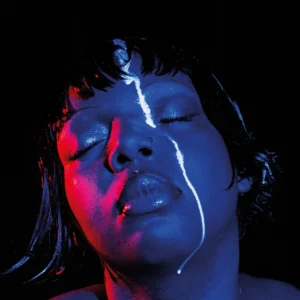 keiyaA was feeling numb as the hype around her last album, 2020’s Forever, Ya Girl, began to die down, when she came across a post by writer Mandy Harris Williams: “a downward spiral is a loaded spring.” He was citing the concept in physics that became the title of, and poetic fuel for, the Chicago-born singer-songwriter and multi-instrumentalist’s latest album, hooke’s law. Building on the avant-R&B vision of her debut, it’s a dazzling portrait of jadedness unlike any in the genre while remaining absolute playful, both in its lush experimentation and silly one-liners. It’s not claustrophobic, exactly, so much as club music from the bottom of an emotional well. “I toast to lighten up the pain,” she offers on the closing track, “Until we meet again/ Start again.”
55. Sharon Van Etten & The Attachment Theory, Sharon Van Etten & The Attachment Theory
 Subtlety is a virtue in the singer-songwriter world. In the face of a dying earth, however, and energized by collaborating for the first time in a writing capacity with her live band, the Attachment Theory – Devra Hoff on bass and vocals, Jorge Balbi on drums and machines, and TEEN’s Teeny Lieberson on synth, piano, guitar and vocals – Sharon Van Etten has made one of her boldest and biggest-sounding records to date. Sharon Van Etten & the Attachment Theory is as thunderous as it is propulsive, disquieting in its storm of existential questions but deliberate in how it sequences them; sounding like doubt at times, despair at others. But at its most resonant, Van Etten’s voice soars with pure wonder, unburdened by judgment or an easy way out: “Oh, what it must be like.” She’s singing about Southern life here, but really, about compassion – one of the few things that still doesn’t come attached with an expiration date. Read the full review.
54. Black Country, New Road, Forever Howlong
 Building on 2023’s Live at Bush Hall, Forever Howlong leverages Black Country, New Road’s fluidity as a band with a heightened level of precision and strikes a subtler balance between sonic lightness and emotional intensity. With vocals, and largely songwriting, now split between Tyler Hyde, Georgia Ellery, and May Kershaw, the album serendipitously, yet potently, coalesces around a female perspective, but the experiences they relay reach far beyond these three women. It’s in the loneliest moments that you hear them band together, all playing out time. Read the full review.
53. Asher White, 8 Tips for Full Catastrophe Living
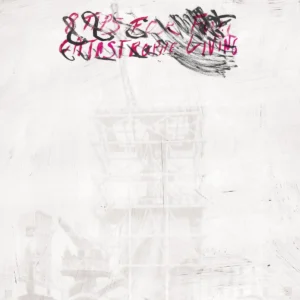 More than continuously toeing the line between styles, between coherence and abstraction, Asher White’s music has evolved to prioritize confessional transparency over purity, complexity over wilful obfuscation. That may seem counterintuitive when talking about her latest album, 8 Tips for Full Catastrophe Living – her 16th overall and first for Joyful Noise – itself an unconventional and anxious reaction to a potential breakout moment, pushing her approach to its eruptive, feastful limits. More than just revealing, its recklessness opens the door to a fascinating place that’s bound to change shape with each subsequent release. If you’re dedicated enough to follow its twists and turns, you’ll want to come back for another look. Read our Artist Spotlight interview with Asher White.
52. Weatherday, Hornet Disaster
 Diving into Weatherday’s latest outing, Hornet Disaster – which stretches over an hour and 16 minutes – is a daunting task, but the Swedish experimentalist sounds more exacting, determined, and addictive than ever. Six years after Sputnik’s debut LP under the moniker, Come In, and just a few after an impressive split EP with Asian Glow, the 19-track LP’s replayability justifies its overwhelming length, while the density of its noise-pop is made legible by intense and equally uncompromising emotion. “Our heartbeats in sync/ Our only real link,” they sing about halfway through the record. After just a single listen, you can’t help but clap along, enmeshed but blissful in the shared chaos.
51. Horsegirl, Phonetics On and On
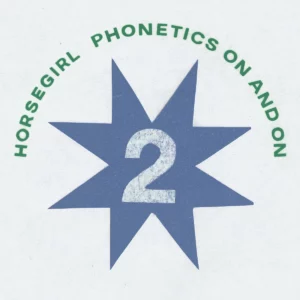 You don’t always know what Horsegirl are singing about, but you know someone in the group does. Perhaps more than anything, their sophomore album, Phonetics On and On, delights in and charms through its deceptively childlike and unwaveringly playful language, which spins choruses out of practically every variation of “da da da.” Having moved from Chicago to New York between albums, the trio enlisted musician/producer Cate Le Bon to pare down and declutter the sound of 2022’s Versions of Modern Performance while amping up the absurdity in the subtlest places. Through the uncanniness and restraint, though, shines naked emotionality. “It’s oh so plain to see,” Nora Cheng sings at the very end, “How often I think sentimentally.” Whether repeating or tangling up the same words, Horsegirl make you want to sit down and listen. Read the full track-by-track review.
50. Florry, Sounds like…
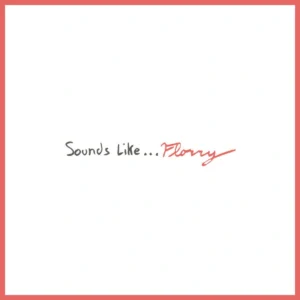 Sparks fly all over Sounds like…, Florry’s second album with Dear Life Records. It’s impossible to deny on the record’s euphorically charged, lyrically intriguing opener, ‘First it was a movie, then it was a book’, but there’s plenty of magic to be found as the Vermont-based septet loosens up on the rest of the record. Like pretty much every album coming out of Asheville’s Drop of Sun Studios, this one, co-produced with Colin Miller, sounds lived-in and magnetic. There is a rawness, at times even an explicit emptiness, in bandleader Francie Medosch’s lyrics, but it’s hardly something to stop the band dead in its tracks. “I was hoping to use this song to talk about/ Something that had been going on but I could not get it out,” she sings on ‘Dip Myself in Like an Ice Cream Cone’. Something like it, still, spills out.
49. Hotline TNT, Raspberry Moon
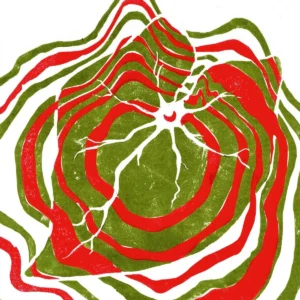 Perhaps the follow-up to Hotline TNT’s 2023 breakout Cartwheel wouldn’t sound so bright, anthemic, and grandiose – in other words, uninterested in sticking to stylistic trappings – had the lovely sentiments of its predecessor not been amplified by devotion and confidence, not to mention the dynamism of Will Anderson’s touring band joining him in the studio. After many months of the road, the frontman was eager to return to the familiar, for him, introverted process of making another album, but guitarist Lucky Hunter, bassist Haylen Trammel, drummer Mike Ralston, and producer Amos Pitsch convinced him otherwise. If nothing else, Raspberry Moon is evidence that at least sometimes, such a leap of trust – for the people in the songs no less than the ones making them – pays off. Read the full review.
48. The Antlers, Blight
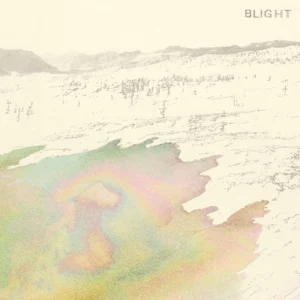 The Antlers’ new album, Blight, widens the scope of Peter Silberman’s songwriting by reckoning with environmental catastrophe, taking cues from a range of science fiction media. But it begins in a homey place: the unsparing intimacy of Silberman’s voice, admitting to the ways he’s contributing to the destruction by simply going about his day, the way you might be when you first press play on the record: having a meal, ordering it. If you have mourned with the psychological devastation of 2009’s Hospice or 2011’s Burst Apart, it is disarming and powerful to hear his soulful whisper carrying the same weight in this conceptual framework. Though when Blight spirals toward a series of ambiguous apocalyptic events, it once again feels not conceptual but psychological, the sound of ecological anxiety – corrosive, wordless, outstretched – turning what could be a familiarly delicate (by the Antlers’ standards) listen into an eerily fragile one. Read our inspirations interview with The Antlers.
47. Tyler, the Creator, Don’t Tap the Glass
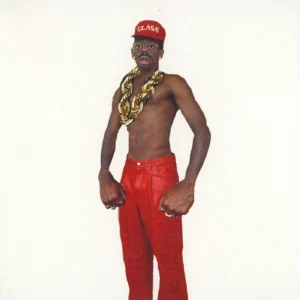 The third and titular rule of Don’t Tap the Glass is the most ambiguous, which is somewhat reflective of the overall balance the record strikes: it’s a straightforward rap-party project whose kineticism is undeniable, but, arriving less than a year after the densely packed Chromakopia, it also can’t help but attach itself to Tyler’s self-mythologizing canon in mature, often meta ways. The album should keep longtime fans engaged long after the party’s over, but for at least the 29 minutes that it’s on, it both lifts you up and cools you down. Good dance music not only gets your body moving, but makes you forget yourself for a moment. For an artist as conscious of his ego as Tyler, the Creator, that’s no small feat. Read the full review.
46. No Joy, Bugland
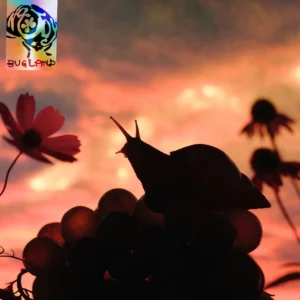 With a title like Bugland, it feels lazy to call No Joy’s new album playful. It’s really the way Jasamine White-Gluz’s work registers as a playground that’s so thrilling: a place that triggers fuzzy memories, a fantastical portal, a wild abstraction with no equivalent in the real world. Beyond their shared musical interests and boundless genre-hopping – having the most fun in the islands of nu metal, shoegaze, and pop music – it’s where her approach intersects with Fire-Toolz’s Angel Marcloid, who co-produced the Motherhood follow-up not just with wide-eyed maximalism but true enthusiasm. It’s a wonder to hear them play and burst into a swirl of emotions mostly antithetical to the project’s name, to linger and rush out of them – maybe cutting the word in half does it more justice – fully.
45. Great Grandpa, Patience, Moonbeam
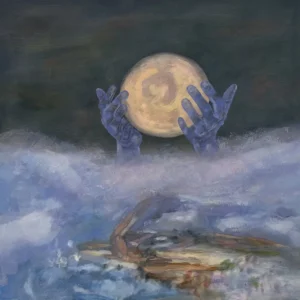 Great Grandpa‘s music sounds so splendid, the lyrics so fantastically poetic, it’s easy to undermine their intimacy. “It’s closer when I see you, damn,” goes the hook on ‘Emma’, a highlight on their latest album Patience, Moonbeam, and they return to that damn for a cathartic explosion on the single ‘Doom’. The band’s first album in six years yearns and plays around for a sense of euphoria, and even if it sometimes falls short – of the feeling, not reeling you in – their synergy achieves a kind of unburdening that feels like a gift. “All dark things in time define their meaning,” Al Menne sings on ‘Kid’, making Pat and Carrie Goodwyn’s mournful lyrics sound tenderly affirming. “And fold sharp ends/ Into their mouths.” Read our track-by-track interview with Great Grandpa.
44. Panda Bear, Sinister Grift
 Way before it was meticulously sequenced, Sinister Grift – Panda Bear’s first record to feature all his AnCo bandmates, with notable appearances from Cindy Lee, Spirit of the Beehive’s Rivka Ravede (Lennox’s partner), and his daughter Nadja – began with Lennox and his co-producer and lifelong friend Deakin (Josh Gibb) laying down material in his newly built studio in Lisbon. Like its ecstatic take on heartbreak, the record reconfigures country tropes, classic rock chords, and reggae rhythms without quite distorting or diluting them. It sounds at ease with its menace and disconcerted by its playfulness, and these are all words you can twist around every time you press play.
43. Oneohtrix Point Never, Tranquilizer
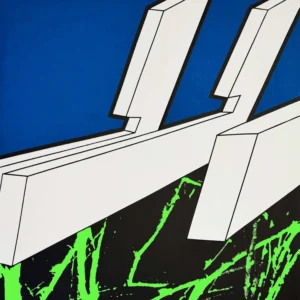 As far as Oneohtrix Point Never records go, Tranquilizer’s most immediate antecedent is Replica, an album that’s almost a decade and a half old. While that collection saw Daniel Lopatin wistfully repurpose sounds from bootleg DVDs compiling TV commercials from the ‘80s and ‘90s, Tranquilizer mines from a set of commercial sample CDs preserved on the Internet Archive. The flimsiness of that maintenance – the page was taken down, then suddenly came back – is part of what inspired the producer and differentiates his follow-up to Again, the way swathes of potentially soulful music can be lost to and resurface through time. Read the full review.
42. The Ophelias, Spring Grove
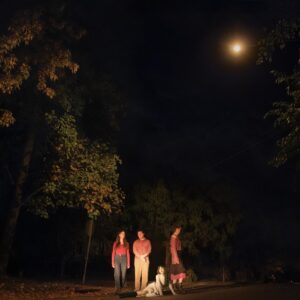 It’s been five years since the Ophelias’ last album, Crocus, but its follow-up, Spring Grove, is by no means a post-pandemic document. Spencer Peppet’s lyrics burrow much deeper into past wounds, burdened by dreams that recur without end or explanation, blurring the line between the present moment and what’s clearly come to pass. When the titular Spring Grove cemetery comes up, it is in reference to the summer of 2014, yet as if neither person would now be the first to speak. “The feeling of you haunts me and I/ Know that I can recognize that,” she confesses on new single ‘Cicada’, and the whole record gives it shape even when the ghosts cease to follow. Read our interview with the Ophelias.
41. Deftones, private music
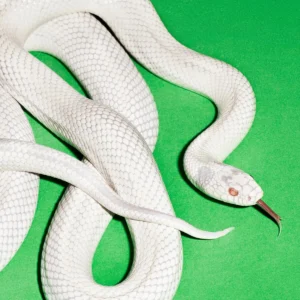 Deftones’ 10th album – and best in years – deftly balances their signature brutality and lushness. The follow-up to 2020’s relatively muted Ohms was produced by Nick Raskulinecz, who previously worked on 2010’s Diamond Eyes and 2012’s Koi No Yokan, and reminds us that no band can make cataclysmic music sound quite as sumptuous. On standout ‘milk of the madonna’, Chino Moreno invokes bloody rain, thunder, quaking winds, and most of all fire, sounding utterly consumed yet invigorated by the pummeling force of the instrumentation. “The display ignites your mind,” he sings. How could it not?
40. Ethel Cain, Willoughby Tucker, I’ll Always Love You
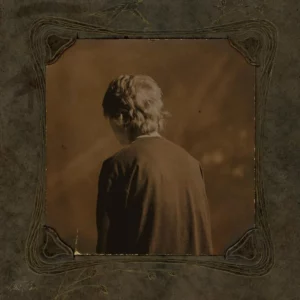 Ethel Cain‘s latest album is billed as the prequel to her 2022 breakthrough Preacher’s Daughter, a debut album that served as the beginning of a trilogy following three generations of women. If Willoughby Tucker “closes the chapter” on Anhedönia’s alter ego, as she has claimed, it’s an unwaveringly tender and astounding portrait, caught between nostalgia and dreams of violence, tangled yet steadfast in its romantic beliefs. And while she has framed the ambient-leaning Perverts as a standalone project, it also acts as a musical bridge to the new album, which balances her atmospheric and narrative world-building. Cain can’t help but draw a line from love straight to death, but not without submerging herself in it. Read the full review.
39. Agriculture, The Spiritual Sound
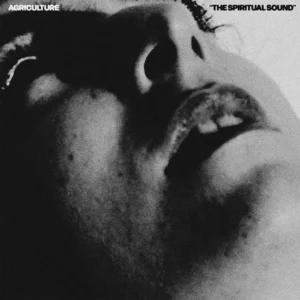 The title of Agriculture’s astounding new album is lifted from the statement that’s printed onto their T-shirts: “I love the spiritual sound of ecstatic black metal by the band Agriculture.” On the follow-up to their 2023’s self-titled LP, the Los Angeles band toys with the technical boundaries of the genre and stretches its transcendent power, partly by digging through the muck of how it feels to love its intense extremes. Shifting between and blurring the visions (and vocals) of main songwriters Dan Meyer and Leah Levinson, its waves are unpredictable but frequently exultant in their chaotic spawl. The most fitting metaphor arrives on the closing track, which ends with the proclamation: “Sometimes I’m lifted and sometimes they crash down on me/ I’m totally out of control/ With a mouth full of water.” Rad the full review.
38. jasmine.4.t., You Are the Morning
 During the pandemic, facing complications from myalgic encephalomyelitis and long COVID, Jasmine Cruickshank underwent heart surgery and was bed-bound for almost half a year. It was then that she decided to come out as trans, end her abusive marriage, and escape to Manchester, where she found – and was able to write through – her queer community. Backed by an all-trans band, jasmine.4.t. became the first UK signee to Phoebe Bridgers’ label Saddest Factory Records, and Bridgers, Dacus, and their boygenius bandmate Julien Baker all produced her remarkable debut full-length, You Are the Morning. Treading the line between intricate, tender-hearted folk and stormy indie rock, the album swoons with the rush of new love, spins catharsis out of the wildest lows, and reimagines the past into a light-filled future. Read our Artist Spotlight interview with jasmine 4.t.
37. Bon Iver, SABLE, fABLE
 First, Bon Iver reframe the entirety of last year’s SABLE, EP by repurposing it as the prologue to their fifth studio album. Throughout it, Justin Vernon puts a lot of stock in that prefix: things are perpetually jumbled, but they can be remade, maybe even replaced. Each new path buzzes with possibilities, but fABLE does away with the fear and paranoia these can stir up, attaching itself, miraculously, to an abundance of joy. It’s clear-headed and radiant, drawing upon elements of soul and R&B that Vernon has harnessed before, but never with such refreshing immediacy and purpose. “Seek the light,” he urged all those years ago, and damn it if he won’t keep looking. He’s in such good company, after all, and it’s showing more than ever. Read the full review.
36. Rochelle Jordan, Through the Wall
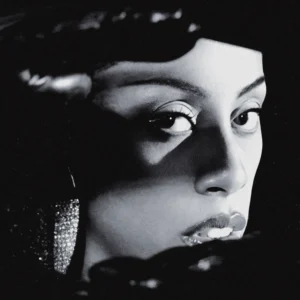 For nearly an entire hour, Through the Wall barely changes up its groove. Remaining sultry and poised, Rochelle Jordan’s incadescent, scintillating new album anchors in a tasteful fusion of R&B and deep house that many attempted but none executed as faithfully as, the Los Angeles-based, British-Canadian singer-songwriter this year. Hooking you in with some of the most tempered – and temptatious – pop choruses of the year, Jordan doesn’t try to prove you won’t hear a better club record this year. She just swings into action, eager to take up space.
35. Samia, Bloodless
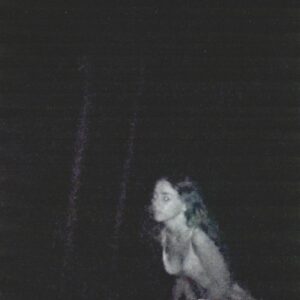 Samia introduced her third album by tracing a line between the inexplicable phenomenon of bloodless cattle mutilation – ‘Bovine Excision’ – and her own experience of womanhood. Though there are pockets of Bloodless that remain a mystery no matter how many times you listen or scrutinize the lyrics – too many poetic turns of phrase, contexts erased, men blurring together – the bigger draw is Samia’s unique ability to turn the inexplicable into the phenomenal; to make beauty out of a void, not necessarily by filling it. It may leave you with more questions than it answers, yet it astounds and surprises you at every turn. The songs rip straight through the heart – even if you have no idea how they even got there.
34. Nourished by Time, The Passionate Ones
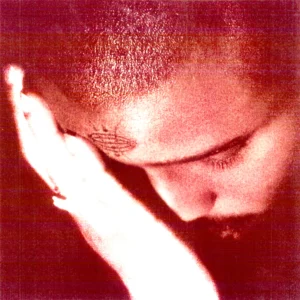 More than a surefire hit that’s capable of carrying a whole album, ‘9 2 5’ serves as a thesis statement for The Passionates Ones, whose title should stave off those without that kind of fire in their hearts. Slotted right in the middle of the record, it paints a typical portrait of an artist struggling to overcome systemic challenges to “manifest a vision,” while everything around it explores more personal, nuanced shades of it: “I dreamed this life, now I’m scared to live it,” Marcus Brown admits on ‘It’s Time’. Flitting between R&B, jazz, funk, and hip-hop, Brown’s eclecticism ensures the songs are radiant enough to prevent the fear from taking over – so they all shine just as bright.
33. Wet Leg, moisturizer
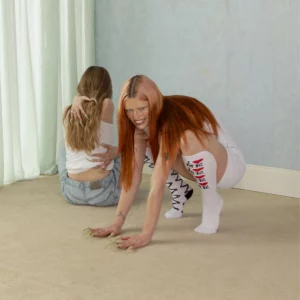 On the first song of their self-titled debut album, Wet Leg were feeling uninspired, beaten down, and zoned out, equating it all to the same oddly desirable state: ‘Being in Love’. Three years later, the Isle of Wight five-piece – helmed by Rhian Teasdale and Hester Chambers – open their sophomore album by reevaluating: being in love isn’t a thing you “kinda like.” It’s an emergency. It makes you sound ravenous, maniacal, silly, and melodramatic, all adjectives that describe moisturizer even as Wet Leg maintain their deadpan humour and offbeat aesthetic. Yet the record, once again produced by Dan Carey, softens into and soaks up its pleasures and contradictions, the way it can appear fantastical even as the sobering reality kicks in. What ‘Being in Love’ describes as “some kind of fucked up trip” is just “happy comatose,” which isn’t a bad slogan for moisturizer. Apply gently; it just might do you good.
32. Ichiko Aoba, Luminescent Creatures
 Luminescent Creatures takes its name from the closing track of Ichiko Aoba’s previous effort, 2020’s Windswept Adan, an enchanting and richly rendered record that expanded both the Japanese singer-songwriter’s palette and audience. Working with arranger Taro Umebayashi and creative director Kodai Kobayashi, Aoba’s ambitious vision for that project included a script for an imaginary movie, telling the story of a girl who is exiled to Adan Island. By the end, Aoba wrote in the album’s companion book, “the body of the girl had vanished instead, transformed and reborn into a variety of living things.” That may leave the island uninhabited by humans, but Aoba has no trouble furthering the fantastical journey, breathing music into all other life forms that permeate the universe she’s built around it. Read the full track-by-track review.
31. Blood Orange, Essex Honey
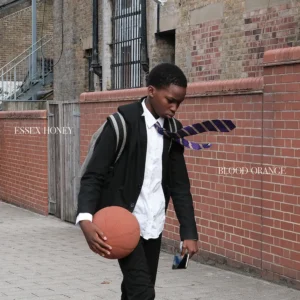 Essex Honey is probably too eclectic to sound like the music you grew up with, but it certainly feels like it. “Regressing back to times you know/ Playing songs you forgot you owned,” Dev Hynes sings on ‘Westerberg’, a key line on an album that digs through memory by interpolating songs from acts including the Replacements, Yo La Tengo, Elliott Smith, and Everything But the Girl’s Ben Watt. Just as evocative are the variably abstract passages of piano and cello, the first instruments Hynes ever played. Foggy, fatigued, yet clear-eyed, Blood Orange’s first record since Angel’s Pulse vaguely revolves around returning to a formative place in the wake of grief, struggling to hold anything in its grip. Yet slipping through the cracks, and the sadness, are memories that offer relief even if you can’t quite place them, as well as a cast of familiar voices that may seem distant but help in embracing it.
30. They Are Gutting a Body of Water, LOTTO
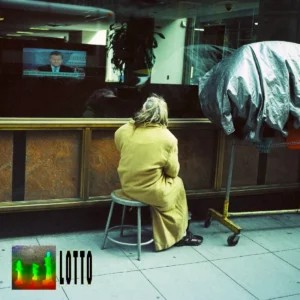 As the most pioneering band in modern shoegaze, TAGABOW could capitalize on a fantastical, watered-down version of a sound that’s only getting more popular, especially on their first LP for a bigger label in NYC’s ATO Records. They could shroud everything in glitchy layers of artifice and mutter poetic lyrics that mean nothing for the rest of their careers. Douglas Dulgarian’s way of avoiding that was making a record he’s deemed “too real” – confessional, euphoric, and achingly, nauseatingly beautiful. “I finally feel the comforting, familiar feeling of potential sleep rising up through the bile in my throat,” he says on the first song of a record filled with truths that are hard to stomach. But there’s hardly a feeling of finality to it – against all odds, it’s another fruitful beginning. Read the full review.
29. Jane Remover, Revengeseekerz
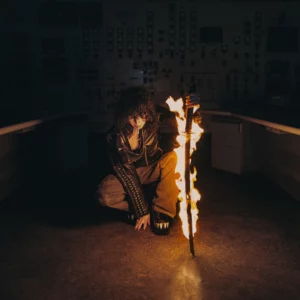 Jane Remover could have spent several albums coasting on, even softening, the blend of shoegaze and bedroom pop that made 2023’s Census Designated a success. Instead, the experimental artist cemented their status by pushing everything – including the limits of those genres, but also rap, pop, and club music at large – to the red. Revengeseekerz puts its money on the feverish excess and self-referentiality that could deter fans who came on board with the last album, but the unbounded rawness that rises to the fore makes this record an absolute blast. It’s explosive and dexterous in ways that put the self above everything: “Might close up shop,” Jane sings ‘Fadeoutz’, “if it means I can live my life.”
28. Sudan Archives, The BPM
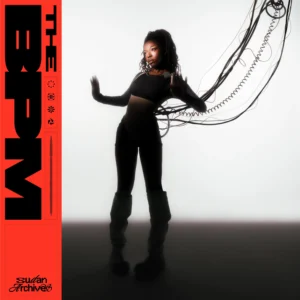 Sudan Archives’ lavish, ambitious world keeps expanding on THE BPM, but not at the expense of vulnerability – quite the opposite. Broadly speaking, the virtuoso’s third LP is as inventive as her 2022 breakout Natural Brown Prom Queen, but it also at times feels like a totally different album: wilder and more confounding its musical swings, more existential in its post-breakup candor. Sudan and her collaborators’ production is hypnotic and breathless with ideas without ever falling out of sync with the singer’s emotional overflow. “Sometimes I can get real low but I am high right now,” she sings on ‘Los Cinci’, prizing every point on the spectrum equally.
27. Maria Somerville, Luster
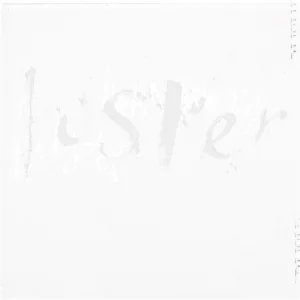 On Maria Somerville‘s 4AD debut, Luster, there’s hardly a line between pristine songs and spacious atmospherics. The Irish musician is an expert at diffusing it, just like her curiosity towards the natural world wafts into her internal one. The follow-up to 2019’s All My People is lush, liminal, and luminous, all those “l” words that earn the record its title. Even at its most reserved, it expands beyond the sense of solitude it seems to be inspired by, rendering it one of the most inviting – and best – dream pop albums released this year.
26. Anna von Hausswolff, Iconoclasts
 “The foolish hope of great eternal beauty,” Anna von Hausswolff sings on ‘Facing Atlas’, reaching her highest register, “This shit breaks my heart.” As epically ambitious as the Swedish musician’s latest effort is, it’s no more high-minded than any other depiction of heartbreak, except in framing it as the equivalent of the sky splitting in two. The atmosphere is so imposing and dense it justfies the unyielding desparation in von Hausswolf’s voice, which hardly ever relaxes. Why would when it seems like the only thing that can power through the cacophony? In starting over, the singer finds better places to store her pure, frantic hope.
25. Lorde, Virgin
 “I’m ready to feel like I don’t have the answers,” Lorde sings on Virgin’s opening track, ‘Hammer’. That doesn’t mean she’s not searching, but on the pop star’s first album in four years, she embraces that feeling. When she sings of the “peace in the madness over our heads,” it’s not reflective of the kind of healing journey that polarized listeners on 2021’s Solar Power so much as beginning to accept it in messy, sometimes subdued, occasionally blissful fashion. While Lorde’s shortest album to date, it is far from her least impactful, mirroring the fluidity she’s discovering in her gender expression and carrying wounds both self-inflicted and relational: hazy yet thorny, guttural yet ambiguous, that self glitching in and out of view yet somehow sounding impervious in its vulnerability. Read the full review.
24. Kathryn Mohr, Waiting Room
 Though Kathryn Mohr‘s music remains insular in nature, every record she’s made since 2021’s As If has required some sort of separation from home: she laid down her 2022 EP, Holly, produced by Midwife’s Madeline Johnston, in rural Mexico, whose desert environment had a palpable influence on the music. Her debut full-length, Waiting Room, was not only self-recorded but also conceived over the course of a month in eastern Iceland, as Mohr wove together songs in a windowless concrete room of a disused fish factory. The effect of the place is captured visually on the album cover and sonically through Mohr’s use of field recordings and imagistic writing, but the record only burrows further inward, at once liminal and confrontational, embodied and otherworldly. Read our Artist Spotlight interview with Kathryn Mohr.
23. Destroyer, Dan’s Boogie
 The world of Destroyer‘s Dan’s Boogie is one of sweeping beauty tumbling towards erasure. “‘There’s nothing in there/Everyone’s been burned,” Dan Bejar sings on ‘The Ignoramus of Love’. “I remix horses.” That third line, which nods to the Bill Callahan song ‘I Break Horses’ and reimagining Patti Smith’s Horses, is evidence of how other pieces of music – as well as film and literature, the boundaries being so blurred in Destroyer’s estimation – permeate Bejar’s subconscious lyrical process. You can’t always trace a direct connection between them as a listener, but you also can’t shake off the way a particular tangle of words, sounds, or images might have bled into Bejar’s madcap expression. It’s Destroyer at their most undiluted and fearless, and the results are both satisfyingly murky and illuminating. Read our inspirations interview with Destroyer.
22. Amaarae, Black Star
 “I’m a material bitch,” Amaarae declares on ‘100DRUM’, “but I know the worth of a mind.” On ‘B2B’, she repeats the word “heart” more times than probably any body part mentioned on her new album. And yes, it’s called Black Star and Naomi Campbell appears on one song, but its best track is probably the PinkPantheress duet, which says a lot about its yearning emotionality. Black Star is as exuberant, reckless, and lavish as the Ghanaian American visionary’s major label debut, Fountain Baby, but it’s also mindful and sensitive as it expands on her globalist, Afrodiasporic vision of club music. The more time she spends in the club, the softer – yet no less inventive – her music becomes. You can get off a dozen different drugs, she knows, but no high can match that of a love that outlasts the rush. Read the full review.
21. Addison Rae, Addison
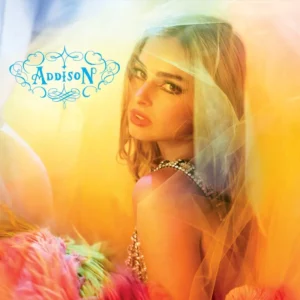 As if titling a song ‘Fame Is a Gun’ isn’t enough provocation, Addison Rae opens it with the lines: “Tell me who I am/ Do I provoke you with my tone of innocence?/ Don’t ask too many questions/ That is my one suggestion.” It’s tempting to intellectualize Addison in the context of the TikTok-dancer-turned-pop-singer’s personal narrative, or the references she wears on her sleeves – Lana, Britney, Madonna – or even the stream of singles that sold more and more people on the prospect of Addison. But tune into Addison and it becomes clear that innocence is a synonym for sincerity, which is the main reason its every move and mood – euphoric and wistful, woozy and downcast – feels seamless; though working with the writer-producer duo of Elvira Anderfjärd and Luka Kloser across the record adds to the cohesion. Rae luxuriates in it all even as she maintains an air of detachment. She cares, of course – just don’t think too hard about it.
20. Smerz, Big city life
 Up until now, Smerz records have tended to pique my interest, even amaze, then soon slipped from my mind. But Big city life, the Norwegian duo’s fuzzily glorious new album, clicked in immediately – and demanded repeated listens. Evocative of their experiences in New York and their hometown of Oslo, the record – playful and, to borrow one of the track titles, feisty – resonates on a wider scale. Catharina Stoltenberg and Henriette Motzfeldt’s eccentricity remains intact, layering one ambiguous feeling after another, but never without pulsing forward. “I’m realizing lately/ That I won’t feel like this again,” is the closing sentiment on ‘A thousand years’. Might be half-remembered, even imagined, but never anything less than real.
19. Perfume Genius, Glory
 Set My Heart on Fire Immediately was the title of Perfume Genius’ 2020 studio album, and of course, there’s always the fear of burning out. ‘It’s a Mirror’, the confident lead single from his astounding new album Glory that marked a shift from the diffuse grooves of 2022’s Ugly Season, still bows down to the feeling of “a siren, muffled crying/ Breaking me down soft and slow.” But if there is a weariness seeping through the familiarly lush and vibrant tapestry of Glory – which reunites Mike Hadreas with producer Blake Mills, while elevating his backing band of Meg Duffy (Hand Habits), Greg Uhlmann, Tim Carr, Jim Keltner, and Pat Kelly – it’s not at the expense of catharsis, freedom, or indeed glory. The album is tender-hearted and open-ended, loosening into a level of directness that not only feels new for Hadreas, but gives even its heavier subjects a weightless air. “My entire life… it’s fine,” he sings on ‘No Front Teeth’. The affirming going to keeps hanging in the silence. Read the full review.
18. Joanne Robertson, Blurr
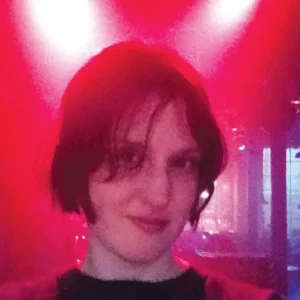 A selfie utilized as an album cover might be the first thing that strikes you about Blurr, making it no surprise the album carries the intimacy of a voice memo – and often sounds like it was recorded directly onto a cell phone. More than staring at yourself in the mirror or inside the screen of a tiny computer, however, Joanne Robertson’s latest release feels like shutting it off and catching your reflection in the blackness. Without any percussive accompaniment, it is full of rhythm, the coiling between her voice and guitar invoking the soul humming through the body: tender and tactile despite its fuzziness, temporal while stretching toward infinity. Oliver Coates’ string contributions, astonishing and meticulously placed, fill out the canvas as if in absolute certainty that endless place is not just reachable, but colours out the solitude.
17. Hannah Frances, Nested in Tangles
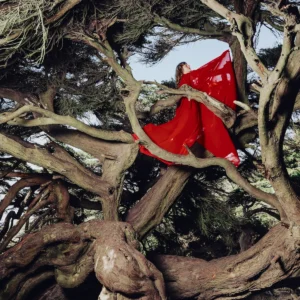 Following last year’s Keeper of the Shepherd, Hannah Frances‘ fifth LP is another dazzling invitation into the singer-songwriter’s deeply interconnected world. Continuing her collaboration co-producer Kevin Copeland, Frances expands the earthy intricacies of her last album by leaning into graceful, winding maximalism; if her previous album was a solemn excavation of grief, familial dysfunction, and a turbulent upbringing, Nested in Tangles spirals outward instead of burrowing further in, creating a lush environment through which past and present selves can move and change shape. Gnarled, playful, and ultimately therapeutic, it knows when to breathe fire and softly exhale, nestle and branch out. “Recollections move through in sudden shifting shapes,” she intones on the final track, “I release into the unburdening.” Read our Artist Spotlight interview with Hannah Frances.
16. Snocaps, Snocaps
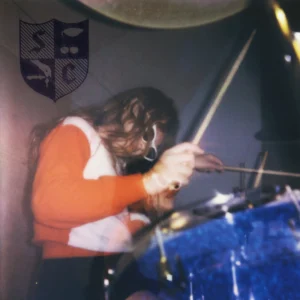 If the words Waxahatchee, Swearin’, or P.S. Eliot mean anything to you, the debut from Snocaps might be the best musical surprise of the year. It’s the return of the Crutchfield twins, whose first band, the Ackleys, made waves in Birmingham, Alabama when they were just 15. Allison sometimes plays as part of Waxahatchee, Katie’s biggest, now Grammy-nominated project, and they’ve promised to perform material from P.S. Eliot, their second band, on tour. They split their self-titled album’s tracklist evenly, ricocheting between their diverging (but never discordant) songwriting instincts. Backed by two musicians Katie worked with on her latest album, Tigers Blood, MJ Lenderman and Brad Cook, Snocaps is as warm and spontaneous as it is thorny and subtly miraculous. Read the full review.
15. Water From Your Eyes, It’s a Beautiful Place
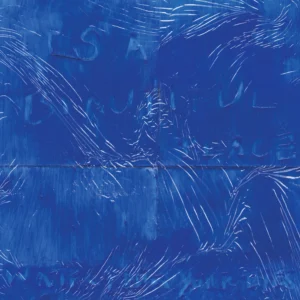 In an interview promoting his new album Guitar, which was released on the same day as Water From Your Eyes’ It’s a Beautiful Place, Mac DeMarco – the archetypal indie rock prankster, a label also applied to the NYC duo of Rachel Brown and Nate Amos – talked about “the Robin Williams effect.” He explained, “Robin Williams is all fun and games, and then you watch Good Will Hunting and you’re like—fuck. It’s good.” Funnily enough, Amos joked that Williams is “a silent member of Water From Your Eyes” in press materials because a poster from the Mork & Mindy era hangs in his bedroom, where he still makes all the music for WFYE, which now sounds bigger than ever. But the Robin Williams effect is also not a bad way of describing It’s a Beautiful Place, which is characteristically silly, freaky, and clunky – because what’s more awkward than making sci-fi indie rock about cosmic existentialism – until its vast emotional range hits you. Read the full review.
14. Dijon, Baby
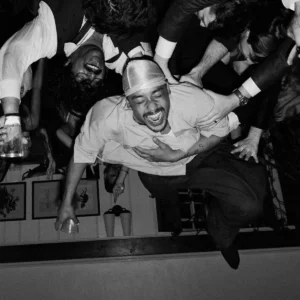 When Dijon sings that he’s on fire, you believe him. But it’s different from any other artist trying to sell the idea that lasting love has the power to obliterate all your insecurities. It’s chaotic, Dijon Duenas affirms, making swooning, infectious, dazzling R&B music that can sound on the verge of a breakdown even – or especially – at its most ecstatic. With help from Andrew Sarlo, Henry Kwapis, and Michael Gordon, the Los Angeles-based musician and producer has no issue fragmenting his most immediate hooks or rendering his voice unrecognizable when he’s most breathlessly trying to express himself. Whatever inspiration it owes to the past, Baby suggests you can no longer make beautiful, revelatory pop music without sounding at least a bit precarious or unwieldy.
13. aya, hexed!
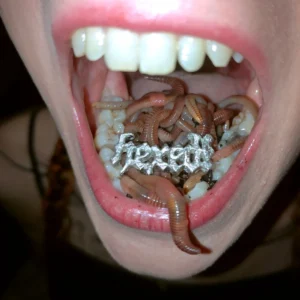 Don’t let that cover artwork throw you off – take it as a warning sign. Though informed by sobriety, that newfound perspective edges the London-based electronic producer into an even more abrasive direction than her ketamine-fuelled 2021 debut, im hole. Because the reality of sobriety – its very soberness – can be even more horrifying, like a blinding light on the rear-view mirror where total fuckery is just a gasping breath or nightmare away. “I’ll never let myself forget/ They had me out on a witch-hunt/ When I found myself,” she intones on the opening track. aya’s production lets sounds – drawing from her childhood fascination with nu-metal and emo – ferment, spiral, and soften, only for her vocals to slice right through. It’s as wry as it is impossibly visceral and dazzling, like a manic dream you wouldn’t wake up from even if you could.
12. Alex G, Headlights
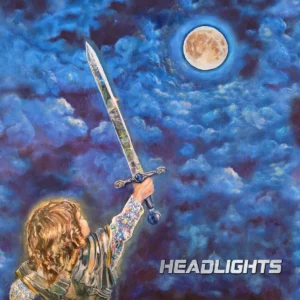 Hushed, gorgeous, and warmly elusive, Alex G‘s major label debut is a high watermark in a career full of them. There’s still a treasure trove of childhood memories for the singer-songwriter to dig up, to try and bridge the disparate pieces and fill the missing ones. “I’ve searched far and wide/ For a place like this/ Now I can close my eyes,” he sings at one point on Headlights. And what happens then, in the blackness? Maybe his voice thrives, writing out every word, rescuing his younger self. Maybe it gets all distorted, firing up his imagination. Maybe he’ll get dizzy with the big bright light; maybe he’ll miss the one glaring right at him. Read the full review.
11. Ryan Davis & the Roadhouse Band, New Threats From the Soul
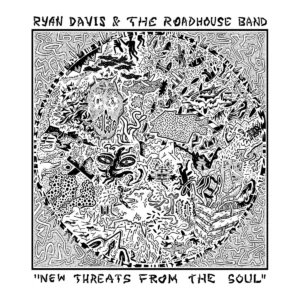 After more than a dozen years of honing his songwriting with the band State Champion and a few experimenting with drum machines and weird synths, Ryan Davis sounds grounded yet unconstrained on his sophomore record with the Roadhouse Band, far removed from the romantic ideals of music yet deeply existential and strangely spiritual about it. The songs are not simple but wordy, knotty, and outstretched while hinging on some elemental truth. It may not bring back the feeling, but it might make you feel, as Davis later sings, “with the feelings that I don’t express.” That’s more than most music, now or ever, would joyfully bestow. Read the full review.
10. FKA twigs, EUSEXUA
 There’s no shame in describing the deepest of pleasures in simple language: “It feels nice,” FKA twigs declares on ‘Room of Fools’, a highlight off her third album EUSEXUA, while another track is called ‘Girl Feels Good’. But the pop iconoclast is as gifted at putting things succinctly as she is at nuanced expression of both body and soul, which is why she’s spent so much of the album’s rollout trying to describe the word she coined for it. The record may not be as loose as her 2022 mixtape CAPRISONGS, but certainly retains some of its clubby exuberance, as well as the spell-binding eroticism of LP1, in mapping that slippery state of being. That it’s a place worth exploring goes without saying. Read the full review.
9. La Dispute, No One Was Driving the Car
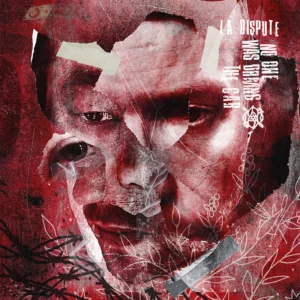 On ‘Saturation Driver’, a highlight from La Dispute’s new album No One Was Driving the Car, disaster flicks play on a muted TV while nobody’s watching – except, that is, Jordan Dreyer’s camera-wielding narrator. Disaster – whether exploited for entertainment, untangling through time, or lost to history – is a fact of life; earlier on the record, Dreyer goes as far as to sing, “Every moment we’re alive a disaster/ A tragedy to be and breathe.” It is also a miracle, he later exalts; the follow-up to 2019’s Panorama is revelatory and windingly rapturous in that way, knotting the vicious truths and transcendent joys its characters are driven towards around the veil of memory, progress, and Christian fundamentalism. Read our inspirations interview with La Dispute.
8. Bad Bunny, DeBÍ TiRAR MáS FOToS
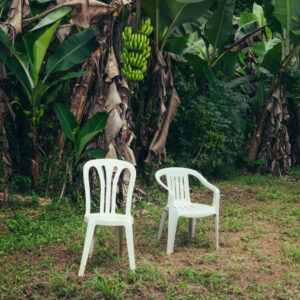 That Bad Bunny would make an album that finds him reconnecting with the musical traditions of Puerto Rico, one that triumphantly doubles as a love letter to his motherland, is no surprise. But you barely have to scratch beneath the surface to acknowledge just how piercing, comprehensive, and ambitious of an effort Debí Tirar Más Fotos is – not only does it survey genres like salsa, plena, and música típica, but for those listening on YouTube, each of its accompanying 17 visualizers serves as a history lesson about Puerto Rican history. As musically rich as it is daring, the record also scans as one of Bad Bunny’s most personal, reeling from different kinds of loss, from cultural displacement to heartbreak. It’s way less of a detour than the global superstar reaching a new peak in predictably admirable fashion.
7. billy woods, GOLLIWOG
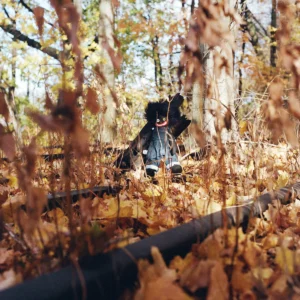 “Everything buffering, reality lag and jump/ Sometimes barely recognize the people I love,” billy woods raps on ‘Golgotha’, a line that cuts to the core of his hallucinogenic writing. The Brooklyn rapper articulates bad dreams, ghostly memories, and gloomy, cross-generational visions with strange lucidity, and while GOLLIWOG marks his first full-length effort without a primary collaborator in six years, he’s hardly alone in it. Sometimes it’s hard to trace who’s relaying whose story, how the past blurs into the present, though woods points to a tale about an evil golliwog – the racist caricature the record is named after – that he wrote as a child, remembering how his mother said it needed some work. So we get a challenging, unsparing 18-track record that stands among the all-timer’s very best.
6. Rosalía, LUX
 Rosalía‘s fourth studio album is a towering epic, a four-movement work that draws inspiration from female saints and poets with “the intention of verticality.” But the most disarming, by pop standards, aspect of LUX isn’t the Spanish superstar’s spiritual and musical ambitions, or the way she folds them into a compelling structure, but its heart-rending sentimentality, apparent in both the dramatic ways she wields these stories and every small waver of her voice. That’s the quality of its operatic scope that cuts through on each listen, taking stock of her lived experience as much as it seeks to undress it and ascend to a new world. It’s a singular document of an artist at the top of her game, shamelessly looking to the past while confronting the oblivion of the future. Read the full review.
5. oklou, choke enough
 oklou‘s debut LP, choke enough, is eerily enchanting yet damn near impossible to pin down. The French-born, London-based vocalist and producer, born Marylou Mayniel, may have been honing in her leftfield stylings for a decade now, but the way she flavours every trace of genre on choke enough – which finds her working with A.G. Cook, Danny L Harle, and co-producer Casey MQ – gives it the feel of an instant avant-pop classic. As giddily lush and Y2K-infused as it is dreamily ambient – but above all vaporous – the record zones in on the experience of decentering from one’s self, the way it stretches over a period of years and the glimmers of life peaking through the cracks. It’s an album you can’t help but get lost in, yet it never totally loses itself, anchoring in a world of in-betweens.
4. Wednesday, Bleeds
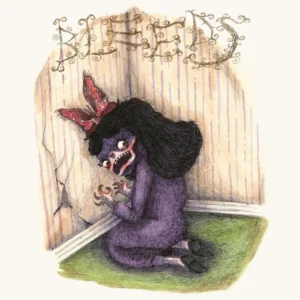 If it sounds like the road is its own fateful character on Bleeds, it might have something to do with when and where it took shape. Entering the studio just a month after vocalist Karly Hartzman and guitarist MJ Lenderman broke up, the North Carolina band were recording off the back of an exhaustive touring schedule in support of 2023’s masterful Rat Saw God. With a couple of stylistic diversions, Wednesday‘s new album no doubt feeds off the gnarly, blazing energy of its predecessor, collaging another tangle of funny, tragic, beautiful stories. But reaching what sounds like a breaking point on the ferocious highlight ‘Wasp’ leads vocalist Karly Hartzman to be just as unsparing on the album’s more intimate moments. The band is about to embark on another tour, but Bleeds sounds like the equivalent of pulling over to let out a good scream. Read the full review.
3. caroline, caroline 2
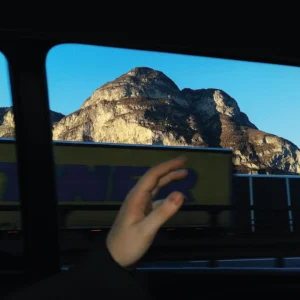 “Not everything needs to even out.” The line stands out amidst the elusive tapestry of ‘Beautiful ending’, though the closer to caroline’s second album doubtlessly lives up to its titular promise. Not everything needs to resolve lyrically to make some sort of sense; not everything needs to line up musically to leave a mark on you. caroline 2 is a delightfully uneven yet meticulously crafted record, one that’s enamoured not so much with the disparateness of its parts as it is in the delicate act of stitching them together. In it you can hear empty spaces and vast stretches of time, people existing in the same room yet setting themselves adrift, bridging distances big and small. I can’t imagine not submitting yourself to its spell.
2. Geese, Getting Killed
 In the 1965 documentary Ladies and Gentlemen… Mr. Leonard Cohen, which follows the singer-songwriter around the age of 30, a TV interviewer asks what Cohen means when he says he tries to wake up in a state of grace. He describes it as “that kind of balance with which you ride the chaos that you find around you,” adding, “It’s not a matter of resolving the chaos, because there’s something arrogant and warlike about putting the world in order.” I kept thinking about his use of the word warlike as I spun Geese’s revelatory new album, Getting Killed, which wastes no time pointing to the carnage all around while spending most of it in a fervid, ludicrous freefall that fills the gaps between the bizarre chaos of 2023’s 3D Country and Cameron Winter’s solo album Heavy Metal. Read the full review.
1. feeo, Goodness
 feeo frames her fragile, eerily intimate songs against the backdrop of infinity. Cosmic possibilities and absurd injustices shimmer at the edges of Goodness, making its vision feel as wide as it is singular; yet the more microscopic details and emotional nuances the London artist homes in on, the more her sonic poems scan as small epics, oozing through the connective tissue of a deeper world. At 39 minutes, Theodora Laird’s full-length debut is astonishingly rich; it swirls, brews, and burrows, rewarding you the further you stay along with it. Her voice is invariably beautiful yet at times almost vaporized by its surroundings, as if everything is always hanging by an incredibly fine thread. But her discerning eye and sense of presence remain infrangible. “I’m only a witness,” she sings, bearing like few artists dare to.

