

In the middle of June, we look back at the best albums released over the previous six months. Fifty albums may sound like a lot of music, but even after tallying up the records highlighted in our monthly column, there were still plenty of releases that felt worth mentioning; narrowing down the list is never a simple task, even at the year’s halfway point. Below, we’ve included albums released from January up until the second week of June. Here, in alphabetical order, are the 50 best albums of 2026 so far.
Aldous Harding, Train on the Island
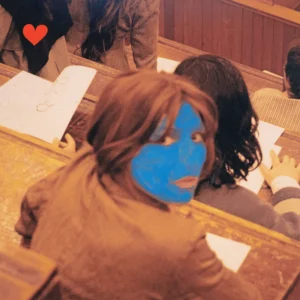 Welcome to Aldous Harding’s island. You’re free to leave anytime you like, but the New Zealand artist is happy to show you around. There are no palm trees here; just the one tree that she used to climb, presumably as a child. Forget about the sensation of floating on the ocean blue; instead, lose yourself in questions like, “When I hit the ocean I was only a spark/ Who brought me up the stem with no love in their heart?” You’ll have to get by eating rocks and plants, but you can dance just to dance. You can get together with friends once in a while, but in the end, of course, it’s just you and your reflection. “I have met my sleeping self/ Things she knows keep me around/ I hope I’m more than I think about,” Harding sings towards the end of her insular yet inviting Warm Chris follow-up. Read the full review.


American Football, LP4
 In the decade-plus since American Football’s reunion, Mike Kinsella has reserved some harrowing lyrical specificity for his other project Owen, aware that it’s much less subject to scrutiny. Reeling from a divorce he’s already addressed on the last couple of Owen records, however, he leans into that vulnerability on the band’s first album in seven years, pointing fingers while claiming responsibility for the mess he’s created. “I can’t bathe in your malaise anymore/ I’d rather be profane than chaste and bored,” he sings deep into the storm of the record, which is dramatic and ambitious, yes, but will probably prove less divisive than some of us early listeners assumed. It’s exploratory, unmoored, and self-aware, though never to the point of rupturing the mythos of American Football. Read the full review.
Ana Roxanne, poem 1
 Each time you press play on poem 1, Anna Roxane’s first album in six years, you might find a new favorite revealing itself to you. For the longest time, for me, it was ‘Keepsake’, the record’s incalculably moving single. But on the cloudy summer morning that I’m writing this blurb, I’m clinging onto ‘Because in A-flat Minor, Op. 45’, where she sings of “the fog hanging over the sea” and “a song playing over the air,” followed by a simple plea: “Don’t go, don’t go.” Because what is memory if not a promise that a string of ephemera can stick around a little longer? Any song from poem 1 doesn’t play over the air, though, so much as it seems to suffuse it, whether murkying the waters with a loose synth or homing in on the bare essentials of piano and voice. It’s rare that music can be so epically small, so lush in its devastation, but it’s no surprise it’s coming from Ana Roxanne.
Angelo De Augustine, Angel in Plainclothes
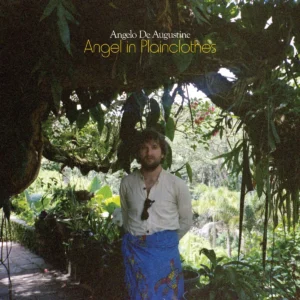 The backstory looming over Angel in Plainclothes is that, after being hospitalized with an undiagnosed illness in early 2022, Angelo De Augustine had to relearn how to walk, talk, see, hear, play music, and sing again. But though at times emotionally devastating, the singer-songwriter’s latest album is no document of suffering; it’s unguarded and mystical in its intimacy, shimmering with the kindness of those who have helped him survive. “Sometimes life is too much, you know,” De Augustine told me in 2023. Angel in Plainclothes captures an artist determined to live it. Read our inspirations interview with Angelo De Augustine.
Anjimile, You’re Free to Go
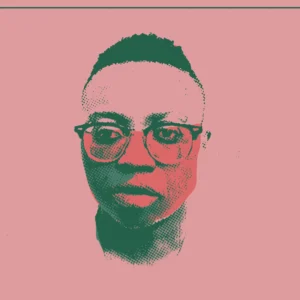 After working with Shawn Everett on 2023’s starkly dramatic, grief-stricken The King, his 4AD debut following 2020’s critically acclaimed Giver Taker, Anjimile linked up with Brad Cook (Bon Iver, Waxahatchee, Hurray for the Riff Raff) to help craft the airier, relaxed, and quietly cathartic songs that emerged from a period of renewed freedom. “It comes in waves/ Memory and empathy/ It stays and waits with me,” he sings on ‘Waits for Me’, patiently letting them ripple across and crash into his music, often retreating into a question instead of resolving. Whether for something as abstract as freedom and embodiment or palpably simple like kissing a partner, you want the desire to wash over you, and Anjimile makes it sound easy. Read our Artist Spotlight interview with Anjimile.
Avalon Emerson & the Charm, Written Into Changes
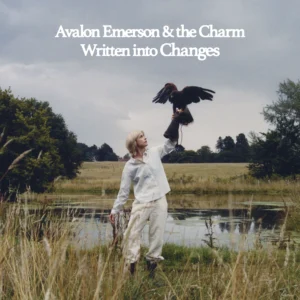
Avalon Emerson deepens her emotive songwriting on Written Into Changes, which encompasses five years of constant travel, including moving from Berlin to Los Angeles to New York. “Too young to die/ Too old to break through,” she sings on the glistening chorus of ‘Happy Birthday’, getting more reflective in the verses: “I have wasted all these years/ Collecting and perfecting this game.” But whatever the extent of Emerson’s sonic perfectionism and industry know-how, it builds no barrier to vulnerability on her second album with a band; or to cosmically upscaling her writing, like on the early single ‘Jupiter and Mars’. But just as she zooms out to the solar system, Emerson homes in on the small, persistent pleasures that seem equally, even frustratingly, miraculous, like drinking a cold beer. “How dare it cradle me in my tears so gently?” she wonders. Listening to Written Into Changes, you might find yourself asking the same question.
Broken Social Scene, Remember the Humans
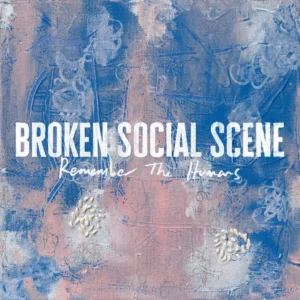 Broken Social Scene’s new album, Remember the Humans, urges you to think of music in organic terms. The title of the Canadian collective’s first album in nearly a decade came from Charles Spearin, who initially framed it as a joke: it sounds like the AI version of their seminal 2002 LP You Forgot It in People. The songs get lost in the haze of personal memory, eulogize individual people, and put relationships under the microscope, but the group still has a unique way of reveling in abstraction: finding relief from the burden of identity and emotional truth in every cliche. It’s a joyously universal kind of homecoming. Read our inspirations interview with Broken Social Scene.
Buck Meek, The Mirror
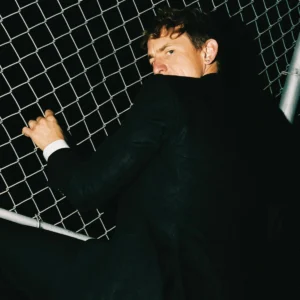 On the cover of his new album The Mirror, Buck Meek is glancing back as if meeting his reflection in the lens, his shoulder obscuring his expression just enough: it’s not clear whether he’s startled, running away from something, or trying to break on through. Perhaps he’s heading to the “the tunnel underneath the road” that he finds on ‘Demon’, “a place I go to sing with echo, echo, echo” – a natural magic further filtered by the voices that tune into it throughout the record, a choir that includes Adrianne Lenker, Germaine Dunes, Staci Foster, and Jolie Holland, and bordering the electronic world fashioned by his Big Thief bandmate and producer James Krivchenia. But just like he sings of trying to write a song that is not for others on ‘Heart in the Mirror’, he’s aware of the dark side of his soul being exposed while learning to foster something good and even divine out of it rather than projecting it outward. Read our inspirations interview with Buck Meek.
cootie catcher, Something We All Got
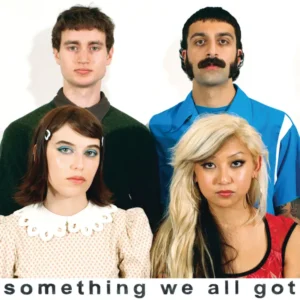 The restless rhythms in cootie catcher’s music – often characterized as “laptop twee,” though the title of a new song, ‘Puzzle Pop’, does a better job of encapsulating it – reflect their overall creative pace. The Toronto-based quartet’s exuberant, untamable new album, Something We All Got, arrives just a year after their last, Shy at first – it’s no surprise its distinct lyrical perspectives collide at the vulnerability of repeatedly putting yourself out there, expecting more than you’re bound to get. SWAG, though, deserves all the attention it can get. Read our Artist Spotlight interview with cootie catcher.
Death Cab for Cutie, I Built a Tower
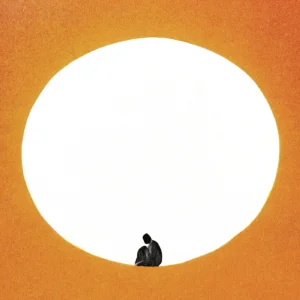 I Built You a Tower doesn’t ride purely on nostalgia, but Ben Gibbard and company were certainly energized by the anniversary tour celebrating Death Cab for Cutie’s Transatlanticism and the Postal Service’s Give Up in 2023. Which is a very unemotional way to assume what it must have felt like to be on the road revisiting at least one seminal breakup album at the height of a new separation, if one with drastically different consequences at this stage of adulthood. Working with producer John Congleton, who proved more than capable of balancing the band’s gentle and aggressive sides on 2022’s Asphalt Meadows, Gibbard copes by building another world of sorrow that simultaneously breaks away from old habits – musical and otherwise. Read the full review.
Dry Cleaning, Secret Love
 I can’t make up my mind whether Dry Cleaning‘s new album Secret Love, the follow-up to 2022’s Stumpwork, is their darkest or most optimistic, precisely because it blurs the line between harmlessness and real horror, self-growth and destruction. In that way it’s certainly their dreamiest, with subtle, reconstructive production from Cate Le Bon, who helps the band break out of their shell by making them sound more like themselves. It’s hard to take that the wrong way. Read the full review.
feeble little horse, bitknot
 Once again recorded across the trio’s homes in Pittsburgh, Pennsylvania, the surprise follow-up to feeble little horse’s mesmerizing 2023 LP Girl With Fish isn’t exactly nostalgic for a time when tech and money were only responsible for human suffering in different ways, but it does grapple with the kind of discombobulation of memory and self that’s particular to this cultural moment. Using digital tools as an extension of their knotty group dynamic and Lydia Slocum’s wiry introspection, it interlaces sugary melodies and dizzying left turns that hardly pale in comparison to its predecessor, making it feel far from a tossed-off release.
Friko, Something Worth Waiting For
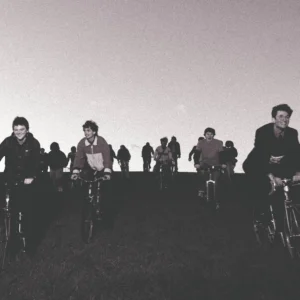 Something Worth Waiting For, the sophomore album by Chicago band Friko, obviously, instantly lives up to its title; the ironic part of it is that we didn’t have to wait that long. You could call them kids when they burst onto the scene with Where we’ve been, Where we go from here, and its follow-up sounds like the sort of epically anthemic record an indie rock buzzband might deliver over a decade after their debut. Just two years later, Friko return with an expanded lineup, with vocalist/guitarist Niko Kapetan and drummer Bailey Minzenberger – who formed the band right out of high school – being joined by bassist David Fuller and guitarist Korgan Robb. While building on the raw, explosive dynamics, anthemic choruses, and infernal yearning of their first record, Something Worth Waiting For feels anything but rushed, just riding the wave of relentless touring instead of letting it subside. Read the full review.
Gladie, No Need to Be Lonely
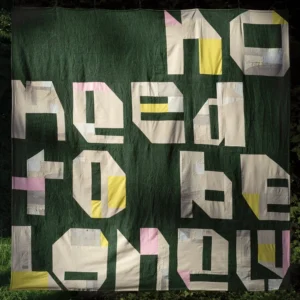 By the time Augusta Koch sent demos of Gladie’s galvanizing new record, No Need to Be Lonely, to Jeff Rosenstock, they weren’t just demo friends but friends friends, putting Rosenstock in the general category of people that many songs on the album feed off of and serve to uplift. “I brace myself to embrace you,” roars the chorus of one early single; “Know that I look to you, just to keep myself moving,” goes another. Rosenstock decided to produce the record, and they tracked it live to tape with Jack Shirley at Atomic Garden in Oakland. It’s no surprise the most dynamic songs on No Need to Be Lonely end up sounding eruptive, but the collaborative spirit enriches and sweetens the quieter songs, too, from the devastating catharsis of ‘Fix Her’ to the raw confessions of ‘Blurry’. It’s the rare gut-punch of a record that makes you feel lighter each time you play it. Read our In Conversation feature with Gladie and Jeff Rosenstock.
Grace Ives, Girlfriend
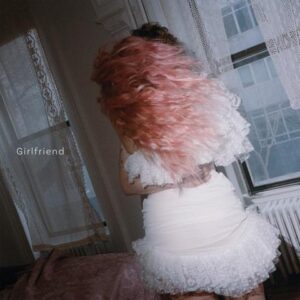 “I’m no stranger to that sage advice/ If you love her, let her find her life,” Grace Ives sings on the outro to the penultimate song of her incandescent new album, Girlfriend. Headed for the freeway, she’s “off with my little mind,” and if you’ve loved Ives’ past work, you know “little” is the kindest compliment. Charting her journey to sobriety, she and co-producers Ariel Rechtshaid and John DeBold dig through the wreckage to uncover an artist more big-hearted, bold, and buzzed with life than the introvert who’d shrink at the scale of it. You can catch Ives on the road on many of these songs (and playing them); you can also hear her marveling. Read the full review.
Greg Mendez, Beauty Land
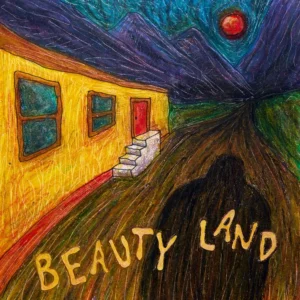
By the time he released his disarmingly intimate self-titled album in 2023, Greg Mendez had spent a decade and a half as part of Philadelphia’s DIY scene. The singer-songwriter’s full-length debut for Dead Oceans is his most extensive collection to date, Beauty Land, one no less thematically heavy than its predecessor but more unburdened in its expression. The songs swell with unguarded emotion, whether looping a single thought over spare keyboard or slow-burning into miniature symphonies. Still recording almost entirely alone, Mendez finds ways to stir them outside the confines of his own reality; you could say that’s where the beauty comes from.
hemlocke springs, the apple tree under the sea
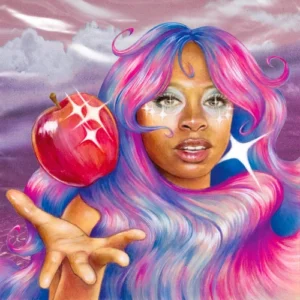 hemlocke springs’ going…going…GONE! EP, not only showcased her knack for larger-than-life, 80s-inspired, maddeningly catchy art-pop, but also led to her opening for the likes of Conan Gray, Ashnikko, and Chappell Roan, the latter of whom interviewed her “favorite artist” in light of the artist’s debut album, the apple tree under the sea. A pop debut more conceptual but just as zany, melodramatic, and adventurous as Roan’s own, the album traces back hemlocke springs’ origin story while interrogating the narratives that have been projected upon her – not just lyrically but musically, through eclectic, triumphant production crafted alongside BURNS. It’s escapist pop you wouldn’t mind becoming more and more inescapable. Read our Artist Spotlight interview with hemlocke springs.
Iceage, For Love of Grace & the Hereafter
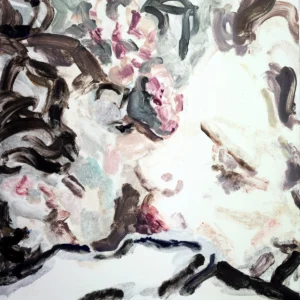 It’s not unusual for Iceage to obscure the narrative details of their songs. But when frontman Elias Rønnenfelt sings about catching “you like an ember falling down” on the opening track of their new album, he might as well be referring to the sparks of a new song that permeate the air when the band is in the studio. The more the Danish punks have pushed their sound forward since their 2011 debut New Brigade, the more days it’s taken them to record, with the last couple requiring – gasp – up to two weeks. Perhaps in reaction to the insularity of Rønnenfelt’s recent solo work, though, they returned to a speedier, raucous approach for For Love of Grace & the Hereafter, as if the ideas themselves were running for dear life. Read the full review.
Ivy Knight, Iron Mountain
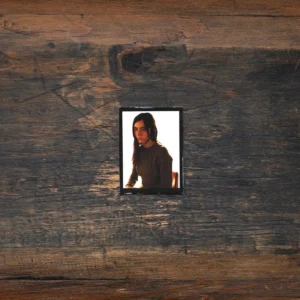 Growing up in Oakland, California, Ivy Knight was tapped into different strains of alternative music: her dad brought her into the world of punk and experimental music early on, while her mom put on indie mixtapes in the car. That’s where we find the New York-based artist on the opening track of her debut album, Iron Mountain, where she sings, “You’re painting colors/ A picture for the sky/ The thin blue beads/ On the mirror while you’re speeding.” It becomes clear she’s absorbed those formative influences as deeply as she takes in her surroundings, her oneiric, often escapist imagery mirrored in frequent collaborator Deer park’s organic production. After a couple of blearier, stripped-back EPs, her first full-length homes in on subtly accented folk-rock, harking back to songwriters like Marty Robbins and Kate Wolf. If the vocal filters and synth flourishes position her as part of a new wave of alt-pop, they’re also just tools for her to blend into her own creative landscape, planting dreams into the earth. Read our Artist Spotlight interview with Ivy Knight.
Jana Horn, Jana Horn
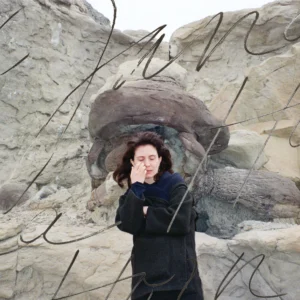 Patient and pensive, the follow-up to 2023’s The Window Is the Dream is marked by its open-endedness, recognizing that behind every loss and human sense of finality churns the cyclical nature of change. Documenting her first year of living in New York, where she moved after completing a creative writing MFA in Charlottesville, Jana Horn and her band refuse to paint a portrait of an artist unstuck from the past, unmissing, or untroubled by a changeless future. It would be absurd to try to force it. They simply inch towards an answer to the album’s final question: “I don’t know, how do you feel about that?” Read the full review.
Joshua Chuquimia Crampton, Anata
 On a purely textural level, it’s easy to dismiss Joshua Chuquimia Crampton‘s music as harsh to the point of being overstimulating. But it doesn’t take more than a little context and emotional attunement for its spiritual, medicinal, and strikingly deconstructive properties to take hold. Inspired by the ceremonies of the Great Pakajaqi Nation of Aymara people and more specifically the idea of “activated ceremonial music,” the Los Thuthanaka guitarist’s fantastic new album, Anata, riffs on and blows apart its influences not as a means of distancing but approximating their ecstatic essence, the way a low-quality audiovisual can elicit a more visceral response than the best technology. Crampton possesses a mysterious ability to let his refractive, impossibly layered guitar playing soar up into the galaxy while ensuring it all slips away in a flash. It just makes you want to hit play again.
Julianna Barwick & Mary Lattimore, Tragic Magic
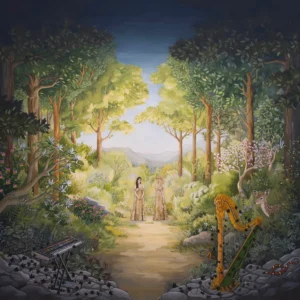 Over the past decade, Julianna Barwick and Mary Lattimore performed live together and collaborated on singles, but it wasn’t until they were invited to record an album in Paris, using the vast and historic collection of instruments at the Musée de la Musique, that a joint full-length finally materialized. The ambient composers have shown admiration for each other’s spiritual world-building, but, in the same way that they use technology and looping to elevate their respective instruments, their kinship heightens and bends the reality they mutually absorbed towards the cosmic – from the strange survivor’s guilt of leaving California in the midst of last year’s tragic wildfires to the reverie of a once-in-a-lifetime creative opportunity – towards the cosmic. Read our In Conversation feature with Julianna Barwick and Mary Lattimore.
Kacey Musgraves, Middle of Nowhere
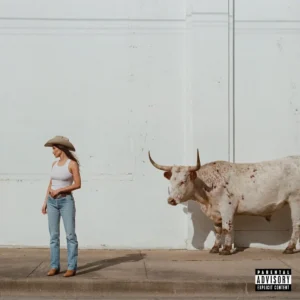 Kacey Musgraves was wandering around her hometown in Texas when she noticed a small sign that said, “Golden, Texas: Somewhere in the middle of nowhere.” She loved that it was “self-deprecating but also kind of confident,” she explained in an interview, which is the exact tonal balance she strikes on her latest record. Middle of Nowhere, in fact, begins “out there on the edge of the world, way past common sense” before Musgraves proclaims that she lives in “the great state of confusion.” Yet the album is less incoherent than her 2021 pop pivot star-crossed, and even more grounded than 2024’s Deeper Well, which focused less inspiringly on growth and healing. She’s not only more comfortable but more incisive in this transitional lane, leaning into the country classicism of Pageant Material and the radiance, if not the total brilliance, of Golden Hour. Read the full review.
Kelsey Lu, So Help Me God
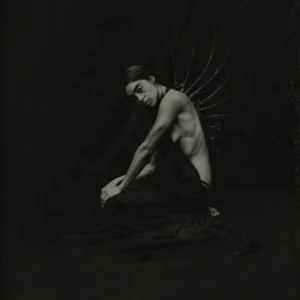 Though Kelsey Lu has kept busy since 2019’s Blood, returning to their musical identity feels like a process of homecoming. After scoring award-winning films, working across galleries, and collaborating with musicians ranging from Beverly Glenn-Copeland to Jamie xx, Lu discovered that going back to songwriting meant having to sit with uncertainty, slowness, and a lack of resolution. “While many things can serve as beautiful guides,” they have said, “I believe that, at our core, we are made from beauty and love. Being able to return to that source feels deeply important, especially now.” Those qualities spill out of So Help Me God with painstaking precision, but even as a classically trained cellist (and therefore perfectionist), Lu is forced to resist giving them any kind of linear structure, instead gliding from “burning desire” to “volcanic gaseous tremblings” with a distinctly emotional logic. Read the full review.
Kevin Morby, Little Wide Open
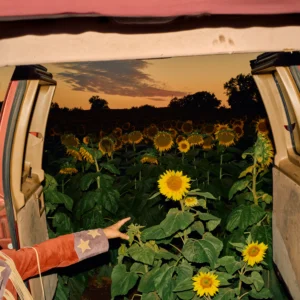 How do you relate to Kevin Morby’s music if you’ve never even been to the Midwest? So much of the singer-songwriter’s work is beloved for its sense of place; I tend to appreciate it because it never seems entirely tied to a single one. Even as he delivers his most settled and, by all accounts, most Midwestern album to date, Morby’s life is split between Kansas City and Los Angeles, as he and his partner, Waxahatchee’s Katie Crutchfield, are expecting their first child. Little Wide Open, in its grand simplicity and cautious optimism, doesn’t cling to Middle America as a nostalgic signifier but mines its abundance of imagery, honouring a beautiful region you can drive through but will always ride passenger to time. It’s the same where you are; Morby just makes the truth easier to embrace. Read the full review.
Kim Gordon, PLAY ME
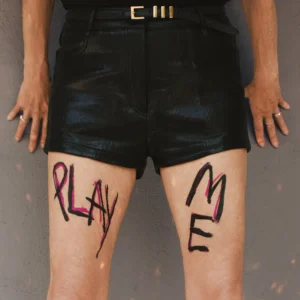 As ‘BUSY BEE’ weaves in a sample of Kim Gordon and her Free Kitten bandmate Julia Cafritz co-hosting MTV’s Beach House, a sentence reverberates through its clattering noise: “The pressure to relax, it was just too much for her.” Sure enough, Dave Grohl’s drums thunder back in, resuming PLAY ME‘s gnarly flow. ‘BYE BYE’, a highlight from the Sonic Youth co-founder’s previous solo album The Collective, spawned TikTok videos of teens going through their own packing list, as Gordon chaotically did on that track – can you imagine going on vacation these days, she now seems to say, let alone enjoying it? The pressure to make music for “chillin’ after work,” as she puts it on the opening track, is too much for Gordon – so she soundtracks the doomscrolling, the brain fog, the post-Everything. Shorter and more spontaneous than its predecessor, PLAY ME‘s restlessness is nearly just as fruitful. Read the full review.
Lip Critic, Theft World
 Lip Critic frontman Bret Kaser’s identity was purportedly stolen while the Brooklyn quartet was writing Theft World, the follow-up to their 2024 debut Hex Dealer; the thief turned out to be a devoted fan who believed he’d cracked the code to the band’s loosely conceptual universe. For a record that toes the line between absurdist fantasy and depressing realism, that origin story is almost too good, but the frenetic machinations of the record itself are even better: a melting pot of delirious characters, adrenaline-fuelled propulsion, and ingenious experimentation. Outlandish or not, it drives home the same truth: It’s happening to you right now. Read our inspirations interview with Lip Critic.
Lord Jah-Monte Ogbon, As of Now
 Lord Jah-Monte Ogbon paces himself all the way through As of Now, his 17-track debut LP for Lex Records. That doesn’t always mean taking things slow: there’s definitely an unsteadiness to the album’s flow, punctuated with the nerve to splice together beats seemingly destined for separate tracks, over which the Charlotte rapper has no trouble triangulating his humour, swagger, and pure skill. You could even argue the beat-switching reflects some of the emotional shiftiness he admits to on the record, one where the skits and adlibs are as vital to the storytelling as his truth-spilling, heartbreaking soliloquies. But Jah-Monte never trips over the music as its layers and characters pile up; he keeps steering the wheel, anchoring it in the present as the only place he can assess both his past and future.
Lowertown, Ugly Duckling Union
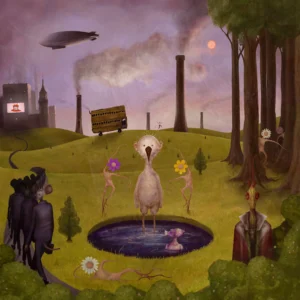 Look, I’m biased. In Greek, my last name means “duck.” Growing up, The Ugly Duckling was both one of my favorite and most anxiety-inducing stories. So when Lowertown, a New York duo I’ve interviewed twice, come out with a concept record about a duckling protagonist and his companions as they attempt to defeat a tyrannical media corporation, you know they’ve got my attention. But while the album is accompanied by a playable Minecraft world, a handbook, plush dolls, and drawn comics by Doctor Nowhere, the focus is still Olivia Osby and Avsha Weinberg’s playfully ramshackle songwriting, which curdles from infatuation to paranoia. It’s great. Subjectively, of course.
Lucy Liyou, MR COBRA
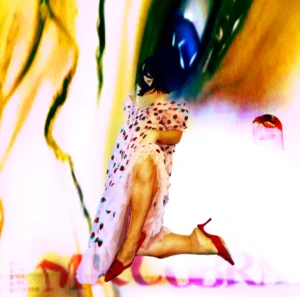 Lucy Liyou’s revelatory new album, MR COBRA, is adapted from her semi-autobiographical theatrical work Mister Cobra, weaving together free jazz, Korean folk opera, musique concrète, 2000s-era pop, drag-inspired performance, and more. Skirting the line between shame and desire, the artist’s discordant sound poetry is juxtaposed with her reverence for pop, from ambiently interpolating Taylor Swift to going full-on nu disco. “Sometimes trying to adhere to the ‘facts’ of my experiences made other emotional truths feel distorted,” Liyou has explained. Stripped of the context of Liyou’s multimedia performance, the illusory nature of MR COBRA is all the more replete with meaning.
Mandy, Indiana, URGH
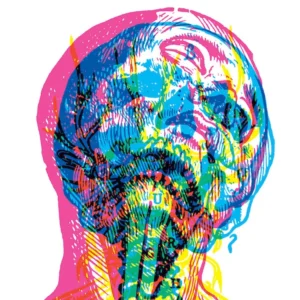 For Mandy, Indiana, inspiration could come from anywhere, and their ears are as attuned to the sounds in their environment – whether close to (or in the literal walls of their) home or entirely foreign – as the ways they can be imagined into their piercing, uncanny body of work. And the body is precisely the animating force on URGH, their first album for Sacred Bones, which partly took shape during “an intense residency at an eerie studio house” near Leeds, but mostly, and painstakingly, over long distances. Buzzing, thrashing, and sloshing through unpindownable spaces that can only be defined by the coordinates of their own band name, the album similarly inspires countless reactions but can only really be captured by its own title. Read our inspirations interview with Mandy, Indiana.
Maria BC, Marathon
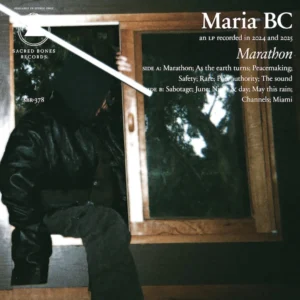 Following 2022’s Hyaline and 2023’s Spike Field, Maria BC‘s new album places an emphasis on songwriting over the gauzy, fragmented production that marked their earlier work. Hazy synths, twitching rhythms, and a blur of overlapping instrumentation still add nuance and density to the songs, but you can imagine them stripped of their textural brilliance, still hauntingly resonant. “The interesting thing about being vaguely ambient musicians for both of us is that without the verb, and without the dream zone additions,” Marissa Nadler said in a conversation with the Oakland-based artist, “I think that your music still stands up very strongly, even if you were to play unplugged on the street. That’s, to me, the mark of a great songwriter.”
Mitski, Nothing’s About to Happen to Me
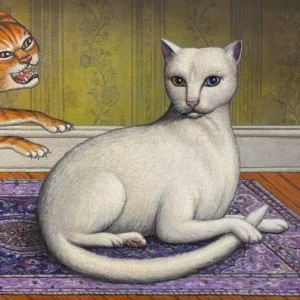 As beautifully pastoral as 2023’s The Land Is Inhospitable and So Are We, with live instrumentation by the band that accompanied her on The Land tour, Mitski’s startling eighth album gestures at a cohesive narrative rather than breathing life into a series of interconnected vignettes. Still, there’s more than one way to connect the dots: from one song to the next, from new to old, nothing to everything. Just listen, though, and you might find her longest album (at 35 minutes) to also be her boldest statement to date. Read the full review.
MUNA, Dancing on the Wall
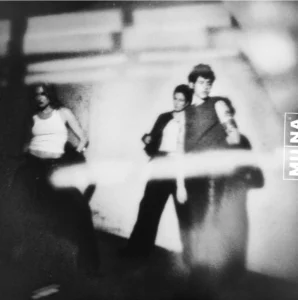 Towards the end of MUNA’s new album, Katie Gavin is convinced she’s past her prime – “and everyone knows it.” It’s a natural insecurity, but it’s laced with the understanding that “everyone” now implies a larger group of people who are far from friends or devoted fans. Whenever the band comes up in the lyrics of their latest, Dancing on the Wall – self-produced, like all their records, but with a heightened urgency – it’s to affirm that they’re doing alright, if with a knowing sigh. “Lots of people love me now,” Gavin sings to deal with an unrequited love, “Lots of people.” Whatever personal grievances these often dizzyingly infectious songs latch onto, they point to a band continuing to grow into themselves rather than self-consciously aging out of their peak. Read the full review.
My New Band Believe, My New Band Believe
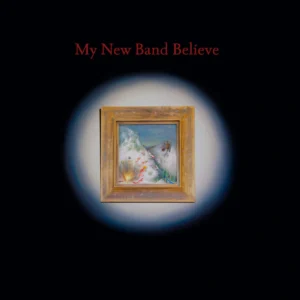 The original idea for My New Band Believe was to make a collaborative album with the avant-folk octet caroline, but the project of ex-black midi member Cameron Picton ended up being a more open-ended studio endeavour that included most of that group, as well as members of Black Country, New Road, shame, and more. Just as he handled most of the writing by himself, Picton then helmed the editing process, creating a magnificent illusion of natural coherence – the way dream logic convinces you this scene makes sense after that one, before the waking mind offers ambivalent interpretations. Fluidly arranged and no less tender than it is delirious, My New Band Believe makes the frantic possibilities of a single night, record, and group structure feel infinitely, intimately mutable. Read our Artist Spotlight interview with My New Band Believe.
Nothing, a short history of decay
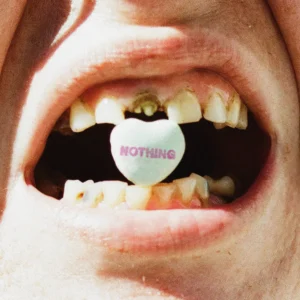 Nothing have been on a two-year album cycle since 2014’s Guilty of Everything, and though they remained busy between 2020’s The Great Dismal and their fifth album and Run for Cover debut, a short history of decay, the break allowed Domenic “Nicky” Palermo the stillness to properly reflect on his pre-Nothing days – growing up with an abusive father, spending two years in prison – and the toll of keeping the band going, both on his body and his relationships from home. Named after a book by Romanian philosopher Emil Cioran, a short history of decay takes a step back to mirror the raw humanity that’s been responsible for the band’s survival, articulating, gently yet vigorously, traumas better shrouded on previous records. “When I was old/ Ain’t life terrible/ With beautiful things getting between,” Palermo sings on the opener. This may be Nothing’s final chapter, but they still traffic in that in-between. Read our inspirations interview with Nothing.
Olivia Rodrigo, you seem pretty sad for a girl so in love
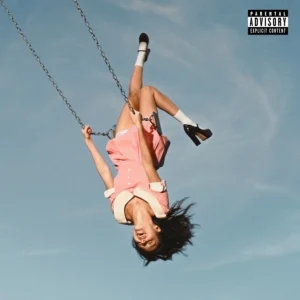
“It’s really poppy, but it doesn’t compare melodically to the stuff that Olivia does, but it’s my idea of Cure Pop,” Robert Smith said while teasing the next Cure album. “It’s probably 20 BPM slower than anything she does.” Slower than ‘honeybee’? Slower than ‘less’? Did he even receive an advance of the 23-year-old’s latest album before going into the studio to sing ‘what’s wrong with me’? If the Cure’s new album is sadder than ‘the cure’, I’m worried. Of course, this is to say that anyone’s idea of Olivia Rodrigo Pop is fallible, as she anchors in a range of influences that have always included the likes of the Cure and Hole – now also triangulated with Devo, Weyes Blood, and more – while stretching them in subtly unexpected ways. On you seem pretty sad for a girl so in love, she charts a romance from its incandescent beginnings to its very last flicker, showcasing new strengths while throwing herself at the mercy of forces beyond her control. The fact that it’s bittersweet isn’t surprising; the execution just keeps getting better. Read the full review.
Ratboys, Singin’ to an Empty Chair
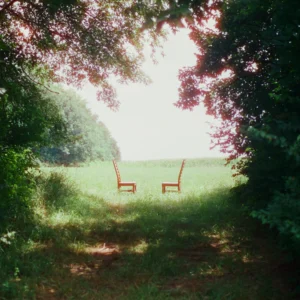 Listening to the follow-up to 2023’s The Window on repeat, an empty chair was always in my periphery, and I would sometimes find myself staring at it while letting the songs do the talking: projecting, sure, but mostly getting lost in their sprawling journey, closing my eyes to appreciate their textures – homed in with producer Chris Walla – and spinning my head in pure joy. I was grateful for their lonely revelations but eager to put it on in the car, on a long drive surrounded by loved ones. If you have listened to a Ratboys record before, you already know the new one is as tremendously open-hearted and emotionally piercing as it is ultra-catchy. The subject matter may seem heavier this time, but it feels less like pulling a blanket over the unvarnished truth than warming the room that could make it unravel, keeping the door open for anyone who’d like to enter. Read our inspirations interview with Ratboys.
Remember Sports, The Refrigerator
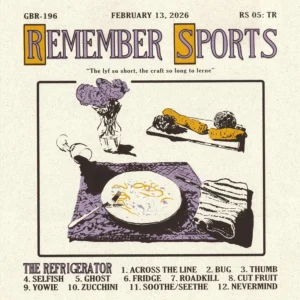 Recorded at Chicago’s Electrical Audio, Remember Sports‘ new album, their first for Get Better Records, refashions the surreal collision of past and present selves – inspired by Perry’s job teaching at an elementary school through COVID – as a head-spinning emotional ride, from the guttural rawness of ‘Across the Line’ to the hypnotic recollections of the bagpipe-led ‘Ghost’. “The kitchen table split in two and I thought of you,” Perry sings on the latter, the whole band ensuring that train of thought – bending time and reason as it does – is a thrill to follow. Read our Artist Spotlight interview with Remember Sports.
Robber Robber, Two Wheels Move the Soul
 Two Wheels Move the Soul was recorded in the wake of an apartment fire that left Nina Cates and Zack James displaced. Relying on the generosity of the Vermont music community, they couch surfed for months, and while that infrastructure may have now seemed like a distant dream, music remained their only constant – “a new familiar place,” to quote ‘Backup Plan’ from their first LP, Wild Guess. Once again, the pair, along with guitarist Will Krulak and bassist Carney Hemler, returned to Little Jamaica Studios to lay down their new album for Fire Talk, Two Wheels Move the Soul, with engineer Benny Yurco. At once groovier and grimier than their debut, it hammers down on the same themes of shaky communication and perpetual unrest as if almost no time has passed between records. Yet through the rubble, they find new ways to navigate their shared space. Read the full review.
Robyn, Sexistential
 At one point on her self-financed, self-titled, and first independently released album, Robyn assumed the role of a captain attempting a crash landing before launching into a song called ‘Crash and Burn Girl’, echoing her description of Sexistential as feeling “like a spaceship coming through the atmosphere at a really high speed.” More than two decades after Robyn, and aided by early collaborators like Teddybears member Klas Åhlund, Sexistential still prioritizes the pleasure principle – “I’m never inspired by pain,” she told one celebrity fan, Tinashe – while defiantly eschewing the trappings of a “maturing” pop star. Read the full review.
Sassy 009, Dreamer+
 Following a series of mixtapes, including 2019’s KILL SASSY 009 and 2021’s Heart Ego, Sassy 009 toiled away at her debut proper for years, struggling to funnel a fantastical narrative in which intrusive thoughts become reality into a digestible record; in essence, squaring the nightmarish with the catchy. But with notable assists from Blood Orange, yunè pinku, and BEA1991, Oslo-born artist Sunniva Lindgård – playing a character described, better than by the album’s namesake, on the title track as an “in-betweener” – embodies the blurry, fluid qualities of Dreamer+ with undeniable kineticism. It’s the kind of dream more likely to haunt you down than fade from memory. Read our Artist Spotlight interview with Sassy 009.
Slayyyter, WOR$T GIRL IN AMERICA
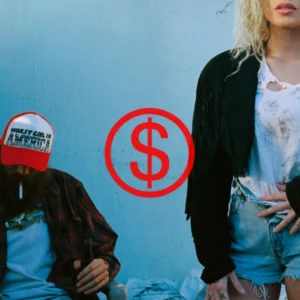 Despite having a promo of WOR$T GIRL IN AMERICA ahead of its release and keeping up with a promotional rollout that included dropping the album’s entire first half, Slayyyter’s latest didn’t fully hit until I loaded it onto my iPod classic and let ‘OLD TECHNOLOGY’ do the work. It’s easy to be suspicious of any artist cashing in on electroclash, hyperpop, and dance-punk in 2026 – remember that the record came out the same day as Fcukers’ Ö and in the wake of great pop albums by underscores, Robyn, and Grace Ives – but there was no getting around the fact that WOR$T GIRL IN AMERICA‘s euphoric abrasion and pure raunchiness deserved its own place in the canon.
Snail Mail, Ricochet
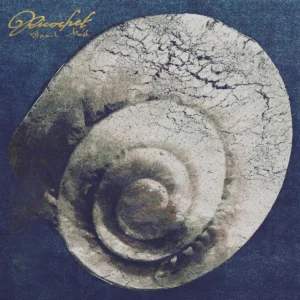 There was a time when Lindsey Jordan harboured the illusion that she could only write in her Maryland childhood bedroom, where she made the songs that brought her indie fame right on the cusp of adulthood. By the time she was in the process of making her latest record, Ricochet, she’d bought her own house, dodging any impulse to write somewhere more nostalgically familiar. Working with Aron Kobayashi Ritch, the bassist and producer of New York’s Momma, it finds her transposing a period of self-imposed yet heavenly isolation into her most comfortably subdued songs to date. There’s still a delicate tension gnawing beneath the surface, as solitude’s gorgeous quiet borders on obsessive dissocation. Jordan, though, will go a long way to dance around it. Read the full review.
Thomas Dollbaum, Birds of Paradise
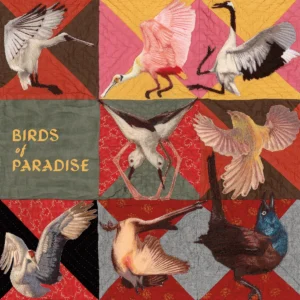 Many of the songs on Thomas Dollbaum‘s new album – propulsive, twangy, torch-like – spring from the setting of his childhood, driven to a magically placeless evocation of memory, empathy, and solitude. “What the living do is prowl around on their hands and knees/ Among the bodies we leave behind,” declares one of its characters; another is purely happy to be alive. Aided by guitarist Josh Halperm, bassist Nick Corson, and MJ Lenderman on drums, guitar, and backing vocals, Dollbaum is always somewhere in between, pooling the feelings together like they’re one and the same. Read our Artist Spotlight interview with Thomas Dollbaum.
underscores, U
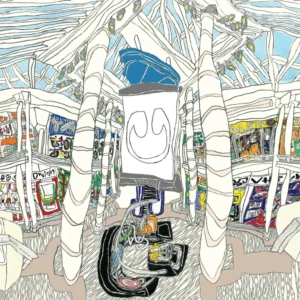 U is shorthand for underscores, but it’s also how, at least 50 times on her sort-of-self-titled album, April Harper Grey spells her object of desire. U has a compressed, equalizing power, leveling the playing field when it comes to mathematizing its relationship to I, which gets a typical definition early on: “I get what I want and then find out right after I get it, I don’t even want it.” It’s a reductive way of looking at underscores’ own trajectory, as U abandons the complex conceptual framework of 2023’s Wallsocket for a concise, escapist psychodrama, which is a way of understating that it’s an early contender for the most irresistible pop album of the year. In truth, you get what you want and then you find out right after you want it all over again: that’s U in a capsule. Read the full review.
Victoryland, My Heart Is a Room With No Cameras in It
 The Brooklyn-based project of Julian McCamman quietly released its first tape, Sprain, just a week before the musician’s former band Blood released their debut and final album, Loving You Backwards. The wiry, whimsical, and emotionally piercing new album finds him continuing his collaboration with producer Dan Howard, who worked on both of those records, honing their mid-fi pop ambitions to brilliant effect. “Was it even worth trying/ Knowing someone is crying for us/ Watching an infinite loop of our lives,” McCamman sings at one point; even at its most desperate, the album sounds like it’s somehow enjoying running back the tape. Read the full review.
waterbaby, Memory Be a Blade
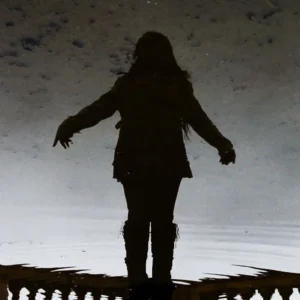 Working with her primary collaborator Marcus White – who also arranged the lush contributions from violinist Oliva Lundberg, cellists Filip Lundberg and Kristina Winiarski, saxophonist Sebastian Mattebo, trombonist Hannes Falk Junestav, and flutist Pelle Westlin – waterbaby retains a preciously intimate and intuitive approach on her debut album, Memory Be a Blade, even going as far as to improvise a lot of the lyrics on the record. “Steady waters asking me to leave again” are the first words that come out of her mouth as she embraces this flow, illustrating that steadiness is an illusion, a trick of lonely shadows and lights. Still, we’re left with no choice but to paddle on. Read our Artist Spotlight interview with waterbaby.
Wendy Eisenberg, Wendy Eisenberg
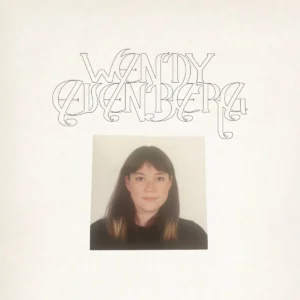
If Wendy Eisenberg’s 2024 LP Viewfinder sought to loosen the parameters of the conventional song form, their self-titled album leans into the timelessness – or, more precisely, the eternal weirdness – of classic songwriting, in part as a call back to the inner child that began to show curiosity around it. As playful and genuine as it is beguiling, Wendy Eisenberg is shaped by its contributors – bassist Trevor Dunn, drummer Ryan Sawyer, and co-producer Mari Rubio (aka more eaze) – in different ways than its predecessor, warmed by their camaraderie while mourning past lonelinesses. “Looks like luck’s inherent humour pushed you past your sense of loss,” they sing on the opener. So when Eisenberg describes self-titling as a “locus point for jokes” that “offsets its vanity by making you laugh,” it’s not a bad way of looking at what makes life itself transcendable. Read our Artist Spotlight interview with Wendy Eisenberg.
Zoh Amba, Eyes Full
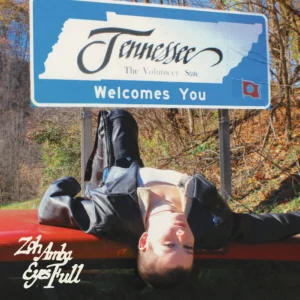 Earlier this year, Zoh Amba joined Iggy Pop on saxophone at Coachella, a somewhat surprising move following the news that they would be switching to guitar and songwriting for Eyes Full, their Matador debut. The blazing, heavenly abrasion of the musician’s instrumental work is anything but lost on the self-produced record, which features Jim White on drums, Kevin Hyland on guitar, and a number of associates at Ashevile’s Drop of Sun, where it took shape. The title might as well be an inversion of the famous Shakespeare sonnet, putting it in alignment with Amba’s past work: The lover’s eyes are everything like the sun. Don’t be afraid to stare into them, Amba seems to implore.

