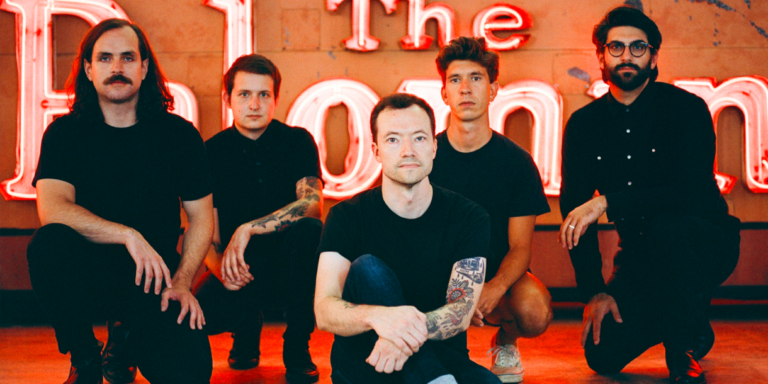
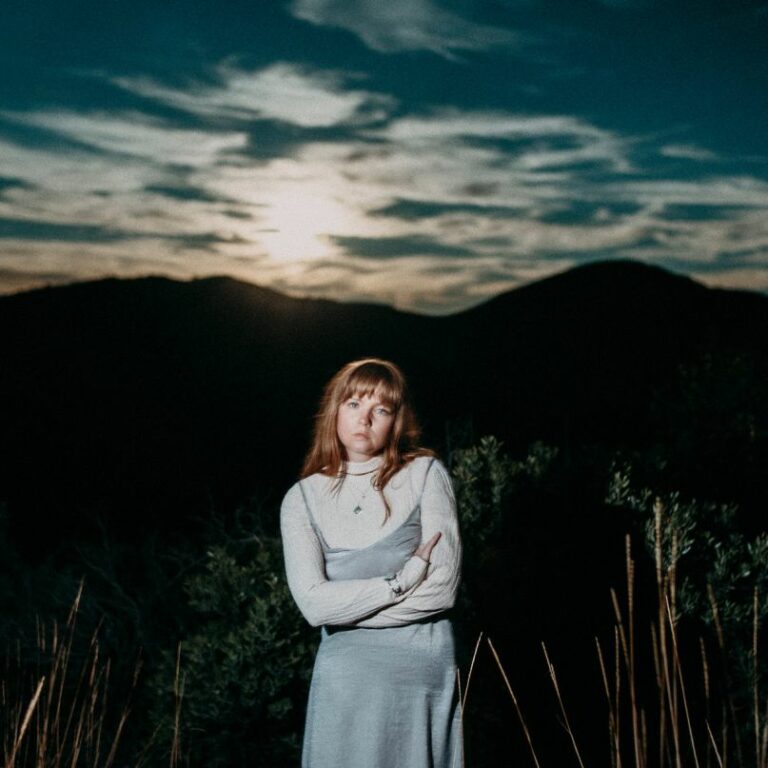
Following his previous release You or Nothing, the gifted Fergus has followed up with Sinking.
After a successful debut release, the much-admired and magnificent Fergus has released his latest single, ‘Sinking’. In his latest single, Fergus showcases true maturity as an artist as he waves through a dynamic slow-burning journey of a song with goose bumping vocals. Thus, it is clear to us that Fergus is the name to keep hold of as he possesses a calibre of vocals many could only envy.
With this single released, we are sure to hear more touching music from Fergus in the months to come as he looks to grow in the world of music and one day reach the top.
‘Sinking’ can be streamed via Spotify and is available for download via major digital stores.
Every now and then a new game is released which shifts the designs and momentum of the greater gaming industry.
This has taken many forms over the years, with different games informing different avenues of popularisation. While these might do something new, something strange, or something we never imagined before, they also commonly simply elevate previously existing ideas into mainstream success and consciousness. We saw this with open world games after GTA 3, we saw more cohesive online worlds following the release of WoW, and we saw an increase in simple counter-heavy combat after the Arkham games, just to name a few. The most recent of these to reach the forefront of gaming, to inspire what might be considered a new genre, is the large-scale single-life battleground idea championed by Player Unknown’s Battlegrounds (PUBG).
“PUBG hits yet another milestone–this ti” (CC BY 2.0) by BagoGames
While a fantastic game in its own right, and an idea which many of us have been eager to experience for years, this game is not without its issues. Some of these issues, such as the lack of content and prevalence of glitches, will be naturally addressed over time. Others, like the problem of hacking, and the issue of monetization, stand to be much longer-lasting and can have a major inhibiting effect to the reputation of the game, and the maintenance of its player base. So how has the greater gaming industry reached this point, and why is it than many claim the current situation to be the inevitable result of uncontained avarice? In this article, we explain the bed which the gaming industry made, and why it seems so content to sleep in it.
Modern Monetisation
For those younger readers out there or those who are new to the gaming industry, we need to point out that the types of monetization which we commonly see today did not arrive without complaint. Time was, we used to rely on a much simpler system of the main game, and then possible expansion content somewhere down the line. While the exact starting position of these changes is difficult to pinpoint, many list the much-maligned Horse Armour for The Elder Scrolls 4: Oblivion as being the first crack in the floodgates.
A small extra charge for something so superfluous? Nobody will ever pay for that! Of course, people did pay for that, and major game publishers now had a new and untapped revenue stream to explore.
This is how it started for many major ongoing franchises. Small microtransactions for small goods, cheats, boosts, and cosmetics. All things which would have been included in the base package years ago, before the pull of further profit became too enticing to the publishers, and the developers bore the brunt. This continued to evolve as the years passed, with different developers discovering new ideas and methods to squeeze increasingly more from their customers. This included practices like on disk DLC, where content was already finished and shipped with the game, yet was still locked behind additional paywalls. While there was pushback, it never proved enough to convince the industry as a whole to question its trajectory.
The Good
We would be remiss if we discarded the entirely of non-traditional funding structures out of hand. While we, and many older gamers and critics, are staunch opponents to these systems being placed on classically designed games, there are those games which rely on newer systems like free-to-play (F2P) which adopt different monetization strategies through necessity. In these systems, the microtransactions and other forms of financing are the only realistic source of revenue, and as such, they become expected.
Some of these, like those utilized in the very popular space-ninja shooter Warframe, have a heavy interest in customer enjoyment and player engagement over sheer profit, and this is often reflected in their treatment of their monetization strategies. In a recent interview for the fantastic documentary YouTube channel NoClip, designers over at Warframe lamented at how their system essentially ended as a slot machine, and this was so contrary to how they thought customers should be treated that it prompted a redesign.
The Bad, and the Ugly
You might have read recently about the PR disaster which was Star Wars Battlefront 2, a game with a lot of promise which was ultimately disappointed. This system included what was, quite literally, a pay-to-win slot machine system. In this game, players could spend real money to spin the reels, and chance an actual in-game advantage over those who chose to only pay for the base game. Not only did this tip the balance of power towards those who were willing to continuously pay out the nose for a product they had already bought, it also directly harmed and preyed on children and those who suffered from gambling addiction.
Naturally, these companies like EA continue to try and save face by claiming these sorts of systems aren’t gambling, though even a surface level understanding of psychology would show otherwise. In reality, this is a scheme which has performed so well because governing laws for such practices have never had to exist yet, and so EA and their contemporaries are taking advantage of systems which have been playing catch-up. As for how much longer this will continue, we don’t yet know.
While EA still maintains it doesn’t think of these systems as gambling, Belgium disagrees, and many other countries are gearing up to follow similar amendments to their gambling laws. On a side note, this makes us wonder who they have working in PR over at EA, as the gaming public certainly remains unconvinced by their platitudes and hand waving.
Of all of the different systems which create controversy, there are two which have remained as prime examples of problematic profiteering. The first is the slot machine loot box system, and the second is the advent and popularisation of item trading. Item trading is a simple idea to understand, being just what it sounds like, but it is the greater effects behind the scenes which lend themselves to harmful outcomes for consumers. With older games like Counterstrike: Global Offensive, this has reared its ugly head as a skin economy, which while not necessarily an issue on its own terms, introduces similar issues to loot boxes when the greater skin economy is factored in.
The most popular way this has manifested is with skin gambling websites, which again have no trouble with targeting problem gamblers and children. The supporting industry of slot-like machines to win skins with high actual monetary value is almost entirely unregulated, and the complications this can cause to an actual game, like in PUBG, can run much deeper.
Boxes, Keys, Counterstrike and PUBG
Item drops in some games with skin economies like Team Fortress 2 and CS:GO at least have similar drop rates for any regularly playing users. Play a certain amount of time and get a drop, a nice and easy start. Then, factor in that not all boxes have the same items, and that some boxes can only be opened through the use of specially bought keys, and the first hints of the real issue start to emerge. PUBG, while a fantastic game in many ways, has created an environment which takes in the worst components in many different systems, leading to a system which many consider as nothing short of rapacious.
Loot crates in PUBG change based on season and time, containing different items of differing rarities and worth. While obviously anecdotal, none of the last 8 boxes claimed in PUBG by this writer are accessible without the purchase of additional keys, and this is just the start.
You see, unlike CS:GO and Team Fortress 2, crates in PUBG can be bought through the use of in-game currency, and are not simply handed out in regular intervals. This currency is earned through gameplay, with the amount which is earned being dependent on where the player placed in the match, and how many kills and hits they made along the way. Can you see where this is going, because the developers of PUBG, Bluehole Studios Inc., apparently did not.
Hackers, China, and the Gameplay Experience
Through its combination of systems, Bluehole has created an experience where winners earn more in-game currency. More in-game currency means the ability to purchase more loot crates. More loot crates mean a greater chance to randomly uncover high-value items, which translates to more money on the real money marketplace. In fact, at the time of writing this article, some of these items can be worth more than a thousand dollars.
While hackers can and do come from almost every country in the world, it is China that is commonly blamed for the constant game-ruining hackers who appear in PUBG, and with good reasons. While the released statements from anti-cheat provider BattlEye tell that ‘The vast majority’ of hackers in this game are located within China, it’s also important to understand the fundamental structures which caused this development to take place.
Hacker @Coding by wuestenigel, on Flickr
China is an obviously immense and developed country, though its labour laws and career opportunities can leave a lot to be desired for persons underqualified. In essence, this means a lot of people can be left doing a lot of less-than-desirable work because it might be the only means of supporting themselves or their families. We can see this in many industries, though the one we are focussed on is based on the general concept of gold-farming. While this has its basis in MMORPGs like WoW, developments in other games also offer significant opportunities to generate a considerable profit, if it is approached on a large enough scale. Combine this with a lower cost of the base game in China than in many other nations, and you start to see the inevitability of this outcome.
Buy a cheap copy of the game
Hack your way to as many victories as possible
Use the won currency to purchase loot crates
Sell these loot crates on the real money marketplace
If banned then use part of the money earned to return to step one
There has been a considerable outcry from the player-base over Chinese hackers in the game, which has been enough to drive many players away from the experience until something is done. Nobody likes coming down to the final ten and then being gunned down by a single headshot through a wall, yet this happens far more often than it should. While part of this is down to the ingenuity of the hackers who create programs, the primary blame, in many people’s minds, needs to be placed on Bluehole itself. It is Bluehole who lacks the anti-cheat programs good enough to combat the problem, it has been Bluehole who creates the surrounding systems which guarantee this behaviour will occur, and it has been Bluehole who is yet to address the issue in any effective way.
The Way of the Future
If the future of PUBG is anything like the past, then things might be looking grim. Bluehole, while eager to assure their customers of behind-the-scenes consideration and action, are yet to instigate any policies which affect real change. No IP wide blocks are in place to lock out those who cheat, and ideas like region locking have been waved away as ‘a bit reactive’. Nobody is claiming these methods are perfect, yet Bluehole’s inability to commit to anything considerable to combat a considerable threat is not an attitude which has gone over well with gamers or fans of PUBG.
As for the future of PUBG, this remains in question. The game is undoubtedly still incredibly popular, though other additions to the genre such as Fortnite have been making progress in usurping the previously unchallenged king. With recent developments concerning gambling monetization only now reaching the mainstream, it leaves PUBG on the tipping point. As many already point to PUBG and Bluehole as being openly avaricious and valuing money over customer satisfaction or the gameplay experience, we have to wonder which direction their next steps will take.
Fortnite Receives PUBG Inspired Battle R by BagoGames, on Flickr
With the player-base on a shrinking trajectory, it’s becoming apparent that something needs to be done. Whether Bluehole has the care or capacity to fix the bed they made for themselves, well that remains to be seen. They already have generated, and continue to generate, more money through their practices than almost any other company in the industry, and from a purely short-term and capitalistic point of view, it makes sense to stay the course. Long-term, however, they have to consider their viability and the legacy they leave behind as the popularizer of this new genre. Will we look back in ten years and see PUBG as a warning of what not to do, or will it remain strong and effective within the public eye and cultural zeitgeist? The ball is in Bluehole’s court, and you can bet we’ll be keeping a close eye on what they do next.
With summer underway, we have compiled a list of great shorts for summer.
For many men, shorts are not something they plan to buy. However, everyone loves to wear them on a hot summer’s day. This list should help you decide on the style you should go for your summer look.
Burton’s grey chino shorts are a must for anyone looking for a casual mix classy look that can crossover with numerous other pieces in your wardrobe. Our recommendation would be wearing these shorts with a classic white t-shirt and a navy suede western jacket. With the price tag of £16, these shorts should end up in everyone’s basket.
German clothing brand Tom Tailor’s cotton-linen shorts are another great addition to anyone’s summer wardrobe. These shorts come in two different colours ivory and grey, both seeming to present a classic look that will go a long way in the summer. If you are going for a solid look, try matching these shorts with a navy blue henley t-shirt.
Another great addition to this list is Tommy Jeans shorts which come in four colours including red, blue, white and grey. These shorts are cut a tad shorter than some of the others on the list, hence are perfect for the beach on a mighty summer’s day.
Another fantastic selection to this list is Lacoste’s shorts which are in a wide-legged style. These shorts look fantastic with a textured polo shirt and come with colour variations including beige, blue, navy, rose and black.
Hilfiger’s shorts seem to become a favourite on this list, and once again they tick all the boxes with their John Light twill shorts which match well with solid t-shirt colours and define the classic chill-look. These shorts come in seven different colours including blue, brown, green (four-leaf clover), green (grape leaf), grey, grey (dark gull) and white.
Another terrific addition to this list is FIND’s straight leg cotton shorts which come in three variations black, blue and beige. With a likeable casual appearance to them and a great price tag, these are a must for any summer wardrobe.
The final addition to our list is Tom Tailor’s denim chino shorts which come in three different variations blue, green and grey. These shorts are slim fit, thus are great for a leaner body type and go well with a polo shirt. With a reasonable price tag, these shorts are definitely to be considered.
Troye Sivan has shared Bloom, a song part of his forthcoming album.
Australian singer-songwriter and YouTube personality, Troye Sivan, shared his song ‘Bloom’ Last night. The song is set to appear in Sivan’s forthcoming album, which has not been fully detailed or scheduled. Sivan’s upcoming album looks to become his second after his debut album ‘Blue Neighbourhood’ which was released in 2015 and which earned him an ARIA award for song of the year, ‘Youth’.
‘Bloom’ was uploaded yesterday on Sivan’s official Vevo account and is in the form of a lyric video. It currently ranks fifth on YouTube trending. The music video was animated by 3D artist, Jason Ebeyer.
‘Bloom’ trails recent singles ‘The Good Side’ and ‘My My My!’.
Thomas Cian an artist based in Italy creates incredible black and white drawings.
Thomas uses the combination of pencil and ink to create his incredibly well-rendered pieces. Thus giving his work its unique textures and marks. Furthermore, the organic and washed out aesthetic of his technique combined with the creative subject matter like the ‘flowers over a portrait’ make his work a window to a surreal reality.
Post Malone’s highly anticipated album Beerbongs & Bentleys has been finally released.
Eagerly waiting fans of Post Malone, have been finally treated to an eighteen-track album that features singles ‘Rockstar’ and ‘Psycho’. Malone’s latest album looks to climb the Billboard charts and join the previous success his album ‘Stoney’ had which hit the 4th place on the Billboard Top 200 chart.
‘Beerbongs & Bentleys’ marks the second album released by the hip-hop wonder Post Malone and looks to become the most successful yet.
The album is available to be streamed and downloaded via all major digital stores and has been released via Republic (Universal).
A short horror film Stay Safe directed by Christopher Stewardson is looking to raise money for production.
Stay Safe is a ghost story inspired by the tales of M.R. James. Young surgeon, Oscar, has had an awful day, one he wishes his mind would let him forget. Despite the comforting words of a friend and fellow surgeon, Toby, Oscar is plagued by how crushing the day has been. Heading home, he’s forced to head through the woods to get there. Something is waiting for him in those woods. At first, Oscar can shake the feeling that something is watching him, until it’s too close to deny.
The beloved Sound Selection is back with more great music for your playlists.
Jeffrey Piton ‘On My Own’
The first song to enter our Sound Selection is ‘On My Own’ by the terrific Jeffrey Piton. In his latest single Piton showcases a splendidly warm vocal that takes over the song with its rawness and authenticity. Piton is a tour de force when it comes to performance and is a must-listen artist in the world of music.
Penguin ‘Get Me Out’
Another great song to enter our Sound Selection is ‘Get Me Out’ by Penguin. In their latest dynamic single Penguin take us on quite a journey from quietly starting intro to a storm-driven hook that will keep with you for weeks and months to come. One for the playlists for sure.
Inwards ‘When She Flashes Her Smile On Me’
By changing our frequencies, we have ‘When She Flashes Her Smile On Me’ by Inwards who present us with a wave of modular synth sounds with a mix of unfussiness, calmness and vivacity. ‘When She Flashes Her Smile On Me’ is a truthfully exceptional piece that deserves recognition for its positive drug-like power.
Airium ‘Our Lives Together’
It is the afternoon, we are driving on the roads, and we hear ‘Our Lives Together’ by Airium, the day could not be better. Airium’s latest journey-filled, soul-driven experience named as ‘Our Lives Together’ is a magical heap of satisfaction that deserves every praise possible and a must for any playlist curator looking to expand their horizons.
Soleima ‘Pacify Me’
Switching us to the commercial sphere we have ‘Pacify Me’ by the pulsating and tremendously dynamic, Soleima. As part of her latest EP ‘Bulldog’, the Danish singer-songwriter has selected ‘Pacify Me’ as the lead song, and this is to no surprise as it surpasses the world around us with its colossal zing and simply textbook feel.
Makeness ‘Who Am I To Follow Love’ feat. Nancy Andersen
Makeness latest collaboration with Nancy Andersen in one word could only be described as a voyage. As part of the album ‘Loud Patterns’, the acclaimed Makeness has join forces with the superb Nancy Andersen to give us a song with a seamless structure and spring romance filled atmosphere.
Jasima Karimova ‘Little Love’
Thundering in with a heavy pounding drum, and crystalline-like vocal we have Jasima Karimova’s ‘Little Love’. In her latest single, Karimova displays to us just why she is the name to track in the world of music with enormous energy and genuineness. A true gift for the soul.
Masserne ‘Le Vide’
Switching up the vibe, we have ‘Le Vide’ by Masserne, who combines serene and enigmatic sounds of Deep House to take us on a journey of mystery. With this single released, we are sure to hear more great things in the coming months from Masserne, who looks to grow rapidly in the world of music.
Lion Sphere ‘Alice at Once’
The final song to enter this Sound Selection is ‘Alice at Once’ by the exciting Lion Sphere who bring out a wave of light-listening groove and vibrancy through their exciting and exhilarating song. This song is one for the playlists.
Born in Poland in 1984, Bartosz Beda relocated to the UK in 2008. After graduating with a MA in Fine Art in 2011, he was selected for the 2012 Catlin Art Guide as one of the most promising emerging artists in the UK. In 2012, Beda was short-listed for Saatchi New Sensations exhibition in London for most exciting graduate students in the IK, and won the esteemed Towry Award for the Best of North of England, as well as a six-month scholarship to Academy of Fine Arts in Dresden, Germany. Beda had solo exhibitions at Galleria Liebre, Spain (2013), BAC Gallery, Colombia (2015), Jackson-Teed, England (2016), Rosemary Duffy Larson Gallery, USA (2017) and received a fellowship from Fondazione perl’Arte in Rome, Italy in 2016.
This summer you will join an artist-in-residency program at Goggle Works in Reading, PA. Do you have any plans for what you will paint there? Would you tell us what your expectations for the residency are?
The residency will begin in June and will end in August. The residency will be for me a time to focus on something new, and I am hoping that I can push my boundaries in painting. I will also explore printmaking and its use for my painting. I do not want to become a printmaker, but I definitely think that there is something in the printmaking medium that can be directly used in painting in the way that nobody had ever thought about. I am going to find out if there is anything for me in this new to me medium.
Residency is a refreshment for the soul. My expectation is to learn something new about painting and the city I will stay in for ten weeks.
Why does Art Matter?
Why should art matter in the first place? This question reminds me of George Carlin, an American comic, who makes fun of American culture. Maybe we should do the same with art. We created in our society something of sort of religion from art that we try to celebrate no matter what. Maybe art shouldn’t matter, and then the importance would increase in value again.
What’s the nature of aesthetic intelligence, and how does it relate to other sorts of intelligence?
I would be interested to know what other people think of aesthetic intelligence and then form my own opinion about it. If the intuition is enough to follow the nature of our senses, then do we need another definitions and phases to understand the higher performance for art and other things? I think that we are performing every time we do something, and it is a work in progress. Answering this question is a form of using my aesthetics with all senses I have, and I perform now believing I bring something valuable to the culture and arts. If there is something in it that relates to other sorts of intelligence, then maybe we should ask those who explore it more, as I feel not in a position to talk about it.
Should we recognize a difference between fine art, commercial art, and other forms of art?
Yes, to distinguish what’s bad in art. No, to make sure that we do not create differences between academical artists and commercial artists who are exposed to high end collectors and private investors who make some art important with their money. It’s like a question about which peanuts are better in taste or which are healthier. Too much of them make us sick and perhaps the same with art.
Do you try to communicate emotions? How central is emotional communication to the nature of your art?
I keep emotions in the studio with the artwork I make. In that sense, I communicate emotions within myself and the work I produce. Once paintings leave the walls of my studio, I try to keep it open to some degrees of interpretations and emotions that comes with works. This question brings me back to aesthetic intelligence. I think that emotion is a state of mind that can be changed. What appears to be emotional now, has a different performance of aesthetics tomorrow. That is why it’s so difficult to communicate emotions in the art, as if I set a specific communication in the piece of art that, for instance, will refer to positivity, that does not necessarily have to be a depiction of positivity in the eyes of other people. I think that there is a very thin layer between the nature of art and emotional communication.
“The philosophy of my art comes from my origin as a Polish. I have that certain type of genes in my blood that create different forms of life and aesthetic”
1 of 9
Bad Boys Have a Nice Beard I, oil on canvas, 51x41cm (20x16"), 2017
For Warmth and Drama II, oil on canvas, 51x51cm (20x20"), 2017
For Warmth and Drama, oil on canvas, 51x51cm (20x20"), 2017
Nun (Triptych), oil on canvas, 2017
Nuns (Congenial Talk) I, oil on canvas, 76x76cm (30x30"), 2017
Nuns (Congenial Talk), oil on canvas, 76x76cm (30x30"), 2017
Nuns (Coordinated) I and II, oil on canvas, 59x48cm (23x18"), 2017
Ten Starts From One V (John White), oil on canvas, 184x254cm, 2017
Ten Starts From One VI, oil on canvas, 183x190cm, 2017
How closely is your artistic expression and meaning tied to culture? To cultural ideas and philosophy? To cultural “forms of life”?
I made all my way to the United States starting from Poland then through Germany, England and then Italy. It has been an adventure for the search of perfect momentum for my life, where I expose myself to carpe diem, stoicism, and interpretation of my dreams. My life is influenced by great philosophers that I came across reading, and they became influencers for my subconscious.
I grow up in a culture that is a part of my expression and meaning in painting. The philosophy of my art comes from my origin as a Polish. I have that certain type of genes in my blood that create different forms of life and aesthetics. This baggage is confronted with every new thing and culture I am exposed to. It is nice to know that my point of view to this world is not only based on one culture, but on a combination of all aspects of life.
Figurative art can represent the real world in a totally distorted manner or be reinterpreted subjectively by you the artist, how is your world view as an artist that has painted in many different countries, does this influence the art you produce?
I always thought that it is important to choose a city that we want to live in no matter what will happen to the world. The place where I live influence me and definitely influence my art. We present the reality that surrounds us in the work we do. I reflect it in my paintings. Everything has its place and origin, and nothing is wasted. We come from energy, and we go back to the same source of energy. I recently talked to my friend about life in different cities. She mentioned something very simple, but very important to how we perceive ourselves. She said that young people get easily bored with the city where they live in and where they explored everything. If there are no many opportunities to grow, then there is a natural need to leave and move elsewhere. It has its origin since man lived in the cave. We immigrate, as we have expectations that there is something that fulfills us and our subconscious. Whether there is something for us to fill fulfilled, that’s another story. Answering the question, yes, countries, cities, and people influence my art.
Sample Magic has once again not disappointed, this time with their Jazz Melodics and Hooks sample pack.
If you are looking for samples for your Hip-hop beat or the next Jazz-inspired Pop song, then this pack might be just for you. Sample Magic’s ‘Jazz Melodics and Hooks’ is a terrifically produced pack that includes a range of sounds from instruments like guitar, piano and even brass. Its masterful range and vintage-like resemblance will fit a range of projects that need more dynamic expansion or just a subtle jazzy-touch.
The pack includes over a 100+ euphonious samples that even include numerous MIDI files for those want to customise further without having the hassle of recreating the notes by ear. With this sample pack released, we are sure that Sample Magic hold the range of sample pack for the everyday music producer.
‘Jazz Melodics and Hooks’ is a tour de force when it comes to Jazz sample packs, and one we must praise.