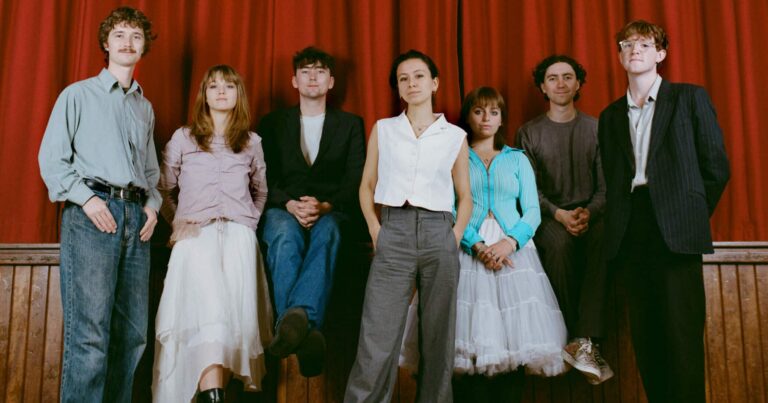
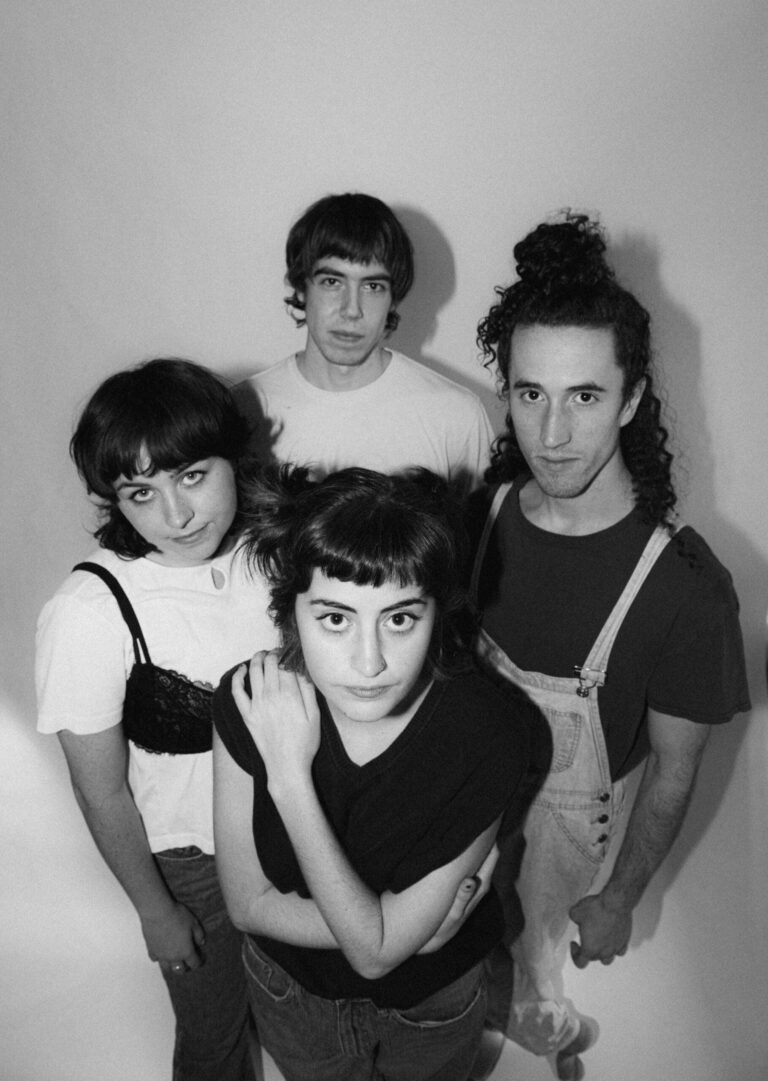
“We wanted to do the first chorus with no time signature,” vocalist and guitarist Isaac Wood said of the new track in a statement. “I went to see Steve Reich do Music for 18 Musicians and there’s a piece where a bar length is determined by the breadth of the clarinet player, they just play until they run out of breath. I wanted to try that with the whole band, where we don’t look at each other, we don’t make too many cues, we just try and play without time—but together.”
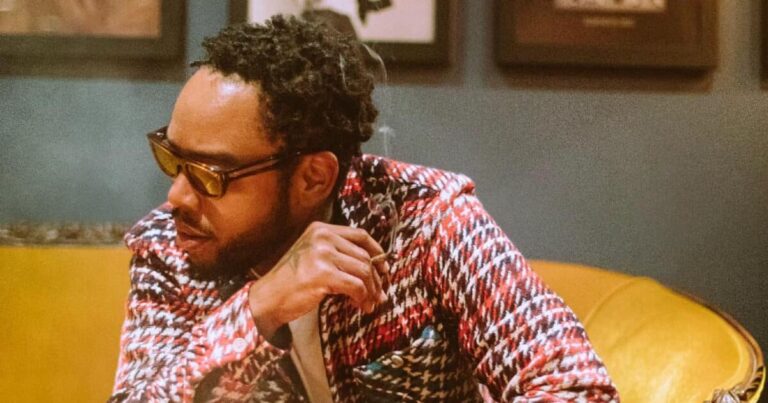
Los Angeles-based jazz saxophonist Terrace Martin has announced a new album called Drones. Out this Friday, November 5 (via Sounds of Crenshaw/BMG), the LP features collaborations with Kendrick Lamar, Kamasi Washington, Snoop Dogg, YG, Ty Dolla $ign, Leon Bridges, Channel Tres, Robert Glasper, Cordae, James Fauntleroy, Smino, Hit-Boy, and more. Check out the new song ‘Leave Us Be’ below, and scroll down for the album’s cover artwork and full tracklist.
“There are touches of R&B, touches of jazz, touches of hip-hop, touches of classical, Cuban music, West African music, house music,” Martin said of Drones in a statement. “You’re going to hear all elements of Black music within this record. It’s not one element I can leave out if I call myself a true Black artist.”
Drones Cover Artwork:
Drones Tracklist:
1. Turning Poison Into Medicine
2. Drones [feat. Kendrick Lamar, Ty Dolla $ign, James Fauntleroy and Snoop Dogg]
3. Leave Us Be
4. Work It Out [feat. Cordae]
5. This Morning [feat. Arin Ray and Smino]
6. Tapped [feat. Channel Tres and Celeste]
7. Reflection [feat. James Fauntletroy]
8. Leimert Park
9. Griots of the Crenshaw District [feat. Kamasi Washington, Robert Glasper and Hit-Boy]
10. Evil Eyes [feat. YG and Malaya]
11. Sick of Cryin [feat. Leon Bridges and D Smoke]
12. Don’t Let Go
13. Listen [feat. James Fauntleroy, Kim Burrell and Robert Glasper]
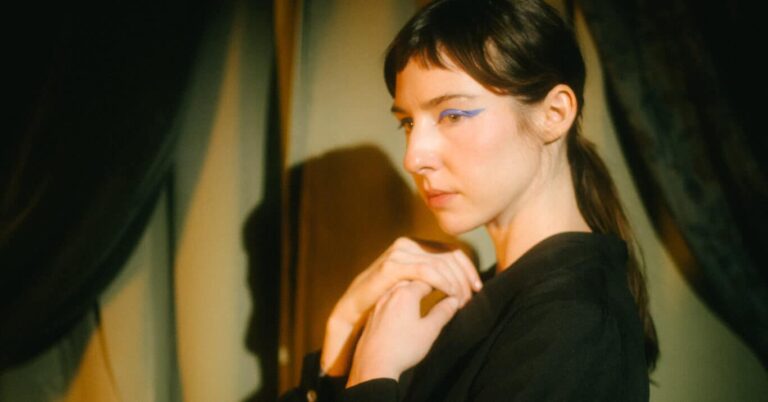
Kristine Leschper, formerly known as the leader of Mothers, has announced her debut solo album. The Opening, or Closing of a Door is set to arrive on March 4 via Anti-. Today, Leschper has shared a self-directed video for the new single ‘Ribbon’. Watch and listen below.
“I found myself wanting to explore love songs, and this is really the framework of The Opening, or Closing of a Door,” Leschper explained in a press release. “‘Ribbon’ is a love song that holds a certain tension—it is the taut line of attempting to read the intentions of another, built with imagery of opposing materialities: a knife meets a ribbon, asking for a kind of vulnerability. A suggestion of something new emerging at this intersection.”
Of the video, Leschper added:
This was my first experience writing and directing a video, as well as designing and fabricating the set. I wanted to play with the perceived reality or unreality of a space, using an absolute economy of materials. When does an environment begin to lose its “realness” and slip into the imaginary? There’s something interesting in the posturing of lip sync in music videos — I wanted to throw the microphone out of frame, as if to say: this is not a real performance, it is a performance of a performance, it’s pantomime! This is not a table, it is a painting of a table! Objects come and go, shifting between hard and soft, flat and dimensional, in a setting that provides little more than an abstraction of interior space.
The Opening, or Closing of a Door Cover Artwork:
The Opening, or Closing of a Door Tracklist:
1. This Animation
2. Picture Window
3. Figure and I
4. Blue
5. A Drop In That Bucket
6. Writhe and Wrestle
7. Carina
8. Stairwell Song
9. All That You Never Wanted
10. Ribbon
11. Compass
12. The Opening Or Closing Of A Door
13. Thank You
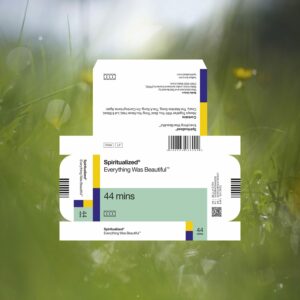
Spiritualized have announced their next studio album: Everything Was Beautiful is set for release on February 25 via Bella Union. Today’s announcement comes with the release of the lead single and album opener ‘Always Together With You’, which was originally released as a demo in 2014. Check it out below, and scroll down for the LP’s cover artwork (by Mark Farrow) and full tracklist.
Frontman Jason Pierce (aka J Spaceman) plays 16 different instruments on Everything Was Beautiful, which also features contributions from over 30 musicians and singers, including his daughter Poppy, longtime collaborator John Coxon, and the Whitechapel Bell Foundry.
“There was so much information on it that the slightest move would unbalance it but going around in circles is important to me,” Pierce said of the album in a statement. “Not like you’re spiralling out of control but you’re going around and around and on each revolution, you hold onto the good each time. Sure, you get mistakes as well, but you hold on to some of those too and that’s how you kind of… achieve. Well, you get there.”
Along with the album news, Spiritualized have announced an extensive world tour running from March to May 2022, including a headline show at London’s Roundhouse. Find the full list of dates below.
This year, Spiritualized reissued their first four albums as part of The Spaceman Reissue Program. The band’s last studio album was 2018’s And Nothing Hurt.
Everything Was Beautiful Cover Artwork:
Everything Was Beautiful Tracklist:
1. Always Together With You
2. Best Thing You Never Had
3. Let It Bleed (For Iggy)
4. Crazy
5. The Mainline Song
6. The A Song (Laid In Your Arms)
7. I’m Coming Home Again
Spiritualized 2022 Tour Dates:
Mar 2 – Utrecht, Netherlands – Tivoli Vredenberg Grote Zaal
Mar 3 – Copenhagen, Denmark – DR Studie 2
Mar 4 – Oslo, Norway – Parkteatret tickets
Mar 5 – Gothenburg, Sweden – Pustervik
Mar 7 – Berlin, Germany – Passionskirche
Mar 8 – Hamburg, German – Laeiszhalle
Mar 9 – Köln, Germany – Gloria
Mar 10 – Paris, France – La Gaîté Lyrique
Mar 11- Brussels, Belgium – Ancienne Belgique
Mar 31 – Dallas, TX, Granada Theater
Apr 1 – Austin, TX – Scoot Inn
Apr 3 – Santa Fe, NM – Meow Wolf
Apr 4 – Denver, CO – Ogden Theatre
Apr 5 – Salt Lake City, UT – The Commonwealth Room
Apr 7 – Seattle, WA – Neptune
Apr 8 – Portland, OR – Revolution Hall
Apr 9 – Vancouver, BC – Commodore Ballroom
Apr 28 – Bath, UK – The Forum tickets
Apr 29 – Cambridge, UK – Corn Exchange
Apr 30 – Brighton, UK – Dome tickets
May 2 – Birmingham, UK – Symphony Hall
May 4 – Gateshead, UK – Sage
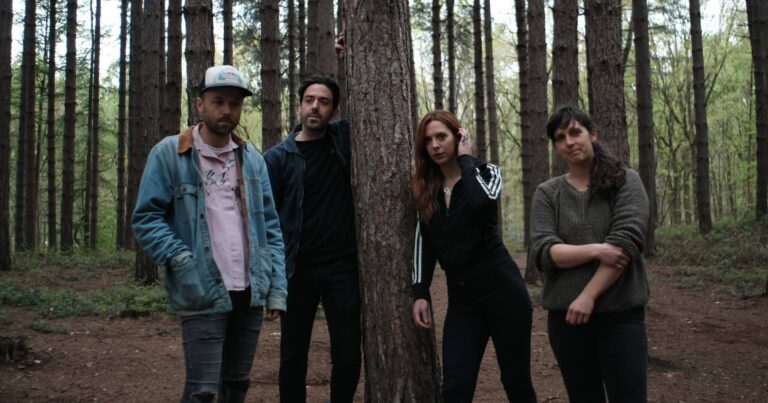
Crake – the Leeds quartet comprised of Rowan Sandle, Russel Searle, Rob Slater, and Sarah Statham – have shared a new single called ‘Lamb’s Tail’, their first for Fika Recordings. It follows a one-off 7” with Saddle Creek, which the band released on the back of supporting Big Thief across the UK and the EU in 2019. Check out a video for ‘Lamb’s Tail’, directed by Ash Scott, below.
“When I was a kid and I was worried or anxious, I would leave it to the fates to tell me the outcome of whatever issue I was currently stuck on,” Sadle explained in a statement. “I would ask my question to the ether and make up some rule to reveal to me my answer. For example, if whilst walking I land at a lamppost with my left foot, the answer is no, but if I land with my right, then yes.”
Sadle continued: “’Lamb’s Tail’ deals with a major question pertinent to me now – in my early 30s, without children but knowing I want them, I worry when. And at the opposite end of life’s flight, I’ve recently got to know grief. And it’s a lot. So sometimes we revert to silly rituals that comforted us as a child, noticing the pushing onwards of Spring, or laughing at the fact that Rob once met a cat he could have sworn he taught drums to.”
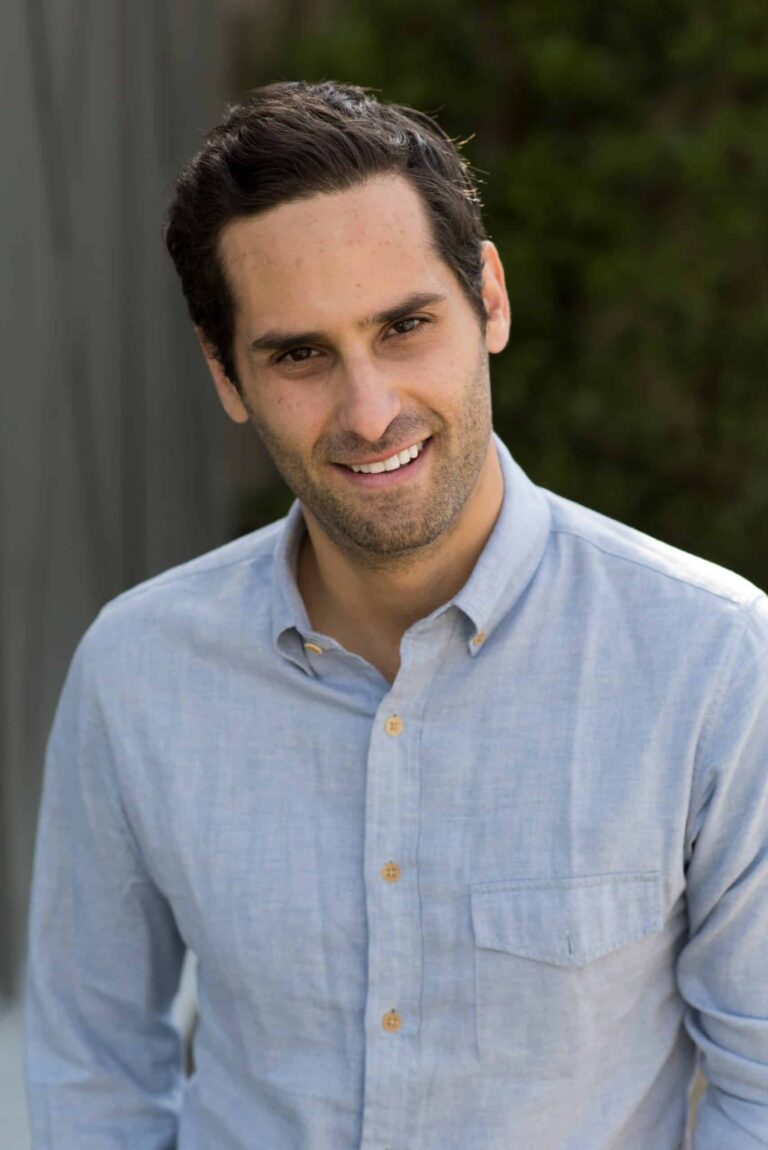
Doug Mand, an American comedian, writer and producer, found his breakthrough while attending NYU and writing sketch comedy with his buddies. From an early wish to become an actor to finding his true calling within writing, Mand has achieved some great things included writing for Emmy nominated show How I Met Your Mother and now his own Netflix sitcom Pretty Smart. However, one thing has been consistent in his career from the beginning, the people who surrounded him when he was writing 3-minute pitches in college are still the same now.
To know more about his journey and how Pretty Smart found its way to shine in the middle of countless Netflix original dramas, we interviewed Doug Mand.
Before the success of your Netflix show. How did you get into TV and how did your career start?
I went to NYU and I met a guy named Dan Gregor who became my writing partner, that also worked on Pretty Smart. We started a sketch comedy group and we started performing at the upright citizens brigade theatre in New York and I thought I was going to be an actor. I was trying to be an actor, but started writing while doing sketch comedy, and then when I graduated, Dan and myself and Adam Pally who is an actor as well, we started to film our own tv show ideas and write scripts, and we were able to sell some of them. And that’s how it started to happen. We created a pitch for a TV Show, and we filmed the first 3 minutes of it because we didn’t have any money. We wrote all script and we sent it to everyone we knew. I had a manager at the time as an actor, and just a couple of people we knew in the business from performing, which wasn’t many, but it made its way up. We were very lucky, and we were able to sell the show to ABC. And from there, we just kind of kept writing. Adam went on and became a very successful actor, Dan and myself went on to writing. We got hired to write on How I Met Your Mother, and from there I’ve been writing ever since.
You wrote for a successful show like How I Met Your Mother, does being part of a project of that magnitude carry a weight on your future projects?
No weight, nothing negative. I don’t see it as a weight, How I Met Your Mother, was the greatest job anyone could ever asked for. I really learned how to write on that show, cause all writing staff was all so talented, so warm and kind to me and to Dan, and over the course of the 4 years there, both of us really learned how to write television, and how to write stories. It was so wonderful, so what I took from How I Met Your Mother was just a sense of, putting together a show that people care about and makes people laugh, and all I got to see the kind of work environment that I would want to create if I was ever to have a show. The kind of office, the kind of writers’ room, that is nice and welcoming, and safe to be yourself. So, I don’t see any pressure, it’s just more like, it helped me. It helped me become who I am, and I just took wonderful things from it. And Kourtney Kang, who I met there, is now an executive producer on Pretty Smart, and so many people from that show read this script before I sold it. It felt like graduate school.
It’s been around 2 weeks since the show premiered. How did the idea for Pretty Smart come about?
It came about very naturally. I think Jack, with whom I created it, who is a close friend of mine, I think he just texted me “What if they’re all the dumb one?”. You know, in a lot of shows there’s always a dumb one, and dumb is not meant to be a negative word, but sitcom dumb. I didn’t want to be pejorative or negative towards these characters, I love these characters. So he (Jack) texted me that, and I immediately texted back, and we started talking about it, and it kind of just flowed from there. We were just like “this feels like a fun show that can be warm, at a time where there’s lots of negative things going on. And it feels like a show that we can do as a multi-cam, which is not necessarily something I have done since How I Met Your Mother. And Jack and I were having a fun time just talking about it, and then we started to write it, and we took it to our agents and managers and said, “We think we have an idea here”, and they were like “Yeah, that’s pretty funny”, and we just set up some pitches. Thankfully was something that Netflix was looking to do and just kind of happened.
Did you have a challenge that felt difficult to overcome over the period of the production?
You know, the pandemic made it very different, we didn’t have any other writers on set with us and we had an amazing writers’ room on this show, and we didn’t film in front of an audience. We were wearing masks and we were wearing visors, and the actors had to rehearse with masks, so you couldn’t see their face, which was a bit of a struggle. It wasn’t terrible, it just made it a little harder. So, I would’ve loved to have the writers there, just because it’s fun to be on set, and to feel the energy, but they were watching on ZOOM while we shot. So those were probably the biggest challenges. But it was a very smooth, kind, nice set. We had great directors, Pamela Fryman, who director almost all episodes of How I Met Your Mother, she directed the first 3 episodes of this show. She was the first person that Jack and I called when we got the order and begged her to do the show, because she’s so sweet and she’s so warm and good, and that energy comes through her throughout all set. And the actors were all very sweet too.
Sitcoms are known for their subjective comedy and writing effective work can be difficult within the guidelines of a studio. Did you feel a certain freedom writing for a streaming platform like Netflix?
Yeah, Netflix was wonderful to work with. They have their own set of guidelines, but it’s not the same as networks. So yeah, they were very supportive, and allowed us to say things that we wanted to say, make jokes that we wanted to make, and it was a wonderful experience to work with them. They were very hands off, so it did feel different, my first time working with them.
Neither Gregg nor Emily are new to this format or the public eye, and they clearly shine throughout, but Cinthya, Michael and Olivia are the definite breakout stars. Was the chemistry and dynamic of this group like what you imagined while writing, or was it even better?
They are all such wonderful actors, and Emily and Gregg come with so much experience that they’re just ready to go. And Olivia, Michael and Cinthya, haven’t done multi-cam before, and they just really took to it, and it was a pleasure. Jack and I felt so lucky to have all of them. And see what they brought to the lines, and as we saw them perform more, we would write to what we felt that they were amazing at. It did change the way we looked at the characters once the actual actors stepped in into those shoes. They became different in our minds, and more full, and more three dimensional.
When it comes to the process of writing a comedy like this, do all the writers in the writer’s room have to agree that the dialogue is funny? How do you guys manage it?
Oh, that’s a great question. That’s what the job of a showrunner is so, you hope that everyone laughs at it but, there’s some jokes on the show, that you can go online and see that some people did not like them, and some people do. You can’t please everyone, so at the end of the day, the decision comes down to me and Jack saying, “We like this or let’s find something better”. But the goal is always to be like “Does all writers room like it?”, and there are a lot of times we did, and it’s a really funny writer’s room, and a lot of the jokes that people are responding to came from the writer’s room of just pitching on ideas.
The entire season built up the Grant and Chelsea relationship, but the real relationship development that we saw was between Chelsea and Claire, and how they were working on reconnecting. Is this love triangle bound to affect them?
Well, without giving too much away, I would say that you hit the nail in the head, this is about two sisters reconnecting, and It think something all of us in the room want to do is, be respectful of that relationship, and not make them petty, we don’t want them to be flip it with one another. The feeling we wanted to come across is that they both care for one another, specially by the end of the season. Hopefully that protects them a little bit as our characters, and hopefully we get another season, and you will see what happens with it. But at the end of the day, their relationship is very important to us, and we want to do right by them, and do right by sisterly bonds.
One of my personal favorite characters must be Solana and how multidimensional she can be but, in a world, dominated by social media Jayden is the accurate representation of how society acts nowadays. Especially when his self-awareness about his own flaws come into play. How deep do you intend to explore this storyline?
Michael is such a gifted performer, and he’s such a joy to give things to, and see what he does with them. We want to keep pushing that character, and see where the stories go, if that leads him to struggle with what he does for a living, we don’t really know yet. We have some ideas. They are all smart in their own ways, and they all have their blind spots, which I also think is very human, we all do. The things we just don’t see as problematic, but everyone else around us does.
If you could have anyone guest star in a second season of the show, who would it be and why?
We had Ming-Na Wen in the first season, she’s a legend, I mean she’s amazing. She’s just a joy to work with and everyone was so excited. I’m a fan of sitcoms, I’m a fan of the classics, so bring back anyone that you don’t expect to see, that was just so good in the medium, is very exciting to me, the thought of bringing someone that maybe haven’t thought for a little while, that is just incredibly talented. You didn’t realize that you missed seeing them on the screen. So, I don’t know if I can give you any specific names, obviously any of the cast of friends, they are all such amazing actors. And then there’s so many great performers out there, I also get really excited about the idea of bringing a dramatic actor into to do something that you wouldn’t expect.
Lastly finish this sentence: “People should watch Pretty Smart on Netflix because…”
Because it’s a feel-good comedy, that will help you escape some of the unpleasant noise in the world right now.
In today’s day and age, you would have to work really hard to have never heard of or been intrigued by online casinos and games. Everyone’s heard about them, but are these online gambling games really worth the hype? The popularity of online casinos has been rising throughout the years and for good reason. For those who like to gamble and live on the edge, online games and casinos are the perfect way to do just that! If you’re still not convinced, here’s a list of reasons why online casinos are worth the hype.
Convenient
The main reason for the recent increase in online casino popularity is their ease of use and convenience. Whether because of the pandemic or not, many people have had to carry on with their everyday life from their homes. If you’re a gamer and you’re stuck at home, going to the casino for a few games is not an option. This is where online gaming sites come in. With online casinos, you can experience the same rush and excitement you get from playing the slots, from the comforts of your own home. With online casinos, you don’t have to worry about a dress code, crowded places, or people staring at you while you play.
Wide variety of games
Real-life casinos have the disadvantage of having a limited amount of available games. If you’re late to a real-life casino, the most popular games might be occupied, leaving you with nothing to do. This is not the case for online casinos. Online casino sites offer an endless variety of games available to all. This is great for gamers looking to try something new or for beginners not knowing where to start. Even if you think you’ve exhausted every outlet, there are still plenty of games out there! If you’re not registered to Gamstop, don’t fret! There are plenty of high-quality games out there for you that don’t revolve around Gamstop, so you can keep the good times rolling.
Accessible and easy to use
For many people, venturing to a casino in person can be too much to handle or not an option at all. Whether because of being unable to leave the house, a fear of crowds, or the pressure to pay and play, the real deal can be stressful for many. Not to mention that game machines can be hard to figure out and operate in the real world. With online casinos, you can game whether you’re handicapped or anxious with ease. Online casinos have made it so that anyone who wants to, can play around easily and with minimal barriers. Whether you live in the desert or the north pole, if you have internet, you can play!
Choose your currency
Another aspect that online casinos have over in-person ones, is their customizability. Cash-out currency can be fixed in many in-person casinos. If you want to play and bet with money, you need to have a currency that the casino is willing to accept. This can put a spanner in the works if you came to play with the “wrong currency”. With online casinos, you can find a site that works with whatever currency works for you. Those who trade in bitcoin and other popular cryptocurrencies, often prefer online casinos to the real deal because of this. Whether you prefer crypto or Australian dollars, there’s an online casino out there that is perfect for you.
Plenty of bonuses up for grabs
Last but not least, online casinos offer plenty of rewards and bonuses as incentives. In regular casinos, the chances of you winning big are pretty small, let alone getting prizes while you play. With most online casinos, you can count on small to substantial bonuses from the moment you sign up. These sites are likely to reward longtime users, successful players, or lucky newcomers with coins, tokens, or other prizes. These bonuses help to set you off on the right foot and make your gaming experience more fun and rewarding. With incentives like these, it’s hard to resist the pull of these online gaming websites.
Hopefully, after reading this list, you can better understand why online casinos are more popular these days. Convenience and accessibility are at the top of the list of pros about online casino gaming. They provide a diverse variety of games to choose from and multiple payments and playing options. You can choose both when you want to play and how with online casino games! To sweeten the deal, don’t forget about the bonuses and rewards up for grabs to make your experience more enjoyable. As fun and fulfilling as online casinos can be, it’s important to remember that this kind of gaming is most fun when it’s a hobby! Stay safe and happy gaming!
Grace Repasky and Maggie Geeslin have been best friends since eighth grade, when their shared appreciation for indie music led them to form a band called Lunar Vacation. After making demos in their bedrooms and playing as many shows as they could in their hometown of Atlanta, they added Matteo DeLurgio on synths, Connor Dowd on drums, and John Michael Young on bass, and self-released two EPs, Swell and Artificial Flavors, shortly after graduating high school. The group’s vibrant, dreamy sound – which they used to call “pool rock” because the members were listening to a lot of surf rock but there weren’t any beaches near them, only pools – ended up garnering a fair amount of critical attention and millions of organic streams, but for a while, it seemed like that might be it for Lunar Vacation. Their bassist left in 2019, and though they continued touring, tensions were high, and their musical future together was uncertain.
They decided to take a much-needed break, which proved crucial in bringing the group closer together and turning Lunar Vacation into a more collaborative effort. While Geeslin was working in a record store, she met Daniel Gleason of Grouplove, who helped refine the band’s lo-fi sound by capturing it in a studio setting. The band recorded ‘Unlucky’ with him and released it in early 2020, the first in a series of singles leading up to their debut album, Inside Every Fig Is a Dead Wasp, which was produced by Gleason and came out last Friday via Keeled Scales. It’s an impressive and emotionally potent record that retains the band’s original appeal – their DIY charm, their knack for blending pop melodicism with psychedelic textures – while making these qualities fit into a more dynamic and effective whole. As a result, it’s harder to gloss over the content of the songs, which is more uncompromising in its expression of self-doubt and hopelessness. They spend much of the album trying to find the right words, but it’s not until the final track, ‘But Maybe’, that the truth comes pouring out. “I feel like I am truly ready to face it all on my own,” Repasky sings, and all doesn’t sound so daunting.
We caught up with Lunar Vacation’s Grace Repasky and Maggie Geeslin for this edition of our Artist Spotlight interview series to talk about their friendship, the band’s journey, the making of their debut album, and more.
What was your impression of each other when you first met?
Maggie Geeslin: We met through a mutual friend – one of my childhood best friends went to middle school with Grace. And I knew that Grace liked music and I was into music, so I think the first time we hung out, I made Grace sing [Maggie laughs, Grace covers eyes] for me and my mom. We had this little electric keyboard in our basement, and Grace played ‘Say Something’ by – who sings that?
Grace Repasky: A Great Big World and Christina Aguilera.
MG: Yeah. Just like crooning in my basement, and we were like, “Yay!” [laughter] And then we just kind of stayed friends.
How did you convince them?
MG: I don’t know, I think I was just like, “Do it, do it!”
GR: Yeah.
MG: I feel like I can convince you to do things.
GR: You can.
That was right when you met.
GR: Yeah, it was like the first time we actually hung out.
MG: I think we were just having such a good time that Grace trusted me enough to just sing. Also, you probably – you like singing.
GR: I love singing. I definitely was like, I get nervous and scared, but I think you guys were hyping me up. So we had that fun hanging out in eighth grade and we went to the same high school, and then didn’t really hang out until sophomore year when we were in the same guitar guitar program and we were in a songwriting group together. That was like 2015, so we were obsessed with Twin Peaks and MacDeMarco and all those garage rock bands, and not a lot of other people listened to that music in our school because it was a small Catholic school.
MG: Our friendship is and always has been grounded in music, because even when we weren’t really friends for the beginning of high school, Grace would come up to me in the hallway and be like, “Oh, have you heard of Father John Misty?” or something. So we were always music friends. Grace was my music homie. And then once we had guitar class together, we had that every day so we’re spending time together, playing music every day.
GR: And we went to shows together. We were like, “Oh my god, I want to play a show so bad, they’re so cool.”
MG: Yeah, we were laughing the other day ‘cause we recently looked up Twin Peaks and Mac DeMarco, and like, we just wanted to be garage rock boys that got plastered on stage.
GR: Literally. We just wanted to be men.
MG: [laughs] We just wanted to be rock and rollers, and that was just so different from the environment that we were living in in the South and going to Catholic school, like a very conservative, uniform environment. So music, and particularly that music scene, was escapism, I guess. Like, We’re wearing plaid skirts and polo shirts every day, but let’s talk about Mac DeMarco.
Did you realize at the time that it was a kind of escapism?
GR: I think so, definitely. I remember, as cliche as it sounds, when things got hard and rough, I always found a nice peace just going on YouTube and watching, like, people’s Audiotree sessions or KEXP or any of that. Like, Wow, there’s a whole other world out there that I haven’t even stepped foot in. Because no one talks about a feasible career in art, it wasn’t really encouraged at all, so this was like, people are making it work, and they seem happy and they’re creating things that are really profound, to where it has an effect on two 15 year olds and makes them want to go pursue things.
MG: Yeah, and our school was like college prep, technically, so everything was focused on getting you to go to college – I think 99% of our graduating class went to college. I think it was just this lens where we’re like, Oh my god, there’s so many other possibilities. And no one ever talked about making a living off of art, or even just dedicating time to art, or having multiple jobs so you could pursue your passion. It was very much a streamlined path to getting a job and making a lot of money.
GR: And having a family and going to church.
MG: Yeah. I think we did realize it was escapism.
GR: That’s why it’s so special, you know?
How much of your friendship at the time revolved around music?
GR: Pretty much all of it. Because our friends that we found later that would come to shows with us and we’re still best friends with now, it all just centred around going to shows.
MG: Or certain indie bands – like, if there’s someone in the school that liked indie music, everyone knew. We would scope it out like, “Oh, I heard this person likes…” It was like the indie pop wave, so it was like, Two Door Cinema Club.
GR: We weren’t the only kids that liked indie music at our school, so we find our little group, and it definitely bonded all of us. I would say our friendship, and this kind of happened with the whole band too, music was first, and then that was the catalyst for friendship. It wasn’t really the other way around. So maybe that’s why we’ve stuck together so long.
When you first started playing shows, did it feel like big decision at the time, or like an act of rebellion?
GR: Yeah… I think so.
MG: Which was also really exciting, because it’s like we had our own little thing that no one else – there were musicians in our school, but they all played like open mic nights, and it was like football players who would sing country songs, basically. But there was never like a band in our environment. We didn’t know that there’s such a thing as a local scene, and we didn’t realise there were other kids our age in bands. That’s something we discovered after the fact. And the boys that are in our band, we all went to high school together but they’re older than us. We never hung out with them, and we weren’t friends with them beforehand, so it was also strange because it’s like, we’re working on this project with these people that we see every day but we’re not like really friends with them.
GR: Yeah. It’s such an odd… Talking about it, I’m like, how did we even become a band? Like, we would see our drummer, Connor, in the hallway, and we would be like [coyly] “Hey.” [laughter] We literally did not talk to any of them, and then we would we just go to my house and practice and play a show. I remember the music-making and writing process felt very comforting to me, because I was just on my bed with GarageBand singing quietly so my parents couldn’t hear-type thing. But playing shows definitely was like rebellious, because we would go out Wednesday nights and we would stay out until like 11:30 playing at some venue downtown and my parents were like, “I don’t want you going down there, it’s too scary.” And we were like, “We have to. We’re rock stars.”
MG: And most of the time, at the beginning, we didn’t know that you were supposed to get paid for shows. And we would always have to leave early because in our state you can’t drive past midnight if you’re under 18, so we’d always have to be beating the driving curfew, so we would play, pack up, and then dip. And then, I think like six months into playing shows, our guitar teacher was like, “You’re supposed to be getting paid for these shows.” [laughter]
MG: We were like, “What? What are you talking about?” We would have to sell tickets [Grace laughs] – we would stand in the hallway and be like, “Hey, want to come to our show?” And our teacher was like, “Are you guys getting paid for this?” We’re like, “No?”
GR: It felt so sus, because I had like a wad of tickets, pulling it out of my backpack like it’s drugs or something.
When Connor and Matteo joined the band, how did the dynamic change, and how did your relationship evolve over time?
MG: I would honestly our friendship really solidified, where we’re like deep understanding connected friends, really only after we made our album this past year. We spent a lot of time together and toured together and had a great time giggling all the time with them, but I personally didn’t feel as deep of a connection as I do now until we made our album. It was was just such a vulnerable time for everyone, it was pandemic lockdown, we’re spending 12 hours a day in this tiny studio, and everyone was like a little bit unhinged, emotions were very high. But we were also dedicated to making this thing together, and I feel like that is what really really unified us.
GR: We used to be a five-piece, and then our bassist left in 2019 and then all of us decided to go back to college, take a break from touring and take a break from music in general. I was starting to lose my steam and my will for it, I was like, “I don’t even want to do this anymore.” The dynamics in our band were not good. So I think that break helped us really figure out that we do love being together and we want to keep doing this. It really is just creating something to spending time together which really solidified all of it, where I was like, “I’m going to know these people forever, and I love them so much.” Our first two EPs, we didn’t all write that together. It literally was not a collective effort. At least the first EP is like my child, like I love her so much, she’s the best. But the second EP, it just doesn’t have the same amount of emotion and consideration as this album does. So, I think playing shows on those two EPs, it did feel a little weird because our dynamic was weird. When we were playing all those songs, it was hard to really get into them because it’s like, Maggie’s playing a guitar part that she didn’t even write or record, and that was the same thing for everyone else.
So when we all were like, “Do we even still want to be doing music? What are we doing?” that was when we all were like, “Let’s just give another shot. Let’s just go and try to make music all four of us together.” And it just worked out so well. There is so much trust that started building there, from a mission standpoint but also just as friends. Because if you’re making music, especially making a record together, it’s literally like being in a deep, emotional relationship with four people. But the best thing was when we all were like, “Okay, we’re putting everyone’s ego aside and we went into the studio and everything we’re going to do is going to serve the song.” And just over time, it’s just grown into something really beautiful, and it’s so amazing, because you would think that it would be like that from the start. But it started so strangely, but it’s morphed into something so fantastic. It feels like we just became a band yesterday – all the excitement is there.
MG: We always had that sacred excitement for music, and once it started dwindling, like Grace said, that’s when we’re like, “I don’t know if we should even do this, because it doesn’t feel as pure.”
I wasn’t even aware you were on a break. How long did that last?
GR: Not a lot of people are.
MG: We were still playing shows, too.
GR: We were playing sparse shows, yeah, but in terms of doing music full time, it was kind of like a halt. I guess we’ve literally never talked about how we had a big break and a lot of doubt and almost stopped making music.
MG: We still were doing tours that we had committed to, but I think we set aside the idea of making an album. Once we made ‘Unlucky’ together, that was the first time we went in an actual studio, not a home studio, which inherently changes the dynamic because we’re not running the machines. That’s when we met Dan, who produced the album, during this break time, and that was definitely huge. I feel like I’m telling everyone that Dan and [engineer] TJ [Elias] saved our band.
GR: They kind of did, in a way. They instilled so much confidence in us that we’ve never had before. It was just really magical and it came from such a pure place.
MG: Dan’s been in bands for so long, and he’s like Grace and I, where it’s like, we are so excited about the emotion behind the music and any songs we like. So when we toured the studio, that was probably in August during our break, but we’re like, “We know we want to make this single, and maybe make an album down the line.” And we met Dan, and the studio was tiny so we toured it for like 10 minutes, and then we sat down and told him our whole situation and how we were feeling about music. It was kind of like band therapy.
GR: It literally was!
MG: And he was just like, “Let’s try to make a song.” So we made ‘Unlucky’, and then the next one we made was ‘Peddler’ in January 2020, and that was when we’re like, “Okay, shit, we have to make an album.”
Grace, could you talk about your headspace going into the album? Did you find it hard to channel or explain what the songs were about to everyone?
GR: Going into the studio, I was definitely in a really bad headspace. Even finishing the record, I was super depressed and my anxiety was at an all-time high. That was kind of the most unhinged I’ve ever felt, emotionally. I just felt like an intense wreck all the time, and honestly, I think that’s what helped me write most of the lyrics that are super honest, to where sometimes I was maybe second-guessing them and being like, Oh, this is too obvious or too raw or I sound too whiny. Dan and our whole band were like, “No, I love it,” like you should keep those lyrics and all all that stuff. Looking back on it, it was really great, but I do remember there were some days where I was like – you know when you have those really dark thoughts where you’re just like, I’m gonna go home and never return. Like, I remember we were playing something one time and I was like, I don’t want to be alive. [to Maggie] Don’t stare, I’m sorry! [laughter] It was just really emotional and bad.
MG: Yeah.
GR: It’s like, I am the worst and I hate myself and literally I can’t see any out ever, you know? Our last song that we have on that record was literally written after a really bad manic depressive episode where I, like, drove somewhere really far – it was just not good news. But I think making the record was a big healing process, because I look back and I’m like, Whoa, I overcame a lot of those things by being with people I cared about and making something that I really believed in.
Also, it’s hard because a lot of the songs are about this relationship I had two or three years ago, which is insane, but it was one of those things that lasts a short amount of time but then they kind of drag on for another year or two, so you never really had a good cut off point. And I think when we were in the studio I was in that vortex of just thinking about what could have happened and why it didn’t work out and if it was my fault, so it was kind of like a trip to the past. I was like, Wow, I feel like I’m 18 again. It was emotionally intense to hash out those feelings again and then also on top of feeling really, really low. But I think that all of us were all going through it, you know, and that’s what made us all super vulnerable and willing to try a lot of things. Willing to just kind of be like, “Fuck it, it can’t get any worse. Let’s just do whatever and go crazy.” But I don’t feel that way anymore, which is good. No more bad vibes from me.
But it was definitely very emotionally taxing, and there was all this insecurity around my writing, too. It was very bad imposter syndrome, I was like, I don’t write songs, I don’t do music, I can’t do any of this stuff. Even if I did write something once that was good, it wasn’t me,it was a fluke accident or something. But I think it was just building confidence about writing, too, which is really scary, you know, you’re creating something and letting the whole entire world critique it. And especially if you’re not mentally stable, you’re like, Oh my god, this feels like the end of me. I don’t really know what the question was because I kind of just went on a crazy little thing, but I hope that answers something. [Maggie laughs] But long story short, I was really depressed and a lot of it just got put out in the music.
Maggie, did you want to add something? It looked like you were thinking or processing things and I wondered how you experienced that time, if you’re comfortable sharing.
MG: Yeah, I mean, obviously it was hard for everyone. I started going to therapy while we were making our album, maybe right after we had finished it. I think it was the beginning of a lot of stuff in our personal mental health journeys. We were just working ourselves so hard to make something that we believed in and to finish college, and I was just thinking, Wow, it’s actually happening now. I guess that ties into our record finally coming out, it’s like a very sweet release of emotion. The first few years of our band we were in high school and then the beginning of college, which is like emotional wreckage time, so this album feels like it tied up a lot of loose ends.
GR: It’s like full healing mode.
MG: I think we really learned how to be open while trying to find closure on so many things.
GR: Wow. That was deep [laughter].
MG: It’s almost like it had to be made to move on to a better place, you know.
Can you each tell me one thing that you find inspiring about the other person?
GR: Oh my god.
MG: I’m gonna cry.
GR: I will too.
MG: I have mine.
GR: Okay [laughs].
MG: Ever since I met Grace, even in eighth grade, Grace has always been so emotionally open with people. Before Grace and I were ever even really good friends, everyone in our grade knew about Grace’s crushes, because Grace was like, “Oh my god, I love this person.”
GR: [laughs] So embarrassing.
MG: Even if you didn’t really know Grace, you knew what they were into, because you just unapologetically love things, whether it’s people or art or bread and cheese or something. That’s always been so inspiring to me. And definitely just in my own creations, things that I write or whatever, Grace always encourages me to be emotionally open and not apologetic about it. Which is interesting, because Grace is always like, “Oh, I’m so shy.” [Grace laughs] But I don’t think Grace is really shy.
GR: I’m not shy when I’m with people I’m comfortable with.
MG: Yeah. But definitely just the excitement about anything. Grace gets excited about so many things, it’s so pure.
GR: Aww. That’s so sweet.
MG: Now compliment me. [laughter]
GR: Probably the biggest thing is that you’re one of the kindest people I’ve ever met, ever. I think it’s almost impossible for you to be mean to anyone, to have any kind of malice towards anyone. And that’s been something I’ve really looked up ever since I’ve been friends with you, because you always want to approach things in a very peaceful, kind, chill way. Even when we go into conflict, I’m always trying to be like “Fuck this!” [laughter] I go insane and unhinged, and you’re like, “No, no, peace, think about it from this side.” And I think you have a really pure appreciation for art, which is also probably why we’re such good friends. I think we can just talk about a lot of things, and you really have an interesting, positive outlook on things. I think you’re really warm. You make everyone insanely comfortable and it’s just really easy to be around your good vibes.
MG: Thank you.
GR: I love you. [They hug]
I have one more question, but it’s kind of just taking a line from your song ‘Mold’ out of context and applying it to the release of the album. And that’s: “Are you in love with what you’re making?” Or I guess, what you’ve made.
GR: Wow.
MG: I’m so happy you picked that line because I thought people would look over that one. Are you asking if we’re in love with what we’re making?
Yeah.
MG: Yeah. And I think that’s because I know all the people that worked on it, even Leo [Horton] who did the artwork, just every step of the way. And our label, we chose them because we could tell they’re good people who really put music first. Everyone who’s been involved with it has been so understanding and open, and I just know we really worked hard to have good intentions while making everything. It feels very pure, and I love it because of that.
GR: Yeah, definitely agree. I’m insanely proud of all of us and our capacity grew so much, in terms of respect for each other creatively and just the overall love for each other. We definitely spent a lot of time and energy carefully choosing who we have around us, because I think Lunar is a very sacred, special, pure thing still and I want to be able to protect it as much as possible [Maggie laughs] from, like, any bad things out there in the music industry. I don’t want anything to corrupt it, really. It feels really… It’s hard to put into words, but the overall feeling is like an insane amount of gratitude and appreciation, just in our team, but then also on the other side that people actually listen to our music and connect with it in any kind of way and want to see us play live or want to ask us questions about our album. That’s just the coolest thing in the entire world. It’s like, how could you not love all of it? And everything’s not perfect, even on the rollout there’s been some bumps here and there, but overall, we’re just really lucky to be able to do this. I don’t know…
MG: A lot of love.
GR: A lot of love. It’s all love. [laughs] So, yeah… Just all love and appreciation. Life is beautiful. We’re lucky to live it.
This interview has been edited and condensed for clarity and length.
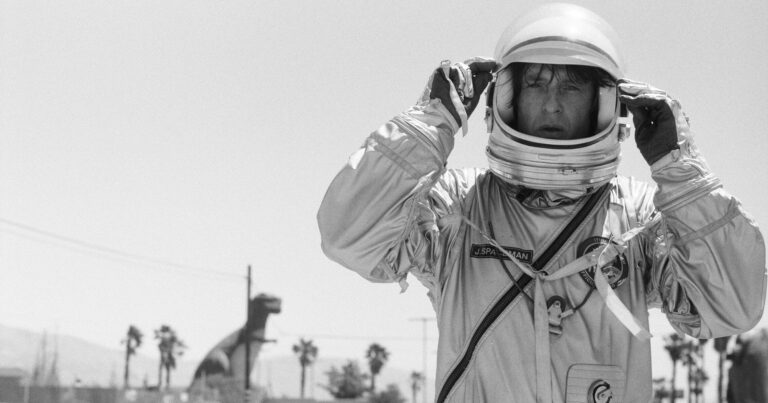
Radiohead have unveiled a new video for ‘Follow Me Around’, the second archival track to be released from their upcoming Kid A/Amnesiac reissue Kid A Mnesia. The clip was directed by the band and stars Memento actor Guy Pearce. Check it out below.
‘Follow Me Around’ will appear on Kid Amnesiae, the collection of outtakes and alternate versions from the Kid A and Amnesiac sessions that comes with the reissue. The track was featured in the 1998 Radiohead documentary Meeting People Is Easy, and in 2017, Thom Yorke and Jonny Greenwood performed it together at a benefit show in Italy. The reissue will also include another previously unreleased recording, ‘If You Say the Word’, which got a music video in September.
Online casinos have been around since the late 90s and have become a very popular way to play slots and casino games like Blackjack and Roulette. For over a decade, very little changed. Most casino sites looked the same, and there were no real innovative brands doing anything different from the rest.
Fast-forward to the 2010’s and online casinos got a makeover. More new sites began to launch, offering something bigger and better than before. This has become even more prevalent in the last couple of years, with new online casinos using ground-breaking activity to improve the entire gaming experience.
So how are these new casinos changing the online gaming culture? What features do they have that are different to what we had before? Keep reading to find out the answers.
Bigger Bonuses For New Players
A welcome bonus is something new players are rewarded with when they register and make their first deposit. It used to be a couple of free spins, but now it’s so much more than that. Most new casinos are now offering large deposit matches on top of some bonus spins.
It’s not even unusual to see bonuses that offer 200% or 300% of the initial deposit. In fact, large bonuses at new casinos have become so popular that there are now comparison sites aimed at finding the best options. You can see an example here.
Just remember to always read the terms and conditions before accepting any welcome bonus so that you understand the limitations and rules.
More Games Than Ever Before
Gone are the days of small selections of classic slots. Forget about 3-reel games with cherries and sevens symbols. Game development is one of the biggest changes in the online casino world, and it means that new brands are launching with hundreds, if not thousands of titles.
There are slots, table games, jackpots, and even live casino options where you can now interact with real dealers and watch games unfold on camera. Perhaps most impressive of all is the fact that each of these games can now be played on every device, including Android and IOS phones.
Responsible Gambling
The online casino industry gets a lot of criticism, but new casino sites are breaking the mould. In fact, the entire gaming culture has shifted and now responsible gambling is promoted on every online casino you visit. This is down to better regulation and rules around online gambling to ensure that players are protected.
There are plenty of new tools available to players to keep their gambling habits fun and under control. These include deposit limits, cooling off periods or complete self-exclusion. There are now plenty of responsible gambling features and support, something that wasn’t around so much just a few years ago.
What does the future look like for new casinos?
One thing is certain – new casino sites will keep finding new ways to impress and develop. The improvement in live casino is just one example of how things are progressing, and virtual reality is set to play a huge part in casino gaming in future.
The importance of mobile casino will keep taking precedence and we expect to see even more impressive mobile features in the future. The online casino industry is showing no sign of slowing down, and the new brands are at the forefront of it.