Earlier this week, Japanese Breakfast‘s Michelle Zauner performed‘Glider’, her song for the Sable soundtrack, at the Summer Game Fest livestream. A new trailer for the upcoming game has now been released, featuring a portion of the new song ‘Better The Mask’, which Zauner called “the best song I’ve ever written.” Check it out below.
Sable is set for release on September 23, 2021. The soundtrack, which is also out that day and will be available as a double-LP, 33-track release, marks the first project Zauner has composed and produced entirely on her own. “special thanks to @jorgeelbrecht for mixing Alex Santilli of @SpieceHouseSound for mastering, Eric Bogacz for additional engineering and Molly Germer, Veronica Jurkiewicz, Carolina Diazgranados for making beautiful sense of my sloppily written arrangement,” Zauner added.
In related news, a new version of Japanese Breakfast’s ‘Be Sweet’ features on the new trailer for The Sims 4 Cottage Living, sung entirely in Simlish. The singer-songwriter released her third album, Jubilee, earlier this month.
Ok I know you're all tired of me but there is a beautiful new Sable trailer featuring a portion of the best song I've ever written. This will be the first project I've composed and produced entirely on my own. The game and soundtrack comes out 9.23.21 https://t.co/MkS1hyAsHO
Bookings in holiday parks in Suffolk have increased considerably following the success of the Netflix film The Dig. The film by director Simon Stone was released in May this year and has already received a score of 87% on Rotten Tomatoes as well as 73% on Metacritic. The plot is largely based on the real-life discovery of the Anglo-Saxon ship-burial at Sutton Hoo. The ship is considered to be one of the most important recent archaeological findings in Britain, containing valuable Anglo-Saxon artefacts.
Ralph Fiennes and Carey Mulligan star in the historical film which takes place near the real excavation site in Suffolk. The Dig has become so successful that many people have decided to spend their holidays in Suffolk, taking in the magnificent coastline, pretty local villages and beautiful natural reserves.
Holiday bookings spike in Suffolk where the film took place
Holiday parks have noticed a large increase in bookings due to the popularity of the film. Many holidaymakers have chosen to stay in accommodations along the coast. According to Park Holidays UK the stunning landscapes shown in The Dig have inspired people to visit their Suffolk parks. There are five parks by Park Holidays UK in various locations on the coast, which offer the perfect sea-side holiday spot with a bit of history.
Park Holidays UK director Tony Clish explains: “Our Suffolk parks have always had a large and loyal following, but Netflix has done a magnificent job in publicising this enchanting area to a much wider audience. Our staff are being briefed so that they can advise guests on where to go to discover the filming locations used by Netflix both along the coast and inland.”
Apparently, some guests have even started their own little excavations. Clish noticed that “people seem to have been doing a bit of digging themselves, and identified our parks as among the best placed for making scenic discoveries.”
Is The Dig based on a real story?
The digging is inspired by the story of amateur archaeologist Basil Brown who makes an amazing discovery on the land of Edith Pretty. The ship burial war largely undisturbed when it was discovered and is thought to be the burial place of Rædwald of East Anglia. The finding was so significant that experts have been excavating the surrounding areas ever since.
Many historical facts in the show are accurate, however some things were changed for dramatic purposes. Rory Lomax (Johnny Flynn), for example, is a fictional character, which makes his relationship with Peggy Preston, played by Lily James, fictional as well. Besides Rory Lomax all other characters in The Dig are based on real people who were a part of the story in the late 1930s. Some dramatic scenes such as the one where a burial mound nearly collapses on Basil are not historically documented.
Among the treasures that were found in the burial ship at Sutton Hoo were a shield and a sword. The film not only offers some insights to a fascinating story, but also shows the true beauty of the stunning landscapes in Suffolk.
Sleater-Kinney are back with a new album. Path of Wellness marks Corin Tucker and Carrie Brownstein’s first album as a duo and their first without Janet Weiss since she joined the band in 1996; the drummer left before the release of the St. Vincent-produced 2019’s The Center Won’t Hold, explaining that she no longer felt like “a creative equal” in the band. Out now via Mom + Pop Music, Path of Wellness is also their first self-produced Sleater-Kinney album; the duo wrote and recorded the album during quarantine and enlisted local Portland musicians to help “bring their vision to life.”
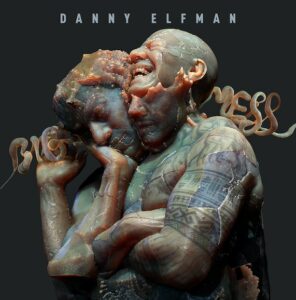
Danny Elfman has returned with his first solo studio album in 37 years. Big Mess is out now via ANTI-/Epitaph and includes the previously released singles ‘True’, ‘Happy’, ‘Sorry’, ‘Love in the Time of Covid’, and ‘Kick Me’. Created during lockdown in 2020, the 18-track LP features contributions from drummer Josh Freese, bassist Stu Brooks, and guitarists Robin Finck and Nili Brosh. “Once I began writing, it was like opening a Pandora’s box and I found I couldn’t stop,” Elfman explained. “None of it was planned. I had no idea how many songs I would write but from the start, it quickly became a 2-sided project with heavily contrasting and even conflicting tones.” He added: “I knew from the start that this wasn’t going to be a neat, easy-to-categorise record. It was always destined to be this crazy cacophony because that’s who I am. The ‘Big Mess’ is me.”
King Gizzard & the Lizard Wizard have released their latest full-length album, Butterfly 3000, via their own KGLW label. It marks the psych-rock band’s third new album in less than a year following February’s L.W. and their 18th studio album overall. Recorded in the band’s homes during the pandemic, the album’s 10 songs “all began life as arpeggiated loops composed on modular synthesisers,” according to the band, who described the album as “melodic + psychedelic.” The record’s cover artwork is an autostereogram designed by regular collaborator Jason Galea.
BLACK METAL 2 is the sequel to Dean Blunt’s 2014 album Black Metal. The experimental artist – who is also one-half of Hype Williams, one-third of Babyfather, and has collaborated with A$AP Rocky, Mica Levi, and many others – announced the album just days ago with no promotional singles, and it’s out now digitally via Rough Trade and on vinyl, with physical copies arriving on October 22. The LP’s cover art appears to be a nod to Dr Dre’s album 2001.
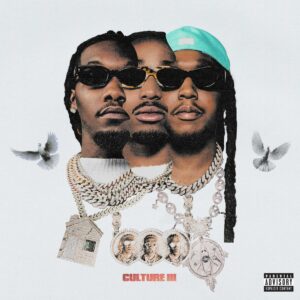
Migos have delivered the long-awaited follow-up to 2018’s Culture II. The Atlanta trio’s latest contains a total of 19 tracks and features collaborations with Drake, Cardi B, Justin Bieber, Polo G, Future, and NBA Youngboy, as well as posthumous guest spots from Juice WRLD and Pop Smoke. It was preceded by the singles ‘Straightenin’ and last year’s ‘I Need It’, as well as ‘Avalanche, which they debuted on The Tonight Show Starring Jimmy Fallon earlier this week.
Marina has issued her fifth studio album, Ancient Dreams in a Modern Land, via Atlantic. The LP, which follows 2019’s Love + Fear, was previewed with four singles, ‘Man’s World’, ‘Purge the Poison’, the title track, and ‘Venus Fly Trap’. Marina Diamandis – who previously performed as Marina and the Diamonds – wrote every song on the album and co-produced five of its 10 tracks. Talking about how the COVID-19 pandemic affected the themes of the album in an interview with Billboard, the Welsh singer-songwriter said: “A lot of social problems have been unveiled for exactly what they are in the pandemic, and that’s definitely mirrored in some of the songs.”
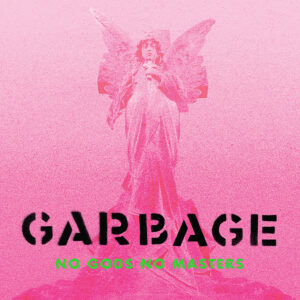
Garbage have released a new album called No Gods No Masters. The follow-up to 2016’s Strange Little Birds was produced by longtime collaborator Billy Bush and was preceded by the singles ‘The Men Who Rule The World’, ‘Wolves’, and the title track. “This is our seventh record, the significant numerology of which affected the DNA of its content: the seven virtues, the seven sorrows, and the seven deadly sins,” the band explained in a statement. “It was our way of trying to make sense of how fucking nuts the world is and the astounding chaos we find ourselves in. It’s the record we felt that we had to make at this time.”
Other albums out today:
Chloe Foy, Where Shall We Begin; Polo G, Hall of Fame; Islands, Islomania;Pi’erre Bourne, The Life Of Pi’erre 5; AFI, Bodies; Azure Ray, Remedy; Maroon 5, Jordi; Jim Ward, Daggers.
It’s been a strange a year in music so far. This feels especially good to say, because using the word “strange” to refer to anything that happened in the first half of 2020 felt like a gross understatement. With many artists either laying dormant or using the past year to write and refine new material, there’s been a notable lack of major releases in the past few months – and if all the shows and festivals scheduled to take place later this year are any indication, we should be getting a lot of exciting music in the second half of 2021. But this doesn’t mean there hasn’t been plenty of great music to take in already: we were treated to some outstanding debuts, long-awaited returns, and a lot – a lot – of post-punk (for better or for worse, much of it is good).
But just like those post-punk records, genre is hardly what’s defined the best music of the year so far. As things start to open up, there’s a sense that the music that’s being released reflects these changes, whether intentionally or not. Talking about the timing of the release of her new album in our interview a month ago, Arooj Aftab spoke of there being “a very tiny sentiment of hope, a very small sliver of it,” like “a subtle sliding open of a door that has been closed for a while.” This seems to be the prevailing sentiment that connects many of these albums, and we can’t wait to see what the rest of the year has in store.
Here, in no particular order, are the 30 best albums of 2021 so far. (Early June releases aren’t included, but you might want to check out that new Japanese Breakfast album.)
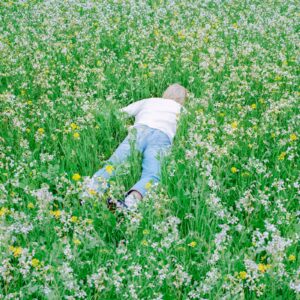
“So tell me how it felt/ When you walked on water/ Did you get your wish?/ Floating to the surface/ Quicker than you sank,” Porter Robinson sings on ‘Get Your Wish’, the first in a series of singles leading up to the release of his sophomore album, Nurture. Touted as the wunderkind of the EDM scene at age 18, the Atlanta-born EDM producer’s meteoric rise to international stardom was followed by an intense period of depression and creative drought, where he struggled to overcome feelings of self-doubt and questioned whether he’d ever make music again. Nurture doesn’t so much mirror the highs and lows of success as it does the pure rush of experimentation and discovery, like stepping into the outside world for the first time: its infectious choruses and pyrotechnic synths sweep you up in a tide of euphoria, while its ambient, minimalist passages pull you back down, gently floating in a stream of incoherent thoughts and disembodied memories. Robinson’s vision is so bright and kaleidoscopic, so sincere in its expression of both joy and sadness, that it’s impossible not to immerse yourself in this wonderfully strange, life-affirming journey.
One of 2021’s most ambitious and compelling albums comes from an anonymous Korean musician who describes themselves as “just a student writing music in my bedroom” whose “singing skills are fucking awful.” And that’s just from the project’s description on Bandcamp, where the album blew up; in rareinterviews, Parannoul has also admitted to being terrible at guitar and mixing, deeming their music “overrated.” Those things may be true, but they don’t detract from the emotional intensity and breadth of To See the Next Part of the Dream. Perhaps its relatability can partly be attributed to the feelings of internalized shame and depression that pervade much of the album, but the driving force behind the music, and what makes it so fresh and intimate, is its earnestness – and the contradictions found within it. That its technical flaws are intentional goes without saying, but what’s truly remarkable is how overwhelming the music sounds without descending into self-indulgence. A concept album about an adult whose present reality is haunted by the adolescent fantasies of his past, Parannoul has said they “wanted to make a sophisticated lie rather than the unfinished truth.” Somehow, the record manages to be both at the same time.
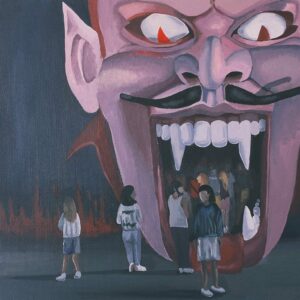
A feeling of vertigo creeps in as soon as you press play on Spirit of the Beehive’s latest record. But like everything else about the Philadelphia trio’s music, that feeling soon begins to mutate, veering off in countless different directions that are impossible to keep track of but are mirrored, as if through fractured glass, in the album’s cryptic lyrics: “a fantasy, a sedative,” “filled with smoke, seamless dread;” “compressed in a vacuum;” “it permeates/ beyond the scope of vision.” In contrast to their last album, 2018’s Hypnic Jerks, each track on ENTERTAINMENT, DEATH is stylized in all-caps, but their sound is too fragmented, too lethargic to be called maximalist. Through a freakish mix of gauzy synth textures, off-kilter percussion, and processed vocals, they elicit the kind of horror that’s too vague to recall and too pervasive to escape, like letting unfiltered thoughts course through your mind as your body descends into an abyss. Then you wake up, stare feverishly into the sun, and question everything: to quote highlight ‘IT MIGHT TAKE SOME TIME’, “Do you realize you’re caught in a web?”
Though their lyrics can be downbeat and their performances unnerving, part of what separates Squid from their contemporaries is that there’s an infectious energy to their eclectic blend of jazz, krautrock, funk, and post-rock that’s designed to retain the listener’s attention rather than make a show of their versatility. After showcasing an impressive command of space in a series of well-received singles that leaned more heavily on nervous ecstasy than apocalyptic gloom, their debut LP not only confirms they can achieve the same impact in the album format, but also reveals the true scope of their ambitions: even at its most wildly experimental, Bright Green Field never loses its sense of momentum, zooming out of a specific scene to paint a grander and more frightening picture. Though their songwriting process is entirely collaborative, Judge writes most of the album’s lyrics, which expose the trappings of modern society by drawing on a wide range of cultural influences, imagined places, and real-world environments – especially London. Bright Green Field lays out a scene both massive and claustrophobic, its characters as lost as they are connected, all – narrator included – aching to break free. For them, the release never really comes.
How do respond to crises? This is the fundamental question behind Toronto-based songwriter Tamara Lindeman’s fifth studio album as the Weather Station, Ignorance. The title of the album might give the impression that the 36-year-old has arrived at a less-than-heartening conclusion, but in the process of working through different types of conflict, she has also crafted a shimmering collection of songs that tap into feelings of profound grief and existential wonder. Expanding her palette through an array of synths, strings, and percussion hinting at 80s sophistipop and modern folk-rock, the project’s new sonic direction smoothly complements the richness and complexity of Lindeman’s writing, which continues to look inwards but is infused with a new kind of openness. The album elegantly oscillates between the personal and the universal, at times wringing beauty out of heartbreak but more often interested in simply being in tune with it, and by extension, the world around her – a world on the brink of unprecedented environmental catastrophe. The fact that Lindeman has always sung with her whole heart and an open-eyed curiosity only makes her refusal to succumb to indifference all the more powerful.
Freeform jazz, post-rock, and the Jewish tradition of klezmer all make up Black Country, New Road’s riveting stylistic blend, but you’re more likely to appreciate the London band’s creative spirit by paying attention to the contributions of each the band’s members, from vocalist Isaac Wood’s often absurd yet impassioned musings to Lewis Evans’ frantic saxophone and Georgia Ellery’s sweeping violin; Charlie Wayne’s agile drumming, Tyler Hyde’s menacing bass, and May Kershaw’s twitchy synths also form the backbone of the unnerving opening track and provide startling dynamics throughout the album. Though there seem to be virtually no limits to the band’s musical instincts, all seven members are perpetually in sync with one another, carrying momentum even when their incendiary crescendos come closer to approximating uncontrollable chaos. For the first time serves as a dazzling display of the heights that music can reach, even if it ultimately leaves you with more questions than answers – and I guess, in some way, that’s part of the magic of a really good first impression.
The Armed’s fourth full-length is not only a magnificent manifestation of the band’s unique vision, but also one of the most riveting and ambitious releases of the year so far. The music on ULTRAPOP is muscular and abrasive and primed for maximum impact, but none of it is propped up by mythos or pretense. As the group’s mastermind Dan Green puts it in an introductory essay, the album “seeks only to create the most intense experience possible, a magnification of all culture, beauty, and things,” adding, “It’s the harshest, most beautiful, most hideous thing we could make.” It’s in that contrast that the record owes much of its power: not so much balancing the loud and the delicate but creating a space where both can thrive. ULTRAPOP might make you wonder what would happen if PC Music had a hand in Deafheaven’s success, but it sounds less like the unexpected pairing of two disparate forces than a dozen minds operating as one. It doesn’t so much push the boundaries of pop and heavy music as much as it heats them into vapor, and the result is equal parts euphoric and chaotic.
Katy Kirby’s debut album, Cool Dry Place, is a shimmering and heartfelt collection of songs that spring from a place of radiant intimacy. “I tap twice on your doorframe and you let me in/ I tap twice on your forehead and a heart appears,” she sings softly on ‘Tap Twice’, while the title track sees her repeating the question, “Can I come over? Is it too late? Would you keep me in a cool, dry place?” With lyrics that feel personal even when she assumes an outside perspective (‘Juniper’, ‘Fireman’), Kirby has such a delicate way of capturing everyday moments of beauty and poetry that the codes of communication she comes up with in the process – her “secret language” – feel both new and familiar, wonderfully complex yet approachable. ‘Cool Dry Place’ opens with the lines “just another episode of tenderness/ in a long, long string of similar events,” and Kirby’s gift lies in the ability to hold each of them still just long enough so she can trace a line between them.
Mdou Moctar and his band – rhythm guitarist Ahmoudou Madassane, drummer Souleymane Ibrahim, and Brooklyn-based bassist and producer Mikey Coltun, who travels days just to rehearse with the others – continue to refine their approach on Afrique Victime, tightening its predecessor’s full-band sound without scarifying its spontaneity and live dynamics. The result is raw yet accessible, tapping into something primal and elemental while sounding quite unlike anything you’re likely to hear this year. Its main strength is not originality as much as a heightened sense of control: while previous Mdou Moctar albums have pushed boundaries, Afrique Victime brings a new dimensionality to the band’s explosive sound, fusing the Tuareg guitarist’s various sonic touchpoints – from guitar legends such as ZZ Top and Eddie Van Halen to African artists like Abdallah Ag Oumbadougou – while allowing other elements to take more space in the mix. The juxtaposition of organic and electronic textures in particular – atmospheric field recordings on one hand, drum machines and AutoTuned vocals on the other – simultaneously gives the album an earthly and surreal quality. If the word “incandescent” can be used to describe most of Mdou Moctar’s catalog, Afrique Victime takes things a step further as it reaches moments of transcendence.
In the summer of 2019, New York songwriter Cassandra Jenkins was ready to join David Berman on his comeback tour as Purple Mountains, only to find herself mourning his loss mere days later. On ‘Ambiguous Norway’, a highlight from her magnificent second album An Overview on Phenomenal Nature, we find her landing in Oslo, unsure what to do with the now purposeless tour outfit that’s arrived in the mail. Returning to New York after having started work on the album in Norway, she collaborated with producer Josh Kaufman to flesh out its seven songs. As a whole, the record is less about processing that particular moment in time than it is about learning how to navigate and grapple with the nature of change. Sifting through the light haze of the instrumentals like a sunray peaking through the clouds, her tone remains conversational yet gentle, her writing as perceptive as it is affecting. “Empty space is my escape/ It runs through me like a river,” she sings on ‘Crosshairs’, yet there’s a comfort in the subtle ways she tries to fill that space, lifting the paddle out of the water only to appreciate the view around her.
2019’s hauntingly beautiful Ghosteen may have been the final installment in what Nick Cave has described as a trilogy of albums, but the glimmers of hope that seeped through its serene, ethereal soundscapes gave way to no real conclusion. Once again eschewing narrative conventions for a more impressionistic style of writing, Cave’s new album with longtime Bad Seed and close collaborator Warren Ellis is similarly if not more amorphous as he circles back to familiar motifs that have been prevalent throughout his career. On Ghosteen he was “a lonely rider across the sky,” and here he keeps referring to “that kingdom in the sky,” some eternally bright light we’re all ceaselessly pursuing. Written during the early stages of lockdown, Cave and Ellis’ first non-soundtrack album as a duo leans into the stark minimalism of their recent material while pushing their sound – sometimes tentatively, sometimes more aggressively – into bold new territory. Far from a nostalgic release, Carnage reckons with themes of death, suffering, and the apocalypse through a lens that’s more suited to both Cave’s personal and artistic trajectory and the current state of the world.
On her first two albums as IAN SWEET, 2016’s Shapeshifter and 2018’s Crusher Crusher, Jilian Medford dove into varying indie-pop textures in search of a dynamic that felt honest enough to match both her ambitions and the earnestness of her songwriting. Though it’s not hard to trace her artistic growth throughout these records, it wasn’t until her latest release, Show Me How You Disappear, that Medford was fully satisfied with the result. Written after the singer-songwriter had completed a two-month outpatient program following increasingly severe panic attacks, the album grapples with internalized trauma in an attempt to chart a path towards self-acceptance. With help from a number of handpicked producers, including Andrew Sarlo (Big Thief, Empress Of) and Andy Seltzer (Maggie Rogers), she sharpens and amplifies her approach in ways that not only evoke the overwhelming intensity her emotions but are marked by a towering confidence that at times seems to transcend them. That newfound clarity cuts through a haze of synths on the final of the album’s many transformative mantras: “I see it now, I see it/ So much more than before/ I see everything.”
Co-produced by Sylvan Esso’s Nick Sanborn and recorded in quarantine with a handful of collaborators, Head of Roses represents a natural step forward in Jenn Wasner’s artistic evolution. It’s a profoundly personal and honest record that centers on feeling rather than concept or narrative, showcasing her strengths as a lyricist and musician who’s able to comfortably explore new territory without using it to shield herself from vulnerability. Sanborn’s synth textures provide rich layers for her and the listener to swim around, but the production extracts a wholly different kind of magic out of Wasner’s emotive voice, by far the most powerful and engaging presence on the album. Throughout the album, she reckons with parts of herself that feel foreign or unreachable, getting lost in distant fantasies (as on the tender, achingly earnest ‘Hard Way’ or the spine-chilling ‘One More Hour’) but finding pockets of truth in the process. Though a breakup album at its core, Head of Roses is about, and borne out of, a craving for human connection – and the ways we try to hold on to those sparks of intimacy without losing our individuality.
Two years ago, black midi captured the attention of virtually everyone interested in rock music of the more adventurous variety with their ferocious, boundary-pushing debut, Schlagenheim. The London art-rockers don’t sacrifice one bit of their chaotic ethos on their sophomore full-length, but their focus does shift significantly. Though as restless and unpredictable as its predecessor, Cavalcade shows a band willing to introduce more structure and atmosphere into their normally improvisational style, though it’s not its harmonic elements that stand out as much as the music’s intentionality and nuance. ‘Diamond Stuff’ seems less concerned with quickly ratcheting up tension or catching the listener off guard than the simple but delicate act of building mood, while ‘Slow’ is as ominous as it is hyperactive, balancing technical precision with a propulsive edge and ultimately erupting in a whirlwind of frantic guitars and screeching saxophone. Cavalcade does have some unusually straightforward moments, but in “relentlessly trying to untie our knots, of rivers and roads that defy all sense,” as guitarist and de facto frontman Geordie Greep sings on the gentle ‘Marlene Dietrich’, the music only becomes more complex and elusive.
Arriving three years after her debut EP, 2018’s ethereal Bodies of Water (not to be confused with another album on this list), Claire George’s deeply affecting The Land Beyond the Light sees the Los Angeles-based artist expanding her sound, setting her evocative vocals against more layers of organic instrumentation, including real bass and guitar, to reflect the very real feelings of grief that sit at the heart of the songs. Originally conceived as a break-up record, the gravity of the project shifted significantly in the wake of the death of one of her friends and ex-boyfriends to substance abuse. Channeling personal tragedy through the cathartic pull of dance music is nothing new, but George grapples with themes of loss, mental illness, and addiction with bracing vulnerability and a depth of feeling that’s rare in the genre. From the wrenching ‘Northern Lights’ to the strangely comforting ‘Bag of Peaches’, the album flits between youthful memories of the past and the overwhelming weight of the present; George finds flickers of light in the midst of darkness not by concealing it, but by allowing space for both – even when they threaten to drown her out.
Sixteen years after their beloved 2005 LP Superwolf, guitarist Matt Sweeney and singer-songwriter Will Oldham have returned with Superwolves, billed not just as a follow-up but a direct sequel to its predecessor. It’s perhaps no surprise that they’ve managed to recapture that same energy – their nearly 25-year-old friendship has only sharpened their ability to play off each other’s strengths, becoming the sole constant character throughout the album’s loose and ambiguous narratives. But Superwolves is also marked by a newfound sense of vitality and purpose: these are crisp, buoyant songs that eschew the introverted, solitary qualities often associated with the singer-songwriter tag without stripping away the unique intimacy that can arise from it. There’s still a lot to unpack, but the ease with which the two artists exchange ideas is accompanied by songwriting that, at its core, is stronger and more direct than before, relying on emotional impact rather than ambivalence. “Got no friends, got no home/ There must be a someone I can turn to,” Oldham sings on highlight ‘There Must Be Someone’; Sweeney steps in for a brief solo halfway through, but his playing remains less an answer than a constant, reassuring presence.
There’s an undeniable urgency to Sons of Kemet’s music that’s a key component of every one of Shabaka Hutchings’ projects, but here it’s also informed by a heightened political consciousness that comes through both in their propulsive compositions and conceptual ambitions. The improvisational jazz quartet’s latest release, Black to the Future, is the most powerful and pertinent expression of their unique dynamic to date. Twin drummers Edward Wakili-Hick and Tom Skinner provide a rhythmic backbone that not only gives the music a nervous quality but also makes it feel rooted to the earth, while tuba player Theon Cross casts a heavy, ominous cloud over the proceedings. But it’s Hutchings’ layers of clarinet and saxophone that light the fire, one that takes many different forms throughout the duration of the LP. Following 2018’s Your Queen Is a Reptile and recorded in the midst of last year’s Black Lives Matter protests, Black to the Future is fuelled by a similar sense of purpose: to “redefine and reaffirm what it means to strive for Black power,” as Hutchings writes in the liner notes. And it does so with tenacity and fervour, presenting a radical vision of the future built on the foundations of the past.
John Ross has been steadily expanding Wild Pink’s sound and vision with each album, and A Billion Little Lights is the project’s most cohesive and inviting effort to date. Recorded with producer David Greenbaum, the follow-up to 2018’s Yolk in the Fur incorporates more sweeping layers of bright, glossy synths to match Ross’ ambition, deftly balancing not just the sounds but also the romantic grandeur of heartland synth-rock with the sensitivity and warmth of late 2000s indie. Refreshingly, the band’s decision to broaden their horizons feels like more than just a default artistic move. Inspired by Carl Sagan’s Cosmos among various other works that he’s gracious enough to reference in his lyrics, Ross uses the album’s sprawling aesthetic as a canvas through which to grapple with the infinite expanse of the universe and his own place in it. Because it straddles the line between fantasy and nostalgia, the result feels both familiar and out of reach, as if chasing a vision that’s yet to fully materialize. When it does, one can only hope it captures the same magical splendour that this album naturally exudes.
It’s almost impossible not to recognize some part of yourself in Julien Baker’s music. The Tennessee singer-songwriter offered an easy way in, laying her demons bare on her 2015 debut, Sprained Ankle, before coating her self-lacerating lyrics in the refined minimalism of 2017’s breakout Turn Out the Lights. Little Oblivions embraces a full-band sound and expands her palette in bolder and more noticeable ways than its predecessor did, but rather than hiding behind the additional layers of instrumentation – most of which Baker handled herself – she uses them to carve out new spaces that accentuate not just the bracing intimacy of her songwriting but also its emotional intensity and depth. Underneath it all is a self-aware portrait of survival in the midst of personal crisis, and if there’s a battle the album proves she’s won, it’s that of staying true to yourself – even when you’re not exactly sure what that entails, or where it leaves you. If her music continues to serve as a conduit for catharsis, it’s in tracing that journey – not necessarily relating to the trauma itself – that it retains a visceral resonance.
Before expanding into a trio with Ben Cruz on guitar and Emerson Hunton on drums, Moontype was the solo project of singer-songwriter Margaret McCarthy, and a handful of songs on their remarkable debut album, Bodies of Water, are reworkings from 2018’s spare Bass Tunes, Year 5. Throughout the album, the group’s diverse musical sensibilities and palpable chemistry elevate McCarthy’s intimate songwriting, which largely reflects on the changing nature of friendships; how susceptible they are to forces beyond our control, and how the need for them never really goes away. She makes interesting connections between people and landscape: “I’m thinking about the world as being alive, like, geologically, but I’m also thinking about people and relationships and emotional change. And I think that those two things kind of melded inside me somewhere,” she explained in our interview. In a similar way, the band’s fusion of styles evokes a yearning for connection through transcendent choruses that wash over you like a tide, but they’re equally capable of crafting a sticky hook as they are jumping into jazzy, math-rock territory. Whichever direction they move towards, Moontype retain an earnestness that’s echoed in their quietly unassuming yet powerfully evocative music.
There’s nothing revolutionary about Dry Cleaning’s sound – a fact that, for a band who so neatly has come to represent the latest wave of British post-punk (the likes of black midi and Black Country, New Road, by comparison, lean much more heavily on the avant-garde), should be somewhat alarming. But there’s no denying that what the London band is doing on their debut album is fascinatingly absurd, and in its own way, kind of thrilling. Anchored by terrifically controlled performances from guitarist Tom Dowse, bassist Lewis Maynard, and drummer Nick Buxton, as well as intricate production from John Parish, Florence Shaw’s sardonic, playful delivery and strange non-sequiturs make the music feel like it exists in a world of its own, even if it primarily serves as an invitation to take a closer look around the real one. As Alyana Vera wrote in her review: “Life is already pretty absurd; Dry Cleaning’s real strength is their ability to drop us into disorientingly similar but surreal versions of our own world, where everyday life isn’t mundane but full of little stories waiting to be uncovered.”
Really From’s effortless fusion of emo, math rock, and jazz will likely appeal to fans of any one of these genres, but what makes their music so resonant and compelling has more to do with the way they combine their individual voices. The band’s third, self-titled LP brims with personality – not just thanks to its honest and searing exploration of cultural identity, but also because the group harnesses the spirit of collaboration in ways that bring out rich and distinct flavours while maintaining an overall sense of fluidity. That openness bleeds into both the album’s musical arrangements as well as its lyrics, inviting the listener into a vulnerable space. Really From is less of a stylistic pivot than an apt distillation of what the band has always stood for, propelled by a newfound confidence that bolsters their unique artistic vision. Expanding their musical scope might be the only way for Really From to express their unbound creativity, but the true power of their music lies in untangling the chaos that’s buried underneath.
On her sophomore full-length, BABii sets out to convey the full scope of her ambition and establish herself as a dynamic creative force in her own right, not just as a collaborator (in addition to releasing the exhilarating XYZ as part of the GLOO collective with Iglooghost and Kai Whiston, she also had a hand in Iglooghost’s own sophomore LP Lei Line Eon). Both musically and conceptually, MiiRROR is a step above her debut HiiDE, carving out an expansive narrative world that’s rooted in fantasy as much as self-reflection; BABii digs through the wasteland of childhood memory to find it’s filled with both imaginary beings and strange artefacts. Where HiiDE focused on the dissolution of a romantic relationship, MiiRROR fixates on her difficult, on-and-off relationship with maternal figures and the absence they’ve left behind. Inspired by her reconnecting with her mother for the first time in 15 years, she confronts that personal struggle with striking directness on songs like ‘WASTE’ and ‘TRACKS’ while pushing her sound forward. The musical world BABii inhabits might be one defined by escapism, but few artists are able to combine a knack for world-building with deeply personal storytelling the way she does on MiiRROR.
Though Build a Problem marks dodie’s first full-length release, the 25-year-old British singer-songwriter, born Dorothy Miranda Clark, has established a strong online presence with nearly 2 million subscribers on her main YouTube channel, and her three independently released EPs – 2016’s Intertwined, 2017’s You, and 2019’s Human – went on to reach the UK pop charts. One thing both her videos and her music have in common is that they both can feel like soul-baring admissions of vulnerability. Throughout her career, she’s channeled that intimacy through lush folk pop built around soft vocals and plucky acoustic guitars, and her debut LP is no different – this time, though, the variations in sound and mood also reflect the contradictions and inner battles she often speaks about in her discussions of mental health. Working with producer Joe Rubel as well as a 13-piece orchestra, dodie uses the extra space to experiment with different styles and structures as the album delves into darker, more dramatic territory, adding rich, complex layers to her explorations of self-worth, shame, and internal conflict.
‘Collapsed in Sunbeams’, the title track that also opens Arlo Parks’ debut album, is a spoken-word piece that not only establishes Parks’ poetic lyricism, but also reveals the way she tends to approach her narrative subjects: she starts by establishing her point of view (“I see myself…”), before bringing others in (“We’re all learning…”) and ultimately utilizing the unique power of the second person: “You shouldn’t be afraid to cry in front of me,” she says, then mutters, “I promise.” A wholly affecting and delicately crafted debut, Collapsed in Sunbeams is populated by an assortment of different characters, and Parks is equally adept at relaying the experiences of those close to her as she is at harnessing the poetic gift of writing about strangers. On the closing track, ‘Portra 400’, she recognizes the beauty in “making rainbows out of something painful,” which echoes an Audre Lorde quote Parks has often referred to: “Pain will either change or end.” Here, none of the characters’ pain seems to really change or end. But through her incisive observations and mellow, unshowy vocals, Parks is at least capable of making the air feel a little bit lighter.
Born in Portugal to Belgian and Cape Verdean parents, Erika de Casier grew up in the Lisbon suburb of Estoril until she moved to the tiny Danish village of Ribe at the age of 8. After spending a year abroad in Vermont, she eventually settled in Copenhagen and taught herself music production in her bedroom. Though she had to learn to sing in a hushed tone so as not to disturb her flatmates, she’s since found ways to harness that intimacy to convey all manner of emotion, whether invoking the sensuality of ’90s and ’00s R&B or taking cues from the empowerment anthems of Destiny’s Child and TLC. She draws from both musical worlds on her latest album, Sensational, her second following 2019’s Essentials and first since signing to 4AD. Each subtle texture radiates warmth as well as newfound confidence, lending an air of playfulness to what is an otherwise stripped-back and relaxed affair. But more remarkable than her self-assured presence is de Casier’s ability to explore relationship dynamics with elegance and style, making her minimalist, confessional songs feel vivid and nuanced: not just palpably romantic, but full of possibility.
Arooj Aftab has described her new album, Vulture Prince, as being about “revisiting places I’ve called mine,” which feels like a fitting metaphor for her music as a whole. Opening with a new rendition of ‘Baghon Main’, a folk song the Brooklyn-based Pakistani composer first tackled on her 2014 debut Bird Under Water, the record employs classic Urdu lyrics dealing in themes of loss and yearning and embellishes them with stripped-back instrumentation that includes harp, acoustic guitar, double bass, and synths. A continuation of her debut and the follow-up to 2018’s ambient project Siren Islands, Vulture Prince is an album of devastating beauty – one whose nature shifted significantly following the passing of the singer’s younger brother Maher in the middle of the writing process. The arrangements are intimate and elegiac, while Aftab’s crystalline, elastic voice carries a depth of feeling that transcends any potential language barriers, transporting the listener into a realm where sorrow can briefly take the form of acceptance. The result is both a stunning artistic achievement and a melancholy lament whose spiritual resonance is amplified in the present moment.
Throughout her career, claire rousay’s music has incorporated field recordings, voicemails, and percussive sounds to dissect the corners of human emotion and daily life that otherwise remain elusive and ambiguous. Following a prolific run of releases, a softer focus once again recontextualizes her work as it finds the San Antonio-based artist stepping into new sonic territory while building on the melodic elements that had started to seep into her music with 2020’s it was always worth it. Featuring contributions from OHMME’s Lia Kohl and Macie Stewart, multi-instrumentalist Ben Baker Billington, and violinist Alex Cunningham, a softer focus is a collaboration with painter and ceramicist Dani Toral, who, in creating the visual world for the album, set out to explore the “feelings of present familiarity” she felt with rousay, an emotional state rousay’s work intimately mirrors. Even if the lush ambient textures and scattered pop influences render it her most accessible and less esoteric effort to date, it’s still marked by the kind of attention to detail and personal candor that make those quiet moments vibrate with significance.
Listening to Indigo Sparke’s music can feel like watching a star flicker in the dark country sky: from afar it can seem small and insubstantial, but once you consider the amount of energy that ripples through it, the moment can suddenly feel overwhelming in its intensity. Amid the soft glow of finger-picked guitar and delicate touches of piano, the Sydney-based singer-songwriter often uses that kind of cosmic language to relate her own experience on her debut album, Echo: “I have pulled apart the cosmos/ Trying to find you inside,” she sings on ‘Carnival’; on ‘Wolf’, she implores, “Come upstairs, let me show you all the parts you haven’t seen/ There’s a hell, there’s a heaven, there’s a universe exploding,” before comparing her lover to the moon. Recorded between Los Angeles, Italy, and New York, the follow-up to 2016’s Nightbloom EP was co-produced by Adrianne Lenker and frequent Big Thief collaborator Andrew Sarlo; the result is a mesmerizing record that’s charged with emotional intimacy without ever losing its poetic, intangible qualities. “Everything is dying,” she tenderly intones against the ghostly echo of an instrumental, “Everything is simple.”
Rather than distancing themselves from the increased pertinence of their ideas in a time of unprecedented uncertainty, Godspeed You! Black Emperor deliver their radical message with more weight and urgency than ever on their first album in four years. Expanding on the melodic elements that ran through Luciferian Towers but leaning more firmly on the fury and power of their earlier work, G_d’s Pee AT STATE’S END might be one of the Canadian post-rock collective’s most immediately impactful and downright beautiful efforts to date, propelled by a new dynamism that’s less the result of timing than careful refinement of craft. Comprised of four pieces, two longer and two shorter, the album utilizes cryptic spoken-word passages and soundclips from shortwave radio to set an apocalyptic scene, but it’s the music itself that does the heavy lifting. The longer pieces are sprawling and ambitious, building to roaring climaxes filled with promise and rays of optimism; the shorter ones are mournful and meditative, floating through the cloud of cacophony with a kind of elegiac solemnity. By utilizing the perpetual cycle of build-up and release, GY!BE transmute those familiar forces into something rich and all-encompassing.
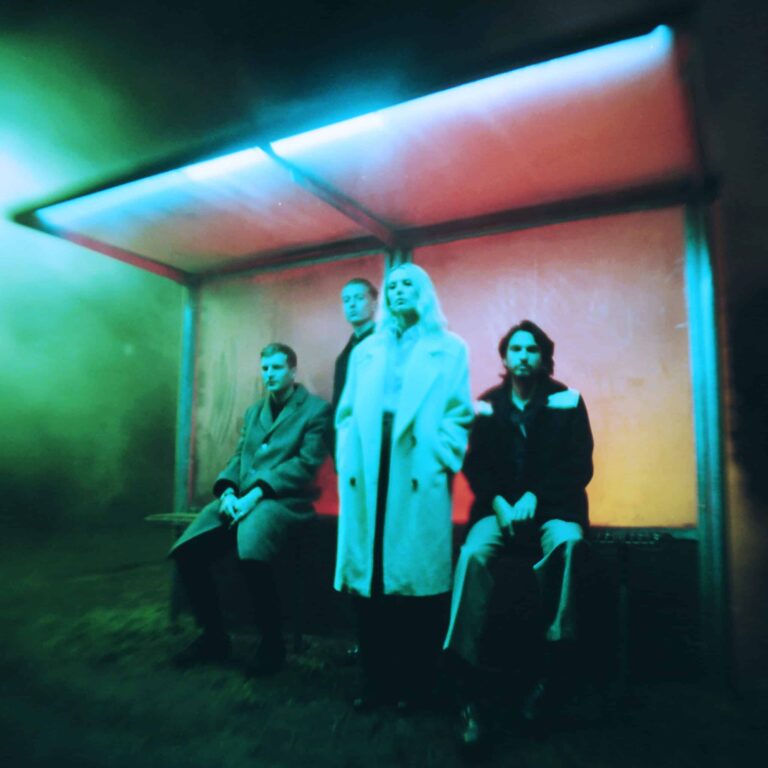
Wolf Alice’s new album sounds more or less exactly what you would expect the follow-up to 2017’s Mercury Prize-winning Visions of a Life to sound like. Intent on reconnecting with their roots while reinvigorating their already expansive sound, the north London group recruited producer Markus Dravs, whose work with the likes of Coldplay and Arcade Fire made him the perfect fit for their third LP, a grand and cinematic effort replete with huge hooks, skyward vocals, and sparks of emotional vulnerability. Once again deftly channeling their ‘90s influences into a dynamic blend of shoegaze, grunge, and folk-rock, Blue Weekend boasts moments of undeniable brilliance, even if a significant portion of the record feels inconsequential and unnecessarily polished, brimming with textures and ideas but not always nuance or subtlety. This level of refinement is both a natural step in the band’s trajectory and a bold reminder of their status as one of the world’s biggest acts, but it can also end up drowning out some of the volatile intensity of their earlier work.
At its best, though, Blue Weekend amplifies the qualities that have always been essential to the quartet’s DNA. Give any other contemporary alternative band the same budget, and chances are they’d struggle to come up with such magnificent and anthemic results; Wolf Alice’s sprawling ambition was evident from their 2015 debut Love is Cool. ‘Smile’ proves they’ve all but abandoned their more raucous tendencies, fuelled by the kind of righteous angst that runs through much of the record; ‘Play the Greatest Hits’ is by far the wildest cut here, a riot grrrl-esque blast of energy with such a distractingly impeccable sense of control that it pales in comparison to its Visions of a Life equivalent ‘Yuk Foo’. Elsewhere, the band’s commanding performances and propensity for arena-sized choruses largely pay off: the album’s longest tracks, ‘How Can I Make It OK?’ and the euphoric ode to self-love, ‘Feeling Myself’, are also its most memorable, building to captivating crescendos.
But the band’s razor-sharp focus and commitment to formula also lead to some less impactful moments. Tracks like ‘Lipstick on the Glass’ lack a strong sense of direction, while the finger-picked folk of ‘Safe From Heartbreak (if you ever fall in love)’ is too lightweight to leave much of an impression, especially compared to the late-album piano ballad ‘The Last Man on Earth’. Though sometimes relying too heavily on vagueness, Ellie Rowsell’s lyrics are as introspective as ever, but also considerably more direct and narrative-based. Those qualities can sometimes get lost in the opulent haze of the production, as on the lyrically excellent ‘Delicious Things’, but they shine on the uncompromising ‘Smile’: “I am what I am and I’m good at it/ And you don’t like me, well that isn’t fucking relevant,” Rowsell proclaims.
It’s her assured and versatile delivery, ranging from a whisper to a scream, that often makes all the difference: the word feeling, for instance, comes up a lot, but it’s Rowsell who imbues it with a particular connotation. When the instrumental accommodates her intimate storytelling on ‘No Hard Feelings’, the effect is both lovely and stirring, making platitudes like “Life can be short, but life can be sweet” feel like a gut-punch, her voice nearly faltering at the end. Because her writing can be light on specifics, the image of “crying in a bathtub/ To ‘Love Is A Losing Game’” that follows is especially wrenching.
Blue Weekend could use a few more surprises, but there’s no doubt Wolf Alice have managed to live up to the massive hype yet again. (It’s currently the highest-rated album of the year on Metacritic.) They certainly have both the ambition and the skills to make an even bigger move in the future, but if their latest release is any indication, that might have the effect of diluting the underlying tension and anxiety that has made their best material stand out. One of the album’s sharper lines arrives on ‘Delicious Things’, a commentary on success and the hedonistic joys of Los Angeles: “Extravagance disguised as elegance is boring.” The ambiguity of the track is alluring and honest, but there’s a sense the band might be ignoring their own advice here (“We do like making songs with loads of shit in it,” drummer Joel Amey said in an interview). None of the extravagance on Blue Weekend seems like a disguise, though, and Wolf Alice still find ways to make it all feel exciting.
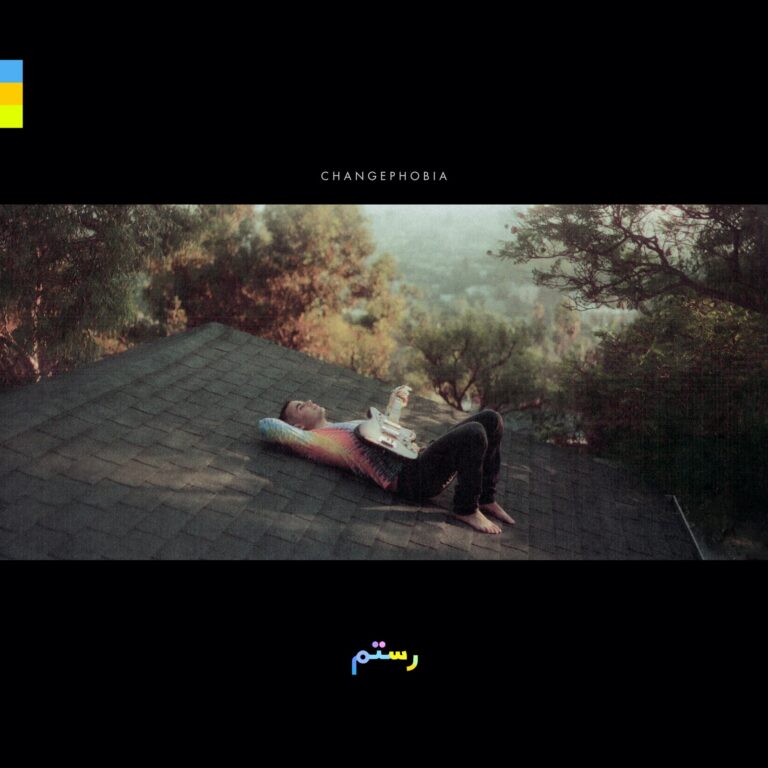
There is a sense of motion bound up in the unique indie-rock-jazz blend of Rostam’s sophomore album, Changephobia – and yet there is also a curious placidity. Frenetic drums and rousing guitar melodies provide a near-constant stream of energy, but any sharp edges are softened by silky saxophone arrangements and honeyed vocals. The project unravels like a kind of gentle blooming, a summery soundscape that carries itself pleasantly along.
Best known as a founding member of Vampire Weekend, Rostam Batmanglij has certainly embraced change: he took the leap into a solo career in 2017 and burst onto the scene with Half-Light, a debut project drenched in electronics and fizzing synth. Between this new venture and his work writing and producing for an impressive list of artists – including HAIM, Clairo, and Frank Ocean – there is much to keep Rostam occupied. Perhaps this is why his newest release feels so much like a space for a reflection, a commitment to quiet introspection while everything around him continues to shift.
Changephobia begins with a feeling of urgency: “Ain’t proud of where we’re going/ You say we can’t afford to slow down,” Rostam sings, hinting at the misery of the younger generation amid political struggles and climate change. Yet he unearths an optimism that weaves its way through the rest of the album as he decides, “We’re gonna slowly pull the earth back together.” His drawled consonants make weighty pronouncements land more like soft contemplations, though glittering keys and playful drums – performed here by Danielle Haim – generate a welcome sense of vibrancy. ‘From the Back of A Cab’ epitomizes this balance between slowness and animation using warm piano riffs that dance among a choppy electronic drum beat. “I’ve been here before/ And I dread the daylight,” Rostam confesses, suspending sonically a transitory instant of bliss preceding a lover’s departure. “I am happy you and I got this hour,” he affirms, and here, at least, he seems to succeed in facing change.
Even when he is not telling stories from inside moving vehicles, Rostam finds a similar sense of contentment. In lead single ‘Unfold You’ – adapted from a sample of a Nick Hakim instrumental – he juxtaposes slow mornings with the emotional rush of a new relationship. Baritone sax solos provided by Henry Solomon swell into quick, pirouetting melodies that topple and melt into lulling falsetto vocals like waves breaking. Though Rostam is back on the road as the next track begins, singing of aimless journeys and sleeping in cars, a sense of intimacy is skillfully maintained. This song, ‘4Runner’, plays out like the end credits to a film, with a single tranquil moment unfurling itself from the passenger seat while the sun sets and the rest of the world is reduced to smudges of colour pasted onto car windows.
But the journey doesn’t end there. In the title track, Rostam’s musings are mellow but profound: “I didn’t want to stumble on a question/ That might upset the structure of the world in which we lived,” he admits, though he seems to have discovered a new kind of openness, explaining, “Talking to myself, I feel much better/ Than I ever used to before.” Synth and swirling electronic production lend the track an almost transcendental quality, and a feeling of fulfilment is still tangible even when transplanted into the frenzied movement of ‘Kinney’. “Pass out in the front seat/ On the pavement I was half-awake,” Rostam murmurs, “Half-ocean, half-sky/ Half-shore, half-tide.” Drums frantically welcome this celebration of incompletion, though the track itself becomes considerably fragmented as individual elements disappear behind the beat. The album’s interlude is similarly chaotic but pleasingly immersive, gathering snatches of synth and distorted saxophone that billow and drop. “The postcard edges start to smudge,” Rostam notes amid meandering piano in ‘Bio18’, as if to acknowledge such disarray. Yet a sense of gratification pervades, often blossoming from the brass instrumentals that run like glinting ribbons through the entire project.
The album, then, captures both endings and dawns. Where sounds are previously submerged, in closing track ‘Starlight’ Rostam sees himself quite literally rise up from the deep: “When you’re near Earth slows/ And I get a feeling like I’m coming up from underwater,” he croons. It is fitting that the project ends with an upward movement rather than a lateral one; no longer carried along in the backseat or even treading water, Rostam embraces a new stability. For all the sonic layers with which he composes his stories, that the strands often blur together is his only downfall – but the portrait he paints is still pleasant, even if the colours run.
It’s always nice to treat someone you love. Whether you’ve been with them a few months or a few years, you might want to treat your boyfriend to a lovely new gift. The thing is, guys can be hard to buy for! Where do you even start? There could be a million things that are suitable for your boyfriend. Luckily, in this article, you’ll get a few top suggestions that could be real game-changing gift ideas.
Great Gifts For Your Guy
It’s always worth considering what the occasion is and how special you want the gift to be. For example, gifts for anime lovers or comic lovers are an option. It may sound silly, but there are different expectations at different times. Think about it, you might not want to splash out big on a huge gesture as a random present. But, for a 30th birthday, you might want to push the boat out and get something really special.
These gifts below can be adapted to be a budget or a huge gesture gift, depending on how special you want to make each of them. So, whatever the occasion, there is something here for you – and your boyfriend!
1. A Stylish Wallet
Every man needs a wallet. Some like different styles to others, whether it’s a men’s long wallet or a simple cardholder. You can choose the style depending on your man’s style. Wallets come in all shapes, colors, and sizes, however, you probably can’t beat a classic leather wallet.
Leather wallets, like long wallets and bifold sleeves, are perfect gifts. They can add a touch of class to any man’s everyday carry. Consider the long wallet, which has perfect space for six to eight cards, notes, and any receipts. They are slim enough to be carried in any pocket without adding bulk and can be customized with embossed lettering or a personalized message from you. A classy gift that is suitable for any occasion.
2. Key Organizers
Key organizers are a practical and creative gift that will make your boyfriend’s life easier. These are tools designed to help to organize keychains, making it easier to find the right key when needed. Every man has an impressive collection of keys, which can make them difficult to manage. But with compact key organizers, they can get rid of the mess and switch to a more efficient system.
3. Home Brewing Kit
Beer. Most of us love it, some of us hate it. But, most guys in our country love a pint of the amber stuff! During the Covid-19 pandemic, pubs and bars were closed for months on end, making it hard to get hold of a pint. So, in stepped the breweries.
Now, you can purchase a simple home brewing kit. Don’t worry, it’s not messy. Instead, it’s a simple container that looks right at home on a kitchen counter. Pour in the dry ingredients provided by a brewer, mix with water, and turn the kit on. After a couple of days or weeks wait, your boyfriend will be able to pour fresh, home-brewed pints at home. With a huge variety of recipes on offer, there’s a homebrew beer out there to cater to any man’s tastes.
4. Make Memories with Tickets
So far, all these recommendations are physical gifts, which is great. But, there is another option too, to make memories with tickets and events. Now that the world is opening up again, what could be better than giving the gift of a ticket to an upcoming event to attend together?
There are so many choices you could think of, depending on what your boyfriend’s favorite activities are. Surprise him with a trip to a city he’s always wanted to visit, take him to see that favorite sports team, or visit a romantic attraction. Making memories together can be one of the greatest gifts you could ever give.
Within each of these four ideas, you’ve got something different. Whether you want to give a classy, physical gift like a leather wallet or signed football, or you want to give memories and potentially drunken nights, there’s something here for your man. Whatever you choose, he’ll love the thought and effort that you’ve put into it.
You can’t deny that digital marketing is an essential component of any marketing plan. It is inexpensive and effective to use social media platforms, email marketing, and other internet marketing strategies. However, digital marketing methods do not imply that traditional marketing methods are no longer effective. Offline marketing is a type of promotion or advertising that makes use of offline tools like billboards, networking, radio, and television. To take your business to the next level, the finest marketing tactics incorporate both offline and online ideas. Here are five suggestions for offline marketing.
Branding
Branding products have a huge impact on your business when compared to other forms of promotion. Branded products help your company stand out and establish a positive reputation. The marketing strategy is reinforced by seeing a brand on an object every day. Client loyalty and retention are aided by promotional merchandise. They can also increase revenues by boosting leads.
Event marketing
Local events are a great way to find where your customers are and you can benefit a lot if you choose the right event and appear right before them. Most brands do this by sponsoring events, others prefer digital signages. As a start-up, another budget-friendly way to do so is by implementing mobile marketing tours, which will not only help your brand get noticed but also will form unique experiences. Depending on the business niche you are in, you can choose which type of mobile vehicle will be the most effective for you.
Publish a book
A short book or pamphlet can help you get your point across. This offline marketing raises awareness of your company. Sharing your company’s knowledge with the rest of the world is a generous gesture. Amazon’s Kindle is a wonderful venue for publishing both paperbacks and eBooks. You may also offer it as a free download in return for email addresses on your website. Make some actual printouts and give them to your loyal customers if you can. You can use printing services to publish a book that’s on brand and portrays the message perfectly. Moreover, sticker printing can help by further pushing the promo of a book.
When attending networking events or business courses, make sure you have a few extra copies with you.
Create flyers and pamphlets
Your brand message can also be communicated to the target audience through printed marketing materials. Flyers may appear to be a standard strategy, but they are very effective. Go the additional mile and let your imagination run wild. Pamphlets and flyers can be used in a variety of creative ways to capture the attention of the audience. So keep it basic, helpful, and include discount coupons in yours.
Business cards
A business card is an important part of your brand. For a successful business growth and expansion, you must invest in well-designed business cards. Business cards can be printed for a reasonable price. Business cards, despite their small size, contain vital information. However, avoid including too much information. You can include your company name, phone number, physical address, and a few items or services.
You have complete control over the appearance and size of your business cards. Furthermore, these cards are compact and light to carry. Some people keep cards in specific binders or containers for posterity.
Networking
Even with a small business, you can network your way to success. A business network provides you with a plethora of options to connect with a target audience and professional groups. You’ll have the opportunity to make new friends and network with influential people.
Networking, which is usually free, will be used to generate referrals. Referrals come with brand recommendations as well. This could increase your confidence in networking and force you to step beyond your comfort zone. Regular networking will help you learn how to associate with people, which is beneficial to your business.
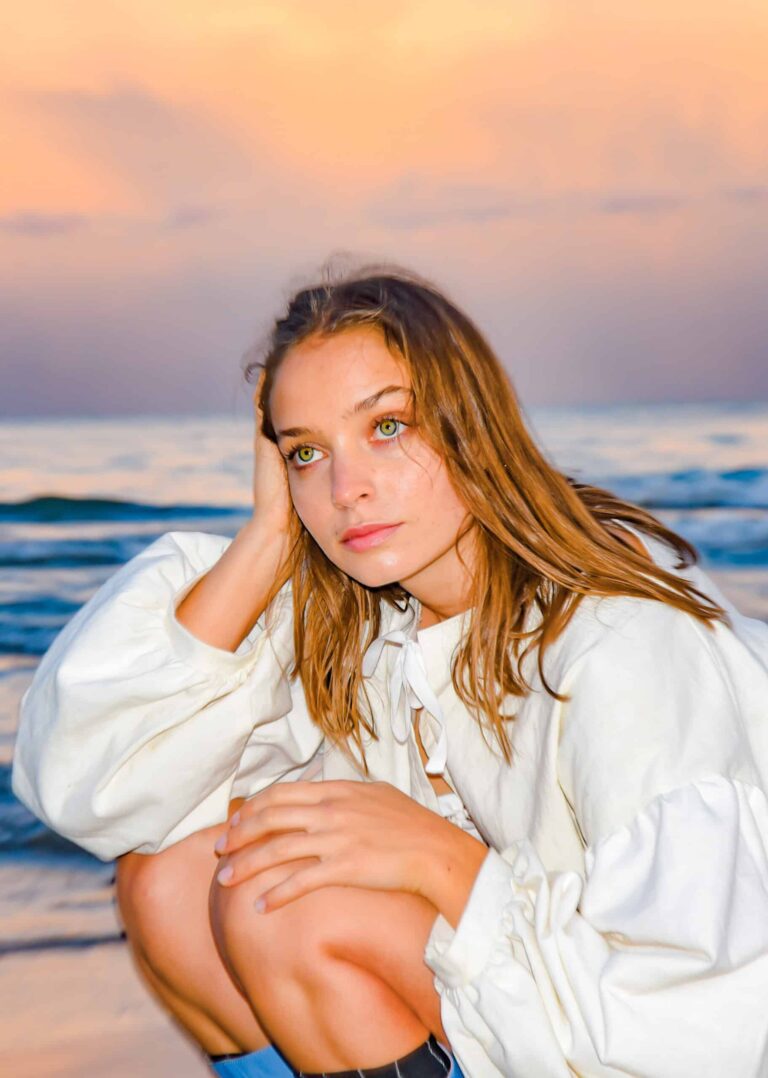
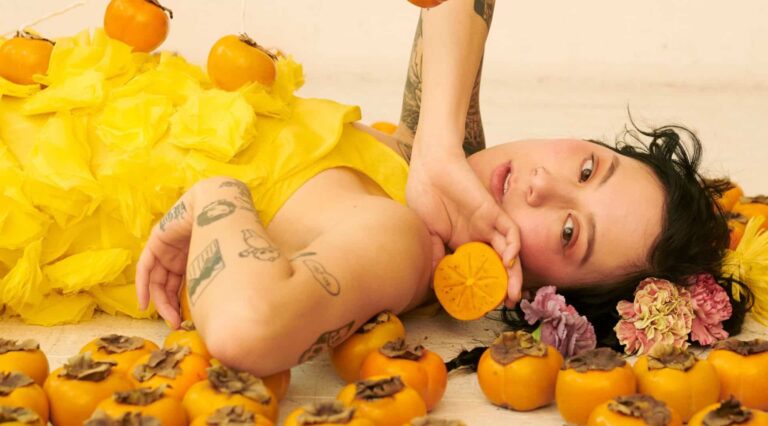
Madeline Link had already been uploading tracks on Bandcamp for years before playing her first solo show in 2018. Raised in a musical household – her dad fronted the power pop trio The Shinolas, while she and her sister Eva formed a group of their own called Triples – the 24-year-old from Ottawa pursued PACKS as her solo project in between gigs as a set dresser for commercials, but the band has now expanded into a four-piece with Shane Hooper on drums, Noah O’Neil on bass, and Dexter Nash on lead guitar. Their debut full-length, Take the Cake, released on Brooklyn’s Fire Talk Records, combines Link’s penchant for fuzzy lo-fi sonics and incisive writing with occasionally more refined instrumentation, like on the heartfelt highlight ‘Hangman’ or the delicate closer ‘U Can Wish All U Want’. Link started writing these songs while living in Toronto with her sister in 2019, and completed the album after they had to move back to the Ottawa suburbs in the spring of 2020 to quarantine with their parents. Rather than feeling divided or incoherent, however, Take the Cake rolls by with a distinctive energy, no matter the pace. Though just 24 minutes long, Link’s catchy melodies and poetic observations hang around like a dream.
We caught up with PACKS’ Madeline Link for this edition of our Artist Spotlight interview series to talk about her inspirations, lo-fi music, making Take the Cake, and more.
How do you look back on those years when you were first getting into music?
I’ve recently just been digging through all of my earliest stuff that I put onto Bandcamp and I feel so nostalgic for it. I was really a lot more into electronic music. Obviously, when I was like 12 and I was just learning the guitar, I was super into the Beatles and old school rock and roll, and that’s how I got my guitar playing style. But then when I first started recording music, it was just me, so I was using little keyboards and little synths and all that kind of stuff to try and create weird soundscapes. So I really started with a very basic foundation, and by the time I was like 17, I was doing weird soundscape explorations.
What was it that initially inspired you to make music and start uploading it on Bandcamp?
I had seen a lot of other artists that I really liked using Bandcamp. It seemed like it wasn’t really linked to social media at all, so I was just putting it up there as an archive for myself because I knew that not a lot of other people would find it unless I told them about it. So it was really just for me to kind of keep a log of everything that I was doing.
So was it a very solitary process at first, and then it kind of opened up?
It never really opened up, I have to say. It’s still very solitary, especially now with having to do remote jamming, where I’m just writing my songs and sending them to my bandmates. I haven’t had a lot of chances to collaborate – we only really started collaborating when we started playing together, which was pretty much only a year.
What led to the decision to expand the project into a four-piece?
When I was writing music by myself back in high school, I would record all these different parts, and I didn’t have the idea that I wanted to play live. But when I did have the idea that I wanted to play live, I was like, “Oh, I have to tone this all down so that I can play live, just myself and not have backing tracks and stuff like that.” And so cutting off all these different parts of the songs changed the way that I had to express myself. So when they offered to turn PACKS from a one-piece to a four-piece, I was like, “That’s awesome, because I can start writing songs that are meant to have more parts to them, and that when they’re played live, they can still sound like how they were recorded.”
I also read that before PACKS, you were in a band with your sister called Triples, which is partly why I was wondering if your process opened up more later.
Yeah, that band, we based it as a collaborative thing where we both could write songs. But that evolved into my sister writing the main part of the song and then I just wrote the drum parts, because I would bring songs to the table and they didn’t really fit with her style, especially her guitar playing style – we have completely different styles. So being in that project is pretty much the only reason that I wanted to start playing my songs live, because I realized it’s really fun, and when you can stand in front of an audience and get people to feel your feeling, that’s pretty cool.
Can you talk about what resonated with you initially about lo-fi music?
Lo-fi has always struck me the hardest for some reason. Every artist that I listen to, their earliest stuff, their least pristine recordings, always – I don’t know if when you hear a song that you’ve never heard the likes of before like, sometimes it feels like I’m physically being, like, hit by something. Do you have that feeling ever?
Yeah. Of course.
It’s like lo-fi has the most energy for me – like, literally, I can feel the energy more. Whereas when something has been processed, compressed, pieces have been stripped away, there’s like 80 tracks, way too many tracks just trying to overcomplicate everything it… It’s like, that kind of stuff is fun to dance to and stuff, but if you’re really trying to evoke a feeling from like deep within, it’s that lo-fi that’s gonna actually be the thing that hits you.
It’s raw and intimate in a way that other styles aren’t.
Yeah, exactly. Like, early Beck, Micachu and the Shapes, Elliott Smith, all of that early stuff is just – you can listen to it a million times and you’ll always be able to find a new detail or a new mistake. I really like being able to hear mistakes too.
Why is that?
Why? Because I think…
It makes it more human, in a way?
Not – I guess so, yeah, it’s like… It makes me feel like things are okay. I don’t know why that is, but it makes you feel like this song was produced, it was put out there with mistakes in it. And I think what it is, yeah, it’s more representational of what the human experience is.
Your debut album, Take the Cake, is split into two different periods in your life: living in Toronto in 2019 and quarantining with your parents during the pandemic. When you listen back to the record, is that contrast immediately clear to you, or has putting them together made those times in your life kind of blur together?
Yeah, the second one. When I listen to the album, I don’t really differentiate the songs, even by chronological order. Because I know exactly what each song is about, but I pay more attention to the energy of each song, and the emotion that each song brings up. And so I was still feeling some emotions in the quarantine that I was feeling before. Like, I was feeling that like intense sense of longing – before quarantine, during quarantine.
What are some feelings that kind of separate the songs for you in terms of those time periods?
The main thing that separates those songs is the fact that I wrote the songs during quarantine knowing that I was talking to a label, and knowing I had only a month. So, the previous songs, I wrote them because I was like, “Oh, we’re in a band, we need to keep things fresh and I need to get these emotions out, so I’m going to write the songs at a leisurely pace, whenever I have a spare moment.” Whereas the new songs were written pretty much for the entire month of April 2020. I was like, I didn’t have a job, I was in a music frenzy, I was always writing something, everything was a song – everything. I wrote so many more songs than appear on the album. But I would say the energy was just, I was approaching music a bit more as though it was my profession.
There’s obviously a pressure that comes with that as well. To what extent did that affect your writing process?
It just got me to extract more – the things that are bogging me down, that are logged in my brain mentally, and that linger in my body physically. I was kind of like, mining myself more, you know what I mean? Like we extract natural resources from the earth when we are desperate for more of those resources. I was just doing that to myself, plunging deeper than I would normally go.
What strikes me about this metaphor is that it actually reminds me of the lyrics on the album, which, besides being very introspective, are also poetic in their use of metaphors. It makes me wonder what kind of headspace you’re usually in when you’re writing.
My headspace is usually like, sometimes I can wake up in the morning and say, “I’m gonna write a song today,” and I can just sit down and play around with the words that I’ve been writing in my journal and play around with chords and find something. And then other days, like last night I had this, it’s like… It’s not super rare, but maybe every third song or something I sit down and I have this feeling that I just am going to go insane. And so I write, I just start playing and singing at the same time and the words follow the chords and the chords follow the words, and then it just manifests, and I feel so much better after I do it. I’ve said this in some other interviews, just about having, like, feverish feelings of writing. So yeah, it varies, and I think you could probably tell which songs I went into with an intent to write, and I was thinking a lot. And then there’s other songs where I didn’t have to think at all, and everything just came out without me even having to do anything.
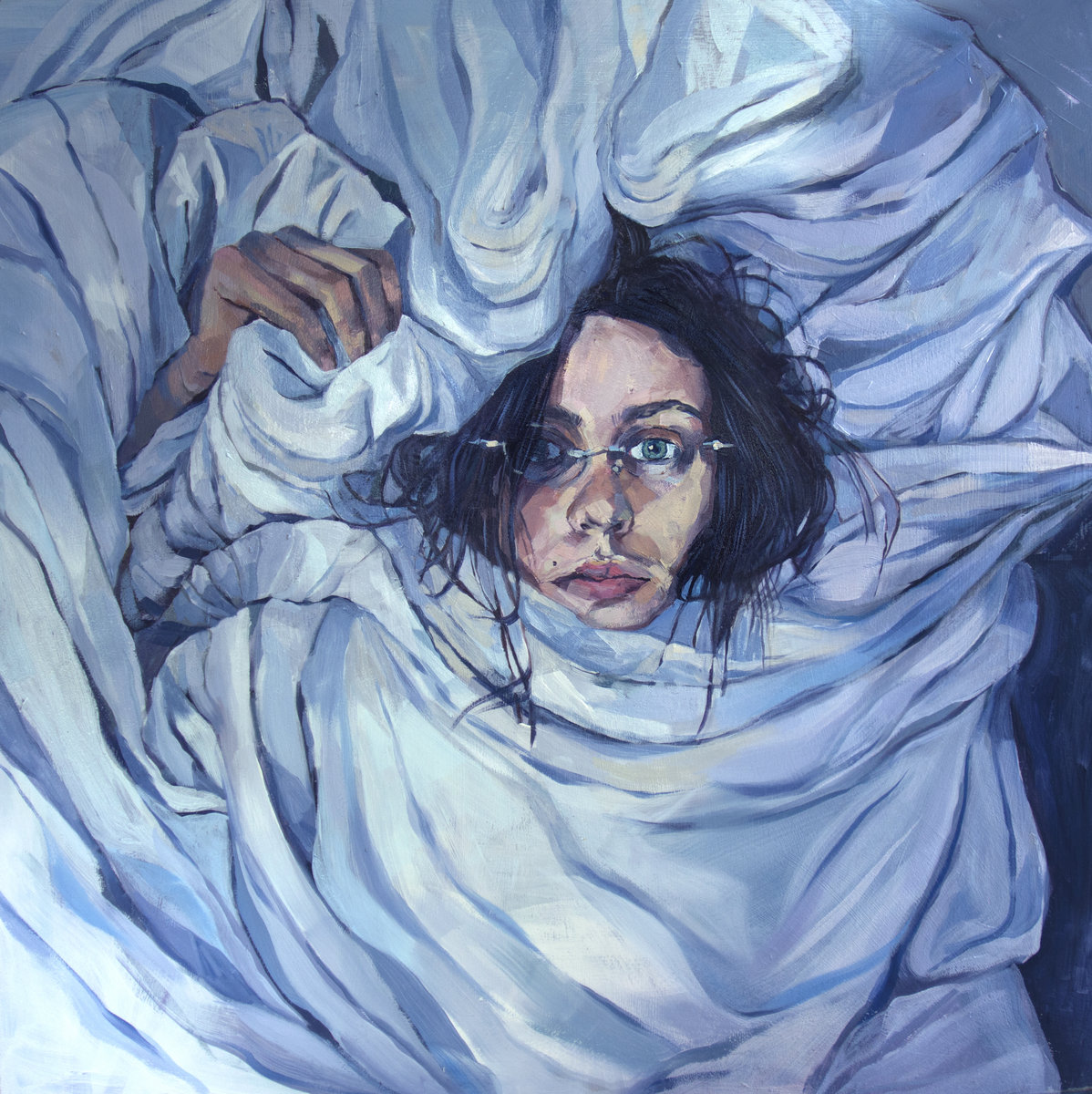
I wanted to ask about the cover artwork, which was done by your sister. Did you have any conversations about the music during that process of creating the cover?
I knew I wanted her to paint something for the cover, and we both were talking about what state of mind provoked all of those songs to be written, what was the common thread of all of those songs. And the common thread is that they were all written in a state – I have to kind of make sure that no one can really hear what I’m doing. So me poking my head out of a mess of comfy sheets, it’s like a visual metaphor for what those songs make me feel. When I write a song, it feels like I’m enveloping myself in a physical manifestation of comfort – even though a song isn’t a physical thing, it feels physical when you’re writing and playing a song for some reason.
It’s interesting, this sense of the process being comforting but also feverish, like you said. And the way those covers are depicted made it seem like it could be suffocating as well.
Yeah, totally. It never feels unnatural or like too much, but when I get into that feverish songwriting state, it can kind of feel like I’m indulging in insanity or something. [laughs]
The final track on the album, ‘U Can Wish All U Want’, is one of those acoustic moments, and it feels nostalgic and hopeful at the same time. I read that it was written about moving in with your sister and living in the city. What does that song mean to you now?
It really is about this feeling of knowing you can be your full true self, living with this person. Like, when I was living with my sister, it’s just like … You don’t have to worry about anything. And you can just laugh – because laughing is my kind of favorite thing to do, and she’s like the funniest person that I know. So I was just, you know… all good things have to come to an end. That’s kind of the general idea of the song, is that all good things must come to an end.
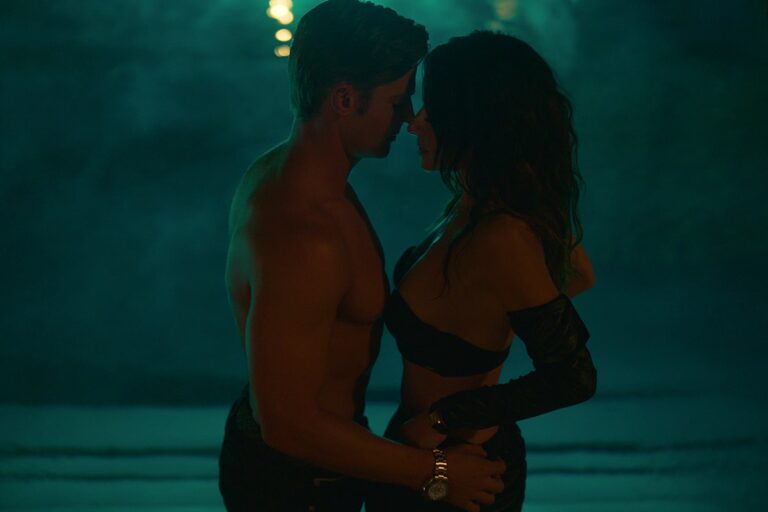
Despite the recent cancellation of Jupiter’s Legacy, add to that the numerous questionable cancellations, Netflix has managed to maintain a large share of its subscriber base. Luckily for TV and film fanatics, Netflix is bringing out many new shows, including Sex/Life, a series created by Stacy Rukeyser.
A provocative new look at female identity and desire, Sex/Life is the story of a love triangle between a woman, her husband, and her past. Billie Connelly (Sarah Shahi) wasn’t always a stay-at-home mother and wife. Before she married loving and reliable Cooper (Mike Vogel) and moved to Connecticut, Billie was a free-spirited wild child living in New York City with her best friend Sasha (Margaret Odette), working hard and playing even harder. Then, exhausted from taking care of her two young kids and feeling nostalgic for her past, Billie starts journaling and fantasizing about her passionate exploits with sexy ex-boyfriend Brad (Adam Demos), the big heartbreak she never got over. But the more Billie remembers, the more she wonders how she got here — and then her husband finds her journal. Will the truth about Billie’s past start a sexual revolution in her marriage, or lead her down a path back to the life she thought she left behind with the man who broke her heart?



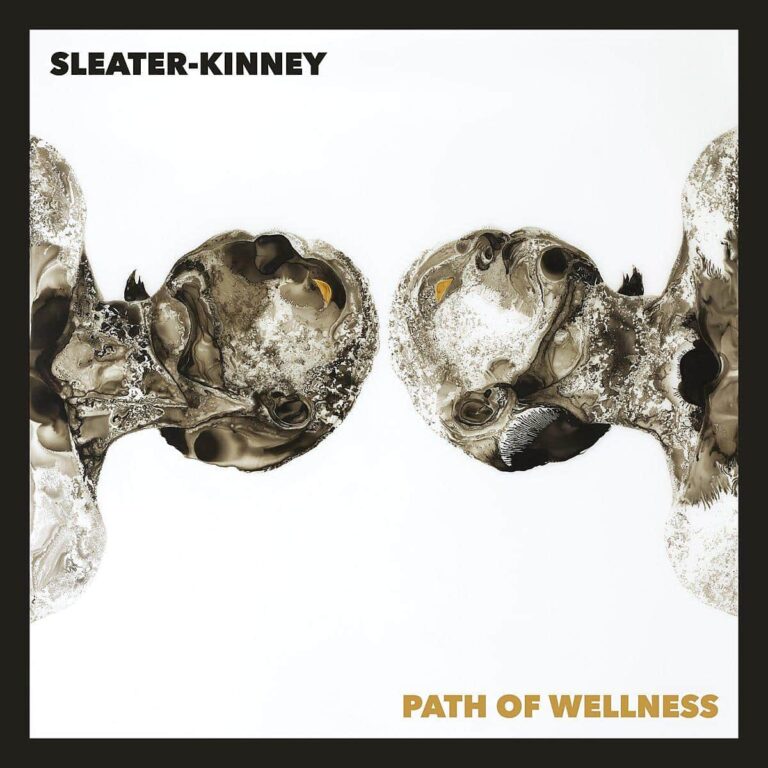

 Sleater-Kinney
 Danny Elfman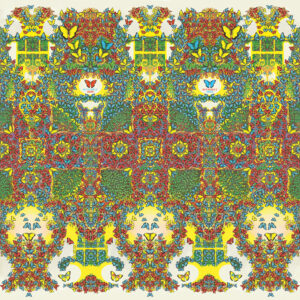
 BLACK METAL 2
 Migos
Migos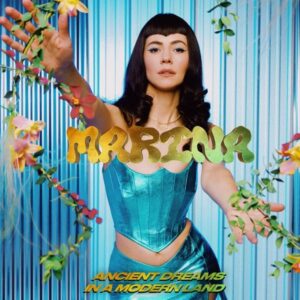 Marina
 Garbage
 “So tell me how it felt/ When you walked on water/ Did you get your wish?/ Floating to the surface/ Quicker than you sank,” Porter Robinson sings on ‘Get Your Wish’, the first in a series of singles leading up to the release of his sophomore album, Nurture. Touted as the wunderkind of the EDM scene at age 18, the Atlanta-born EDM producer’s meteoric rise to international stardom was followed by an intense period of depression and creative drought, where he struggled to overcome feelings of self-doubt and questioned whether he’d ever make music again. Nurture doesn’t so much mirror the highs and lows of success as it does the pure rush of experimentation and discovery, like stepping into the outside world for the first time: its infectious choruses and pyrotechnic synths sweep you up in a tide of euphoria, while its ambient, minimalist passages pull you back down, gently floating in a stream of incoherent thoughts and disembodied memories. Robinson’s vision is so bright and kaleidoscopic, so sincere in its expression of both joy and sadness, that it’s impossible not to immerse yourself in this wonderfully strange, life-affirming journey.
 One of 2021’s most ambitious and compelling albums comes from an anonymous Korean musician who describes themselves as “just a student writing music in my bedroom” whose “singing skills are fucking awful.” And that’s just from the project’s description on Bandcamp, where the album blew up; in
  A feeling of vertigo creeps in as soon as you press play on Spirit of the Beehive’s latest record. But like everything else about the Philadelphia trio’s music, that feeling soon begins to mutate, veering off in countless different directions that are impossible to keep track of but are mirrored, as if through fractured glass, in the album’s cryptic lyrics: “a fantasy, a sedative,” “filled with smoke, seamless dread;” “compressed in a vacuum;” “it permeates/ beyond the scope of vision.” In contrast to their last album, 2018’s Hypnic Jerks, each track on ENTERTAINMENT, DEATH is stylized in all-caps, but their sound is too fragmented, too lethargic to be called maximalist. Through a freakish mix of gauzy synth textures, off-kilter percussion, and processed vocals, they elicit the kind of horror that’s too vague to recall and too pervasive to escape, like letting unfiltered thoughts course through your mind as your body descends into an abyss. Then you wake up, stare feverishly into the sun, and question everything: to quote highlight ‘IT MIGHT TAKE SOME TIME’, “Do you realize you’re caught in a web?”
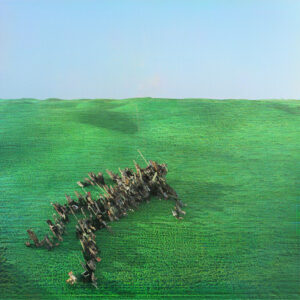 Though their lyrics can be downbeat and their performances unnerving, part of what separates Squid from their contemporaries is that there’s an infectious energy to their eclectic blend of jazz, krautrock, funk, and post-rock that’s designed to retain the listener’s attention rather than make a show of their versatility. After showcasing an impressive command of space in a series of well-received singles that leaned more heavily on nervous ecstasy than apocalyptic gloom, their debut LP not only confirms they can achieve the same impact in the album format, but also reveals the true scope of their ambitions: even at its most wildly experimental, Bright Green Field never loses its sense of momentum, zooming out of a specific scene to paint a grander and more frightening picture. Though their songwriting process is entirely collaborative, Judge writes most of the album’s lyrics, which expose the trappings of modern society by drawing on a wide range of cultural influences, imagined places, and real-world environments – especially London. Bright Green Field lays out a scene both massive and claustrophobic, its characters as lost as they are connected, all – narrator included – aching to break free. For them, the release never really comes.
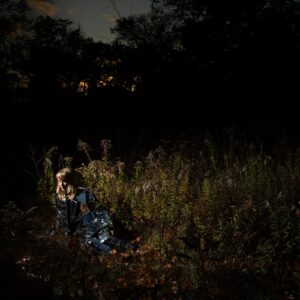 How do respond to crises? This is the fundamental question behind Toronto-based songwriter Tamara Lindeman’s fifth studio album as the Weather Station, Ignorance. The title of the album might give the impression that the 36-year-old has arrived at a less-than-heartening conclusion, but in the process of working through different types of conflict, she has also crafted a shimmering collection of songs that tap into feelings of profound grief and existential wonder. Expanding her palette through an array of synths, strings, and percussion hinting at 80s sophistipop and modern folk-rock, the project’s new sonic direction smoothly complements the richness and complexity of Lindeman’s writing, which continues to look inwards but is infused with a new kind of openness. The album elegantly oscillates between the personal and the universal, at times wringing beauty out of heartbreak but more often interested in simply being in tune with it, and by extension, the world around her – a world on the brink of unprecedented environmental catastrophe. The fact that Lindeman has always sung with her whole heart and an open-eyed curiosity only makes her refusal to succumb to indifference all the more powerful.
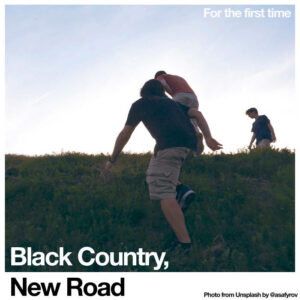 Freeform jazz, post-rock, and the Jewish tradition of klezmer all make up Black Country, New Road’s riveting stylistic blend, but you’re more likely to appreciate the London band’s creative spirit by paying attention to the contributions of each the band’s members, from vocalist Isaac Wood’s often absurd yet impassioned musings to Lewis Evans’ frantic saxophone and Georgia Ellery’s sweeping violin; Charlie Wayne’s agile drumming, Tyler Hyde’s menacing bass, and May Kershaw’s twitchy synths also form the backbone of the unnerving opening track and provide startling dynamics throughout the album. Though there seem to be virtually no limits to the band’s musical instincts, all seven members are perpetually in sync with one another, carrying momentum even when their incendiary crescendos come closer to approximating uncontrollable chaos. For the first time serves as a dazzling display of the heights that music can reach, even if it ultimately leaves you with more questions than answers – and
  The Armed’s fourth full-length is not only a magnificent manifestation of the band’s unique vision, but also one of the most riveting and ambitious releases of the year so far. The music on ULTRAPOP is muscular and abrasive and primed for maximum impact, but none of it is propped up by mythos or pretense. As the group’s mastermind Dan Green puts it in an introductory essay, the album “seeks only to create the most intense experience possible, a magnification of all culture, beauty, and things,” adding, “It’s the harshest, most beautiful, most hideous thing we could make.” It’s in that contrast that the record owes much of its power: not so much balancing the loud and the delicate but creating a space where both can thrive. ULTRAPOP might make you wonder what would happen if PC Music had a hand in Deafheaven’s success, but it sounds less like the unexpected pairing of two disparate forces than a dozen minds operating as one. It doesn’t so much push the boundaries of pop and heavy music as much as it heats them into vapor, and the result is equal parts euphoric and chaotic.
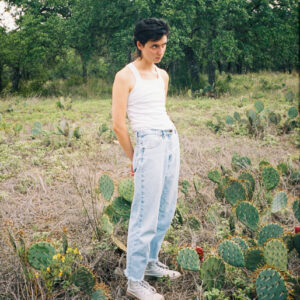 Katy Kirby’s debut album, Cool Dry Place, is a shimmering and heartfelt collection of songs that spring from a place of radiant intimacy. “I tap twice on your doorframe and you let me in/ I tap twice on your forehead and a heart appears,” she sings softly on ‘Tap Twice’, while the title track sees her repeating the question, “Can I come over? Is it too late? Would you keep me in a cool, dry place?” With lyrics that feel personal even when she assumes an outside perspective (‘Juniper’, ‘Fireman’), Kirby has such a delicate way of capturing everyday moments of beauty and poetry that the codes of communication she comes up with in the process – her “secret language” – feel both new and familiar, wonderfully complex yet approachable. ‘Cool Dry Place’ opens with the lines “just another episode of tenderness/ in a long, long string of similar events,” and Kirby’s gift lies in the ability to hold each of them still just long enough so she can trace a line between them.
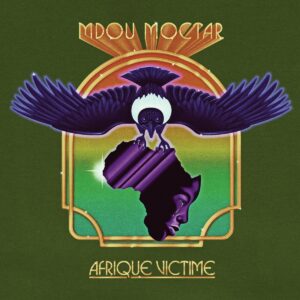 Mdou Moctar and his band – rhythm guitarist Ahmoudou Madassane, drummer Souleymane Ibrahim, and Brooklyn-based bassist and producer Mikey Coltun, who travels days just to rehearse with the others – continue to refine their approach on Afrique Victime, tightening its predecessor’s full-band sound without scarifying its spontaneity and live dynamics. The result is raw yet accessible, tapping into something primal and elemental while sounding quite unlike anything you’re likely to hear this year. Its main strength is not originality as much as a heightened sense of control: while previous Mdou Moctar albums have pushed boundaries, Afrique Victime brings a new dimensionality to the band’s explosive sound, fusing the Tuareg guitarist’s various sonic touchpoints – from guitar legends such as ZZ Top and Eddie Van Halen to African artists like Abdallah Ag Oumbadougou – while allowing other elements to take more space in the mix. The juxtaposition of organic and electronic textures in particular – atmospheric field recordings on one hand, drum machines and AutoTuned vocals on the other – simultaneously gives the album an earthly and surreal quality. If the word “incandescent” can be used to describe most of Mdou Moctar’s catalog, Afrique Victime takes things a step further as it reaches moments of transcendence.
 In the summer of 2019, New York songwriter Cassandra Jenkins was ready to join David Berman on his comeback tour as Purple Mountains, only to find herself mourning his loss mere days later. On ‘Ambiguous Norway’, a highlight from her magnificent second album An Overview on Phenomenal Nature, we find her landing in Oslo, unsure what to do with the now purposeless tour outfit that’s arrived in the mail. Returning to New York after having started work on the album in Norway, she collaborated with producer Josh Kaufman to flesh out its seven songs. As a whole, the record is less about processing that particular moment in time than it is about learning how to navigate and grapple with the nature of change. Sifting through the light haze of the instrumentals like a sunray peaking through the clouds, her tone remains conversational yet gentle, her writing as perceptive as it is affecting. “Empty space is my escape/ It runs through me like a river,” she sings on ‘Crosshairs’, yet there’s a comfort in the subtle ways she tries to fill that space, lifting the paddle out of the water only to appreciate the view around her.
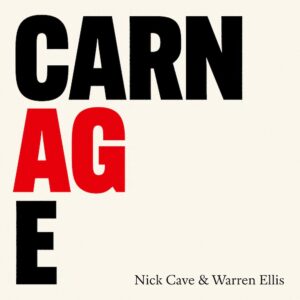 2019’s hauntingly beautiful Ghosteen may have been the final installment in what Nick Cave has described as a trilogy of albums, but the glimmers of hope that seeped through its serene, ethereal soundscapes gave way to no real conclusion. Once again eschewing narrative conventions for a more impressionistic style of writing, Cave’s new album with longtime Bad Seed and close collaborator Warren Ellis is similarly if not more amorphous as he circles back to familiar motifs that have been prevalent throughout his career. On Ghosteen he was “a lonely rider across the sky,” and here he keeps referring to “that kingdom in the sky,” some eternally bright light we’re all ceaselessly pursuing. Written during the early stages of lockdown, Cave and Ellis’ first non-soundtrack album as a duo leans into the stark minimalism of their recent material while pushing their sound – sometimes tentatively, sometimes more aggressively – into bold new territory. Far from a nostalgic release, Carnage reckons with themes of death, suffering, and the apocalypse through a lens that’s more suited to both Cave’s personal and artistic trajectory and the current state of the world.
 On her first two albums as IAN SWEET, 2016’s Shapeshifter and 2018’s Crusher Crusher, Jilian Medford dove into varying indie-pop textures in search of a dynamic that felt honest enough to match both her ambitions and the earnestness of her songwriting. Though it’s not hard to trace her artistic growth throughout these records, it wasn’t until her latest release, Show Me How You Disappear, that Medford was fully satisfied with the result. Written after the singer-songwriter had completed a two-month outpatient program following increasingly severe panic attacks, the album grapples with internalized trauma in an attempt to chart a path towards self-acceptance. With help from a number of handpicked producers, including Andrew Sarlo (Big Thief, Empress Of) and Andy Seltzer (Maggie Rogers), she sharpens and amplifies her approach in ways that not only evoke the overwhelming intensity her emotions but are marked by a towering confidence that at times seems to transcend them. That newfound clarity cuts through a haze of synths on the final of the album’s many transformative mantras: “I see it now, I see it/ So much more than before/ I see everything.”
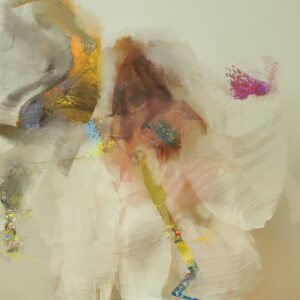 Co-produced by Sylvan Esso’s Nick Sanborn and recorded in quarantine with a handful of collaborators, Head of Roses represents a natural step forward in Jenn Wasner’s artistic evolution. It’s a profoundly personal and honest record that centers on feeling rather than concept or narrative, showcasing her strengths as a lyricist and musician who’s able to comfortably explore new territory without using it to shield herself from vulnerability. Sanborn’s synth textures provide rich layers for her and the listener to swim around, but the production extracts a wholly different kind of magic out of Wasner’s emotive voice, by far the most powerful and engaging presence on the album. Throughout the album, she reckons with parts of herself that feel foreign or unreachable, getting lost in distant fantasies (as on the tender, achingly earnest ‘Hard Way’ or the spine-chilling ‘One More Hour’) but finding pockets of truth in the process. Though a breakup album at its core, Head of Roses is about, and borne out of, a craving for human connection – and the ways we try to hold on to those sparks of intimacy without losing our individuality.
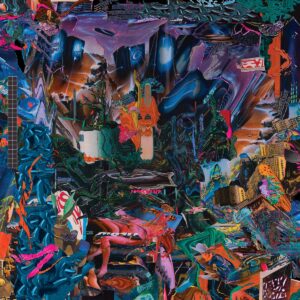 Two years ago, black midi captured the attention of virtually everyone interested in rock music of the more adventurous variety with their ferocious, boundary-pushing debut, Schlagenheim. The London art-rockers don’t sacrifice one bit of their chaotic ethos on their sophomore full-length, but their focus does shift significantly. Though as restless and unpredictable as its predecessor, Cavalcade shows a band willing to introduce more structure and atmosphere into their normally improvisational style, though it’s not its harmonic elements that stand out as much as the music’s intentionality and nuance. ‘Diamond Stuff’ seems less concerned with quickly ratcheting up tension or catching the listener off guard than the simple but delicate act of building mood, while ‘Slow’ is as ominous as it is hyperactive, balancing technical precision with a propulsive edge and ultimately erupting in a whirlwind of frantic guitars and screeching saxophone. Cavalcade does have some unusually straightforward moments, but in “relentlessly trying to untie our knots, of rivers and roads that defy all sense,” as guitarist and de facto frontman Geordie Greep sings on the gentle ‘Marlene Dietrich’, the music only becomes more complex and elusive.
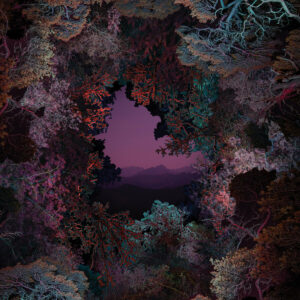 Arriving three years after her debut EP, 2018’s ethereal Bodies of Water (not to be confused with another album on this list), Claire George’s deeply affecting The Land Beyond the Light sees the Los Angeles-based artist expanding her sound, setting her evocative vocals against more layers of organic instrumentation, including real bass and guitar, to reflect the very real feelings of grief that sit at the heart of the songs. Originally conceived as a break-up record, the gravity of the project shifted significantly in the wake of the death of one of her friends and ex-boyfriends to substance abuse. Channeling personal tragedy through the cathartic pull of dance music is nothing new, but George grapples with themes of loss, mental illness, and addiction with bracing vulnerability and a depth of feeling that’s rare in the genre. From the wrenching ‘Northern Lights’ to the strangely comforting ‘Bag of Peaches’, the album flits between youthful memories of the past and the overwhelming weight of the present; George finds flickers of light in the midst of darkness not by concealing it, but by allowing space for both – even when they threaten to drown her out.
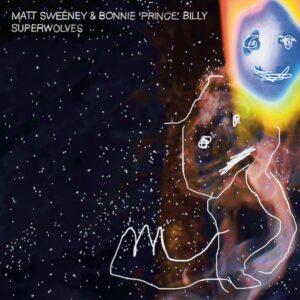 Sixteen years after their beloved 2005 LP Superwolf, guitarist Matt Sweeney and singer-songwriter Will Oldham have returned with Superwolves, billed not just as a follow-up but a direct sequel to its predecessor. It’s perhaps no surprise that they’ve managed to recapture that same energy – their nearly 25-year-old friendship has only sharpened their ability to play off each other’s strengths, becoming the sole constant character throughout the album’s loose and ambiguous narratives. But Superwolves is also marked by a newfound sense of vitality and purpose: these are crisp, buoyant songs that eschew the introverted, solitary qualities often associated with the singer-songwriter tag without stripping away the unique intimacy that can arise from it. There’s still a lot to unpack, but the ease with which the two artists exchange ideas is accompanied by songwriting that, at its core, is stronger and more direct than before, relying on emotional impact rather than ambivalence. “Got no friends, got no home/ There must be a someone I can turn to,” Oldham sings on highlight ‘There Must Be Someone’; Sweeney steps in for a brief solo halfway through, but his playing remains less an answer than a constant, reassuring presence.
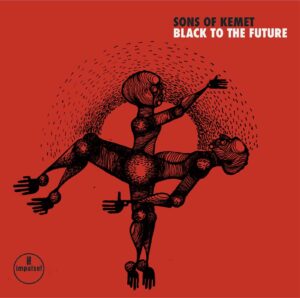 There’s an undeniable urgency to Sons of Kemet’s music that’s a key component of every one of Shabaka Hutchings’ projects, but here it’s also informed by a heightened political consciousness that comes through both in their propulsive compositions and conceptual ambitions. The improvisational jazz quartet’s latest release, Black to the Future, is the most powerful and pertinent expression of their unique dynamic to date. Twin drummers Edward Wakili-Hick and Tom Skinner provide a rhythmic backbone that not only gives the music a nervous quality but also makes it feel rooted to the earth, while tuba player Theon Cross casts a heavy, ominous cloud over the proceedings. But it’s Hutchings’ layers of clarinet and saxophone that light the fire, one that takes many different forms throughout the duration of the LP. Following 2018’s Your Queen Is a Reptile and recorded in the midst of last year’s Black Lives Matter protests, Black to the Future is fuelled by a similar sense of purpose: to “redefine and reaffirm what it means to strive for Black power,” as Hutchings writes in the liner notes. And it does so with tenacity and fervour, presenting a radical vision of the future built on the foundations of the past.
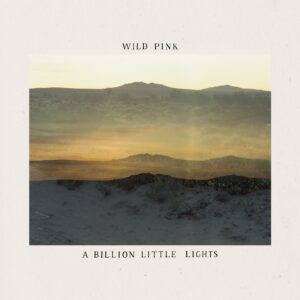 John Ross has been steadily expanding Wild Pink’s sound and vision with each album, and A Billion Little Lights is the project’s most cohesive and inviting effort to date. Recorded with producer David Greenbaum, the follow-up to 2018’s Yolk in the Fur incorporates more sweeping layers of bright, glossy synths to match Ross’ ambition, deftly balancing not just the sounds but also the romantic grandeur of heartland synth-rock with the sensitivity and warmth of late 2000s indie. Refreshingly, the band’s decision to broaden their horizons feels like more than just a default artistic move. Inspired by Carl Sagan’s Cosmos among various other works that he’s gracious enough to reference in his lyrics, Ross uses the album’s sprawling aesthetic as a canvas through which to grapple with the infinite expanse of the universe and his own place in it. Because it straddles the line between fantasy and nostalgia, the result feels both familiar and out of reach, as if chasing a vision that’s yet to fully materialize. When it does, one can only hope it captures the same magical splendour that this album naturally exudes.
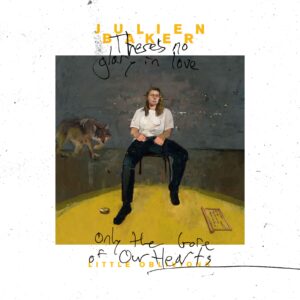 It’s almost impossible not to recognize some part of yourself in Julien Baker’s music. The Tennessee singer-songwriter offered an easy way in, laying her demons bare on her 2015 debut, Sprained Ankle, before coating her self-lacerating lyrics in the refined minimalism of 2017’s breakout Turn Out the Lights. Little Oblivions embraces a full-band sound and expands her palette in bolder and more noticeable ways than its predecessor did, but rather than hiding behind the additional layers of instrumentation – most of which Baker handled herself – she uses them to carve out new spaces that accentuate not just the bracing intimacy of her songwriting but also its emotional intensity and depth. Underneath it all is a self-aware portrait of survival in the midst of personal crisis, and if there’s a battle the album proves she’s won, it’s that of staying true to yourself – even when you’re not exactly sure what that entails, or where it leaves you. If her music continues to serve as a conduit for catharsis, it’s in tracing that journey – not necessarily relating to the trauma itself – that it retains a visceral resonance.
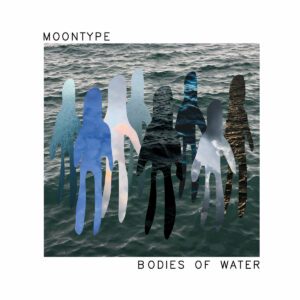 Before expanding into a trio with Ben Cruz on guitar and Emerson Hunton on drums, Moontype was the solo project of singer-songwriter Margaret McCarthy, and a handful of songs on their remarkable debut album, Bodies of Water, are reworkings from 2018’s spare Bass Tunes, Year 5. Throughout the album, the group’s diverse musical sensibilities and palpable chemistry elevate McCarthy’s intimate songwriting, which largely reflects on the changing nature of friendships; how susceptible they are to forces beyond our control, and how the need for them never really goes away. She makes interesting connections between people and landscape: “I’m thinking about the world as being alive, like, geologically, but I’m also thinking about people and relationships and emotional change. And I think that those two things kind of melded inside me somewhere,” she explained in our interview. In a similar way, the band’s fusion of styles evokes a yearning for connection through transcendent choruses that wash over you like a tide, but they’re equally capable of crafting a sticky hook as they are jumping into jazzy, math-rock territory. Whichever direction they move towards, Moontype retain an earnestness that’s echoed in their quietly unassuming yet powerfully evocative music.
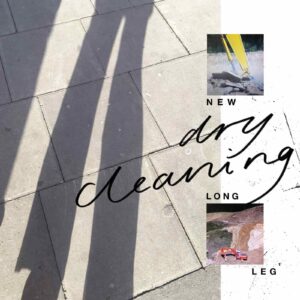 There’s nothing revolutionary about Dry Cleaning’s sound – a fact that, for a band who so neatly has come to represent the latest wave of British post-punk (the likes of black midi and Black Country, New Road, by comparison, lean much more heavily on the avant-garde), should be somewhat alarming. But there’s no denying that what the London band is doing on their debut album is fascinatingly absurd, and in its own way, kind of thrilling. Anchored by terrifically controlled performances from guitarist Tom Dowse, bassist Lewis Maynard, and drummer Nick Buxton, as well as intricate production from John Parish, Florence Shaw’s sardonic, playful delivery and strange non-sequiturs make the music feel like it exists in a world of its own, even if it primarily serves as an invitation to take a closer look around the real one. As Alyana Vera wrote in her
 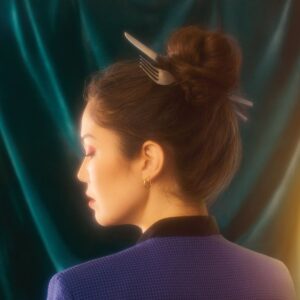 Really From’s effortless fusion of emo, math rock, and jazz will likely appeal to fans of any one of these genres, but what makes their music so resonant and compelling has more to do with the way they combine their individual voices. The band’s third, self-titled LP brims with personality – not just thanks to its honest and searing exploration of cultural identity, but also because the group harnesses the spirit of collaboration in ways that bring out rich and distinct flavours while maintaining an overall sense of fluidity. That openness bleeds into both the album’s musical arrangements as well as its lyrics, inviting the listener into a vulnerable space. Really From is less of a stylistic pivot than an apt distillation of what the band has always stood for, propelled by a newfound confidence that bolsters their unique artistic vision. Expanding their musical scope might be the only way for Really From to express their unbound creativity, but the true power of their music lies in untangling the chaos that’s buried underneath.
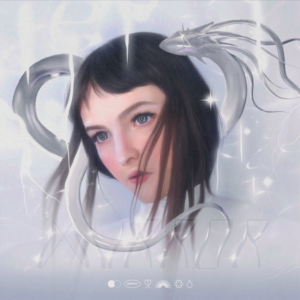 On her sophomore full-length, BABii sets out to convey the full scope of her ambition and establish herself as a dynamic creative force in her own right, not just as a collaborator (in addition to releasing the exhilarating XYZ as part of the GLOO collective with Iglooghost and Kai Whiston, she also had a hand in Iglooghost’s own sophomore LP Lei Line Eon). Both musically and conceptually, MiiRROR is a step above her debut HiiDE, carving out an expansive narrative world that’s rooted in fantasy as much as self-reflection; BABii digs through the wasteland of childhood memory to find it’s filled with both imaginary beings and strange artefacts. Where HiiDE focused on the dissolution of a romantic relationship, MiiRROR fixates on her difficult, on-and-off relationship with maternal figures and the absence they’ve left behind. Inspired by her reconnecting with her mother for the first time in 15 years, she confronts that personal struggle with striking directness on songs like ‘WASTE’ and ‘TRACKS’ while pushing her sound forward. The musical world BABii inhabits might be one defined by escapism, but few artists are able to combine a knack for world-building with deeply personal storytelling the way she does on MiiRROR.
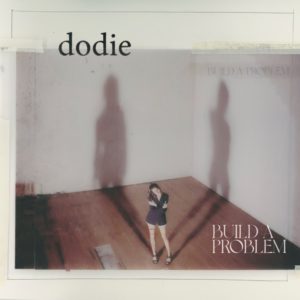 Though Build a Problem marks dodie’s first full-length release, the 25-year-old British singer-songwriter, born Dorothy Miranda Clark, has established a strong online presence with nearly 2 million subscribers on her main YouTube channel, and her three independently released EPs – 2016’s Intertwined, 2017’s You, and 2019’s Human – went on to reach the UK pop charts. One thing both her videos and her music have in common is that they both can feel like soul-baring admissions of vulnerability. Throughout her career, she’s channeled that intimacy through lush folk pop built around soft vocals and plucky acoustic guitars, and her debut LP is no different – this time, though, the variations in sound and mood also reflect the contradictions and inner battles she often speaks about in her discussions of mental health. Working with producer Joe Rubel as well as a 13-piece orchestra, dodie uses the extra space to experiment with different styles and structures as the album delves into darker, more dramatic territory, adding rich, complex layers to her explorations of self-worth, shame, and internal conflict.
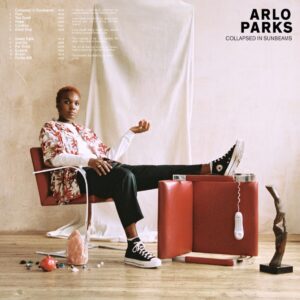 ‘Collapsed in Sunbeams’, the title track that also opens Arlo Parks’ debut album, is a spoken-word piece that not only establishes Parks’ poetic lyricism, but also reveals the way she tends to approach her narrative subjects: she starts by establishing her point of view (“I see myself…”), before bringing others in (“We’re all learning…”) and ultimately utilizing the unique power of the second person: “You shouldn’t be afraid to cry in front of me,” she says, then mutters, “I promise.” A wholly affecting and delicately crafted debut, Collapsed in Sunbeams is populated by an assortment of different characters, and Parks is equally adept at relaying the experiences of those close to her as she is at harnessing the poetic gift of writing about strangers. On the closing track, ‘Portra 400’, she recognizes the beauty in “making rainbows out of something painful,” which echoes an Audre Lorde quote Parks has often referred to: “Pain will either change or end.” Here, none of the characters’ pain seems to really change or end. But through her incisive observations and mellow, unshowy vocals, Parks is at least capable of making the air feel a little bit lighter.
 Born in Portugal to Belgian and Cape Verdean parents, Erika de Casier grew up in the Lisbon suburb of Estoril until she moved to the tiny Danish village of Ribe at the age of 8. After spending a year abroad in Vermont, she eventually settled in Copenhagen and taught herself music production in her bedroom. Though she had to learn to sing in a hushed tone so as not to disturb her flatmates, she’s since found ways to harness that intimacy to convey all manner of emotion, whether invoking the sensuality of ’90s and ’00s R&B or taking cues from the empowerment anthems of Destiny’s Child and TLC. She draws from both musical worlds on her latest album, Sensational, her second following 2019’s Essentials and first since signing to 4AD. Each subtle texture radiates warmth as well as newfound confidence, lending an air of playfulness to what is an otherwise stripped-back and relaxed affair. But more remarkable than her self-assured presence is de Casier’s ability to explore relationship dynamics with elegance and style, making her minimalist, confessional songs feel vivid and nuanced: not just palpably romantic, but full of possibility.
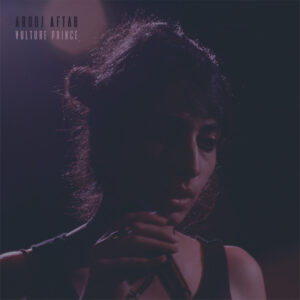 Arooj Aftab has described her new album, Vulture Prince, as being about “revisiting places I’ve called mine,” which feels like a fitting metaphor for her music as a whole. Opening with a new rendition of ‘Baghon Main’, a folk song the Brooklyn-based Pakistani composer first tackled on her 2014 debut Bird Under Water, the record employs classic Urdu lyrics dealing in themes of loss and yearning and embellishes them with stripped-back instrumentation that includes harp, acoustic guitar, double bass, and synths. A continuation of her debut and the follow-up to 2018’s ambient project Siren Islands, Vulture Prince is an album of devastating beauty – one whose nature shifted significantly following the passing of the singer’s younger brother Maher in the middle of the writing process. The arrangements are intimate and elegiac, while Aftab’s crystalline, elastic voice carries a depth of feeling that transcends any potential language barriers, transporting the listener into a realm where sorrow can briefly take the form of acceptance. The result is both a stunning artistic achievement and a melancholy lament whose spiritual resonance is amplified in the present moment.
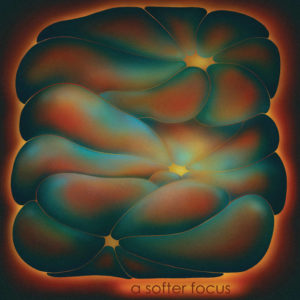 Throughout her career, claire rousay’s music has incorporated field recordings, voicemails, and percussive sounds to dissect the corners of human emotion and daily life that otherwise remain elusive and ambiguous. Following a prolific run of releases, a softer focus once again recontextualizes her work as it finds the San Antonio-based artist stepping into new sonic territory while building on the melodic elements that had started to seep into her music with 2020’s it was always worth it. Featuring contributions from OHMME’s Lia Kohl and Macie Stewart, multi-instrumentalist Ben Baker Billington, and violinist Alex Cunningham, a softer focus is a collaboration with painter and ceramicist Dani Toral, who, in creating the visual world for the album, set out to explore the “feelings of present familiarity” she felt with rousay, an emotional state rousay’s work intimately mirrors. Even if the lush ambient textures and scattered pop influences render it her most accessible and less esoteric effort to date, it’s still marked by the kind of attention to detail and personal candor that make those quiet moments vibrate with significance.
 Listening to Indigo Sparke’s music can feel like watching a star flicker in the dark country sky: from afar it can seem small and insubstantial, but once you consider the amount of energy that ripples through it, the moment can suddenly feel overwhelming in its intensity. Amid the soft glow of finger-picked guitar and delicate touches of piano, the Sydney-based singer-songwriter often uses that kind of cosmic language to relate her own experience on her debut album, Echo: “I have pulled apart the cosmos/ Trying to find you inside,” she sings on ‘Carnival’; on ‘Wolf’, she implores, “Come upstairs, let me show you all the parts you haven’t seen/ There’s a hell, there’s a heaven, there’s a universe exploding,” before comparing her lover to the moon. Recorded between Los Angeles, Italy, and New York, the follow-up to 2016’s Nightbloom EP was co-produced by Adrianne Lenker and frequent Big Thief collaborator Andrew Sarlo; the result is a mesmerizing record that’s charged with emotional intimacy without ever losing its poetic, intangible qualities. “Everything is dying,” she tenderly intones against the ghostly echo of an instrumental, “Everything is simple.”
 Rather than distancing themselves from the increased pertinence of their ideas in a time of unprecedented uncertainty, Godspeed You! Black Emperor deliver their radical message with more weight and urgency than ever on their first album in four years. Expanding on the melodic elements that ran through Luciferian Towers but leaning more firmly on the fury and power of their earlier work, G_d’s Pee AT STATE’S END might be one of the Canadian post-rock collective’s most immediately impactful and downright beautiful efforts to date, propelled by a new dynamism that’s less the result of timing than careful refinement of craft. Comprised of four pieces, two longer and two shorter, the album utilizes cryptic spoken-word passages and soundclips from shortwave radio to set an apocalyptic scene, but it’s the music itself that does the heavy lifting. The longer pieces are sprawling and ambitious, building to roaring climaxes filled with promise and rays of optimism; the shorter ones are mournful and meditative, floating through the cloud of cacophony with a kind of elegiac solemnity. By utilizing the perpetual cycle of build-up and release, GY!BE transmute those familiar forces into something rich and all-encompassing.