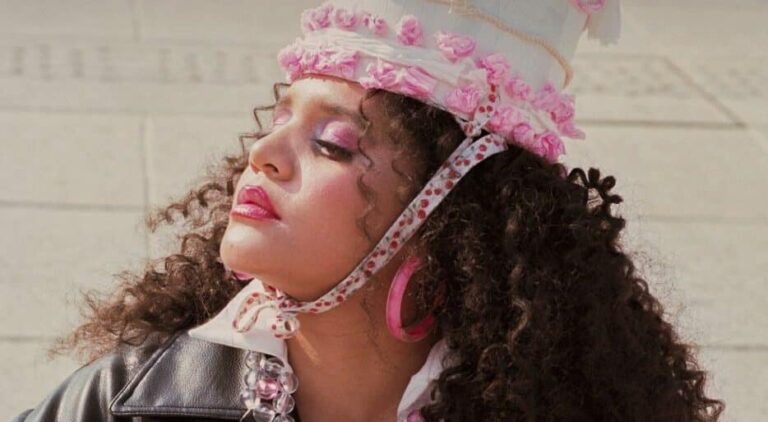
Lido Pimienta has shared a cover of Björk’s ‘Declare Independence’, from her 2007 album Volta. It’s part of the second annual Spotify Singles x Pride campaign, Pride 2021: Claim Your Space, which also comes with the release of an original song from Dua Saleh called ‘macrodosing’. Take a listen below.
“I chose this song mainly because of the lyrics: ‘Wave your flag, raise your flag, higher higher’ and ‘don’t let them do that to you’,” Pimienta explained in a press statement. “I heard this song live and I loved how all the immigrants in the audience were waving their flags. The sense of PRIDE we all felt then, I wanted to carry it through with this version, one that would honour my Caribbean roots and the camp of pride but most importantly, a message of love and revolution in togetherness and acceptance. Björk has been an inspiration to me, not only as a singer, but as a composer and producer, so this song is also a *thank you* to her for encouraging womxn like me to not be afraid to create my own sonic universe.”
Dua Saleh said of ‘macrodosing’: “This song is about my journey of overcoming challenges both as a trans person and as an independent artist. Lyrically, I claim that the world around me will mold itself to my expansive being. In return, I offer gratitude and pride for the blessings that come my way. When I first wrote it, I couldn’t stop singing it. I felt like I was in a trance. Something moved me to let it out and so it feels extremely nurturing.”
Lido Pimienta’s released her most recent album, Miss Colombia, last year. Dua Saleh’s most recent EP, Rosetta, also arrived last year.
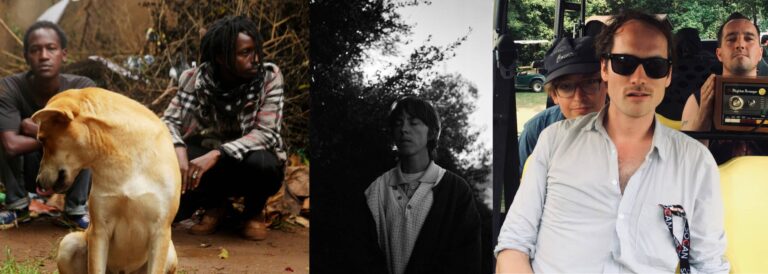
Hand Habits have shared a pair of new tracks, ‘motherless’ and ‘no reply’, as part of Sub Pop’s Singles Club. Sub Pop Singles Club Vol. 6 also includes ‘Cannis’ and ‘Mbukinya’ by Nairobi, Kenya’s Duma as well as ‘Furniture’ and ‘Half Twin’ by Canadian supergroup LIDS (featuring Alex Edkins of METZ, Brian Borcherdt of Holy Fuck/Dusted, and Doug MacGregor of Constantines). Check them all out below.
Hand Habits’ Meg Duffy recently launched a new collaborative project with producer Joel Ford called yes/and, whose self-titled LP is out September 23. A new Hand Habits album, produced by Sasami Ashworth, is due out later this year via Saddle Creek.
Chloe Foy’s debut album, Where Shall We Begin, has been ten years in the making. The Gloucestershire-via-Manchester songwriter released her debut single, ‘In The Middle of the Night’, all the way back in 2013, followed by a series of tracks that found success on Spotify, including ‘Flaws’ and ‘Asylum’, severalEPs, a tour with Jesca Hoop, and numerous festival appearances. But Foy’s first full-lengthsets out to present a fuller picture of her strengths as a musician and producer: influenced by her classical music education as well as songwriters like Gillian Welch and Edith Piaf and producers like Blake Mills and John Congleton, Foy worked on the record with her collaborator Harry Fausing Smith, who is also responsible for the beautiful and layered string arrangements that blossom throughout its 10 songs. Meditating on the loss of her father as well as her personal and creative journey over the past decade, Foy treats each song with tremendous care, infusing its sublime melodies and evocative lyrics with great warmth and intimacy. The mood ranges from quietly melancholic to empathetic, but as Foy coats each sentiment through her rich vocals and refined instrumentation, the result is both wonderfully cohesive and comforting.
We caught up with Chloe Foy for this edition of our Artist Spotlight interview series to talk about her musical journey, the process of making Where Shall We Begin, and more.
This album closes out a formative ten-year period for you. What has your relationship with writing been like during that time?
I think, like anything over the course of 10 years, it’s developed quite a lot. 10 years is a formative time no matter where you place in somebody’s life – this for me was from my teenager years into my 20s, and that included the loss of my father, as well as moving out into a bigger city to university and meeting all the different people and musicians that I’ve met up in Manchester that created this melting pot of influences. Not just from new music that I was listening to, but from peers that I was going to see play or starting to play with. Plus, I was doing a classical music degree at university. I’d gone from writing songs in my bedroom as a teenager – I mean, I still very much write songs in my bedroom, but they were a lot simpler in tone. I suppose I was always trying to tackle difficult subjects in my own life, but I think as the 10 years have gone along, I have paid more attention to my lyrics and how I’m getting the subject across, and also have just been more ambitious, perhaps, in my arrangements of songs and the structure of songs.
What initially inspired you to start making music?
I’d always done music in one way or another. [My parents] both loved music, and they never had that opportunity, so they put any of their extra pennies into me going to have some lessons. So I’d always been doing classical music from about the age of eight. My influence from my dad was, although I was playing classical music as a kid, the music I was listening to either at home or with friends at school was all popular music, so really what I was going away consuming was anything from like Rolling Stones, Joni Mitchell, Bob Dylan, which was from my dad, to whatever was currently on trend. I was big into indie bands, and also certainly had a very pop group phase from about the age of eight to 12. So I think putting those all together and then finally picking up the guitar around 13 or 14 – my dad was delighted I picked up the guitar because he could kind of relate to that a little more, perhaps. And then I think it was just my guitar teacher that said, you know, I’d learned the basic chords, “Why don’t you write a song?” And so I went away and did that, and then it just kind of spiraled from there.
You mentioned some traditional singer-songwriters, but I read that you’ve also cited producers like Blake Mills as having an influence on you. Were you always interested in that side of music – how things are produced – or was that something that came later on?
That’s been something that’s come a little later for me. It’s only been in recent years that I’ve truly appreciated the kind of curatorial role that [a producer] can play in a body of work. I think it was just one particular year, in 2017, when I suddenly caught on to Blake Mills, because that was the year that both Laura Marling released Semper Femina and Jesca Hoop released Memories Are Now. And it was drawing the line between those and going, “Wow, the same guy produced these.” What I love about that is that you can hear that he’s produced them, but at the same time, they’re very individual to the artists still. And having since gone on to work with Jesca Hoop, you know, they have a longstanding relationship, and so hearing about that producer-artist relationship has been really interesting.
On that note, you co-produced your debut album with Harry Fausing Smith, who also did the string arrangements for the record. What do you like about working with him? What’s that relationship like?
I mean, we go back a long way, so we’re old friends. And it’s been a project for both of us in a lot of ways. Although my name is on it, it’s been an opportunity for him too, because he had not produced a full record before, so really it was a chance for him to put his name to something and show what he could do in that capacity. Because really, he can play pretty much every instrument going, he’s got an excellent ear for arrangement and string work. He knows a lot of reference points that I was after and the place that I come from, so in that way it’s very representative of me.
Why did this feel like the right moment to produce your first full body of work?
Good question. I’d released a lot of singles and EPs prior to that and I was pretty ready to be more of an album-releasing artist. Although I’d had success on Spotify with singles, you know, it’s not totally quantifiable and it’s not totally real in some ways. And I felt I’d never got the chance so far to put out something that felt truly representative of me, because I think you can say so much with a single, and that’s great, but with an album you can say a diverse range of things within one sort of sound well. You can show people the true colors of yourself a bit more when you’ve got 10 songs to your name instead of two. So I was really keen to do that.
I feel that relates to the title of the album, because in my head, Where Shall We Begin is like, “Where do I begin telling this story? How do I put myself out there, and which parts or colours of myself do I show?” Does that sound right?
I think you’ve pretty much got it, yeah. Obviously, it’s quite nice that it neatly fits into it being a debut record. But there’s sort of that tongue-in-cheek question to it that’s a bit like, “Where on earth do we begin when it’s your first record and it’s a piece of you that’s going out into the world?” And obviously, it comes from that first song, which is probably the most existential song on the record, and which is kind of saying, “Where do we begin when we’re trying to examine the meaning of existence?” Because there’s not really a good place to start, so let’s just start here.
‘Shining Star’ is one of the most personal songs on the album, and you’ve talked about how it reflects on your father’s decision to not follow his passion in life, and how that gave you an early life lesson to pursue your own. I’m not sure how far back the origins of this song go, but I’m curious if your perspective on the subject has changed at all.
It’s something I’ve wrestled with over the last year, for sure, because COVID has come along and made it all the more challenging to continue to pursue a creative career. And I think a lot of creatives have felt hugely left out by society and by the government. So for me, I’ve wavered several times, having worked lots of different jobs whilst pursuing music for a long time, until the end of 2018 when I decided I would give it a go full time. And then 2019 I had this wonderful year that only seemed to get better, so I felt like I was just finding my place in the world. And then 2020 came along. I’ve had so many moments over the last year where I have wavered and thought, “Well, maybe I should do something else, because this is really, really hard.” Because I think all creatives enter into a creative pursuit knowing that it’s going to be hard in normal circumstances anyway, but then add a pandemic into the mix and that makes it a whole lot harder. So from that perspective, I have certainly thought about it a lot. And I understand the pressures that we have in society to conform to some sort of normality, primarily so that we get by financially. I understand how hard it is, but I think I’m still learning from my dad’s unhappiness. There’s still that root and fire in my belly that goes, “No, come on, keep trying.”
A song that resonated with me in a similar way is ‘And It Goes’, which is such a profoundly moving and empathetic track. Given its emotional weight, how much of a challenge was it to really get it right compared to the other songs?
Thank you, firstly. But it was really hard. I remember trying to sing that one and struggling quite a bit, because it’s a bit more choral as well so I think I was being overly self-critical about my vocal ability, especially towards the end. With that bit at the end of the layering of the vocals, that feels very much like a classically-inspired lullaby. But I think ultimately, you just put your heart and soul into it to try and get the emotional message across.
What did you want to channel with that kind of lullaby-like sound, and what was your headspace like when you were writing it?
I realized I had never really written a song about my mom – it had always been about the loss of my dad. And although this song is inspired by that, it has more of a positive background in that it’s sort of a dedication to my mom. And that ending with the “ohs”, it feels quite classical and choral to me, inspired by [how] classical composers go away and write a dedicated piece to someone, their beloved. I think that last bit came about towards the end of the process of writing, and in the first bit, I was just in the space of feeling a lot of love and feeling thankful for role that she has played in being there and being two parents. To me, it has always felt like a lullaby, because there’s parallels in there when I think about how she always makes me feel comforted, and always has done, and who was the person to sing lullabies to me as baby. So it’s trying to come full circle a bit.
There’s a certain vulnerability to these songs as well as compassion. There’s a line on ‘Work of Art’ specifically I wanted to mention, which is “made this for the weak of heart.” Do you have a certain audience in mind when you’re writing that will relate to that vulnerability?
When I write, I can say it’s not necessarily targeted at certain people, but I think by default it will end up in those who resonate with those lyrics. It’s funny because I struggle to be open about vulnerability in person and in speech, but when it comes to writing it down in song, I find it much more easy to be open about it. So I think hopefully the people that pay attention to those lyrics and find that something speaks to them there, they’ll probably find that they have something in common with the the next person who also feels the same about that. That’s why I like bringing lots of people together in a room, to find that commonality and vulnerability that we all have.
What do you hope those who listen to the album take away from it?
Just a sense of hope, ultimately. Because I think as I go through these songs and I pick things apart, there is that vulnerability there and there’s the loss that runs throughout, but there’s also, I would hope, this sense of possibility and resolve, despite these difficulties and these vulnerabilities, that ultimately we will survive, and that life is quite a wonderful thing.
This interview has been edited and condensed for clarity and length.
Throughout the week, we update our Best New Songs playlist with the new releases that caught our attention the most, be it a single leading up to the release of an album or a newly unveiled deep cut. And each Monday, we round up the best new songs released over the past week (the eligibility period begins on Monday and ends Sunday night) in this segment.
We all knew that Lorde season was around the corner (the track is a grower), but who could’ve anticipated Clairo returning with a new album announcement and single that same day? And that it would also be co-produced by Jack Antonoff? And that it would be a gentle yet stirring acoustic ballad featuring backing vocals from, that’s right, Lorde? If you’re looking for something a little less low-key, though, Megan Thee Stallion is also back and in top form on the assertive ‘Thot Shit’, whose accompanying music video is a must-watch. Also on this week’s list, we have ‘Crying’, a dramatic highlight from Pom Pom Squad’s upcoming debut record, as well as a new one from that album’s co-producer, illuminati hotties’ Sarah Tudzin, the summery, infectious ‘Pool Hopping’ (taken from her the forthcoming LP Let Me Do One More, out October 1; we missed that announcement). W. H. Lung announced their sophomore album Vanities with the propulsive dance track ‘Pearl in the Palm’; Madi Diaz delivered the emotive and lyrically complex ‘Woman in My Heart’ from her upcoming album History of a Feeling; Laura Stevenson shared the simmering and dynamic ‘State’; and finally, The Goon Sax previewed their third album with the fittingly hypnotic yet emotionally gripping ‘Psychic’.
Australia is often perceived as a sleepy country where not much happens. However, the ugly history of how (so-called) Australia became Australia is enough to feed generations of crime writers. From the Stolen Generation to mysterious disappearances in the infamous bushland or desert plains, dark material isn’t in short supply. The island’s harsh climate and landscape lend themselves to eerie, haunting stories of crime and mystery, with settings often acting as characters. Here are seven of the best haunting novels from Australian writers.
All Our Shimmering Skies by Trent Dalton
Molly Hook is the daughter of a gravedigger and the niece of his abusive brother. Set in 1942 Darwin, Japanese airforce attacks drive Molly away from her home and in search of the mysterious Longcoat Bob, who she believes cursed her family. She’s accompanied by Greta Maze, an actress, and Yukio, a Japanese fighter pilot. Along the way, this unlikely trio encounters many diverse characters and learns more about themselves than they thought would be possible.
This follow-up to Dalton’s successful debut, Boy Swallows Universe, is just as beautifully written. The language is as much a part of the story as the plot and the characters. Similarly, the natural landscape and the skies above Molly seem to actively engage in the plot.
The Dry by Jane Harper
The Dry recently premiered on the big screen, topping Australia’s box office for two consecutive weeks. Jane Harper’s novel is the first of the Aaron Falk series, which so far consists of two books. Aaron returns to his hometown of Kiewarra years after a series of life-changing events took place there in his youth. Now a Federal Police investigator, he returns for the funeral of his childhood best friend, Luke.
Luke has been accused of murdering his wife and children, then killing himself, but Aaron isn’t convinced this is true. Faced with his troubled past, Aaron finds the townsfolk shunning him upon his return, which makes his investigations rife with tension. As Aaron traipses the eerie dry plains of Kiewarra’s farming district, he gets closer to the truth of what happened to Luke’s family and more about his own past comes to light.
The Yellow House by Emily O’Grady
Winner of the 2018 Vogel Prize, The Yellow House is a story of redemption, loyalty, and betrayal. Ten-year-old Cub lives with her family – including her twin brother, Wally – on an isolated property near an abandoned knackery. They also live next door to a yellow house that belonged to Cub’s grandfather, Les. Les was a vicious criminal who lives on through the poor reputation he’s given Cub’s family, as well as the haunting surroundings.
Cast out by the other town residents, Cub always feels like an unimportant outsider. when her cousin and aunt move into the yellow house and begin to discover the family’s dark secrets, Cub is also exposed to the terrible history her parents have tried to hard to hide from her. The child-like voice of the story’s narrator juxtaposes the horrors of Les’s crimes and the eeriness of the nearby knackery – not to mention the yellow house – in an unsettling way.
The Natural Way of Things by Charlotte Wood
This story takes place on a deserted facility that claims to be a rehabilitation center for women but is really a prison manned by violent guards. The two women at the center of this story wake with no memory of how they got to this property in the middle of the desert – or any memory at all, for that matter. Eight other women are in the same situation, but they have yet to discover what they all have in common.
Soon, they learn that they have all been part of a public sex scandal with a man in power. With this new knowledge, it seems that the hunted are now the hunters, and their jailers may be the jailed. The novel’s clever exploration of modern corporate control and misogyny won Charlotte Wood the prestigious 2016 Stella Prize.
Sleeping Dogs by Sonya Hartnett
Published in 1995, Sleeping Dogs plays with the idea of letting sleeping dogs lie. In the book, the Willow family owns and lives in a dilapidated carvan park. The nature of their surroundings is reflected in the family’s dysfunctional dynamic; they’re depressed, violent, and totally isolated from the outside world.
One day, an artist named Bow Fox comes to stay at the park and seems intent on uncovering the family’s secrets. Desperate to remain hidden in the shadows, the Willows slowly spiral into madness. The high-stakes climax of the novel is shocking and satisfying, leaving readers with much to think about.
The Aunt’s Story by Patrick White
From Nobel Prize-winner Patrick White, his third novel is a complex and intricately written story of a woman’s grief. Theodora Goodman is a middle-aged woman who leaves Australia after her mother’s death. Traveling to France and America, Theodora reflects on her life and conjures entire worlds around her. Rejected by critics upon its publication in 1948, the story examines sanity and reality in a nuanced and almost obscure sort of way.
The Drover’s Wife by Henry Lawson
This classic Australian short story is set in the isolated outback, where a woman and her children are left alone for long periods of time while her husband is away with his sheep. The story depicts this woman’s struggle against the natural environment around her, which is a common theme in all of the books listed above. The Drover’s Wife was initially published in 1892 and became one of Henry Lawson’s most-read and re-printed works. Since its first publication, the story has been recreated in several mediums and influenced key Australian artworks.
Are you thinking of starting a blog on your website? If so, it’s worth checking what the project will involve before wading in. If you’ve already started one, you’ll know it’s quite a commitment to keep up and requires a fair amount of time, effort, and skill to attract a following. A quality blog can be quite useful for drawing attention to your online business, but it’s by no means essential, so consider these six crucial elements of successful blogging, to make sure it’s really for you.
Regular, quality writing
You need to feel comfortable with writing if you’re a blogger; otherwise, the activity will be a task rather than a pleasure, and readers will probably sense this. Your work needs to be fluent, clear, and expressive so that it can be read and understood easily. It also needs to be interesting or entertaining, to engage the reader. Spelling and grammar errors will put them off and reduce your perceived authority on the subject, so you’ll need a good command of the language and attention to detail when proofreading.
Pitching your style to your audience
Your posts will achieve little if readers can’t relate to them, so you’ll need to pitch them carefully. Consider what types of people your blog may be attracting and what tone and style would be likely to keep them reading. If your style is too dry and formal for them, for instance, or too chatty and frivolous, they may not bother reading your next post, whereas if you can gauge their preferred approach and tune into their wavelength, they’re more likely to stick with you.
Thinking up ideas to write about
Whether you’re thinking of daily, weekly or monthly posting, you’ll need a fresh, new subject or angle each time, with content to enrich it, which will involve thinking up ideas quickly, with accompanying plans for approach and embellishment. Some people find this easy, while for others, it’s a stumbling block, so try to envisage how you would cope.
Keeping on top of your subject
People will read your blog with the assumption you have some expertise or experience in the field and a view of your own to share. It’s therefore essential to project this image and to do so with the confidence of valid credentials. That may involve keeping abreast of changing facts, trends, and statistics, and what other bloggers and specialists are saying on the subject.
Enriching your articles with visual or audio input
If you’re relatively new to computing, make sure you’re familiar with the technical side of blogging before you start. You’ll need to know how to upload images and videos, for instance, and how to adjust your layout and design to best effect. You’ll also need resources for your uploaded content, which may mean going out and about to record music or events for audio or visual material, for instance. A creative, flexible approach will help you.
Linking in with social media
Remember that your posts don’t sit on your screen or hang in a bubble. They’re seized and read by countless people like yourself, and the more people you can reach, the better. Make sure your blog is linked in with all relevant online platforms and social media sites for instant access. If you’re not yet on Facebook, Twitter, LinkedIn or other appropriate sites, sign up now and feed your blog posts down those invaluable avenues.
If you feel less sure about blogging than you did after checking this list, then perhaps try it out for a while to see how you get on. Remember you have no duty to blog, and if you’ve gone right off the idea by now, that’s fine; you can focus your energy elsewhere online. But if you’re comfortable with these commitments and can see yourself in the role, go ahead and enjoy it.
Nonetheless, if you are looking for quality website design. Then it’s worth checking out this quality website design cambridge agency — Talks.
Earlier this week, Japanese Breakfast‘s Michelle Zauner performed‘Glider’, her song for the Sable soundtrack, at the Summer Game Fest livestream. A new trailer for the upcoming game has now been released, featuring a portion of the new song ‘Better The Mask’, which Zauner called “the best song I’ve ever written.” Check it out below.
Sable is set for release on September 23, 2021. The soundtrack, which is also out that day and will be available as a double-LP, 33-track release, marks the first project Zauner has composed and produced entirely on her own. “special thanks to @jorgeelbrecht for mixing Alex Santilli of @SpieceHouseSound for mastering, Eric Bogacz for additional engineering and Molly Germer, Veronica Jurkiewicz, Carolina Diazgranados for making beautiful sense of my sloppily written arrangement,” Zauner added.
In related news, a new version of Japanese Breakfast’s ‘Be Sweet’ features on the new trailer for The Sims 4 Cottage Living, sung entirely in Simlish. The singer-songwriter released her third album, Jubilee, earlier this month.
Ok I know you're all tired of me but there is a beautiful new Sable trailer featuring a portion of the best song I've ever written. This will be the first project I've composed and produced entirely on my own. The game and soundtrack comes out 9.23.21 https://t.co/MkS1hyAsHO
Bookings in holiday parks in Suffolk have increased considerably following the success of the Netflix film The Dig. The film by director Simon Stone was released in May this year and has already received a score of 87% on Rotten Tomatoes as well as 73% on Metacritic. The plot is largely based on the real-life discovery of the Anglo-Saxon ship-burial at Sutton Hoo. The ship is considered to be one of the most important recent archaeological findings in Britain, containing valuable Anglo-Saxon artefacts.
Ralph Fiennes and Carey Mulligan star in the historical film which takes place near the real excavation site in Suffolk. The Dig has become so successful that many people have decided to spend their holidays in Suffolk, taking in the magnificent coastline, pretty local villages and beautiful natural reserves.
Holiday bookings spike in Suffolk where the film took place
Holiday parks have noticed a large increase in bookings due to the popularity of the film. Many holidaymakers have chosen to stay in accommodations along the coast. According to Park Holidays UK the stunning landscapes shown in The Dig have inspired people to visit their Suffolk parks. There are five parks by Park Holidays UK in various locations on the coast, which offer the perfect sea-side holiday spot with a bit of history.
Park Holidays UK director Tony Clish explains: “Our Suffolk parks have always had a large and loyal following, but Netflix has done a magnificent job in publicising this enchanting area to a much wider audience. Our staff are being briefed so that they can advise guests on where to go to discover the filming locations used by Netflix both along the coast and inland.”
Apparently, some guests have even started their own little excavations. Clish noticed that “people seem to have been doing a bit of digging themselves, and identified our parks as among the best placed for making scenic discoveries.”
Is The Dig based on a real story?
The digging is inspired by the story of amateur archaeologist Basil Brown who makes an amazing discovery on the land of Edith Pretty. The ship burial war largely undisturbed when it was discovered and is thought to be the burial place of Rædwald of East Anglia. The finding was so significant that experts have been excavating the surrounding areas ever since.
Many historical facts in the show are accurate, however some things were changed for dramatic purposes. Rory Lomax (Johnny Flynn), for example, is a fictional character, which makes his relationship with Peggy Preston, played by Lily James, fictional as well. Besides Rory Lomax all other characters in The Dig are based on real people who were a part of the story in the late 1930s. Some dramatic scenes such as the one where a burial mound nearly collapses on Basil are not historically documented.
Among the treasures that were found in the burial ship at Sutton Hoo were a shield and a sword. The film not only offers some insights to a fascinating story, but also shows the true beauty of the stunning landscapes in Suffolk.
Sleater-Kinney are back with a new album. Path of Wellness marks Corin Tucker and Carrie Brownstein’s first album as a duo and their first without Janet Weiss since she joined the band in 1996; the drummer left before the release of the St. Vincent-produced 2019’s The Center Won’t Hold, explaining that she no longer felt like “a creative equal” in the band. Out now via Mom + Pop Music, Path of Wellness is also their first self-produced Sleater-Kinney album; the duo wrote and recorded the album during quarantine and enlisted local Portland musicians to help “bring their vision to life.”
Danny Elfman has returned with his first solo studio album in 37 years. Big Mess is out now via ANTI-/Epitaph and includes the previously released singles ‘True’, ‘Happy’, ‘Sorry’, ‘Love in the Time of Covid’, and ‘Kick Me’. Created during lockdown in 2020, the 18-track LP features contributions from drummer Josh Freese, bassist Stu Brooks, and guitarists Robin Finck and Nili Brosh. “Once I began writing, it was like opening a Pandora’s box and I found I couldn’t stop,” Elfman explained. “None of it was planned. I had no idea how many songs I would write but from the start, it quickly became a 2-sided project with heavily contrasting and even conflicting tones.” He added: “I knew from the start that this wasn’t going to be a neat, easy-to-categorise record. It was always destined to be this crazy cacophony because that’s who I am. The ‘Big Mess’ is me.”
King Gizzard & the Lizard Wizard have released their latest full-length album, Butterfly 3000, via their own KGLW label. It marks the psych-rock band’s third new album in less than a year following February’s L.W. and their 18th studio album overall. Recorded in the band’s homes during the pandemic, the album’s 10 songs “all began life as arpeggiated loops composed on modular synthesisers,” according to the band, who described the album as “melodic + psychedelic.” The record’s cover artwork is an autostereogram designed by regular collaborator Jason Galea.
BLACK METAL 2 is the sequel to Dean Blunt’s 2014 album Black Metal. The experimental artist – who is also one-half of Hype Williams, one-third of Babyfather, and has collaborated with A$AP Rocky, Mica Levi, and many others – announced the album just days ago with no promotional singles, and it’s out now digitally via Rough Trade and on vinyl, with physical copies arriving on October 22. The LP’s cover art appears to be a nod to Dr Dre’s album 2001.
Migos have delivered the long-awaited follow-up to 2018’s Culture II. The Atlanta trio’s latest contains a total of 19 tracks and features collaborations with Drake, Cardi B, Justin Bieber, Polo G, Future, and NBA Youngboy, as well as posthumous guest spots from Juice WRLD and Pop Smoke. It was preceded by the singles ‘Straightenin’ and last year’s ‘I Need It’, as well as ‘Avalanche, which they debuted on The Tonight Show Starring Jimmy Fallon earlier this week.
Marina has issued her fifth studio album, Ancient Dreams in a Modern Land, via Atlantic. The LP, which follows 2019’s Love + Fear, was previewed with four singles, ‘Man’s World’, ‘Purge the Poison’, the title track, and ‘Venus Fly Trap’. Marina Diamandis – who previously performed as Marina and the Diamonds – wrote every song on the album and co-produced five of its 10 tracks. Talking about how the COVID-19 pandemic affected the themes of the album in an interview with Billboard, the Welsh singer-songwriter said: “A lot of social problems have been unveiled for exactly what they are in the pandemic, and that’s definitely mirrored in some of the songs.”
Garbage have released a new album called No Gods No Masters. The follow-up to 2016’s Strange Little Birds was produced by longtime collaborator Billy Bush and was preceded by the singles ‘The Men Who Rule The World’, ‘Wolves’, and the title track. “This is our seventh record, the significant numerology of which affected the DNA of its content: the seven virtues, the seven sorrows, and the seven deadly sins,” the band explained in a statement. “It was our way of trying to make sense of how fucking nuts the world is and the astounding chaos we find ourselves in. It’s the record we felt that we had to make at this time.”
Other albums out today:
Chloe Foy, Where Shall We Begin; Polo G, Hall of Fame; Islands, Islomania;Pi’erre Bourne, The Life Of Pi’erre 5; AFI, Bodies; Azure Ray, Remedy; Maroon 5, Jordi; Jim Ward, Daggers.
It’s been a strange a year in music so far. This feels especially good to say, because using the word “strange” to refer to anything that happened in the first half of 2020 felt like a gross understatement. With many artists either laying dormant or using the past year to write and refine new material, there’s been a notable lack of major releases in the past few months – and if all the shows and festivals scheduled to take place later this year are any indication, we should be getting a lot of exciting music in the second half of 2021. But this doesn’t mean there hasn’t been plenty of great music to take in already: we were treated to some outstanding debuts, long-awaited returns, and a lot – a lot – of post-punk (for better or for worse, much of it is good).
But just like those post-punk records, genre is hardly what’s defined the best music of the year so far. As things start to open up, there’s a sense that the music that’s being released reflects these changes, whether intentionally or not. Talking about the timing of the release of her new album in our interview a month ago, Arooj Aftab spoke of there being “a very tiny sentiment of hope, a very small sliver of it,” like “a subtle sliding open of a door that has been closed for a while.” This seems to be the prevailing sentiment that connects many of these albums, and we can’t wait to see what the rest of the year has in store.
Here, in no particular order, are the 30 best albums of 2021 so far. (Early June releases aren’t included, but you might want to check out that new Japanese Breakfast album.)
“So tell me how it felt/ When you walked on water/ Did you get your wish?/ Floating to the surface/ Quicker than you sank,” Porter Robinson sings on ‘Get Your Wish’, the first in a series of singles leading up to the release of his sophomore album, Nurture. Touted as the wunderkind of the EDM scene at age 18, the Atlanta-born EDM producer’s meteoric rise to international stardom was followed by an intense period of depression and creative drought, where he struggled to overcome feelings of self-doubt and questioned whether he’d ever make music again. Nurture doesn’t so much mirror the highs and lows of success as it does the pure rush of experimentation and discovery, like stepping into the outside world for the first time: its infectious choruses and pyrotechnic synths sweep you up in a tide of euphoria, while its ambient, minimalist passages pull you back down, gently floating in a stream of incoherent thoughts and disembodied memories. Robinson’s vision is so bright and kaleidoscopic, so sincere in its expression of both joy and sadness, that it’s impossible not to immerse yourself in this wonderfully strange, life-affirming journey.
One of 2021’s most ambitious and compelling albums comes from an anonymous Korean musician who describes themselves as “just a student writing music in my bedroom” whose “singing skills are fucking awful.” And that’s just from the project’s description on Bandcamp, where the album blew up; in rareinterviews, Parannoul has also admitted to being terrible at guitar and mixing, deeming their music “overrated.” Those things may be true, but they don’t detract from the emotional intensity and breadth of To See the Next Part of the Dream. Perhaps its relatability can partly be attributed to the feelings of internalized shame and depression that pervade much of the album, but the driving force behind the music, and what makes it so fresh and intimate, is its earnestness – and the contradictions found within it. That its technical flaws are intentional goes without saying, but what’s truly remarkable is how overwhelming the music sounds without descending into self-indulgence. A concept album about an adult whose present reality is haunted by the adolescent fantasies of his past, Parannoul has said they “wanted to make a sophisticated lie rather than the unfinished truth.” Somehow, the record manages to be both at the same time.
A feeling of vertigo creeps in as soon as you press play on Spirit of the Beehive’s latest record. But like everything else about the Philadelphia trio’s music, that feeling soon begins to mutate, veering off in countless different directions that are impossible to keep track of but are mirrored, as if through fractured glass, in the album’s cryptic lyrics: “a fantasy, a sedative,” “filled with smoke, seamless dread;” “compressed in a vacuum;” “it permeates/ beyond the scope of vision.” In contrast to their last album, 2018’s Hypnic Jerks, each track on ENTERTAINMENT, DEATH is stylized in all-caps, but their sound is too fragmented, too lethargic to be called maximalist. Through a freakish mix of gauzy synth textures, off-kilter percussion, and processed vocals, they elicit the kind of horror that’s too vague to recall and too pervasive to escape, like letting unfiltered thoughts course through your mind as your body descends into an abyss. Then you wake up, stare feverishly into the sun, and question everything: to quote highlight ‘IT MIGHT TAKE SOME TIME’, “Do you realize you’re caught in a web?”
Though their lyrics can be downbeat and their performances unnerving, part of what separates Squid from their contemporaries is that there’s an infectious energy to their eclectic blend of jazz, krautrock, funk, and post-rock that’s designed to retain the listener’s attention rather than make a show of their versatility. After showcasing an impressive command of space in a series of well-received singles that leaned more heavily on nervous ecstasy than apocalyptic gloom, their debut LP not only confirms they can achieve the same impact in the album format, but also reveals the true scope of their ambitions: even at its most wildly experimental, Bright Green Field never loses its sense of momentum, zooming out of a specific scene to paint a grander and more frightening picture. Though their songwriting process is entirely collaborative, Judge writes most of the album’s lyrics, which expose the trappings of modern society by drawing on a wide range of cultural influences, imagined places, and real-world environments – especially London. Bright Green Field lays out a scene both massive and claustrophobic, its characters as lost as they are connected, all – narrator included – aching to break free. For them, the release never really comes.
How do respond to crises? This is the fundamental question behind Toronto-based songwriter Tamara Lindeman’s fifth studio album as the Weather Station, Ignorance. The title of the album might give the impression that the 36-year-old has arrived at a less-than-heartening conclusion, but in the process of working through different types of conflict, she has also crafted a shimmering collection of songs that tap into feelings of profound grief and existential wonder. Expanding her palette through an array of synths, strings, and percussion hinting at 80s sophistipop and modern folk-rock, the project’s new sonic direction smoothly complements the richness and complexity of Lindeman’s writing, which continues to look inwards but is infused with a new kind of openness. The album elegantly oscillates between the personal and the universal, at times wringing beauty out of heartbreak but more often interested in simply being in tune with it, and by extension, the world around her – a world on the brink of unprecedented environmental catastrophe. The fact that Lindeman has always sung with her whole heart and an open-eyed curiosity only makes her refusal to succumb to indifference all the more powerful.
Freeform jazz, post-rock, and the Jewish tradition of klezmer all make up Black Country, New Road’s riveting stylistic blend, but you’re more likely to appreciate the London band’s creative spirit by paying attention to the contributions of each the band’s members, from vocalist Isaac Wood’s often absurd yet impassioned musings to Lewis Evans’ frantic saxophone and Georgia Ellery’s sweeping violin; Charlie Wayne’s agile drumming, Tyler Hyde’s menacing bass, and May Kershaw’s twitchy synths also form the backbone of the unnerving opening track and provide startling dynamics throughout the album. Though there seem to be virtually no limits to the band’s musical instincts, all seven members are perpetually in sync with one another, carrying momentum even when their incendiary crescendos come closer to approximating uncontrollable chaos. For the first time serves as a dazzling display of the heights that music can reach, even if it ultimately leaves you with more questions than answers – and I guess, in some way, that’s part of the magic of a really good first impression.
The Armed’s fourth full-length is not only a magnificent manifestation of the band’s unique vision, but also one of the most riveting and ambitious releases of the year so far. The music on ULTRAPOP is muscular and abrasive and primed for maximum impact, but none of it is propped up by mythos or pretense. As the group’s mastermind Dan Green puts it in an introductory essay, the album “seeks only to create the most intense experience possible, a magnification of all culture, beauty, and things,” adding, “It’s the harshest, most beautiful, most hideous thing we could make.” It’s in that contrast that the record owes much of its power: not so much balancing the loud and the delicate but creating a space where both can thrive. ULTRAPOP might make you wonder what would happen if PC Music had a hand in Deafheaven’s success, but it sounds less like the unexpected pairing of two disparate forces than a dozen minds operating as one. It doesn’t so much push the boundaries of pop and heavy music as much as it heats them into vapor, and the result is equal parts euphoric and chaotic.
Katy Kirby’s debut album, Cool Dry Place, is a shimmering and heartfelt collection of songs that spring from a place of radiant intimacy. “I tap twice on your doorframe and you let me in/ I tap twice on your forehead and a heart appears,” she sings softly on ‘Tap Twice’, while the title track sees her repeating the question, “Can I come over? Is it too late? Would you keep me in a cool, dry place?” With lyrics that feel personal even when she assumes an outside perspective (‘Juniper’, ‘Fireman’), Kirby has such a delicate way of capturing everyday moments of beauty and poetry that the codes of communication she comes up with in the process – her “secret language” – feel both new and familiar, wonderfully complex yet approachable. ‘Cool Dry Place’ opens with the lines “just another episode of tenderness/ in a long, long string of similar events,” and Kirby’s gift lies in the ability to hold each of them still just long enough so she can trace a line between them.
Mdou Moctar and his band – rhythm guitarist Ahmoudou Madassane, drummer Souleymane Ibrahim, and Brooklyn-based bassist and producer Mikey Coltun, who travels days just to rehearse with the others – continue to refine their approach on Afrique Victime, tightening its predecessor’s full-band sound without scarifying its spontaneity and live dynamics. The result is raw yet accessible, tapping into something primal and elemental while sounding quite unlike anything you’re likely to hear this year. Its main strength is not originality as much as a heightened sense of control: while previous Mdou Moctar albums have pushed boundaries, Afrique Victime brings a new dimensionality to the band’s explosive sound, fusing the Tuareg guitarist’s various sonic touchpoints – from guitar legends such as ZZ Top and Eddie Van Halen to African artists like Abdallah Ag Oumbadougou – while allowing other elements to take more space in the mix. The juxtaposition of organic and electronic textures in particular – atmospheric field recordings on one hand, drum machines and AutoTuned vocals on the other – simultaneously gives the album an earthly and surreal quality. If the word “incandescent” can be used to describe most of Mdou Moctar’s catalog, Afrique Victime takes things a step further as it reaches moments of transcendence.
In the summer of 2019, New York songwriter Cassandra Jenkins was ready to join David Berman on his comeback tour as Purple Mountains, only to find herself mourning his loss mere days later. On ‘Ambiguous Norway’, a highlight from her magnificent second album An Overview on Phenomenal Nature, we find her landing in Oslo, unsure what to do with the now purposeless tour outfit that’s arrived in the mail. Returning to New York after having started work on the album in Norway, she collaborated with producer Josh Kaufman to flesh out its seven songs. As a whole, the record is less about processing that particular moment in time than it is about learning how to navigate and grapple with the nature of change. Sifting through the light haze of the instrumentals like a sunray peaking through the clouds, her tone remains conversational yet gentle, her writing as perceptive as it is affecting. “Empty space is my escape/ It runs through me like a river,” she sings on ‘Crosshairs’, yet there’s a comfort in the subtle ways she tries to fill that space, lifting the paddle out of the water only to appreciate the view around her.
2019’s hauntingly beautiful Ghosteen may have been the final installment in what Nick Cave has described as a trilogy of albums, but the glimmers of hope that seeped through its serene, ethereal soundscapes gave way to no real conclusion. Once again eschewing narrative conventions for a more impressionistic style of writing, Cave’s new album with longtime Bad Seed and close collaborator Warren Ellis is similarly if not more amorphous as he circles back to familiar motifs that have been prevalent throughout his career. On Ghosteen he was “a lonely rider across the sky,” and here he keeps referring to “that kingdom in the sky,” some eternally bright light we’re all ceaselessly pursuing. Written during the early stages of lockdown, Cave and Ellis’ first non-soundtrack album as a duo leans into the stark minimalism of their recent material while pushing their sound – sometimes tentatively, sometimes more aggressively – into bold new territory. Far from a nostalgic release, Carnage reckons with themes of death, suffering, and the apocalypse through a lens that’s more suited to both Cave’s personal and artistic trajectory and the current state of the world.
On her first two albums as IAN SWEET, 2016’s Shapeshifter and 2018’s Crusher Crusher, Jilian Medford dove into varying indie-pop textures in search of a dynamic that felt honest enough to match both her ambitions and the earnestness of her songwriting. Though it’s not hard to trace her artistic growth throughout these records, it wasn’t until her latest release, Show Me How You Disappear, that Medford was fully satisfied with the result. Written after the singer-songwriter had completed a two-month outpatient program following increasingly severe panic attacks, the album grapples with internalized trauma in an attempt to chart a path towards self-acceptance. With help from a number of handpicked producers, including Andrew Sarlo (Big Thief, Empress Of) and Andy Seltzer (Maggie Rogers), she sharpens and amplifies her approach in ways that not only evoke the overwhelming intensity her emotions but are marked by a towering confidence that at times seems to transcend them. That newfound clarity cuts through a haze of synths on the final of the album’s many transformative mantras: “I see it now, I see it/ So much more than before/ I see everything.”
Co-produced by Sylvan Esso’s Nick Sanborn and recorded in quarantine with a handful of collaborators, Head of Roses represents a natural step forward in Jenn Wasner’s artistic evolution. It’s a profoundly personal and honest record that centers on feeling rather than concept or narrative, showcasing her strengths as a lyricist and musician who’s able to comfortably explore new territory without using it to shield herself from vulnerability. Sanborn’s synth textures provide rich layers for her and the listener to swim around, but the production extracts a wholly different kind of magic out of Wasner’s emotive voice, by far the most powerful and engaging presence on the album. Throughout the album, she reckons with parts of herself that feel foreign or unreachable, getting lost in distant fantasies (as on the tender, achingly earnest ‘Hard Way’ or the spine-chilling ‘One More Hour’) but finding pockets of truth in the process. Though a breakup album at its core, Head of Roses is about, and borne out of, a craving for human connection – and the ways we try to hold on to those sparks of intimacy without losing our individuality.
Two years ago, black midi captured the attention of virtually everyone interested in rock music of the more adventurous variety with their ferocious, boundary-pushing debut, Schlagenheim. The London art-rockers don’t sacrifice one bit of their chaotic ethos on their sophomore full-length, but their focus does shift significantly. Though as restless and unpredictable as its predecessor, Cavalcade shows a band willing to introduce more structure and atmosphere into their normally improvisational style, though it’s not its harmonic elements that stand out as much as the music’s intentionality and nuance. ‘Diamond Stuff’ seems less concerned with quickly ratcheting up tension or catching the listener off guard than the simple but delicate act of building mood, while ‘Slow’ is as ominous as it is hyperactive, balancing technical precision with a propulsive edge and ultimately erupting in a whirlwind of frantic guitars and screeching saxophone. Cavalcade does have some unusually straightforward moments, but in “relentlessly trying to untie our knots, of rivers and roads that defy all sense,” as guitarist and de facto frontman Geordie Greep sings on the gentle ‘Marlene Dietrich’, the music only becomes more complex and elusive.
Arriving three years after her debut EP, 2018’s ethereal Bodies of Water (not to be confused with another album on this list), Claire George’s deeply affecting The Land Beyond the Light sees the Los Angeles-based artist expanding her sound, setting her evocative vocals against more layers of organic instrumentation, including real bass and guitar, to reflect the very real feelings of grief that sit at the heart of the songs. Originally conceived as a break-up record, the gravity of the project shifted significantly in the wake of the death of one of her friends and ex-boyfriends to substance abuse. Channeling personal tragedy through the cathartic pull of dance music is nothing new, but George grapples with themes of loss, mental illness, and addiction with bracing vulnerability and a depth of feeling that’s rare in the genre. From the wrenching ‘Northern Lights’ to the strangely comforting ‘Bag of Peaches’, the album flits between youthful memories of the past and the overwhelming weight of the present; George finds flickers of light in the midst of darkness not by concealing it, but by allowing space for both – even when they threaten to drown her out.
Sixteen years after their beloved 2005 LP Superwolf, guitarist Matt Sweeney and singer-songwriter Will Oldham have returned with Superwolves, billed not just as a follow-up but a direct sequel to its predecessor. It’s perhaps no surprise that they’ve managed to recapture that same energy – their nearly 25-year-old friendship has only sharpened their ability to play off each other’s strengths, becoming the sole constant character throughout the album’s loose and ambiguous narratives. But Superwolves is also marked by a newfound sense of vitality and purpose: these are crisp, buoyant songs that eschew the introverted, solitary qualities often associated with the singer-songwriter tag without stripping away the unique intimacy that can arise from it. There’s still a lot to unpack, but the ease with which the two artists exchange ideas is accompanied by songwriting that, at its core, is stronger and more direct than before, relying on emotional impact rather than ambivalence. “Got no friends, got no home/ There must be a someone I can turn to,” Oldham sings on highlight ‘There Must Be Someone’; Sweeney steps in for a brief solo halfway through, but his playing remains less an answer than a constant, reassuring presence.
There’s an undeniable urgency to Sons of Kemet’s music that’s a key component of every one of Shabaka Hutchings’ projects, but here it’s also informed by a heightened political consciousness that comes through both in their propulsive compositions and conceptual ambitions. The improvisational jazz quartet’s latest release, Black to the Future, is the most powerful and pertinent expression of their unique dynamic to date. Twin drummers Edward Wakili-Hick and Tom Skinner provide a rhythmic backbone that not only gives the music a nervous quality but also makes it feel rooted to the earth, while tuba player Theon Cross casts a heavy, ominous cloud over the proceedings. But it’s Hutchings’ layers of clarinet and saxophone that light the fire, one that takes many different forms throughout the duration of the LP. Following 2018’s Your Queen Is a Reptile and recorded in the midst of last year’s Black Lives Matter protests, Black to the Future is fuelled by a similar sense of purpose: to “redefine and reaffirm what it means to strive for Black power,” as Hutchings writes in the liner notes. And it does so with tenacity and fervour, presenting a radical vision of the future built on the foundations of the past.
John Ross has been steadily expanding Wild Pink’s sound and vision with each album, and A Billion Little Lights is the project’s most cohesive and inviting effort to date. Recorded with producer David Greenbaum, the follow-up to 2018’s Yolk in the Fur incorporates more sweeping layers of bright, glossy synths to match Ross’ ambition, deftly balancing not just the sounds but also the romantic grandeur of heartland synth-rock with the sensitivity and warmth of late 2000s indie. Refreshingly, the band’s decision to broaden their horizons feels like more than just a default artistic move. Inspired by Carl Sagan’s Cosmos among various other works that he’s gracious enough to reference in his lyrics, Ross uses the album’s sprawling aesthetic as a canvas through which to grapple with the infinite expanse of the universe and his own place in it. Because it straddles the line between fantasy and nostalgia, the result feels both familiar and out of reach, as if chasing a vision that’s yet to fully materialize. When it does, one can only hope it captures the same magical splendour that this album naturally exudes.
It’s almost impossible not to recognize some part of yourself in Julien Baker’s music. The Tennessee singer-songwriter offered an easy way in, laying her demons bare on her 2015 debut, Sprained Ankle, before coating her self-lacerating lyrics in the refined minimalism of 2017’s breakout Turn Out the Lights. Little Oblivions embraces a full-band sound and expands her palette in bolder and more noticeable ways than its predecessor did, but rather than hiding behind the additional layers of instrumentation – most of which Baker handled herself – she uses them to carve out new spaces that accentuate not just the bracing intimacy of her songwriting but also its emotional intensity and depth. Underneath it all is a self-aware portrait of survival in the midst of personal crisis, and if there’s a battle the album proves she’s won, it’s that of staying true to yourself – even when you’re not exactly sure what that entails, or where it leaves you. If her music continues to serve as a conduit for catharsis, it’s in tracing that journey – not necessarily relating to the trauma itself – that it retains a visceral resonance.
Before expanding into a trio with Ben Cruz on guitar and Emerson Hunton on drums, Moontype was the solo project of singer-songwriter Margaret McCarthy, and a handful of songs on their remarkable debut album, Bodies of Water, are reworkings from 2018’s spare Bass Tunes, Year 5. Throughout the album, the group’s diverse musical sensibilities and palpable chemistry elevate McCarthy’s intimate songwriting, which largely reflects on the changing nature of friendships; how susceptible they are to forces beyond our control, and how the need for them never really goes away. She makes interesting connections between people and landscape: “I’m thinking about the world as being alive, like, geologically, but I’m also thinking about people and relationships and emotional change. And I think that those two things kind of melded inside me somewhere,” she explained in our interview. In a similar way, the band’s fusion of styles evokes a yearning for connection through transcendent choruses that wash over you like a tide, but they’re equally capable of crafting a sticky hook as they are jumping into jazzy, math-rock territory. Whichever direction they move towards, Moontype retain an earnestness that’s echoed in their quietly unassuming yet powerfully evocative music.
There’s nothing revolutionary about Dry Cleaning’s sound – a fact that, for a band who so neatly has come to represent the latest wave of British post-punk (the likes of black midi and Black Country, New Road, by comparison, lean much more heavily on the avant-garde), should be somewhat alarming. But there’s no denying that what the London band is doing on their debut album is fascinatingly absurd, and in its own way, kind of thrilling. Anchored by terrifically controlled performances from guitarist Tom Dowse, bassist Lewis Maynard, and drummer Nick Buxton, as well as intricate production from John Parish, Florence Shaw’s sardonic, playful delivery and strange non-sequiturs make the music feel like it exists in a world of its own, even if it primarily serves as an invitation to take a closer look around the real one. As Alyana Vera wrote in her review: “Life is already pretty absurd; Dry Cleaning’s real strength is their ability to drop us into disorientingly similar but surreal versions of our own world, where everyday life isn’t mundane but full of little stories waiting to be uncovered.”
Really From’s effortless fusion of emo, math rock, and jazz will likely appeal to fans of any one of these genres, but what makes their music so resonant and compelling has more to do with the way they combine their individual voices. The band’s third, self-titled LP brims with personality – not just thanks to its honest and searing exploration of cultural identity, but also because the group harnesses the spirit of collaboration in ways that bring out rich and distinct flavours while maintaining an overall sense of fluidity. That openness bleeds into both the album’s musical arrangements as well as its lyrics, inviting the listener into a vulnerable space. Really From is less of a stylistic pivot than an apt distillation of what the band has always stood for, propelled by a newfound confidence that bolsters their unique artistic vision. Expanding their musical scope might be the only way for Really From to express their unbound creativity, but the true power of their music lies in untangling the chaos that’s buried underneath.
On her sophomore full-length, BABii sets out to convey the full scope of her ambition and establish herself as a dynamic creative force in her own right, not just as a collaborator (in addition to releasing the exhilarating XYZ as part of the GLOO collective with Iglooghost and Kai Whiston, she also had a hand in Iglooghost’s own sophomore LP Lei Line Eon). Both musically and conceptually, MiiRROR is a step above her debut HiiDE, carving out an expansive narrative world that’s rooted in fantasy as much as self-reflection; BABii digs through the wasteland of childhood memory to find it’s filled with both imaginary beings and strange artefacts. Where HiiDE focused on the dissolution of a romantic relationship, MiiRROR fixates on her difficult, on-and-off relationship with maternal figures and the absence they’ve left behind. Inspired by her reconnecting with her mother for the first time in 15 years, she confronts that personal struggle with striking directness on songs like ‘WASTE’ and ‘TRACKS’ while pushing her sound forward. The musical world BABii inhabits might be one defined by escapism, but few artists are able to combine a knack for world-building with deeply personal storytelling the way she does on MiiRROR.
Though Build a Problem marks dodie’s first full-length release, the 25-year-old British singer-songwriter, born Dorothy Miranda Clark, has established a strong online presence with nearly 2 million subscribers on her main YouTube channel, and her three independently released EPs – 2016’s Intertwined, 2017’s You, and 2019’s Human – went on to reach the UK pop charts. One thing both her videos and her music have in common is that they both can feel like soul-baring admissions of vulnerability. Throughout her career, she’s channeled that intimacy through lush folk pop built around soft vocals and plucky acoustic guitars, and her debut LP is no different – this time, though, the variations in sound and mood also reflect the contradictions and inner battles she often speaks about in her discussions of mental health. Working with producer Joe Rubel as well as a 13-piece orchestra, dodie uses the extra space to experiment with different styles and structures as the album delves into darker, more dramatic territory, adding rich, complex layers to her explorations of self-worth, shame, and internal conflict.
‘Collapsed in Sunbeams’, the title track that also opens Arlo Parks’ debut album, is a spoken-word piece that not only establishes Parks’ poetic lyricism, but also reveals the way she tends to approach her narrative subjects: she starts by establishing her point of view (“I see myself…”), before bringing others in (“We’re all learning…”) and ultimately utilizing the unique power of the second person: “You shouldn’t be afraid to cry in front of me,” she says, then mutters, “I promise.” A wholly affecting and delicately crafted debut, Collapsed in Sunbeams is populated by an assortment of different characters, and Parks is equally adept at relaying the experiences of those close to her as she is at harnessing the poetic gift of writing about strangers. On the closing track, ‘Portra 400’, she recognizes the beauty in “making rainbows out of something painful,” which echoes an Audre Lorde quote Parks has often referred to: “Pain will either change or end.” Here, none of the characters’ pain seems to really change or end. But through her incisive observations and mellow, unshowy vocals, Parks is at least capable of making the air feel a little bit lighter.
Born in Portugal to Belgian and Cape Verdean parents, Erika de Casier grew up in the Lisbon suburb of Estoril until she moved to the tiny Danish village of Ribe at the age of 8. After spending a year abroad in Vermont, she eventually settled in Copenhagen and taught herself music production in her bedroom. Though she had to learn to sing in a hushed tone so as not to disturb her flatmates, she’s since found ways to harness that intimacy to convey all manner of emotion, whether invoking the sensuality of ’90s and ’00s R&B or taking cues from the empowerment anthems of Destiny’s Child and TLC. She draws from both musical worlds on her latest album, Sensational, her second following 2019’s Essentials and first since signing to 4AD. Each subtle texture radiates warmth as well as newfound confidence, lending an air of playfulness to what is an otherwise stripped-back and relaxed affair. But more remarkable than her self-assured presence is de Casier’s ability to explore relationship dynamics with elegance and style, making her minimalist, confessional songs feel vivid and nuanced: not just palpably romantic, but full of possibility.
Arooj Aftab has described her new album, Vulture Prince, as being about “revisiting places I’ve called mine,” which feels like a fitting metaphor for her music as a whole. Opening with a new rendition of ‘Baghon Main’, a folk song the Brooklyn-based Pakistani composer first tackled on her 2014 debut Bird Under Water, the record employs classic Urdu lyrics dealing in themes of loss and yearning and embellishes them with stripped-back instrumentation that includes harp, acoustic guitar, double bass, and synths. A continuation of her debut and the follow-up to 2018’s ambient project Siren Islands, Vulture Prince is an album of devastating beauty – one whose nature shifted significantly following the passing of the singer’s younger brother Maher in the middle of the writing process. The arrangements are intimate and elegiac, while Aftab’s crystalline, elastic voice carries a depth of feeling that transcends any potential language barriers, transporting the listener into a realm where sorrow can briefly take the form of acceptance. The result is both a stunning artistic achievement and a melancholy lament whose spiritual resonance is amplified in the present moment.
Throughout her career, claire rousay’s music has incorporated field recordings, voicemails, and percussive sounds to dissect the corners of human emotion and daily life that otherwise remain elusive and ambiguous. Following a prolific run of releases, a softer focus once again recontextualizes her work as it finds the San Antonio-based artist stepping into new sonic territory while building on the melodic elements that had started to seep into her music with 2020’s it was always worth it. Featuring contributions from OHMME’s Lia Kohl and Macie Stewart, multi-instrumentalist Ben Baker Billington, and violinist Alex Cunningham, a softer focus is a collaboration with painter and ceramicist Dani Toral, who, in creating the visual world for the album, set out to explore the “feelings of present familiarity” she felt with rousay, an emotional state rousay’s work intimately mirrors. Even if the lush ambient textures and scattered pop influences render it her most accessible and less esoteric effort to date, it’s still marked by the kind of attention to detail and personal candor that make those quiet moments vibrate with significance.
Listening to Indigo Sparke’s music can feel like watching a star flicker in the dark country sky: from afar it can seem small and insubstantial, but once you consider the amount of energy that ripples through it, the moment can suddenly feel overwhelming in its intensity. Amid the soft glow of finger-picked guitar and delicate touches of piano, the Sydney-based singer-songwriter often uses that kind of cosmic language to relate her own experience on her debut album, Echo: “I have pulled apart the cosmos/ Trying to find you inside,” she sings on ‘Carnival’; on ‘Wolf’, she implores, “Come upstairs, let me show you all the parts you haven’t seen/ There’s a hell, there’s a heaven, there’s a universe exploding,” before comparing her lover to the moon. Recorded between Los Angeles, Italy, and New York, the follow-up to 2016’s Nightbloom EP was co-produced by Adrianne Lenker and frequent Big Thief collaborator Andrew Sarlo; the result is a mesmerizing record that’s charged with emotional intimacy without ever losing its poetic, intangible qualities. “Everything is dying,” she tenderly intones against the ghostly echo of an instrumental, “Everything is simple.”
Rather than distancing themselves from the increased pertinence of their ideas in a time of unprecedented uncertainty, Godspeed You! Black Emperor deliver their radical message with more weight and urgency than ever on their first album in four years. Expanding on the melodic elements that ran through Luciferian Towers but leaning more firmly on the fury and power of their earlier work, G_d’s Pee AT STATE’S END might be one of the Canadian post-rock collective’s most immediately impactful and downright beautiful efforts to date, propelled by a new dynamism that’s less the result of timing than careful refinement of craft. Comprised of four pieces, two longer and two shorter, the album utilizes cryptic spoken-word passages and soundclips from shortwave radio to set an apocalyptic scene, but it’s the music itself that does the heavy lifting. The longer pieces are sprawling and ambitious, building to roaring climaxes filled with promise and rays of optimism; the shorter ones are mournful and meditative, floating through the cloud of cacophony with a kind of elegiac solemnity. By utilizing the perpetual cycle of build-up and release, GY!BE transmute those familiar forces into something rich and all-encompassing.






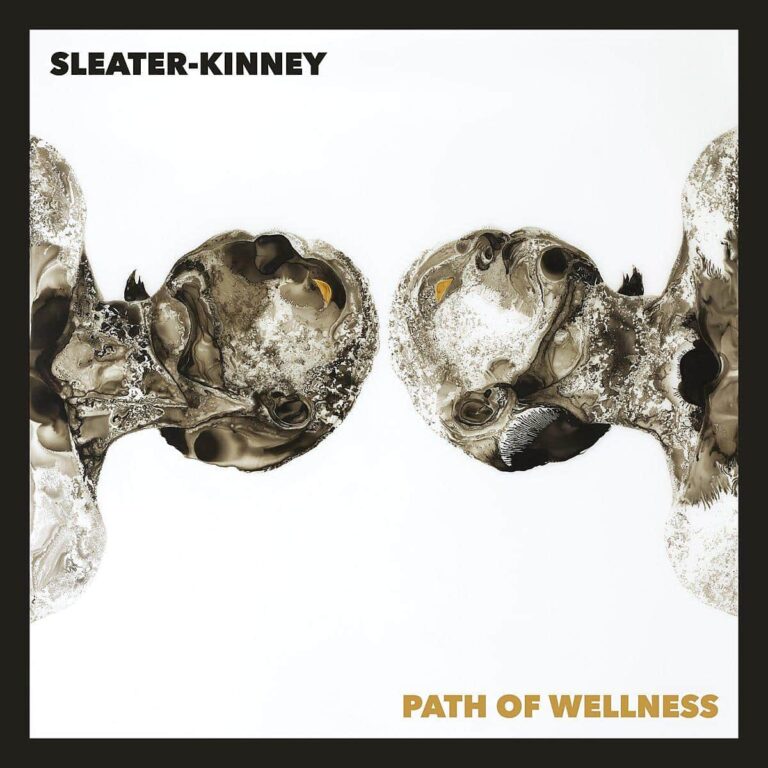

 Sleater-Kinney
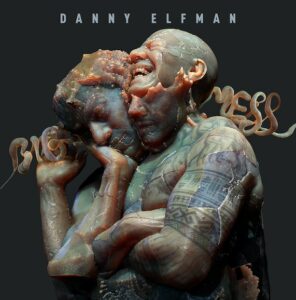 Danny Elfman
 BLACK METAL 2
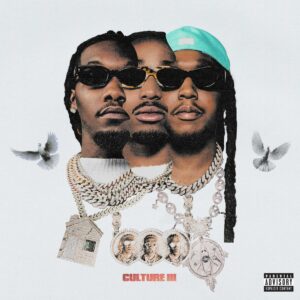 Migos
Migos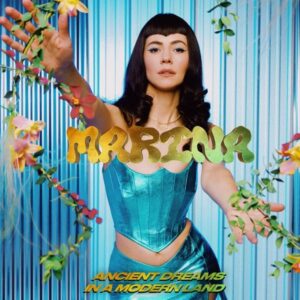 Marina
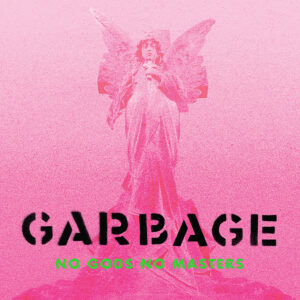 Garbage
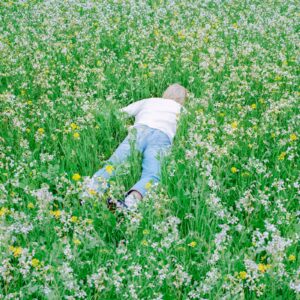 “So tell me how it felt/ When you walked on water/ Did you get your wish?/ Floating to the surface/ Quicker than you sank,” Porter Robinson sings on ‘Get Your Wish’, the first in a series of singles leading up to the release of his sophomore album, Nurture. Touted as the wunderkind of the EDM scene at age 18, the Atlanta-born EDM producer’s meteoric rise to international stardom was followed by an intense period of depression and creative drought, where he struggled to overcome feelings of self-doubt and questioned whether he’d ever make music again. Nurture doesn’t so much mirror the highs and lows of success as it does the pure rush of experimentation and discovery, like stepping into the outside world for the first time: its infectious choruses and pyrotechnic synths sweep you up in a tide of euphoria, while its ambient, minimalist passages pull you back down, gently floating in a stream of incoherent thoughts and disembodied memories. Robinson’s vision is so bright and kaleidoscopic, so sincere in its expression of both joy and sadness, that it’s impossible not to immerse yourself in this wonderfully strange, life-affirming journey.
 One of 2021’s most ambitious and compelling albums comes from an anonymous Korean musician who describes themselves as “just a student writing music in my bedroom” whose “singing skills are fucking awful.” And that’s just from the project’s description on Bandcamp, where the album blew up; in
 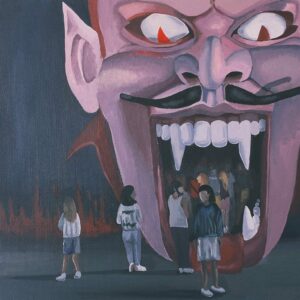 A feeling of vertigo creeps in as soon as you press play on Spirit of the Beehive’s latest record. But like everything else about the Philadelphia trio’s music, that feeling soon begins to mutate, veering off in countless different directions that are impossible to keep track of but are mirrored, as if through fractured glass, in the album’s cryptic lyrics: “a fantasy, a sedative,” “filled with smoke, seamless dread;” “compressed in a vacuum;” “it permeates/ beyond the scope of vision.” In contrast to their last album, 2018’s Hypnic Jerks, each track on ENTERTAINMENT, DEATH is stylized in all-caps, but their sound is too fragmented, too lethargic to be called maximalist. Through a freakish mix of gauzy synth textures, off-kilter percussion, and processed vocals, they elicit the kind of horror that’s too vague to recall and too pervasive to escape, like letting unfiltered thoughts course through your mind as your body descends into an abyss. Then you wake up, stare feverishly into the sun, and question everything: to quote highlight ‘IT MIGHT TAKE SOME TIME’, “Do you realize you’re caught in a web?”
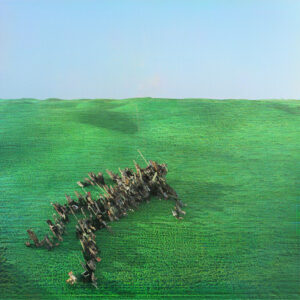 Though their lyrics can be downbeat and their performances unnerving, part of what separates Squid from their contemporaries is that there’s an infectious energy to their eclectic blend of jazz, krautrock, funk, and post-rock that’s designed to retain the listener’s attention rather than make a show of their versatility. After showcasing an impressive command of space in a series of well-received singles that leaned more heavily on nervous ecstasy than apocalyptic gloom, their debut LP not only confirms they can achieve the same impact in the album format, but also reveals the true scope of their ambitions: even at its most wildly experimental, Bright Green Field never loses its sense of momentum, zooming out of a specific scene to paint a grander and more frightening picture. Though their songwriting process is entirely collaborative, Judge writes most of the album’s lyrics, which expose the trappings of modern society by drawing on a wide range of cultural influences, imagined places, and real-world environments – especially London. Bright Green Field lays out a scene both massive and claustrophobic, its characters as lost as they are connected, all – narrator included – aching to break free. For them, the release never really comes.
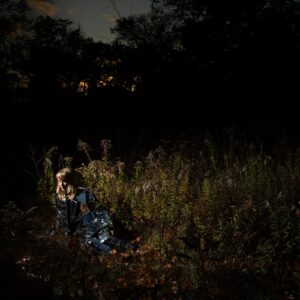 How do respond to crises? This is the fundamental question behind Toronto-based songwriter Tamara Lindeman’s fifth studio album as the Weather Station, Ignorance. The title of the album might give the impression that the 36-year-old has arrived at a less-than-heartening conclusion, but in the process of working through different types of conflict, she has also crafted a shimmering collection of songs that tap into feelings of profound grief and existential wonder. Expanding her palette through an array of synths, strings, and percussion hinting at 80s sophistipop and modern folk-rock, the project’s new sonic direction smoothly complements the richness and complexity of Lindeman’s writing, which continues to look inwards but is infused with a new kind of openness. The album elegantly oscillates between the personal and the universal, at times wringing beauty out of heartbreak but more often interested in simply being in tune with it, and by extension, the world around her – a world on the brink of unprecedented environmental catastrophe. The fact that Lindeman has always sung with her whole heart and an open-eyed curiosity only makes her refusal to succumb to indifference all the more powerful.
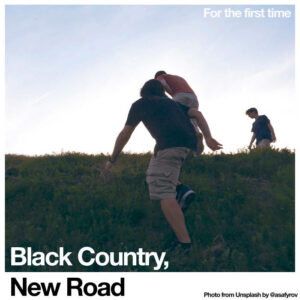 Freeform jazz, post-rock, and the Jewish tradition of klezmer all make up Black Country, New Road’s riveting stylistic blend, but you’re more likely to appreciate the London band’s creative spirit by paying attention to the contributions of each the band’s members, from vocalist Isaac Wood’s often absurd yet impassioned musings to Lewis Evans’ frantic saxophone and Georgia Ellery’s sweeping violin; Charlie Wayne’s agile drumming, Tyler Hyde’s menacing bass, and May Kershaw’s twitchy synths also form the backbone of the unnerving opening track and provide startling dynamics throughout the album. Though there seem to be virtually no limits to the band’s musical instincts, all seven members are perpetually in sync with one another, carrying momentum even when their incendiary crescendos come closer to approximating uncontrollable chaos. For the first time serves as a dazzling display of the heights that music can reach, even if it ultimately leaves you with more questions than answers – and
  The Armed’s fourth full-length is not only a magnificent manifestation of the band’s unique vision, but also one of the most riveting and ambitious releases of the year so far. The music on ULTRAPOP is muscular and abrasive and primed for maximum impact, but none of it is propped up by mythos or pretense. As the group’s mastermind Dan Green puts it in an introductory essay, the album “seeks only to create the most intense experience possible, a magnification of all culture, beauty, and things,” adding, “It’s the harshest, most beautiful, most hideous thing we could make.” It’s in that contrast that the record owes much of its power: not so much balancing the loud and the delicate but creating a space where both can thrive. ULTRAPOP might make you wonder what would happen if PC Music had a hand in Deafheaven’s success, but it sounds less like the unexpected pairing of two disparate forces than a dozen minds operating as one. It doesn’t so much push the boundaries of pop and heavy music as much as it heats them into vapor, and the result is equal parts euphoric and chaotic.
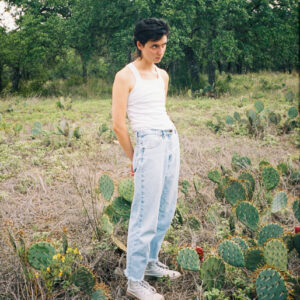 Katy Kirby’s debut album, Cool Dry Place, is a shimmering and heartfelt collection of songs that spring from a place of radiant intimacy. “I tap twice on your doorframe and you let me in/ I tap twice on your forehead and a heart appears,” she sings softly on ‘Tap Twice’, while the title track sees her repeating the question, “Can I come over? Is it too late? Would you keep me in a cool, dry place?” With lyrics that feel personal even when she assumes an outside perspective (‘Juniper’, ‘Fireman’), Kirby has such a delicate way of capturing everyday moments of beauty and poetry that the codes of communication she comes up with in the process – her “secret language” – feel both new and familiar, wonderfully complex yet approachable. ‘Cool Dry Place’ opens with the lines “just another episode of tenderness/ in a long, long string of similar events,” and Kirby’s gift lies in the ability to hold each of them still just long enough so she can trace a line between them.
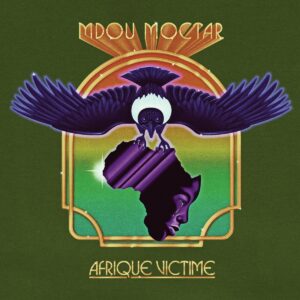 Mdou Moctar and his band – rhythm guitarist Ahmoudou Madassane, drummer Souleymane Ibrahim, and Brooklyn-based bassist and producer Mikey Coltun, who travels days just to rehearse with the others – continue to refine their approach on Afrique Victime, tightening its predecessor’s full-band sound without scarifying its spontaneity and live dynamics. The result is raw yet accessible, tapping into something primal and elemental while sounding quite unlike anything you’re likely to hear this year. Its main strength is not originality as much as a heightened sense of control: while previous Mdou Moctar albums have pushed boundaries, Afrique Victime brings a new dimensionality to the band’s explosive sound, fusing the Tuareg guitarist’s various sonic touchpoints – from guitar legends such as ZZ Top and Eddie Van Halen to African artists like Abdallah Ag Oumbadougou – while allowing other elements to take more space in the mix. The juxtaposition of organic and electronic textures in particular – atmospheric field recordings on one hand, drum machines and AutoTuned vocals on the other – simultaneously gives the album an earthly and surreal quality. If the word “incandescent” can be used to describe most of Mdou Moctar’s catalog, Afrique Victime takes things a step further as it reaches moments of transcendence.
 In the summer of 2019, New York songwriter Cassandra Jenkins was ready to join David Berman on his comeback tour as Purple Mountains, only to find herself mourning his loss mere days later. On ‘Ambiguous Norway’, a highlight from her magnificent second album An Overview on Phenomenal Nature, we find her landing in Oslo, unsure what to do with the now purposeless tour outfit that’s arrived in the mail. Returning to New York after having started work on the album in Norway, she collaborated with producer Josh Kaufman to flesh out its seven songs. As a whole, the record is less about processing that particular moment in time than it is about learning how to navigate and grapple with the nature of change. Sifting through the light haze of the instrumentals like a sunray peaking through the clouds, her tone remains conversational yet gentle, her writing as perceptive as it is affecting. “Empty space is my escape/ It runs through me like a river,” she sings on ‘Crosshairs’, yet there’s a comfort in the subtle ways she tries to fill that space, lifting the paddle out of the water only to appreciate the view around her.
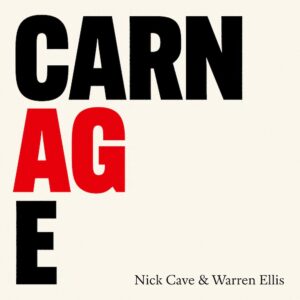 2019’s hauntingly beautiful Ghosteen may have been the final installment in what Nick Cave has described as a trilogy of albums, but the glimmers of hope that seeped through its serene, ethereal soundscapes gave way to no real conclusion. Once again eschewing narrative conventions for a more impressionistic style of writing, Cave’s new album with longtime Bad Seed and close collaborator Warren Ellis is similarly if not more amorphous as he circles back to familiar motifs that have been prevalent throughout his career. On Ghosteen he was “a lonely rider across the sky,” and here he keeps referring to “that kingdom in the sky,” some eternally bright light we’re all ceaselessly pursuing. Written during the early stages of lockdown, Cave and Ellis’ first non-soundtrack album as a duo leans into the stark minimalism of their recent material while pushing their sound – sometimes tentatively, sometimes more aggressively – into bold new territory. Far from a nostalgic release, Carnage reckons with themes of death, suffering, and the apocalypse through a lens that’s more suited to both Cave’s personal and artistic trajectory and the current state of the world.
 On her first two albums as IAN SWEET, 2016’s Shapeshifter and 2018’s Crusher Crusher, Jilian Medford dove into varying indie-pop textures in search of a dynamic that felt honest enough to match both her ambitions and the earnestness of her songwriting. Though it’s not hard to trace her artistic growth throughout these records, it wasn’t until her latest release, Show Me How You Disappear, that Medford was fully satisfied with the result. Written after the singer-songwriter had completed a two-month outpatient program following increasingly severe panic attacks, the album grapples with internalized trauma in an attempt to chart a path towards self-acceptance. With help from a number of handpicked producers, including Andrew Sarlo (Big Thief, Empress Of) and Andy Seltzer (Maggie Rogers), she sharpens and amplifies her approach in ways that not only evoke the overwhelming intensity her emotions but are marked by a towering confidence that at times seems to transcend them. That newfound clarity cuts through a haze of synths on the final of the album’s many transformative mantras: “I see it now, I see it/ So much more than before/ I see everything.”
 Co-produced by Sylvan Esso’s Nick Sanborn and recorded in quarantine with a handful of collaborators, Head of Roses represents a natural step forward in Jenn Wasner’s artistic evolution. It’s a profoundly personal and honest record that centers on feeling rather than concept or narrative, showcasing her strengths as a lyricist and musician who’s able to comfortably explore new territory without using it to shield herself from vulnerability. Sanborn’s synth textures provide rich layers for her and the listener to swim around, but the production extracts a wholly different kind of magic out of Wasner’s emotive voice, by far the most powerful and engaging presence on the album. Throughout the album, she reckons with parts of herself that feel foreign or unreachable, getting lost in distant fantasies (as on the tender, achingly earnest ‘Hard Way’ or the spine-chilling ‘One More Hour’) but finding pockets of truth in the process. Though a breakup album at its core, Head of Roses is about, and borne out of, a craving for human connection – and the ways we try to hold on to those sparks of intimacy without losing our individuality.
 Two years ago, black midi captured the attention of virtually everyone interested in rock music of the more adventurous variety with their ferocious, boundary-pushing debut, Schlagenheim. The London art-rockers don’t sacrifice one bit of their chaotic ethos on their sophomore full-length, but their focus does shift significantly. Though as restless and unpredictable as its predecessor, Cavalcade shows a band willing to introduce more structure and atmosphere into their normally improvisational style, though it’s not its harmonic elements that stand out as much as the music’s intentionality and nuance. ‘Diamond Stuff’ seems less concerned with quickly ratcheting up tension or catching the listener off guard than the simple but delicate act of building mood, while ‘Slow’ is as ominous as it is hyperactive, balancing technical precision with a propulsive edge and ultimately erupting in a whirlwind of frantic guitars and screeching saxophone. Cavalcade does have some unusually straightforward moments, but in “relentlessly trying to untie our knots, of rivers and roads that defy all sense,” as guitarist and de facto frontman Geordie Greep sings on the gentle ‘Marlene Dietrich’, the music only becomes more complex and elusive.
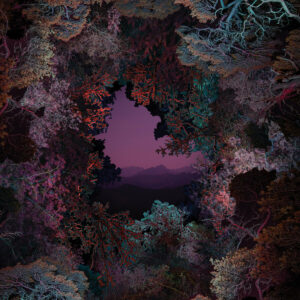 Arriving three years after her debut EP, 2018’s ethereal Bodies of Water (not to be confused with another album on this list), Claire George’s deeply affecting The Land Beyond the Light sees the Los Angeles-based artist expanding her sound, setting her evocative vocals against more layers of organic instrumentation, including real bass and guitar, to reflect the very real feelings of grief that sit at the heart of the songs. Originally conceived as a break-up record, the gravity of the project shifted significantly in the wake of the death of one of her friends and ex-boyfriends to substance abuse. Channeling personal tragedy through the cathartic pull of dance music is nothing new, but George grapples with themes of loss, mental illness, and addiction with bracing vulnerability and a depth of feeling that’s rare in the genre. From the wrenching ‘Northern Lights’ to the strangely comforting ‘Bag of Peaches’, the album flits between youthful memories of the past and the overwhelming weight of the present; George finds flickers of light in the midst of darkness not by concealing it, but by allowing space for both – even when they threaten to drown her out.
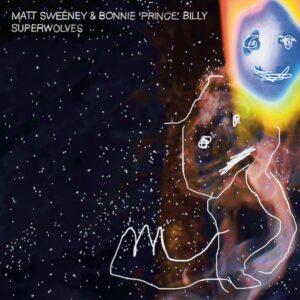 Sixteen years after their beloved 2005 LP Superwolf, guitarist Matt Sweeney and singer-songwriter Will Oldham have returned with Superwolves, billed not just as a follow-up but a direct sequel to its predecessor. It’s perhaps no surprise that they’ve managed to recapture that same energy – their nearly 25-year-old friendship has only sharpened their ability to play off each other’s strengths, becoming the sole constant character throughout the album’s loose and ambiguous narratives. But Superwolves is also marked by a newfound sense of vitality and purpose: these are crisp, buoyant songs that eschew the introverted, solitary qualities often associated with the singer-songwriter tag without stripping away the unique intimacy that can arise from it. There’s still a lot to unpack, but the ease with which the two artists exchange ideas is accompanied by songwriting that, at its core, is stronger and more direct than before, relying on emotional impact rather than ambivalence. “Got no friends, got no home/ There must be a someone I can turn to,” Oldham sings on highlight ‘There Must Be Someone’; Sweeney steps in for a brief solo halfway through, but his playing remains less an answer than a constant, reassuring presence.
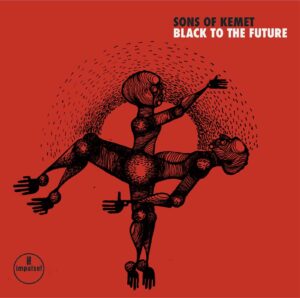 There’s an undeniable urgency to Sons of Kemet’s music that’s a key component of every one of Shabaka Hutchings’ projects, but here it’s also informed by a heightened political consciousness that comes through both in their propulsive compositions and conceptual ambitions. The improvisational jazz quartet’s latest release, Black to the Future, is the most powerful and pertinent expression of their unique dynamic to date. Twin drummers Edward Wakili-Hick and Tom Skinner provide a rhythmic backbone that not only gives the music a nervous quality but also makes it feel rooted to the earth, while tuba player Theon Cross casts a heavy, ominous cloud over the proceedings. But it’s Hutchings’ layers of clarinet and saxophone that light the fire, one that takes many different forms throughout the duration of the LP. Following 2018’s Your Queen Is a Reptile and recorded in the midst of last year’s Black Lives Matter protests, Black to the Future is fuelled by a similar sense of purpose: to “redefine and reaffirm what it means to strive for Black power,” as Hutchings writes in the liner notes. And it does so with tenacity and fervour, presenting a radical vision of the future built on the foundations of the past.
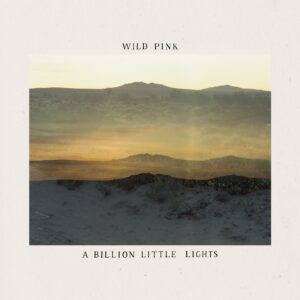 John Ross has been steadily expanding Wild Pink’s sound and vision with each album, and A Billion Little Lights is the project’s most cohesive and inviting effort to date. Recorded with producer David Greenbaum, the follow-up to 2018’s Yolk in the Fur incorporates more sweeping layers of bright, glossy synths to match Ross’ ambition, deftly balancing not just the sounds but also the romantic grandeur of heartland synth-rock with the sensitivity and warmth of late 2000s indie. Refreshingly, the band’s decision to broaden their horizons feels like more than just a default artistic move. Inspired by Carl Sagan’s Cosmos among various other works that he’s gracious enough to reference in his lyrics, Ross uses the album’s sprawling aesthetic as a canvas through which to grapple with the infinite expanse of the universe and his own place in it. Because it straddles the line between fantasy and nostalgia, the result feels both familiar and out of reach, as if chasing a vision that’s yet to fully materialize. When it does, one can only hope it captures the same magical splendour that this album naturally exudes.
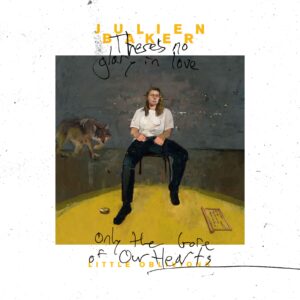 It’s almost impossible not to recognize some part of yourself in Julien Baker’s music. The Tennessee singer-songwriter offered an easy way in, laying her demons bare on her 2015 debut, Sprained Ankle, before coating her self-lacerating lyrics in the refined minimalism of 2017’s breakout Turn Out the Lights. Little Oblivions embraces a full-band sound and expands her palette in bolder and more noticeable ways than its predecessor did, but rather than hiding behind the additional layers of instrumentation – most of which Baker handled herself – she uses them to carve out new spaces that accentuate not just the bracing intimacy of her songwriting but also its emotional intensity and depth. Underneath it all is a self-aware portrait of survival in the midst of personal crisis, and if there’s a battle the album proves she’s won, it’s that of staying true to yourself – even when you’re not exactly sure what that entails, or where it leaves you. If her music continues to serve as a conduit for catharsis, it’s in tracing that journey – not necessarily relating to the trauma itself – that it retains a visceral resonance.
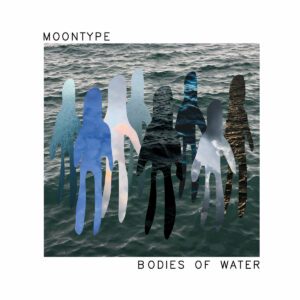 Before expanding into a trio with Ben Cruz on guitar and Emerson Hunton on drums, Moontype was the solo project of singer-songwriter Margaret McCarthy, and a handful of songs on their remarkable debut album, Bodies of Water, are reworkings from 2018’s spare Bass Tunes, Year 5. Throughout the album, the group’s diverse musical sensibilities and palpable chemistry elevate McCarthy’s intimate songwriting, which largely reflects on the changing nature of friendships; how susceptible they are to forces beyond our control, and how the need for them never really goes away. She makes interesting connections between people and landscape: “I’m thinking about the world as being alive, like, geologically, but I’m also thinking about people and relationships and emotional change. And I think that those two things kind of melded inside me somewhere,” she explained in our interview. In a similar way, the band’s fusion of styles evokes a yearning for connection through transcendent choruses that wash over you like a tide, but they’re equally capable of crafting a sticky hook as they are jumping into jazzy, math-rock territory. Whichever direction they move towards, Moontype retain an earnestness that’s echoed in their quietly unassuming yet powerfully evocative music.
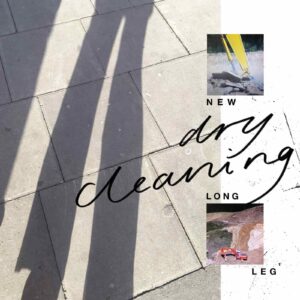 There’s nothing revolutionary about Dry Cleaning’s sound – a fact that, for a band who so neatly has come to represent the latest wave of British post-punk (the likes of black midi and Black Country, New Road, by comparison, lean much more heavily on the avant-garde), should be somewhat alarming. But there’s no denying that what the London band is doing on their debut album is fascinatingly absurd, and in its own way, kind of thrilling. Anchored by terrifically controlled performances from guitarist Tom Dowse, bassist Lewis Maynard, and drummer Nick Buxton, as well as intricate production from John Parish, Florence Shaw’s sardonic, playful delivery and strange non-sequiturs make the music feel like it exists in a world of its own, even if it primarily serves as an invitation to take a closer look around the real one. As Alyana Vera wrote in her
  Really From’s effortless fusion of emo, math rock, and jazz will likely appeal to fans of any one of these genres, but what makes their music so resonant and compelling has more to do with the way they combine their individual voices. The band’s third, self-titled LP brims with personality – not just thanks to its honest and searing exploration of cultural identity, but also because the group harnesses the spirit of collaboration in ways that bring out rich and distinct flavours while maintaining an overall sense of fluidity. That openness bleeds into both the album’s musical arrangements as well as its lyrics, inviting the listener into a vulnerable space. Really From is less of a stylistic pivot than an apt distillation of what the band has always stood for, propelled by a newfound confidence that bolsters their unique artistic vision. Expanding their musical scope might be the only way for Really From to express their unbound creativity, but the true power of their music lies in untangling the chaos that’s buried underneath.
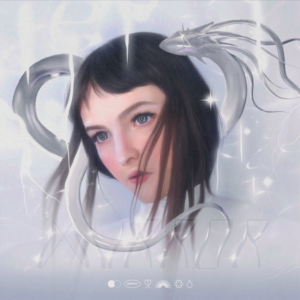 On her sophomore full-length, BABii sets out to convey the full scope of her ambition and establish herself as a dynamic creative force in her own right, not just as a collaborator (in addition to releasing the exhilarating XYZ as part of the GLOO collective with Iglooghost and Kai Whiston, she also had a hand in Iglooghost’s own sophomore LP Lei Line Eon). Both musically and conceptually, MiiRROR is a step above her debut HiiDE, carving out an expansive narrative world that’s rooted in fantasy as much as self-reflection; BABii digs through the wasteland of childhood memory to find it’s filled with both imaginary beings and strange artefacts. Where HiiDE focused on the dissolution of a romantic relationship, MiiRROR fixates on her difficult, on-and-off relationship with maternal figures and the absence they’ve left behind. Inspired by her reconnecting with her mother for the first time in 15 years, she confronts that personal struggle with striking directness on songs like ‘WASTE’ and ‘TRACKS’ while pushing her sound forward. The musical world BABii inhabits might be one defined by escapism, but few artists are able to combine a knack for world-building with deeply personal storytelling the way she does on MiiRROR.
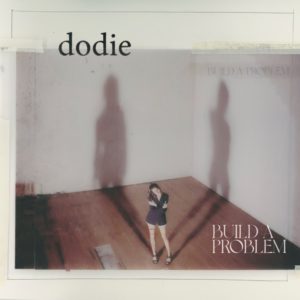 Though Build a Problem marks dodie’s first full-length release, the 25-year-old British singer-songwriter, born Dorothy Miranda Clark, has established a strong online presence with nearly 2 million subscribers on her main YouTube channel, and her three independently released EPs – 2016’s Intertwined, 2017’s You, and 2019’s Human – went on to reach the UK pop charts. One thing both her videos and her music have in common is that they both can feel like soul-baring admissions of vulnerability. Throughout her career, she’s channeled that intimacy through lush folk pop built around soft vocals and plucky acoustic guitars, and her debut LP is no different – this time, though, the variations in sound and mood also reflect the contradictions and inner battles she often speaks about in her discussions of mental health. Working with producer Joe Rubel as well as a 13-piece orchestra, dodie uses the extra space to experiment with different styles and structures as the album delves into darker, more dramatic territory, adding rich, complex layers to her explorations of self-worth, shame, and internal conflict.
 ‘Collapsed in Sunbeams’, the title track that also opens Arlo Parks’ debut album, is a spoken-word piece that not only establishes Parks’ poetic lyricism, but also reveals the way she tends to approach her narrative subjects: she starts by establishing her point of view (“I see myself…”), before bringing others in (“We’re all learning…”) and ultimately utilizing the unique power of the second person: “You shouldn’t be afraid to cry in front of me,” she says, then mutters, “I promise.” A wholly affecting and delicately crafted debut, Collapsed in Sunbeams is populated by an assortment of different characters, and Parks is equally adept at relaying the experiences of those close to her as she is at harnessing the poetic gift of writing about strangers. On the closing track, ‘Portra 400’, she recognizes the beauty in “making rainbows out of something painful,” which echoes an Audre Lorde quote Parks has often referred to: “Pain will either change or end.” Here, none of the characters’ pain seems to really change or end. But through her incisive observations and mellow, unshowy vocals, Parks is at least capable of making the air feel a little bit lighter.
 Born in Portugal to Belgian and Cape Verdean parents, Erika de Casier grew up in the Lisbon suburb of Estoril until she moved to the tiny Danish village of Ribe at the age of 8. After spending a year abroad in Vermont, she eventually settled in Copenhagen and taught herself music production in her bedroom. Though she had to learn to sing in a hushed tone so as not to disturb her flatmates, she’s since found ways to harness that intimacy to convey all manner of emotion, whether invoking the sensuality of ’90s and ’00s R&B or taking cues from the empowerment anthems of Destiny’s Child and TLC. She draws from both musical worlds on her latest album, Sensational, her second following 2019’s Essentials and first since signing to 4AD. Each subtle texture radiates warmth as well as newfound confidence, lending an air of playfulness to what is an otherwise stripped-back and relaxed affair. But more remarkable than her self-assured presence is de Casier’s ability to explore relationship dynamics with elegance and style, making her minimalist, confessional songs feel vivid and nuanced: not just palpably romantic, but full of possibility.
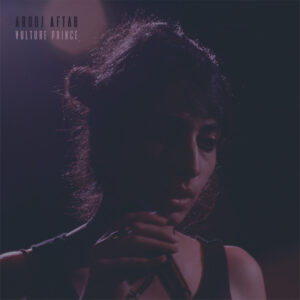 Arooj Aftab has described her new album, Vulture Prince, as being about “revisiting places I’ve called mine,” which feels like a fitting metaphor for her music as a whole. Opening with a new rendition of ‘Baghon Main’, a folk song the Brooklyn-based Pakistani composer first tackled on her 2014 debut Bird Under Water, the record employs classic Urdu lyrics dealing in themes of loss and yearning and embellishes them with stripped-back instrumentation that includes harp, acoustic guitar, double bass, and synths. A continuation of her debut and the follow-up to 2018’s ambient project Siren Islands, Vulture Prince is an album of devastating beauty – one whose nature shifted significantly following the passing of the singer’s younger brother Maher in the middle of the writing process. The arrangements are intimate and elegiac, while Aftab’s crystalline, elastic voice carries a depth of feeling that transcends any potential language barriers, transporting the listener into a realm where sorrow can briefly take the form of acceptance. The result is both a stunning artistic achievement and a melancholy lament whose spiritual resonance is amplified in the present moment.
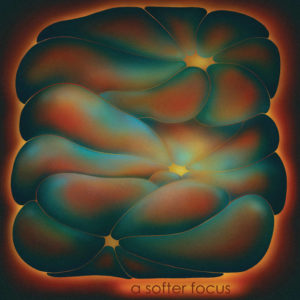 Throughout her career, claire rousay’s music has incorporated field recordings, voicemails, and percussive sounds to dissect the corners of human emotion and daily life that otherwise remain elusive and ambiguous. Following a prolific run of releases, a softer focus once again recontextualizes her work as it finds the San Antonio-based artist stepping into new sonic territory while building on the melodic elements that had started to seep into her music with 2020’s it was always worth it. Featuring contributions from OHMME’s Lia Kohl and Macie Stewart, multi-instrumentalist Ben Baker Billington, and violinist Alex Cunningham, a softer focus is a collaboration with painter and ceramicist Dani Toral, who, in creating the visual world for the album, set out to explore the “feelings of present familiarity” she felt with rousay, an emotional state rousay’s work intimately mirrors. Even if the lush ambient textures and scattered pop influences render it her most accessible and less esoteric effort to date, it’s still marked by the kind of attention to detail and personal candor that make those quiet moments vibrate with significance.
 Listening to Indigo Sparke’s music can feel like watching a star flicker in the dark country sky: from afar it can seem small and insubstantial, but once you consider the amount of energy that ripples through it, the moment can suddenly feel overwhelming in its intensity. Amid the soft glow of finger-picked guitar and delicate touches of piano, the Sydney-based singer-songwriter often uses that kind of cosmic language to relate her own experience on her debut album, Echo: “I have pulled apart the cosmos/ Trying to find you inside,” she sings on ‘Carnival’; on ‘Wolf’, she implores, “Come upstairs, let me show you all the parts you haven’t seen/ There’s a hell, there’s a heaven, there’s a universe exploding,” before comparing her lover to the moon. Recorded between Los Angeles, Italy, and New York, the follow-up to 2016’s Nightbloom EP was co-produced by Adrianne Lenker and frequent Big Thief collaborator Andrew Sarlo; the result is a mesmerizing record that’s charged with emotional intimacy without ever losing its poetic, intangible qualities. “Everything is dying,” she tenderly intones against the ghostly echo of an instrumental, “Everything is simple.”
 Rather than distancing themselves from the increased pertinence of their ideas in a time of unprecedented uncertainty, Godspeed You! Black Emperor deliver their radical message with more weight and urgency than ever on their first album in four years. Expanding on the melodic elements that ran through Luciferian Towers but leaning more firmly on the fury and power of their earlier work, G_d’s Pee AT STATE’S END might be one of the Canadian post-rock collective’s most immediately impactful and downright beautiful efforts to date, propelled by a new dynamism that’s less the result of timing than careful refinement of craft. Comprised of four pieces, two longer and two shorter, the album utilizes cryptic spoken-word passages and soundclips from shortwave radio to set an apocalyptic scene, but it’s the music itself that does the heavy lifting. The longer pieces are sprawling and ambitious, building to roaring climaxes filled with promise and rays of optimism; the shorter ones are mournful and meditative, floating through the cloud of cacophony with a kind of elegiac solemnity. By utilizing the perpetual cycle of build-up and release, GY!BE transmute those familiar forces into something rich and all-encompassing.